Film musical design
Moulin Rouge! offers a vivid case for studying theatrical excess held together by strong focal points and emotional staging.
A closer look
Begin with an emotional center before adding ornament.
Understanding the subject
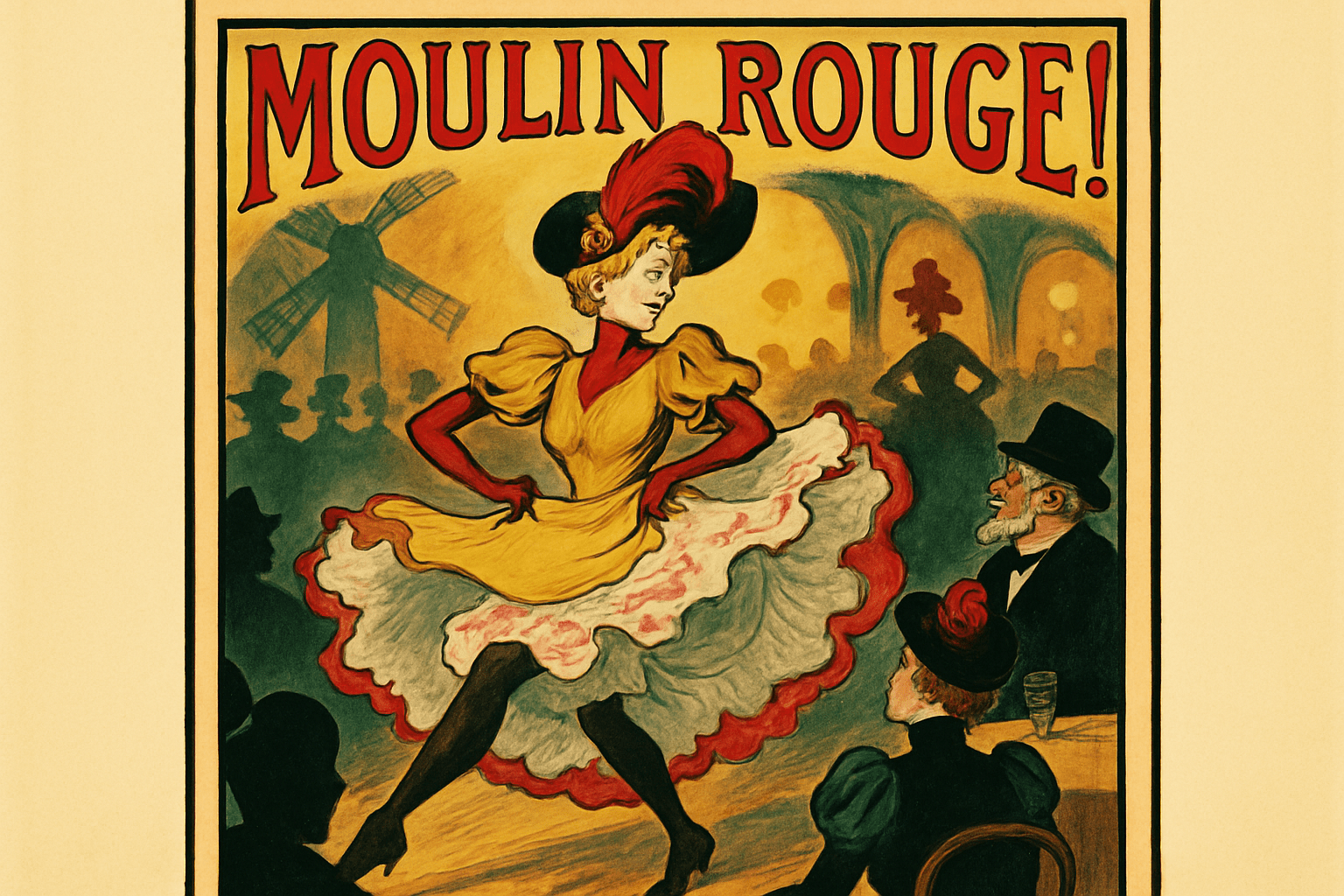
Baz Luhrmann’s Moulin Rouge! is a film musical whose visual identity draws on theatrical spectacle and a deliberately heightened presentation. It should not be mistaken for an exact record of a historical venue or a single period’s design. Costumes, sets, editing and performance work together. A static image can examine their broad visual relationships without claiming to reproduce an official frame or summarize the film’s entire aesthetic.
AOI looking and making workshop
Begin with an emotional center before adding ornament. A solitary figure beneath a vast red curtain creates a different image from a crowded celebration, even if both use gold trim and jewel colors. Organize decoration into foreground, middle distance and background so the eye can move through it. Protect the focal face or gesture from competing highlights. For an original musical-inspired composition, use stage architecture and dramatic light intentionally; an indiscriminate pile of feathers, signs and glitter will usually weaken the scene.
The prompt workshop
Original creative exercises. These prompts create new illustrations, not documentary evidence.
Before the curtain rises
Create an original theatrical scene of a lone singer beneath a huge crimson curtain, one warm spotlight and a quiet dark auditorium. Use gold accents only near the focal figure.
A layered celebration
Design an original film-musical ballroom with dancers in the middle distance, dark foreground silhouettes and a luminous balcony above. Coordinate ruby, gold and midnight blue without filling every area with detail.
Spectacle in paper
Create an original miniature paper-theater collage of a cabaret stage, exaggerated curtains and a tiny performer. Use bold cut shapes, limited jewel colors and clearly handmade textures.
Your next inspiration
Discover another art style
Follow a visual thread to the next subject.