
Living Sorbian folk art · decorated eggs of Lusatia
Turn a decorated Sorbian Easter egg slowly in your hand and the picture changes: a ring becomes a procession of dots, and a star disappears around the far side. Wax resist, wax relief, scratching and etching give this living tradition several distinct visual languages.
A visual introduction
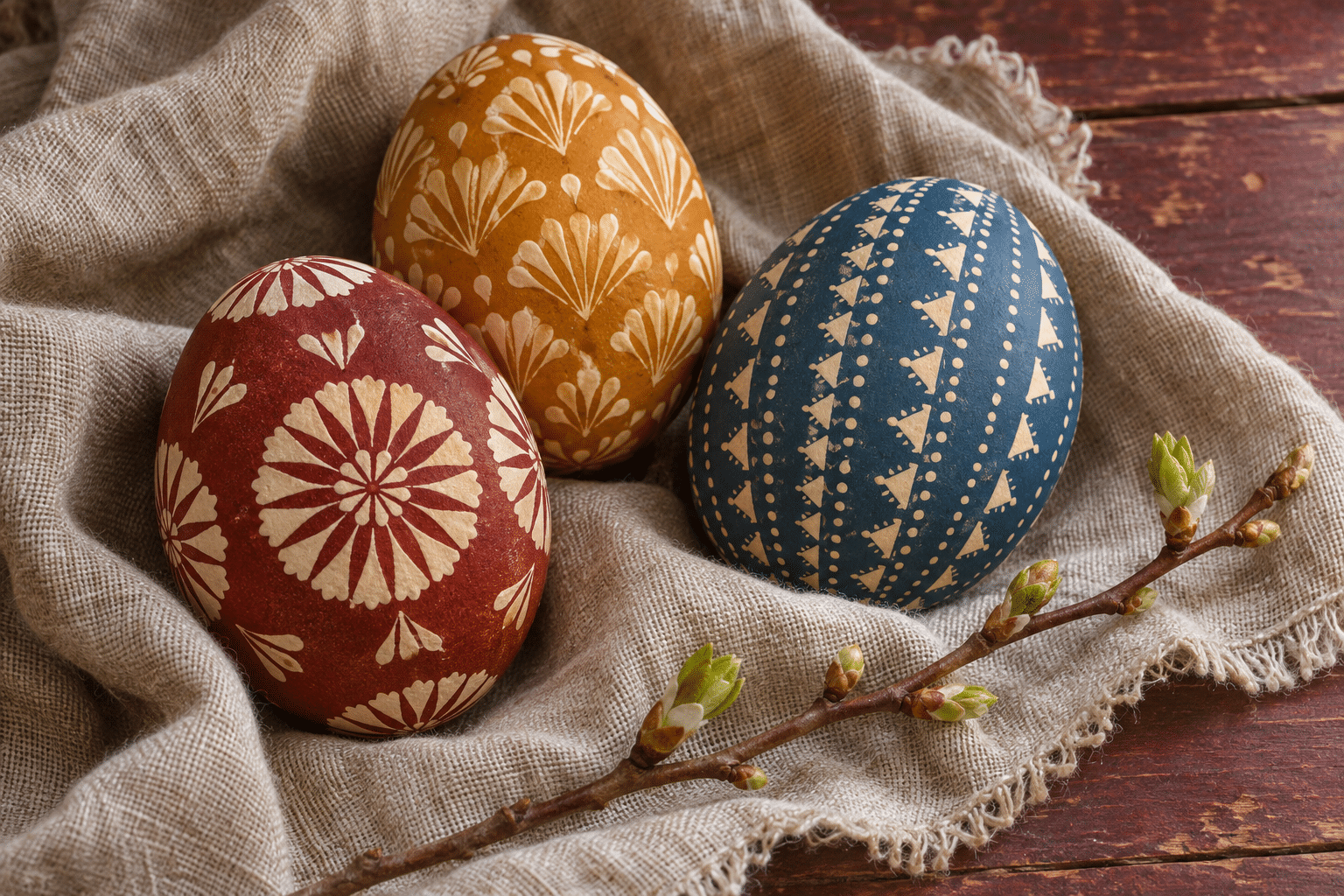
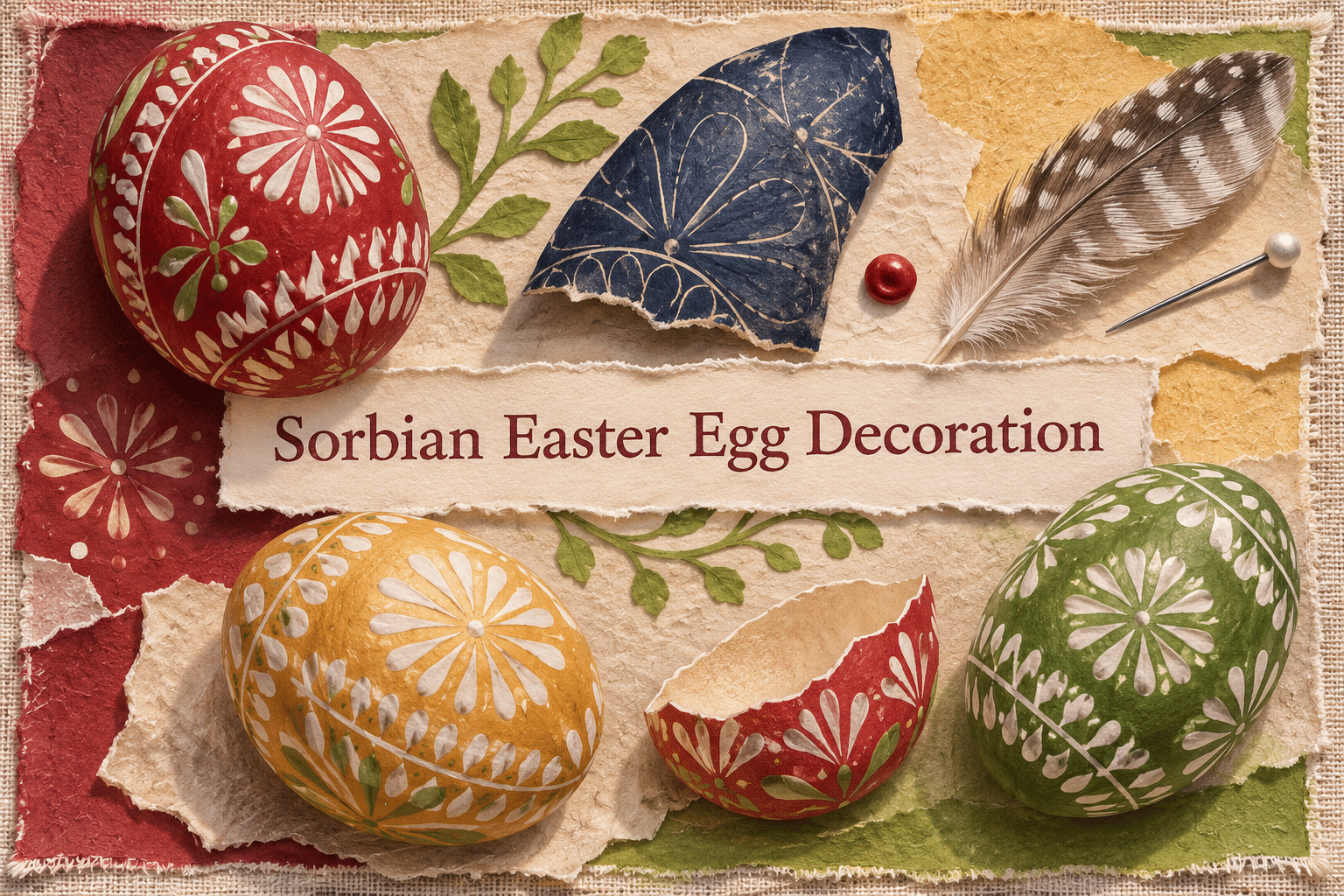
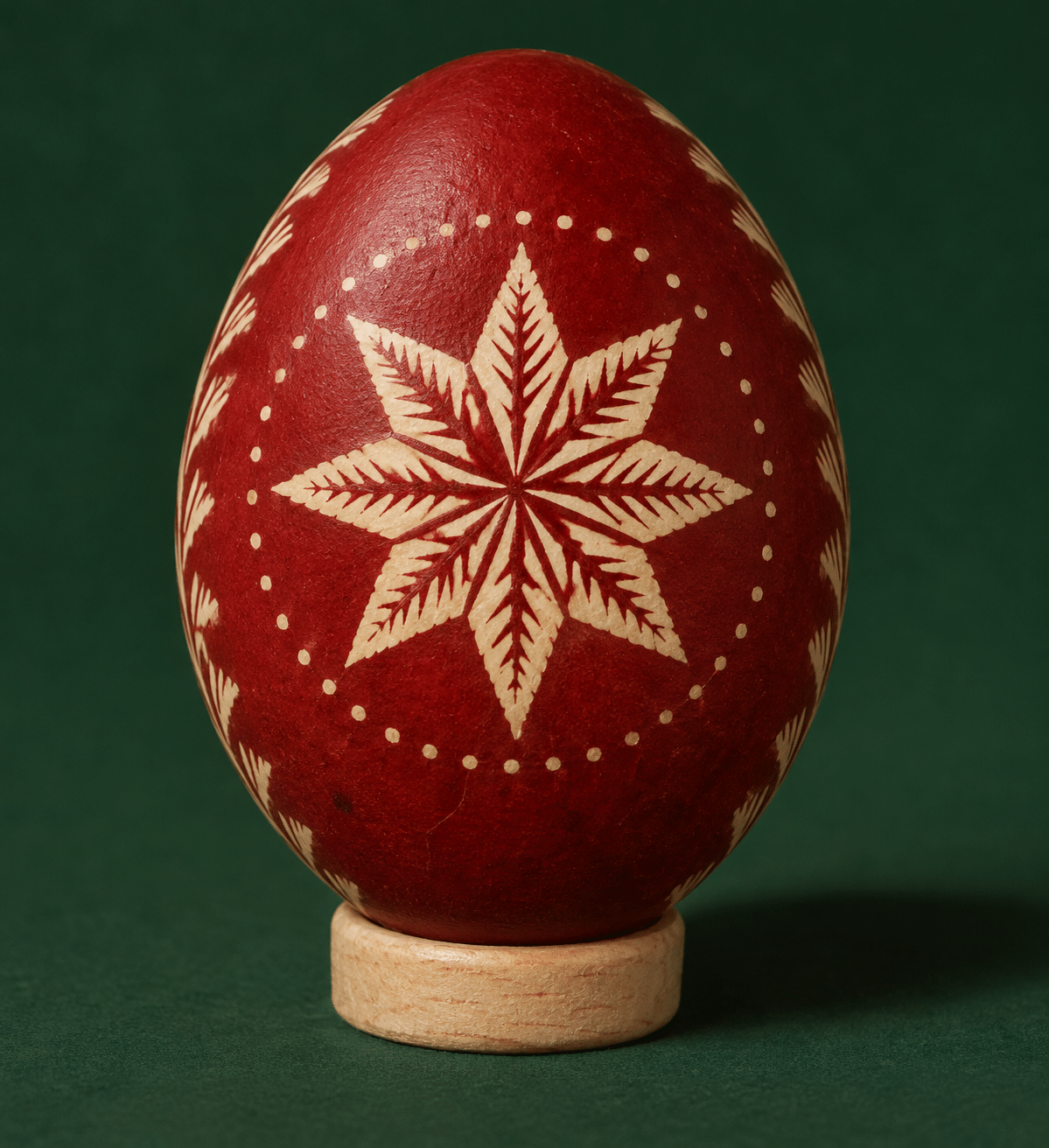
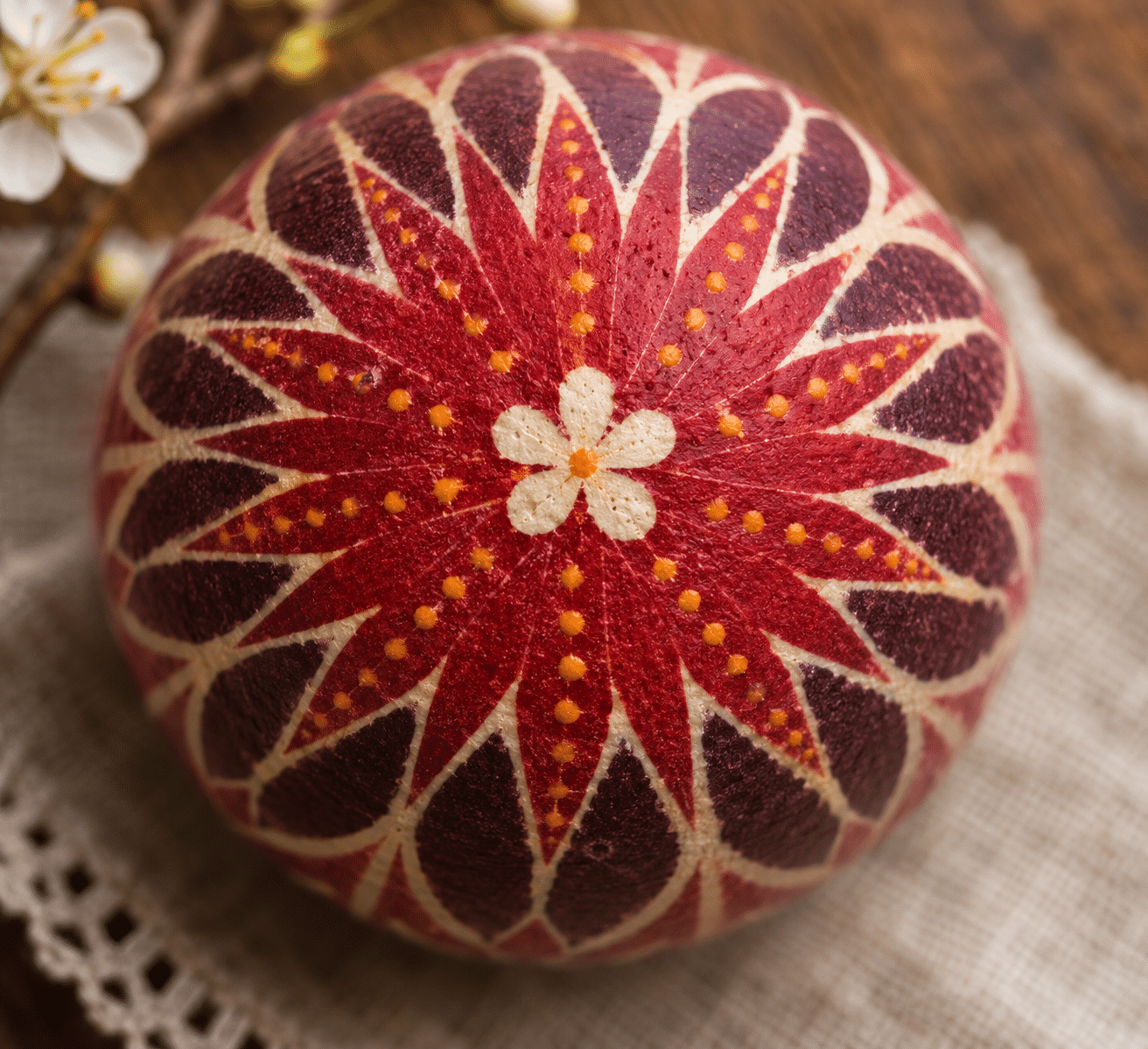
Seven original AI-generated interpretations: a dedicated banner, a centrally titled artistic collage and five standalone studies.
Select an image for a closer look. Use the thumbnails, arrow keys or a swipe to compare examples. Zoom in to inspect details, or share the image that inspires you.
Creative toolbox · take this style further
Choose an input and a destination. Search sends your words to the chosen site; Copy & open puts them on your clipboard to paste there.
Create with AI
Turn your chosen input into an image prompt or a new creative direction.
ChatGPT
Copy your input and paste it into a ChatGPT conversation or image request.
Copy & open ChatGPT (new tab)Claude · Anthropic
Develop an image prompt or explore the style in a new Claude conversation.
Copy & open Claude · Anthropic (new tab)Midjourney
Paste your input into the Imagine bar on the Create page.
Copy & open Midjourney (new tab)Adobe Firefly
Copy your input, open Firefly, and paste it into the prompt field.
Copy & open Adobe Firefly (new tab)Leonardo.Ai
Copy your input, open Leonardo, and paste it into the generation field.
Copy & open Leonardo.Ai (new tab)Image search
Find visual references. Short, concrete keywords usually work best.
Lexica
Search AI images and prompts using your selected input.
Search with this input Lexica (new tab)Pexels
Search the photo and video library. Short keywords often work best.
Search with this input Pexels (new tab)Pixabay
Search photos, illustrations and other images.
Search with this input Pixabay (new tab)Unsplash
Search photographs using the style name or your own keywords.
Search with this input Unsplash (new tab)Wikimedia Commons
Search photographs, artworks and historical images. Check each file for its source and reuse terms.
Search with this input Wikimedia Commons (new tab)Art & research
Explore artists, collections and the ideas behind a style.
Wikipedia
Search for background reading. A style may not have its own article.
Search with this input Wikipedia (new tab)WikiArt
Copy your input into WikiArt’s search to explore artists and artworks.
Copy & open WikiArt (new tab)Europeana
Paste your keywords into the search to explore European museum, library and archive collections.
Copy & open Europeana (new tab)Inspiration
Discover portfolios and visual ideas from creative communities.
Instagram hashtags
Search a hashtag made from your input: spaces and punctuation are removed. Instagram may require sign-in.
Search with this input Instagram hashtags (new tab)ArtStation
Paste your input into artwork search for concept art, environments, characters and visual development.
Copy & open ArtStation (new tab)Behance
Paste your input into project search for illustration, design and visual storytelling.
Copy & open Behance (new tab)A closer look
Build a design around the pole or equator of a real egg shape. Vary the size and direction of feather marks and pin dots. Decide whether a pale mark is bare shell, an incision or a deposit of wax: each catches light differently.
A picture with no front edge
An egg has poles, an equator and no obvious place to end a drawing. A rosette at one end can open like a flower when seen from above and become a narrow crown from the side. A band that seems finished in a photograph still has half a turn to travel. The best way to study one is to imagine turning it in a hand.
This entry concerns the Sorbian Easter egg tradition of Lusatia. Domowina’s Association for Sorbian Folk Culture documents techniques practised today; the Sorbian Museum in Bautzen also points readers to the particular Easter customs of the Schleife region. Local practices and meanings deserve that specificity. The seven gallery images are newly generated studies, not objects attributed to a particular maker or village.
Wax that leaves, wax that stays
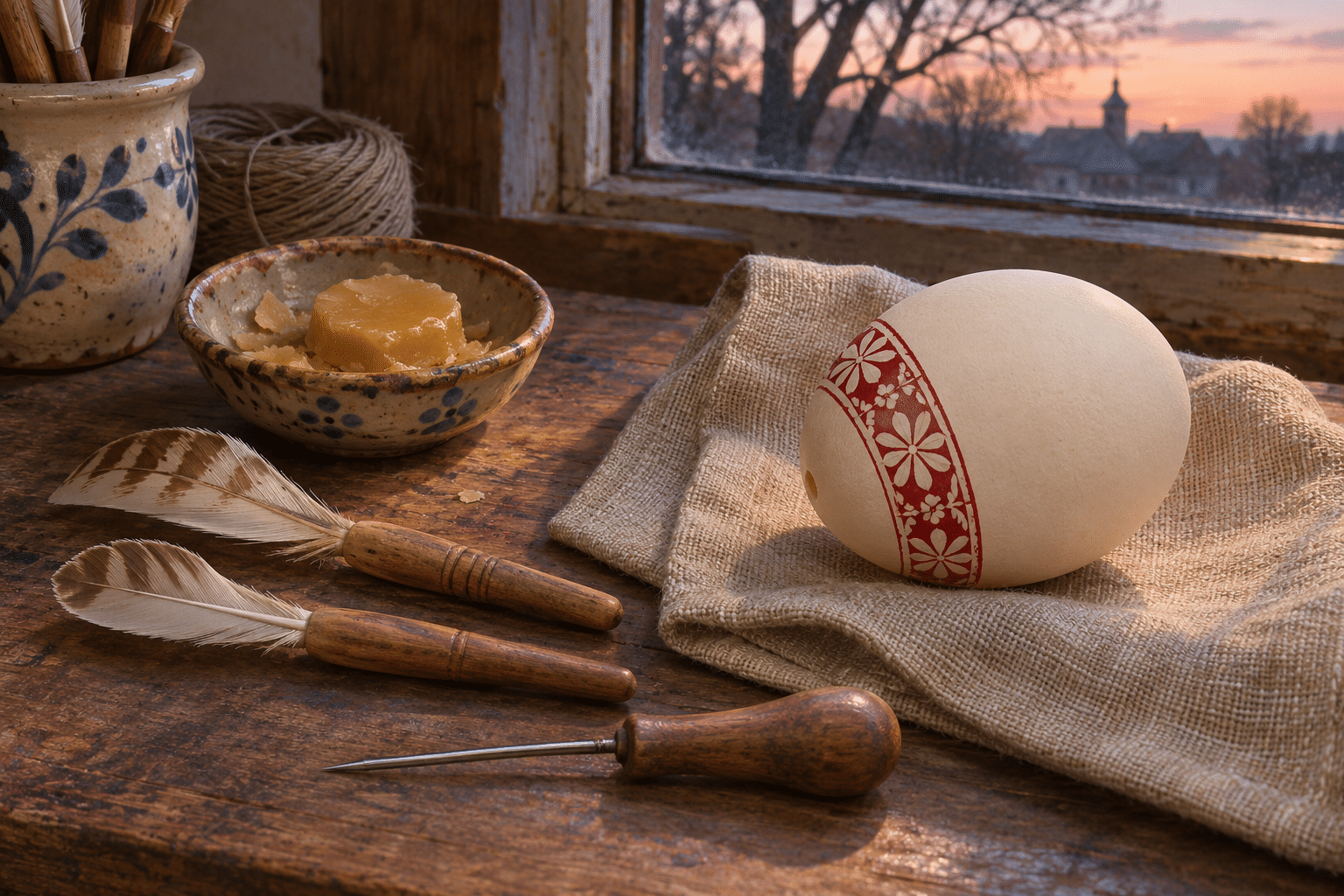
In the wax-resist technique described by Domowina, wax protects selected shell areas from dye. A trimmed feather can lay down a shaped mark and a pin can deposit a dot. Further reserves and dyes can build several colors, generally moving from lighter to darker. Removing the wax reveals the colors that earlier layers protected.
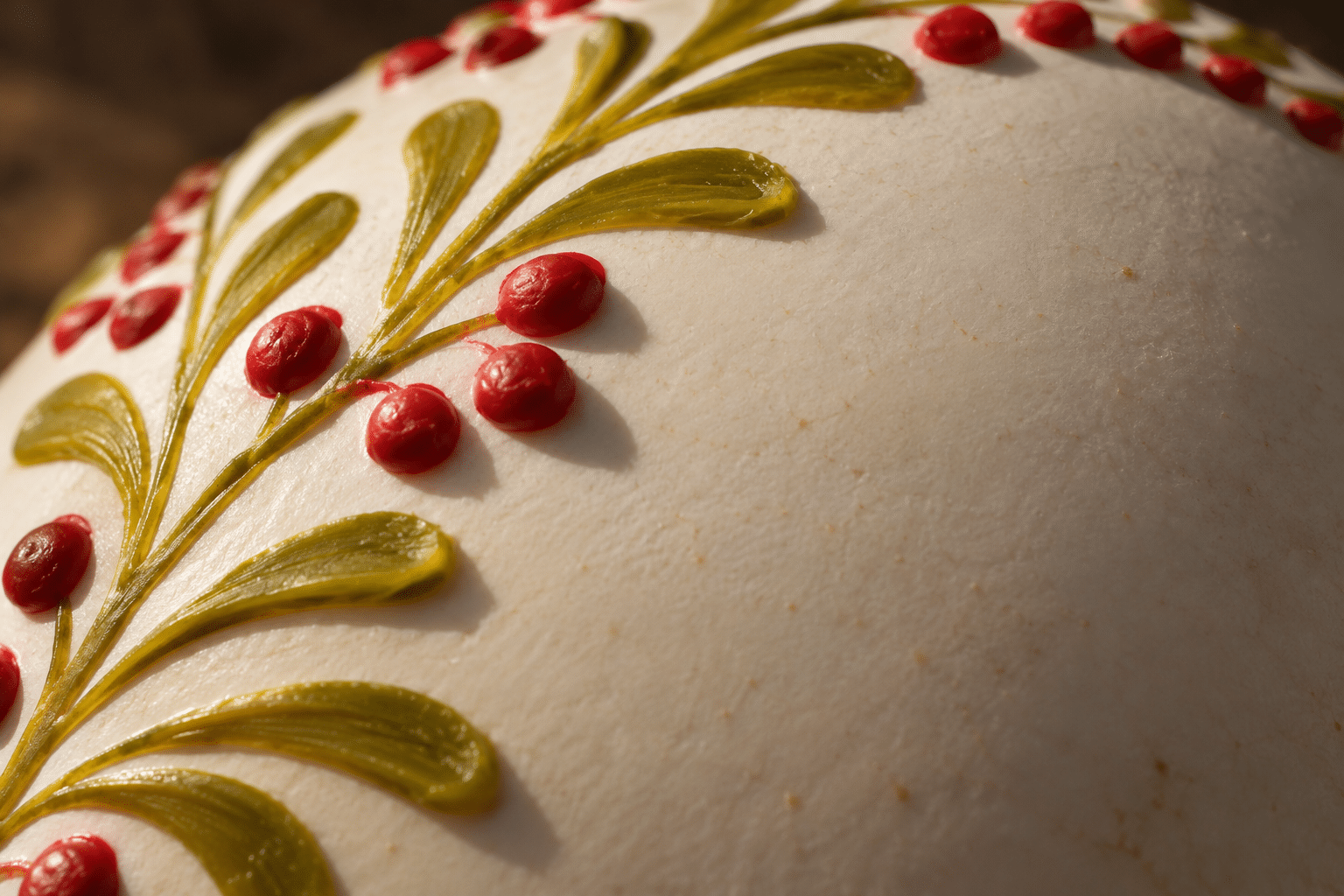
Raised wax works differently: colored wax itself remains as decoration. A grazing light can reveal its thickness and cast a tiny shadow beneath a dot. If a prompt asks for resist but the result resembles a cake covered in piped icing, ask for flush, unshadowed marks. Save the tiny relief shadows for the technique in which they belong.
Marks cut into the dark
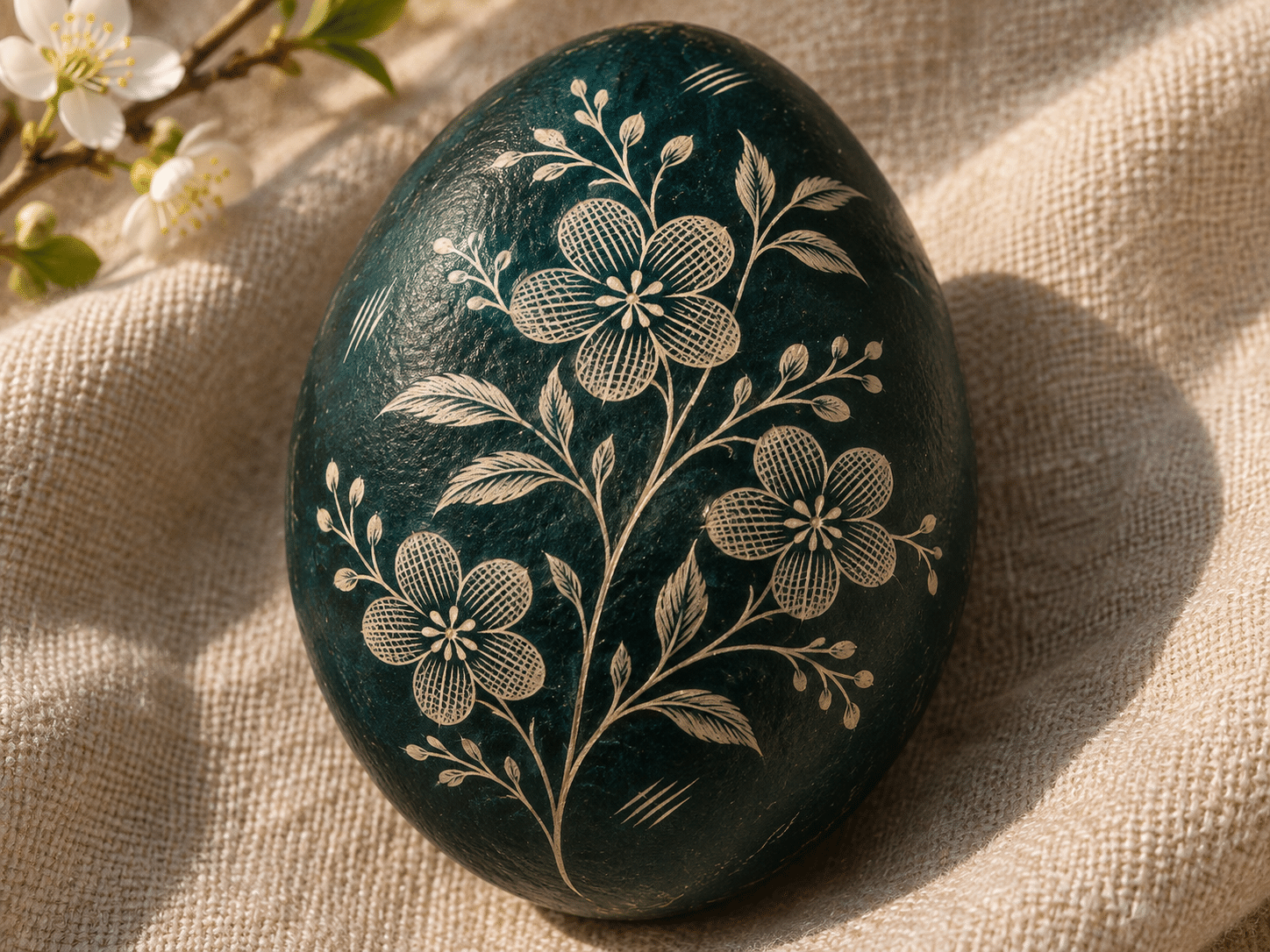
Scratching cuts a pale design into an already dyed surface. Hairline fan strokes or small fields of hatching can give a leaf an interior texture very different from a wax-stamped triangle. Etching is another subtractive approach, locally taking color away. Similar light-on-dark pictures do not necessarily come from the same process.
One exercise is to draw the same small sprig twice: once using a dozen short, broad impressions and once using a fine point. Then wrap both around the egg. The two versions should still read differently when reduced to a thumbnail. Use a side light for the texture of the cut shell and a soft frontal light when you want the order of the pattern to dominate.
Space the last mark first
Divide the circumference before composing a border. Leave room at the join so the last triangle does not have to squeeze between two confident predecessors. Small variations in angle give the rhythm a hand; large variations can pull the whole band toward one side.
At a pole, taper the motif or let it open into a little reserve. A crowded center often looks less intricate than a quiet one because no mark has enough space to show its shape. Consider the natural shell color an active part of the palette. In a single-dye egg, it can carry the brightest and most legible part of the design.
Look closely, and name the source
The museum’s wax-technique publication discusses tools, patterns, color choices and their meanings in context. For a motif with a particular traditional name or interpretation, seek a local source that actually describes it. A triangle in a new digital exercise is a triangle; visual resemblance alone cannot establish its ceremonial significance.
For a photographic study, set one egg on folded linen and move the light before adding more props. For an illustration, flatten the shadows but preserve the narrowing intervals at the turning edge. Either way, acknowledge the Sorbian tradition and make clear which design decisions belong to the contemporary study.
Positive editorial perspective
AOI editorial perspective (AI-authored). The shell makes repetition adventurous. A disciplined line of six dots changes character as soon as the seventh turns out of sight.
Negative editorial perspective
AOI editorial perspective (AI-authored). A seamless wallpaper wrapped over a shiny plastic egg misses both the craft and the form. Keep the finish of the shell, the mark of the tool and the awkward little join at the back in view.
Neutral editorial perspective
AOI editorial perspective (AI-authored). Wax resist, wax relief and subtractive decoration have distinct processes. The gallery invites comparison; it does not certify the provenance or symbolism of any historical object.
Pocket-sized facts
Domowina documents single- and multicolor wax resist, scratching, etching and wax relief.
In wax relief, colored wax remains on the shell; in resist decoration, the protective wax is removed.
Regional customs and the meaning of named motifs should be traced to Sorbian sources.
A small poetic detour
Original words from the AOI studio.
Poetry
A feather leaves a pointed leaf;
a pin sets down a drop of light.
The shell is small, the circuit brief;
the seventh dot turns out of sight.
Below the red a white mark stays
where wax once kept the dye away.
A raised bead, caught in slanting rays,
keeps its small shadow through the day.
I turn the egg. The folded wing
becomes a star, becomes a row.
My thumb turns back the little spring
to find where all the petals go.
The prompt workshop
Original creative exercises. These prompts create new illustrations, not documentary evidence.
One dye, a whole circuit
A single matte crimson dyed egg, a small rosette of cream triangular reserves, pin dots arranged in a border that turns around the shell, on a simple wooden ring.
Leave visible shell between adjacent marks.
Two ways to catch light
Macro photograph-inspired study of raised red and golden wax on a pale curved eggshell. Low side light creates tiny shadows under the dots, shallow focus on one row.
This is wax relief; keep the thickness legible.
Draw into the dark
A dark teal dyed egg with a botanical motif scratched into the shell, delicate pale hatching and tapering cuts, quiet linen background.
Let the thin incisions differ from broad wax-stamped reserves.
A smile from the studio
Jokes
I planned a border of twenty-four perfectly spaced dots. Twenty-three went around the egg before I noticed there was room for half a dot at the back. My teacher turned it gently in its stand. “There,” she said. “Your first lesson in composition includes a front.”