
Artist profile · narrative illustration
Simon Stålenhag is a Swedish artist and author whose illustrated narratives bring unfamiliar technology into recognisable everyday environments. The tension comes from how convincingly those worlds appear to have been lived in: roads, weather, ordinary buildings and small human routines make the extraordinary feel like part of an existing social landscape.
A visual introduction
Select an image for a closer look. Use the thumbnails, arrow keys or a swipe to compare examples. Zoom in to inspect details, or share the image that inspires you.

Creative toolbox · take this style further
Choose an input and a destination. Search sends your words to the chosen site; Copy & open puts them on your clipboard to paste there.
Create with AI
Turn your chosen input into an image prompt or a new creative direction.
ChatGPT
Copy your input and paste it into a ChatGPT conversation or image request.
Copy & open ChatGPT (new tab)Claude · Anthropic
Develop an image prompt or explore the style in a new Claude conversation.
Copy & open Claude · Anthropic (new tab)Midjourney
Paste your input into the Imagine bar on the Create page.
Copy & open Midjourney (new tab)Adobe Firefly
Copy your input, open Firefly, and paste it into the prompt field.
Copy & open Adobe Firefly (new tab)Leonardo.Ai
Copy your input, open Leonardo, and paste it into the generation field.
Copy & open Leonardo.Ai (new tab)Image search
Find visual references. Short, concrete keywords usually work best.
Lexica
Search AI images and prompts using your selected input.
Search with this input Lexica (new tab)Pexels
Search the photo and video library. Short keywords often work best.
Search with this input Pexels (new tab)Pixabay
Search photos, illustrations and other images.
Search with this input Pixabay (new tab)Unsplash
Search photographs using the style name or your own keywords.
Search with this input Unsplash (new tab)Wikimedia Commons
Search photographs, artworks and historical images. Check each file for its source and reuse terms.
Search with this input Wikimedia Commons (new tab)Art & research
Explore artists, collections and the ideas behind a style.
Wikipedia
Search for background reading. A style may not have its own article.
Search with this input Wikipedia (new tab)WikiArt
Copy your input into WikiArt’s search to explore artists and artworks.
Copy & open WikiArt (new tab)Europeana
Paste your keywords into the search to explore European museum, library and archive collections.
Copy & open Europeana (new tab)Inspiration
Discover portfolios and visual ideas from creative communities.
Instagram hashtags
Search a hashtag made from your input: spaces and punctuation are removed. Instagram may require sign-in.
Search with this input Instagram hashtags (new tab)ArtStation
Paste your input into artwork search for concept art, environments, characters and visual development.
Copy & open ArtStation (new tab)Behance
Paste your input into project search for illustration, design and visual storytelling.
Copy & open Behance (new tab)A closer look
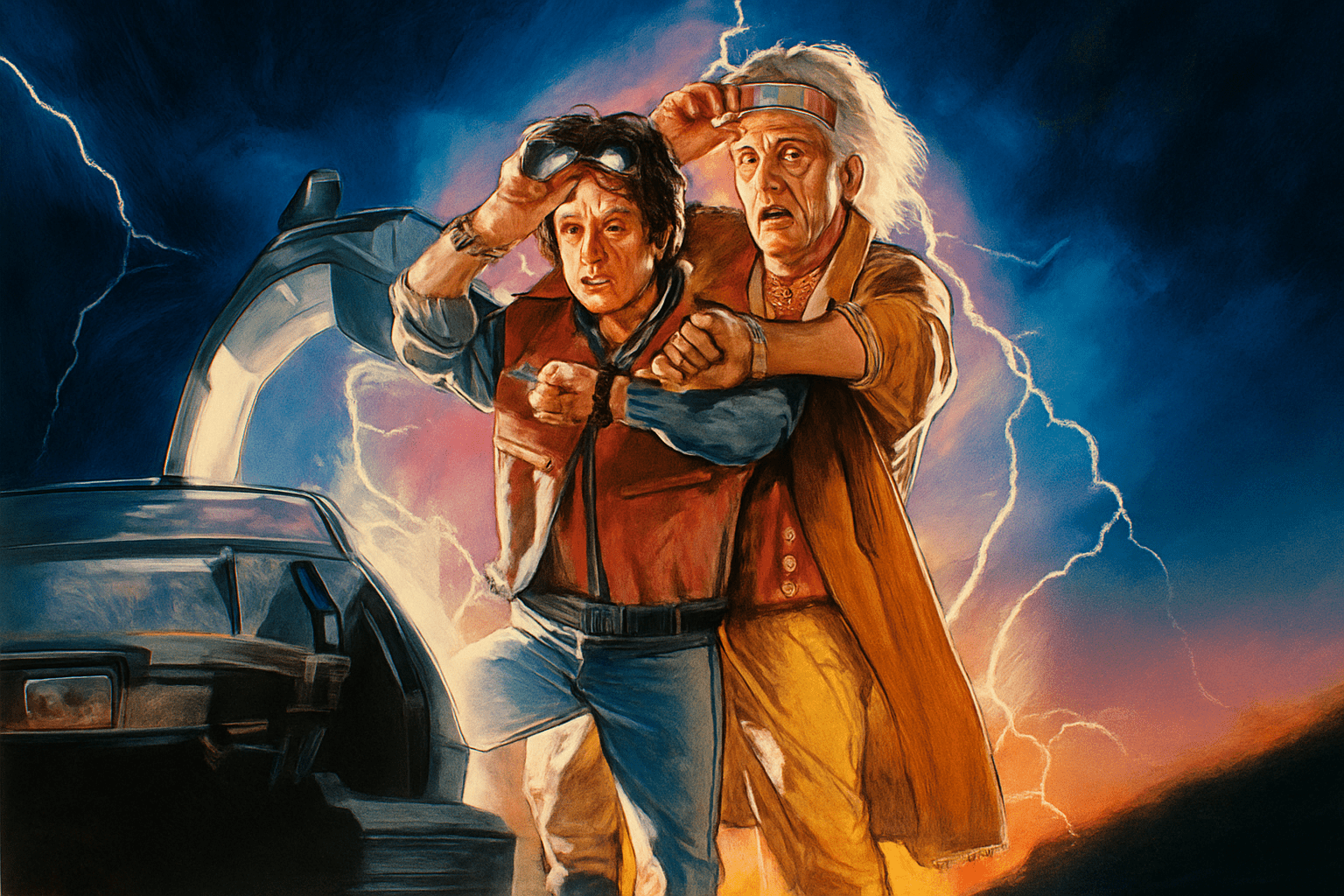
Study the relationship between ordinary terrain and invented machinery, the scale of figures, broad atmospheric values and small signs of wear. This guide discusses visual principles; its AOI illustrations are independent interpretations, not works by Stålenhag.
An artist and author, not a generic science-fiction filter
Stålenhag's official portfolio groups images by projects including Tales from the Loop (2014), Things from the Flood (2016), The Electric State (2017) and The Labyrinth (2020). His publisher describes the alternate late-twentieth-century worlds of the early narrative books. Those sources establish the projects; they do not imply that every image belongs to one interchangeable setting. [1][2]
Start with the particular book or image rather than a catch-all label such as retrofuturism. An illustrated narrative develops meaning through recurring places, changes of scale and the relationship between text and image. A single spectacular machine isolated from that sequence can miss the quieter human situation that gives the scene its weight.
Let the ordinary carry the impossible
One useful way to analyse this imagery is to ask which elements establish everyday credibility before the speculative element appears. Road surfaces, houses, vegetation and the distribution of practical objects give the viewer familiar distances and uses. The unfamiliar technology becomes more unsettling when it shares those same weather and lighting conditions.
For an original exercise, make an ordinary location convincing before adding anything fantastic. Establish where a vehicle could turn, where people would stand and how a structure meets the ground. Then introduce one invented object. If it floats without affecting scale, shadow or the behaviour of nearby people, it may read as a pasted-in prop rather than part of a world.
Scale is an emotional relationship
A small figure beside a large structure can suggest vulnerability, curiosity or indifference. Size alone does not decide which. Posture, distance and direction of attention do that work. A person continuing an everyday task beside an enormous machine tells a different story from a person pointing at it in amazement.
Try reading a composition without its smallest details. Locate the horizon, the main silhouette and the human point of reference. Decide where the eye enters and where it pauses. Empty ground or sky can make the central encounter stronger; filling every gap with machinery removes the interval in which the viewer senses distance.
Atmosphere should connect the scene
Light is a way to make unrelated objects inhabit the same air. Reduce contrast with distance, keep cast shadows consistent and let local colour respond to the overall weather. A subdued field can make one warm window or small warning light significant without turning the entire scene into neon spectacle.
This is an analytical approach, not a fixed recipe for all of Stålenhag's work. Compare individual images in the official portfolio: ask where the sharpest edge occurs and whether the strongest colour belongs to the technology, the landscape or a human detail. Those observations are more useful than assuming every scene needs fog, snow or a desaturated blue cast.
Wear implies time, but it needs a cause
Surface damage becomes narrative when it follows plausible use. A maintenance hatch, a patched seam, a worn path and vegetation around an abandoned structure suggest different histories. Random scratches distributed evenly across everything provide texture without explaining how the place was used.
In your own worldbuilding, write a short practical history for the invented object: what it once did, who serviced it and what stopped working. Show only two or three consequences. The image does not need to answer every mystery. It does need enough internal consistency for the unanswered questions to feel intentional.
Books, adaptations and independent exercises
Use the artist's books and official portfolio when attributing an image or researching a project. A screen adaptation involves additional filmmakers and design decisions; do not automatically credit its frames to the book artist or use it as proof of a painting's appearance. Likewise, generated studies on this page should never be presented as newly discovered Stålenhag originals.
The most productive creative brief describes its own location, social situation and visual constraints. For example, an ordinary coastal service road, a retired weather-monitoring structure and two workers discussing repairs offer a specific narrative without borrowing a recognisable scene. Test three views: distant context, the human encounter and one functional detail. Each should reveal something different while belonging to the same invented world.
The prompt workshop
Original creative exercises. These prompts create new illustrations, not documentary evidence.
An ordinary place, one impossible object
Create an original narrative painting of a coastal service road under overcast light, a retired fictional weather machine beside a modest maintenance shed, and two workers discussing repairs. Plausible ground contact, broad quiet sky, restrained colour and one small warm lamp. Do not reproduce an existing artwork or character.
Three scales of a world
Design an original narrative triptych of a disused inland monitoring station: a distant landscape, two people at its service entrance, and a repaired mechanical seam. Shared weather, consistent materials, small evidence of everyday labour, no spectacular battle.
The unexplained interruption
Paint an original suburban allotment where one unfamiliar industrial structure interrupts otherwise ordinary gardening. Show a person calmly carrying a watering can, coherent afternoon light and believable vegetation. Let posture and scale create the uncertainty rather than dramatic effects.
Your next inspiration
Discover another art style
Follow a visual thread to the next subject.
Sources and further exploration
Simon Stålenhag — official project portfolio and dated book sections