Film visual storytelling
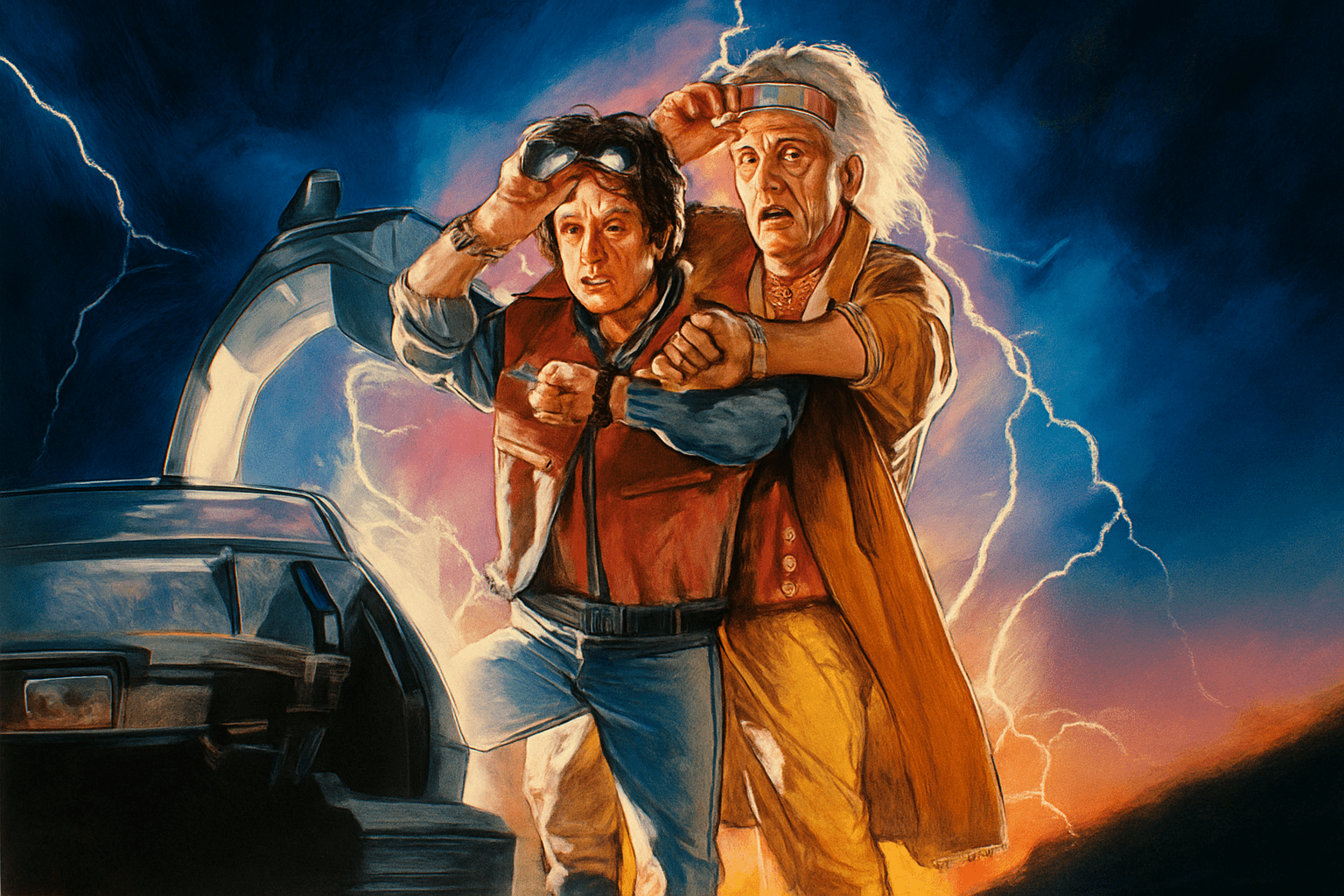
Back to the Future uses changes in familiar places and objects to make time travel readable, comic and emotionally connected.
A closer look
For an original time-travel image, choose a stable landmark and show what changes around it.
Understanding the subject
The 1985 film Back to the Future places its story across 1985 and 1955. Its official production notes describe the development of a mobile time machine and the visual challenges of contrasting those periods. The film is a narrative and production-design reference, not an art movement. A scene’s changing signs, clothing or vehicles can communicate time, but period accuracy still depends on specific references rather than a generic nostalgic filter.
AOI looking and making workshop
For an original time-travel image, choose a stable landmark and show what changes around it. A town square, workshop or family room can remain recognizable while objects, surfaces and activity shift. Keep the viewpoint consistent if making a comparison. Give the speculative machine a clear silhouette and one understandable action rather than covering it with arbitrary glowing parts. Visual humor can come from a small anachronism that the viewer notices. The prompts invent their own settings and devices instead of presenting an image as a production still.
The prompt workshop
Original creative exercises. These prompts create new illustrations, not documentary evidence.
One place, two times
Create an original diptych of the same small-town square in two imagined decades, identical viewpoint and landmark, carefully changed vehicles and shopfront materials. Use no readable brand names or franchise props.
A mobile invention
Design an original comic time-travel scene with a homemade machine built into a compact delivery cart, a startled inventor and a quiet street. Keep the mechanism’s main action readable and the design independent.
A tiny anachronism
Create an original period-inspired workshop scene with one obviously futuristic gardening tool among ordinary hand tools, warm light and restrained visual humor. Let the contrast emerge through careful object placement.
Your next inspiration
Discover another art style
Follow a visual thread to the next subject.