
Original AOI concept · scratched surfaces, absence and remembrance
Sgraffito Mourning uses the act of revealing a lower layer as a visual metaphor for remembrance. An empty chair, a worn cup or a bare branch becomes meaningful through what is exposed and what remains covered.
An A⊕I –[-.+] creαt¡ve c⊕ncept, n⊕t αn estαbl¡she∂ h¡st⊕r¡cαl m⊕vement.
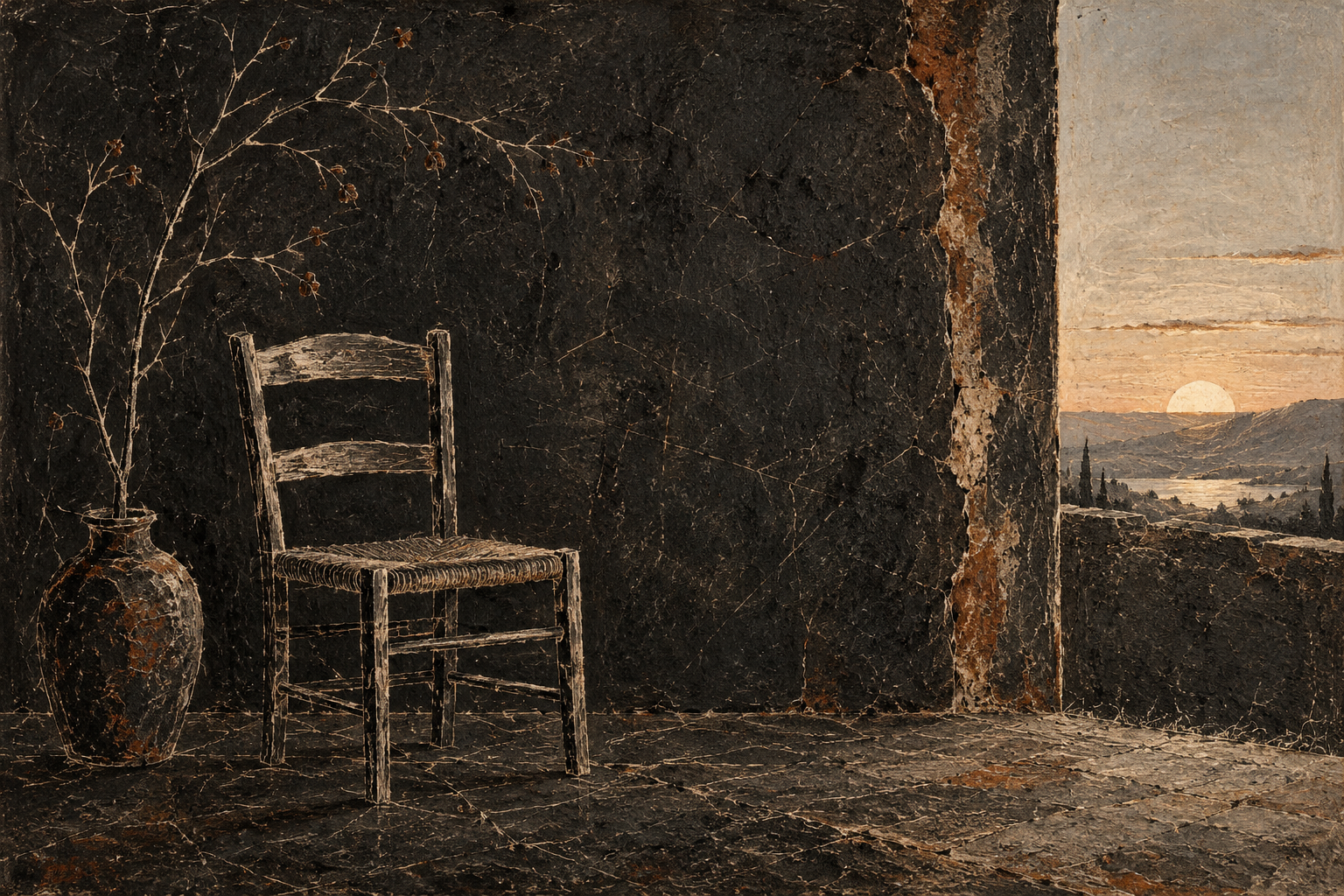
A visual introduction
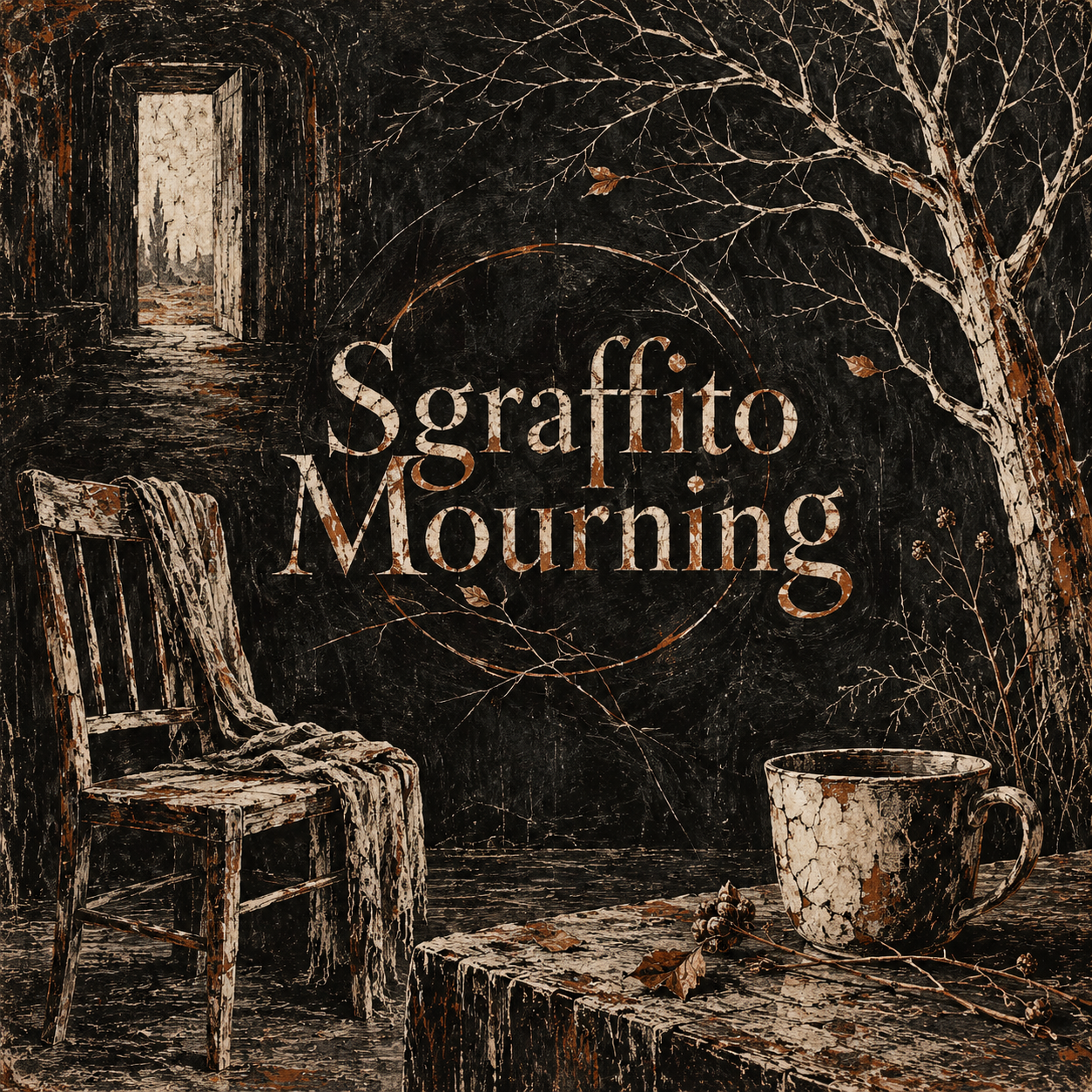
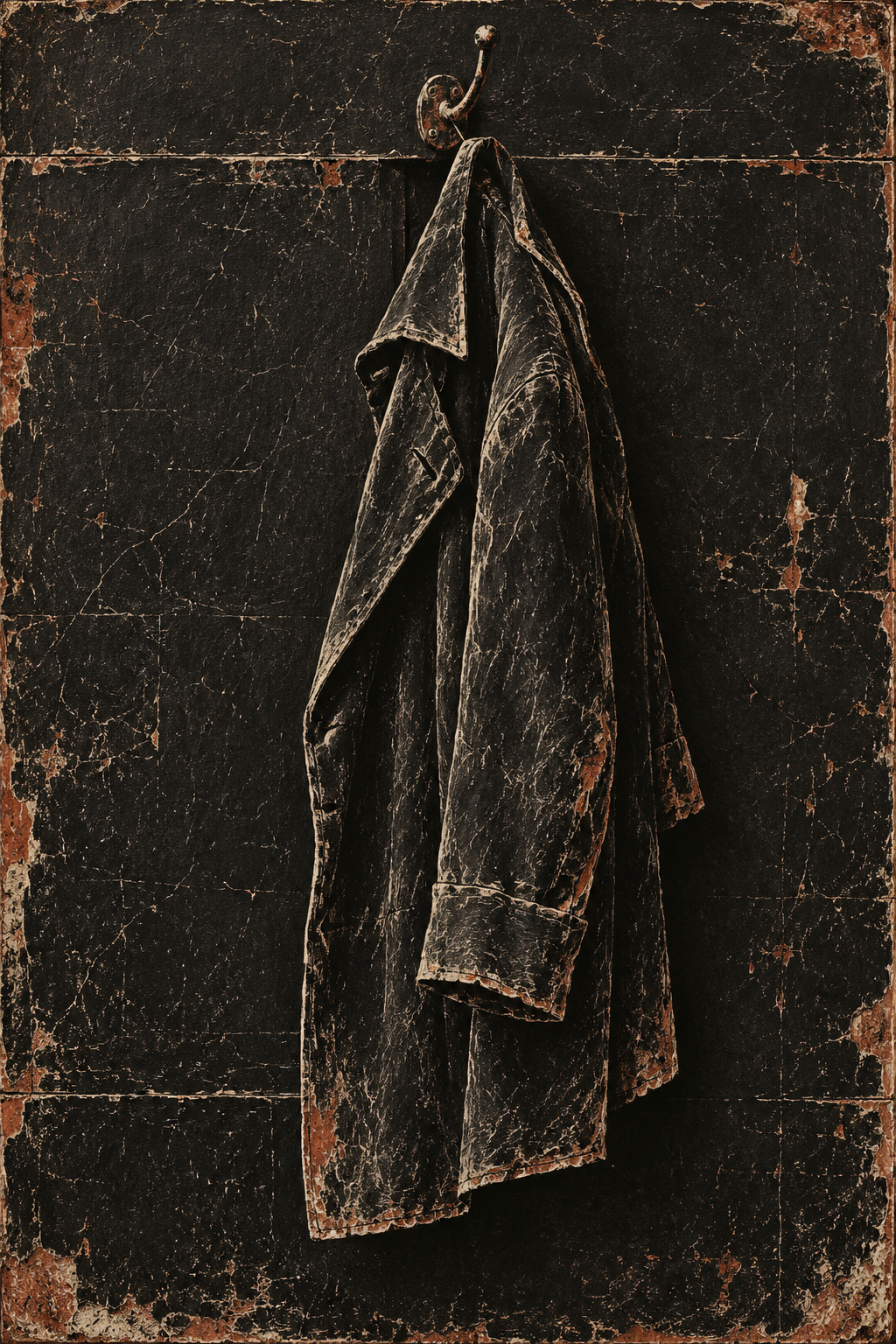
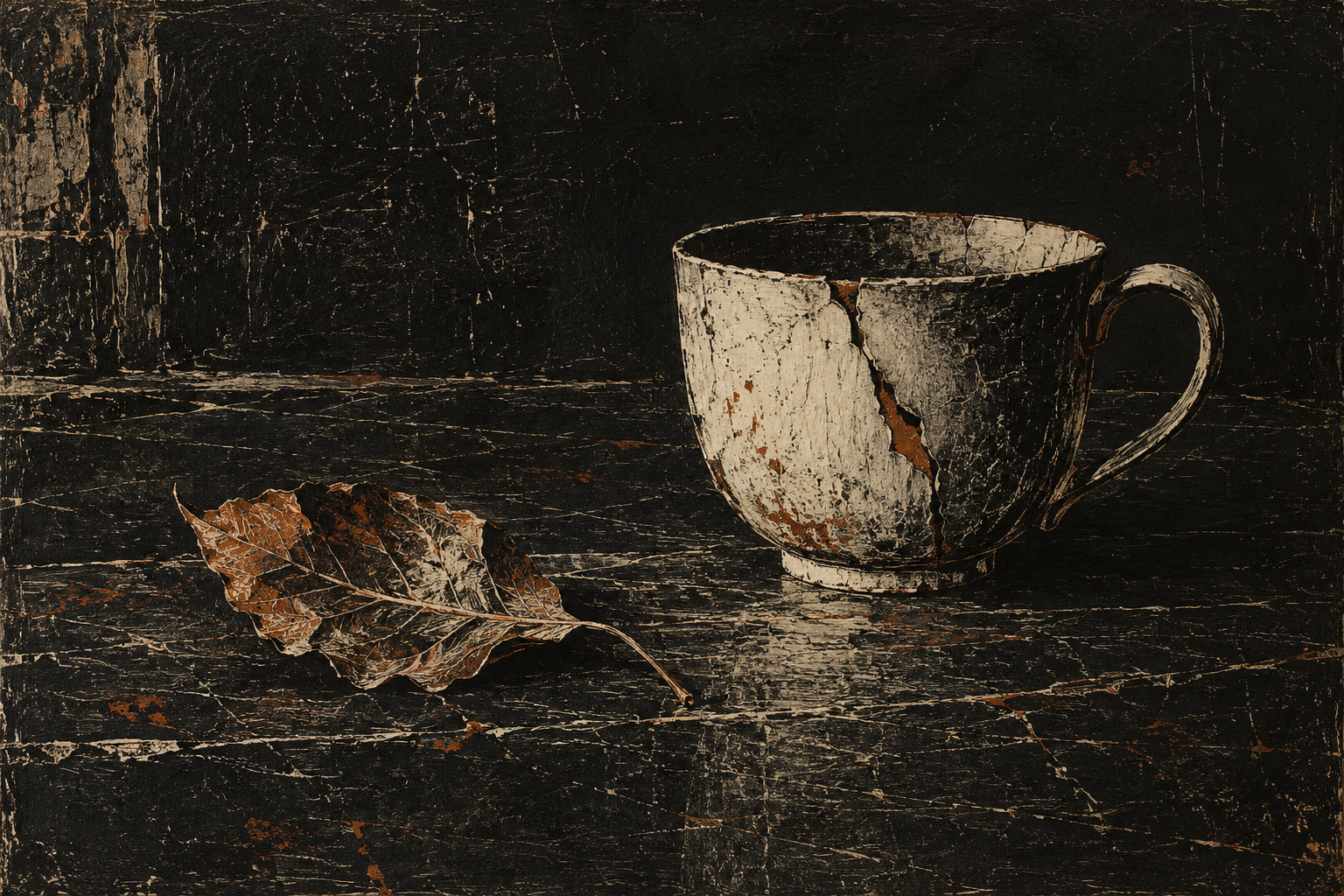
Five original AI-generated AOI interpretations: a dedicated banner, a centrally titled collage and three standalone studies. These are new illustrations, not historical objects or works by the referenced artist.
Select an image for a closer look. Use the thumbnails, arrow keys or a swipe to compare examples. Zoom in to inspect details, or share the image that inspires you.
Creative toolbox · take this style further
Choose an input and a destination. Search sends your words to the chosen site; Copy & open puts them on your clipboard to paste there.
Create with AI
Turn your chosen input into an image prompt or a new creative direction.
ChatGPT
Copy your input and paste it into a ChatGPT conversation or image request.
Copy & open ChatGPT (new tab)Claude · Anthropic
Develop an image prompt or explore the style in a new Claude conversation.
Copy & open Claude · Anthropic (new tab)Midjourney
Paste your input into the Imagine bar on the Create page.
Copy & open Midjourney (new tab)Adobe Firefly
Copy your input, open Firefly, and paste it into the prompt field.
Copy & open Adobe Firefly (new tab)Leonardo.Ai
Copy your input, open Leonardo, and paste it into the generation field.
Copy & open Leonardo.Ai (new tab)Image search
Find visual references. Short, concrete keywords usually work best.
Lexica
Search AI images and prompts using your selected input.
Search with this input Lexica (new tab)Pexels
Search the photo and video library. Short keywords often work best.
Search with this input Pexels (new tab)Pixabay
Search photos, illustrations and other images.
Search with this input Pixabay (new tab)Unsplash
Search photographs using the style name or your own keywords.
Search with this input Unsplash (new tab)Wikimedia Commons
Search photographs, artworks and historical images. Check each file for its source and reuse terms.
Search with this input Wikimedia Commons (new tab)Art & research
Explore artists, collections and the ideas behind a style.
Wikipedia
Search for background reading. A style may not have its own article.
Search with this input Wikipedia (new tab)WikiArt
Copy your input into WikiArt’s search to explore artists and artworks.
Copy & open WikiArt (new tab)Europeana
Paste your keywords into the search to explore European museum, library and archive collections.
Copy & open Europeana (new tab)Inspiration
Discover portfolios and visual ideas from creative communities.
Instagram hashtags
Search a hashtag made from your input: spaces and punctuation are removed. Instagram may require sign-in.
Search with this input Instagram hashtags (new tab)ArtStation
Paste your input into artwork search for concept art, environments, characters and visual development.
Copy & open ArtStation (new tab)Behance
Paste your input into project search for illustration, design and visual storytelling.
Copy & open Behance (new tab)A closer look
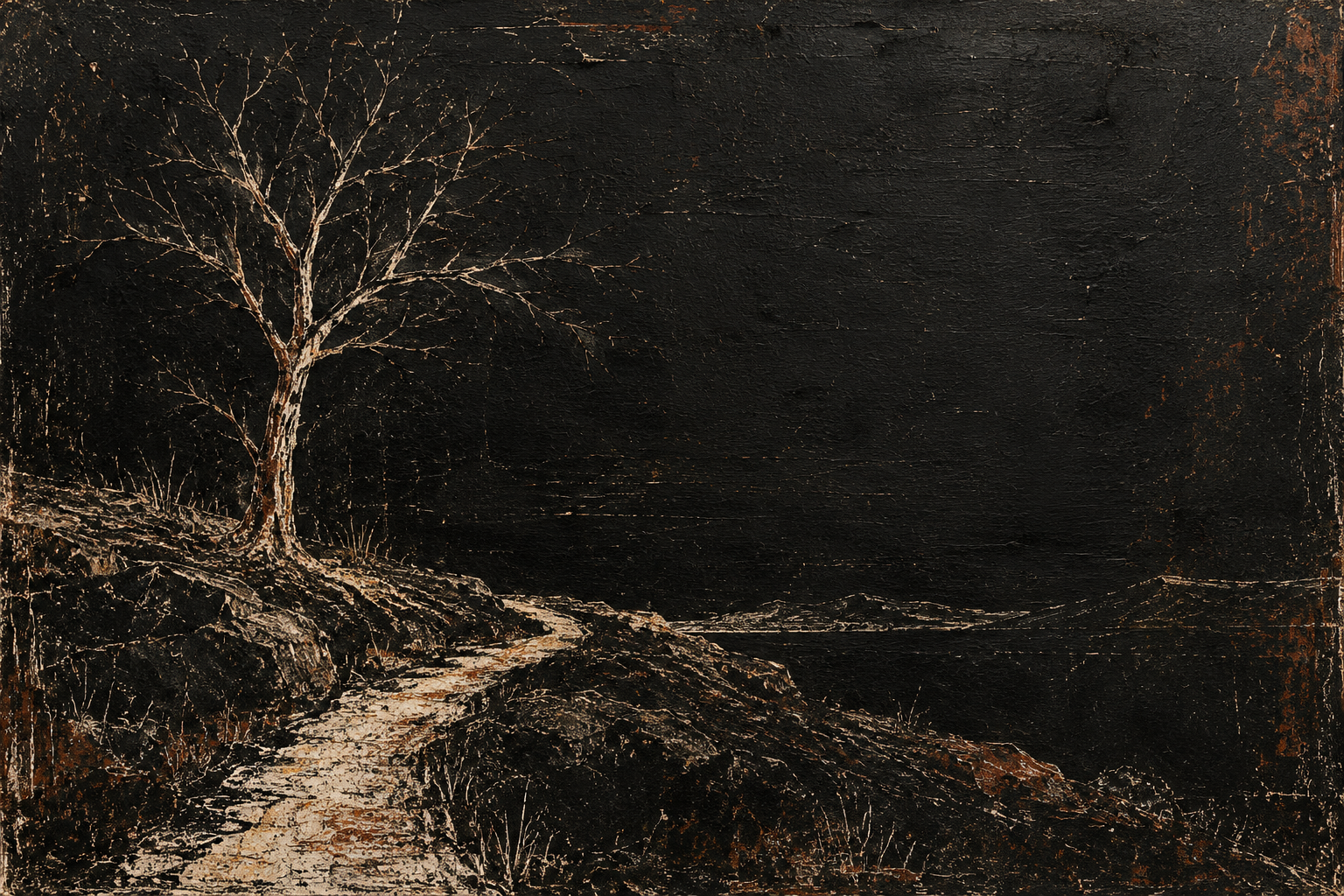
Pale incised lines emerge through charcoal surfaces, with restrained rust or earth-colored underlayers. Sparse objects, uneven abrasion and large quiet areas create an elegiac image without illustrating suffering literally.
An invented concept with a material premise
Sgraffito Mourning is an AOI proposal, not a historical movement or an established mourning ritual. The name joins a scratch-through visual method with an emotional intention. The lower layer acts like something remembered: partly available, interrupted and changed by the surface above it.
The concept does not claim that a particular texture represents grief for everyone. Its language is deliberately modest. Ordinary objects can carry the absence of a person without requiring a portrait, a dramatic event or an explanation of private circumstances. The generated examples are visual studies, not evidence of anyone's loss.
Choose an object that leaves room
Begin with one object and its surrounding space. A chair suggests a body through its vacancy; a coat suggests a habitual gesture; a cup can imply a daily ritual. Place it slightly away from the most obvious center and ask which direction the empty area seems to continue.
Avoid accumulating memorial symbols simply to make the meaning unmistakable. A bare branch, a narrow doorway or a single fallen leaf may be enough. The tension between a specific object and an unresolved space allows the viewer to stay with the image rather than decode a checklist.
Let the layers behave differently
Give the dark upper surface weight and the pale revealed line a more fragile character. Vary the width and continuity of the scratches. Some can describe an edge precisely; others can stop before the object is fully enclosed. A few broader abrasions suggest wear without turning the whole panel into uniform noise.
Keep any rust-colored layer subordinate. If every mark glows orange, the image moves toward spectacle and loses its quiet contrast. In a physical experiment, choose materials and tools appropriate to the surface; the digital illustration is not a recipe for working on valuable objects or a claim about a tested conservation technique.
Make restraint visible
Compare an empty coat, a cup with a leaf, and a tree beside a pale path. Each carries a different scale of absence. The coat is bodily, the cup domestic, the landscape spatial. Retain the scratch-through grammar while changing the kind of silence.
Review the image both small and large. At small size, the object and void should remain clear; close up, the marks should feel varied and purposeful. Remove a decorative crack if it has no compositional role. The concept succeeds when the uncovered line feels necessary, not when the surface looks maximally damaged.
A small poetic detour
Original words from the AOI studio.
Poetry
Under the dark
The chair has kept its ordinary place.
The coat remembers where a shoulder turned.
A pale line opens through the painted face
of something neither broken nor returned.
I leave the cup unfinished at the rim.
The branch is more convincing with a gap.
The room grows quiet as its edges dim;
no final outline closes up the map.
What little light the scratched surface can spare
is enough to say that something once was there.
The prompt workshop
Original creative exercises. These prompts create new illustrations, not documentary evidence.
Begin with an empty chair
Create a charcoal-black panel with the pale scratched outline of one empty chair and a bare branch. Leave a large quiet region and use only a trace of rust beneath the surface.
Let absence carry the composition.
Change the scale of remembrance
Make an intimate study of a worn cup and fallen leaf, using irregular incised lines through a dark layer and restrained side light.
Avoid decorative damage everywhere.
Open a path through darkness
Design a bare tree beside a narrow pale path on a scraped black panel. Let some contours remain unfinished.
Compare the object silhouette with the untouched area.
Your next inspiration
Discover another art style
Follow a visual thread to the next subject.
A smile from the studio
Jokes
A small studio aside: the artist spent an hour deciding where to place one scratch. The assistant offered a ruler. “That would make it a measured absence,” said the artist. The ruler was returned to its drawer, where it had the good manners to remain quiet.