
Photographic self-representation practice
A selfie is a photograph someone makes of themselves, commonly with a phone held at arm’s length or aimed into a mirror. It can be a quick social message, a record of an experience or a deliberately constructed portrait. Its defining relationship is between the person depicted and the person making the image, not a particular filter or facial expression.
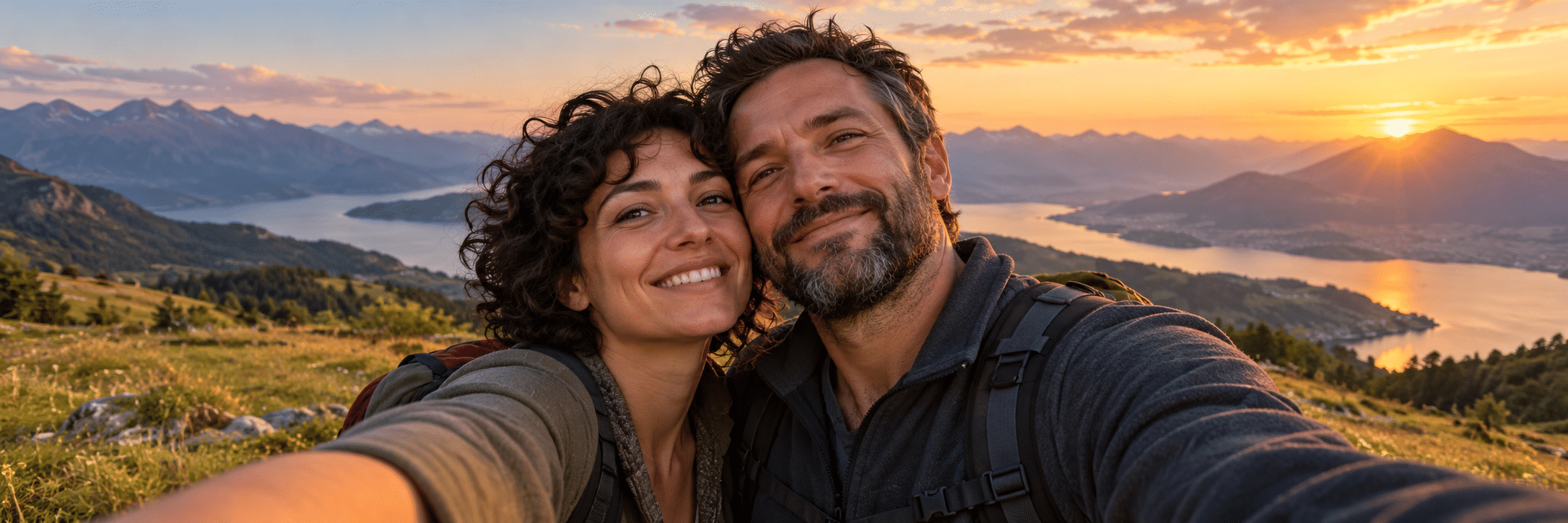
A visual introduction
Select an image for a closer look. Use the thumbnails, arrow keys or a swipe to compare examples. Zoom in to inspect details, or share the image that inspires you.

Creative toolbox · take this style further
Choose an input and a destination. Search sends your words to the chosen site; Copy & open puts them on your clipboard to paste there.
Create with AI
Turn your chosen input into an image prompt or a new creative direction.
ChatGPT
Copy your input and paste it into a ChatGPT conversation or image request.
Copy & open ChatGPT (new tab)Claude · Anthropic
Develop an image prompt or explore the style in a new Claude conversation.
Copy & open Claude · Anthropic (new tab)Midjourney
Paste your input into the Imagine bar on the Create page.
Copy & open Midjourney (new tab)Adobe Firefly
Copy your input, open Firefly, and paste it into the prompt field.
Copy & open Adobe Firefly (new tab)Leonardo.Ai
Copy your input, open Leonardo, and paste it into the generation field.
Copy & open Leonardo.Ai (new tab)Image search
Find visual references. Short, concrete keywords usually work best.
Lexica
Search AI images and prompts using your selected input.
Search with this input Lexica (new tab)Pexels
Search the photo and video library. Short keywords often work best.
Search with this input Pexels (new tab)Pixabay
Search photos, illustrations and other images.
Search with this input Pixabay (new tab)Unsplash
Search photographs using the style name or your own keywords.
Search with this input Unsplash (new tab)Wikimedia Commons
Search photographs, artworks and historical images. Check each file for its source and reuse terms.
Search with this input Wikimedia Commons (new tab)Art & research
Explore artists, collections and the ideas behind a style.
Wikipedia
Search for background reading. A style may not have its own article.
Search with this input Wikipedia (new tab)WikiArt
Copy your input into WikiArt’s search to explore artists and artworks.
Copy & open WikiArt (new tab)Europeana
Paste your keywords into the search to explore European museum, library and archive collections.
Copy & open Europeana (new tab)Inspiration
Discover portfolios and visual ideas from creative communities.
Instagram hashtags
Search a hashtag made from your input: spaces and punctuation are removed. Instagram may require sign-in.
Search with this input Instagram hashtags (new tab)ArtStation
Paste your input into artwork search for concept art, environments, characters and visual development.
Copy & open ArtStation (new tab)Behance
Paste your input into project search for illustration, design and visual storytelling.
Copy & open Behance (new tab)A closer look
A viewpoint close to the subject; direct or screen-directed gaze; an arm, reflection or framing choice that suggests self-capture; and a setting whose inclusion helps explain the moment. Colour, lighting, pose and finish can vary widely.
A way of making an image, not a cartoon style
The selfie belongs to photographic self-representation. It does not require exaggerated eyes, a busy patterned background, beauty retouching or a smiling expression. Nor must it be posted online to count as a photograph made of oneself. Sharing is a frequent use, but making and publishing are separate decisions.
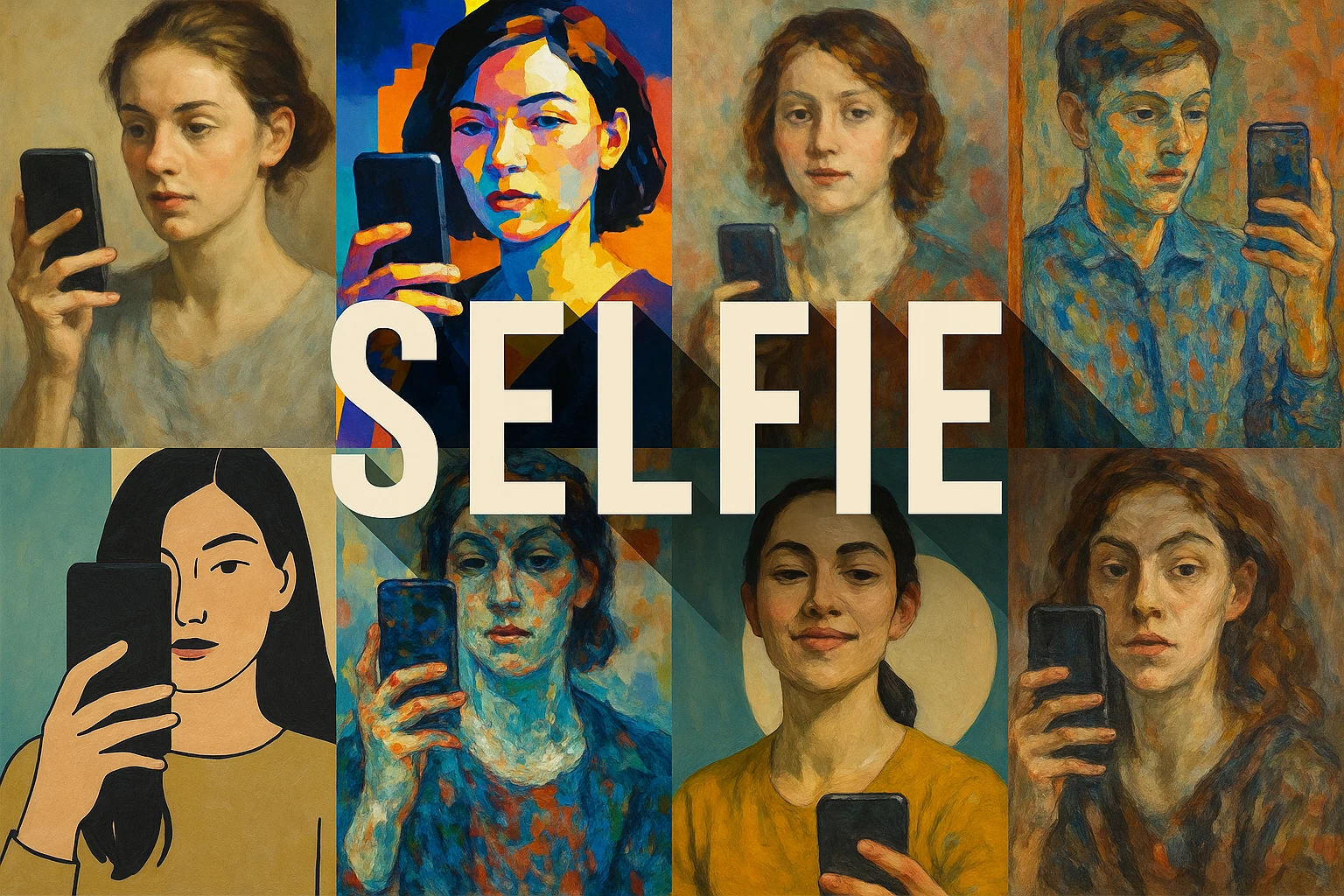
Self-portrait is the broader category: an artist can represent themselves through painting, drawing, sculpture or photography. Calling every old self-portrait a selfie can obscure differences in medium and social context. An ordinary portrait made by somebody else is not automatically a selfie, even when its composition resembles one.
A history longer than the phone
The Library of Congress holds Robert Cornelius’s daguerreotype self-portrait from October or November 1839 and identifies it as the earliest extant American portrait photograph. It is a valuable early example of photographic self-representation. The familiar description “first selfie” is a retrospective comparison, not the name Cornelius used for a modern phone practice.
Getty’s discussion of selfies and self-portraits presents different interpretations of their relationship. Curator Arpad Kovacs considers their differing conditions of making and replacement; writer Alli Burness emphasizes the social conversation around a selfie. These perspectives help explain why the photograph’s use and audience matter alongside its appearance. Neither requires dismissing casual images as worthless or treating every selfie as a major artwork.
Choose the distance before the expression
A close camera makes nearby parts of the face more prominent relative to parts farther away. Changing the camera position changes those relationships. If the face feels exaggerated, try moving the camera farther away and composing more loosely, then consider a crop. A lens label or a filter does not undo the effect of the original viewpoint.
Keep the most important face away from the extreme edge of a wide group composition. Check whether one person is much closer to the camera than the others and whether that difference serves the picture. There is no universally correct flattering angle: the useful choice is the viewpoint that supports the expression, setting and intention.
Light gives the face its structure
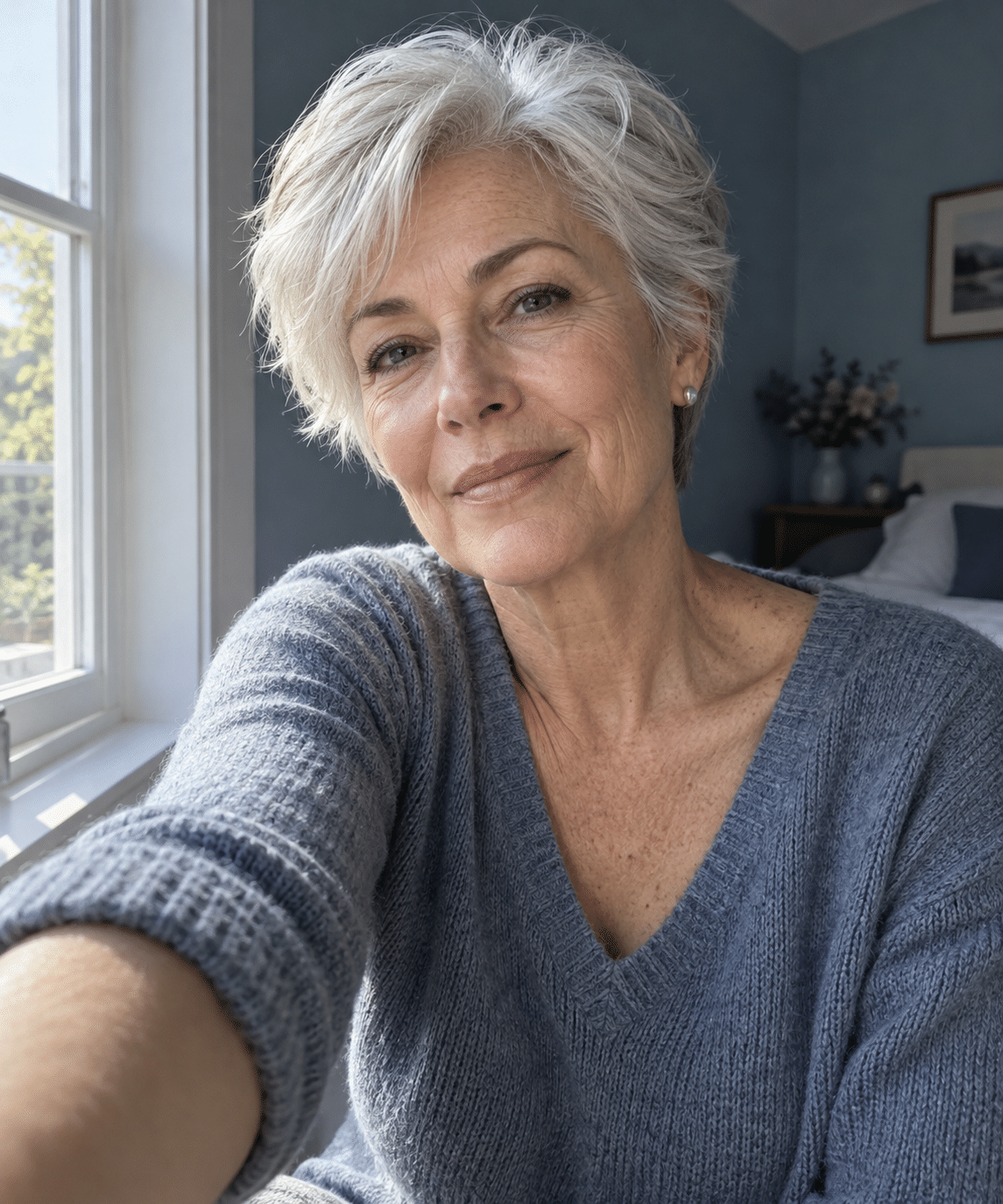
Begin with one clear source of light. Near a window, turn slightly and watch how the shadow changes across the cheek and under the nose. Outdoors, compare open shade with direct sunlight. One may describe the face softly; the other may produce a sharp, graphic pattern. Neither is inherently more honest or more artistic.
Look at the background brightness as well as the face. A bright window behind a dark head can overwhelm a delicate expression, while a plain wall can make a small gesture carry the image. When coloured lights are part of the subject, decide whether their effect on skin is intentional. Avoid correcting away the atmosphere you wanted to remember.
Make the setting do useful work
The National Portrait Gallery’s photographic-portrait guide connects location, lighting, pose, gaze, clothing and props with what a portrait communicates. Apply that idea selectively to a selfie. One object or a small piece of setting may say more than a crowded collection of clues.
A mirror portrait can show tools and a working space; an outdoor image can record weather and companionship; a quiet close view can concentrate on expression. Check the edges for accidental intrusions and confusing overlaps. Keep a background detail if it contributes to the story, and move or reframe if it merely competes with the subject.
Mirrors, timers and group photographs
A mirror changes the arrangement of camera, gaze and reflection. Decide whether the device is part of the composition or an obstruction. Look at the whole reflected image: a phone that hides the expression may still make sense in a picture about gesture, clothing or the act of photographing, but it should be a considered choice.
A timer or remote release allows a more distant self-portrait without an extended arm. Group selfies add another problem: several expressions must coexist within one small frame. Leave room for the people at the edges and choose a moment that works for the group. A staged pose can be playful and revealing; spontaneity is an effect to evaluate, not a guarantee of truth.
Editing and context
Adjust exposure, colour and crop with the intended use in mind. Retain the original when making substantial changes so that alternatives remain possible. An edited image can be expressive, but a heavily altered face or invented setting should not be presented as an untouched record when that distinction matters.
Avoid diagnosing someone’s personality from a selfie. A single image cannot establish narcissism, insecurity or self-esteem. Consider the situation, the intended audience and what the maker chose to show. For a shared group photograph, make sure the other participants are comfortable with the selected image and its use.
Reading the generated examples
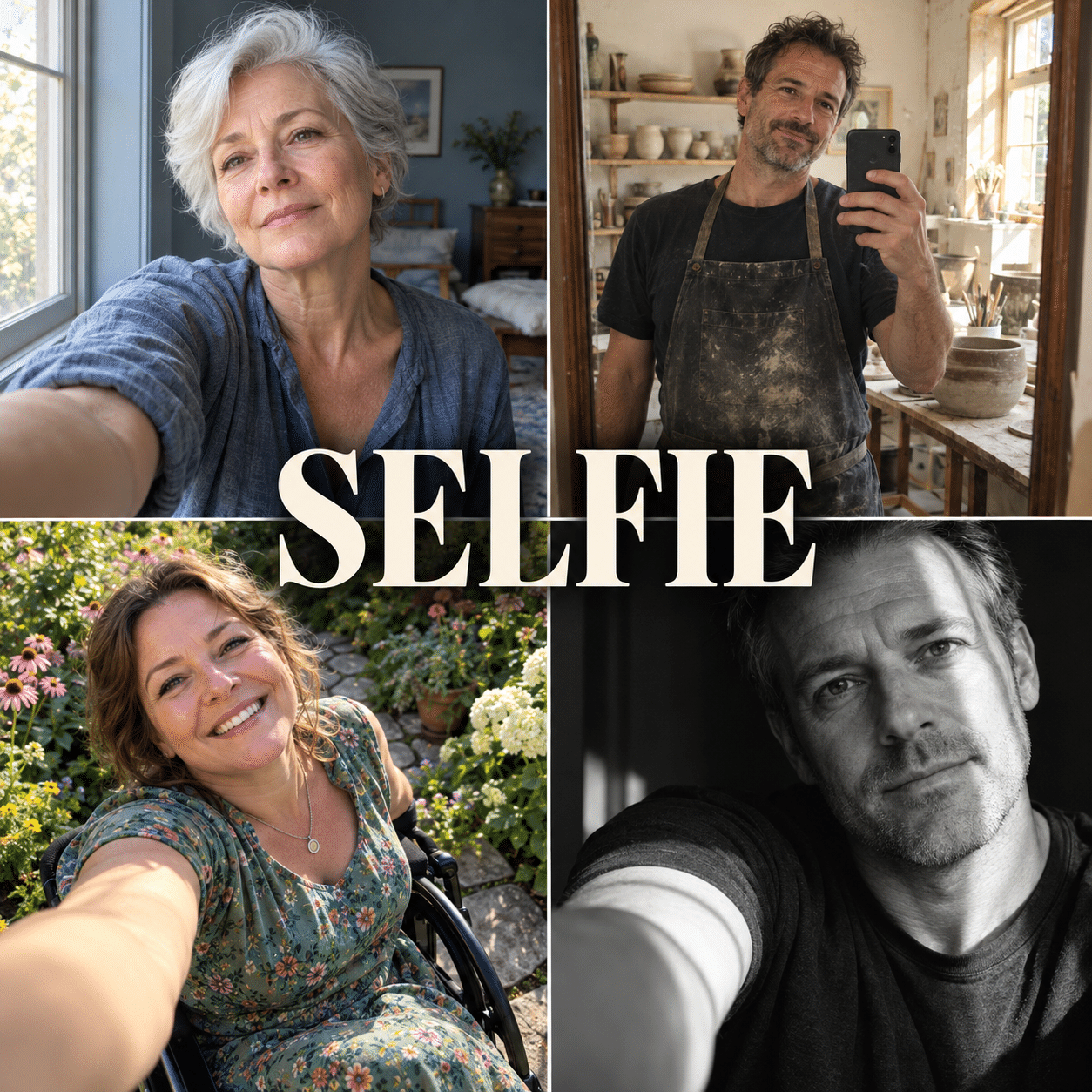
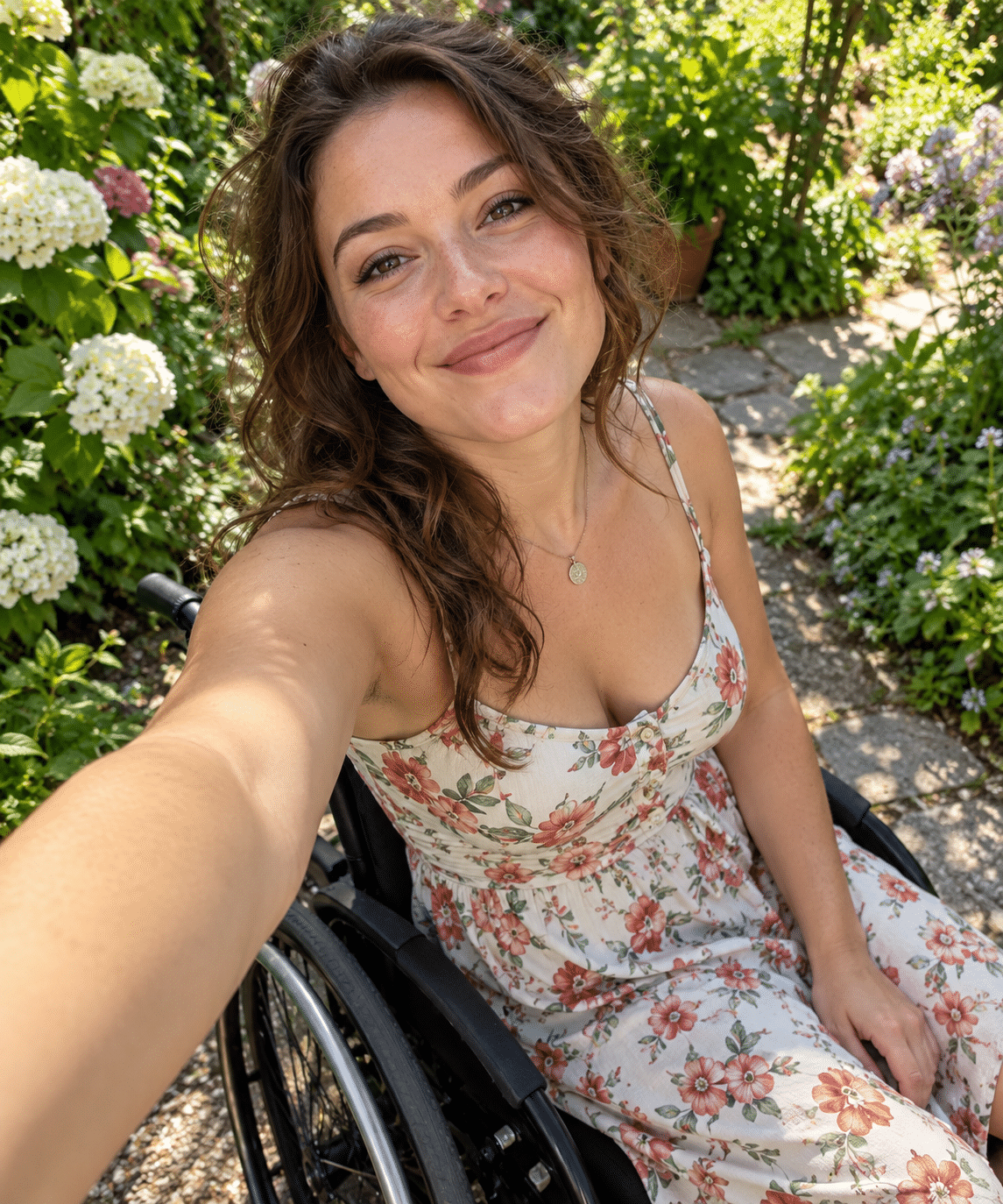
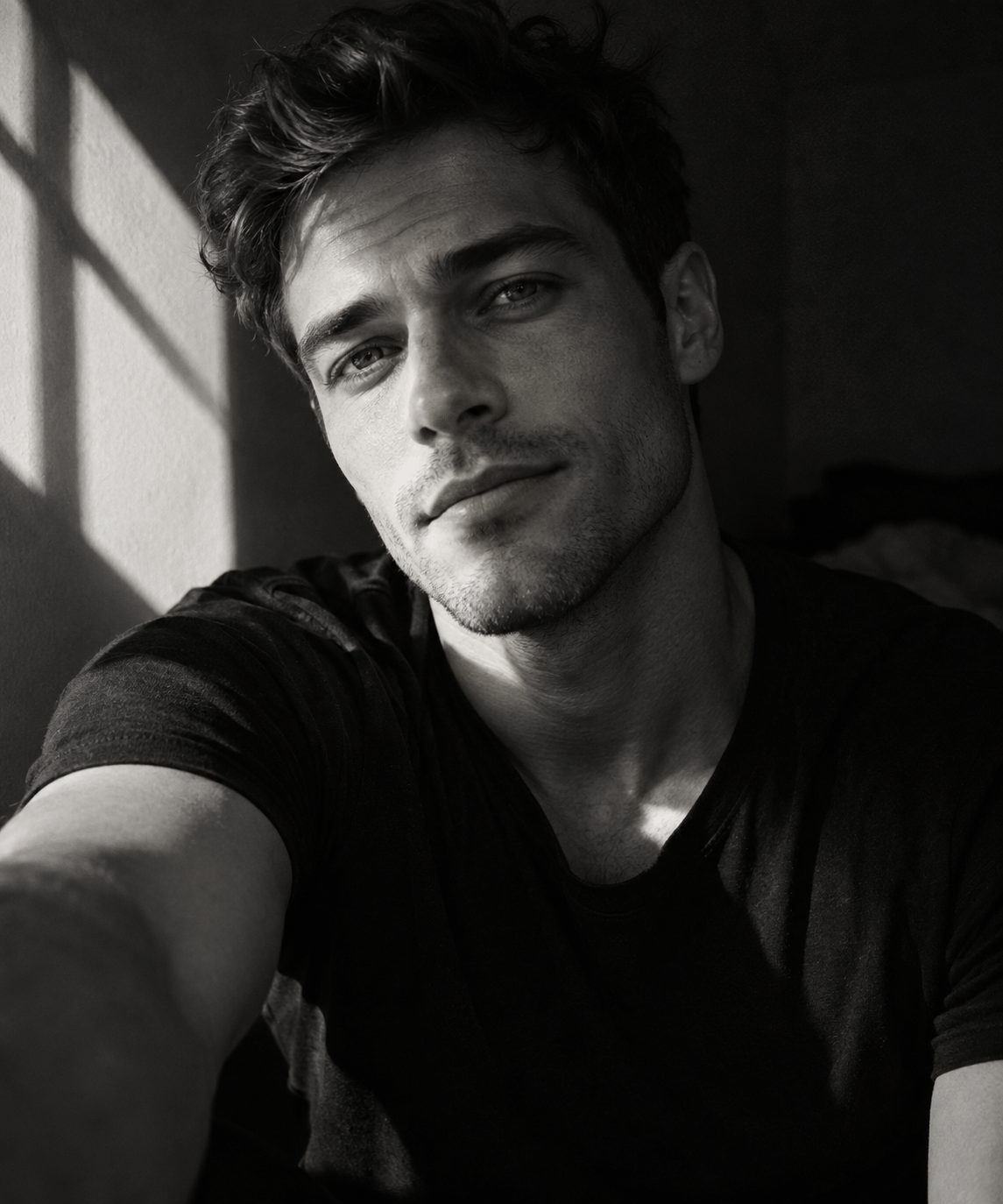
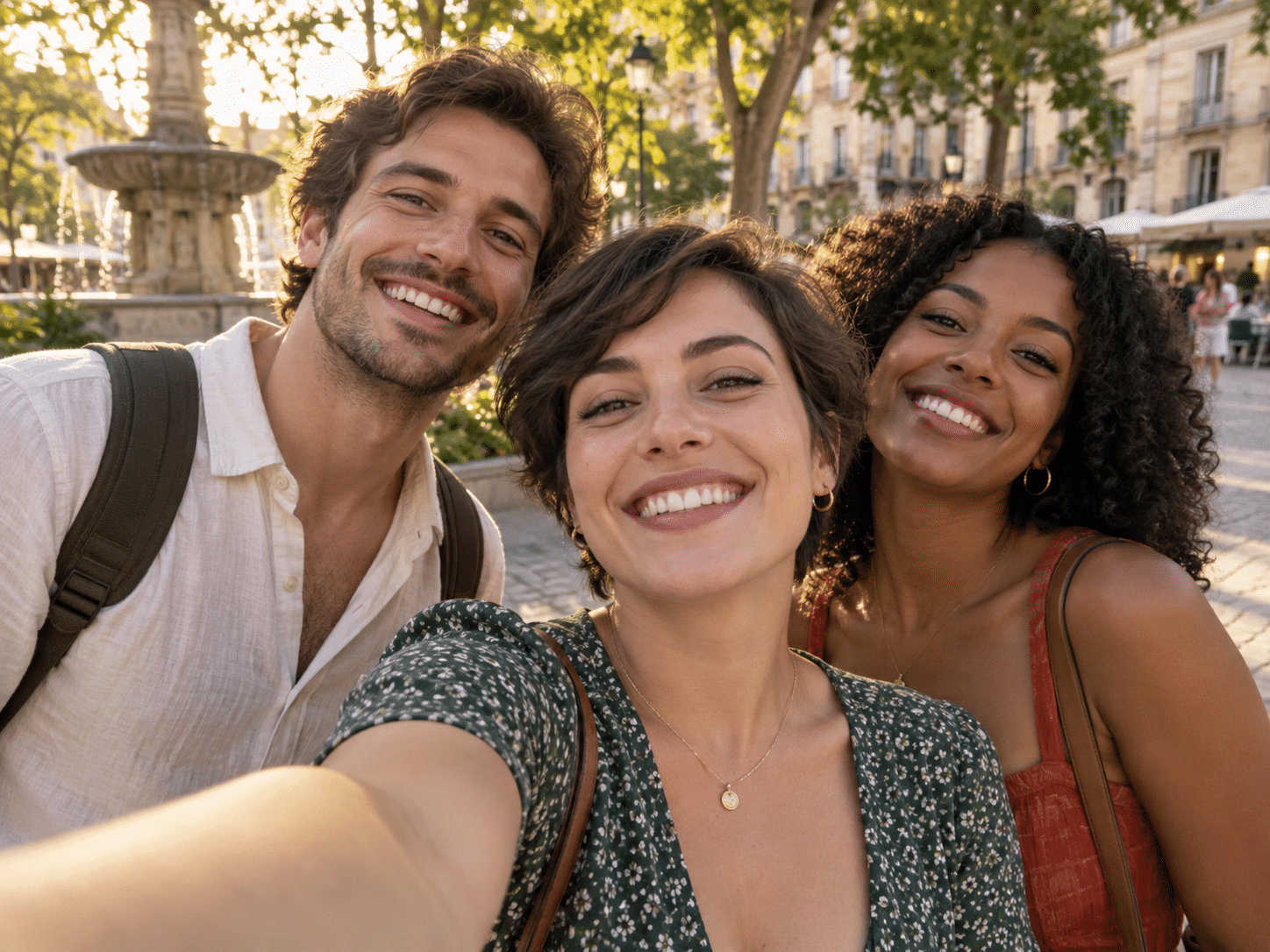
The new gallery contains AI-generated illustrations of selfie conventions, with fictional adults. They are not genuine self-photographs or documentary records of real people and events. The variety demonstrates how close viewpoint, mirror framing, environment, companionship and directional light can produce different kinds of image.
When generating an illustrative concept, describe the camera viewpoint explicitly. A third-person photograph of someone holding a phone is a picture of selfie-taking, not the selfie itself. Check hands, arm direction, reflections and the plausibility of the viewpoint. In a real photographic exercise, make several versions that change one choice at a time and select the image whose choices work together.
Positive editorial assessment — AI-authored
The selfie makes self-representation immediate and accessible. A small change in distance, light or context can turn an ordinary record into a precise observation of a moment. Its conversational quality can also carry humour and affection that a more formal portrait would lose.
Critical editorial assessment — AI-authored
Repeated poses and automatic filters can make very different lives look interchangeable. Technical polish may remove the particular detail that made the moment interesting. Strengthen the image through a meaningful setting or expression before adding effects, and resist treating engagement counts as a measure of its value.
Neutral editorial assessment — AI-authored
A selfie is a practice of photographic self-representation with many social and artistic uses. Evaluate its authorship, viewpoint, context and visual decisions separately. It can overlap with self-portraiture and documentary habits without becoming a single art movement or a reliable psychological test.
Pocket-sized facts
The maker and depicted person overlap in a selfie; resemblance to a selfie composition alone does not establish authorship.
The Library of Congress dates Cornelius’s early self-portrait to October or November 1839.
AI-generated fictional selfie-style illustrations are not documentary self-photographs.
A small poetic detour
Original words from the AOI studio.
Poetry
I held a little window out
and found the room behind my face:
the cup, the coat, the rain about
to leave its weather in the place.
No grand account of who I am,
no final version, framed and true—
just light, a moment, and a hand
that turned the looking back to you.
The prompt workshop
Original creative exercises. These prompts create new illustrations, not documentary evidence.
Quiet window light
Create an AI-generated illustration of selfie conventions with a fictional adult woman in her sixties beside a window. View from the phone camera at arm’s length, her forearm entering one lower corner, natural expression and skin texture, soft side light, simple blue-grey background. No visible phone, interface, text or beauty-filter smoothing; not a documentary photograph.
A working-space reflection
Create an original AI-generated mirror-selfie concept of a fictional adult ceramic artist in a plain apron in a small studio. One coherent reflection, one unbranded phone held below eye level, face visible, a few ceramic tools in the background, warm natural light. Plausible hands and mirror geometry, no labels or fabricated documentary claims.
The shared moment
Create an original AI-generated wide group-selfie concept with three fictional adult friends standing together in a leafy public square. Camera viewpoint at arm’s length, one forearm enters the lower edge, all faces comfortably inside the frame, distinct natural expressions, late afternoon light and a readable sense of place. No third-person photographer, interface, logos or text.
Your next inspiration
Discover another art style
Follow a visual thread to the next subject.


Instagram Visuals: Designing for a Small Screen and a Larger Story
Consider the platform context through which images are presented and shared.
A smile from the studio
Jokes
I took one spontaneous selfie. Then I carefully selected it from the other twenty-seven spontaneous selfies.
Sources and further exploration
Getty: selfie and self-portrait — contrasting curatorial and social interpretations