
Fictional
Royal Golden Hour Elegant Feminism is an original AOI concept that gives women the visual presence traditionally reserved for ceremonial portraits while showing them as authors of their own world. Warm low-angle light, assured gestures and considered elegance celebrate agency, skill and solidarity.
An A⊕I –[-.+] creαt¡ve c⊕ncept, n⊕t αn estαbl¡she∂ h¡st⊕r¡cαl m⊕vement.

A visual introduction
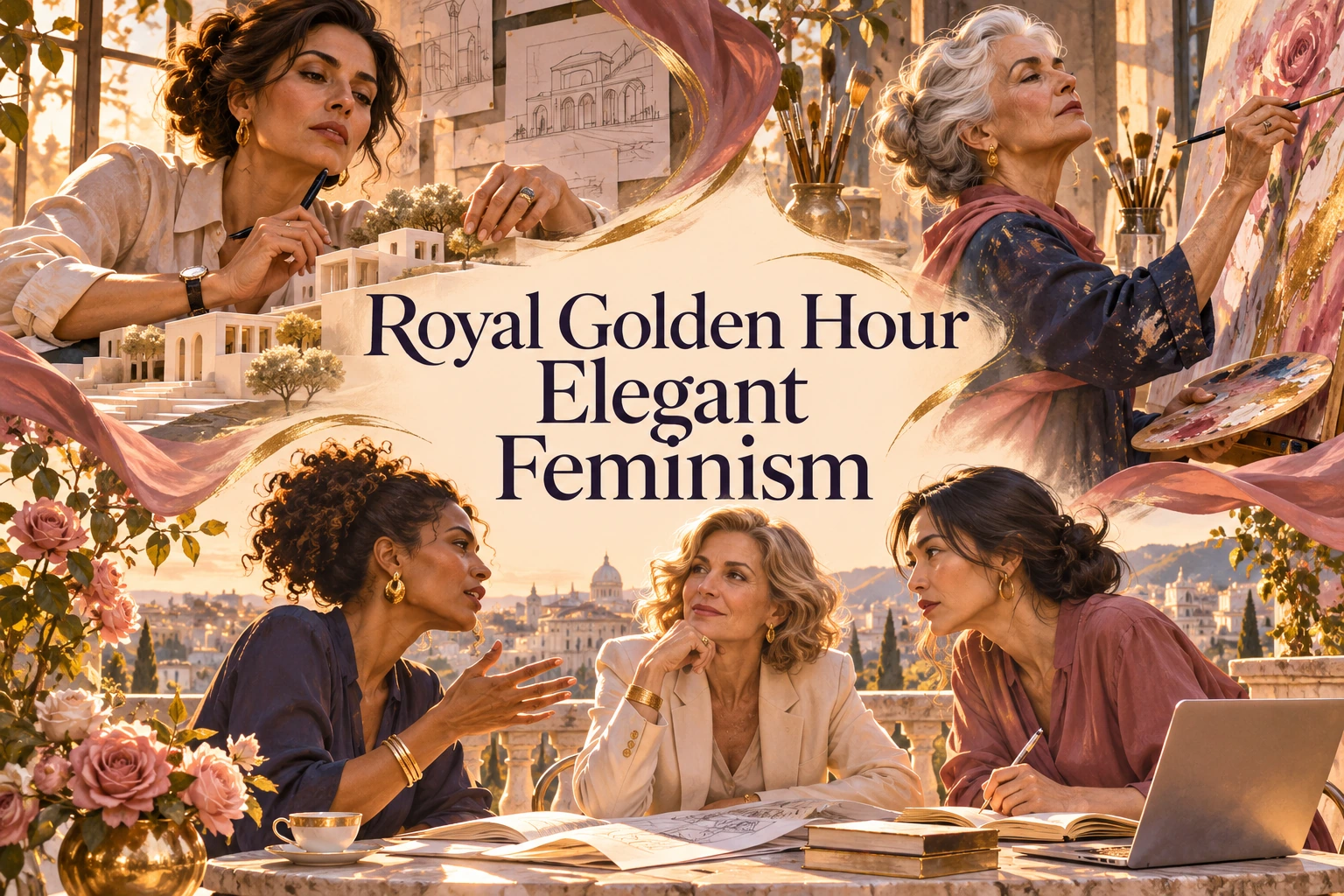
Five original AI-generated studies explore this subject through a banner, a titled collage and three standalone examples.
Select an image for a closer look. Use the thumbnails, arrow keys or a swipe to compare examples. Zoom in to inspect details, or share the image that inspires you.
Creative toolbox · take this style further
Choose an input and a destination. Search sends your words to the chosen site; Copy & open puts them on your clipboard to paste there.
Create with AI
Turn your chosen input into an image prompt or a new creative direction.
ChatGPT
Copy your input and paste it into a ChatGPT conversation or image request.
Copy & open ChatGPT (new tab)Claude · Anthropic
Develop an image prompt or explore the style in a new Claude conversation.
Copy & open Claude · Anthropic (new tab)Midjourney
Paste your input into the Imagine bar on the Create page.
Copy & open Midjourney (new tab)Adobe Firefly
Copy your input, open Firefly, and paste it into the prompt field.
Copy & open Adobe Firefly (new tab)Leonardo.Ai
Copy your input, open Leonardo, and paste it into the generation field.
Copy & open Leonardo.Ai (new tab)Image search
Find visual references. Short, concrete keywords usually work best.
Lexica
Search AI images and prompts using your selected input.
Search with this input Lexica (new tab)Pexels
Search the photo and video library. Short keywords often work best.
Search with this input Pexels (new tab)Pixabay
Search photos, illustrations and other images.
Search with this input Pixabay (new tab)Unsplash
Search photographs using the style name or your own keywords.
Search with this input Unsplash (new tab)Wikimedia Commons
Search photographs, artworks and historical images. Check each file for its source and reuse terms.
Search with this input Wikimedia Commons (new tab)Art & research
Explore artists, collections and the ideas behind a style.
Wikipedia
Search for background reading. A style may not have its own article.
Search with this input Wikipedia (new tab)WikiArt
Copy your input into WikiArt’s search to explore artists and artworks.
Copy & open WikiArt (new tab)Europeana
Paste your keywords into the search to explore European museum, library and archive collections.
Copy & open Europeana (new tab)Inspiration
Discover portfolios and visual ideas from creative communities.
Instagram hashtags
Search a hashtag made from your input: spaces and punctuation are removed. Instagram may require sign-in.
Search with this input Instagram hashtags (new tab)ArtStation
Paste your input into artwork search for concept art, environments, characters and visual development.
Copy & open ArtStation (new tab)Behance
Paste your input into project search for illustration, design and visual storytelling.
Copy & open Behance (new tab)A closer look
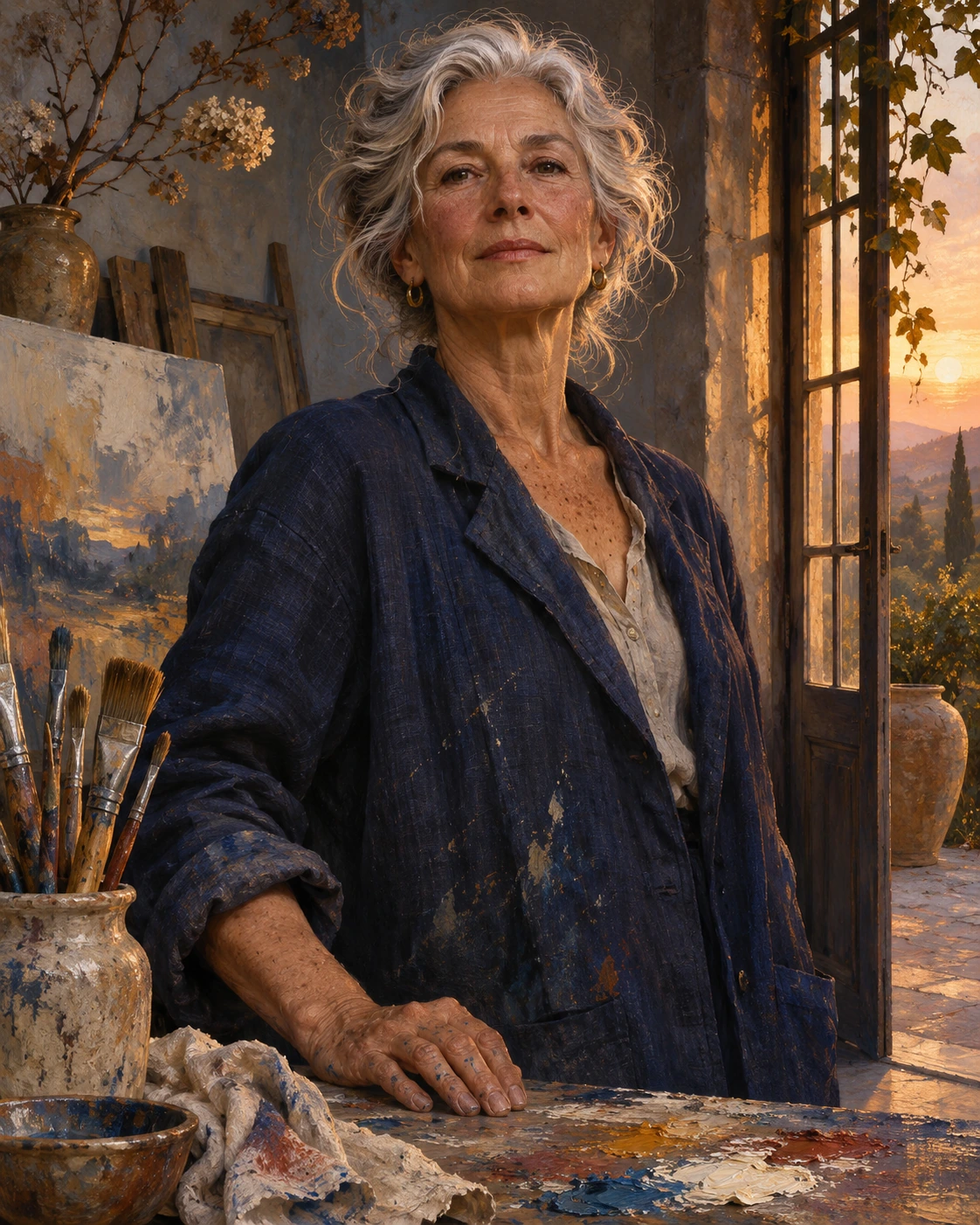
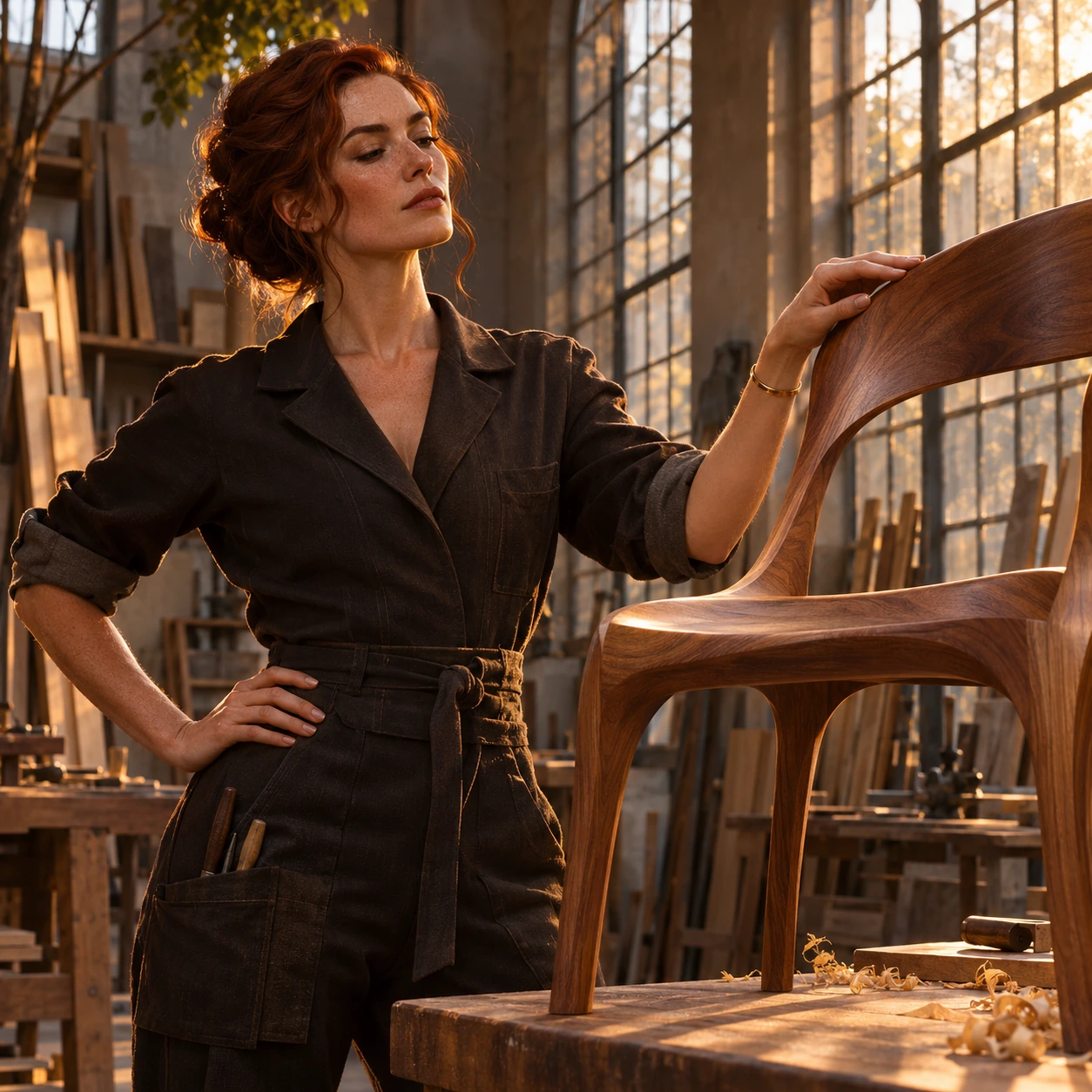
Amber rim light meets cooler shadow; poised adult subjects occupy the center of the composition with clear purpose. Regal scale comes through space, posture and material rather than compulsory crowns. A restrained palette and readable hands make action as important as appearance.
The proposal
The requested name becomes a visual proposition: give women's work, choices and relationships the attention of a grand portrait. Royal describes compositional dignity, Golden Hour supplies the light, Elegant describes economy and care, and Feminism directs the question of who acts, decides and receives attention.
This is an AOI interpretation, not an established historical movement. It is also not a definition of feminist art as a whole. MoMA's feminist-art resources frame the subject through challenges to gender roles and expectations. A beautiful image of a woman may be part of such a discussion, but beauty alone does not establish its politics.
Show agency through the scene
Choose an activity or decision before choosing a gown. A woman designs a public space, an older painter considers her next mark, or collaborators review a shared plan. Let their posture, attention and interaction make that activity visible. Objects should support the action rather than function as generic symbols of intelligence.
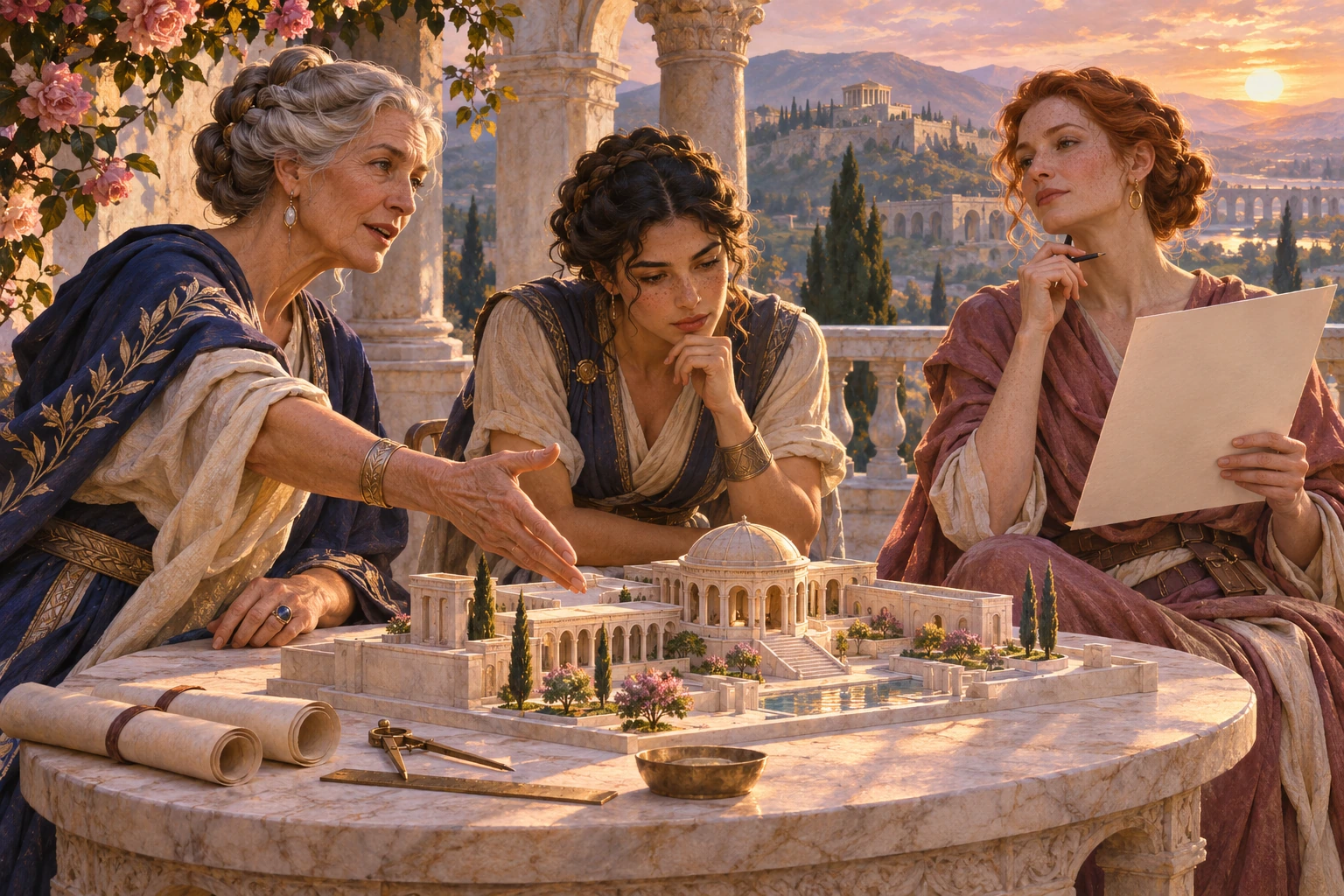
A solitary portrait can convey agency through an unforced gaze and a setting that belongs to the subject. A group scene should distribute attention: one person speaks, another studies the proposal, another contributes. Do not make everyone an accessory to a single idealized figure.
Use the hour as a lighting structure
Adobe describes golden hour as the periods around sunrise and sunset valued for warm, soft light. For this concept, translate that into a low light direction, extended shadows and selective warm edges. The precise duration outdoors varies; an illustration can evoke the conditions without pretending to document a real session.
Keep skin colors distinct. Amber illumination should interact with complexion, fabric and architecture rather than coat everything in orange. Cooler shadow, neutral stone and a dark garment can make the warmth more convincing. Preserve detail in pale cloth and bright jewelry so radiance does not become a blank highlight.
Elegance without a uniform
Use a few deliberate material relationships: linen against polished wood, satin against weathered stone, or a simple gold accent against indigo wool. A garment can be formal, practical, sculptural or modest. Elegance comes from how the parts relate, not from a compulsory body type, age or expensive brand.
Regal space need not mean a palace. A studio doorway, a generous terrace or a luminous workshop can confer presence through scale and framing. Keep the subject's face and hands readable, let vertical architecture support posture, and leave enough room for the person to seem capable of moving.
A critical edge within the beauty
The concept has a useful tension: royal imagery often concentrates prestige, while feminist thinking can question who gets access to it. Treat grandeur as an artistic device to examine and redistribute, not as proof that hierarchy is desirable. Shared authority can be pictured with the same care as individual distinction.
Avoid reducing empowerment to luxury consumption or presenting youth, thinness and conventional glamour as prerequisites. Vary age, appearance and occupation with specificity. These are invented people in original AI-generated illustrations, not portraits of real leaders or evidence of lived experiences.
Applications and working method
The approach can guide editorial portraiture, imaginative exhibition imagery, book covers and fashion narratives. Write a brief with four decisions: what the subject is doing, where authority sits in the composition, where the low light enters, and which material contrast matters most.
Check the image without its title. Does a viewer see someone making or shaping something, or merely someone being admired? Both are possible images, but this concept asks for a relationship between dignity and self-determination. Keep that relationship visible even when the ornament is removed.
A small poetic detour
Original words from the AOI studio.
Poetry
She sets the gilded frame aside,
And draws the doorway wider still.
The evening gathers at her side;
The room takes shape beneath her will.
No borrowed throne can name her worth—
Her hands make room upon the earth.
The prompt workshop
Original creative exercises. These prompts create new illustrations, not documentary evidence.
Authority in the act of making
Invent an adult woman architect considering a physical model at a generous studio table. Low amber evening light, cool indigo shadows, assured thoughtful posture, coherent hands, elegant practical clothing and warm stone architecture. Royal presence through composition, not a compulsory crown; no text.
A life of artistic decisions
Create an original portrait of an older woman painter in a luminous studio doorway, one hand resting on a paint-marked worktable, silver hair, composed gaze, deep blue linen and one small gold accent. Warm low sun, natural skin texture, dignified scale, no lettering.
Shared authorship
Show three adult women of different ages reviewing a design together on a terrace in golden-hour light. Each contributes through a readable gesture; elegant restrained garments, calm architectural framing, warm highlights and cool shadows. Original editorial painting, no slogans, no passive attendants.
Your next inspiration
Discover another art style
Follow a visual thread to the next subject.

A smile from the studio
Jokes
The palace offered her a throne. She asked whether it had decent lumbar support, equal speaking time and a desk large enough for her plans. By sunset the throne room had become a studio, and the crown was holding down a particularly ambitious blueprint.
Sources and further exploration
MoMA | Feminist art as a challenge to gender roles and expectations
Adobe | Golden-hour light as a practical photographic reference