
Named AI-reference aesthetic · atmospheric linework and solitary scenes
Ravencast builds a story from the distance between a small figure and a large environment. Fine lines, layered blue-gray space and a few decisive shadows make stillness feel charged with possibility.
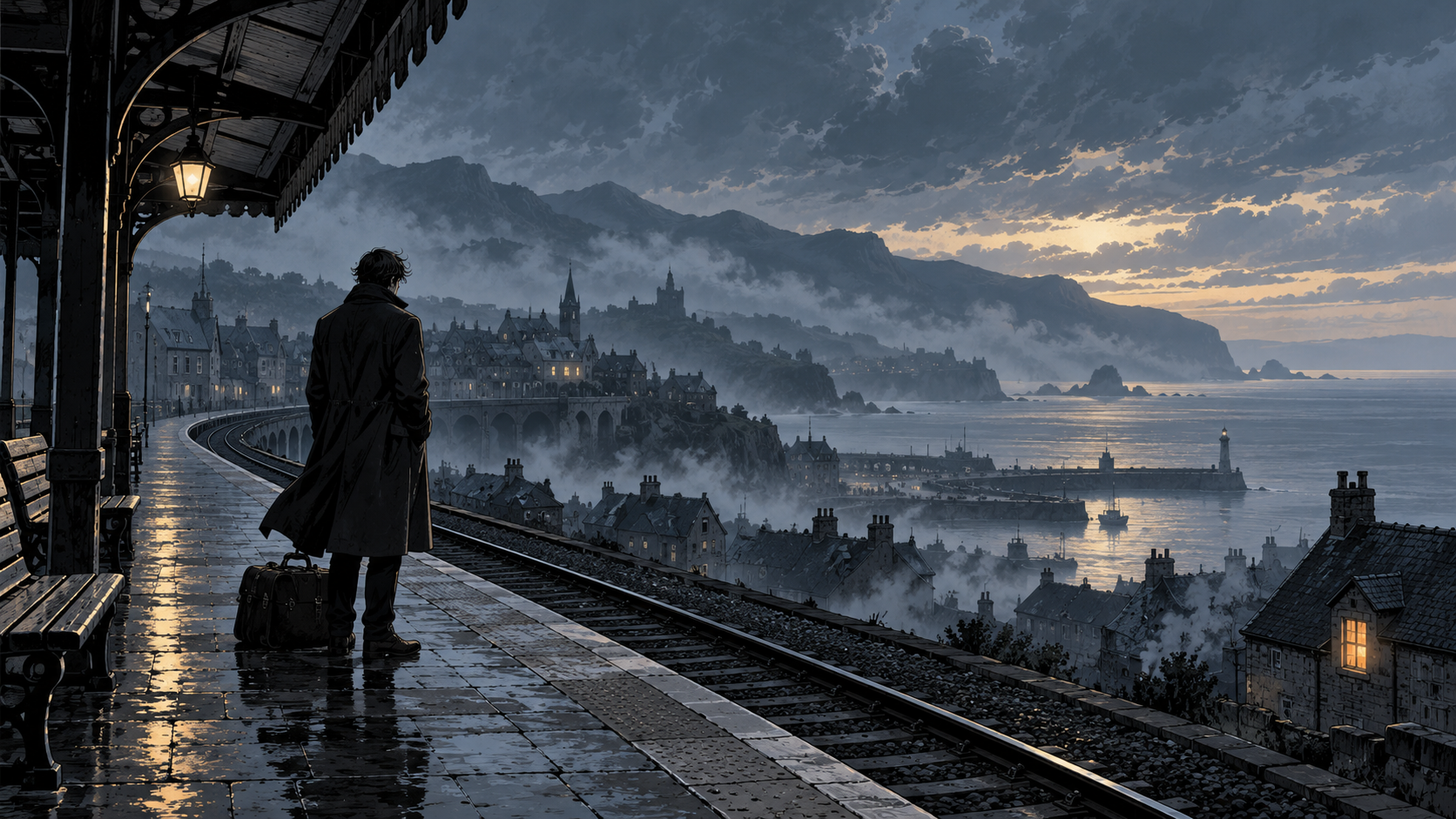
A visual introduction
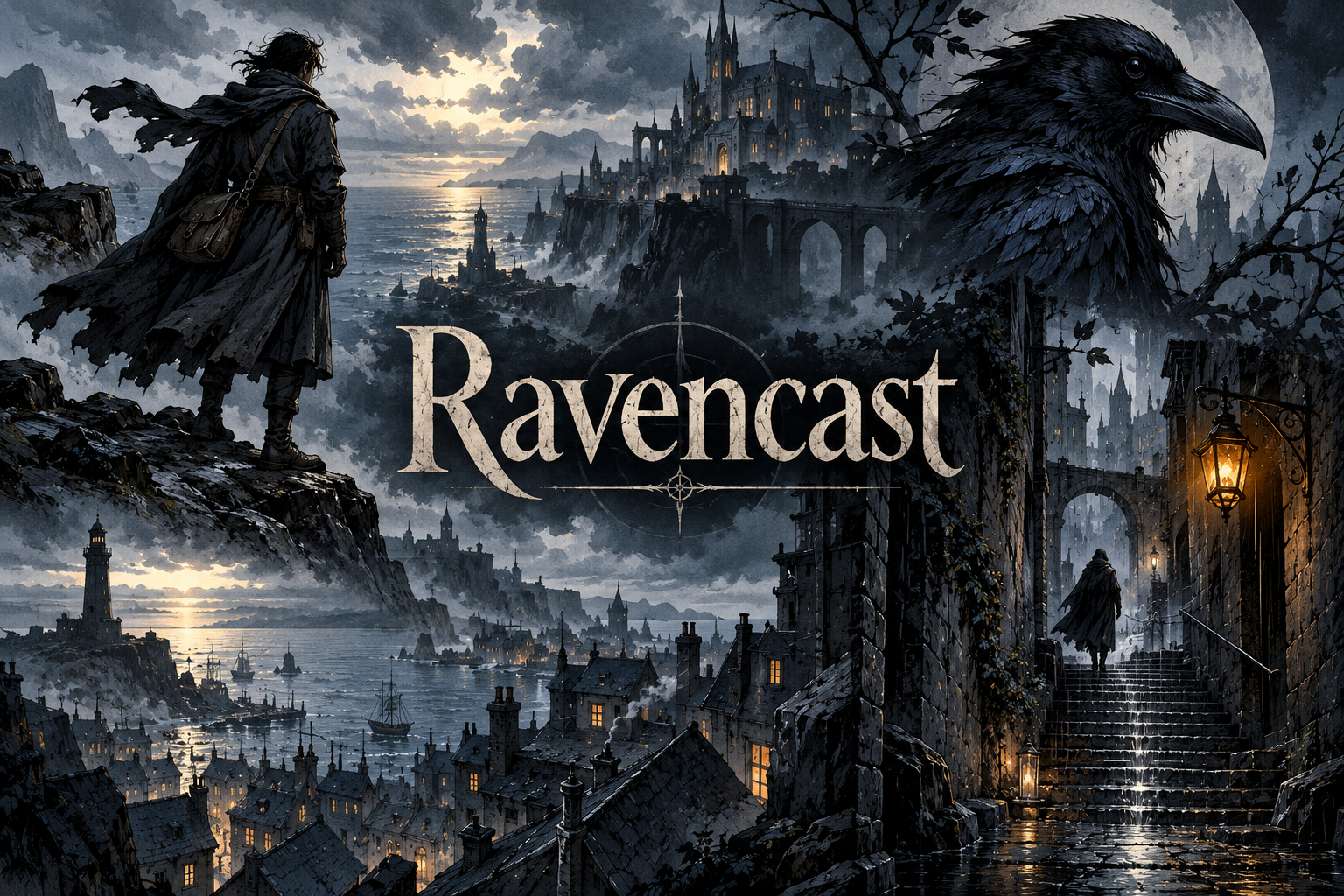
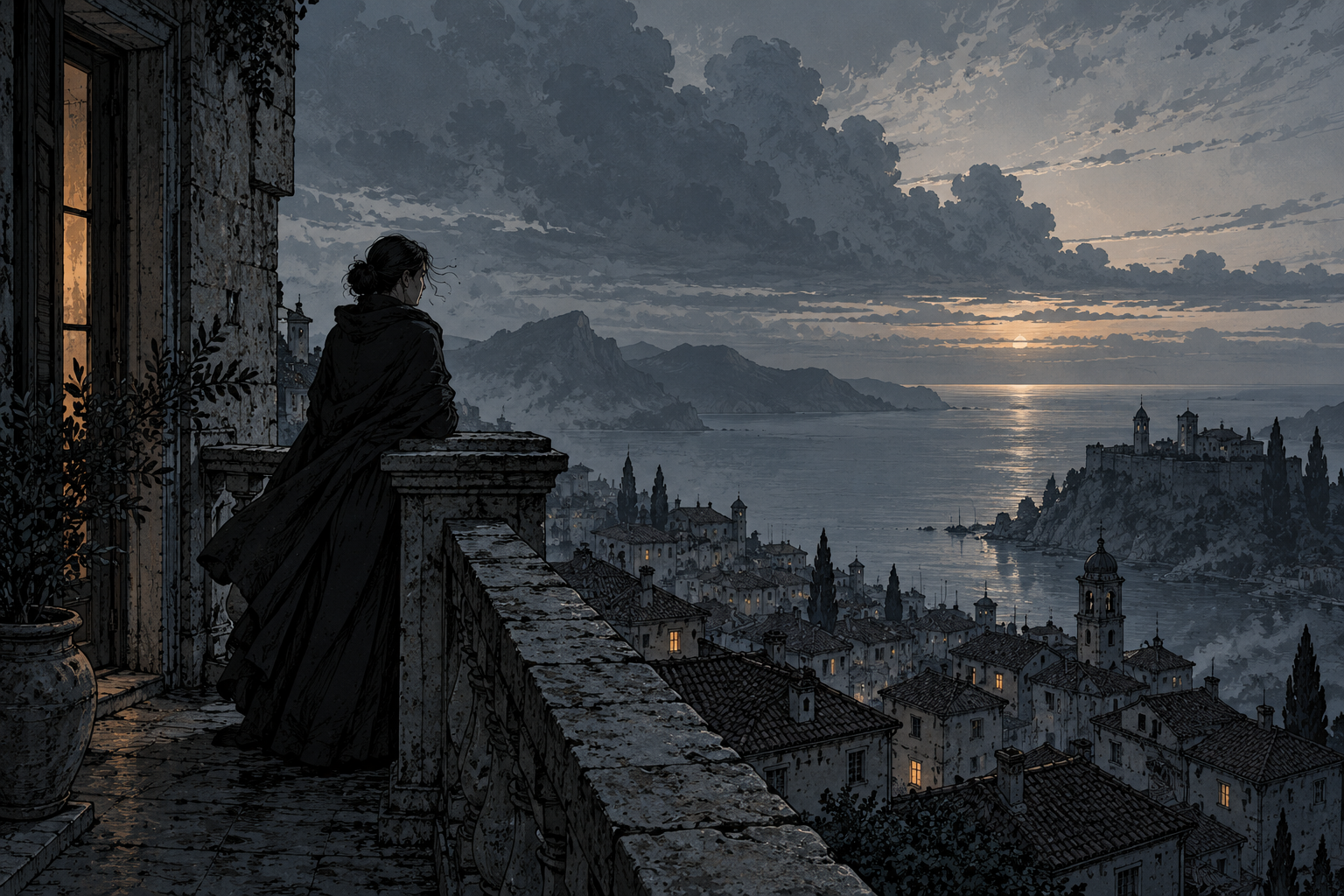
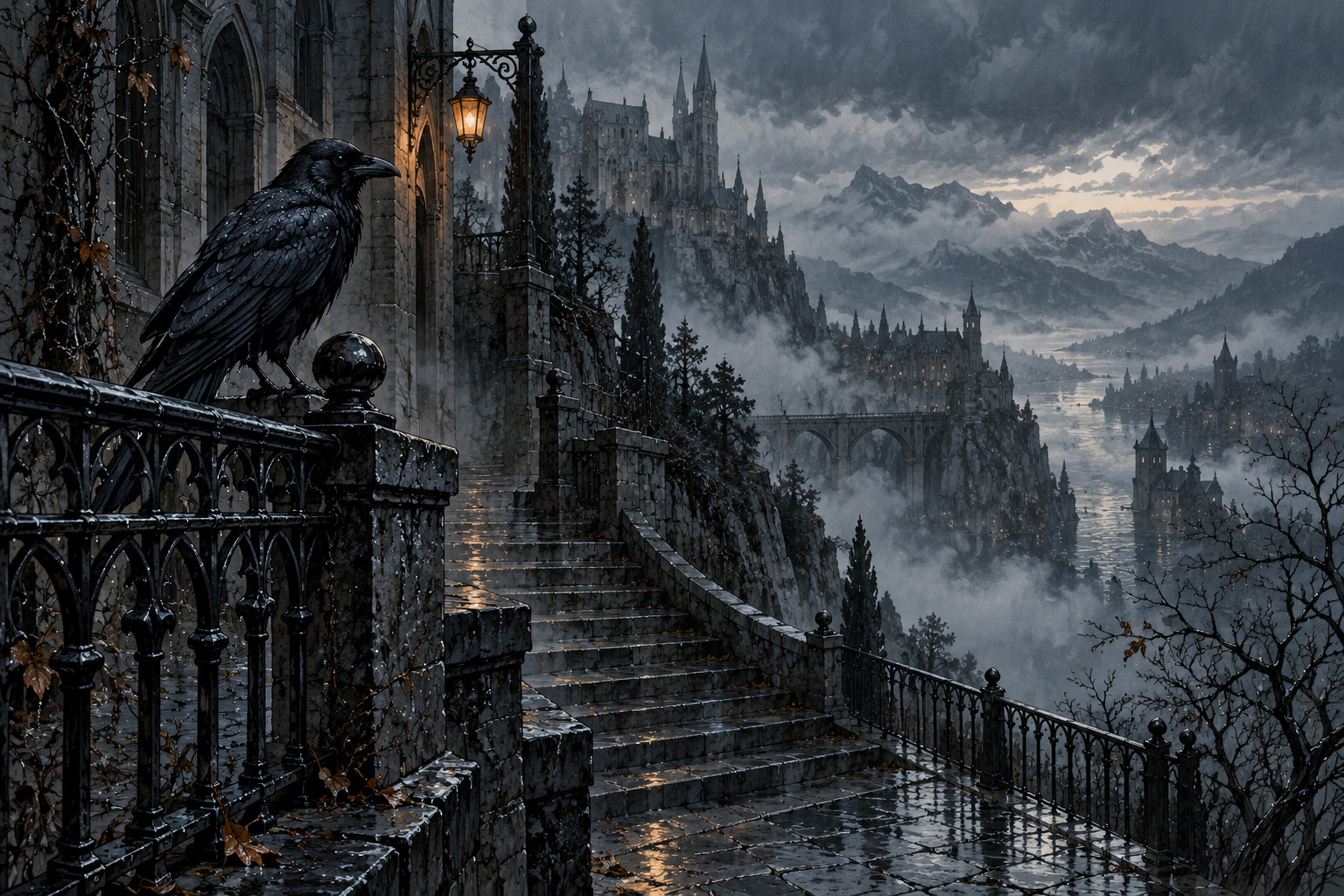
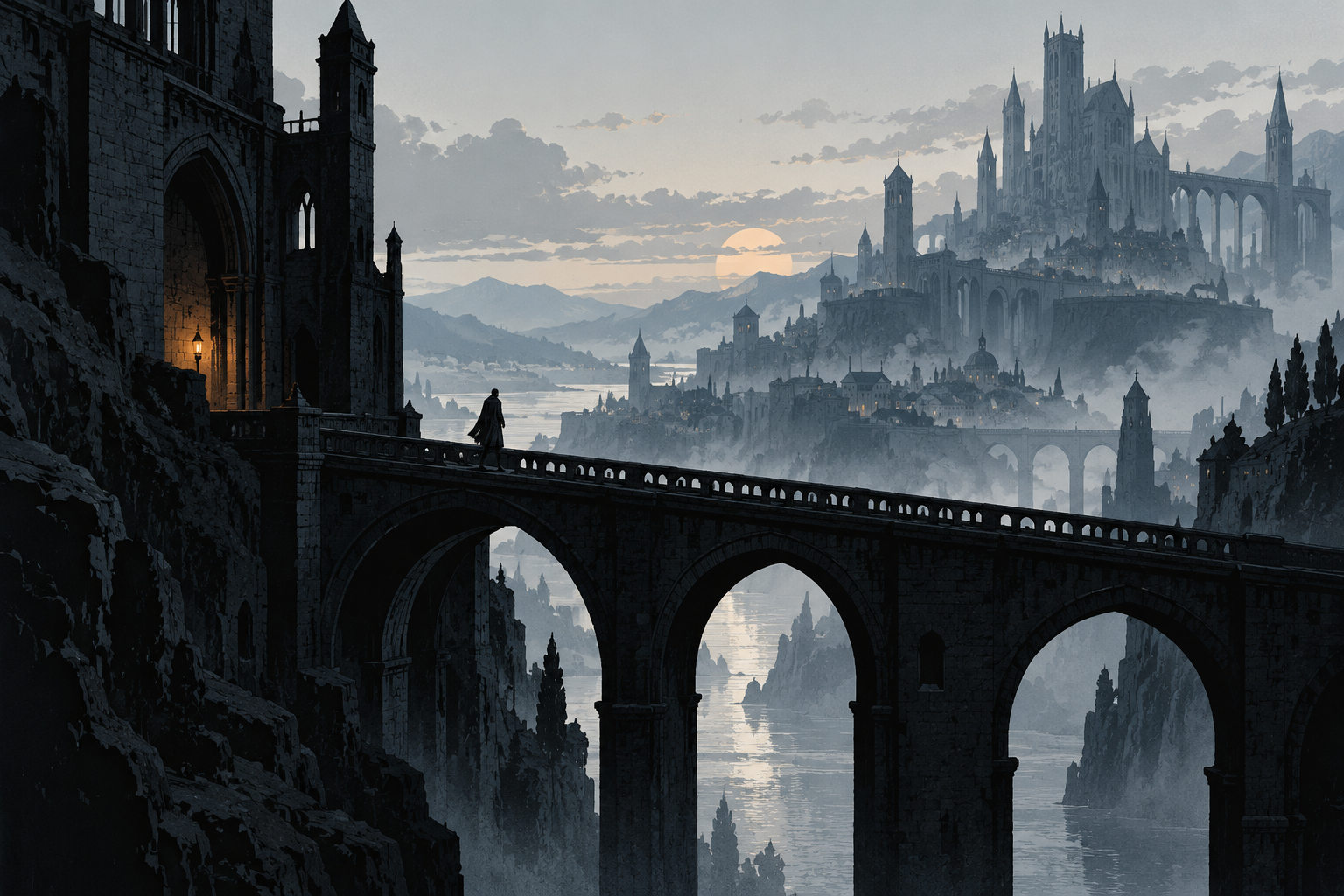
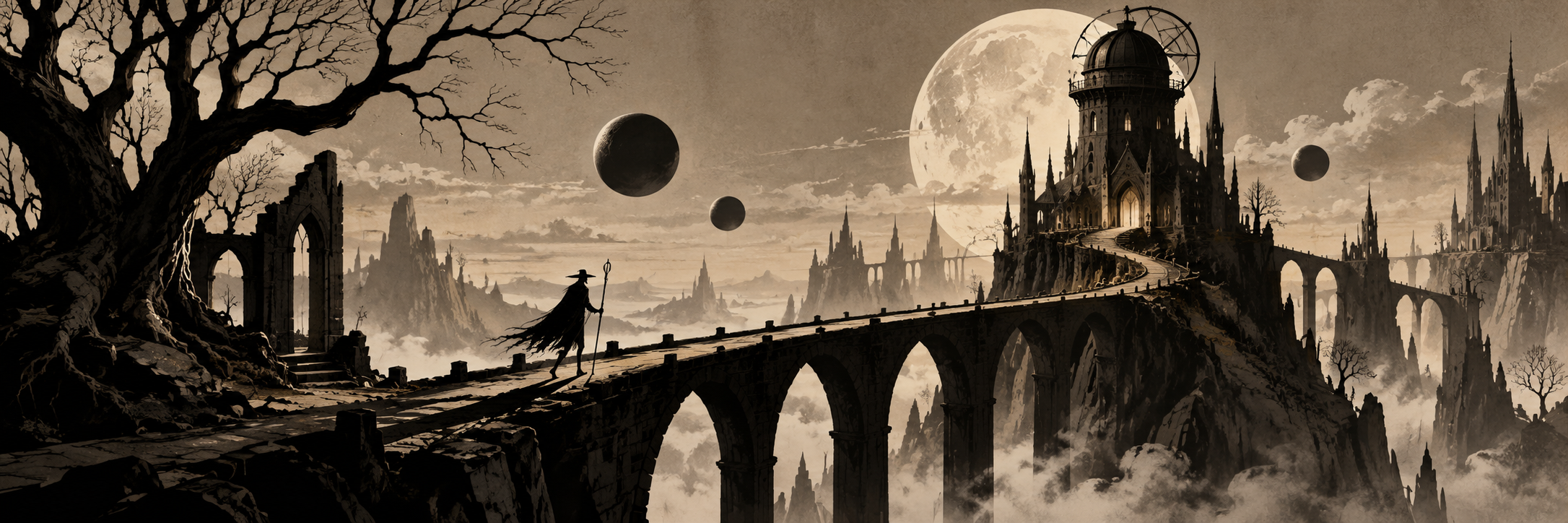
Five original AI-generated AOI interpretations: a dedicated banner, a centrally titled collage and three standalone studies. These are new illustrations, not historical objects or works by the referenced artist.
Select an image for a closer look. Use the thumbnails, arrow keys or a swipe to compare examples. Zoom in to inspect details, or share the image that inspires you.
Creative toolbox · take this style further
Choose an input and a destination. Search sends your words to the chosen site; Copy & open puts them on your clipboard to paste there.
Create with AI
Turn your chosen input into an image prompt or a new creative direction.
ChatGPT
Copy your input and paste it into a ChatGPT conversation or image request.
Copy & open ChatGPT (new tab)Claude · Anthropic
Develop an image prompt or explore the style in a new Claude conversation.
Copy & open Claude · Anthropic (new tab)Midjourney
Paste your input into the Imagine bar on the Create page.
Copy & open Midjourney (new tab)Adobe Firefly
Copy your input, open Firefly, and paste it into the prompt field.
Copy & open Adobe Firefly (new tab)Leonardo.Ai
Copy your input, open Leonardo, and paste it into the generation field.
Copy & open Leonardo.Ai (new tab)Image search
Find visual references. Short, concrete keywords usually work best.
Lexica
Search AI images and prompts using your selected input.
Search with this input Lexica (new tab)Pexels
Search the photo and video library. Short keywords often work best.
Search with this input Pexels (new tab)Pixabay
Search photos, illustrations and other images.
Search with this input Pixabay (new tab)Unsplash
Search photographs using the style name or your own keywords.
Search with this input Unsplash (new tab)Wikimedia Commons
Search photographs, artworks and historical images. Check each file for its source and reuse terms.
Search with this input Wikimedia Commons (new tab)Art & research
Explore artists, collections and the ideas behind a style.
Wikipedia
Search for background reading. A style may not have its own article.
Search with this input Wikipedia (new tab)WikiArt
Copy your input into WikiArt’s search to explore artists and artworks.
Copy & open WikiArt (new tab)Europeana
Paste your keywords into the search to explore European museum, library and archive collections.
Copy & open Europeana (new tab)Inspiration
Discover portfolios and visual ideas from creative communities.
Instagram hashtags
Search a hashtag made from your input: spaces and punctuation are removed. Instagram may require sign-in.
Search with this input Instagram hashtags (new tab)ArtStation
Paste your input into artwork search for concept art, environments, characters and visual development.
Copy & open ArtStation (new tab)Behance
Paste your input into project search for illustration, design and visual storytelling.
Copy & open Behance (new tab)A closer look
Restrained blues and charcoal organize rooftops, bridges, stairs and expansive skies. A small warm accent can locate attention without dissolving the image's cool, melancholy atmosphere.
A reference name, interpreted visibly
The supplied Midlibrary entry uses Ravencast for a style-reference aesthetic. Its current observations describe detailed outlines, graphic shadows and atmospheric narrative scenes in a subdued blue-gray range. This is a model-reference label, not evidence of a historical artistic movement.
AOI develops that cue into original scene design. A raven may appear, but the name does not require one. The more useful principle is a solitary focal presence within layered space. Describe that relationship explicitly when prompting, since a name or model code alone does not guarantee stable results across systems and versions.
Give solitude a spatial measure
Place a small figure where an architectural line changes direction: the end of a platform, the turn of a stair, or the edge of a balcony. The surrounding space should explain how far the figure is from shelter, movement or another person. Empty area becomes a narrative element rather than unused background.
Choose one visual question. Is the traveler arriving, waiting or looking back? You do not need to answer it, but the pose and setting should support the same possibility. Avoid a collection of unrelated ominous objects that creates atmosphere without any coherent situation.
Separate the planes before adding detail
Use dark foreground structures, a middle-distance subject and a paler distant environment. Fine outlines can describe tiles and railings, while broader shadows keep the architecture legible. Reduce both contrast and detail with distance. If every roof receives the same sharp black edge, the city becomes a flat pattern.
A blue-gray palette still needs variation in value and temperature. Try a cooler sky, a slightly warmer wall and one amber window. Keep that accent small enough to feel discovered. Fog should clarify the depth structure, not conceal every awkward intersection or substitute for composition.
Make a scene worth returning to
The balcony, rail and bridge studies offer three different relationships between near and far. The raven provides a close focal silhouette; the city offers a distant field; the traveler connects human scale to architecture. Repeating the same coat-and-mist arrangement would weaken the set.
Check railing continuity, stair direction, window alignment and the scale of figures. Preserve a readable horizon or another strong spatial anchor. At thumbnail size, the dark and pale masses should already suggest a scene. The fine linework can then reward a slower second look.
A small poetic detour
Original words from the AOI studio.
Poetry
The last lit window
The roofs descend in folded blue;
the harbor keeps its silver thread.
A window offers something true:
one small warm square before the bed
of cloud closes the farther shore.
A raven weighs the railing's end.
The traveler asks for nothing more
than one clear road around the bend.
No answer comes. The evening stays,
and gives the waiting several ways.
The prompt workshop
Original creative exercises. These prompts create new illustrations, not documentary evidence.
Place one figure against distance
Illustrate an adult traveler on a platform above a misty coastal town, with fine outlines, blue-gray shadows and one amber window.
Make the figure small enough for the setting to matter.
Use a near silhouette
Place a raven on a rain-wet rail beside empty steps. Contrast crisp foreground lines with a pale distant city.
Check rail and stair continuity.
Let architecture frame the story
Design a tiny pedestrian crossing a bridge toward layered rooftops, with dark foreground arches and an expansive quiet sky.
Keep one spatial question clear.
Your next inspiration
Discover another art style
Follow a visual thread to the next subject.
A smile from the studio
Jokes
The location scout found the perfect melancholy railway platform: mist, distant rooftops, one warm window. The director asked for a second traveler. “That would make it a conversation,” said the illustrator. They compromised on a raven, whose contract specified no dialogue.
Sources and further exploration
Midlibrary — supplied Ravencast reference and version-dependent visual observations