
Named AI prompt aesthetic · Midlibrary reference
Gloamgraft is a named Midlibrary prompt aesthetic interpreted through crooked architecture, watchful silhouettes and sepia twilight. Its strongest scenes turn light and shadow into participants in a Gothic story.
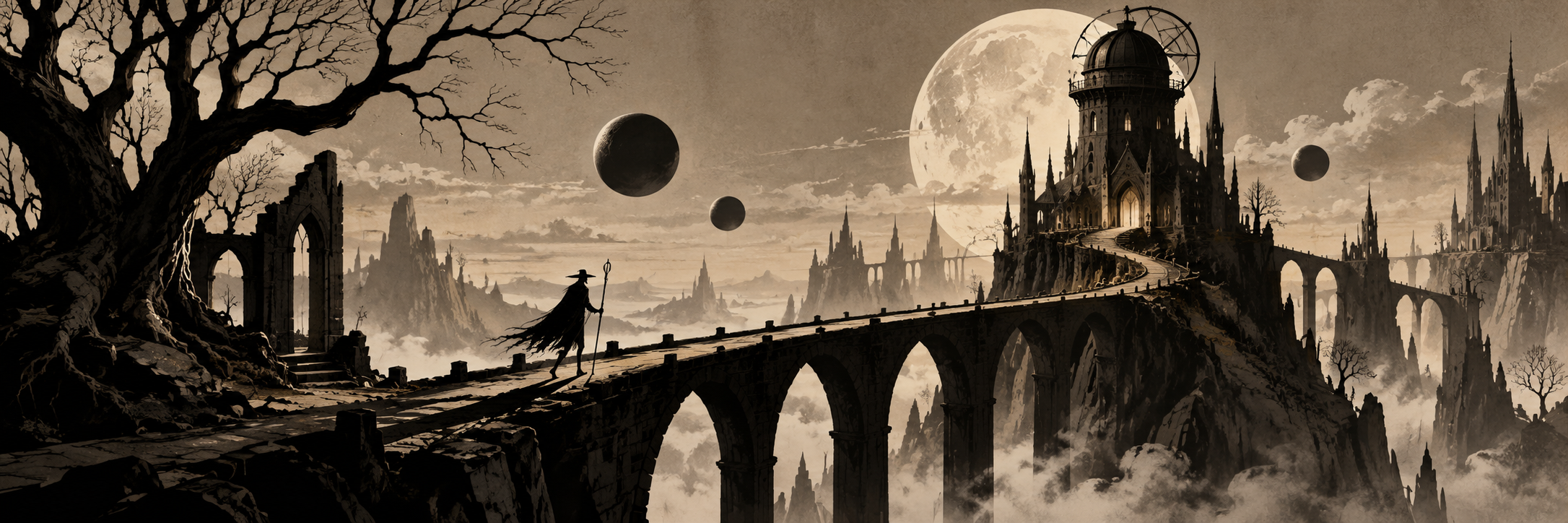
A visual introduction
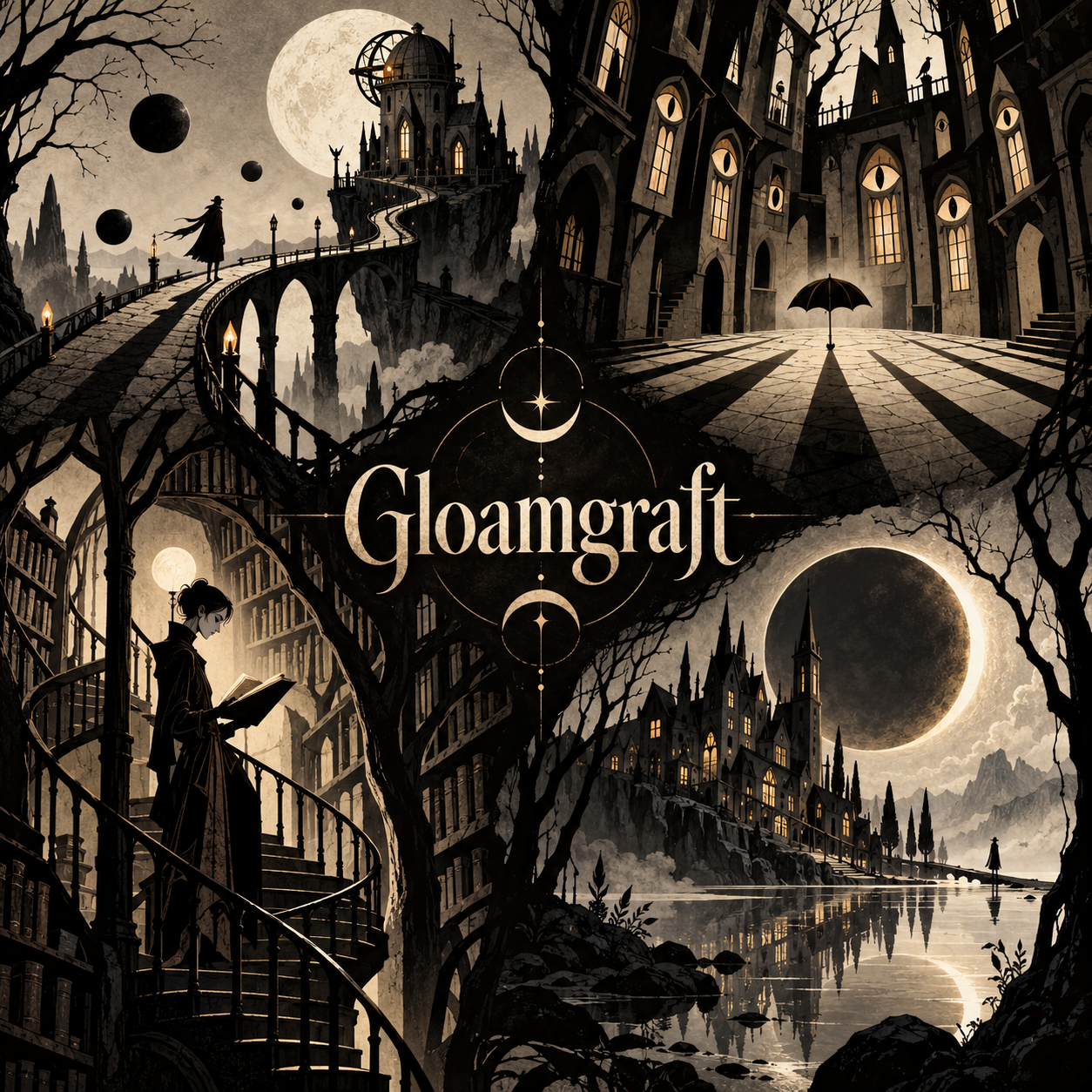
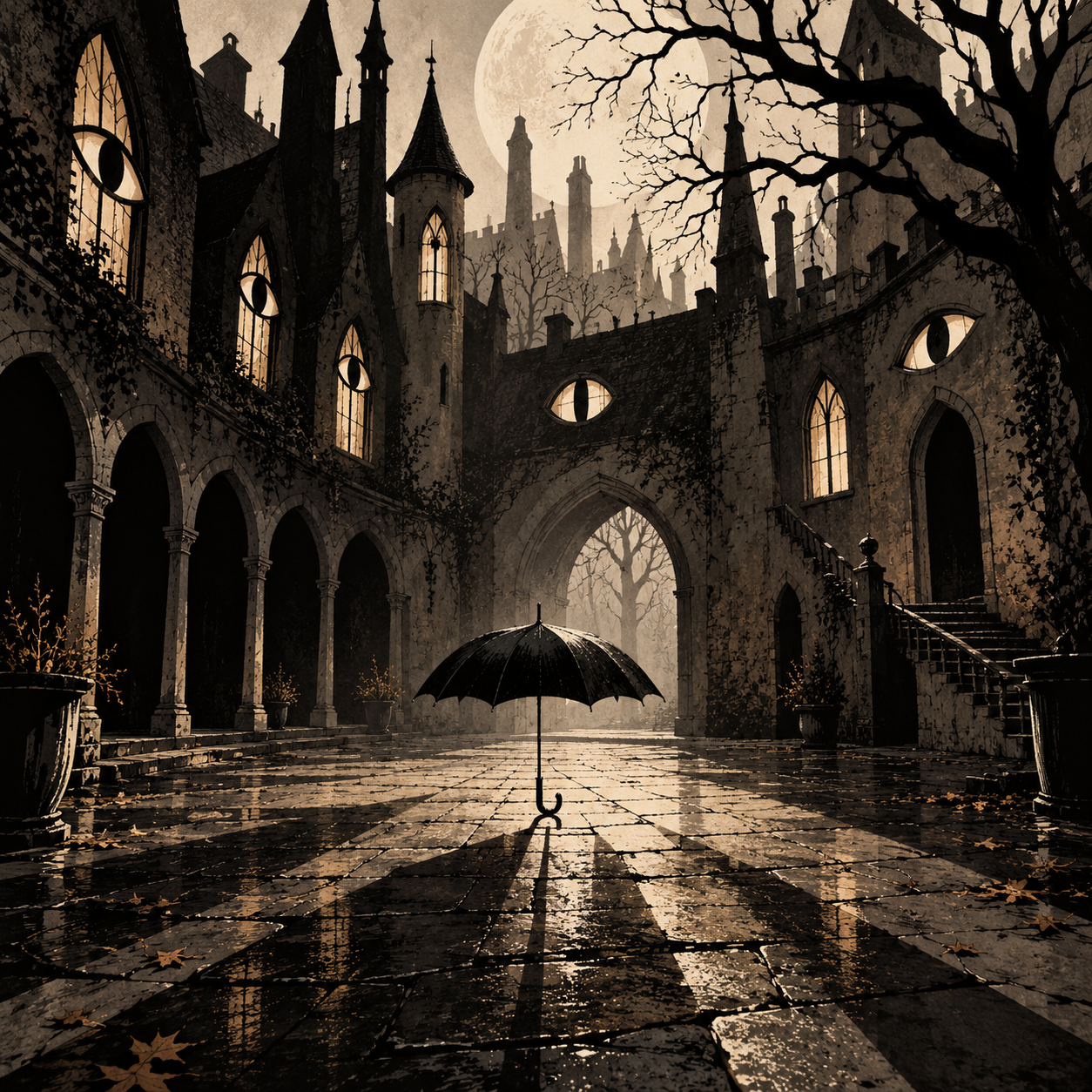
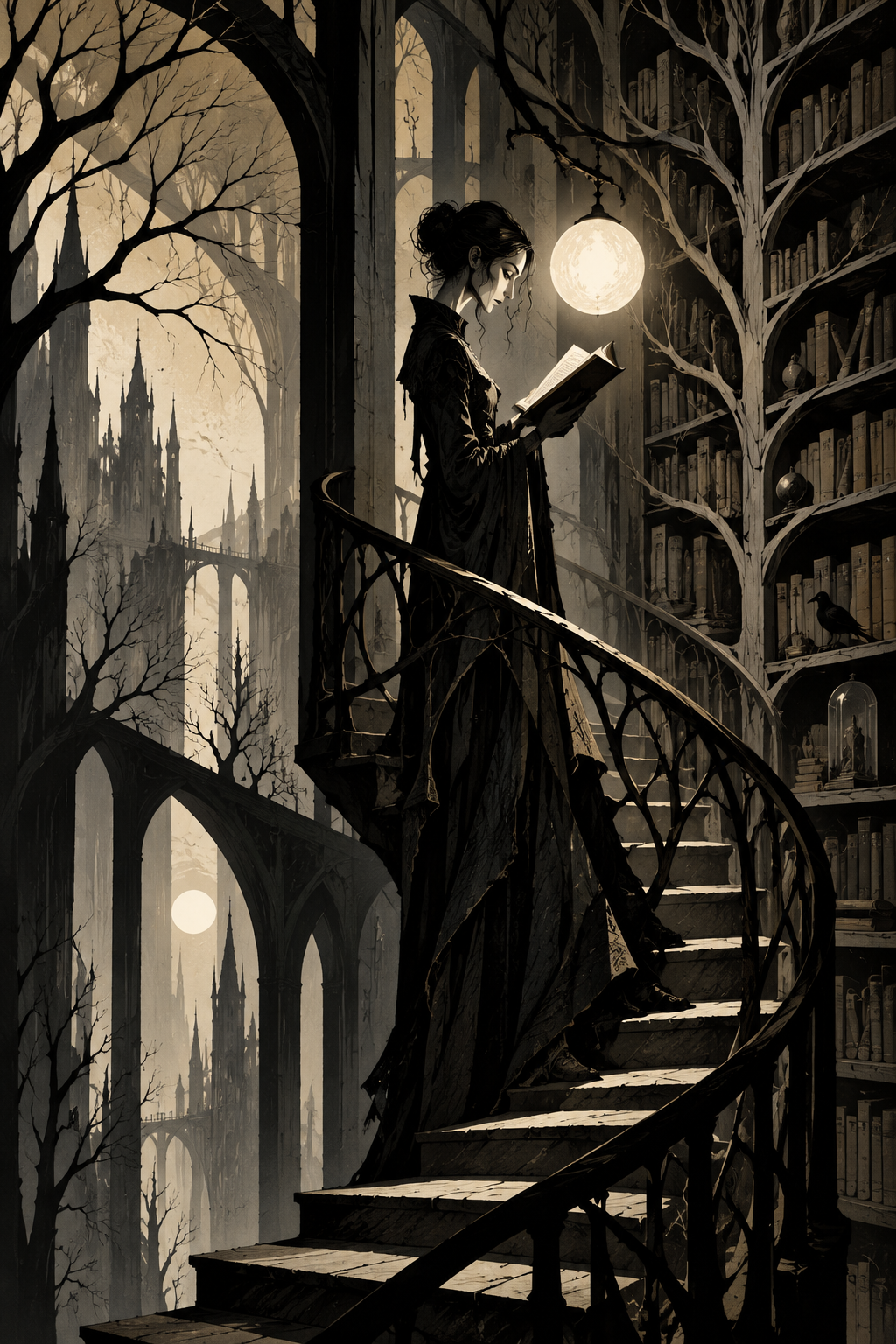
Five original AI-generated AOI interpretations of the referenced aesthetic: a banner, centrally titled collage and three standalone studies.
Select an image for a closer look. Use the thumbnails, arrow keys or a swipe to compare examples. Zoom in to inspect details, or share the image that inspires you.
Creative toolbox · take this style further
Choose an input and a destination. Search sends your words to the chosen site; Copy & open puts them on your clipboard to paste there.
Create with AI
Turn your chosen input into an image prompt or a new creative direction.
ChatGPT
Copy your input and paste it into a ChatGPT conversation or image request.
Copy & open ChatGPT (new tab)Claude · Anthropic
Develop an image prompt or explore the style in a new Claude conversation.
Copy & open Claude · Anthropic (new tab)Midjourney
Paste your input into the Imagine bar on the Create page.
Copy & open Midjourney (new tab)Adobe Firefly
Copy your input, open Firefly, and paste it into the prompt field.
Copy & open Adobe Firefly (new tab)Leonardo.Ai
Copy your input, open Leonardo, and paste it into the generation field.
Copy & open Leonardo.Ai (new tab)Image search
Find visual references. Short, concrete keywords usually work best.
Lexica
Search AI images and prompts using your selected input.
Search with this input Lexica (new tab)Pexels
Search the photo and video library. Short keywords often work best.
Search with this input Pexels (new tab)Pixabay
Search photos, illustrations and other images.
Search with this input Pixabay (new tab)Unsplash
Search photographs using the style name or your own keywords.
Search with this input Unsplash (new tab)Wikimedia Commons
Search photographs, artworks and historical images. Check each file for its source and reuse terms.
Search with this input Wikimedia Commons (new tab)Art & research
Explore artists, collections and the ideas behind a style.
Wikipedia
Search for background reading. A style may not have its own article.
Search with this input Wikipedia (new tab)WikiArt
Copy your input into WikiArt’s search to explore artists and artworks.
Copy & open WikiArt (new tab)Europeana
Paste your keywords into the search to explore European museum, library and archive collections.
Copy & open Europeana (new tab)Inspiration
Discover portfolios and visual ideas from creative communities.
Instagram hashtags
Search a hashtag made from your input: spaces and punctuation are removed. Instagram may require sign-in.
Search with this input Instagram hashtags (new tab)ArtStation
Paste your input into artwork search for concept art, environments, characters and visual development.
Copy & open ArtStation (new tab)Behance
Paste your input into project search for illustration, design and visual storytelling.
Copy & open Behance (new tab)A closer look
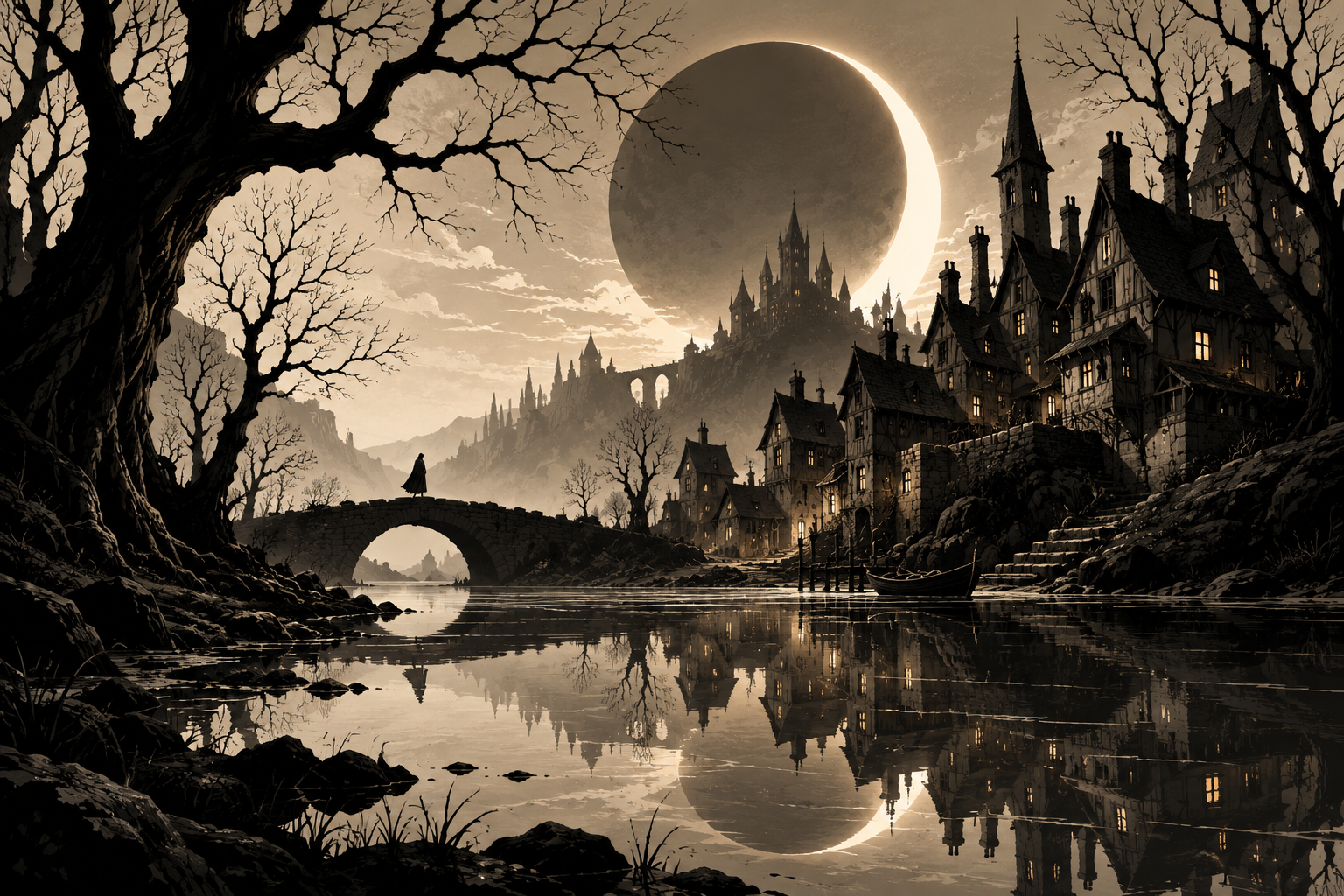
Dark contour masses and pale openings organize dense architecture. Bare branches, elongated figures and impossible moons create tension within a restrained brown, black and bone-white range.
A reference label with a Gothic vocabulary
Midlibrary's current Gloamgraft reference emphasizes a graphic Gothic atmosphere, strong outlines and a near-monochrome range. It is a named AI prompt aesthetic, not a documented historical school. This AOI gallery translates that starting point into original environments with tactile surfaces and more developed atmospheric depth.
Build a readable dark shape
Begin with the largest black mass: an overhanging tree, a leaning tower or the side of a courtyard. Cut a clear pale route through it. A bridge leading to an observatory works because the traveler, route and destination separate before the viewer examines the stonework. Without that hierarchy, elaborate Gothic detail becomes wallpaper.
Allow some architecture to lean, but retain enough structure for stairs, arches and supports to feel purposeful. The scene can be impossible without every joint becoming accidental.
Let light behave like attention
In the courtyard study, eye-like windows appear to watch an unattended umbrella. The object remains small and ordinary; the surrounding light gives it importance. In the library, a pale orb gathers attention around the reader's face and book. These are different kinds of unease: public scrutiny and private absorption.
Keep the palette close. A warm window can be effective within sepia without introducing a rainbow of competing accents. Deep blacks should establish the silhouette; softer gray-brown transitions can carry distance and surface wear.
Hard boundaries, soft distance
Sharp architectural edges make the foreground decisive. Softer distant towers make the world feel larger and less knowable. The contrast matters more than a blanket instruction to make everything dark. If haze erases every contour, the graphic character disappears; if every distant brick is equally sharp, depth collapses.
A useful study is to preserve a bridge silhouette while changing only the treatment of its far destination. A hard-edged tower feels reachable. A tower partly lost in mist becomes a promise or a warning.
The story need not become a horror checklist
An eclipse, a bird, a branch and an eye-shaped window are possibilities, not mandatory ingredients. Choose one dominant disturbance. The village study uses still water and an outsized celestial shape; the reflection makes the impossible scene feel momentarily settled.
Gloamgraft can support book covers, atmospheric game environments and illustrated tales. It fails when surface grime substitutes for composition or when every object is decorated with a sinister face. Leave ordinary things ordinary enough for the unusual element to register.
Read the reference with its version
At the time of this research, Midlibrary associates Gloamgraft with –sref 1378340489 –v 8.2. Its page also warns that the same numeric code can produce a different aesthetic under earlier versions. Treat the code and version as a pair, and check the linked reference before reusing it.
The AOI images here are newly generated interpretations of the observed visual vocabulary, not outputs produced by executing that Midjourney code. The written prompts describe visible decisions so that the ideas can also be explored with other tools or by hand.
A small poetic detour
Original words from the AOI studio.
Poetry
The borrowed moon
The windows kept their eyes upon the square.
An umbrella waited, open to no rain.
A branch drew crooked letters in the air;
the bridge took one thin traveler home again.
Inside, a reader held a borrowed moon
above a book no daylight came to claim.
The shelves grew quiet. Somewhere in the gloom,
a house remembered someone else's name.
The prompt workshop
Original creative exercises. These prompts create new illustrations, not documentary evidence.
One ordinary object under scrutiny
Create a sepia Gothic courtyard with heavy dark silhouettes and pale eye-like windows. Place one unattended black umbrella at the center. Make the long shadows organize the scene rather than fill it with clutter.
Compare the focal point, edge treatment and distribution of detail before adding more motifs.
Light a private world
Illustrate a solitary reader on a curving stair beside branch-like shelves, lit by one pale orb. Use sharply readable foreground contours and softer distant architecture.
Compare the focal point, edge treatment and distribution of detail before adding more motifs.
Change the distance, keep the route
Compose a narrow bridge and tiny traveler leading toward a crooked observatory. Compare a clear hard-edged destination with one partly lost in gray-brown mist. Preserve the route and a restrained monochrome palette.
Compare the focal point, edge treatment and distribution of detail before adding more motifs.
Your next inspiration
Discover another art style
Follow a visual thread to the next subject.
A smile from the studio
Jokes
The librarian said the books were arranged by subject. The visitor asked where to find astronomy. “Follow the moon.” “And architecture?” “Ask the staircase.” “What about horror?” The librarian glanced at the overdue notice, which had begun crawling toward him. “That section finds you.”
Sources and further exploration
Midlibrary — current reference images, style observations and version-specific SREF information