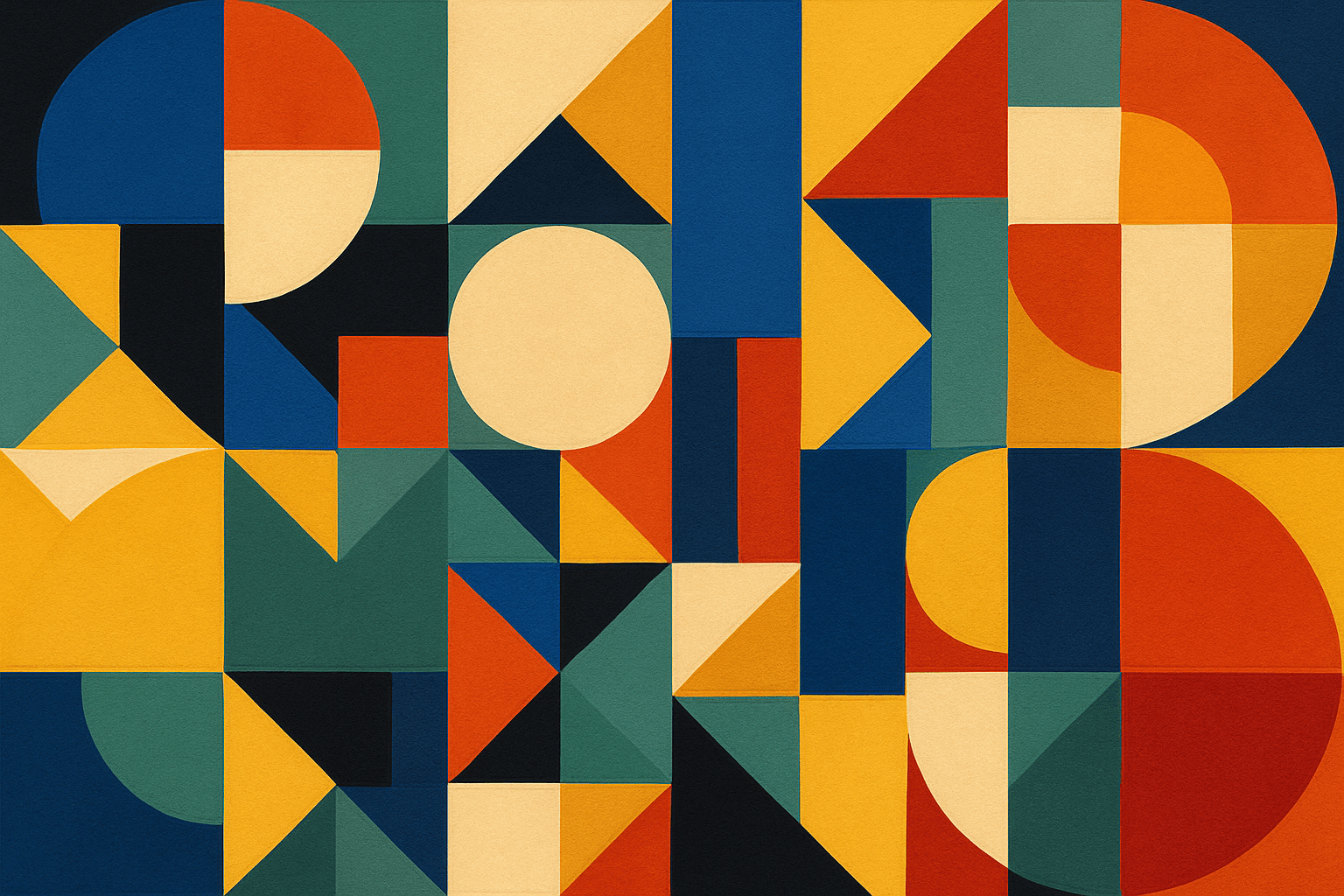
AOI creative concept · Rhythm and geometric systems
Build a rhythm from rectangular blocks of unequal width, with one unusually long empty interval acting as the strongest beat.
An AOI creative concept, not an established historical movement.
A closer look
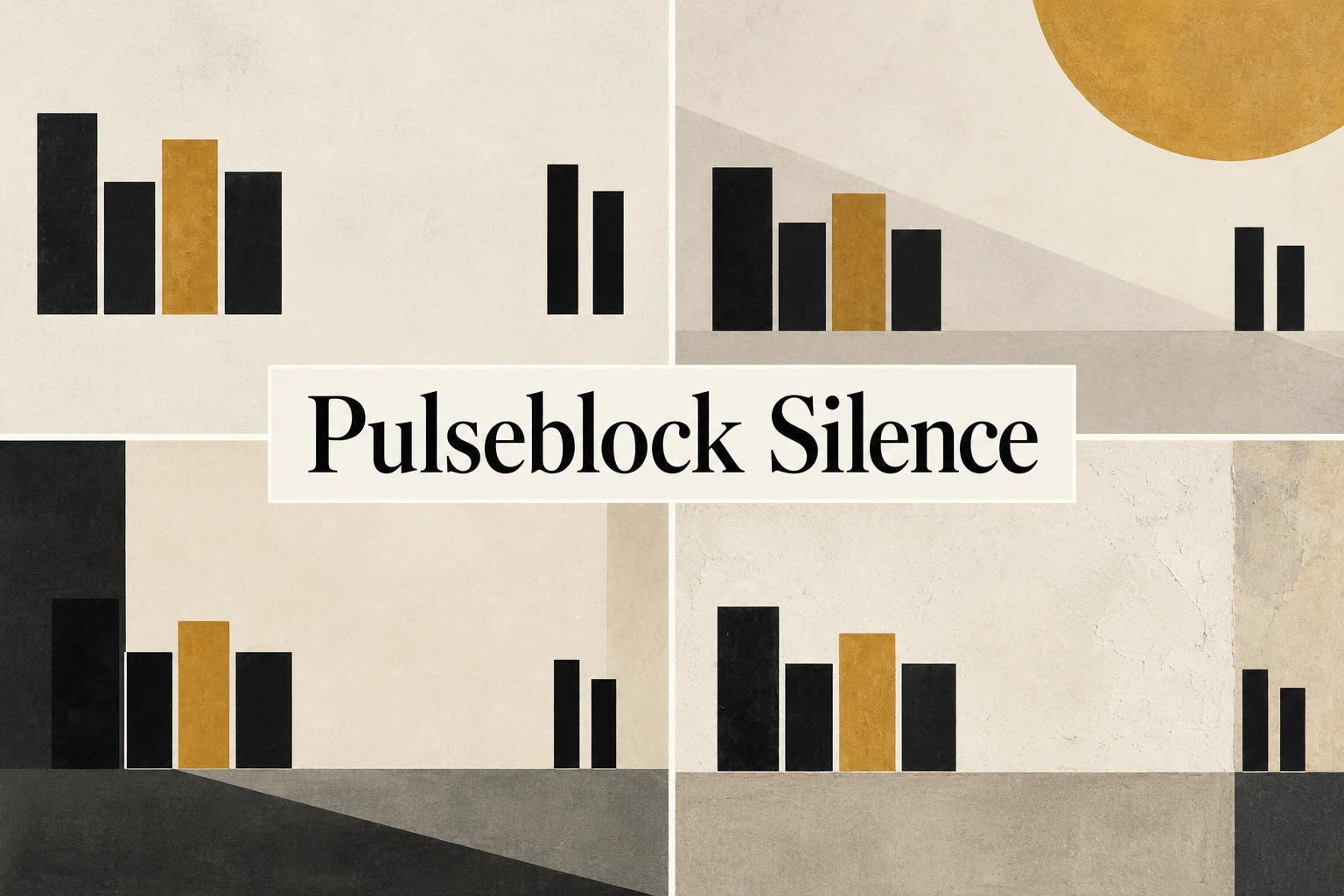
Ink black, warm white and one muted ochre block; flat geometric forms. The focal scene: six rectangular blocks organized around one long empty interval.
Establish the system
Build a rhythm from rectangular blocks of unequal width, with one unusually long empty interval acting as the strongest beat. The work should remain abstract and should not claim to encode actual sound or measured data.
Place the shapes
Place six dark blocks along a low horizontal band. Group four tightly at the left, leave a broad blank interval and place two thinner blocks near the right edge. Keep their heights related but not identical. Use a quiet off-white ground and avoid a baseline that would make the arrangement look like a conventional chart.
Make the exception count
Equal spacing weakens the pause. Test the composition at small size and ask whether the empty interval remains the first thing you notice. Avoid adding numerical labels or waveform details; the rhythm is designed, not extracted from a recording.
Technique notes
Rotate the arrangement vertically and let the long pause fall just above the bottom pair, creating a sense of suspended weight.
When prompting an image model, spell out the rule and visible relationships. The invented style name alone is not a reliable instruction. Compare outputs against the critique above and revise the specific failed relationship.
The prompt workshop
Original creative exercises. These prompts create new illustrations, not documentary evidence.
Start with the defining rule
Create an original illustration of six rectangular blocks organized around one long empty interval. Build a rhythm from rectangular blocks of unequal width, with one unusually long empty interval acting as the strongest beat. The work should remain abstract and should not claim to encode actual sound or measured data. Use ink black, warm white and one muted ochre block; flat geometric forms. Keep the composition readable, with a clear focal area and quiet surrounding space. No lettering, signatures or watermark.
Build the fuller composition
Create an original Pulseblock Silence composition. Place six dark blocks along a low horizontal band. Group four tightly at the left, leave a broad blank interval and place two thinner blocks near the right edge. Keep their heights related but not identical. Use a quiet off-white ground and avoid a baseline that would make the arrangement look like a conventional chart. Use ink black, warm white and one muted ochre block; flat geometric forms. Preserve the defining constraint: Build a rhythm from rectangular blocks of unequal width, with one unusually long empty interval acting as the strongest beat. Avoid decorative clutter, readable text and watermarks.
Try a deliberate variation
Create an experimental illustration based on this rule: Build a rhythm from rectangular blocks of unequal width, with one unusually long empty interval acting as the strongest beat. The work should remain abstract and should not claim to encode actual sound or measured data. Variation: Rotate the arrangement vertically and let the long pause fall just above the bottom pair, creating a sense of suspended weight. Use ink black, warm white and one muted ochre block; flat geometric forms. Make the changed relationship unmistakable while keeping supporting details restrained. No captions, signatures or watermark.
Look closer
Explore the image gallery
Select an image to enlarge it. Browse with the arrows, and press Escape to return.

Your next inspiration
Discover another art style
Follow a visual thread to the next subject.