
AOI's interpretation of a broad visual combination
AOI's Psychedelic Surrealism joins dreamlike transformations with intensified color and optical rhythm. One convincing impossibility gives the image its story; color and repetition deepen the experience.
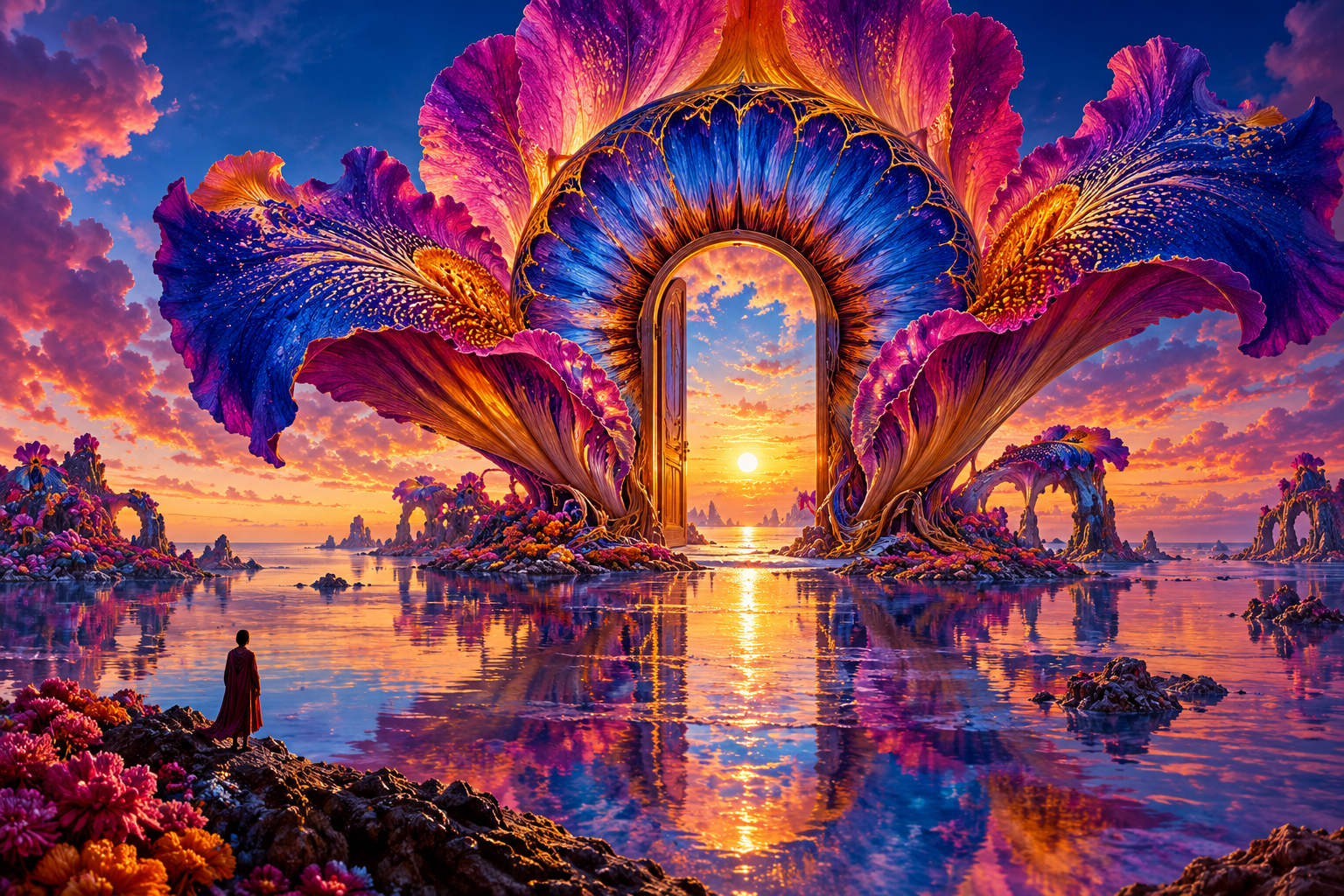
A visual introduction
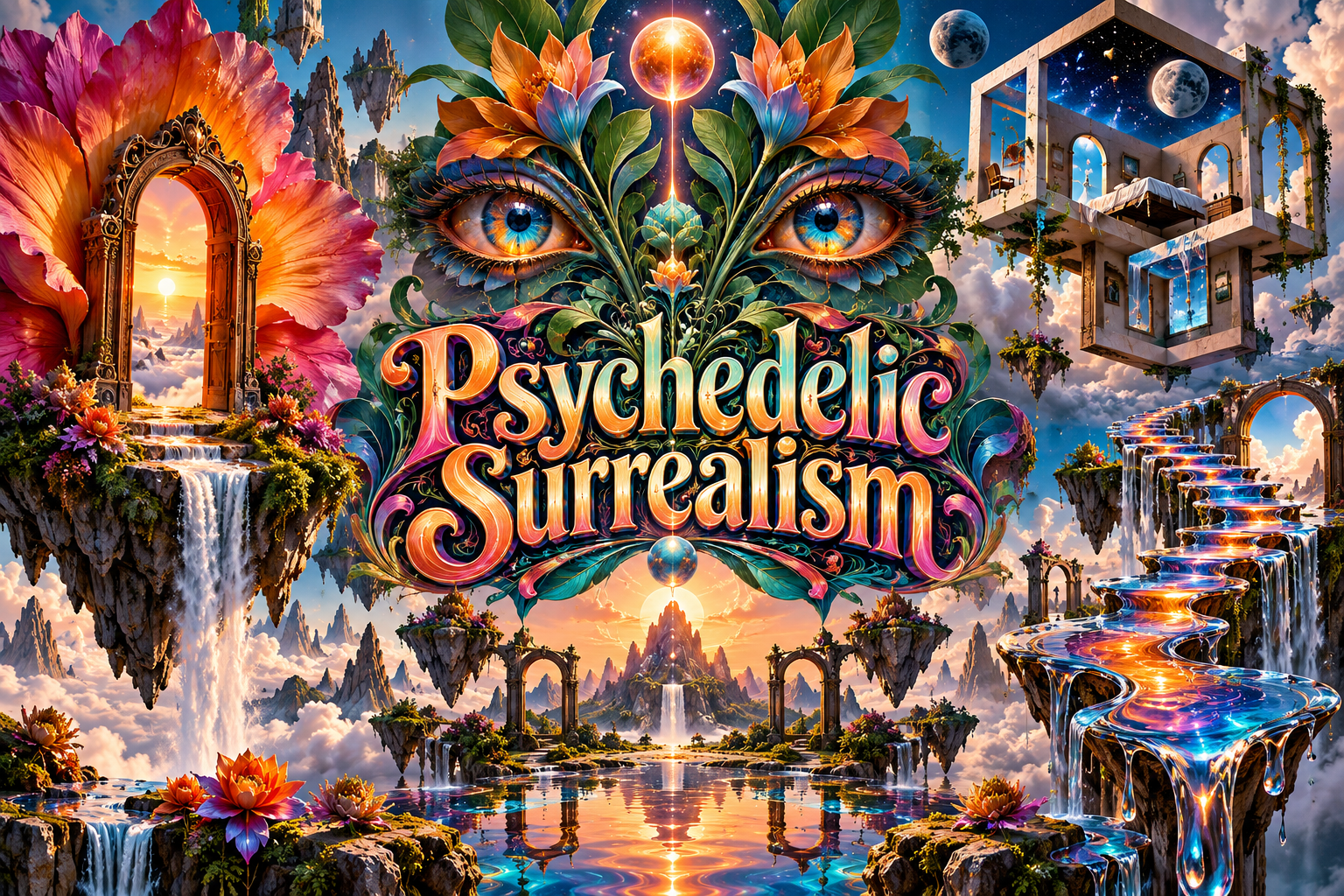
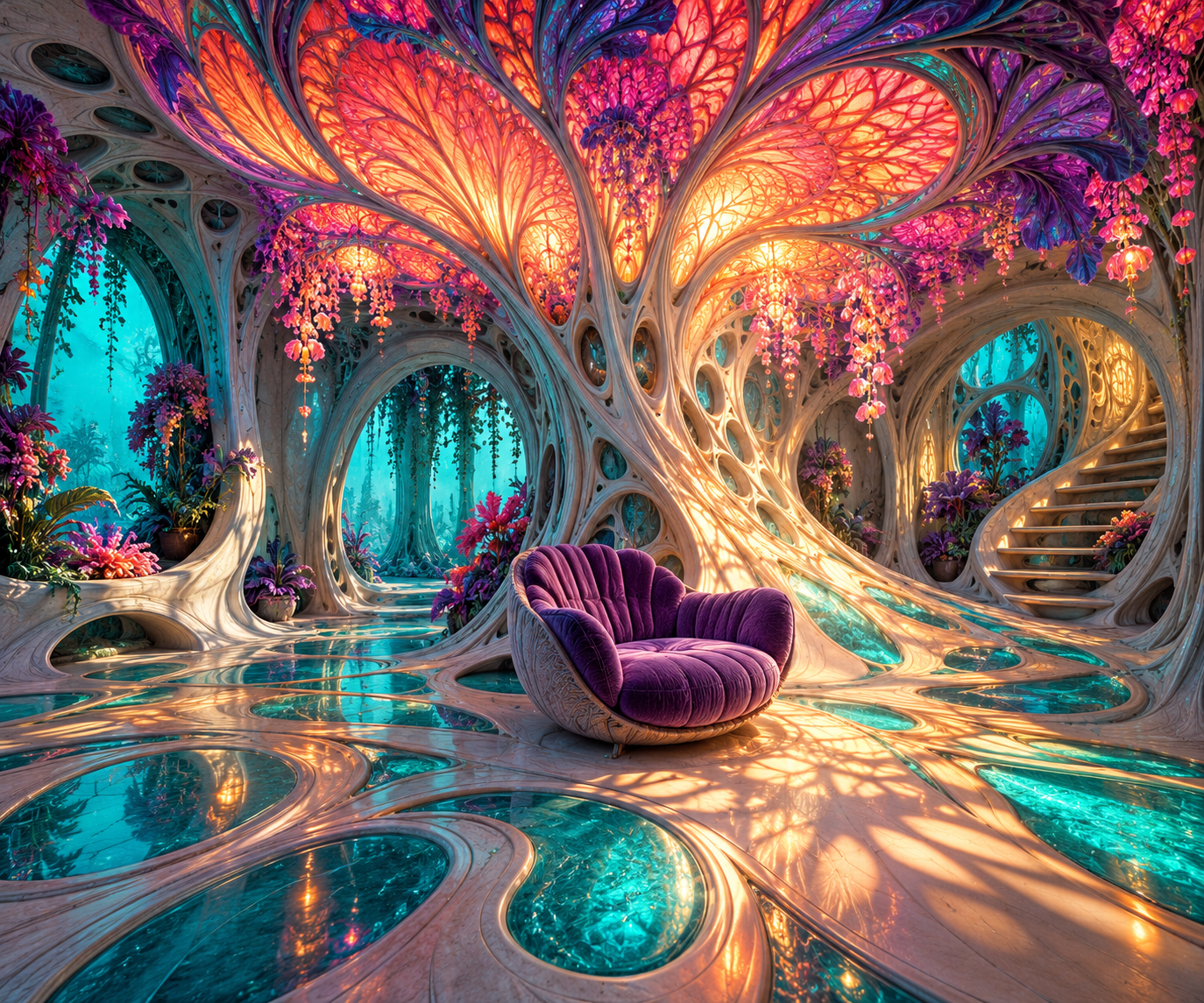
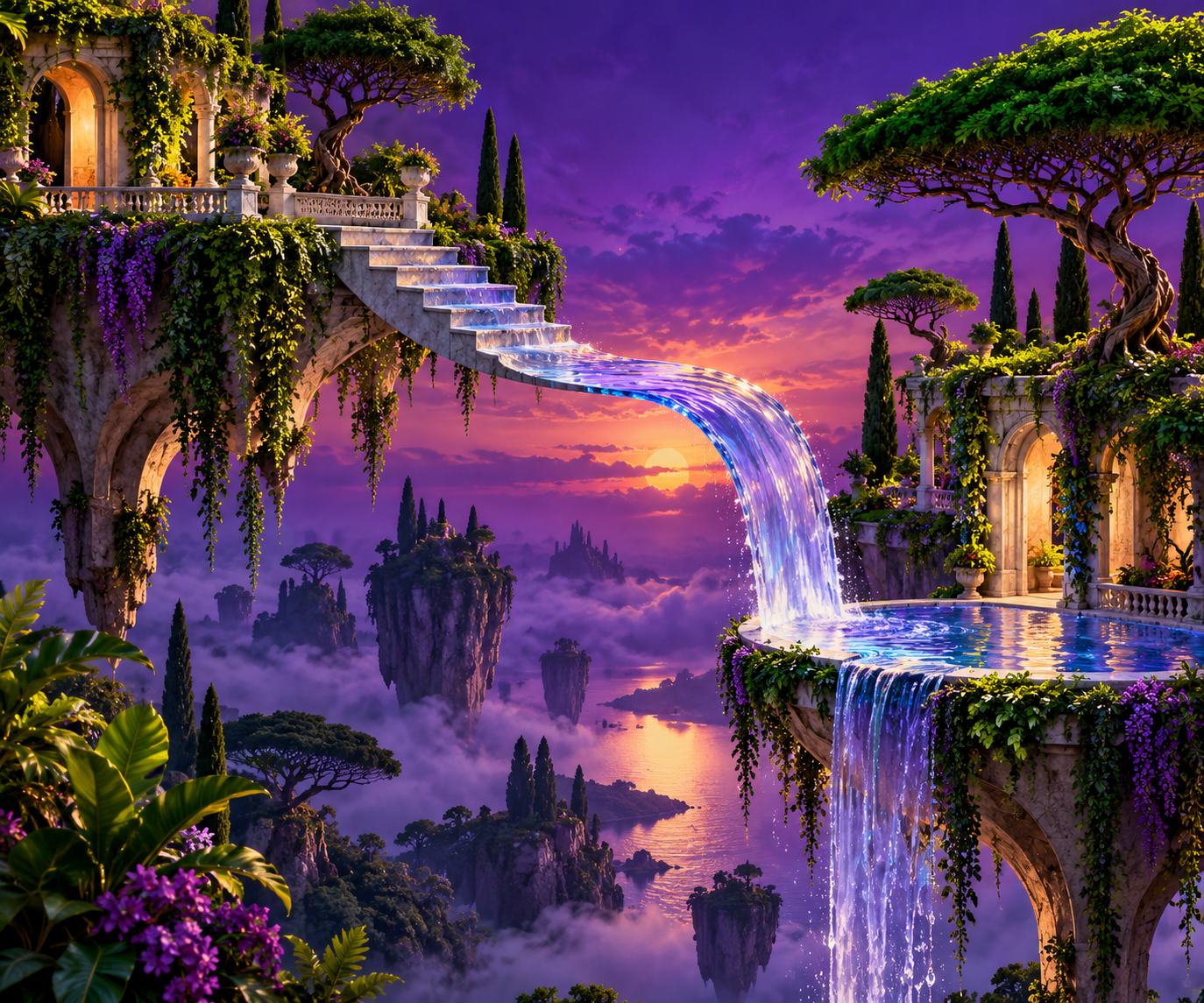
Five original AI-generated AOI interpretations: a dedicated banner, a centrally titled collage and three standalone studies. These are new illustrations, not historical objects or works by the referenced artist.
Select an image for a closer look. Use the thumbnails, arrow keys or a swipe to compare examples. Zoom in to inspect details, or share the image that inspires you.

Creative toolbox · take this style further
Choose an input and a destination. Search sends your words to the chosen site; Copy & open puts them on your clipboard to paste there.
Create with AI
Turn your chosen input into an image prompt or a new creative direction.
ChatGPT
Copy your input and paste it into a ChatGPT conversation or image request.
Copy & open ChatGPT (new tab)Claude · Anthropic
Develop an image prompt or explore the style in a new Claude conversation.
Copy & open Claude · Anthropic (new tab)Midjourney
Paste your input into the Imagine bar on the Create page.
Copy & open Midjourney (new tab)Adobe Firefly
Copy your input, open Firefly, and paste it into the prompt field.
Copy & open Adobe Firefly (new tab)Leonardo.Ai
Copy your input, open Leonardo, and paste it into the generation field.
Copy & open Leonardo.Ai (new tab)Image search
Find visual references. Short, concrete keywords usually work best.
Lexica
Search AI images and prompts using your selected input.
Search with this input Lexica (new tab)Pexels
Search the photo and video library. Short keywords often work best.
Search with this input Pexels (new tab)Pixabay
Search photos, illustrations and other images.
Search with this input Pixabay (new tab)Unsplash
Search photographs using the style name or your own keywords.
Search with this input Unsplash (new tab)Wikimedia Commons
Search photographs, artworks and historical images. Check each file for its source and reuse terms.
Search with this input Wikimedia Commons (new tab)Art & research
Explore artists, collections and the ideas behind a style.
Wikipedia
Search for background reading. A style may not have its own article.
Search with this input Wikipedia (new tab)WikiArt
Copy your input into WikiArt’s search to explore artists and artworks.
Copy & open WikiArt (new tab)Europeana
Paste your keywords into the search to explore European museum, library and archive collections.
Copy & open Europeana (new tab)Inspiration
Discover portfolios and visual ideas from creative communities.
Instagram hashtags
Search a hashtag made from your input: spaces and punctuation are removed. Instagram may require sign-in.
Search with this input Instagram hashtags (new tab)ArtStation
Paste your input into artwork search for concept art, environments, characters and visual development.
Copy & open ArtStation (new tab)Behance
Paste your input into project search for illustration, design and visual storytelling.
Copy & open Behance (new tab)A closer look
Complementary colors, flowing contours and repeated organic shapes surround a coherent impossible event. Ordinary perspective or lighting anchors the scene while a doorway, flower, staircase or landscape changes its nature.
A combination, with room for a personal reading
Surrealism has a documented history of interest in dreams and the workings of the mind, as MoMA's introduction explains. Psychedelic Surrealism is used here as a broad visual combination, developed into an AOI interpretation rather than presented as a single movement with one founder or fixed manifesto. The focus is on how an image can feel altered while remaining readable.
The generated studies explore imaginative transformations through color and space. They do not represent scientific accounts of perception, promise a particular psychological effect or document anyone's altered state. A flower opening into a lake is a visual proposition. Its success depends on what the image lets the viewer understand and discover, not on a claim about what a substance or experience must look like.
Choose one impossible relationship
Begin with an ordinary spatial situation: a room, a doorway, a stair or a hillside. Change one important relationship. The floor might fold upward into a canopy, or a flower's center might become a distant horizon. Keep enough of the original structure visible that the transformation can be recognized. If everything is equally impossible, nothing supplies the comparison.
A transition zone helps the image persuade. Floorboards can gradually become stems; stone treads can soften into running water. Let material, lighting and scale shift in stages. This creates a narrative path through the scene and reduces the temptation to add unrelated eyes, planets and floating objects simply because they are familiar surreal motifs.
Make intense color do compositional work
Choose a main complementary relationship and control its extent. Orange and blue may define the transformed area, while quieter violet or green passages support it. Repeated bands, petals or contour echoes can suggest optical movement, but a stable focal shape gives the eye somewhere to settle. A bright image still needs differences in value and density.
Glow should have a local source or a clearly deliberate graphic role. Keep some edges crisp, some soft and some lost within neighboring colors. Uniform sharpness and uniform saturation can flatten an intricate scene into decorative wallpaper. Test whether the impossible event remains recognizable at thumbnail size before expanding the ornamental detail.
Let the dream retain its mystery
This interpretation suits speculative illustration, album-like artwork, fantasy environments and visual poems about change. The strongest scenes offer a specific relationship without explaining away every association. A doorway into a floral ocean can suggest invitation, scale or uncertainty; it need not come with a universal symbolic dictionary.
The main risk is accumulating recognizable motifs without giving them a reason to coexist. Reduce the number of transformations and improve their connections. Keep generated work clearly identified and avoid assigning fixed cultural or spiritual meanings to borrowed symbols without context. An image can be strange, vivid and generous while remaining precise about what it depicts and modest about what it claims.
A small poetic detour
Original words from the AOI studio.
Poetry
The door opens into a flower.
The flower opens into the sea.
A stair forgets the weight of stone
and runs in blue across the room.
Orange light returns in circles;
a violet shadow learns to swim.
The floor remembers being a forest,
though every board remains in place.
We do not ask the dream for proof.
We follow where its edges meet.
Beyond the bright impossible,
a quiet patch of sky stays clear.
The prompt workshop
Original creative exercises. These prompts create new illustrations, not documentary evidence.
One doorway, one transformation
An original surreal room with a single doorway whose frame gradually becomes a huge flower opening onto an ocean horizon, coherent room perspective, orange-blue contrast, restrained optical rhythms, no text.
Keep the doorway-to-flower transition readable and avoid unrelated floating symbols.
A floor becomes a canopy
An original dreamlike interior where wooden floorboards gradually curve upward into a leafy canopy, consistent directional light, vivid complementary colors around the transition, quieter outer walls, no text.
Preserve the boards' identity long enough for the transformation to be understood.
Stone turns into water
An imagined staircase whose upper stone treads progressively become flowing turquoise water, locally coherent architecture, coral and violet accents, repeated contour echoes, one calm focal opening, no lettering.
Change material in stages and retain an area of visual rest.
Your next inspiration
Discover another art style
Follow a visual thread to the next subject.
A smile from the studio
Jokes
The surreal architect specified a doorway opening onto the sea. The builder installed a flower, which opened onto the sea, and submitted it as an improved circulation plan. The client objected that the staircase had become water. 'Yes,' said the architect, 'but now the entire project flows.'
Sources and further exploration
MoMA — Surrealism and dreams, historical context for the dreamlike component