
Drawing · Faces, figures and relationships
Explore portrait drawing through line, tone, colour, pose and setting, with documented artists, varied original studies and practical prompts for observation.
A visual introduction
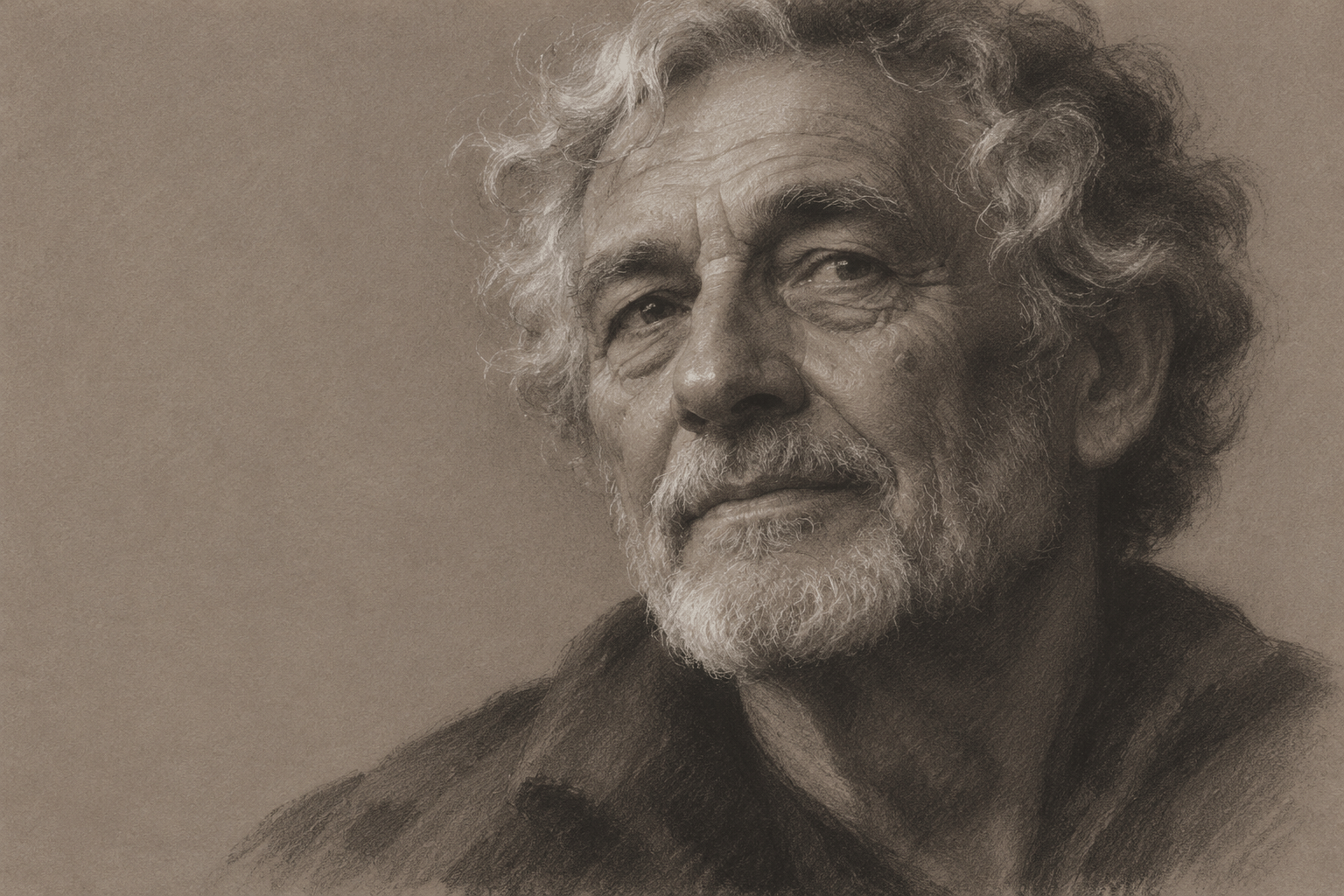
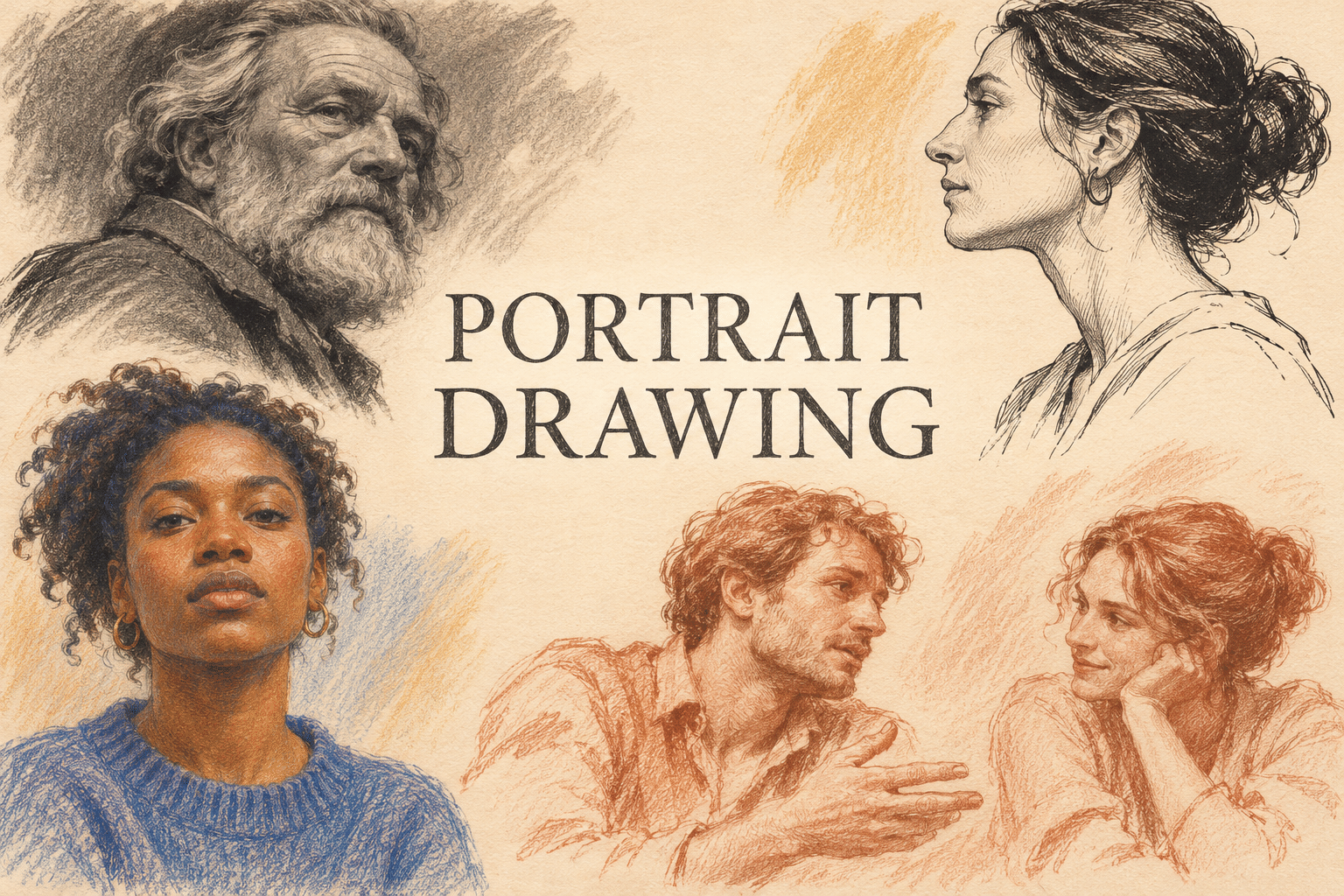
Compare five distinct standalone examples, a charcoal banner and a titled overview collage. The new sitters are fictional; all images are AI-generated interpretations rather than physical drawings or documented life studies.
Select an image for a closer look. Use the thumbnails, arrow keys or a swipe to compare examples. Zoom in to inspect details, or share the image that inspires you.

Creative toolbox · take this style further
Choose an input and a destination. Search sends your words to the chosen site; Copy & open puts them on your clipboard to paste there.
Create with AI
Turn your chosen input into an image prompt or a new creative direction.
ChatGPT
Copy your input and paste it into a ChatGPT conversation or image request.
Copy & open ChatGPT (new tab)Claude · Anthropic
Develop an image prompt or explore the style in a new Claude conversation.
Copy & open Claude · Anthropic (new tab)Midjourney
Paste your input into the Imagine bar on the Create page.
Copy & open Midjourney (new tab)Adobe Firefly
Copy your input, open Firefly, and paste it into the prompt field.
Copy & open Adobe Firefly (new tab)Leonardo.Ai
Copy your input, open Leonardo, and paste it into the generation field.
Copy & open Leonardo.Ai (new tab)Image search
Find visual references. Short, concrete keywords usually work best.
Lexica
Search AI images and prompts using your selected input.
Search with this input Lexica (new tab)Pexels
Search the photo and video library. Short keywords often work best.
Search with this input Pexels (new tab)Pixabay
Search photos, illustrations and other images.
Search with this input Pixabay (new tab)Unsplash
Search photographs using the style name or your own keywords.
Search with this input Unsplash (new tab)Wikimedia Commons
Search photographs, artworks and historical images. Check each file for its source and reuse terms.
Search with this input Wikimedia Commons (new tab)Art & research
Explore artists, collections and the ideas behind a style.
Wikipedia
Search for background reading. A style may not have its own article.
Search with this input Wikipedia (new tab)WikiArt
Copy your input into WikiArt’s search to explore artists and artworks.
Copy & open WikiArt (new tab)Europeana
Paste your keywords into the search to explore European museum, library and archive collections.
Copy & open Europeana (new tab)Inspiration
Discover portfolios and visual ideas from creative communities.
Instagram hashtags
Search a hashtag made from your input: spaces and punctuation are removed. Instagram may require sign-in.
Search with this input Instagram hashtags (new tab)ArtStation
Paste your input into artwork search for concept art, environments, characters and visual development.
Copy & open ArtStation (new tab)Behance
Paste your input into project search for illustration, design and visual storytelling.
Copy & open Behance (new tab)A closer look
A portrait organizes the head, gaze, shoulders and surrounding space into a particular encounter. Contours, value masses, selective edges and visible marks can suggest presence without describing every hair.
A person, not a formula
Portrait drawing represents a person through drawn marks. It can be a close study of the head, a half-length figure, an environmental portrait, a self-portrait or a group encounter. Likeness matters in many portraits, but a drawing can also explore the sitter’s pose, social presentation, relationship to the artist or presence within a place. It need not be photorealistic to be a portrait.
The category crosses periods and materials. There is no basis for assigning all portrait drawing a sixteenth-century beginning or treating it as only Impressionism or Modernism. A drawing made in preparation for a painting and an independent finished sheet have different purposes; neither is automatically less valuable.
Two documented approaches
Royal Collection Trust conservators describe Holbein’s portrait drawings as studies made in front of sitters for possible paintings or miniatures. Their account explains his use of chalk, prepared papers and selective watercolour, as well as the contrast between carefully described faces and more economical costume indications. This is evidence of an adaptable working practice, not a universal recipe for drawing a face.
Käthe Kollwitz’s 1889 Self-Portrait offers another point of entry. The Kollwitz Museum Köln records pen and black ink with brush and sepia on drawing cardboard. The artist presents herself close to the viewer, at an easel, with a hand at her lapel. The work shows how pose and professional self-presentation can matter alongside facial description. These documented drawings replace unrelated lists of paintings and sculptures.
Start with the whole head
Before refining an eye, establish the head’s overall height and width, its tilt, the direction of the face and its connection to the neck and shoulders. Compare the large shape of the hair with the face rather than treating hair as individual strands. Check the negative spaces around the profile and between the head and shoulder.
Construction lines are temporary aids to observation. They should not force every sitter into identical proportions. In a three-quarter view the far side of the face compresses; in profile the sequence of forehead, nose, lips and chin becomes especially important. Compare angles and distances within this particular pose before committing to darker marks.
Line, tone and the choice of material
A line-led portrait can use a few decisive contours, varied pressure and open areas of paper. Hatching can turn around a cheek or neck to describe form. Avoid giving every edge the same weight: an uninterrupted dark outline may flatten a head that needs a softer transition into light.
Charcoal encourages broad shadow masses and selective lifted highlights; graphite can sustain subtle gradations and fine marks. Coloured pencil introduces hue relationships as well as value, while ink and wash can combine a structural line with larger tonal shapes. These are possibilities, not rigid boundaries. The gallery’s digital images interpret these materials rather than documenting physical drawing sessions.
Light, colour and selective attention
Choose a legible lighting arrangement. Group the major light and shadow shapes before adding small reflected lights or skin details. An isolated bright eye can look pasted on if its surrounding socket has not been considered. Likewise, a detailed mouth will not repair an incorrectly placed jaw.
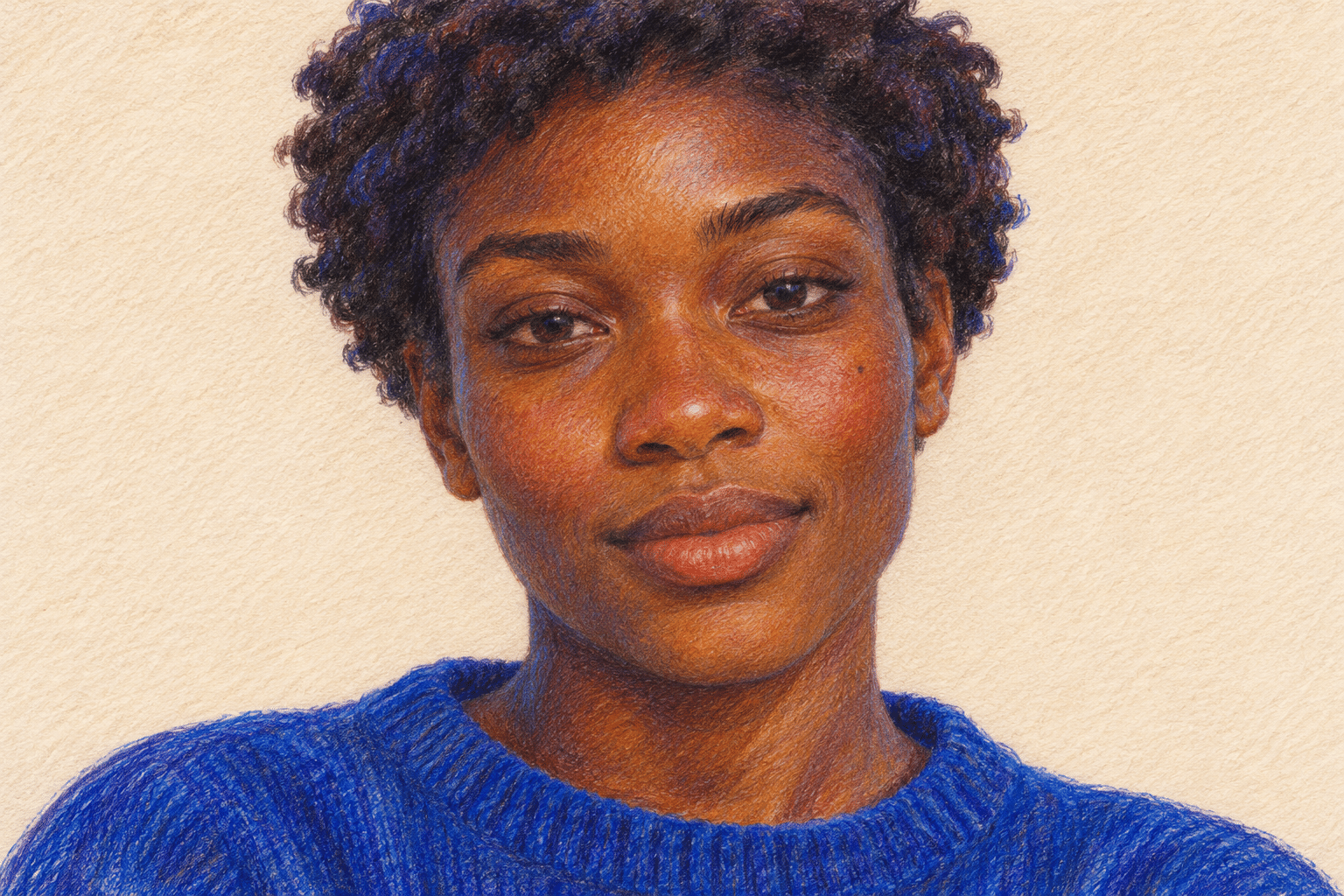
Skin should not be reduced to a single flat colour or a fixed symbolic palette. In the coloured-pencil example, warm and cool strokes work together with the blue sweater and exposed paper. The charcoal banner uses a much narrower tonal range. Compare what each approach emphasizes instead of assuming more colour means more character.
Pose and setting change the encounter
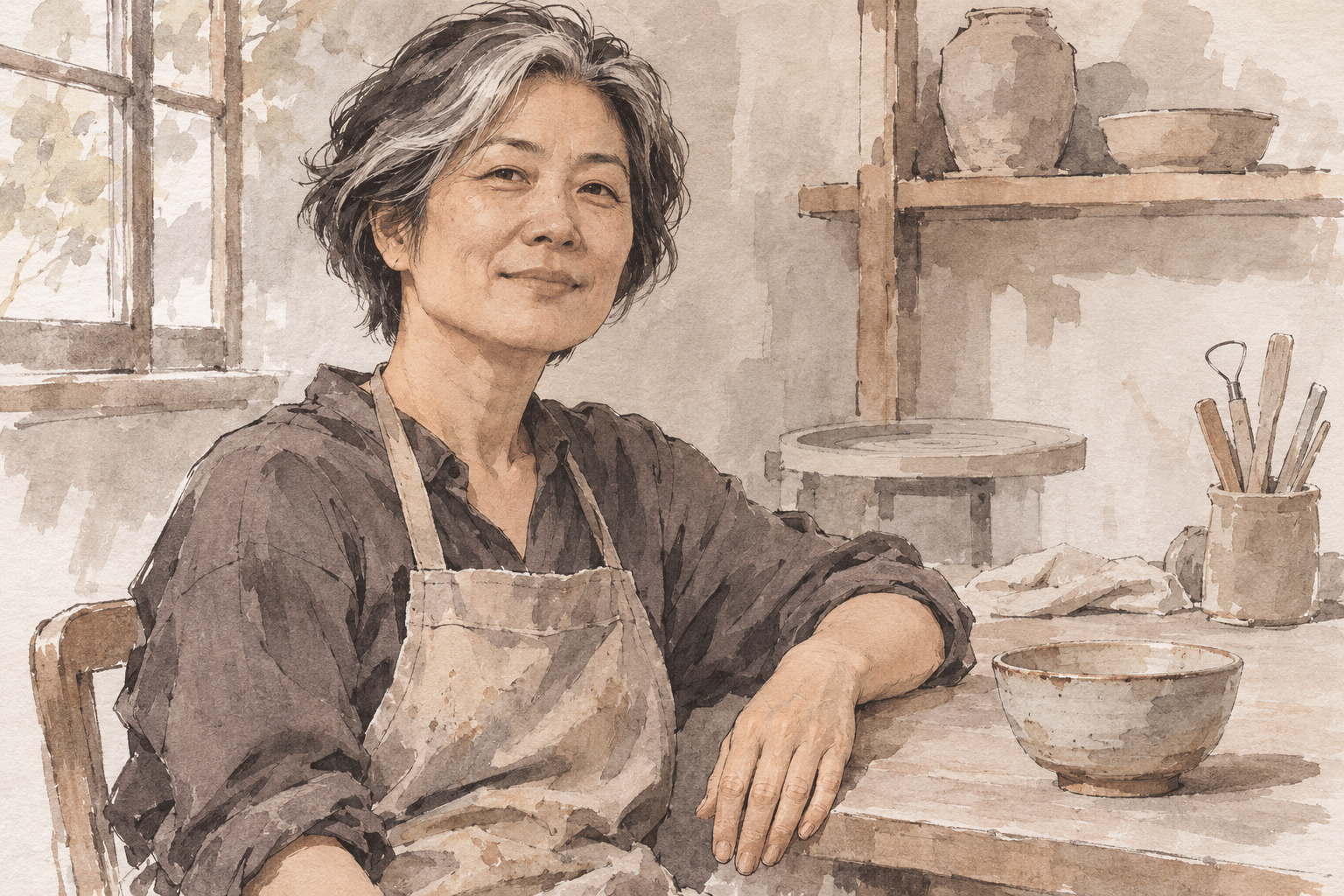
A profile can emphasize silhouette and direction; a frontal view establishes a different meeting with the viewer. An environmental portrait lets a chair, worktable or room contribute to the reading. Keep those details subordinate when the person is the subject. The ceramic-studio illustration uses a bowl and a few tools to provide context without turning the picture into an inventory.
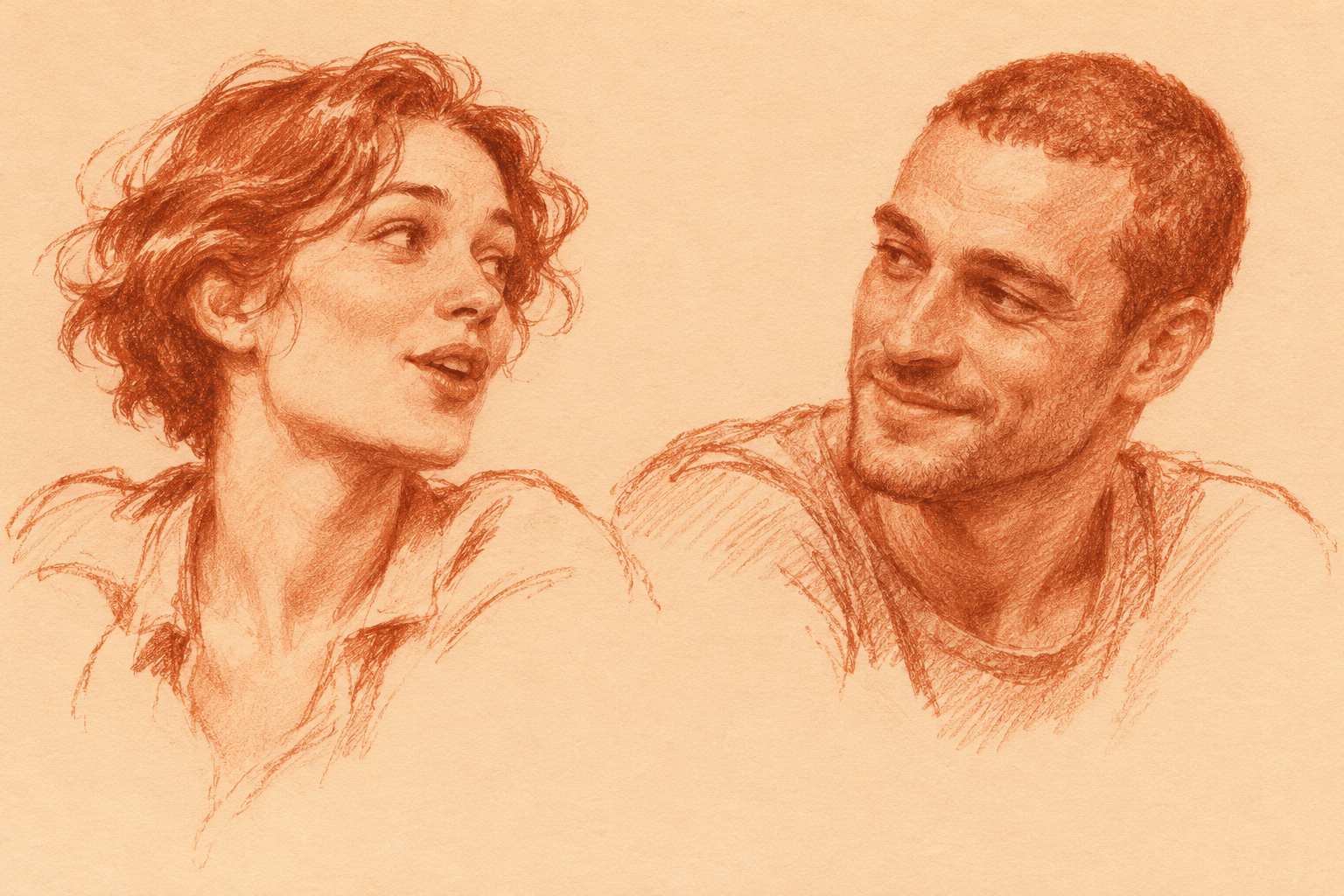
The red-chalk double portrait shifts attention from one face to a relationship. The turn of the heads and the space between them matter as much as individual features. A group picture needs an intentional pattern of attention; simply assembling several equally detailed heads may produce no sense of exchange.
Drawing from life, photographs and imagination
Working from life allows repeated looking at a changing person, but a sitter needs comfortable pauses and a manageable pose. A photograph fixes a moment and framing; its perspective, lighting and lost shadow information still need interpretation. A mirror self-portrait adds the problem of looking and drawing from a position that must remain reasonably consistent.
An invented face or an AI-generated character study can explore mark-making and composition, but it does not demonstrate faithful likeness to an actual sitter. The new examples here depict fictional people. Their expressions invite interpretation; they do not establish personality, occupation or cultural identity from appearance. The studio occupation belongs to the deliberately invented scene.
A practical sequence for revision
Make a small study with only the outer head shape, facial direction and three broad values. Next compare the eye line, nose base, mouth and chin within the pose. Add one area of emphasis, then let the surrounding marks remain quieter. Step back regularly so detail does not conceal a proportion problem.
For a second version, change only one major decision: profile versus three-quarter view, line versus mass, or close crop versus environment. Compare where the eye travels first. Keep useful asymmetry and the sitter’s particular features rather than polishing every face into the same ideal. In AI-assisted work, inspect ears, pupils, hands and repeated details against the intended scene before accepting the image.
Positive review — AOI editorial perspective
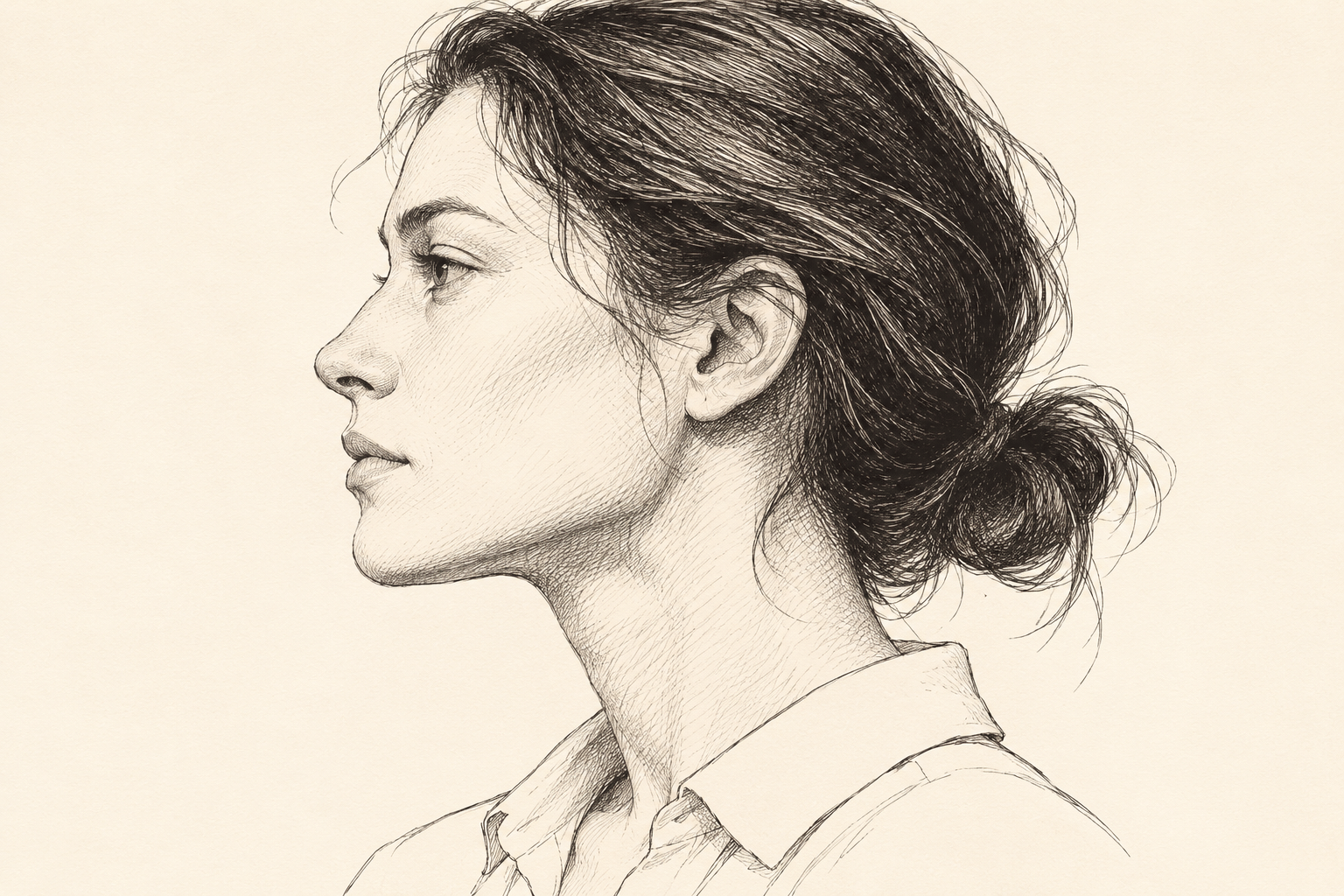
Portrait drawing can make a small number of marks feel attentive and specific. The profile example demonstrates how contour and hatching work together; the studio portrait adds context while keeping the face prominent. Variation in age, pose, medium and framing gives this gallery a broader vocabulary than a series of identical polished heads.
Negative review — AOI editorial perspective
Technical finish can disguise generic likeness, rigid symmetry or an expression assembled from stock features. Excessive blending may erase the drawing’s structure, while busy settings can compete with the sitter. Recheck the large proportions, simplify subordinate edges and make the purpose of each contextual detail clear.
Neutral review — AOI editorial perspective
Portrait drawing spans observational studies, commissions, self-examination, illustration and invented character work. Each has different standards of likeness and documentation. These AI-generated studies demonstrate visual approaches; they are not evidence of a live sitting, a named person’s character or a historical artist’s authorship.
A small poetic detour
Original words from the AOI studio.
Poetry
The line begins beside an ear
and leaves a little daylight clear.
A shoulder turns; the paper waits;
a shadow gathers, then abates.
No numbered rule can quite explain
the angle that we check again.
We draw, look up, and let there be
a space for what we did not see.
Two faces turn across the page;
the marks grow quiet at the edge.
A likeness is a patient start,
an open question held in art.
The prompt workshop
Original creative exercises. These prompts create new illustrations, not documentary evidence.
Start here · A profile in line
Create an original pen portrait of a fictional adult in profile. Use varied contours and sparse hatching to describe the head and neck; leave generous untouched paper. Prioritize the relation of forehead, nose, lips and chin over decorative detail. No signature or text.
Richer study · A person in a place
Create an original ink-and-wash portrait of an imagined craftsperson in a quiet studio. The face is the focus; one work object and a few light background lines suggest context. Natural pose, coherent hands, restrained values, no lettering. Do not claim this is a documentary portrait.
Experiment · Two ways of seeing
Make a paired study of one fictional adult: one version led by economical contours, the other by broad charcoal light and shadow masses. Keep the pose and features consistent enough to compare the visual decisions. Present as one composed study sheet, not two unrelated sitters; no words.
A smile from the studio
Jokes
Why did the artist keep drawing portraits of people? Because people are a-head of their time!