
An original Art of AI concept
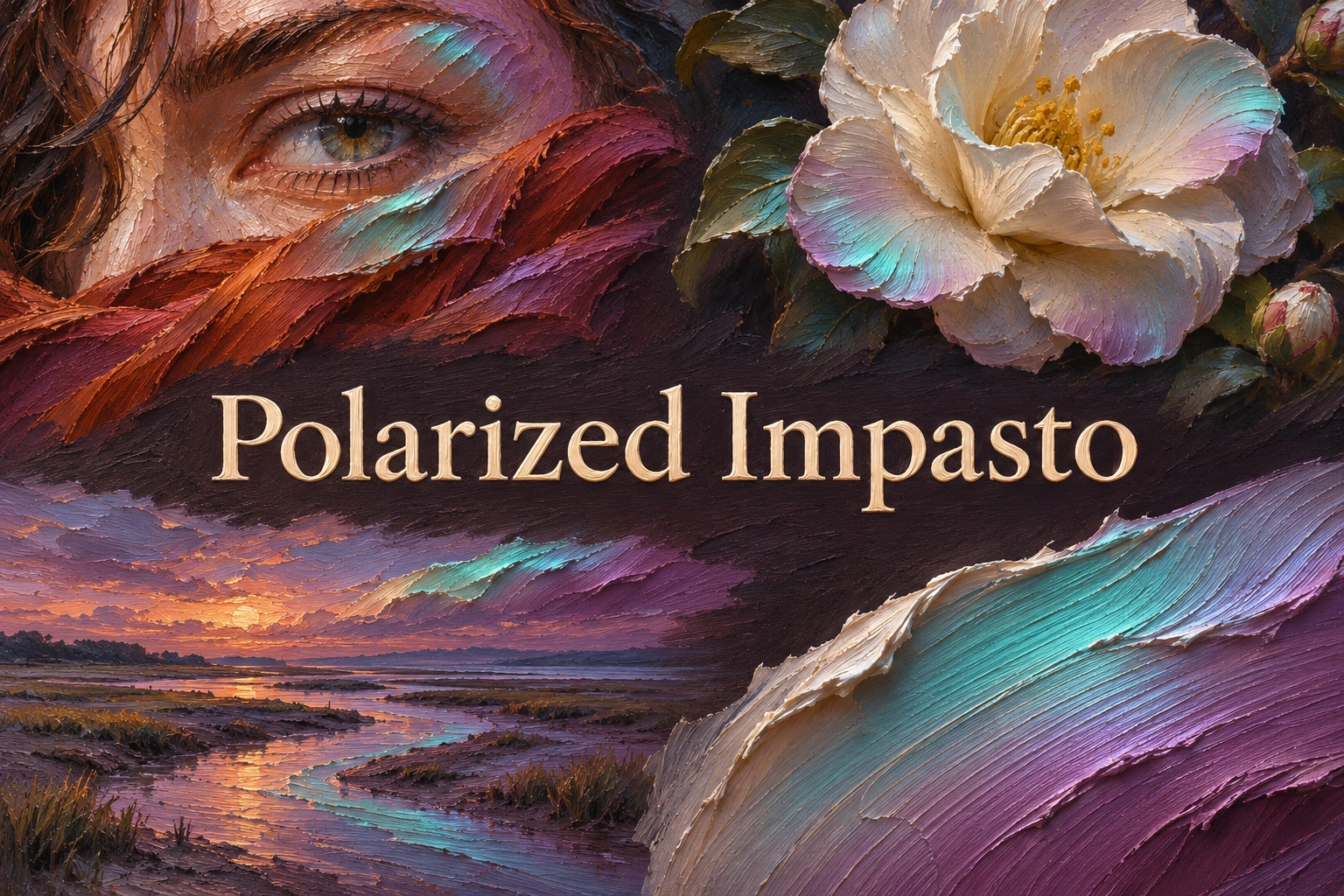
Give a cheekbone one broad stroke. Its crest takes a little sea-green light, the turned edge falls towards plum, and the hollow beside the nose keeps the warm colour of skin. Polarized Impasto is our name for this bargain between paint and light. A change of hue has to earn its place on a change of slope.
An A⊕I –[-.+] creαt¡ve c⊕ncept, n⊕t αn estαbl¡she∂ h¡st⊕r¡cαl m⊕vement.
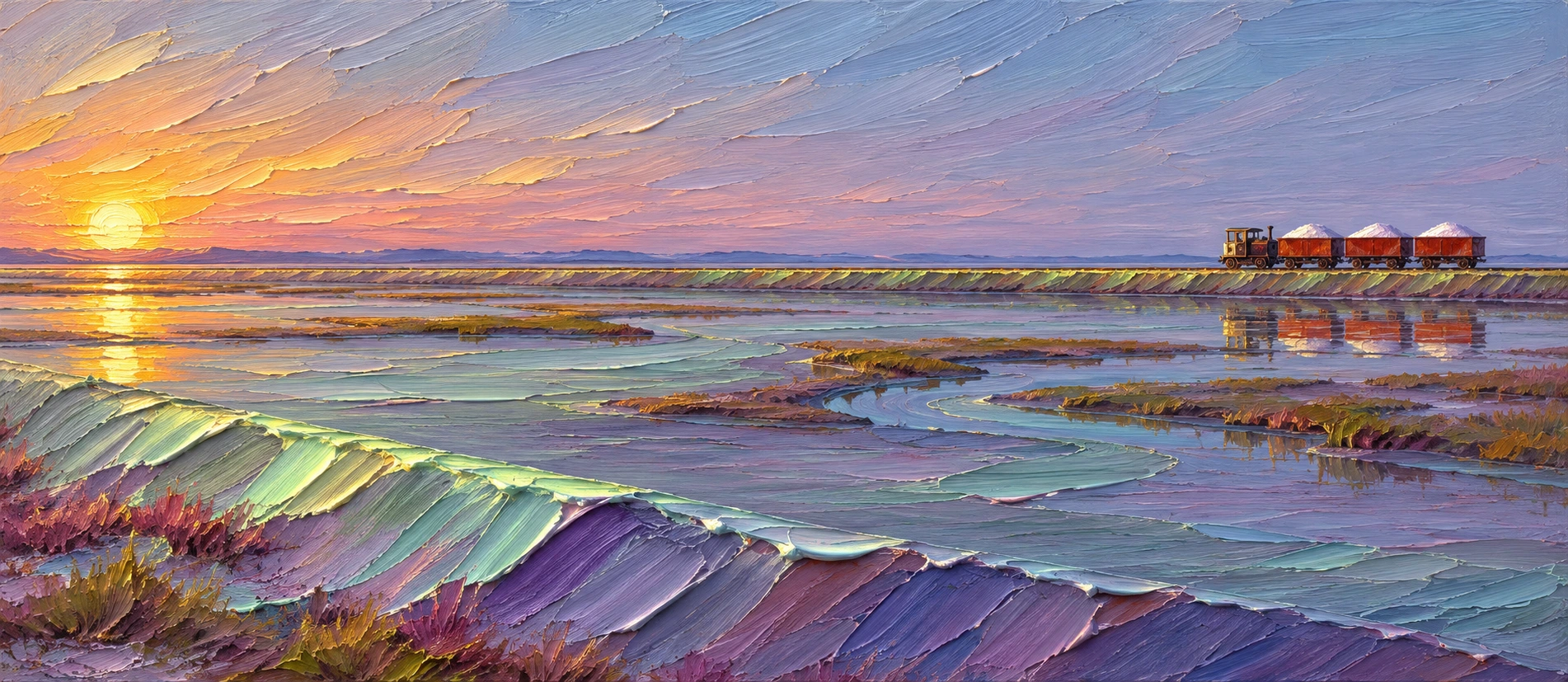
A visual introduction
Follow one crest at a time through a salt marsh, a face, petals, cliffs, a painted knot and a folded apron. The collage brings four scales of brushwork together.
Select an image for a closer look. Use the thumbnails, arrow keys or a swipe to compare examples. Zoom in to inspect details, or share the image that inspires you.
Creative toolbox · take this style further
Choose an input and a destination. Search sends your words to the chosen site; Copy & open puts them on your clipboard to paste there.
Create with AI
Turn your chosen input into an image prompt or a new creative direction.
ChatGPT
Copy your input and paste it into a ChatGPT conversation or image request.
Copy & open ChatGPT (new tab)Claude · Anthropic
Develop an image prompt or explore the style in a new Claude conversation.
Copy & open Claude · Anthropic (new tab)Midjourney
Paste your input into the Imagine bar on the Create page.
Copy & open Midjourney (new tab)Adobe Firefly
Copy your input, open Firefly, and paste it into the prompt field.
Copy & open Adobe Firefly (new tab)Leonardo.Ai
Copy your input, open Leonardo, and paste it into the generation field.
Copy & open Leonardo.Ai (new tab)Image search
Find visual references. Short, concrete keywords usually work best.
Lexica
Search AI images and prompts using your selected input.
Search with this input Lexica (new tab)Pexels
Search the photo and video library. Short keywords often work best.
Search with this input Pexels (new tab)Pixabay
Search photos, illustrations and other images.
Search with this input Pixabay (new tab)Unsplash
Search photographs using the style name or your own keywords.
Search with this input Unsplash (new tab)Wikimedia Commons
Search photographs, artworks and historical images. Check each file for its source and reuse terms.
Search with this input Wikimedia Commons (new tab)Art & research
Explore artists, collections and the ideas behind a style.
Wikipedia
Search for background reading. A style may not have its own article.
Search with this input Wikipedia (new tab)WikiArt
Copy your input into WikiArt’s search to explore artists and artworks.
Copy & open WikiArt (new tab)Europeana
Paste your keywords into the search to explore European museum, library and archive collections.
Copy & open Europeana (new tab)Inspiration
Discover portfolios and visual ideas from creative communities.
Instagram hashtags
Search a hashtag made from your input: spaces and punctuation are removed. Instagram may require sign-in.
Search with this input Instagram hashtags (new tab)ArtStation
Paste your input into artwork search for concept art, environments, characters and visual development.
Copy & open ArtStation (new tab)Behance
Paste your input into project search for illustration, design and visual storytelling.
Copy & open Behance (new tab)A closer look
Broad brushloads and knife strokes carry the subject. Look for tapered ridges, a lip that overhangs its own shadow, and quieter paint between strokes. Similarly tilted faces of paint pick up related colours in separate parts of the picture. A patch of plain ground gives the eye somewhere to measure the shine.
Where the colour turns
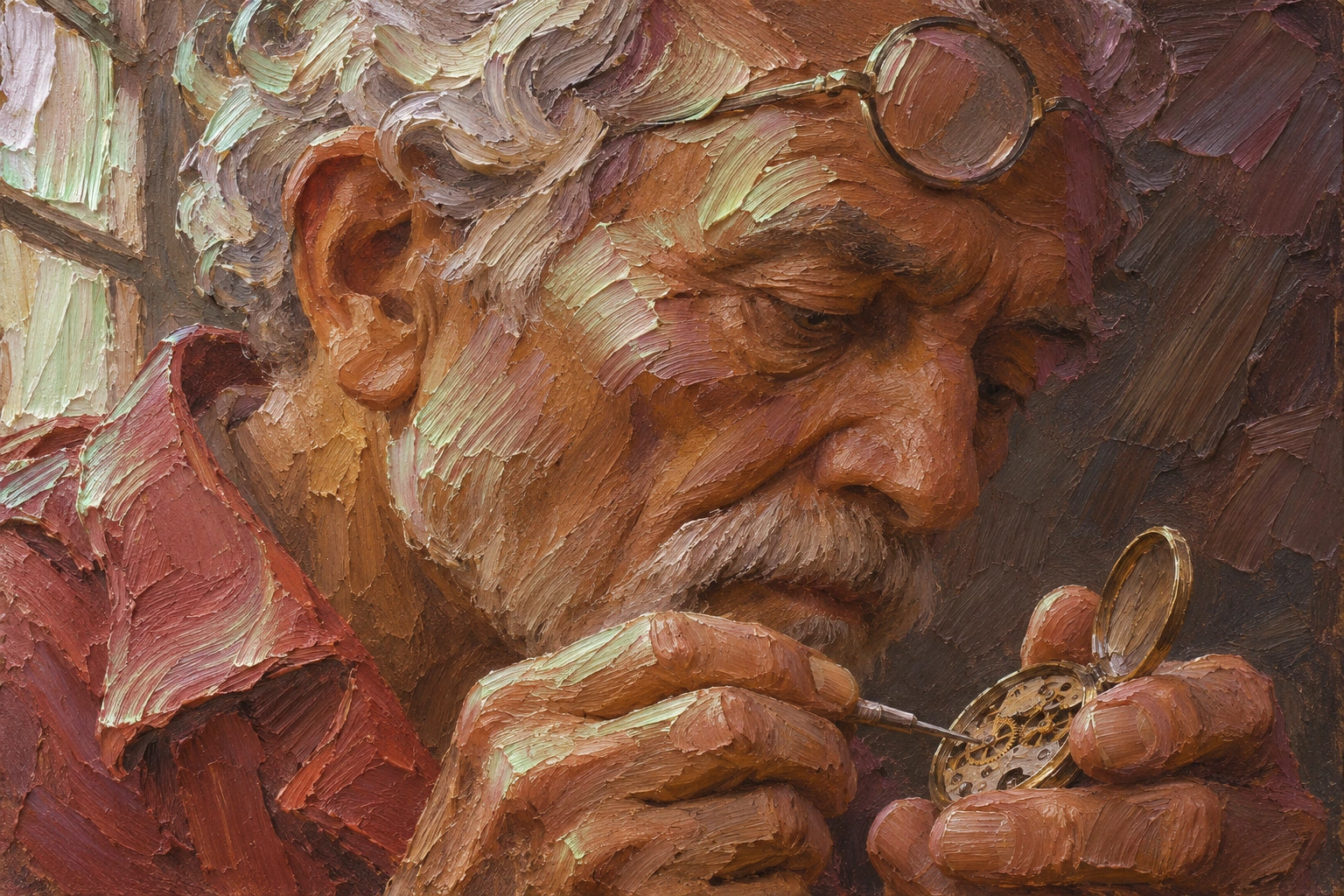
Start with the watch repairer’s cheek. A stroke can describe the cheekbone in outline, but it can also give the cheek a little architecture. Picture the same stroke in cross-section. There is a long face towards the window, a short face away from it and a valley where the next brushload begins. Put a green glint on the first, a subdued violet along the turn and a warm dark in the valley. Even if you cover the eye and mouth, what is left should still feel rounded.
Direction on the canvas tells only half the story. Two horizontal strokes can lean opposite ways, just as opposite sides of a roof can share a ridge. Fix the light and the viewpoint first. Repeat the colour where the little faces of paint have comparable slopes. Give a stroke permission to change hue along its own length when it banks round a form. That last turn is where a painted ribbon begins to look like a petal.
What the real materials contribute
Impasto is an established painting technique. The National Gallery describes how marks left by a loaded brush or palette knife build relief and catch incident light. The Rijksmuseum’s research on Rembrandt’s The Night Watch gives that relief a material history. A raised light accent can do part of the work of a depicted highlight. Neither collection is documenting an art movement called Polarized Impasto.
A second reference comes from interference paints. GOLDEN describes how thin coatings on mica affect which wavelengths reinforce one another in reflected light. Their appearance can change with the viewing angle and the ground beneath the paint. The word “polarized” in this AOI title is a studio cue. In optics, polarization describes the orientation of light’s electric field. The turquoise and plum used here are choices for an imagined painting. They do not identify a pigment, filter or measured polarization.
An actual coated surface can change as you walk past it. Every illustration here holds one view still. Its small cast shadows, occluded edges and recurring glints are the clues from which the viewer can imagine taking a step sideways.
Choose what gets to shine
In a portrait, spend the brightest crest on the plane that gives the face its character. Keep some skin colour by the eye and in the shadow of the jaw. On a flower, one loaded stroke can turn outwards at the lip of a petal. Leave part of the petal ivory. The edge then has something to shine against.
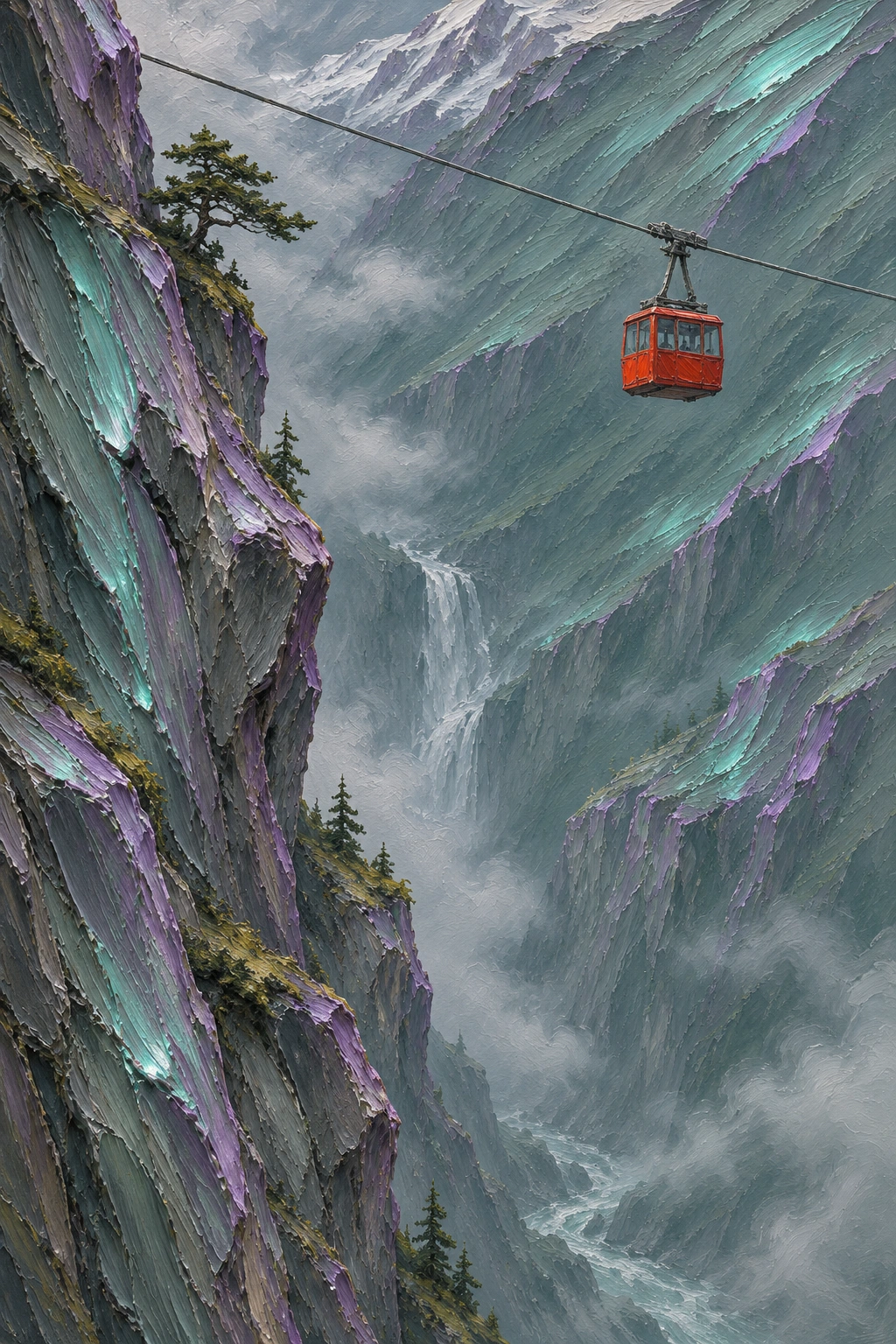
A landscape can give the same colour to two far-apart rock faces under one light. Keep the intervening mist thin and quiet so the banks stay separate. An abstraction offers a stricter trial. Send a stroke round a bend and ask where the glint ought to return on the way out. With no face or mountain to supply a likeness, a misplaced accent has nowhere to hide.
A two-pass studio test
Make a small greyscale version first. Preserve three things at postcard size: a lit crest, a turning plane and the dark sliver where one load of paint sits over another. In a second pass give just the facing planes the interference colour. Compare the two versions at the same size. If the colourful one needs to be explained with the word ‘shimmer’, strengthen a physical edge or quiet its neighbour.
For an image generator, change one instruction at a time. Keep the subject, crop, palette and lighting fixed. First ask for ridges running in one direction. Next let a single ridge curl up and over. Look for the colour to turn with that ridge while the background holds steady. A new spectrum across the whole frame tells you the model has changed the lighting instead.
Positive reading
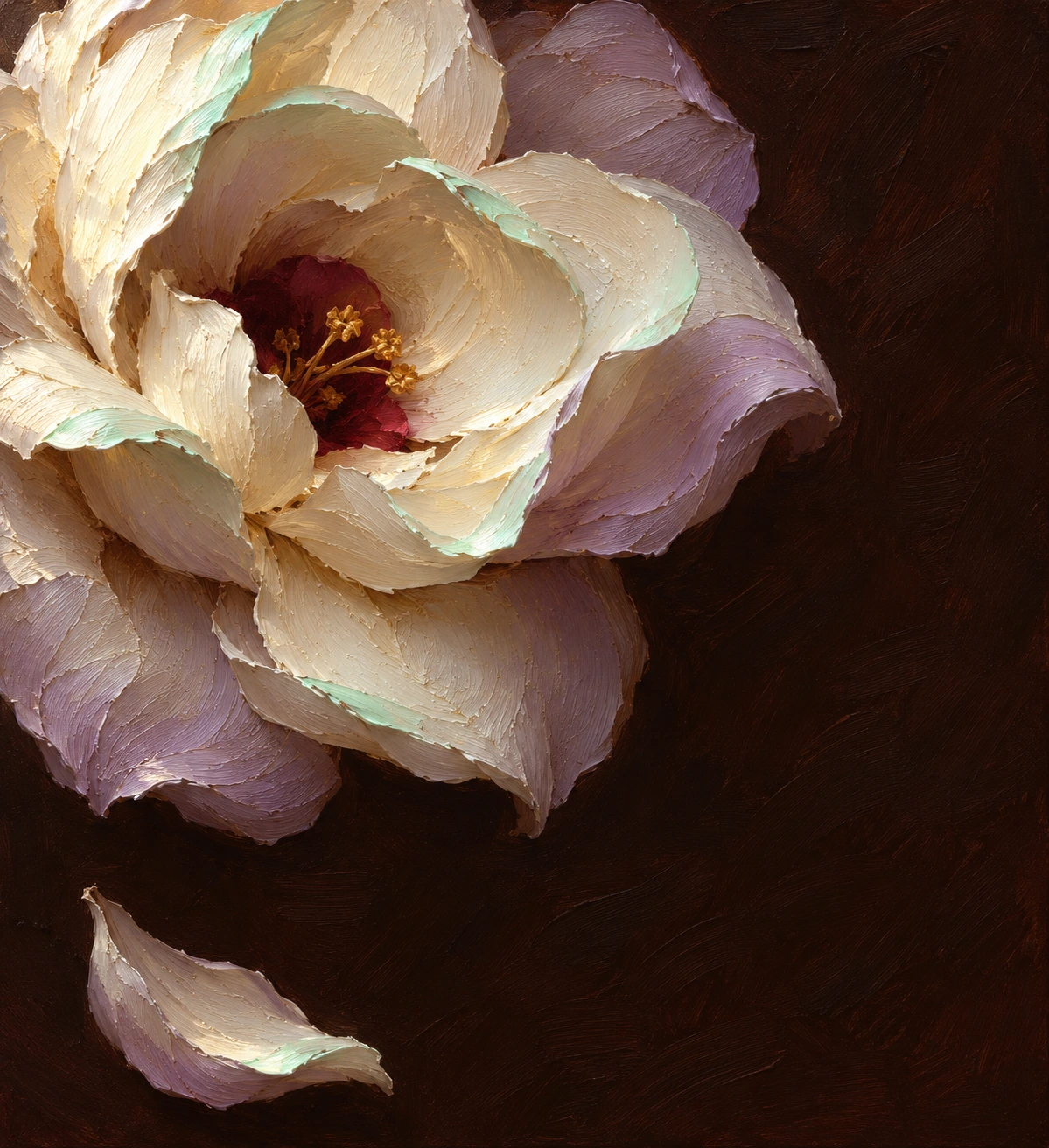
The camellia makes the clearest promise and keeps it. A petal still reads as ivory even where its loaded edge catches mint and its underside takes on violet. The fallen petal repeats that turn below the flower. Once you spot it there, you can pick it out in the more crowded bloom without counting colours.
Critical reading
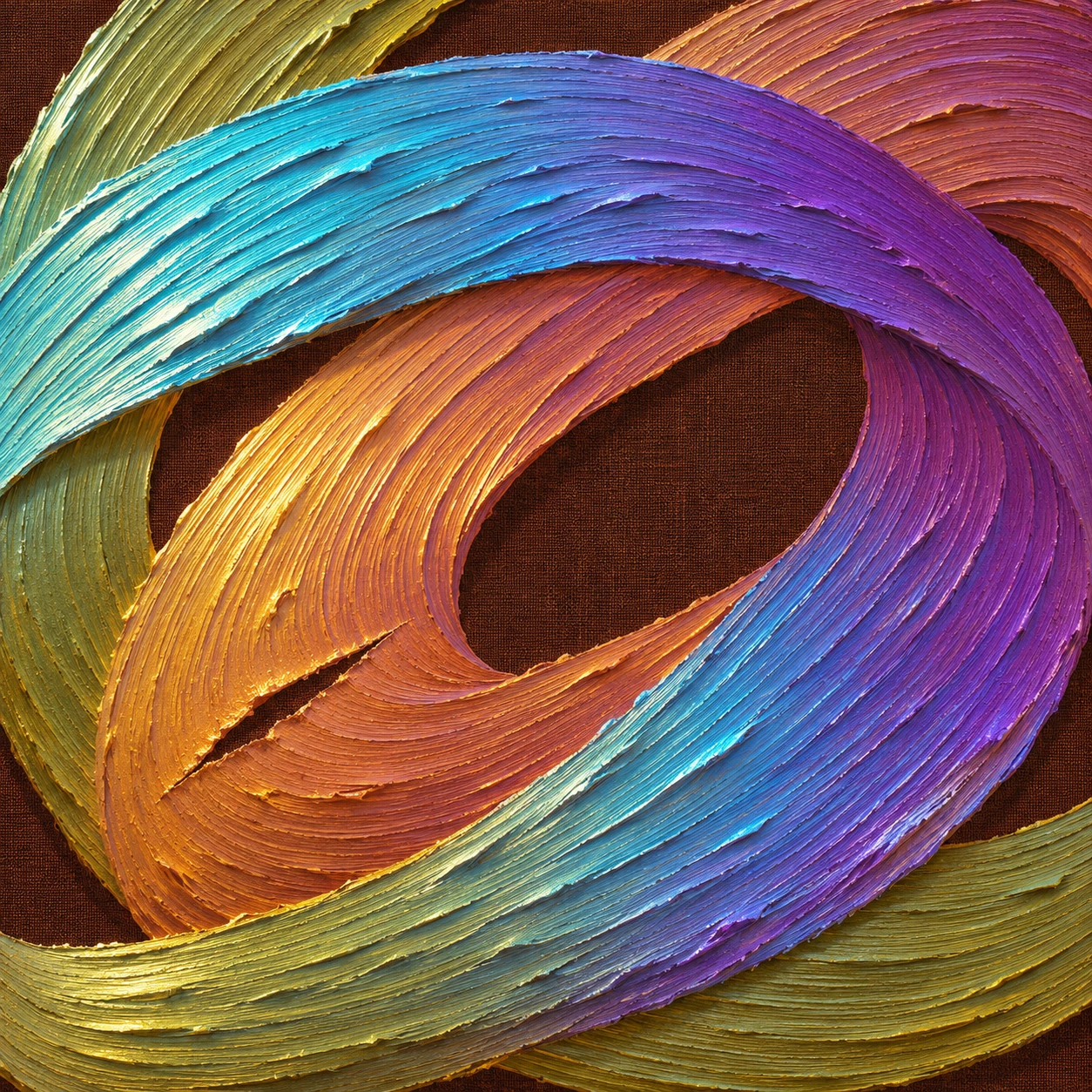
The abstract knot is the most revealing failure at the margin. Its crossing and cut edges have weight, but colour sometimes travels a long way along a band whose slope barely changes. Try covering the centre of that sweep. Then restore half the colour, confined to the banked turn. The ribbon loses some spectacle and gains a more persuasive light.
Neutral reading
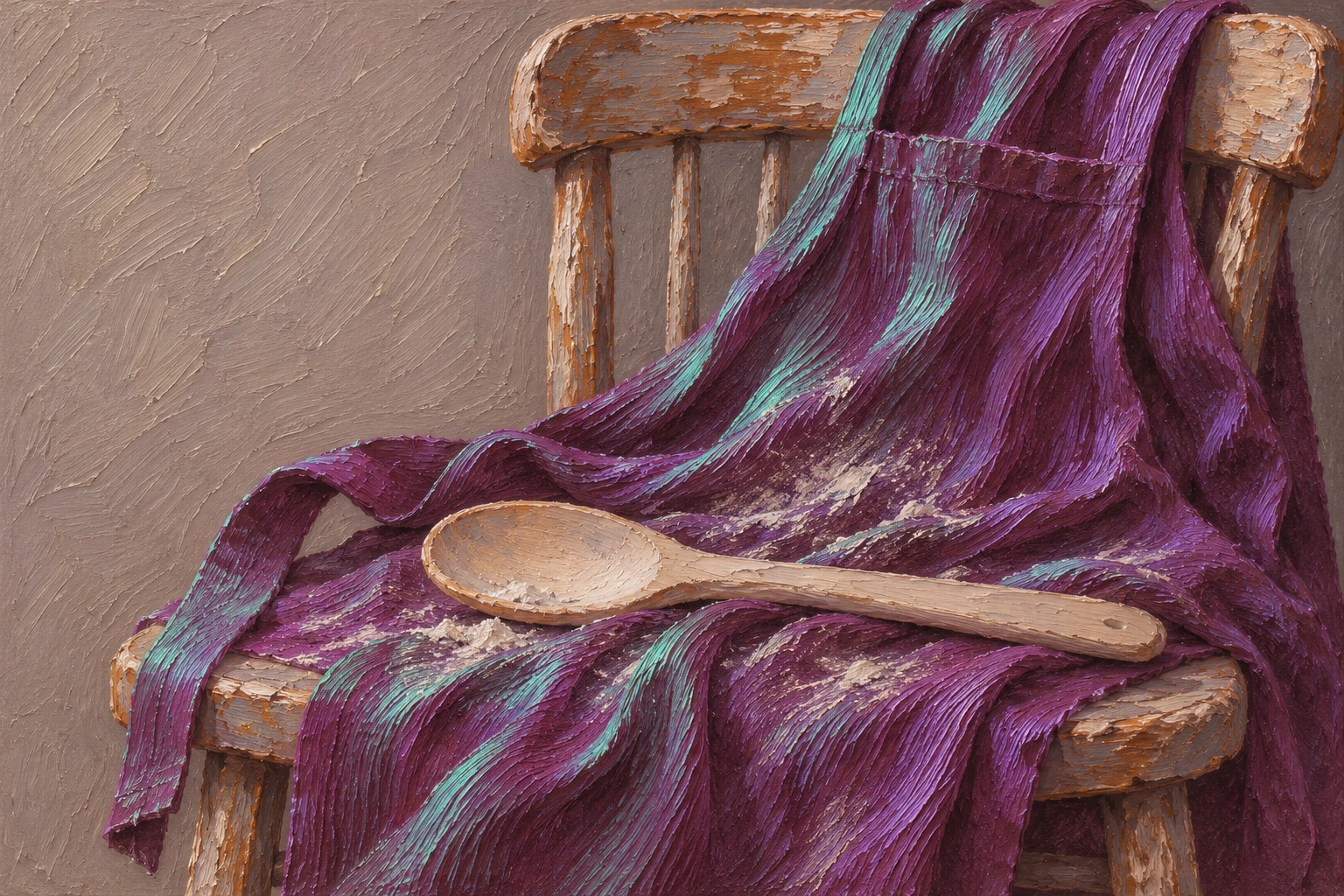
This approach suits subjects whose planes are legible at a glance. The watch repairer offers a temple and knuckles for comparison. The cable car offers two banks of rock at very different distances. Fine watch workings, mist and a plain kitchen spoon benefit from quieter treatment. A still image shows the proposed colour at one viewing position.
A small poetic detour
Original words from the AOI studio.
Poetry
The knife leaves half a wave of cream.
One bank takes green, one bank takes plum.
Down in the furrow, out of reach,
a little brown stays brown.
The prompt workshop
Original creative exercises. These prompts create new illustrations, not documentary evidence.
One petal, one turn
Polarized Impasto. Paint one ivory camellia petal on a dark, matte ground with one thick, turning knife stroke. Set a window to the upper left. Carry pearl green along the facing lip and let it turn towards soft violet as it rolls away. Leave ivory in the petal and a short cast shadow under its edge.
Find the face in three strokes
Build an intimate portrait of a watch repairer using three families of thick strokes for forehead, cheek and collar. Preserve the warm skin in the hollows. Set one low side light. Give similarly inclined faces of paint a quiet turquoise flash. Let the stroke turning round the cheek lose that flash. Keep the watch a small, legible accent.
Test a reversal
Make two matched studies of a loop of combed paint over burnt umber. Same crop, same lamp, same viewing position. In the second version reverse the cross-sectional tilt of one ribbon, keeping its drawn path fixed. Move its violet-to-green transition to the newly facing slope. Keep the other ribbon and the bare ground consistent.
A smile from the studio
Jokes
I asked the sitter to turn a little towards the light. The painter moved one brushstroke and gave her the afternoon off.
Sources and further exploration
National Gallery, London • Impasto — How thick paint and tool marks catch light on a painting.