
A visual storytelling approach across media
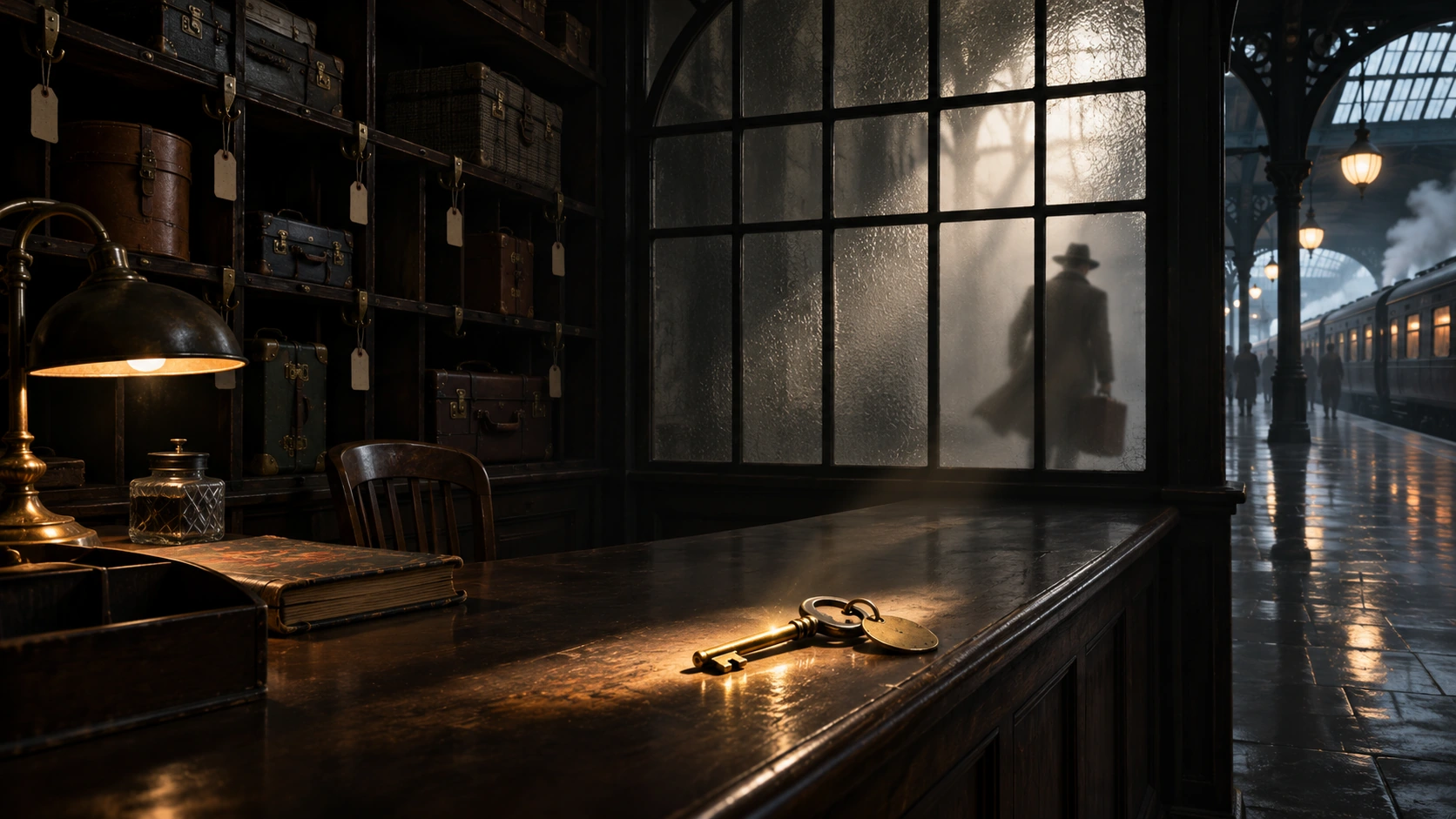
A key lies on the counter. Through frosted glass someone appears to be leaving. Noir begins in the uncertain connection between those facts. This guide follows that way of arranging evidence across a photograph, a drawing and a colour scene.
A visual introduction
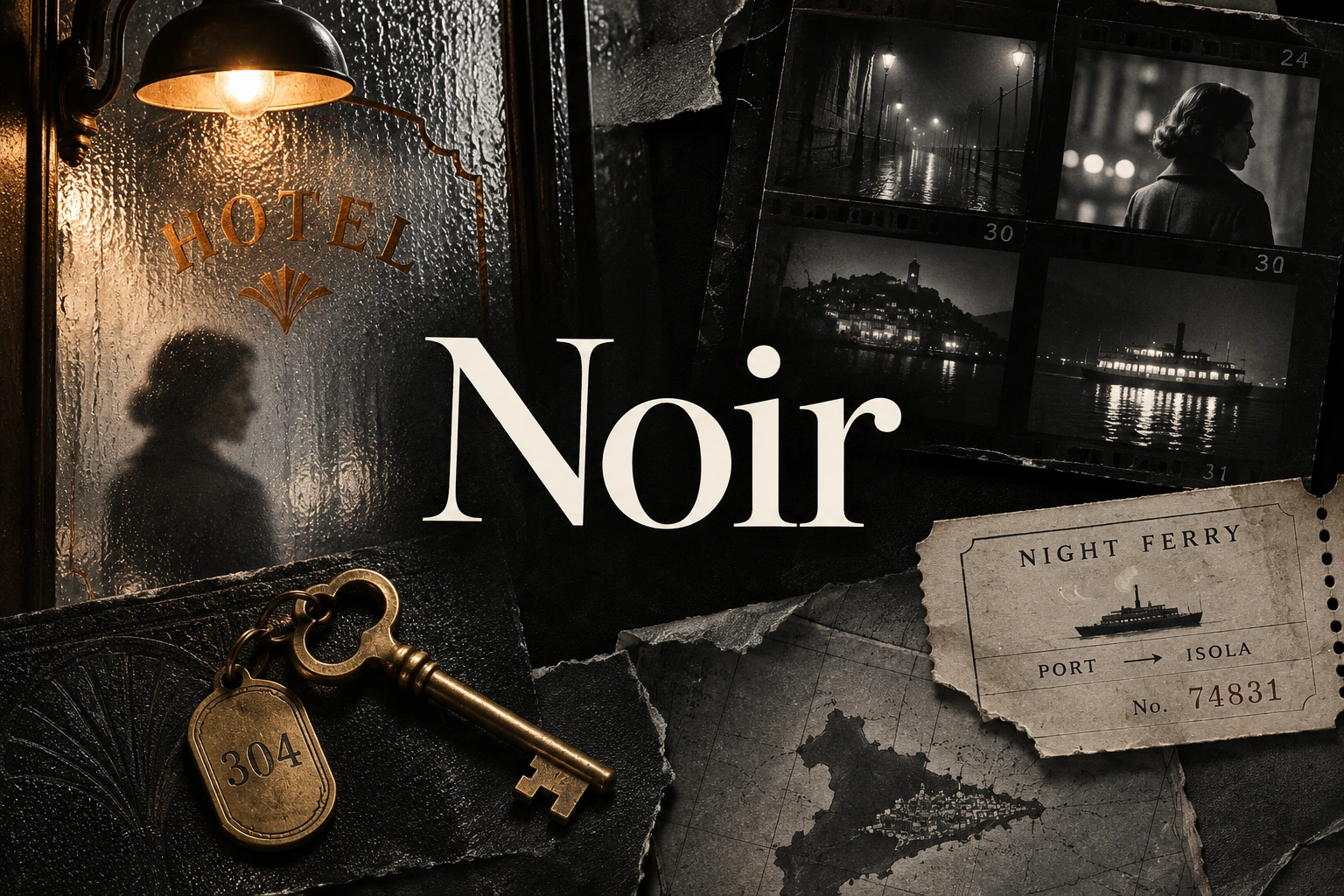
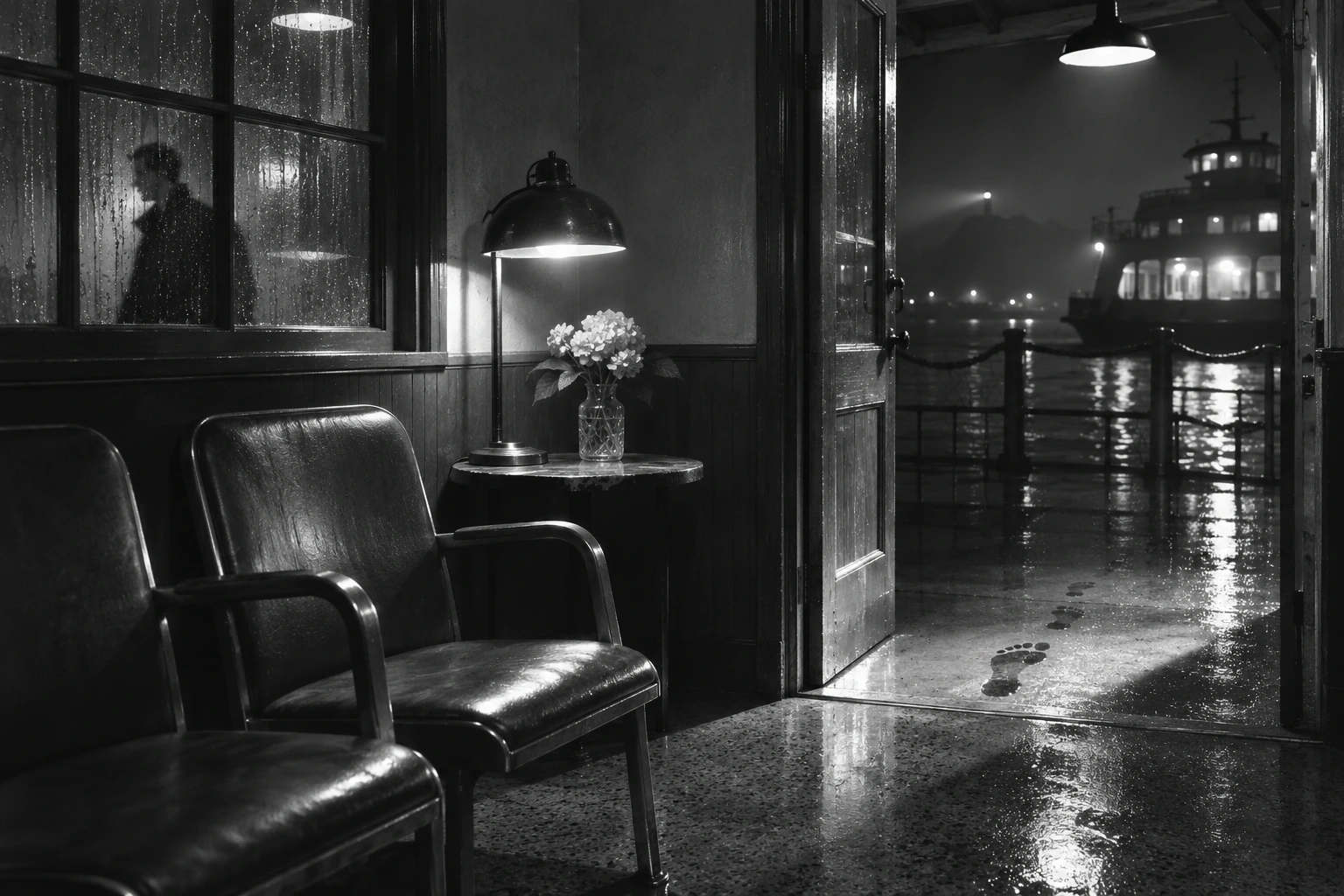
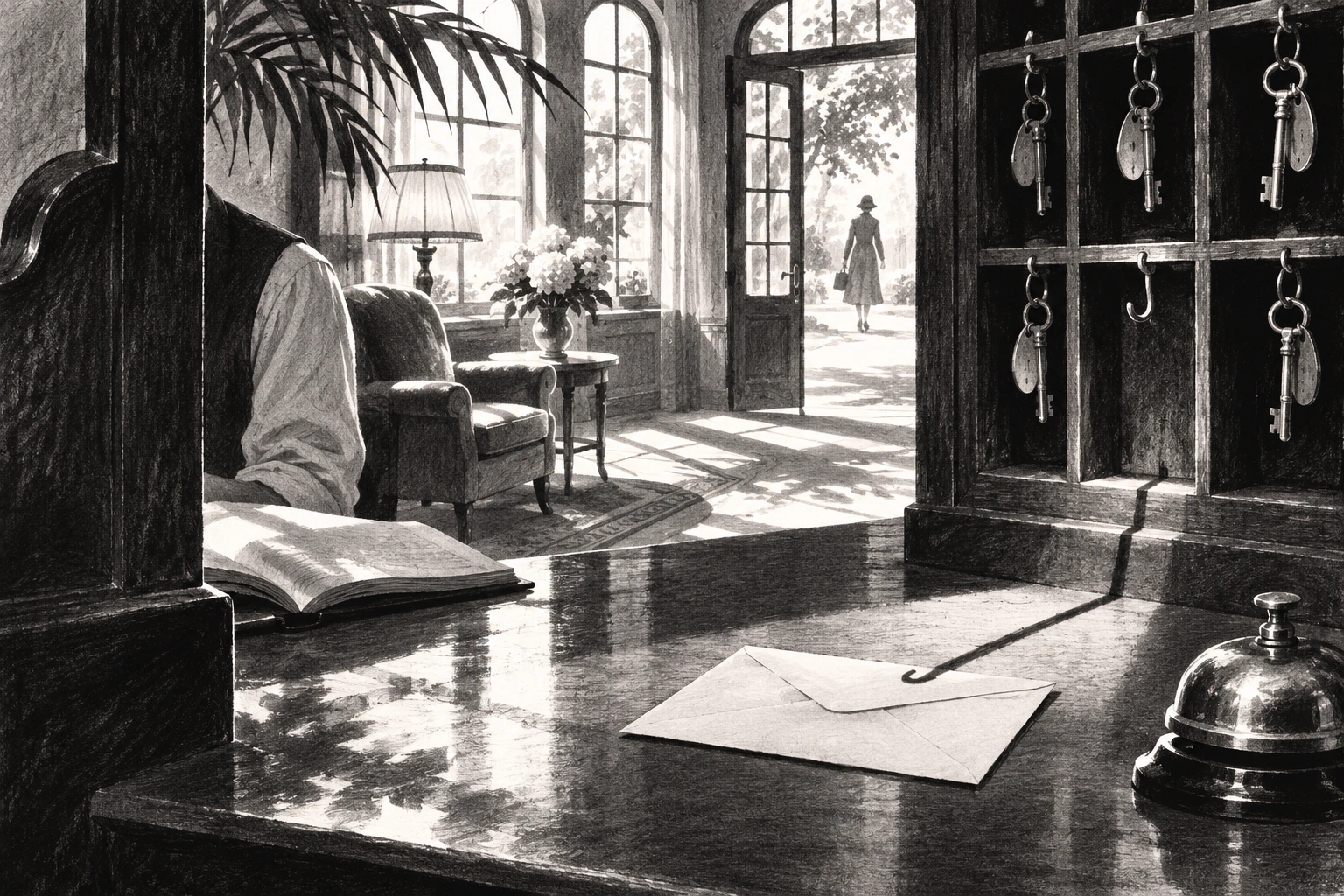
These original AI interpretations test noir at a ferry terminal, in daylight and under coloured shop lights. Each image suggests something that happened outside its frame.
Select an image for a closer look. Use the thumbnails, arrow keys or a swipe to compare examples. Zoom in to inspect details, or share the image that inspires you.
Creative toolbox · take this style further
Choose an input and a destination. Search sends your words to the chosen site; Copy & open puts them on your clipboard to paste there.
Create with AI
Turn your chosen input into an image prompt or a new creative direction.
ChatGPT
Copy your input and paste it into a ChatGPT conversation or image request.
Copy & open ChatGPT (new tab)Claude · Anthropic
Develop an image prompt or explore the style in a new Claude conversation.
Copy & open Claude · Anthropic (new tab)Midjourney
Paste your input into the Imagine bar on the Create page.
Copy & open Midjourney (new tab)Adobe Firefly
Copy your input, open Firefly, and paste it into the prompt field.
Copy & open Adobe Firefly (new tab)Leonardo.Ai
Copy your input, open Leonardo, and paste it into the generation field.
Copy & open Leonardo.Ai (new tab)Image search
Find visual references. Short, concrete keywords usually work best.
Lexica
Search AI images and prompts using your selected input.
Search with this input Lexica (new tab)Pexels
Search the photo and video library. Short keywords often work best.
Search with this input Pexels (new tab)Pixabay
Search photos, illustrations and other images.
Search with this input Pixabay (new tab)Unsplash
Search photographs using the style name or your own keywords.
Search with this input Unsplash (new tab)Wikimedia Commons
Search photographs, artworks and historical images. Check each file for its source and reuse terms.
Search with this input Wikimedia Commons (new tab)Art & research
Explore artists, collections and the ideas behind a style.
Wikipedia
Search for background reading. A style may not have its own article.
Search with this input Wikipedia (new tab)WikiArt
Copy your input into WikiArt’s search to explore artists and artworks.
Copy & open WikiArt (new tab)Europeana
Paste your keywords into the search to explore European museum, library and archive collections.
Copy & open Europeana (new tab)Inspiration
Discover portfolios and visual ideas from creative communities.
Instagram hashtags
Search a hashtag made from your input: spaces and punctuation are removed. Instagram may require sign-in.
Search with this input Instagram hashtags (new tab)ArtStation
Paste your input into artwork search for concept art, environments, characters and visual development.
Copy & open ArtStation (new tab)Behance
Paste your input into project search for illustration, design and visual storytelling.
Copy & open Behance (new tab)A closer look
Choose a viewpoint that gives the viewer access to one revealing detail while withholding another. Let light, framing and reflections affect what the viewer can plausibly know.
Whose view of events are we getting?
Film noir provides a historical frame of reference. In Sight and Sound, a discussion of Out of the Past offers competing ways to understand a single film. The BFI’s account of French noir widens the field again. A list of hats, blinds and wet pavements would tell you very little about the different stories those films tell.
For a still image, begin with an unequal distribution of information. A person behind glass may know where they are going. Someone at the counter can see only their outline. Put the viewer at the counter. The key left within reach now raises a question that the hidden face cannot answer.
Give darkness an address
Locate the light within the scene. If it enters from an open door, a chair leg should cast its shadow away from that door. Give the deepest dark to a shape that can afford to lose its outline, then leave a little separation around the clue. A bright brass highlight can outweigh a whole black coat.
Daylight gives you another means of concealment. A partition can crop a face. An envelope can turn its blank side towards the viewer. Try drawing a daytime desk in graphite and ink, with just one area of dense black. See how much uncertainty survives after you take away the night.
A photograph waits differently from a drawing
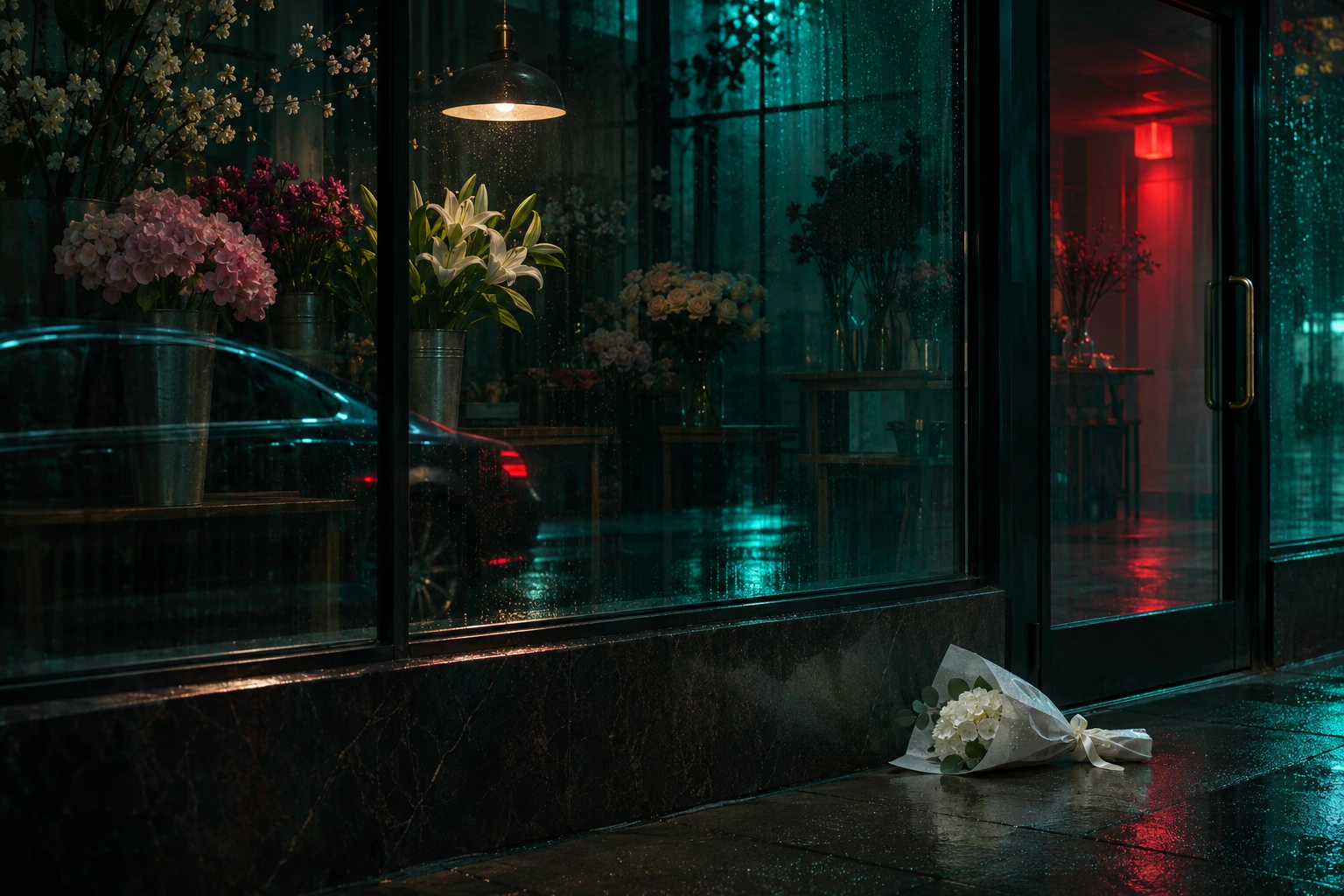
In a photograph, two planes of glass can place a reflected vehicle beside a bouquet on the pavement. A vertical mullion breaks the apparent connection and reminds us that the car may be elsewhere. In an ink drawing, a single unbroken silhouette can hide who stands at a desk. Choice of medium changes what counts as evidence.
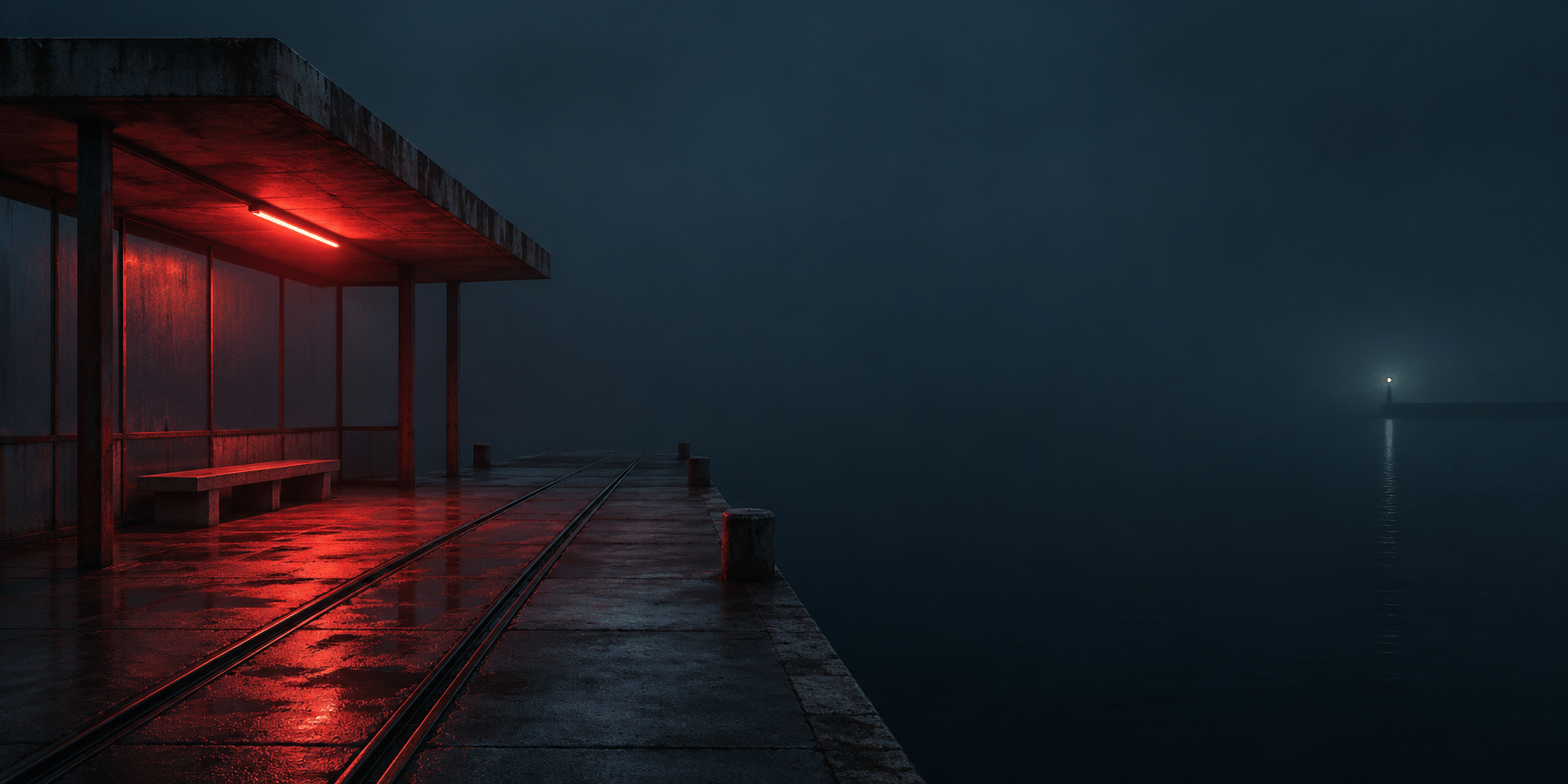
Try removing the most theatrical prop. If the ferry waiting room still feels unsettled with only empty seats, a threshold and a wet mark, the staging is carrying the story. If a coloured night scene collapses when its neon is switched off, reconsider what the characters or objects know about each other. Liminal Void Neon Noir explores the more specific case of transitional space and neon light.
A small poetic detour
Original words from the AOI studio.
Poetry
The key stays on its ring.
The door gives back a coat in pieces.
Someone has taken the last boat.
The light on the counter
is still asking who.
The prompt workshop
Original creative exercises. These prompts create new illustrations, not documentary evidence.
Leave one clue
Frame a ferry waiting room from the height of a seated passenger. Light one wet footprint at the threshold. Let a reflection hint at a person beyond the door.
Bring noir into daylight
Draw a hotel desk in graphite and dry black ink. A key is missing from its hook. A partition hides the clerk and one envelope lies blank side up. Use hard noon light.
Make colour an unreliable witness
Photograph the glass of a closed florist. Cross a red reflection with cool turquoise glass, leave a white bouquet outside and interrupt a reflected car with the door frame.
Your next inspiration
Discover another art style
Follow a visual thread to the next subject.
Liminal Void Neon Noir
Explore the narrower AOI treatment of empty transitional places and neon light.
A smile from the studio
Jokes
The night clerk could account for every key. It was the doors that kept changing their stories.