
AOI editorial concept · Political imagery and visual rhetoric
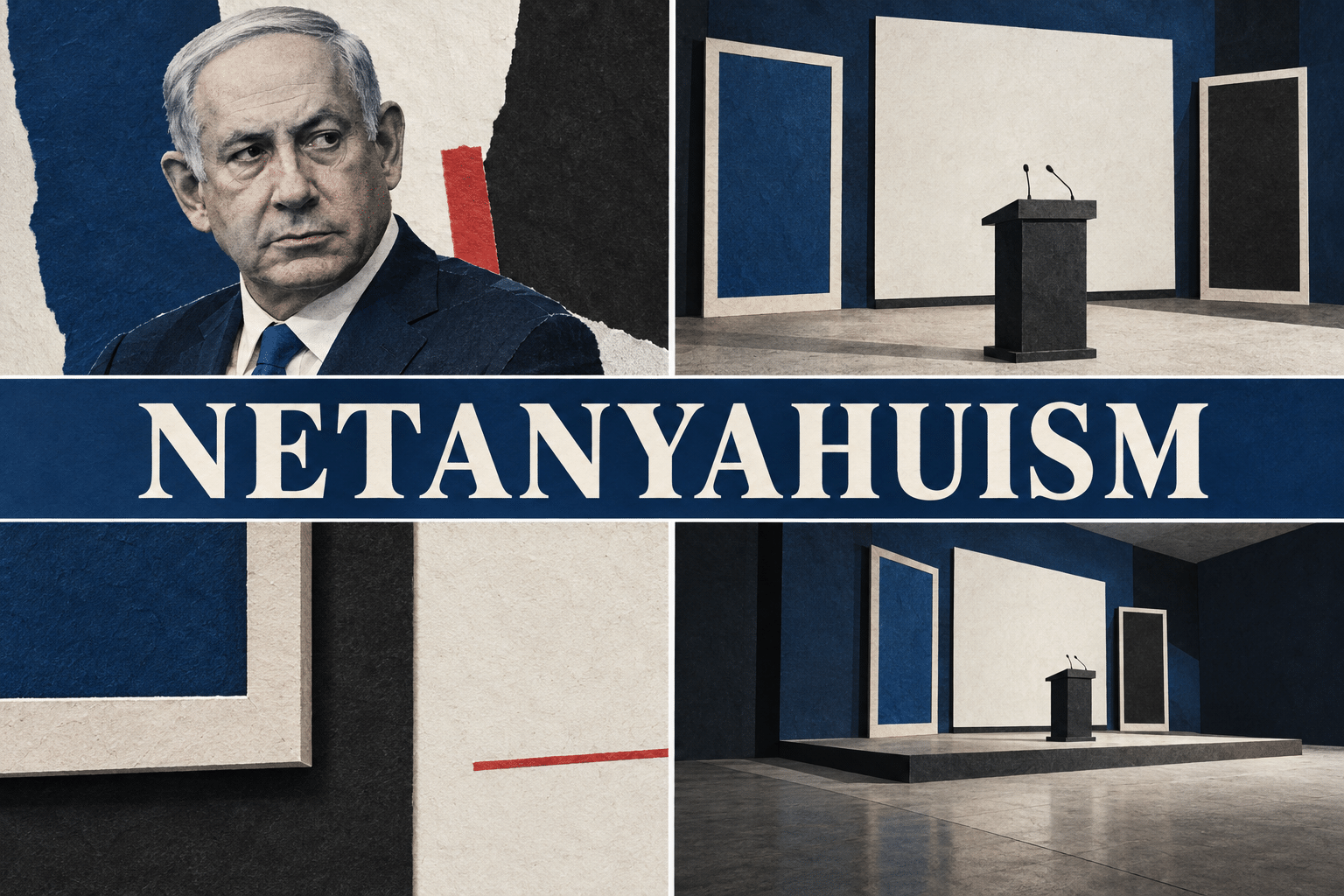
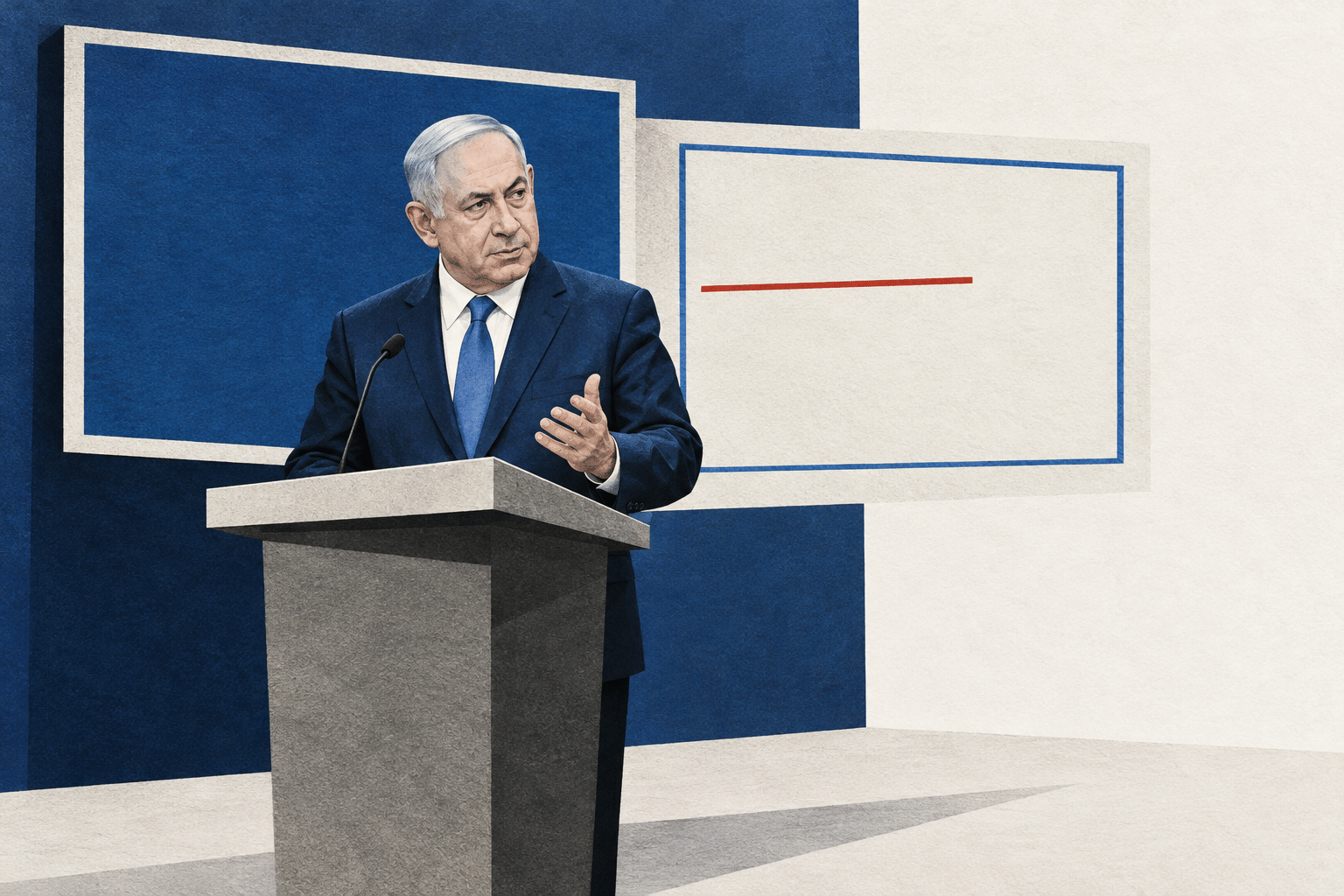
Netanyahuism is an AOI editorial concept built around the frame of an address: the lectern, the speaking figure, the diagram-like plane and the margin left outside the presentation. Its visual question is how a tightly organized image directs attention—and what becomes visible when the frame widens.
An A⊕I –[-.+] creαt¡ve c⊕ncept, n⊕t αn estαbl¡she∂ h¡st⊕r¡cαl m⊕vement.
A visual introduction
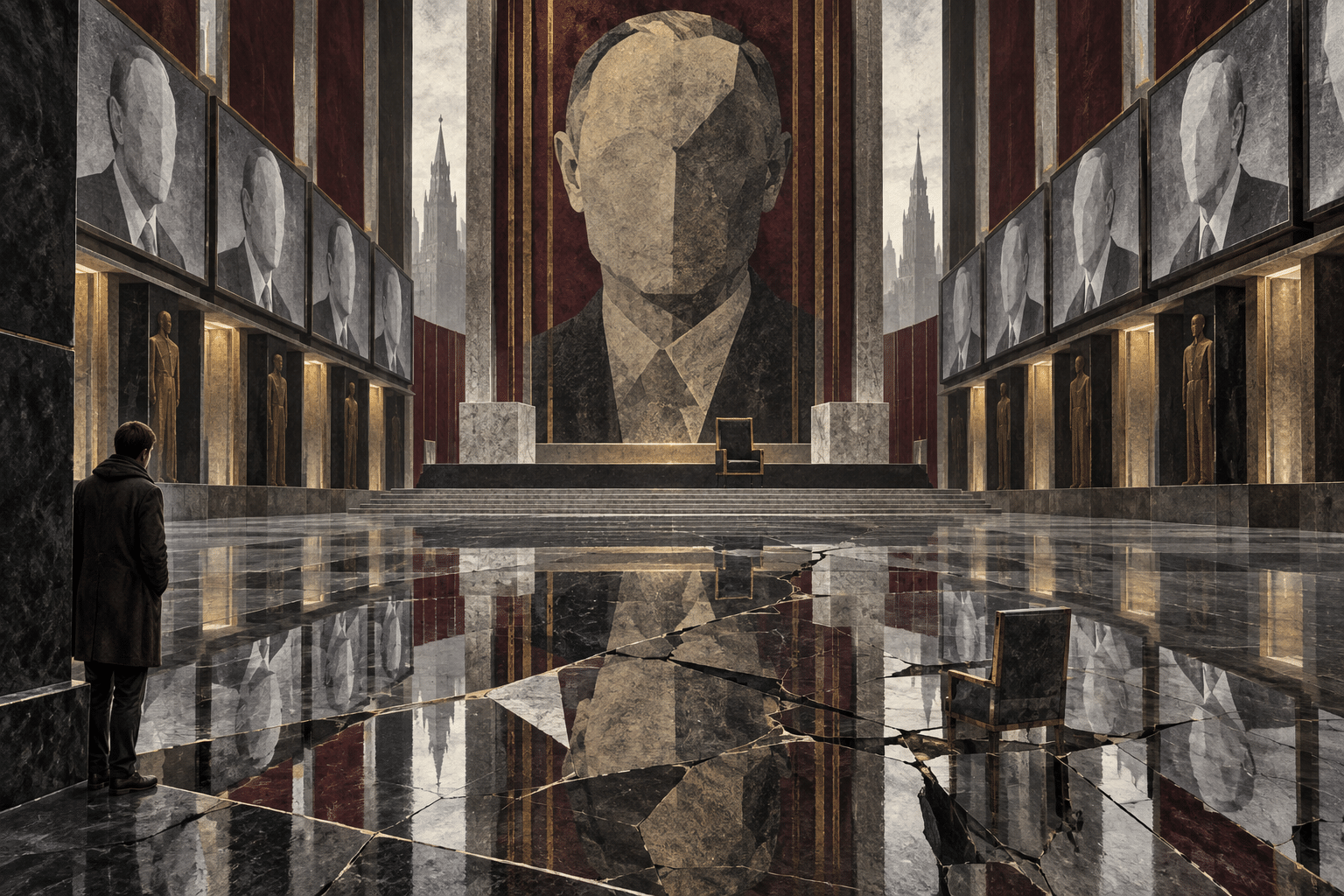
Two original AI-generated illustrations: a dedicated editorial example and a centrally titled four-study collage. The images explore presentation and composition; they are not documentary scenes.
Select an image for a closer look. Use the thumbnails, arrow keys or a swipe to compare examples. Zoom in to inspect details, or share the image that inspires you.
Creative toolbox · take this style further
Choose an input and a destination. Search sends your words to the chosen site; Copy & open puts them on your clipboard to paste there.
Create with AI
Turn your chosen input into an image prompt or a new creative direction.
ChatGPT
Copy your input and paste it into a ChatGPT conversation or image request.
Copy & open ChatGPT (new tab)Claude · Anthropic
Develop an image prompt or explore the style in a new Claude conversation.
Copy & open Claude · Anthropic (new tab)Midjourney
Paste your input into the Imagine bar on the Create page.
Copy & open Midjourney (new tab)Adobe Firefly
Copy your input, open Firefly, and paste it into the prompt field.
Copy & open Adobe Firefly (new tab)Leonardo.Ai
Copy your input, open Leonardo, and paste it into the generation field.
Copy & open Leonardo.Ai (new tab)Image search
Find visual references. Short, concrete keywords usually work best.
Lexica
Search AI images and prompts using your selected input.
Search with this input Lexica (new tab)Pexels
Search the photo and video library. Short keywords often work best.
Search with this input Pexels (new tab)Pixabay
Search photos, illustrations and other images.
Search with this input Pixabay (new tab)Unsplash
Search photographs using the style name or your own keywords.
Search with this input Unsplash (new tab)Wikimedia Commons
Search photographs, artworks and historical images. Check each file for its source and reuse terms.
Search with this input Wikimedia Commons (new tab)Art & research
Explore artists, collections and the ideas behind a style.
Wikipedia
Search for background reading. A style may not have its own article.
Search with this input Wikipedia (new tab)WikiArt
Copy your input into WikiArt’s search to explore artists and artworks.
Copy & open WikiArt (new tab)Europeana
Paste your keywords into the search to explore European museum, library and archive collections.
Copy & open Europeana (new tab)Inspiration
Discover portfolios and visual ideas from creative communities.
Instagram hashtags
Search a hashtag made from your input: spaces and punctuation are removed. Instagram may require sign-in.
Search with this input Instagram hashtags (new tab)ArtStation
Paste your input into artwork search for concept art, environments, characters and visual development.
Copy & open ArtStation (new tab)Behance
Paste your input into project search for illustration, design and visual storytelling.
Copy & open Behance (new tab)A closer look
Deep blue, chalk white and charcoal with one restrained red line; angular presentation planes, a sharply drawn portrait and a clear lectern silhouette. Precise margins and competing rectangular frames matter more than decorative symbols. This is a study of an individual political presentation, not a representation of Jewish or Israeli identity.
A political subject, an artistic proposal
In this article, Netanyahuism names an original AOI editorial art concept associated with Benjamin Netanyahu. The political name is used as a subject for visual inquiry, not presented as an established art-historical school. The aim is to examine how a public persona is framed through space, material, gesture and scale.
United Nations coverage dated September 27, 2012 records Benjamin Netanyahu addressing the General Assembly. It provides a documented example of a public political address. Claims made in that address remain attributed to the speaker; AOI’s invented frames and blank presentation planes do not validate them.
Use framing as the main material
Place the lectern within a dark rectangle, then introduce a second frame at a different scale. Let a shoulder or a shadow cross one boundary so the figure does not become a flat icon. A blank diagram-like plane can make the staging of an argument visible without fabricating evidence or a quotation.
A single red line may guide the eye, but avoid turning every edge into an alarm. Quiet white margins and a large dark mass provide the contrast that makes a small accent meaningful. Keep the facial proportions recognizable without ethnic caricature.
Widen the view
Make two versions of the same invented address: a tight crop around speaker and lectern, and a wider view showing empty floor and the sides of the panels. Compare the amount of space available to the viewer. This exercise studies visual rhetoric; it does not assign hidden motives to the subject.
Avoid conspiracy imagery, religious shorthand and fabricated scenes of harm. The strongest editorial study can remain specific through portrait, framing and a carefully chosen viewpoint. A clear caption establishes the invented nature of the setting.
Read the images and test the idea
The featured illustration and collage are original AI-generated interpretations. Their settings are invented, and the images do not document actual events. The portrait identifies the subject; the surrounding geometry proposes a way to read political presentation. It should not be taken as evidence of a person’s motives or actions.
Make a second version without the portrait. If the composition still has a clear relationship between speaker, setting and viewer, the concept has a useful visual structure. If it becomes an assortment of decorative symbols, simplify the framing and scale before adding more detail. The jokes concern image-making and staging, rather than national, ethnic or religious identity.
A small poetic detour
Original words from the AOI studio.
Poetry
A rectangle decides the view;
The margin keeps a different blue.
Step back: the narrow scene expands,
And shows the frame on which it stands.
The prompt workshop
Original creative exercises. These prompts create new illustrations, not documentary evidence.
Start here · The setting without the speaker
Original AOI Netanyahuism editorial illustration: an empty lectern enclosed by two offset rectangular frames, a blank white presentation plane and one short red guide line. Deep blue, chalk white, charcoal and one restrained red accent; precise layered editorial print. Strong hierarchy, readable negative space, tactile print texture and precise geometric edges. Invented setting, no portrait, campaign slogans, official seals, fake writing or signature.
Portrait · Persona and institution
Original AOI Netanyahuism editorial portrait of Benjamin Netanyahu: a recognizable stylized portrait at an invented lectern, overlapping blue-and-white rectangular frames and a quiet unoccupied margin. Deep blue, chalk white, charcoal and one restrained red accent; precise layered editorial print. Recognizable stylized face, thoughtful balanced composition, visibly illustrative rather than documentary. No endorsement slogan, official emblem, false quotation or signature.
Experimental · Reveal the frame
Original AOI Netanyahuism experimental editorial study: a presentation set in wide view, showing the thin edges of its panels and the empty floor around a small lectern. Deep blue, chalk white, charcoal and one restrained red accent; precise layered editorial print. Contrast the apparent front with the visible construction of the scene, using light and spacing instead of written accusations. Clearly invented visual metaphor, no text or signature.
Your next inspiration
Discover another art style
Follow a visual thread to the next subject.
A smile from the studio
Jokes
The slide deck asked for more context. The margins volunteered.
The lectern wanted a wider shot; it was tired of being cropped at the knees.
Sources and further exploration
United Nations — General Assembly coverage, September 27, 2012