
Established
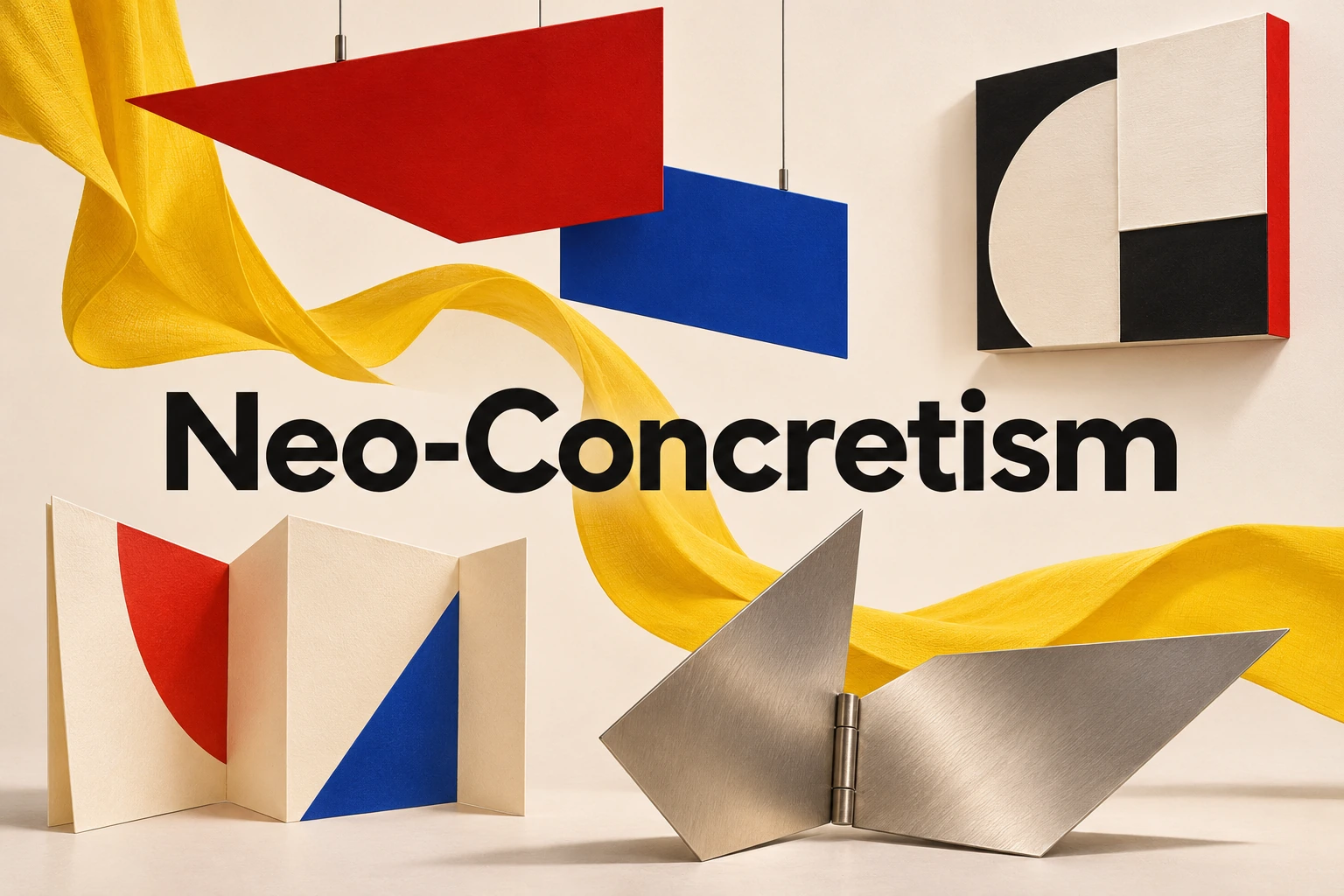
Neo-Concretism emerged in Brazil around the 1959 Rio de Janeiro manifesto written by Ferreira Gullar. It rethought geometric art through lived perception, material presence and the viewer's encounter with a work. A plane could fold, a book could become an object, and color could enter the space of the body.
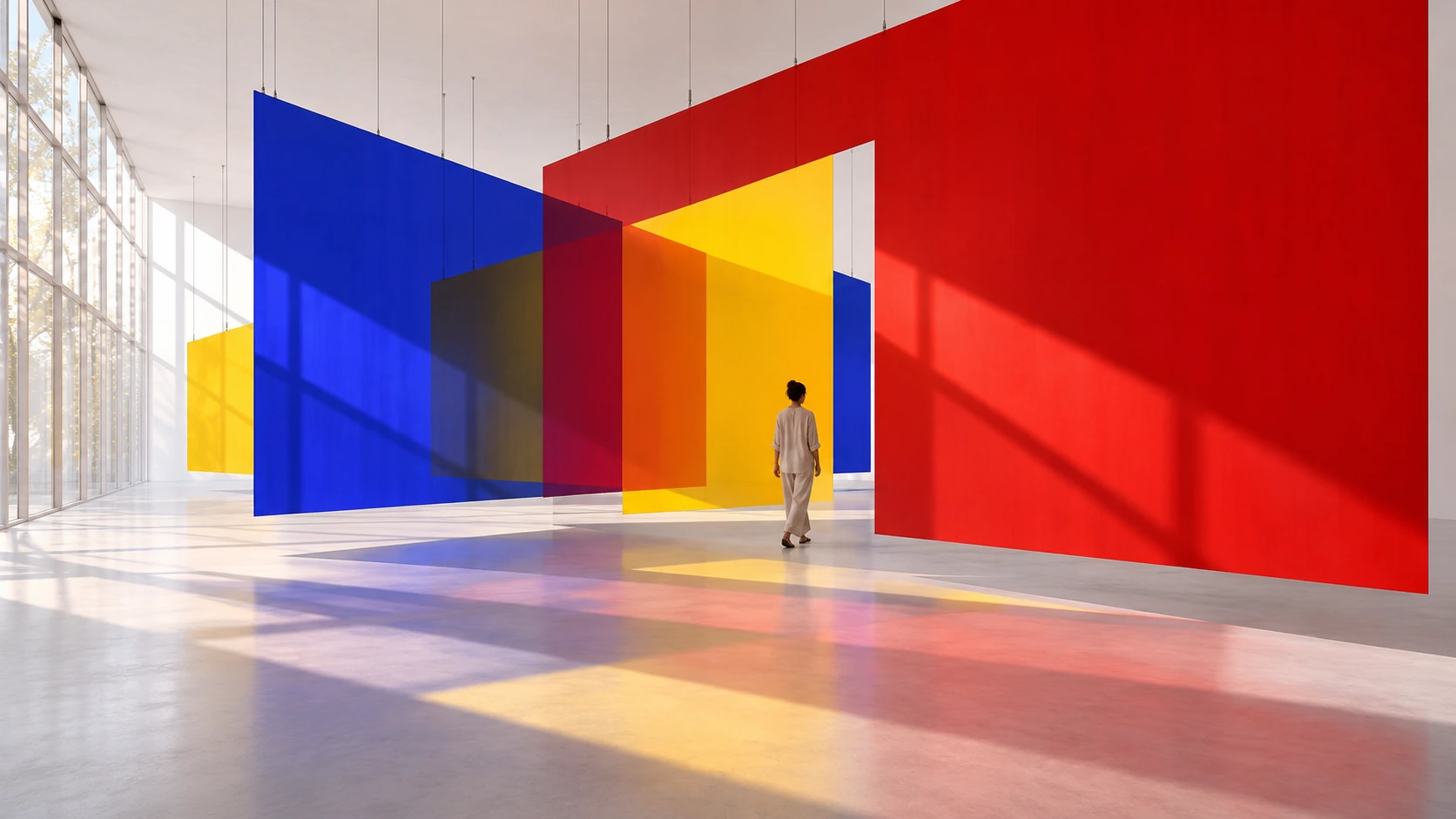
A visual introduction
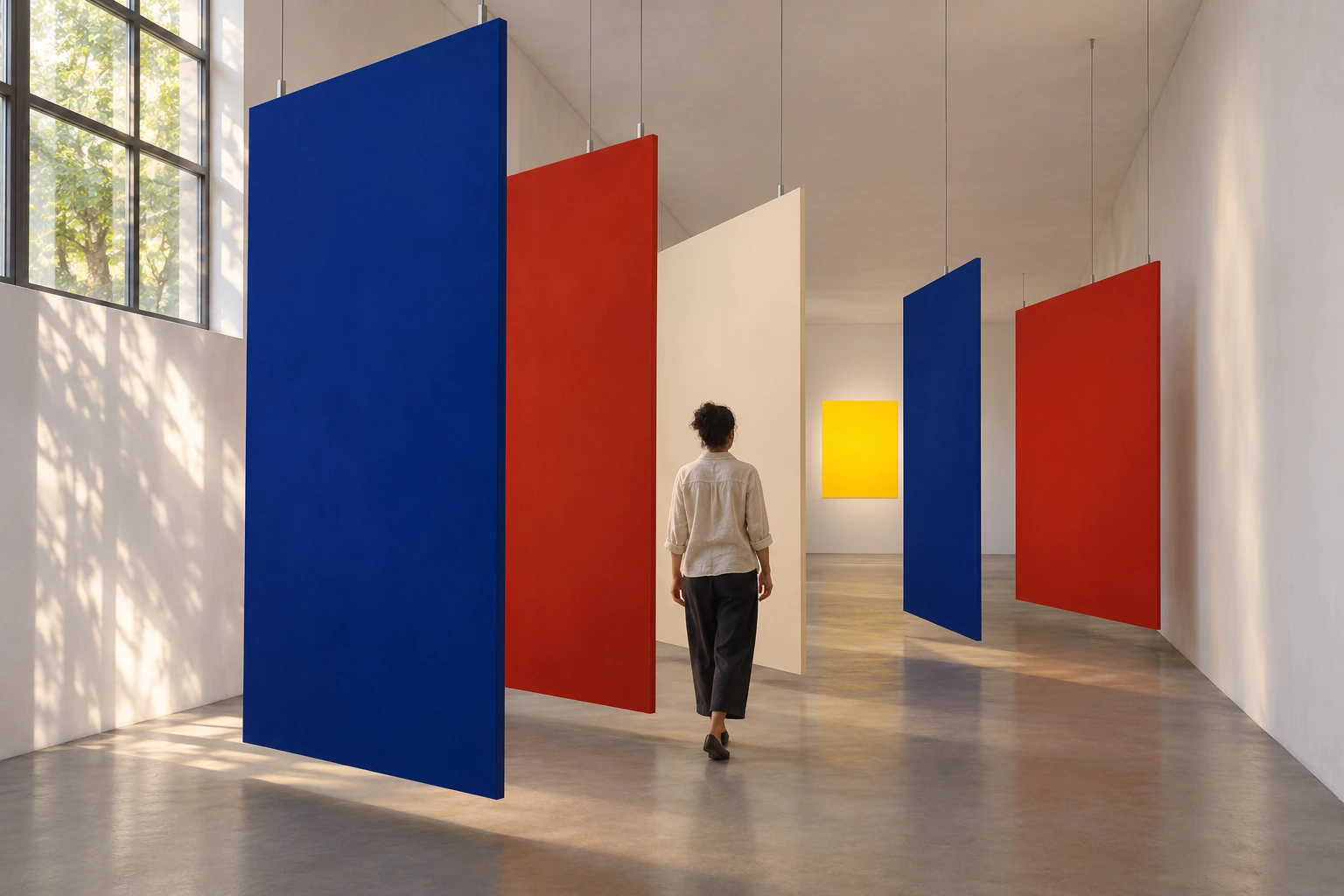
Seven original AI-generated studies explore this subject through a banner, a titled collage and five standalone examples.
Select an image for a closer look. Use the thumbnails, arrow keys or a swipe to compare examples. Zoom in to inspect details, or share the image that inspires you.
Creative toolbox · take this style further
Choose an input and a destination. Search sends your words to the chosen site; Copy & open puts them on your clipboard to paste there.
Create with AI
Turn your chosen input into an image prompt or a new creative direction.
ChatGPT
Copy your input and paste it into a ChatGPT conversation or image request.
Copy & open ChatGPT (new tab)Claude · Anthropic
Develop an image prompt or explore the style in a new Claude conversation.
Copy & open Claude · Anthropic (new tab)Midjourney
Paste your input into the Imagine bar on the Create page.
Copy & open Midjourney (new tab)Adobe Firefly
Copy your input, open Firefly, and paste it into the prompt field.
Copy & open Adobe Firefly (new tab)Leonardo.Ai
Copy your input, open Leonardo, and paste it into the generation field.
Copy & open Leonardo.Ai (new tab)Image search
Find visual references. Short, concrete keywords usually work best.
Lexica
Search AI images and prompts using your selected input.
Search with this input Lexica (new tab)Pexels
Search the photo and video library. Short keywords often work best.
Search with this input Pexels (new tab)Pixabay
Search photos, illustrations and other images.
Search with this input Pixabay (new tab)Unsplash
Search photographs using the style name or your own keywords.
Search with this input Unsplash (new tab)Wikimedia Commons
Search photographs, artworks and historical images. Check each file for its source and reuse terms.
Search with this input Wikimedia Commons (new tab)Art & research
Explore artists, collections and the ideas behind a style.
Wikipedia
Search for background reading. A style may not have its own article.
Search with this input Wikipedia (new tab)WikiArt
Copy your input into WikiArt’s search to explore artists and artworks.
Copy & open WikiArt (new tab)Europeana
Paste your keywords into the search to explore European museum, library and archive collections.
Copy & open Europeana (new tab)Inspiration
Discover portfolios and visual ideas from creative communities.
Instagram hashtags
Search a hashtag made from your input: spaces and punctuation are removed. Instagram may require sign-in.
Search with this input Instagram hashtags (new tab)ArtStation
Paste your input into artwork search for concept art, environments, characters and visual development.
Copy & open ArtStation (new tab)Behance
Paste your input into project search for illustration, design and visual storytelling.
Copy & open Behance (new tab)A closer look
Simple geometric forms acquire depth, hinges, gaps, folds and changing viewpoints. Color belongs to surfaces and spatial relationships rather than merely decorating an outline. Some works invite handling or movement, while others activate perception through edges, relief and the viewer's position. Participation is a relationship, not a mandatory mechanical feature.
Geometry encountered by a person
The ICAA archive at the Museum of Fine Arts, Houston places the Neo-Concrete Manifesto with the first Neo-Concrete exhibition in Rio de Janeiro in 1959. Written by Ferreira Gullar, it was signed by artists including Lygia Clark, Lygia Pape, Franz Weissmann and Amílcar de Castro, alongside Reynaldo Jardim and Theon Spanudis. It challenged a narrowly rationalist account of geometric art while retaining a constructive vocabulary.
The central issue was how a work is experienced. A viewer brings a body, changing attention and a position in space. An object may therefore be understood through an unfolding encounter rather than as a fixed arrangement fully explained by a formula. This does not mean that the artists abandoned precision; it changes what precision is used to make possible.
A Brazilian history, with different paths
Moderna Museet's account distinguishes the more analytical program associated with São Paulo's Grupo Ruptura from the exploratory Rio context of Grupo Frente. Its Neo-Concretism discussion emphasizes sensory experience and the influence of phenomenology. Hélio Oiticica joined the Neo-Concrete group in 1960; he should not be presented as a signatory of the 1959 manifesto.
These artists did not all make the same kind of object. MoMA's collection brings together Clark's Sundial (1960), Pape's Book of Creation (1959–60), Hércules Barsotti's White/White (1961), Willys de Castro's Active Object (1961) and Oiticica's Neoconcrete Relief (1960). The range matters: painting, relief, book and sculpture can pose different questions about space and perception.
A hinge changes more than an angle
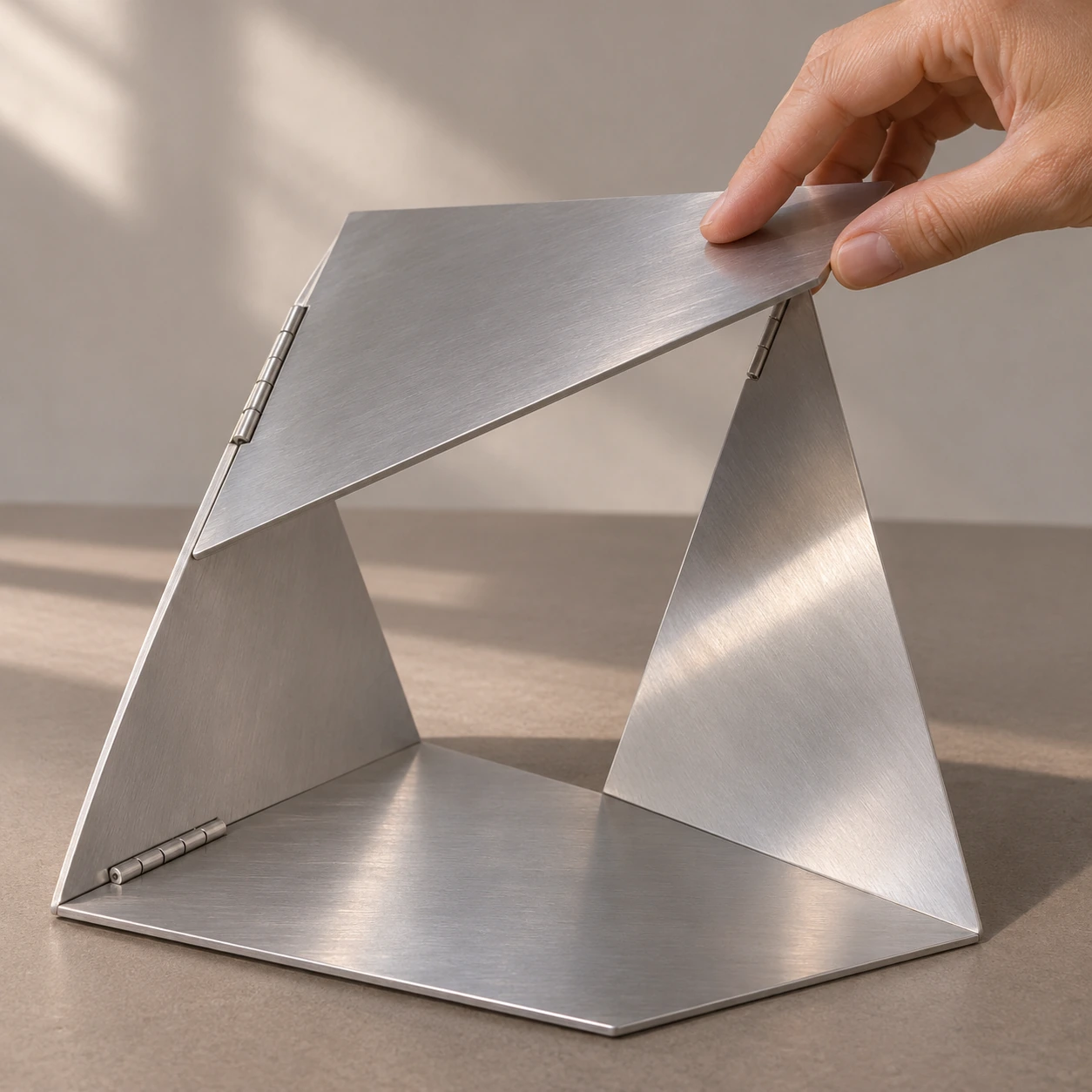
In a contemporary study inspired by manipulable geometry, make the joint intelligible. Two planes should visibly meet along a plausible hinge; a change of angle should alter the balance, silhouette or opening. An arbitrary cluster of floating polygons may be attractive but does not demonstrate the same relationship.
Clark's Bicho works are a key historical reference for objects that can be reshaped through handling, as discussed by Moderna Museet. The new gallery images are conceptual interpretations, not replicas or documentation of those works. A still rendering can show a possible configuration, but it cannot prove how a physical mechanism moves or feels.
The edge becomes an event
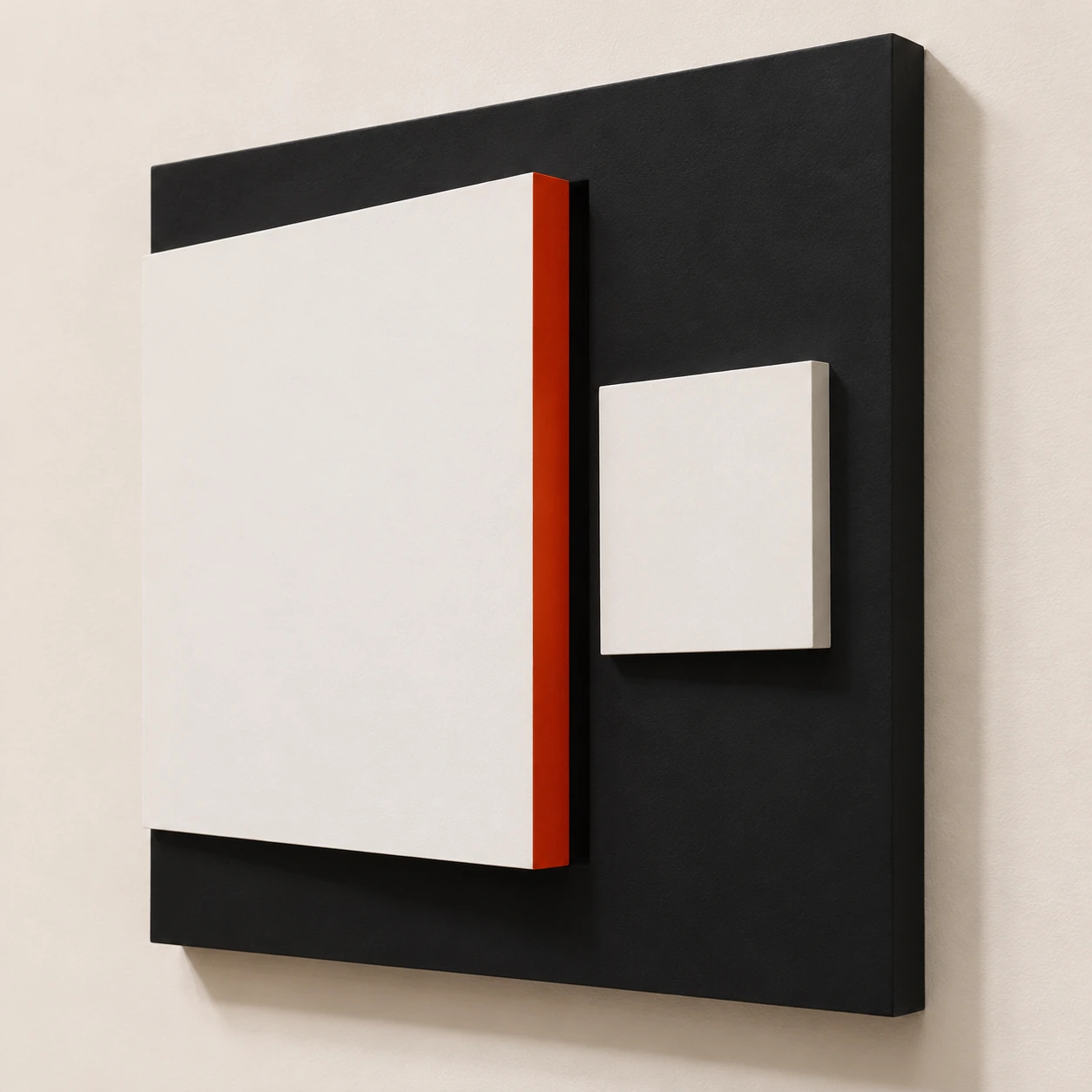
A narrow side face can interrupt the apparent front of a work. A painted band may continue around a corner, disappear from one viewpoint and become dominant from another. This is an economical way to make looking active: the viewer changes the reading by moving.
Try a shallow relief with one projecting plane and a small gap. Compare a frontal view with an oblique view. The important difference may be a newly visible color, a shifted shadow or the discovery that an apparently flat shape has thickness. Keep the geometry spare enough for that change to register.
A book can unfold into space
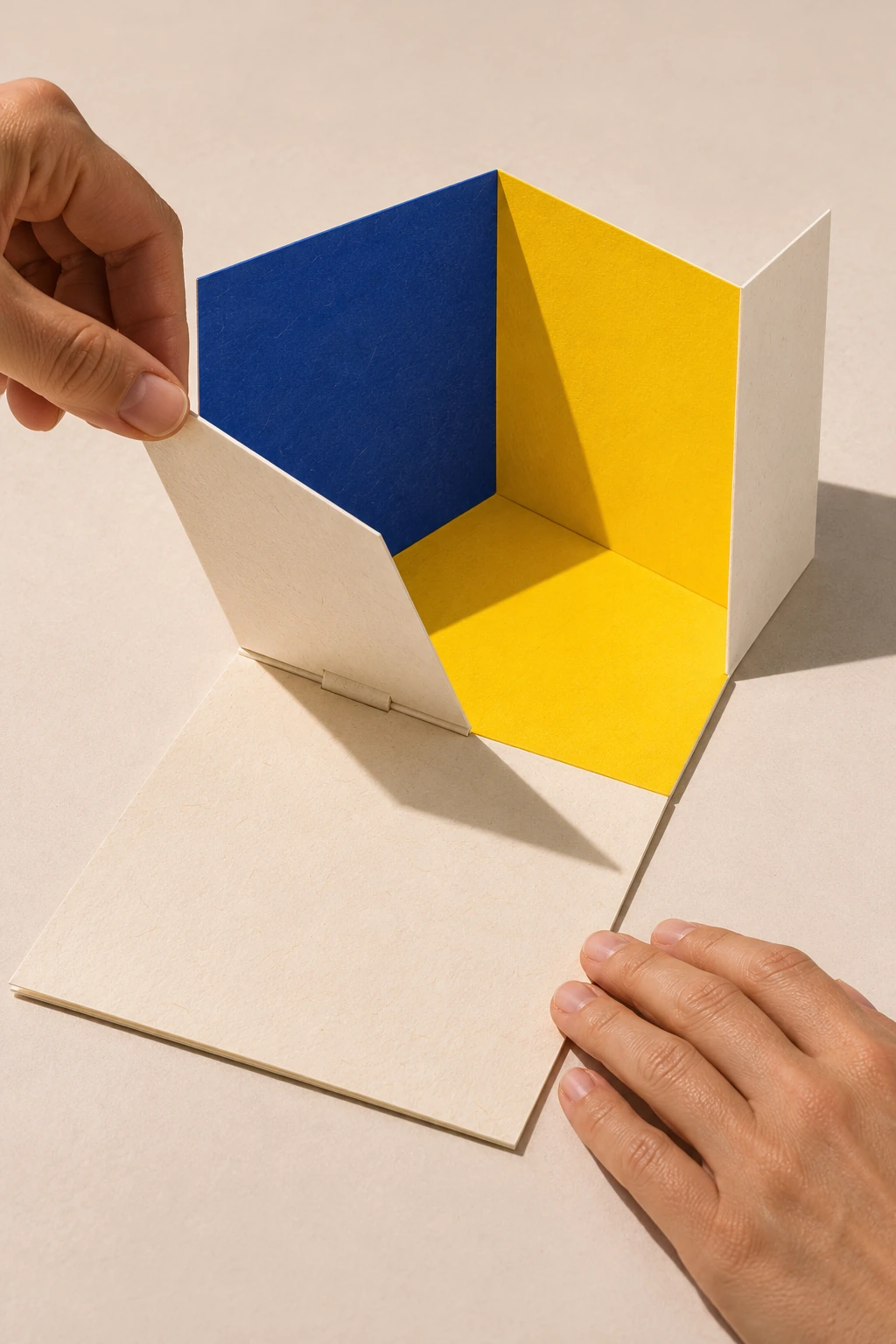
Pape's Book of Creation offers a historical reference for a book experienced through its separate spatial elements and handling. For a new exercise, let a page open, fold or stand rather than serve only as a surface for an illustration. The transition between states becomes part of the composition.
Choose a clear action: lifting a flap, turning a plane or bringing two colored edges together. The reader should be able to understand the invitation. A complex paper sculpture with no perceptible relation to a page turn may explore a different problem, even if its palette resembles a Neo-Concrete work.
Color, movement and later extensions
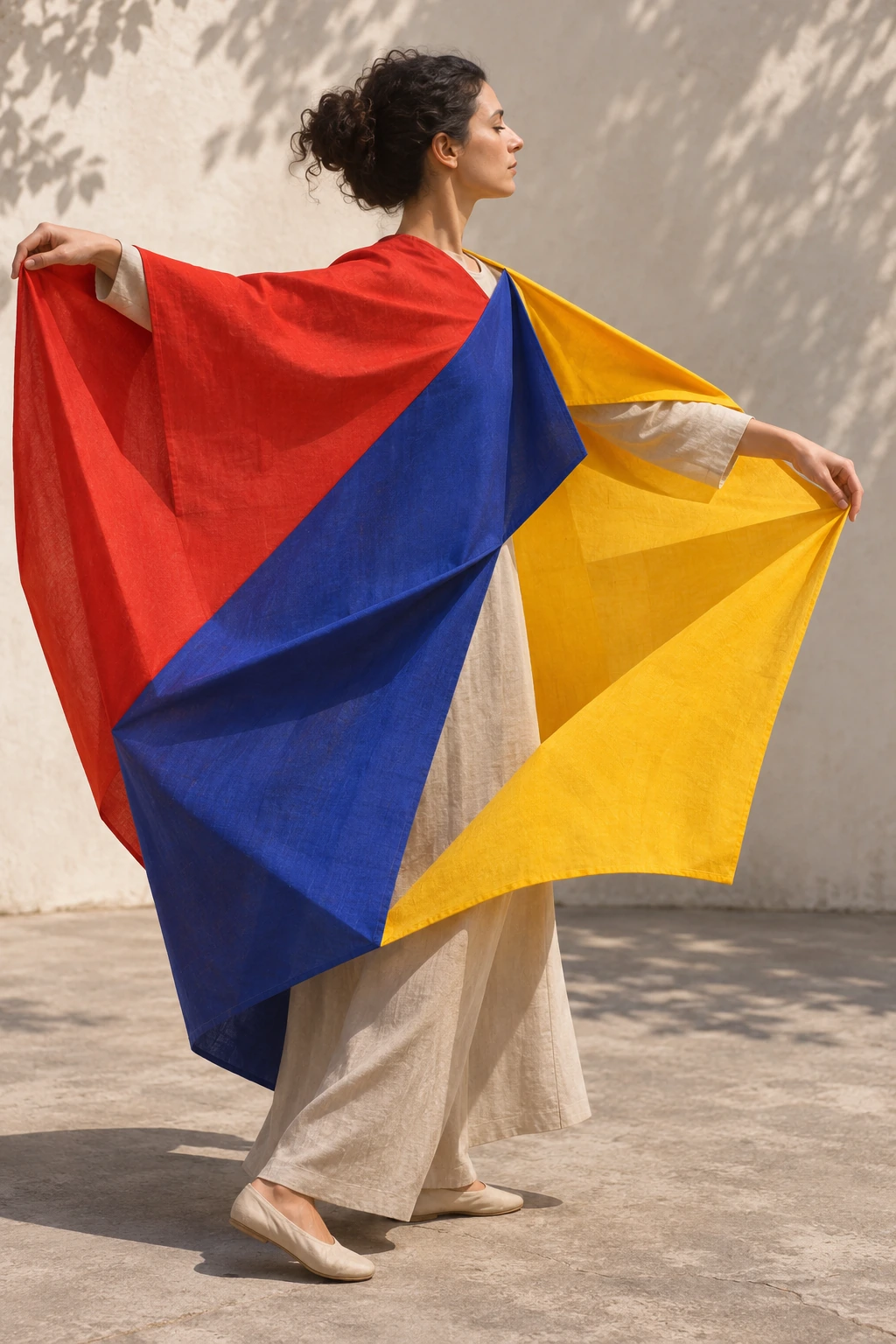
Oiticica's later Parangolés extended color into wearable, moving experience; Moderna Museet discusses them in relation to his work with a samba school in Rio. Their social and bodily context matters. A colored cape in an isolated studio image cannot stand in for that history.
The gallery's fabric study is therefore a contemporary exploration of color changing with a body's movement. The installation study similarly asks how passing between planes could change a view. Neither is presented as a reconstruction of a particular work or evidence that an interactive experience actually took place.
Use the principles without flattening the history
Begin with a relationship rather than a look: two surfaces joined by a hinge, a color revealed by movement, a page that becomes a volume, or a gap that changes with viewpoint. Then choose materials whose edges and weight make that relationship clear. White, black and saturated colors can be useful, but no palette alone defines the movement.
For AI images, specify the intended encounter and inspect the result for connected joints, believable support and readable human scale. For physical work, test the actual materials and movement separately. The approach can inform installations, books, objects and spatial design, but calling every interactive geometric design Neo-Concretism would erase the movement's particular Brazilian history.
Positive editorial review (AI-authored)
Neo-Concretism shows how a precise geometric vocabulary can become open to time, perception and bodily experience. Small changes in an edge, a hinge or a viewer's position can transform the work without requiring visual excess. Its strongest contemporary lessons concern relationships between people, materials and space.
Negative editorial review (AI-authored)
A visual imitation can easily stop at colored panels and folded metal. If the intended encounter is absent, the result may reproduce a surface resemblance while losing the more demanding question of participation. Historical flattening is another risk: distinct artists, periods and social contexts should not become one interchangeable interactive aesthetic.
Neutral editorial review (AI-authored)
Neo-Concretism is a historically situated Brazilian movement whose artists developed different approaches to geometric art and sensory experience. It supplies useful references for relief, sculpture, artist's books and participatory work. These AI-generated studies illustrate selected spatial ideas; they cannot substitute for encountering the actual artworks.
A small poetic detour
Original words from the AOI studio.
Poetry
The square steps sideways from the wall,
A red edge enters into view.
A folded page becomes a small
Unfinished room that waits for you.
One hand, one turn, one altered light—
The form begins again in sight.
The prompt workshop
Original creative exercises. These prompts create new illustrations, not documentary evidence.
A hinge with a purpose
Create an original Neo-Concretism-inspired object study: four simple brushed-aluminum planes meet at clearly visible hinges, forming an open asymmetric volume on a plain table. One adult hand gently changes a single panel angle. Make contact and joints coherent, restrained light, no text, not a replica of a historical work.
Color around the corner
Create a contemporary geometric wall-relief concept in which one white plane projects from a black field and reveals a narrow red side face from an oblique viewpoint. Precise edges, a deliberate gap, soft daylight and strong spatial clarity. No text or signature, not an archival photograph.
A page becomes a room
Create an original spatial artist's-book concept: a cream card opens into three simple standing planes, one blue, one yellow and one white, with a clear fold sequence and generous empty space. Show the relationship between flat page and volume. Tactile paper, no words, no historical attribution.
Your next inspiration
Discover another art style
Follow a visual thread to the next subject.
A smile from the studio
Jokes
The gallery label said, 'The viewer completes the work.' One visitor nodded, folded a panel, moved to the other side and asked where to submit the invoice. The curator admired the participation but suggested that accounting might remain a separate discipline.