
Kinetic and optical abstraction with Venezuelan artist references
An exploration of color, repeated structure and viewer-dependent perception, grounded in the distinct practices of Carlos Cruz-Diez and Jesús Rafael Soto.
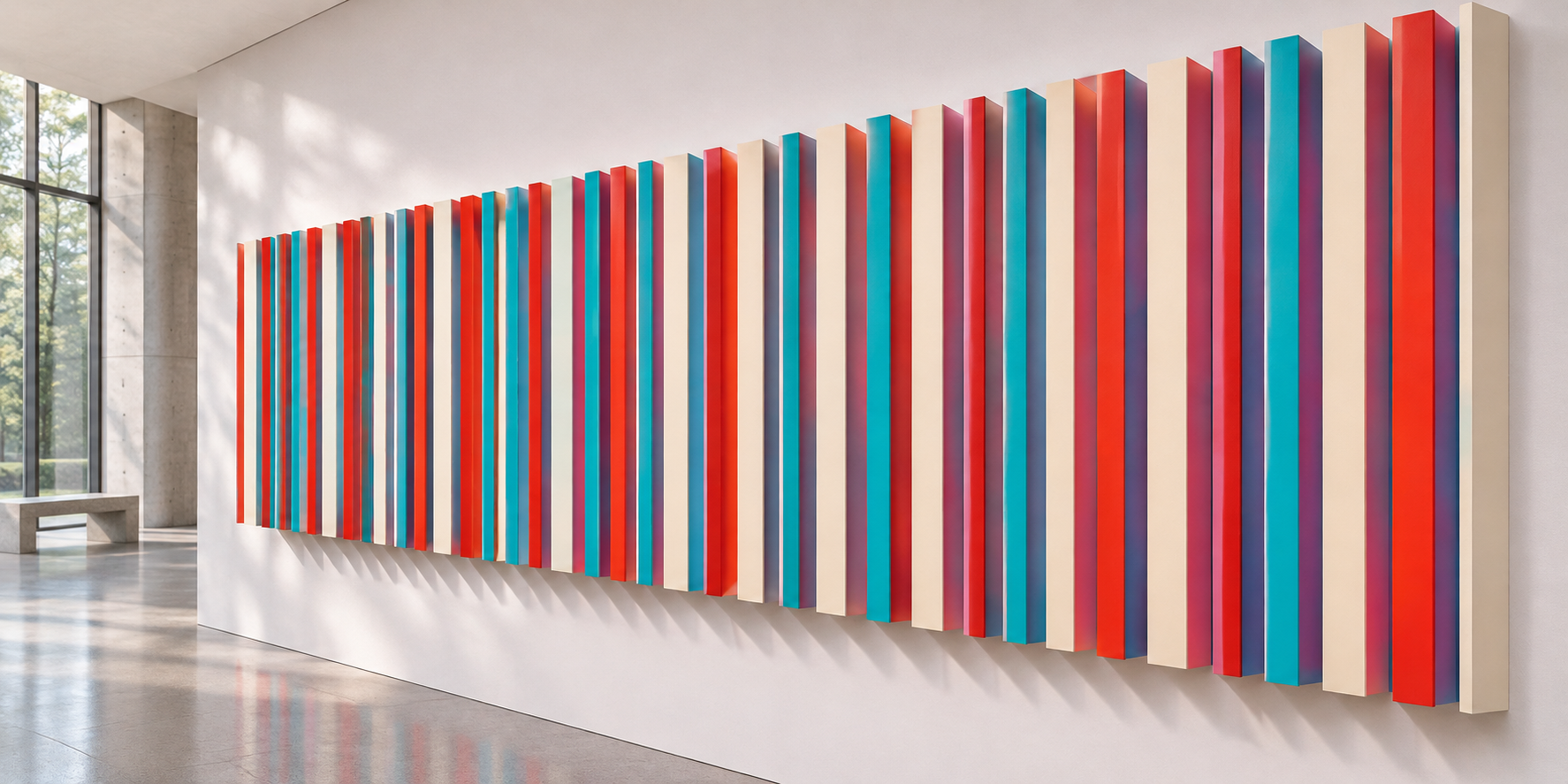
A visual introduction
Select an image for a closer look. Use the thumbnails, arrow keys or a swipe to compare examples. Zoom in to inspect details, or share the image that inspires you.
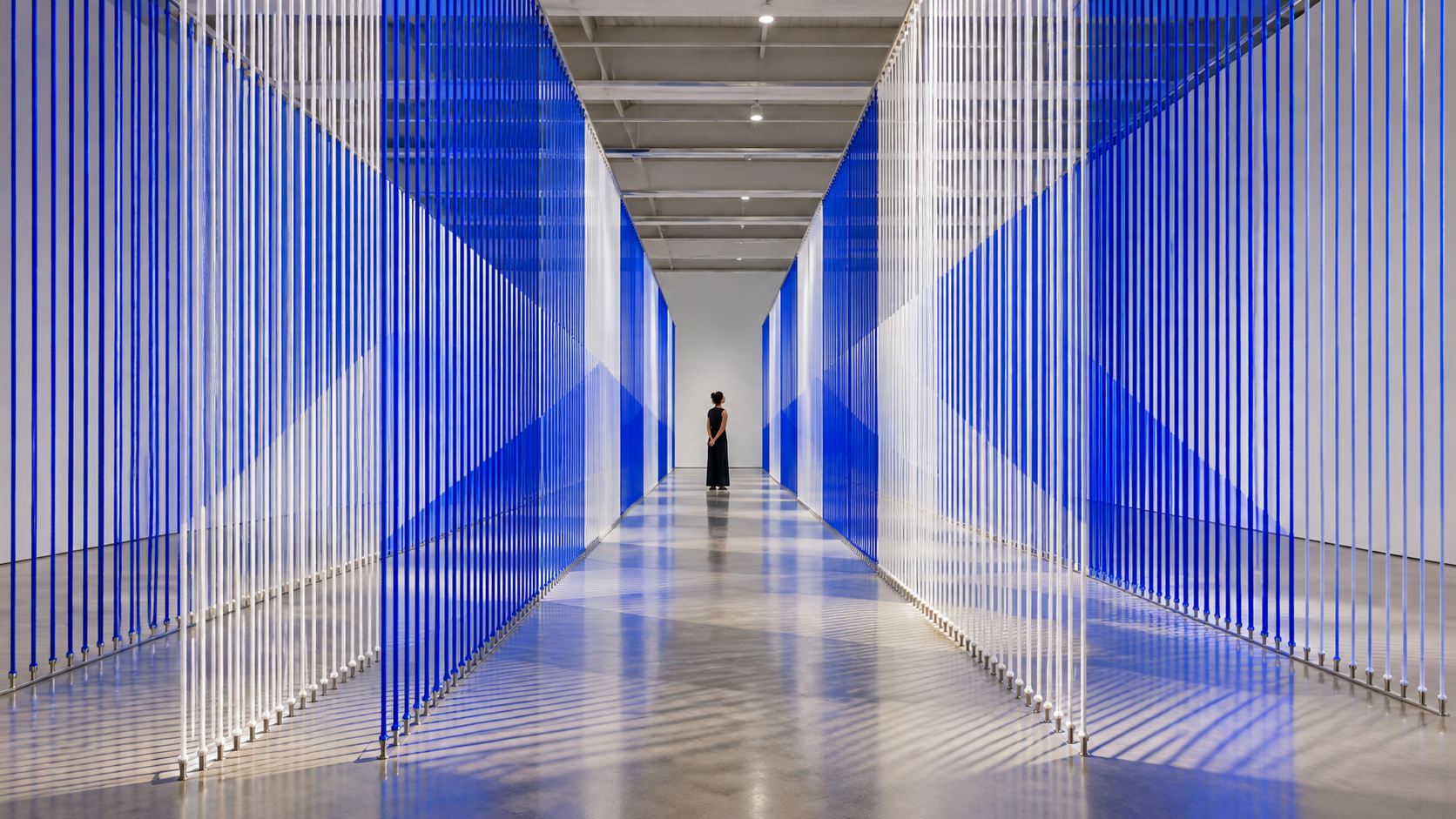
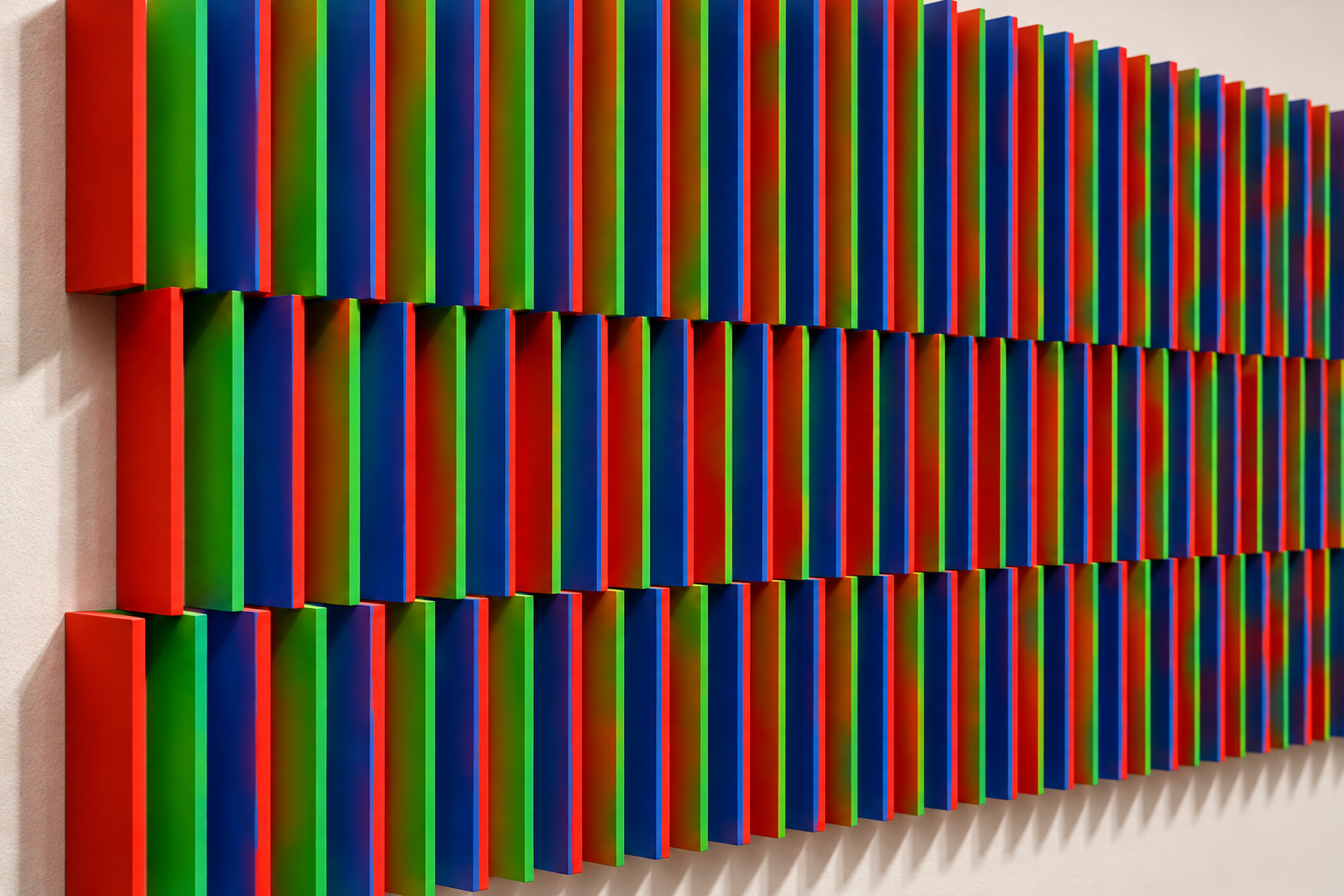
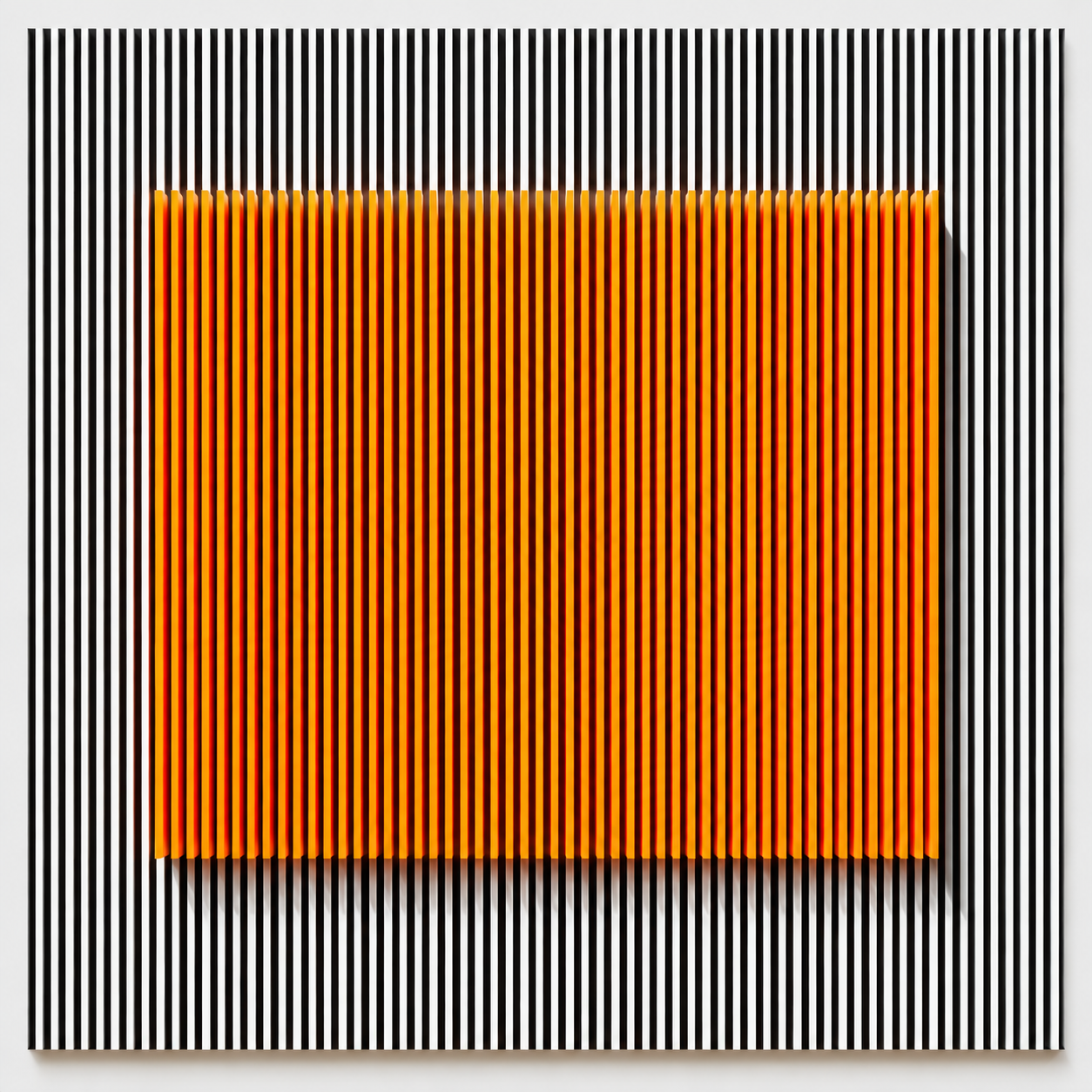
Creative toolbox · take this style further
Choose an input and a destination. Search sends your words to the chosen site; Copy & open puts them on your clipboard to paste there.
Create with AI
Turn your chosen input into an image prompt or a new creative direction.
ChatGPT
Copy your input and paste it into a ChatGPT conversation or image request.
Copy & open ChatGPT (new tab)Claude · Anthropic
Develop an image prompt or explore the style in a new Claude conversation.
Copy & open Claude · Anthropic (new tab)Midjourney
Paste your input into the Imagine bar on the Create page.
Copy & open Midjourney (new tab)Adobe Firefly
Copy your input, open Firefly, and paste it into the prompt field.
Copy & open Adobe Firefly (new tab)Leonardo.Ai
Copy your input, open Leonardo, and paste it into the generation field.
Copy & open Leonardo.Ai (new tab)Image search
Find visual references. Short, concrete keywords usually work best.
Lexica
Search AI images and prompts using your selected input.
Search with this input Lexica (new tab)Pexels
Search the photo and video library. Short keywords often work best.
Search with this input Pexels (new tab)Pixabay
Search photos, illustrations and other images.
Search with this input Pixabay (new tab)Unsplash
Search photographs using the style name or your own keywords.
Search with this input Unsplash (new tab)Wikimedia Commons
Search photographs, artworks and historical images. Check each file for its source and reuse terms.
Search with this input Wikimedia Commons (new tab)Art & research
Explore artists, collections and the ideas behind a style.
Wikipedia
Search for background reading. A style may not have its own article.
Search with this input Wikipedia (new tab)WikiArt
Copy your input into WikiArt’s search to explore artists and artworks.
Copy & open WikiArt (new tab)Europeana
Paste your keywords into the search to explore European museum, library and archive collections.
Copy & open Europeana (new tab)Inspiration
Discover portfolios and visual ideas from creative communities.
Instagram hashtags
Search a hashtag made from your input: spaces and punctuation are removed. Instagram may require sign-in.
Search with this input Instagram hashtags (new tab)ArtStation
Paste your input into artwork search for concept art, environments, characters and visual development.
Copy & open ArtStation (new tab)Behance
Paste your input into project search for illustration, design and visual storytelling.
Copy & open Behance (new tab)A closer look
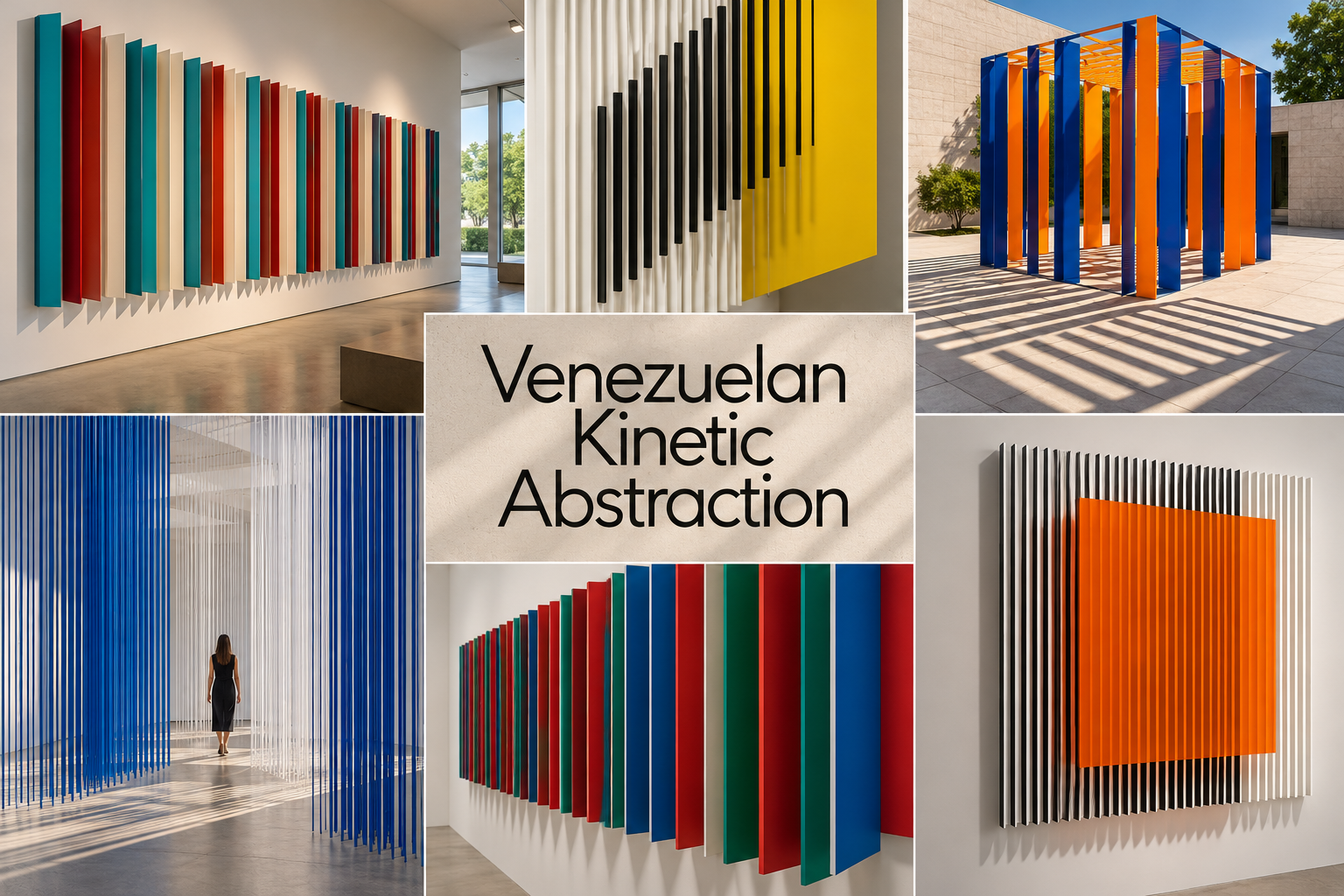
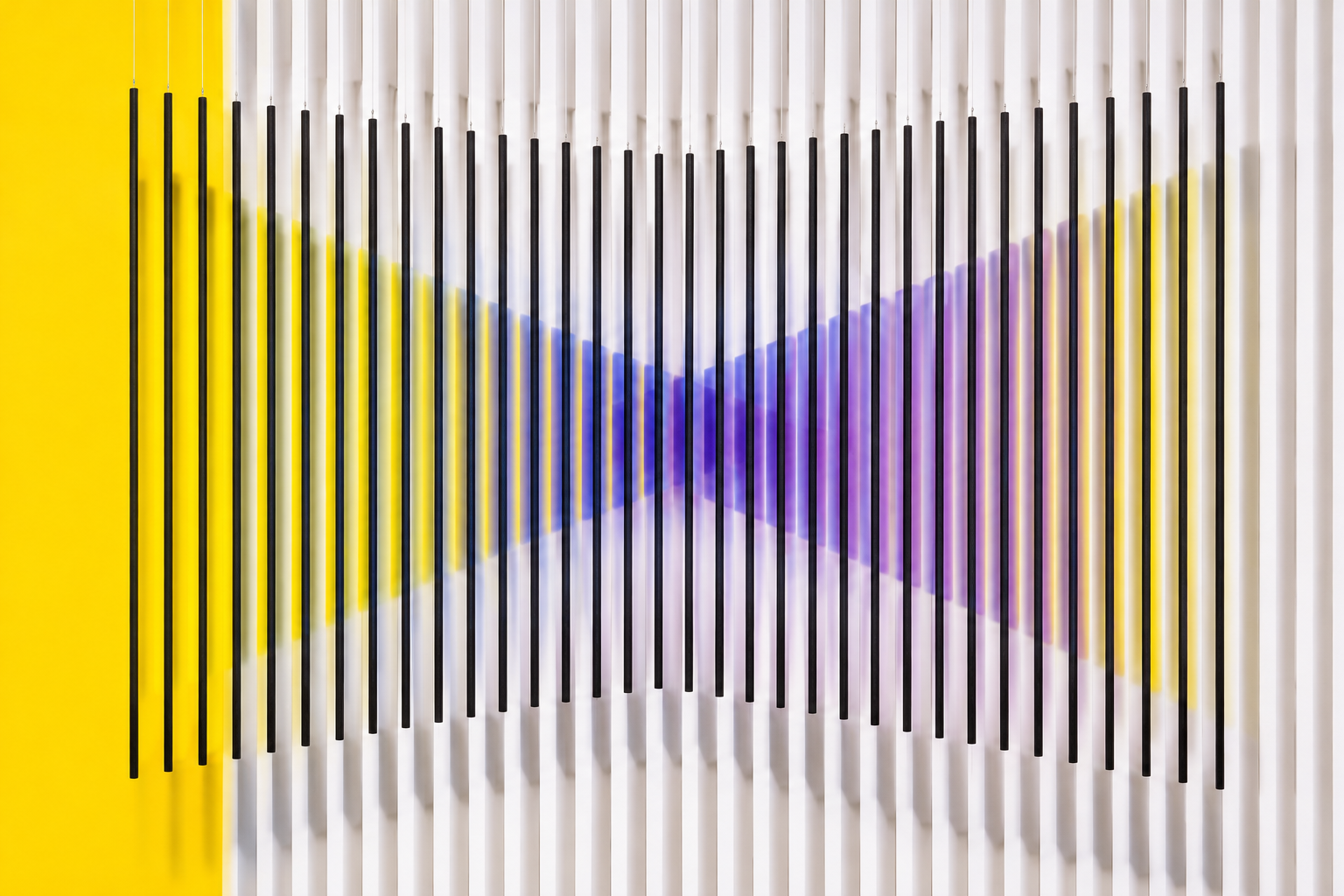
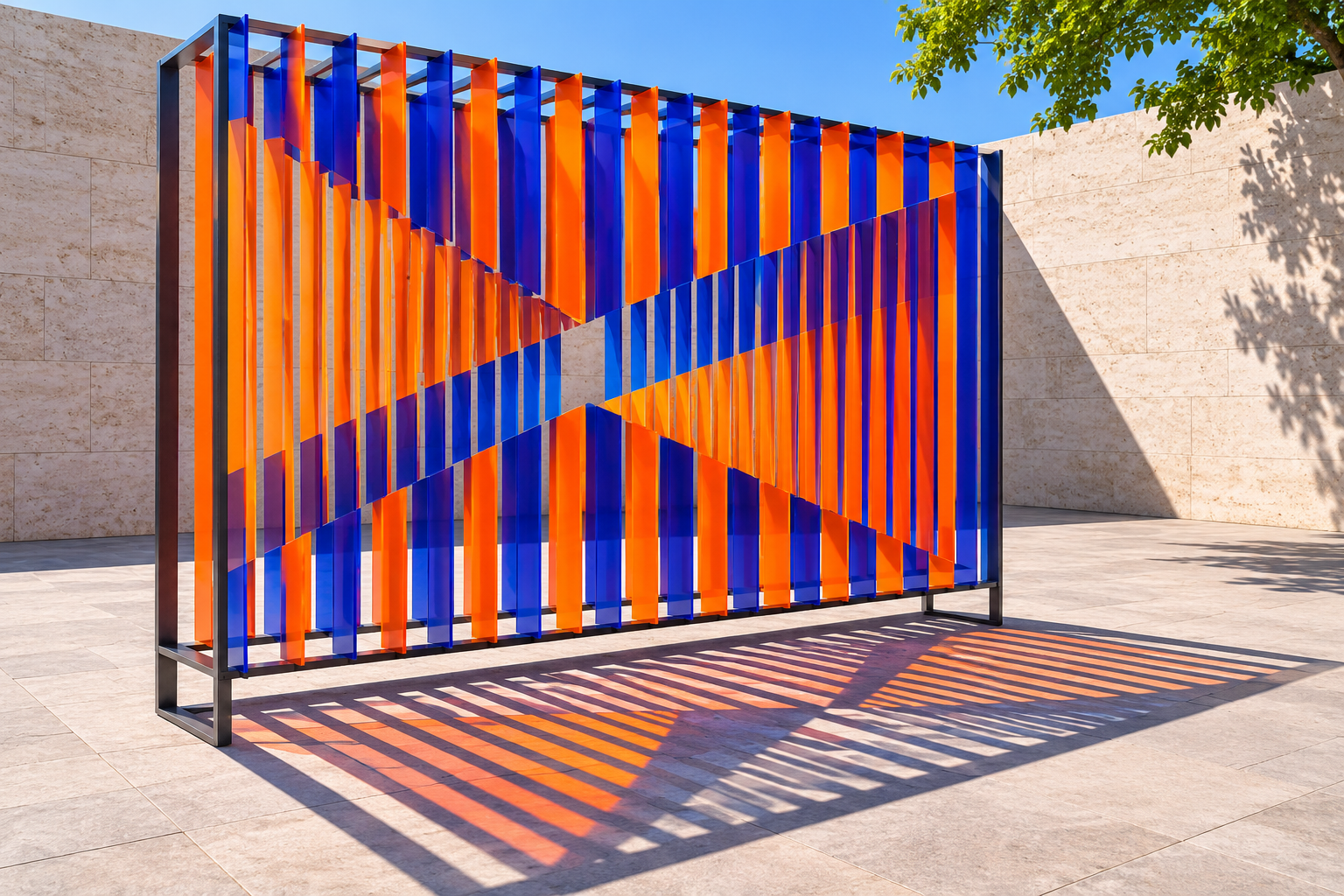
Repeated fins, rods or lines; measured intervals; changing color relationships; foreground and background interference; forms activated by viewpoint, light or movement.
The viewer becomes part of the work
Venezuelan Kinetic Abstraction names an important artistic context rather than every form of abstraction made in Venezuela. Carlos Cruz-Diez and Jesús Rafael Soto developed distinct approaches to color, space and perception. Their work invites viewers to change position and discover that seeing can be an event rather than a fixed reading.
Cruz-Diez's official account dates the Physichromie series to 1959 and describes color structures that vary with the viewer's position and surrounding light. The Museum of Fine Arts, Houston presents Soto's Houston Penetrable as an environment visitors enter. Those are different experiences: a changing color structure is not identical to walking among suspended elements.
Rhythm needs a controlled disturbance
Start with a repeated unit: a vertical fin, a hanging filament or a slender line. Give it a dependable spacing, then introduce an interruption the eye can follow. A shifted interval, a color progression or a density change becomes more persuasive when the surrounding system is coherent.
Color should do structural work. Adjacent warm and cool bands can alternate in prominence; a foreground screen can interrupt a larger shape behind it. Keep lighting understandable so that an optical effect does not collapse into random glow. In a physical relief, cast shadows and occlusion can matter as much as the painted surface.
Actual movement, apparent movement and a still image
Kinetic and optical art do not always need motors. A visitor's movement can change what is visible, and repeated patterns can create a sense of vibration. For a useful study, decide which event matters: object movement, viewpoint change, changing illumination or a perceptual effect in a stationary pattern.
A still illustration can suggest fins, interference and a spatial rhythm, but it cannot demonstrate the full behavior of a physical work. For a digital sequence, preserve the same construction across frames and move the viewpoint coherently. Otherwise the supposed optical experiment becomes a series of unrelated pictures.
Applications without borrowed authority
The visual grammar can inform an original installation proposal, a geometric poster or an explanatory animation. Give the experiment its own structure rather than reproducing a recognizable existing artwork. A dark field of fine lines, a warm color volume and a restrained background can test density and depth without claiming a historical attribution.
Common failures include excessive saturation, inconsistent spacing and decorative stripes that never produce a meaningful relationship. Evaluate the image both close up and at a distance. If the repeated units overwhelm the larger shape, simplify the system. If the larger shape is too obvious, allow a controlled ambiguity between foreground and background.
Positive editorial perspective
AOI editorial perspective (AI-authored). A measured system can turn a small movement into a large perceptual discovery. The strongest works make color and space feel contingent on the viewer, rather than simply adding optical decoration.
Negative editorial perspective
AOI editorial perspective (AI-authored). Stripes and saturation alone rarely sustain the effect. Inconsistent geometry or unexplained glow can erase the mechanism. Simplify the repeated unit and make the role of viewpoint or illumination legible.
Neutral editorial perspective
AOI editorial perspective (AI-authored). The field includes distinct approaches to optical and spatial experience. Static interpretations can study their compositional principles, while physical behavior and interactive effects require suitable material or digital implementation.
A small poetic detour
Original words from the AOI studio.
Poetry
I take one step; the yellow thins.
A blue I could not see begins.
The lines stand still, yet will not stay
The color they were yesterday.
No hidden wheel explains the change;
My ordinary feet arrange
A second picture in the first,
A quiet spectrum unrehearsed.
The room has kept its measured air;
The work has moved by staying there.
I turn, and what I thought I knew
Leaves one bright interval for blue.
The prompt workshop
Original creative exercises. These prompts create new illustrations, not documentary evidence.
Build a measured color relief
Original optical abstraction study with evenly spaced vertical fins, restrained cyan, yellow and charcoal bands, believable oblique light and shallow cast shadows, photographed from a three-quarter angle, no text or recreation of a known artwork.
Describe a plausible structure before requesting optical complexity.
Draw space with suspended lines
An original installation concept of thin suspended filaments forming a shifting warm-color volume within a cool neutral room, visible spacing and coherent depth, one distant adult visitor for scale, no copied installation layout.
This is a concept illustration, not documentation of a real exhibition.
Compare viewpoints
A three-view study of the same original fin-based color relief, identical geometry seen from left, front and right, changing visible colored faces, consistent light, plain background, no labels.
Use a controlled sequence to test viewpoint; do not count a triptych as three independent artworks.
A smile from the studio
Jokes
The visitor asked whether the artwork had a motor. 'Only when you walk,' said the guide. The visitor sat down to save energy, then complained that the color had changed anyway. 'You moved your head.' The museum has not yet found a visitor with a reliable pause button.