
Counted canvas embroidery
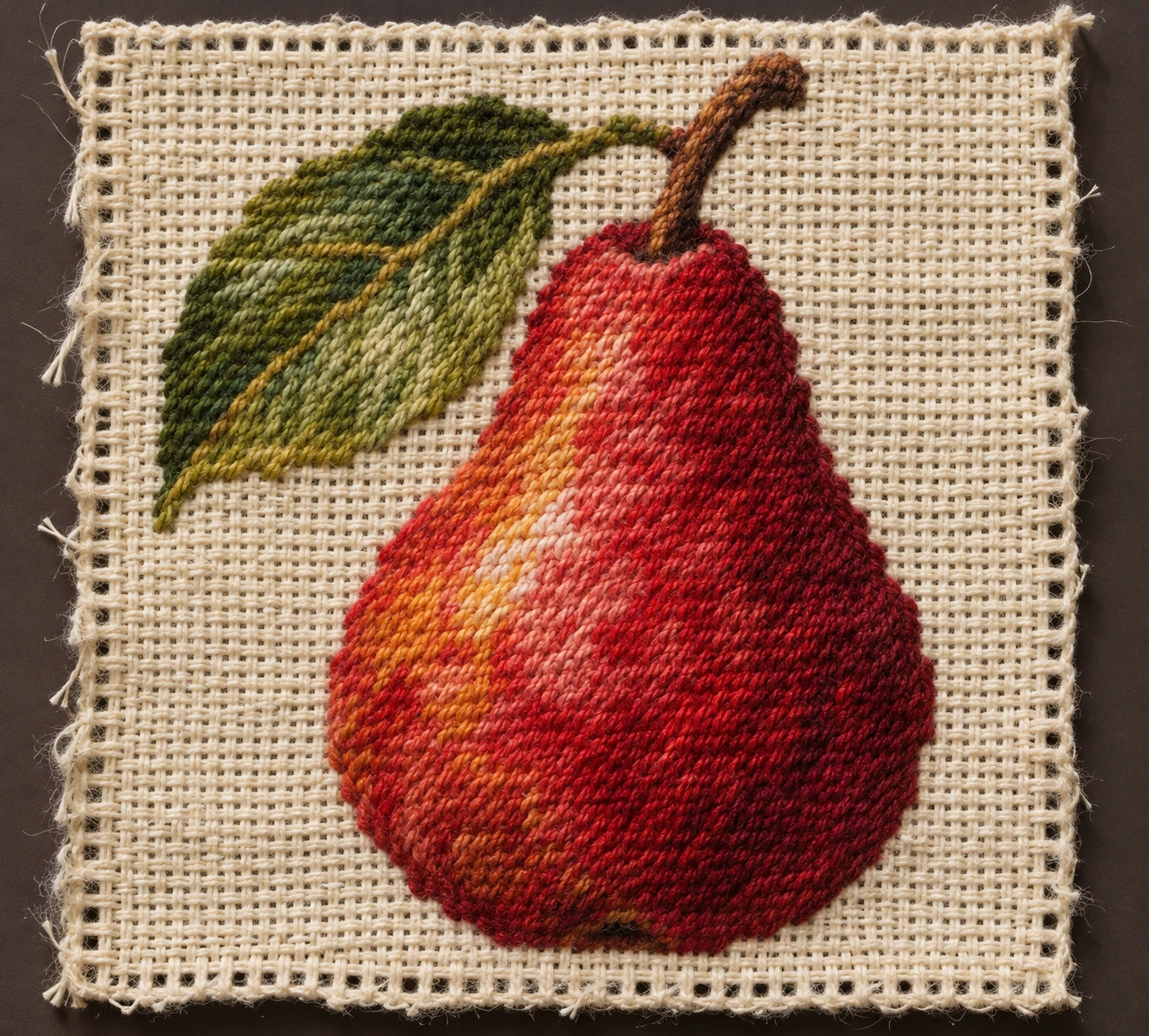
Look at the red edge of a stitched pear. The fruit appears round, but each stitch has to put its needle through a hole already present in the canvas. The embroiderer makes a curve out of those fixed choices.
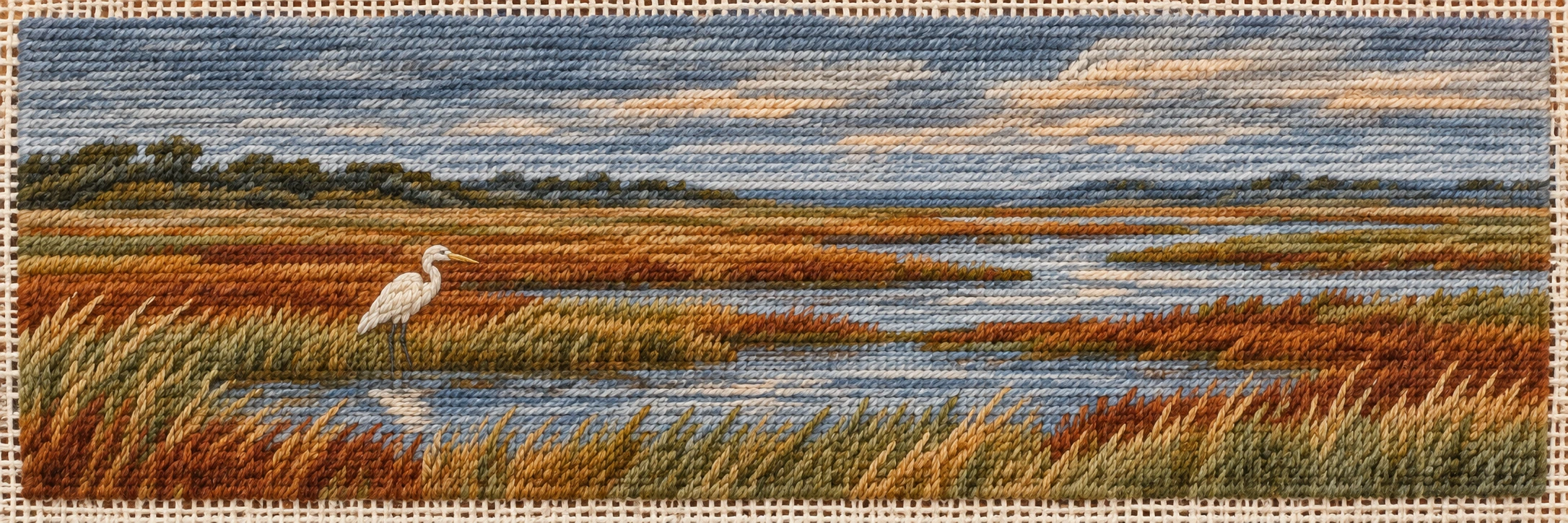
A visual introduction
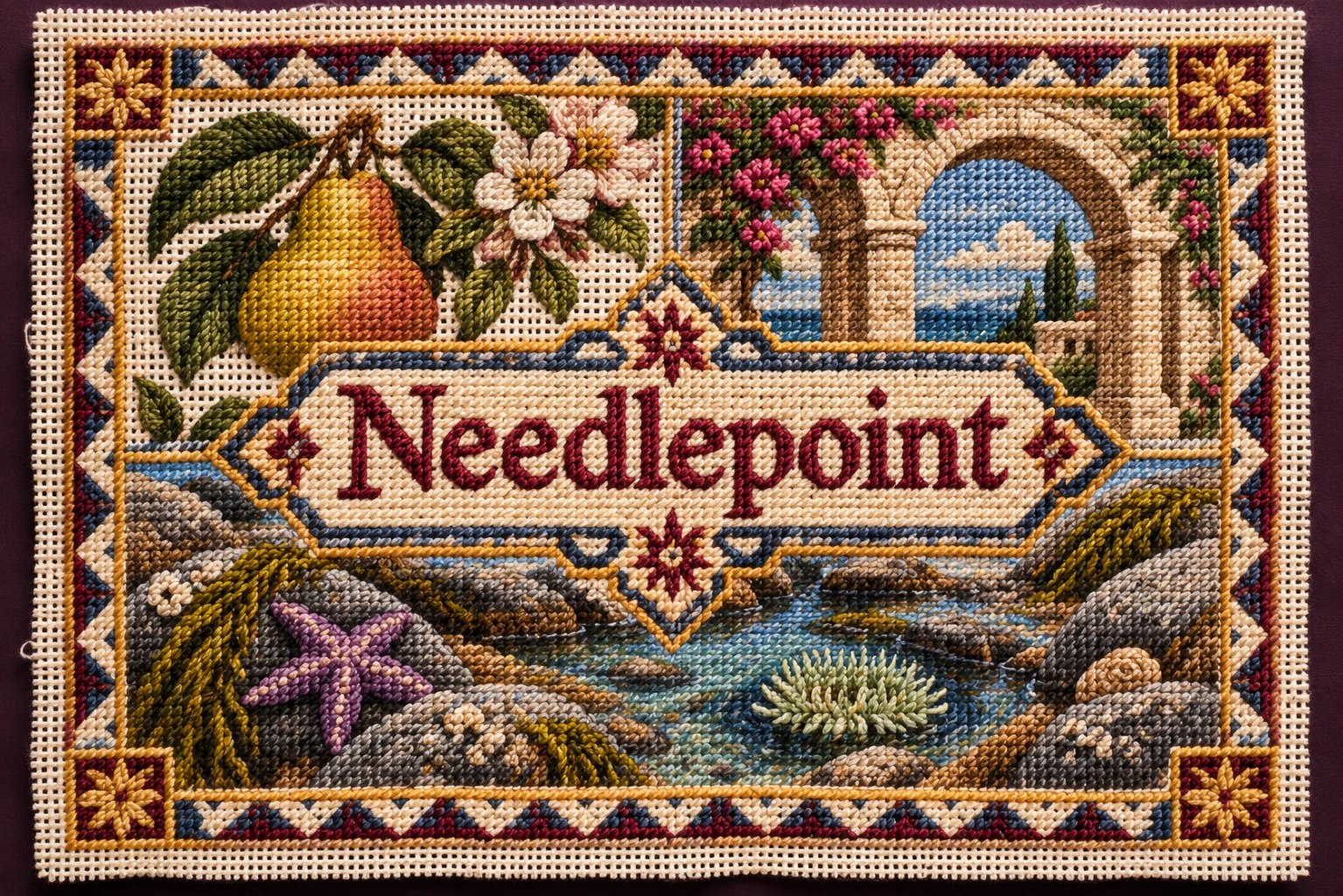
The banner, collage and five studies are AOI interpretations. The linked sources document the works and practices discussed in the article.
Select an image for a closer look. Use the thumbnails, arrow keys or a swipe to compare examples. Zoom in to inspect details, or share the image that inspires you.
Creative toolbox · take this style further
Choose an input and a destination. Search sends your words to the chosen site; Copy & open puts them on your clipboard to paste there.
Create with AI
Turn your chosen input into an image prompt or a new creative direction.
ChatGPT
Copy your input and paste it into a ChatGPT conversation or image request.
Copy & open ChatGPT (new tab)Claude · Anthropic
Develop an image prompt or explore the style in a new Claude conversation.
Copy & open Claude · Anthropic (new tab)Midjourney
Paste your input into the Imagine bar on the Create page.
Copy & open Midjourney (new tab)Adobe Firefly
Copy your input, open Firefly, and paste it into the prompt field.
Copy & open Adobe Firefly (new tab)Leonardo.Ai
Copy your input, open Leonardo, and paste it into the generation field.
Copy & open Leonardo.Ai (new tab)Image search
Find visual references. Short, concrete keywords usually work best.
Lexica
Search AI images and prompts using your selected input.
Search with this input Lexica (new tab)Pexels
Search the photo and video library. Short keywords often work best.
Search with this input Pexels (new tab)Pixabay
Search photos, illustrations and other images.
Search with this input Pixabay (new tab)Unsplash
Search photographs using the style name or your own keywords.
Search with this input Unsplash (new tab)Wikimedia Commons
Search photographs, artworks and historical images. Check each file for its source and reuse terms.
Search with this input Wikimedia Commons (new tab)Art & research
Explore artists, collections and the ideas behind a style.
Wikipedia
Search for background reading. A style may not have its own article.
Search with this input Wikipedia (new tab)WikiArt
Copy your input into WikiArt’s search to explore artists and artworks.
Copy & open WikiArt (new tab)Europeana
Paste your keywords into the search to explore European museum, library and archive collections.
Copy & open Europeana (new tab)Inspiration
Discover portfolios and visual ideas from creative communities.
Instagram hashtags
Search a hashtag made from your input: spaces and punctuation are removed. Instagram may require sign-in.
Search with this input Instagram hashtags (new tab)ArtStation
Paste your input into artwork search for concept art, environments, characters and visual development.
Copy & open ArtStation (new tab)Behance
Paste your input into project search for illustration, design and visual storytelling.
Copy & open Behance (new tab)A closer look
Look for a counted ground, a consistent slant where tent stitches cover it, and changes in thread, stitch length or direction. Unworked canvas at the margin reveals the structure more clearly than a finished field of colour.
A ground that makes decisions visible
In needlepoint a threaded needle carries the picture across a ground that can be counted. An open canvas lets the embroiderer choose both where a colour ends and how yarn will cross between holes. Put a diagonal line on a small grid. Its staircase is easy to see close up, but across a room it can read as a smooth stem. Wool, silk, thread thickness and the scale of that grid change the apparent edge even when two drawings use the same chart.
The front can conceal the working route
The Royal School of Needlework’s Stitch Bank diagrams basketweave tent stitch from both sides. On the face, short diagonal stitches appear consistent. Working in diagonal rows produces alternating orientations on the reverse. The school recommends the method for larger tent-stitched areas because it helps the canvas retain its shape. This is a useful distinction for interpreting photographs: two similar-looking fronts need not have identical thread paths on the back.
Make a small swatch and examine the reverse. Does the tension draw one corner forward? A broad area of even colour reveals distortion more readily than a busy scene. Look again after removing the swatch from its support. For instructions about needle routes, the Stitch Bank diagrams are more dependable than a decorative image that only shows the face.
A picture that has to serve as furniture
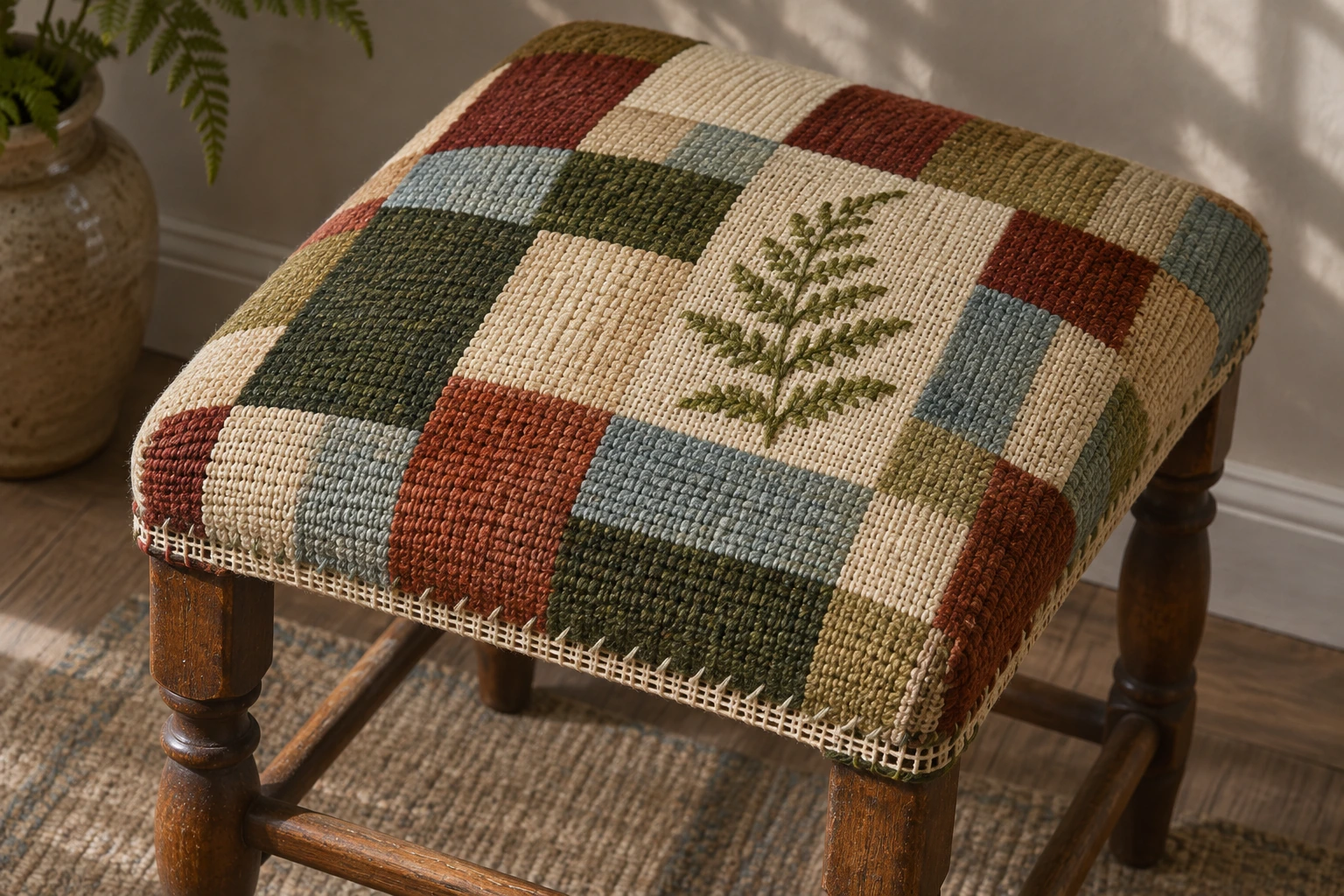
The Metropolitan Museum’s survey of European embroidery documents canvas work for hangings and furnishings made by both professionals and amateurs in the seventeenth and eighteenth centuries. Its illustrated Musical Party in a Garden is silk tent stitch on canvas. Compare the distance at which a stitched figure becomes legible with the distance at which its individual stitches disappear. Now consider a stool seat approached from above. Border width, broad colour blocks and the area that will receive wear become part of the design.
One family of stitches among many
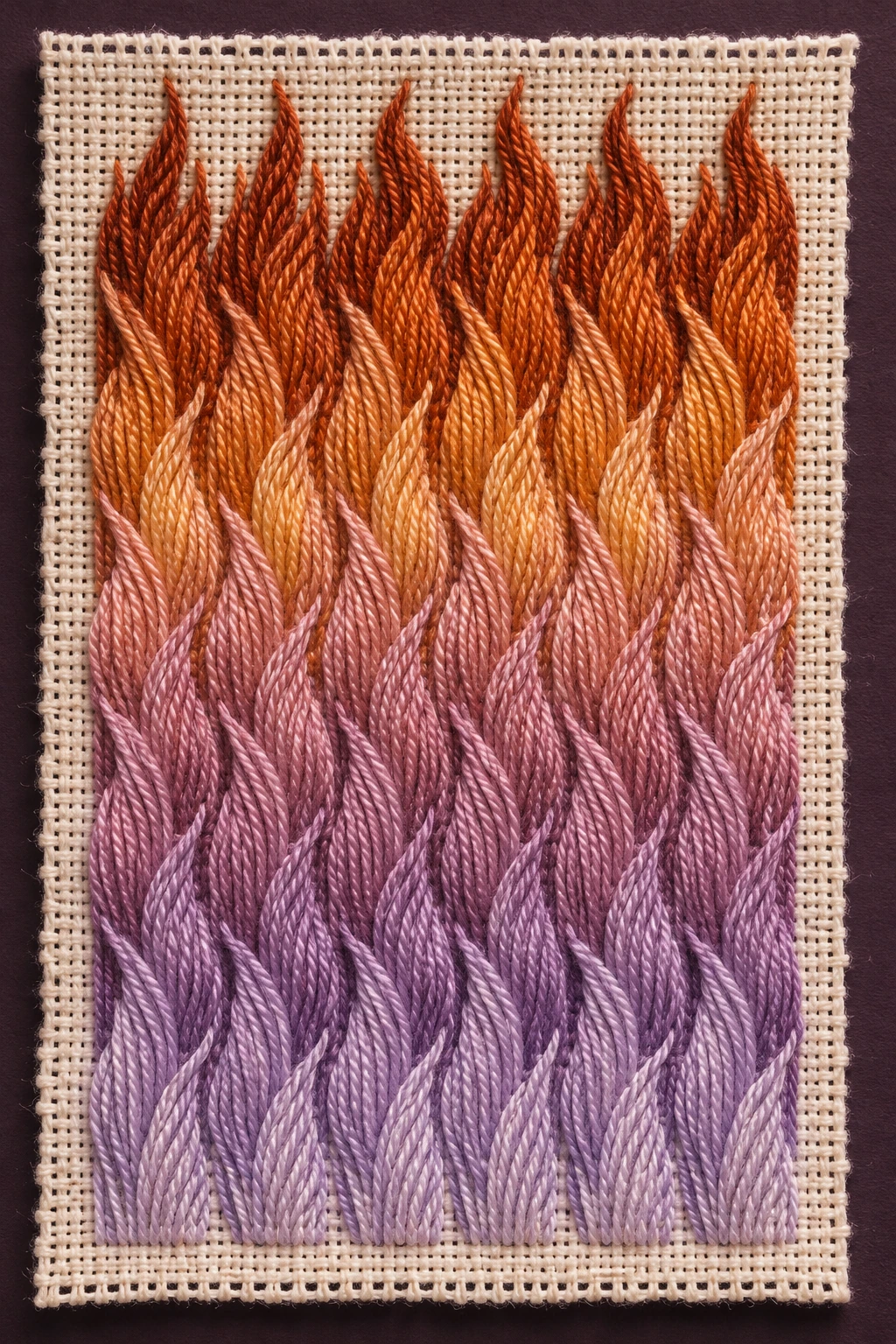
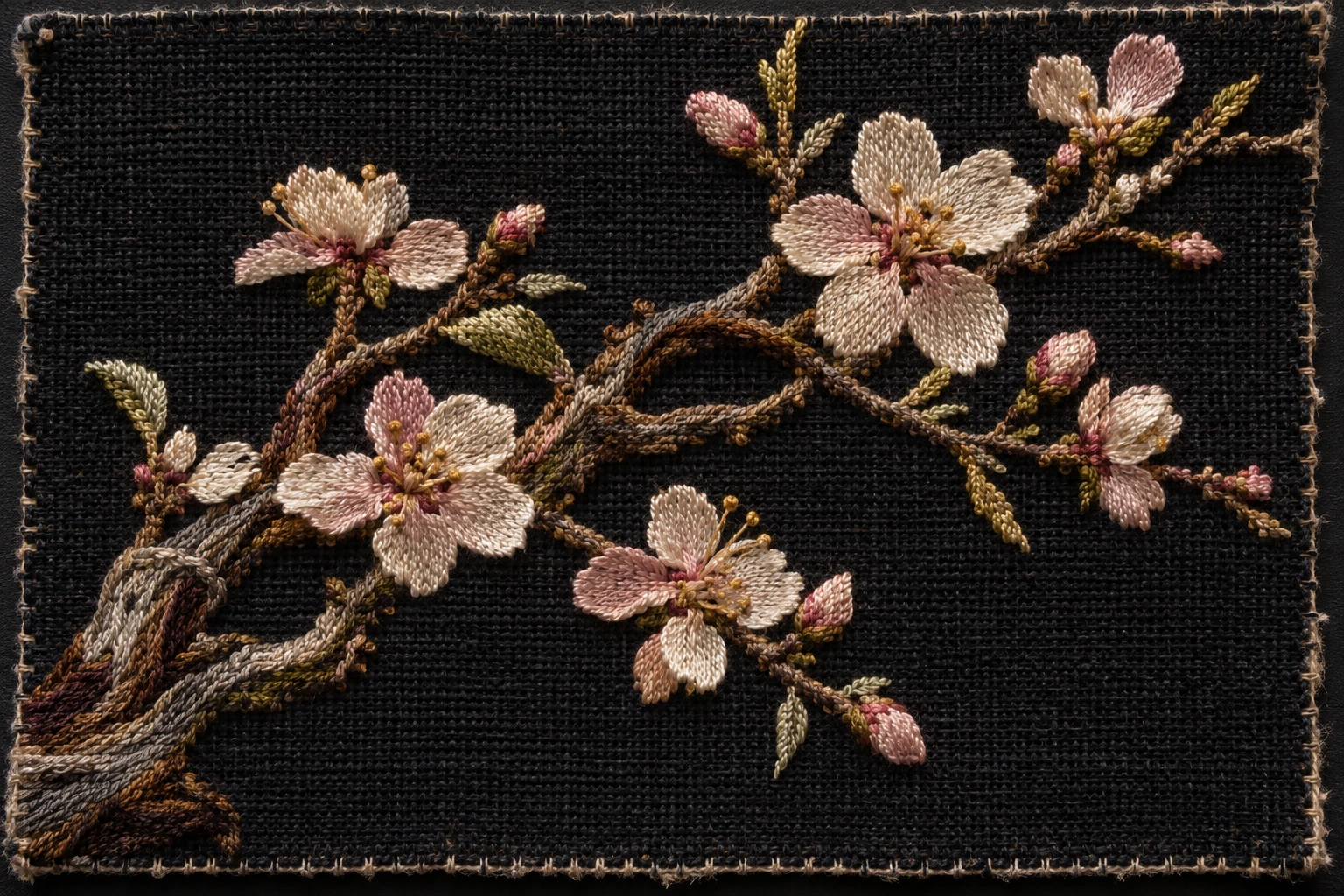
Bargello’s stepped runs of longer stitches can make rising, falling bands. They illustrate one use of counted canvas. A broad needlepoint guide also has room for a field of tiny tent stitches, an unstitched margin and a quiet branch whose sheen changes as you move past it. Woven tapestry builds its structure on the loom. A needlepoint picture adds its stitches to a ground already present. Turn an unfinished edge towards the light and the distinction is easier to see.
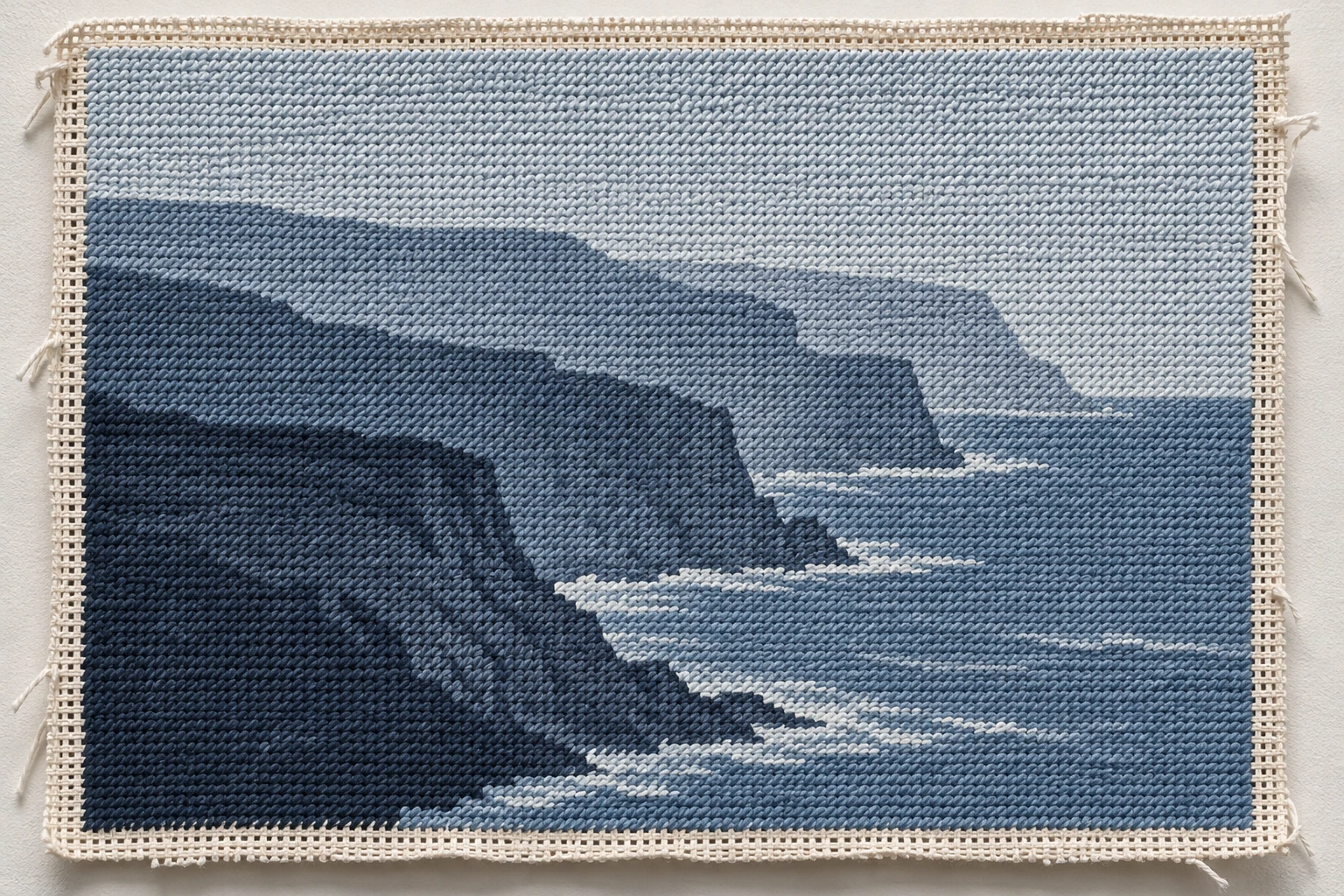
For an original composition, block a headland into four values on squared paper. Stitch a small test in two thread weights. Compare how much ground shows between them, then decide which thread describes mist and which describes rock. The generated illustrations are visual exercises. They cannot certify a stitch count or supply a working chart.
Positive review · AI-authored editorial assessment
A stepped cliff in four greys turns the counted ground into a compositional advantage. A few abrupt changes read as rock from a distance and as decisions up close.
Negative review · AI-authored editorial assessment
Dense photoreal shading can bury the pleasure of the thread. An open margin or one broad, quiet area restores a visible measure of what a single stitch contributes.
Neutral review · AI-authored editorial assessment
Needlepoint serves pictorial panels, samples and furnishings. An image of a finished surface can teach colour placement, while the reverse and a stitch diagram are needed to understand construction.
A small poetic detour
Original words from the AOI studio.
Poetry
One hole to the left for the leaf.
One to the right for the light.
By the time the pear is ripe
my thumb knows every turn.
The prompt workshop
Original creative exercises. These prompts create new illustrations, not documentary evidence.
Starting point
Construct a pear on a visible ivory canvas ground with burgundy, scarlet and apricot stitches. Let single counted steps shape the smallest turn at the stalk.
Richer composition
Design a square stool seat with an off-centre fern. Use broad checked areas around the seat edges and finer changes of tone in the centre. Show the fabric crossing the upholstered edge.
Experiment
Make a narrow sampler in which long upright stitches climb and fall in stepped waves. Change the spacing of a repeated crest halfway down and photograph the raised yarn in side light.
People & works to explore
References discussed in this article. Consult the sources below for context.
Paintings and other works
Musical Party in a Garden
A smile from the studio
Jokes
The pear requested a smoother outline. The canvas referred it to the next available hole.