
Art-historical category and self-taught practices
“Naive art” is a historically used but imprecise label. It should invite attention to individual choices rather than assumptions about an artist’s ability.
A visual introduction
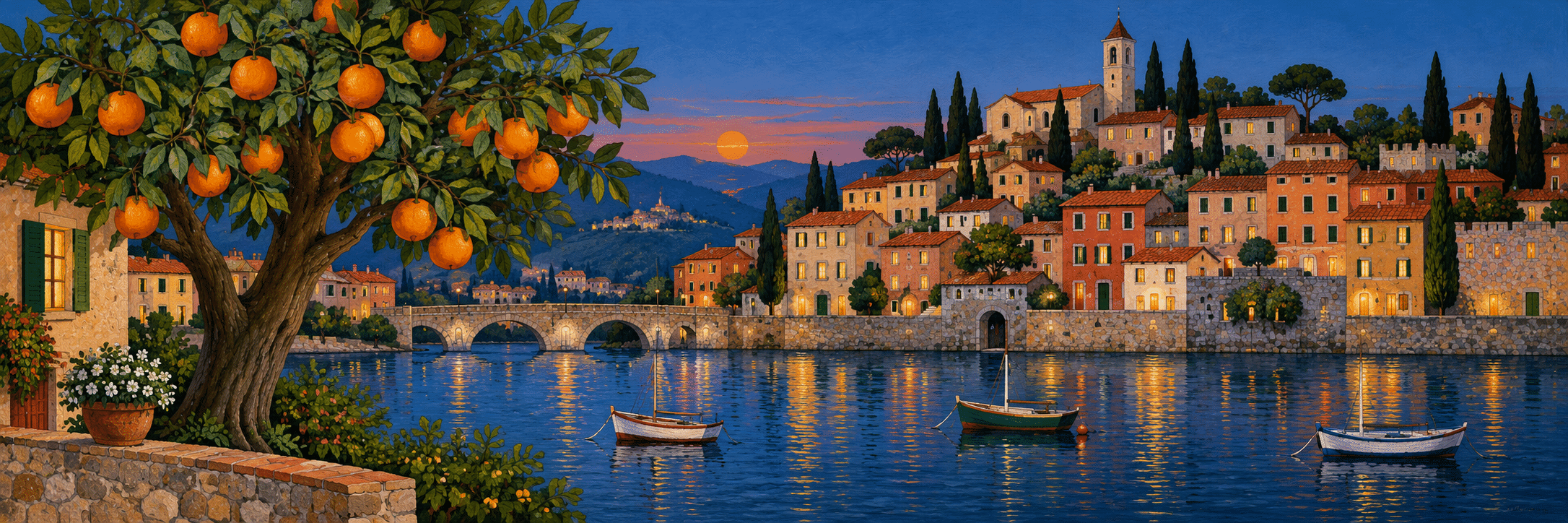
Seven new AI-generated studies explore selective scale, patterned surfaces and remembered space across portrait, still life, garden, winter scene and harbor. These are contemporary interpretations, not works attributed to self-taught historical artists. Earlier illustrations remain as comparisons.
Select an image for a closer look. Use the thumbnails, arrow keys or a swipe to compare examples. Zoom in to inspect details, or share the image that inspires you.


Creative toolbox · take this style further
Choose an input and a destination. Search sends your words to the chosen site; Copy & open puts them on your clipboard to paste there.
Create with AI
Turn your chosen input into an image prompt or a new creative direction.
ChatGPT
Copy your input and paste it into a ChatGPT conversation or image request.
Copy & open ChatGPT (new tab)Claude · Anthropic
Develop an image prompt or explore the style in a new Claude conversation.
Copy & open Claude · Anthropic (new tab)Midjourney
Paste your input into the Imagine bar on the Create page.
Copy & open Midjourney (new tab)Adobe Firefly
Copy your input, open Firefly, and paste it into the prompt field.
Copy & open Adobe Firefly (new tab)Leonardo.Ai
Copy your input, open Leonardo, and paste it into the generation field.
Copy & open Leonardo.Ai (new tab)Image search
Find visual references. Short, concrete keywords usually work best.
Lexica
Search AI images and prompts using your selected input.
Search with this input Lexica (new tab)Pexels
Search the photo and video library. Short keywords often work best.
Search with this input Pexels (new tab)Pixabay
Search photos, illustrations and other images.
Search with this input Pixabay (new tab)Unsplash
Search photographs using the style name or your own keywords.
Search with this input Unsplash (new tab)Wikimedia Commons
Search photographs, artworks and historical images. Check each file for its source and reuse terms.
Search with this input Wikimedia Commons (new tab)Art & research
Explore artists, collections and the ideas behind a style.
Wikipedia
Search for background reading. A style may not have its own article.
Search with this input Wikipedia (new tab)WikiArt
Copy your input into WikiArt’s search to explore artists and artworks.
Copy & open WikiArt (new tab)Europeana
Paste your keywords into the search to explore European museum, library and archive collections.
Copy & open Europeana (new tab)Inspiration
Discover portfolios and visual ideas from creative communities.
Instagram hashtags
Search a hashtag made from your input: spaces and punctuation are removed. Instagram may require sign-in.
Search with this input Instagram hashtags (new tab)ArtStation
Paste your input into artwork search for concept art, environments, characters and visual development.
Copy & open ArtStation (new tab)Behance
Paste your input into project search for illustration, design and visual storytelling.
Copy & open Behance (new tab)A closer look
For an original exercise, allow scale and viewpoint to serve the story rather than enforcing a single optical system.
Use the category with care
Naïve art is a label often applied to work by artists without conventional academic training and to pictorial approaches that depart from academic perspective or proportion. The Setagaya Art Museum’s account emphasizes artists developing their own means of expression, sometimes while working in another profession. Lack of formal training is not lack of thought, sustained practice or visual intelligence.
The term groups unlike artists together and can encourage reductive assumptions. It should not be treated as a diagnosis of innocence, a measure of intelligence or a synonym for all self-taught art. Begin with a particular artist and work, then ask what the category helps explain and what it obscures.
Rousseau offers a specific case, not a universal formula
Henri Rousseau’s The Dream, dated 1910 in MoMA’s collection, places a reclining figure and domestic furniture within an imagined jungle. The museum connects his plant studies with visits to botanical and natural-history collections while emphasizing the invention involved in the composition. This was constructed imagery, not a report from a tropical expedition.
Look at the way repeated foliage establishes rhythm and how sharply distinguished forms can remain legible despite a dense setting. Such observations are more useful than calling the painting simply childlike. They identify decisions that can be compared with another work without assuming the artists share a temperament or life story.
Space can follow narrative importance
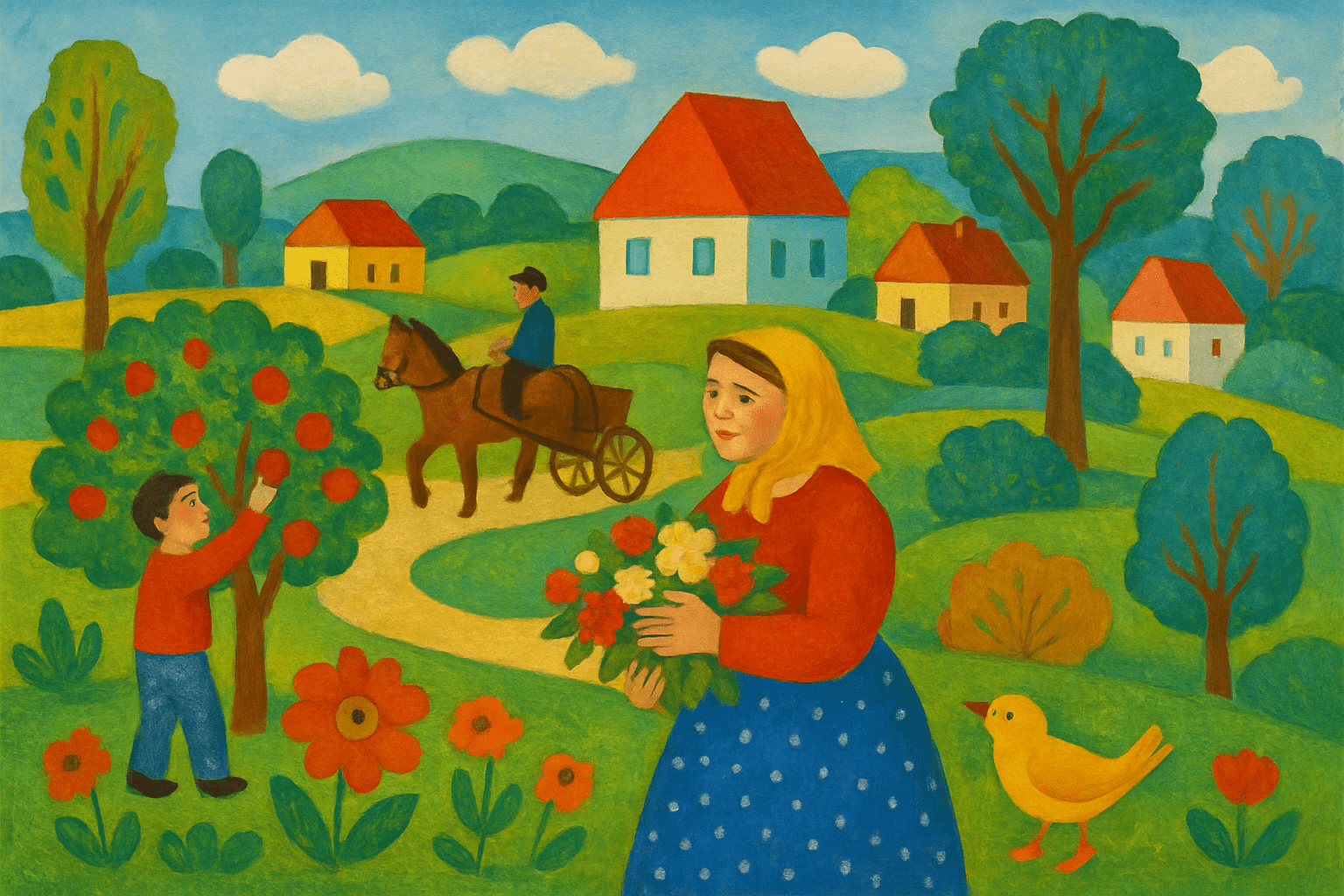
An image need not organize every object through a single optical viewpoint. Scale, placement and repeated detail can instead emphasize what matters within a scene. A tree might command more space than a building because it anchors the story, while small figures establish several simultaneous activities.
For an original exercise, draw a familiar place from memory and mark the relationships that remain strongest: the path to a door, a tall tree beside a house or the distance between two people. Develop those relationships before correcting the scene toward photographic perspective. The aim is a coherent alternative, not accidental inconsistency.
Simplification still needs structure
Use a limited palette and clear shape boundaries, then decide where repeated detail adds significance. Dense pattern can enrich one region while a quieter area lets the eye recover. Equal detail everywhere can make a scene difficult to read even when every object is recognizable.
Avoid deliberately introducing malformed anatomy or arbitrary perspective errors to imitate supposed authenticity. Compare versions of the same composition and ask which makes its relationships more intelligible. A contemporary interpretation can explore flattened space and narrative scale without pretending to be an untrained artist’s spontaneous testimony.
The AOI illustrations are interpretive examples. Historical attribution and biographical claims should come from the linked collection records, not from the appearance of a generated image.
Distinguish a visual approach from a life story
The Huntington’s discussion of folk, vernacular and naïve art shows how labels can suggest different histories of training, production and audience. A work’s appearance cannot establish its maker’s education. Folk art can involve highly developed shared knowledge, while self-taught artists can pursue very different forms. A contemporary trained artist or image generator can use flattened space without acquiring another artist’s biography.
For this page, the practical vocabulary describes visible choices: emphatic contours, selective changes of scale, stacked or compressed space, pattern and close attention to everyday subjects. These are possibilities to investigate, not a checklist that diagnoses an artist. The word naïve is retained as a familiar search and art-historical term, with its limitations made explicit.
Pattern, palette and patient attention
Choose a few strong color relationships before adding detail. Warm ochre and red can connect a figure to a room, while blue and green can connect that room to a landscape. Repeat a color across otherwise separated objects to make the composition feel deliberate. Saturation is optional: a restricted winter palette can carry as much narrative as a bright harbor.
Patterns should describe an area’s role. Flowers on a dress, branches outside a window and roof tiles in the distance can establish different rhythms. Leave intervals where the eye can rest. A dense surface becomes more persuasive when its small marks belong to a larger structure. Deliberately malformed anatomy is not a substitute for this organization.
Read the five new examples
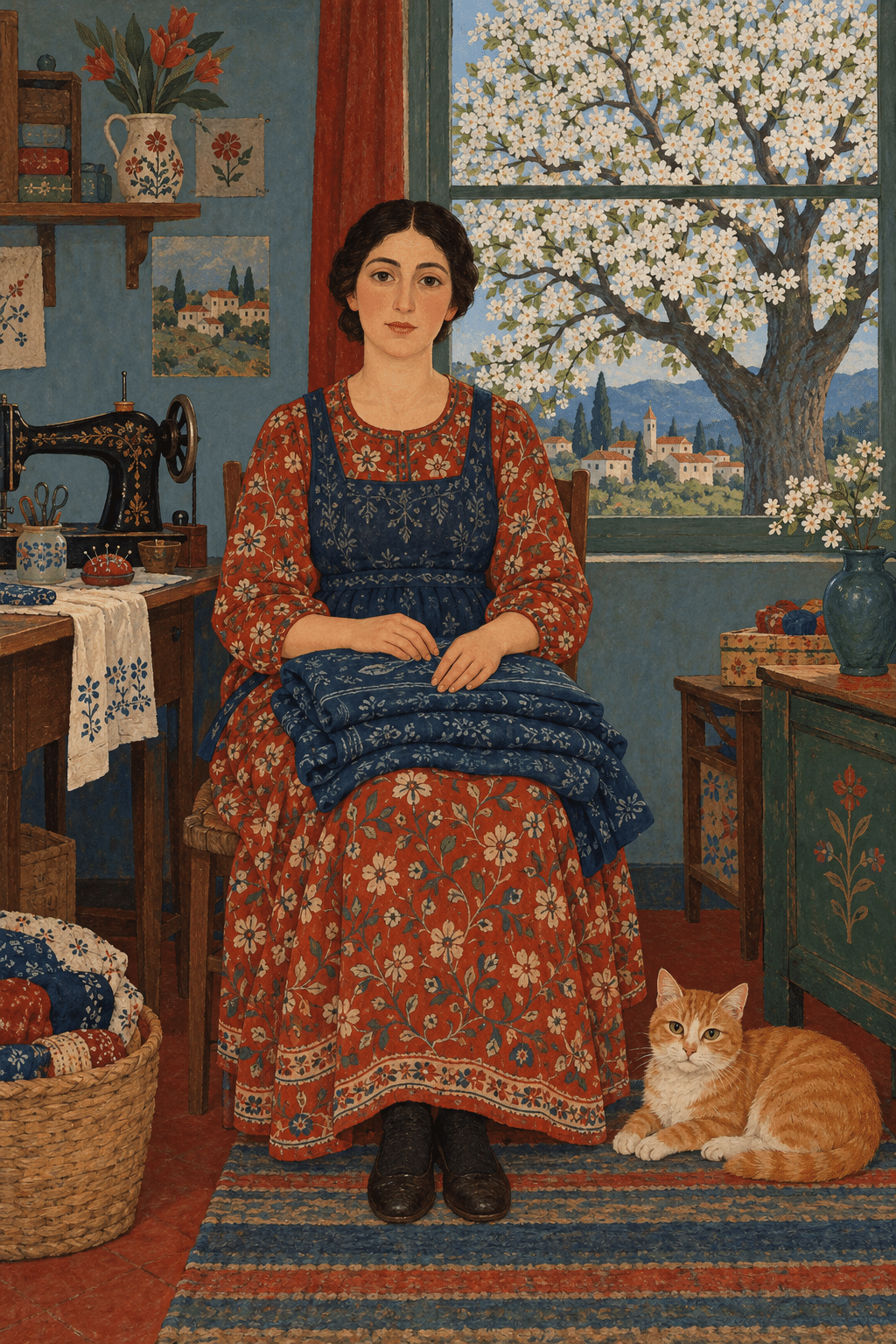
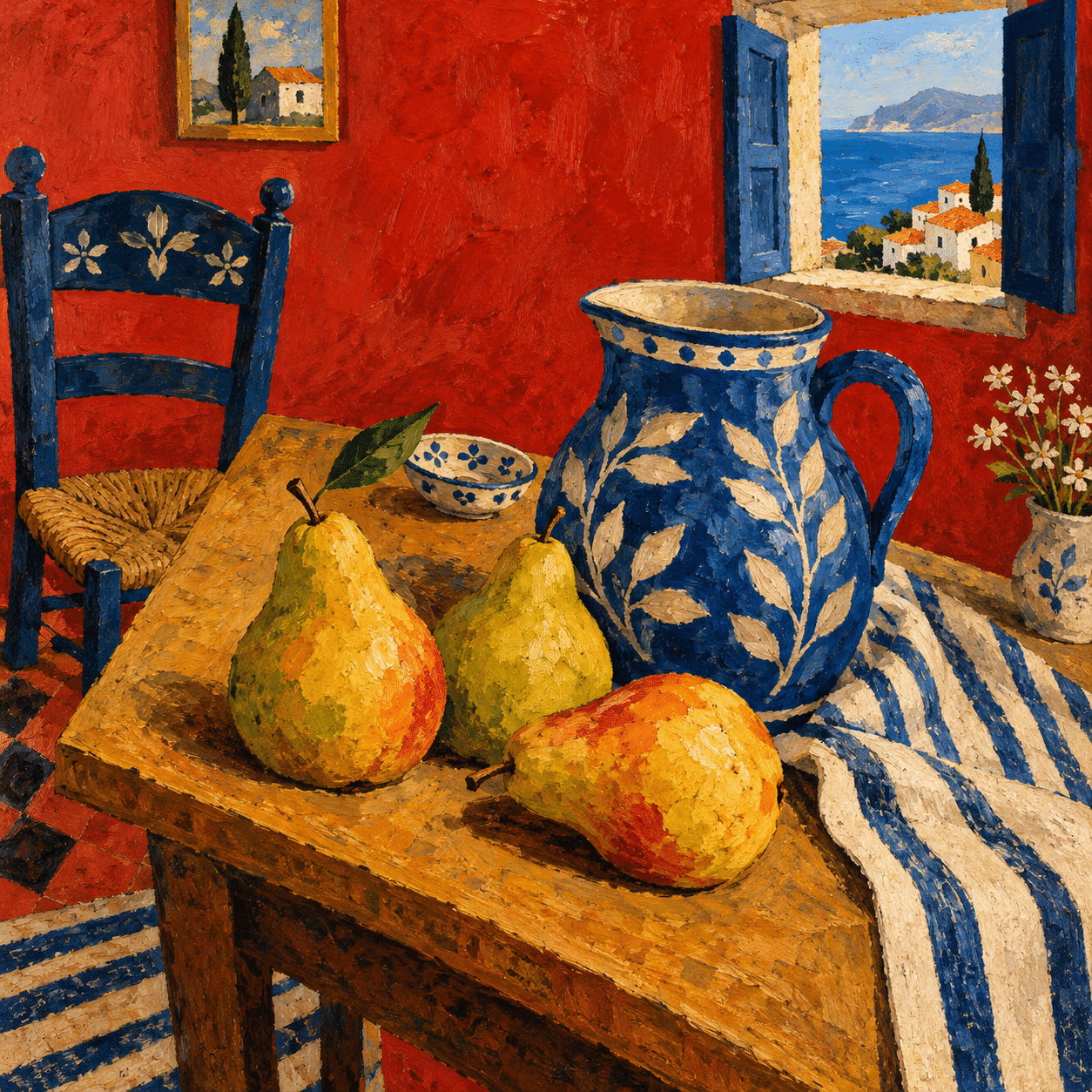
The seamstress portrait uses frontal presence, patterned fabric and a flowering tree to connect a person with a domestic setting. The still life gives pears, a large jug and a tilted tabletop unusual importance. Neither image is presented as evidence of a self-taught maker: both are generated interpretations that explore selective simplification and decorative order.
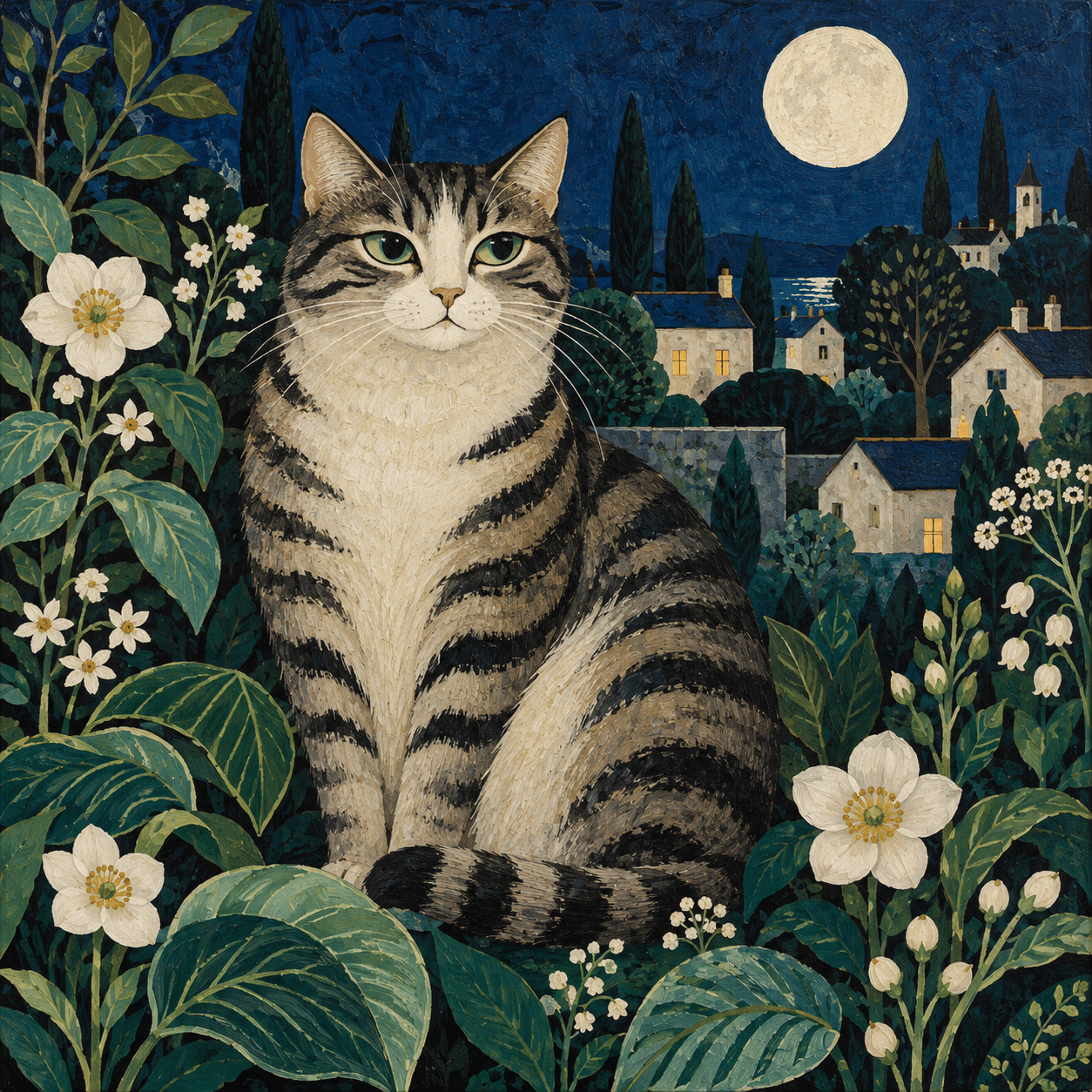
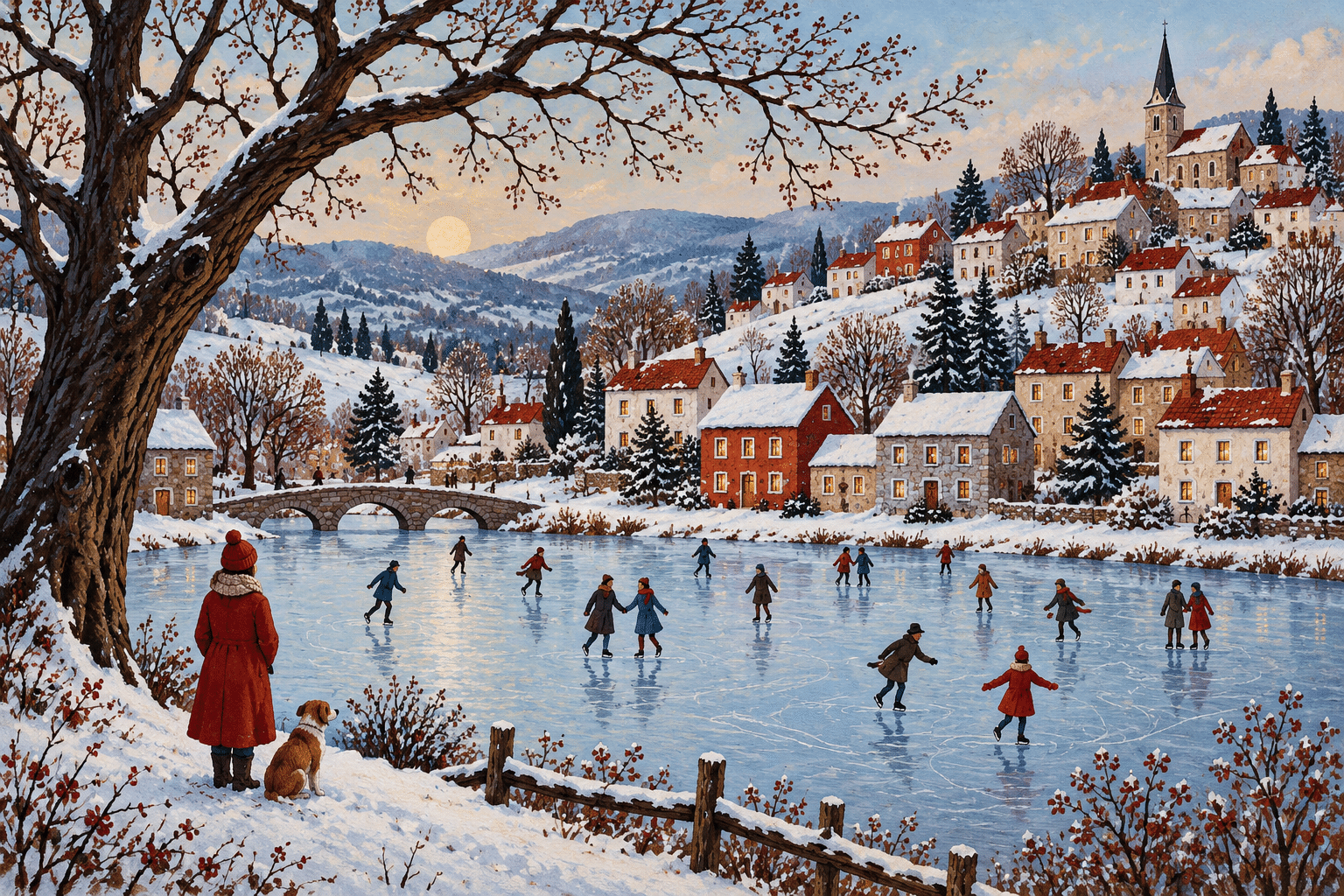
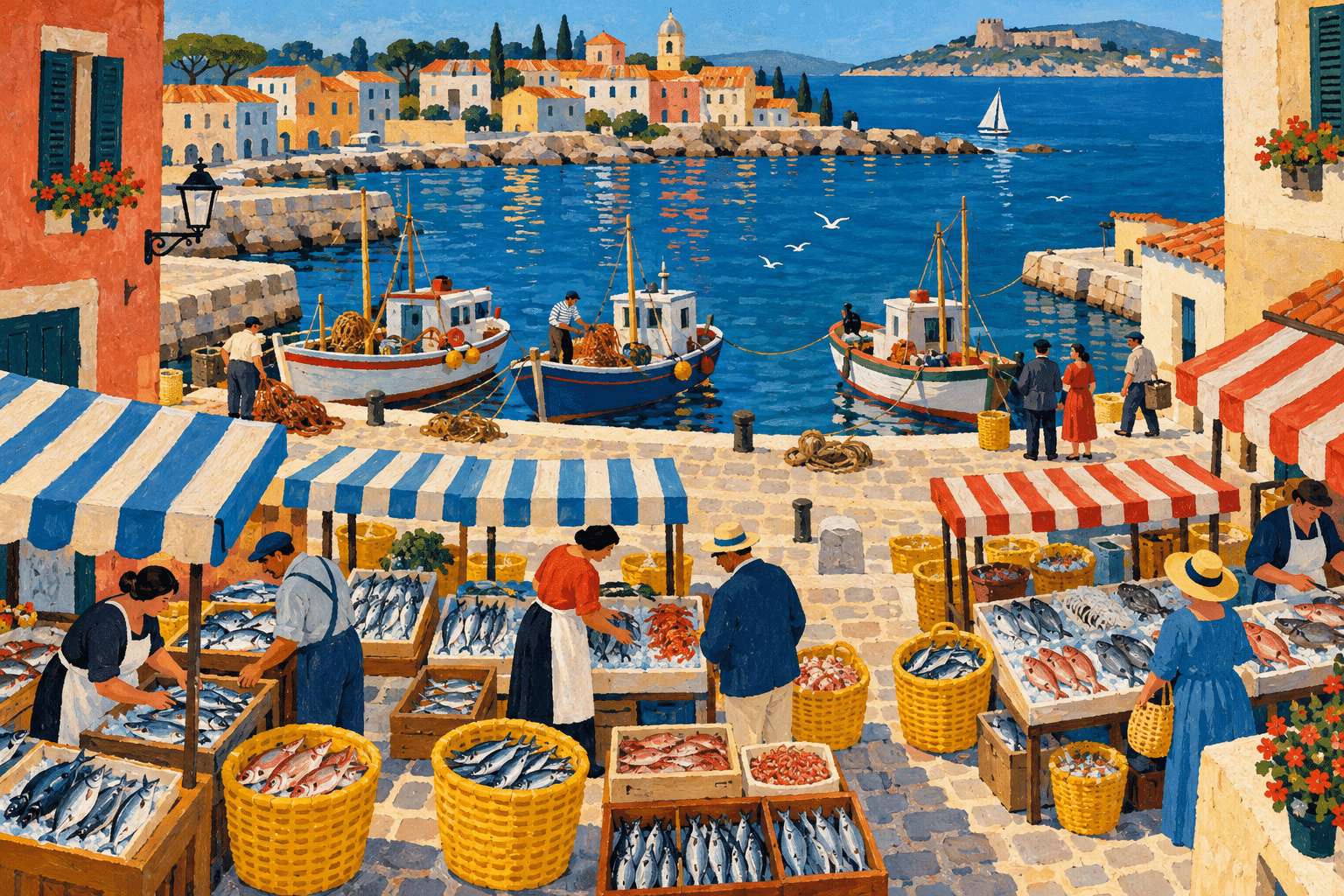
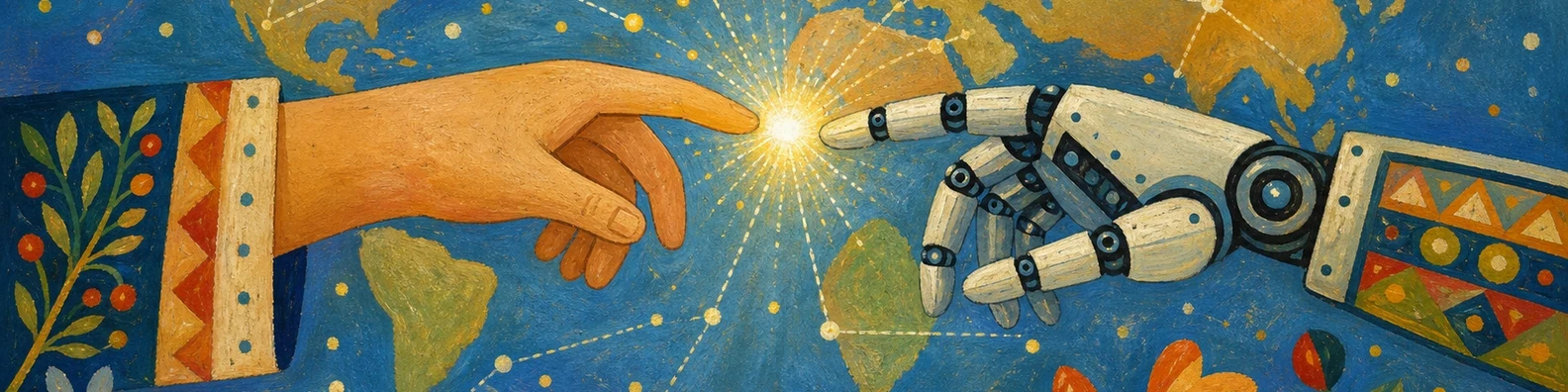
The night garden enlarges a cat against small houses, turning scale into a measure of attention. The winter pond distributes small activities across compressed landscape bands. The harbor market uses repeated baskets, boats and awnings to organize a busier scene. These studies differ in subject, viewpoint, lighting and narrative scale, while the banner and central-title collage introduce their shared visual questions.
Several studies retain considerable naturalistic modeling. That mixture is useful to discuss: a loosely naïve-inspired image can sit between illustrative realism and flattened invention. It would be misleading to claim that every new example represents a pure historical category. The gallery offers visual experiments, not a classification of real artists.
Build a personal geography
Draw a route you know from memory, giving more space to the places that matter. A tree, shop window or meeting place may become larger than its surroundings. Preserve enough connections for another viewer to follow the route. Then make a second version organized by optical perspective and compare what each reveals.
This approach can support narrative illustration, memory-based landscape and decorative painting. It becomes weak when a scene merely imitates generic quaintness. Include a specific relationship, event or detail that explains why this place matters. Compare with Surrealism for invented juxtapositions and with folk traditions for community-specific practices, while keeping those categories distinct.
Positive editorial assessment — AI-authored
The strongest contribution of these approaches is a freedom to organize attention by significance. An enlarged cat, a patiently patterned dress or a hillside of small activities can make ordinary life feel charged with observation. The new set is most convincing when its decorative details reinforce a clear relationship between figure, object and place.
Critical editorial assessment — AI-authored
The label can romanticize artists as innocent outsiders and reduce complex work to charming awkwardness. Contemporary imitations also risk becoming repetitive village nostalgia. The polished modeling in parts of this gallery shows how easily an image slides toward general illustration. Stronger work needs a particular spatial decision and subject, rather than relying on the label to provide meaning.
Neutral editorial assessment — AI-authored
Naïve art is a useful but contested category for discussion of particular artists and visual practices. The exercises here examine alternative spatial logic, repetition and narrative scale. They cannot establish training, cultural identity or historical attribution. Study individual works and makers alongside these contemporary interpretations.
The prompt workshop
Original creative exercises. These prompts create new illustrations, not documentary evidence.
A remembered garden
Create an original narrative painting of a remembered garden, enlarged favorite trees, clear figures and carefully repeated flowers. Use deliberate flattened space and avoid treating awkwardness as the goal.
A village story
Create an original painting of a small neighborhood celebration with several viewpoints combined, meaningful changes in scale and bright but controlled color. Make relationships between people and places easy to follow.
Personal geography
Create an imaginative map-like painting of a childhood route, enlarging important landmarks and compressing unimportant distances. Use simple shapes and careful detail without pretending to be a historical artwork.
Your next inspiration
Discover another art style
Follow a visual thread to the next subject.
A smile from the studio
Jokes
The village painter was asked to correct the perspective. The village asked to keep the larger bakery.
Sources and further exploration
Setagaya Art Museum: Rousseau and the category of naïve art
MoMA: The Dream, 1910, documented work and interpretive context
National Gallery: Rousseau’s Surprised!
1001 Art Styles: source of the retained collected digital illustration
The Huntington: Folk Art, Vernacular Art, or Naïve Art? — why terminology changes interpretation