
Drawing technique · Tessera-like shapes on paper
Draw a mosaic on paper by changing the size and direction of its cells. Follow a heron’s neck, divide a citrus slice and test a curve against a straight grid.
A visual introduction
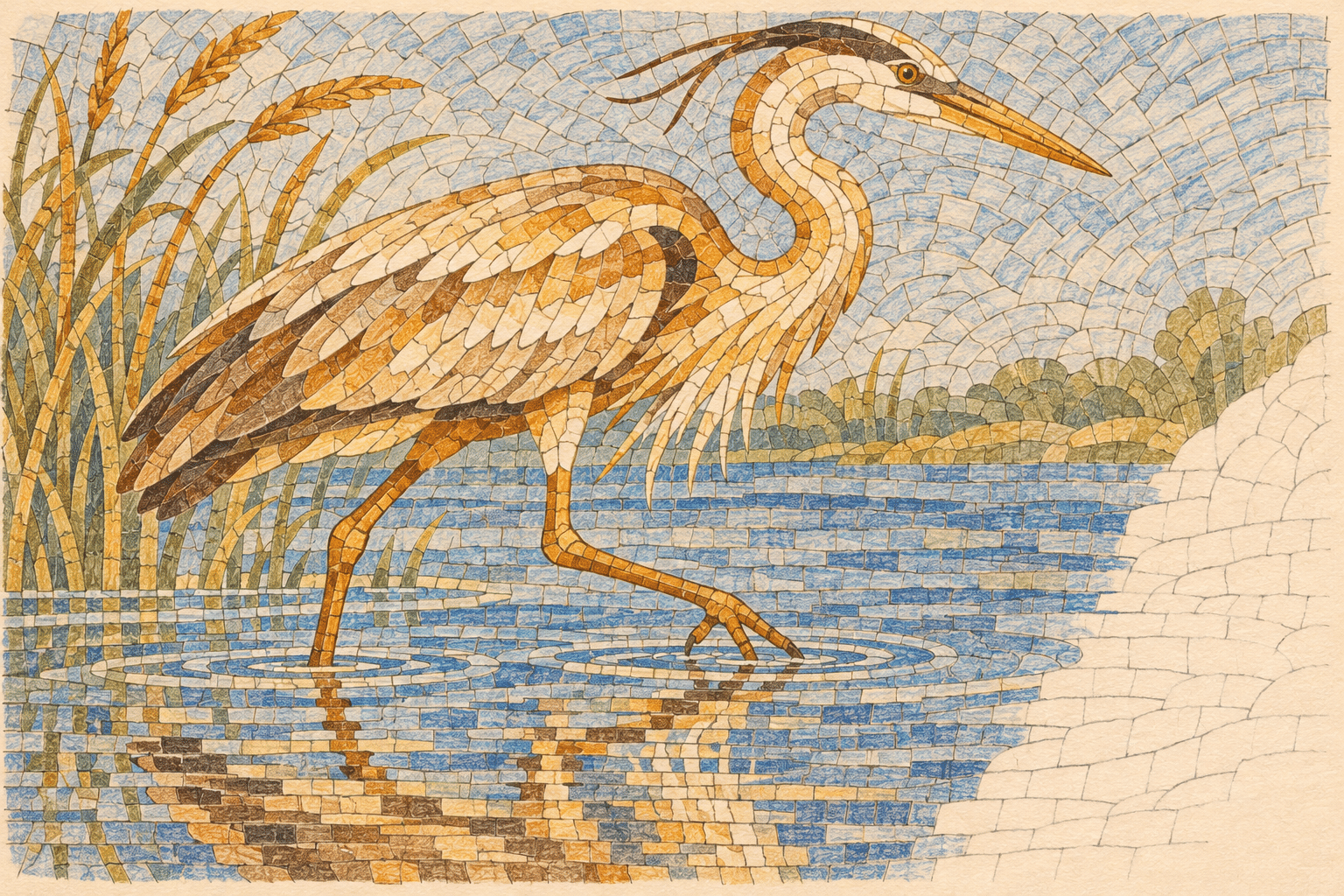
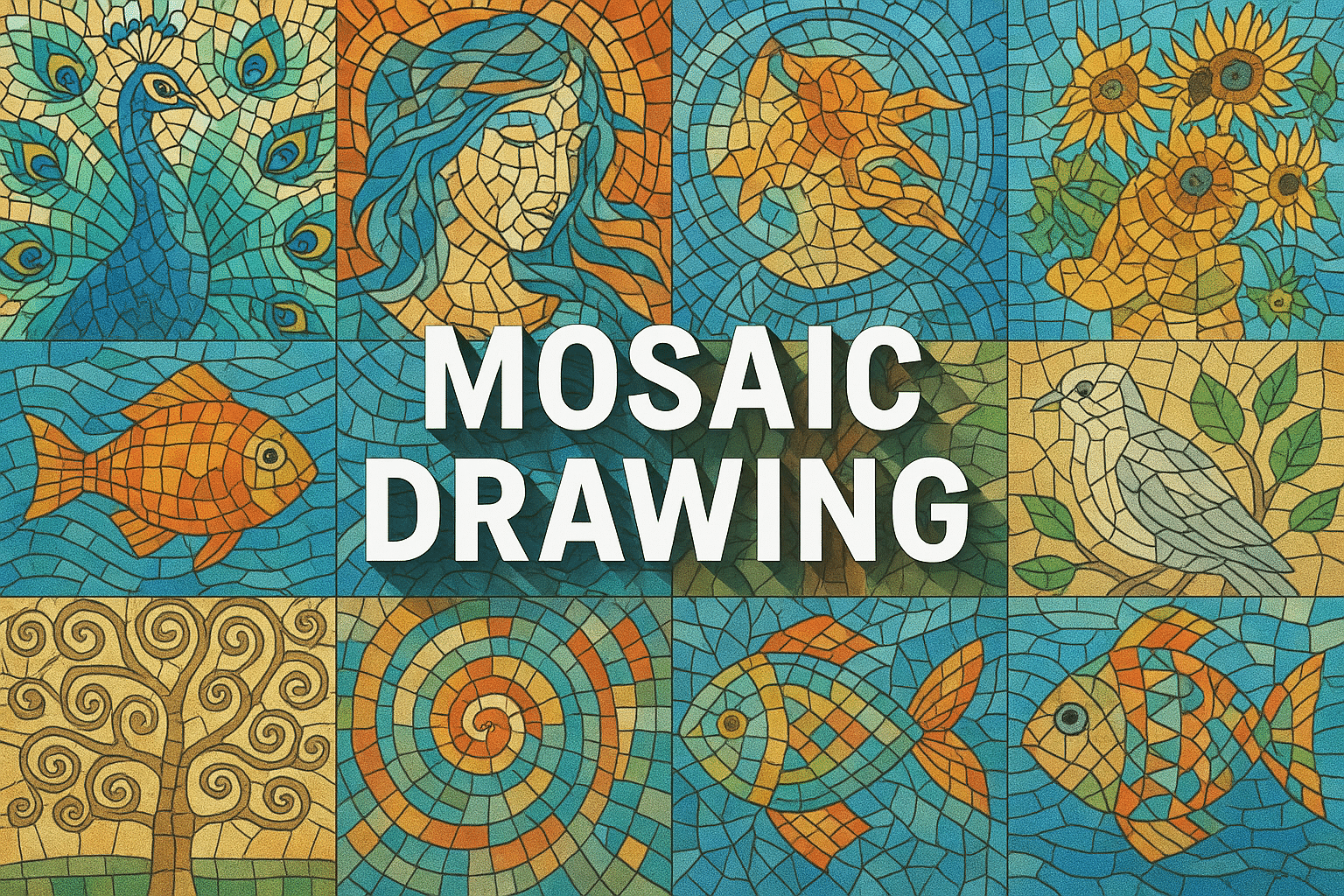
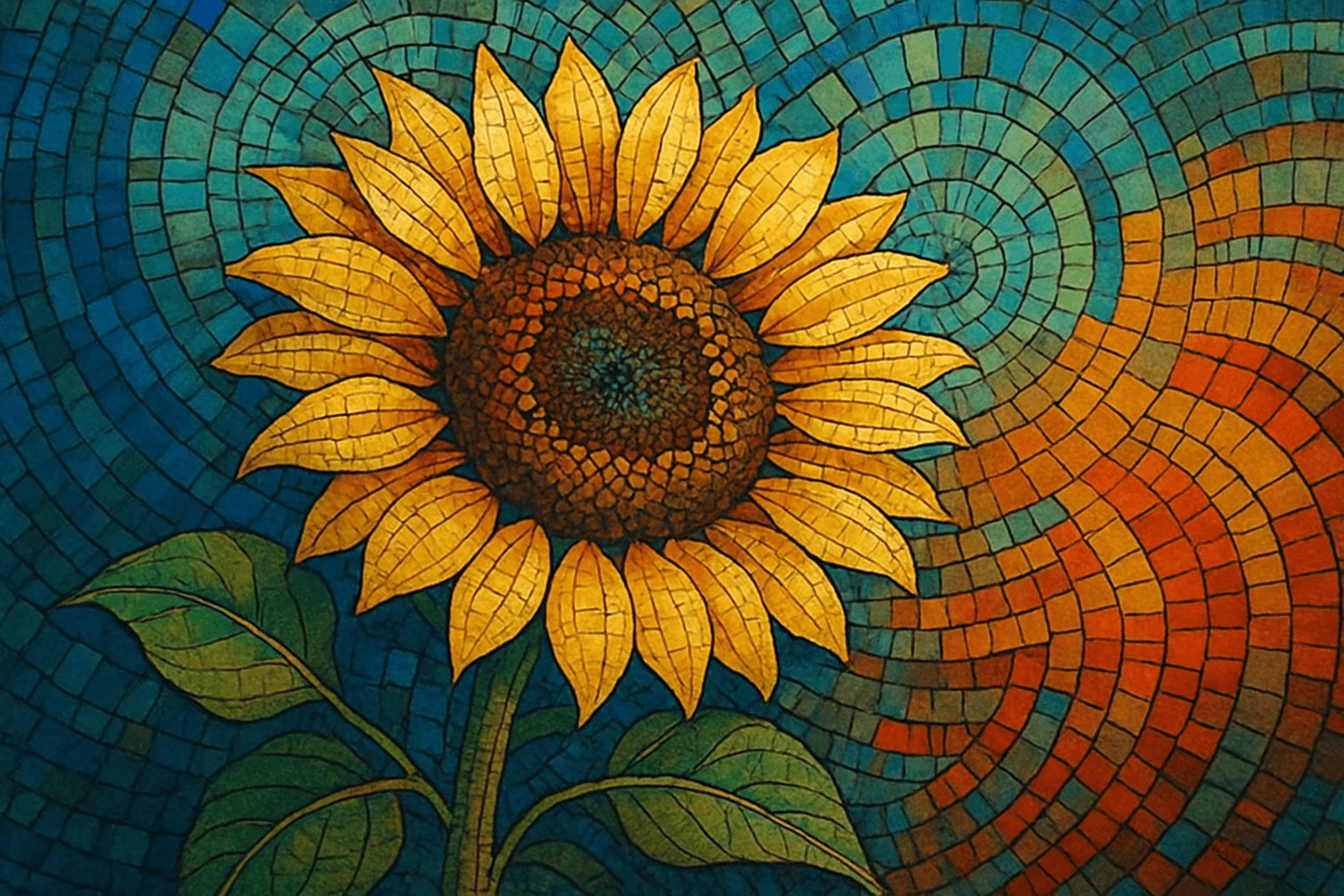
Drawn cells follow a heron, a fruit, a sunflower and two abstract arcs. The archive collage adds other arrangements of pieces.
Select an image for a closer look. Use the thumbnails, arrow keys or a swipe to compare examples. Zoom in to inspect details, or share the image that inspires you.
A closer look
A small joint stops every mark, yet rows of separate shapes can read as one long contour. Tight turns need different cells from straight runs. Let the background change direction when the subject changes.
A drawing about pieces
In the heron study, the quickest line from the eye to the shoulder follows the inside of the neck. Look closer. There is no single unbroken stroke there: several rows of small angular cells turn together. In the water below the bird, the cells straighten out until a foot interrupts them. We read feathers and water differently even where both are pale blue. The direction of the units carries information that colour alone would miss.
This guide is about drawing that arrangement on paper. A physical mosaic is assembled from separate pieces. A pencil drawing can suggest their relationships without being a pavement, wall panel or archaeological reconstruction. The unfinished patch at the right of the heron shows what the artist has to decide before any colour goes in.
Learn from an actual edge
Getty’s teaching resource on a mosaic fragment with a peacock invites you to zoom in around the bird. Pick a short stretch where the animal meets the ground and compare the rows on either side. Do they continue across the outline, or turn to make room? A second Getty example, its catalogue entry on a griffin panel, describes dark tesserae used to draw contours and feather details. Artists can make a line with pieces as well as with the gaps between them.
On paper, try both. Draw five dark cells in a row on a pale field. Beside them leave five little pale gaps between dark cells. Stand the paper at the far end of a desk. Which line survives? You have varied the relation between figure and ground without changing the palette.
Where do the rows go?
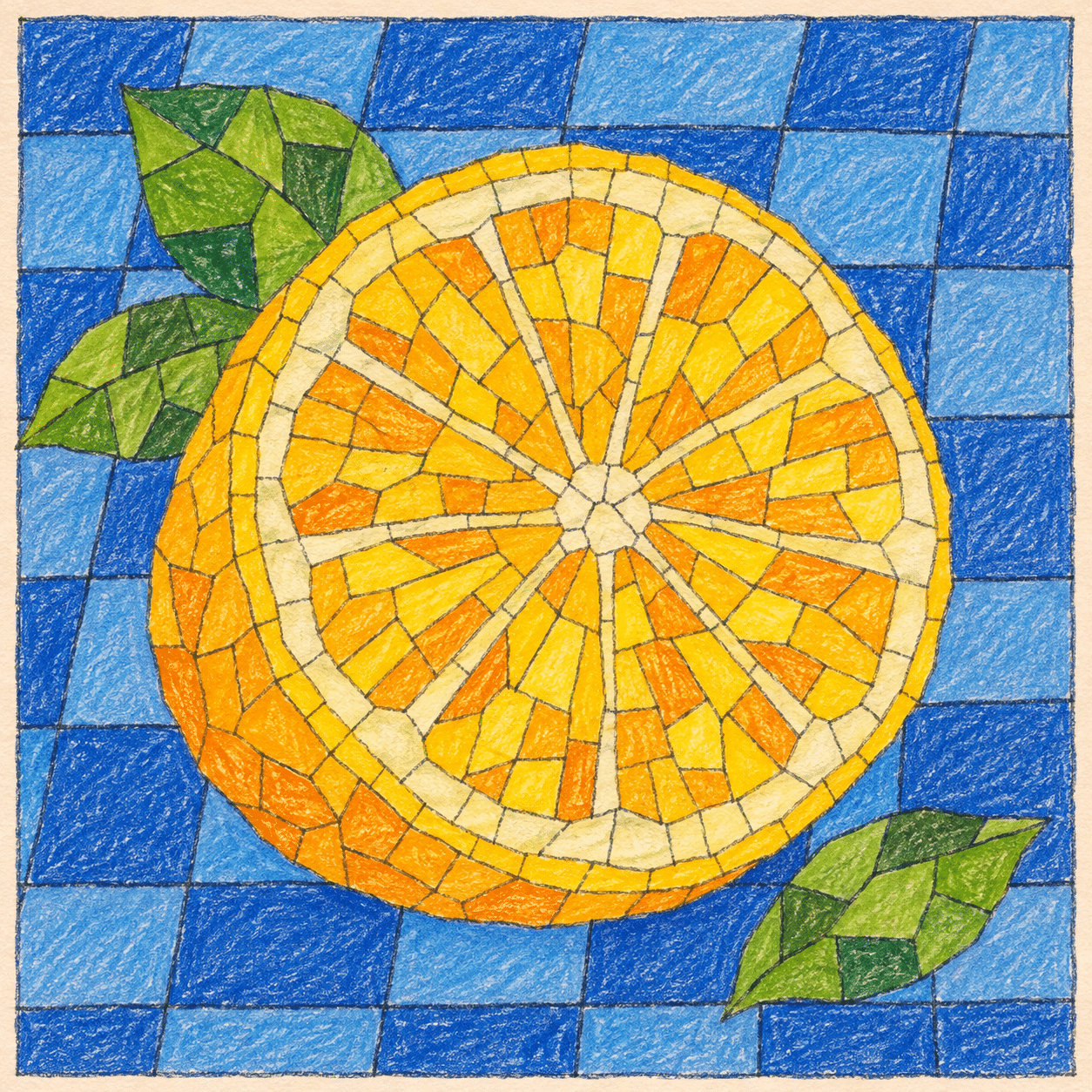
The citrus study offers two directions immediately: spokes within the fruit, rows behind it. Start with the centre and rind, then divide the area between them into wedges. Leave a slightly larger joint at the pith. If you make the same square in every wedge, narrow slivers collect near the centre. Redraw the smallest units as purposeful triangles or let two rows become one. This is easier while the paper is still uncoloured.
Compare the sunflower in the archive study. A petal is long, but the centre is round and dense. The directions compete exactly where they meet. A conspicuous ring can be useful if you want the disk to sit on top of the petals. If you want a softer join, reduce the contrast of that ring or allow the rows to change gradually.
Give the joint a colour of its own
Black outlines around every cell can make a pale lemon look like a diagram of cracks. Make three small swatches of the same arrangement on spare paper. Fill the gaps with dark graphite, warm grey and the untouched paper colour. View them at arm’s length. Which joint is wide enough to make a piece distinct without becoming the main subject? Try your choice in only half the drawing before committing.
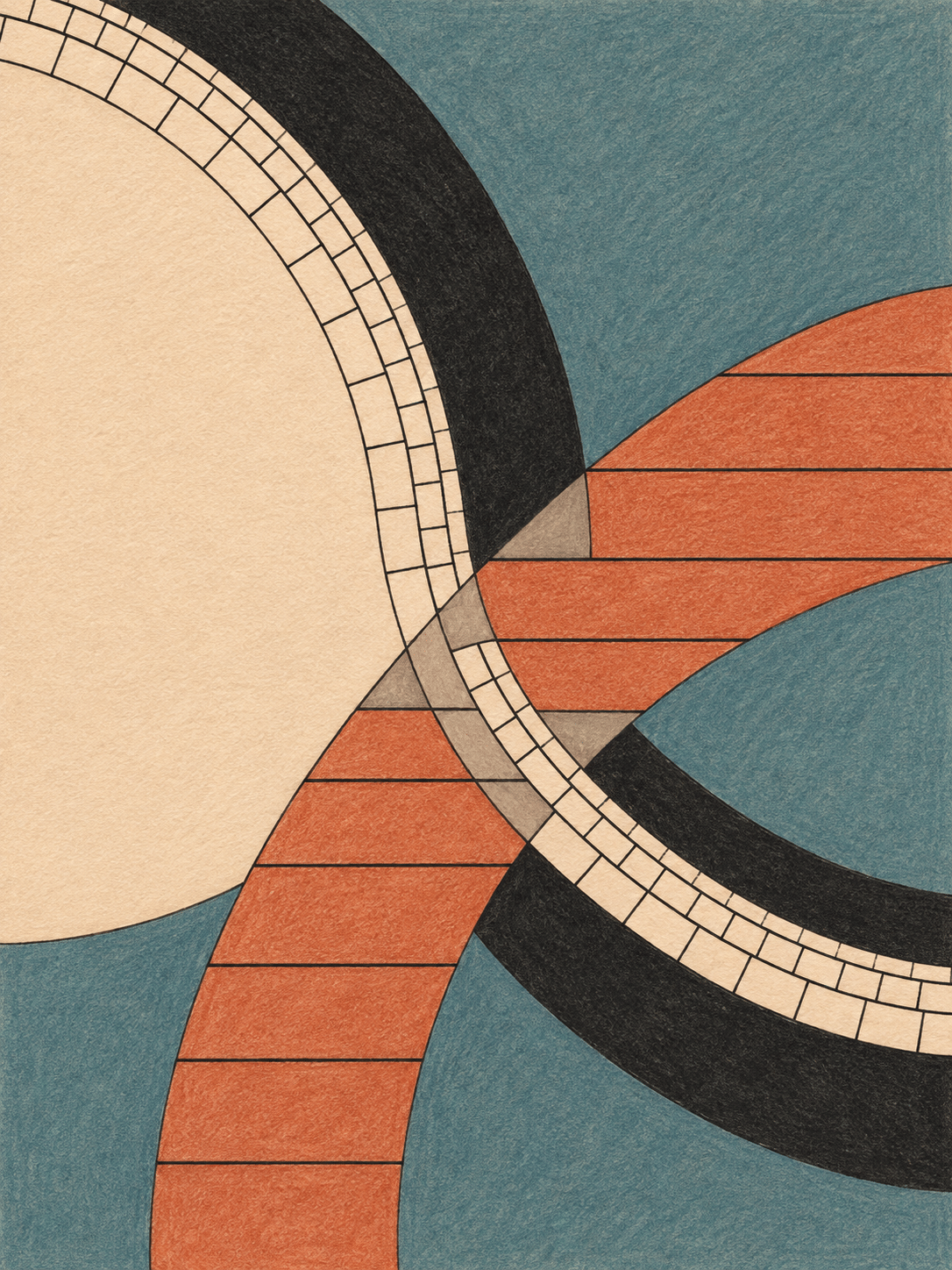
In the abstract crossing, a narrow ribbon of pale cells follows a black arc, while straight divisions pass across the terracotta band. The quiet blue field hardly needs to be subdivided for the crossing to read. Leaving one area relatively still makes the changing direction easier to see.
A small drawing exercise
Trace your own key, leaf or teaspoon. Draw one row just inside the silhouette and another just outside it. Keep those rows apart at every tight turn. Before filling anything else, ask a second reader to identify the object from across the room. If it reads, remove the initial outline and see if the rows can take over. If it does not, simplify the silhouette instead of adding another hundred cells.
The gallery studies are AOI interpretations on this theme. For the behaviour of real glass, stone, mortar or a walked floor, use the linked collection examples and the companion Mosaic article. A drawing excels at showing decisions; an installed surface adds weight, changing reflections and a viewer moving over or beside it.
A small poetic detour
Original words from the AOI studio.
Poetry
The first stone turns.
Its neighbour gives it room.
By the eighth small bend
a bird has found its neck,
and the blue that would not follow
has become the river.
The prompt workshop
Original creative exercises. These prompts create new illustrations, not documentary evidence.
Turn around the neck
Draw a wading bird from individually pencilled cells. Bend two narrow rows around its neck. Let the water settle into wider horizontal units, with just one ripple changing direction. Leave a small patch of outlines uncoloured.
Radial against rectangular
Draw a cut lemon with wedge-shaped cells radiating from the pith. Set it against a tabletop divided into four broad blue rows. Use coloured pencil with visible paper tooth and adjust the narrowest cells by hand.
Let the joint disappear
Draw two crossing arcs on buff paper. Give one a ribbon of small tessera-like units and divide the other with long straight joints. Make a companion version with every second joint erased. Compare which shapes survive at a distance.
A smile from the studio
Jokes
A two-pencil game: one person draws a curved row. The other must turn it into either a fish or a teapot by adding only six cells. Swap the page before choosing the colour.
Sources and further exploration
Getty Education — Peacock Facing Left: zoom in to see how stones turn around the bird
Getty collection catalogue — how a dark line of tesserae defines the griffin’s wing and body
Getty — Roman Mosaics, introduction: materials, scale and the limits of evidence for design drawings