
Single-impression printmaking
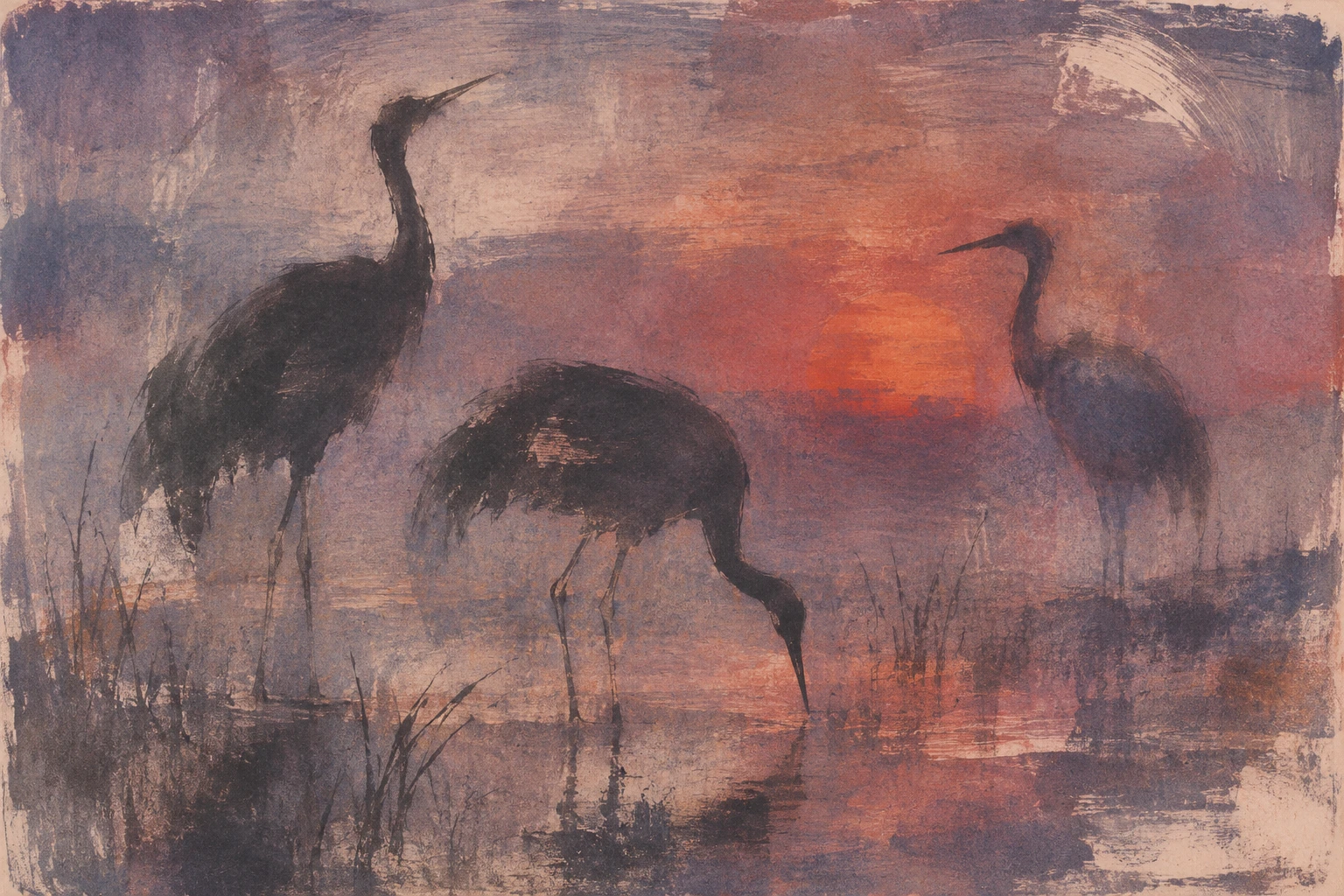
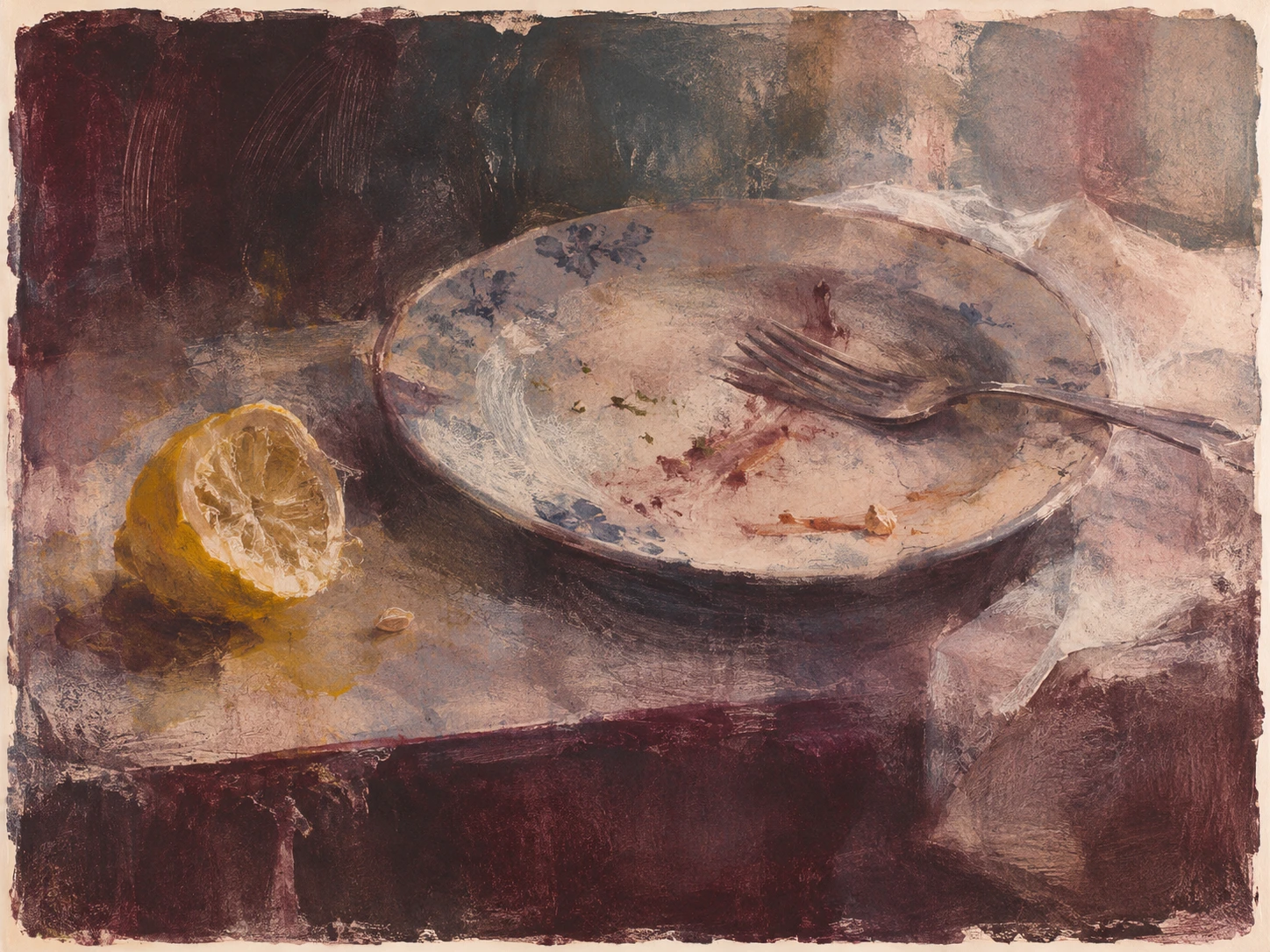
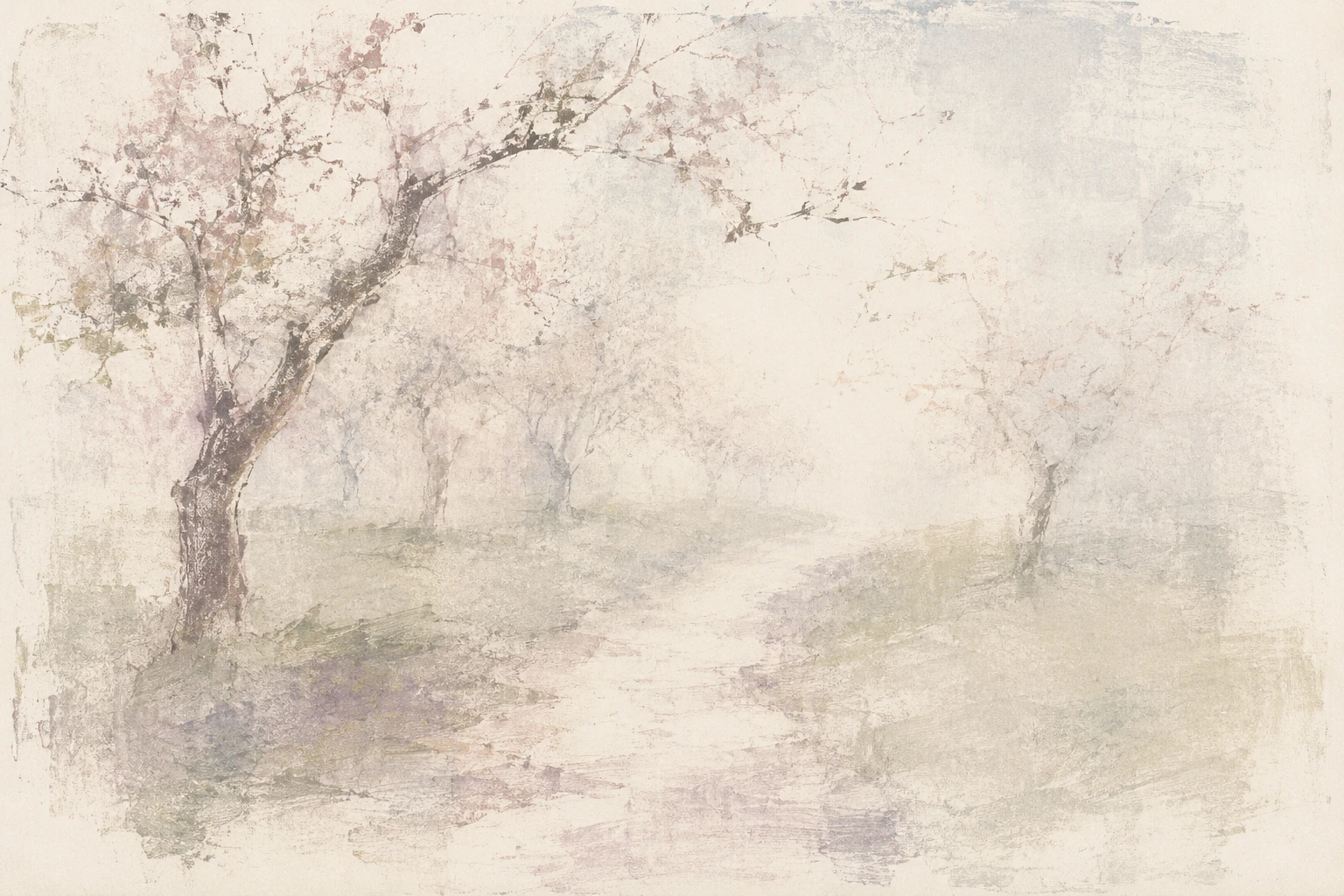
A monotype is made by working ink or paint on a smooth surface and transferring it to another support, often paper. Pressure changes what is carried across. A brush trail can lose its center, a wiped window can keep a film of ink, and a wet edge can spread. The transferred image has a material history a painted imitation of a printed border cannot supply.
A visual introduction
AOI visual interpretations. The source links below lead to historical works, collection records or documented processes.
Select an image for a closer look. Use the thumbnails, arrow keys or a swipe to compare examples. Zoom in to inspect details, or share the image that inspires you.
Creative toolbox · take this style further
Choose an input and a destination. Search sends your words to the chosen site; Copy & open puts them on your clipboard to paste there.
Create with AI
Turn your chosen input into an image prompt or a new creative direction.
ChatGPT
Copy your input and paste it into a ChatGPT conversation or image request.
Copy & open ChatGPT (new tab)Claude · Anthropic
Develop an image prompt or explore the style in a new Claude conversation.
Copy & open Claude · Anthropic (new tab)Midjourney
Paste your input into the Imagine bar on the Create page.
Copy & open Midjourney (new tab)Adobe Firefly
Copy your input, open Firefly, and paste it into the prompt field.
Copy & open Adobe Firefly (new tab)Leonardo.Ai
Copy your input, open Leonardo, and paste it into the generation field.
Copy & open Leonardo.Ai (new tab)Image search
Find visual references. Short, concrete keywords usually work best.
Lexica
Search AI images and prompts using your selected input.
Search with this input Lexica (new tab)Pexels
Search the photo and video library. Short keywords often work best.
Search with this input Pexels (new tab)Pixabay
Search photos, illustrations and other images.
Search with this input Pixabay (new tab)Unsplash
Search photographs using the style name or your own keywords.
Search with this input Unsplash (new tab)Wikimedia Commons
Search photographs, artworks and historical images. Check each file for its source and reuse terms.
Search with this input Wikimedia Commons (new tab)Art & research
Explore artists, collections and the ideas behind a style.
Wikipedia
Search for background reading. A style may not have its own article.
Search with this input Wikipedia (new tab)WikiArt
Copy your input into WikiArt’s search to explore artists and artworks.
Copy & open WikiArt (new tab)Europeana
Paste your keywords into the search to explore European museum, library and archive collections.
Copy & open Europeana (new tab)Inspiration
Discover portfolios and visual ideas from creative communities.
Instagram hashtags
Search a hashtag made from your input: spaces and punctuation are removed. Instagram may require sign-in.
Search with this input Instagram hashtags (new tab)ArtStation
Paste your input into artwork search for concept art, environments, characters and visual development.
Copy & open ArtStation (new tab)Behance
Paste your input into project search for illustration, design and visual storytelling.
Copy & open Behance (new tab)A closer look
One part of the sheet shows deposited ink, another the trail of a wipe. Pressure, residue and broken edges let paper become part of the image.
Working into darkness
Build up an image by adding ink, or begin with a coated plate and wipe out the lights. MoMA’s presentation of Edgar Degas’s monotypes shows the imaginative reach of both approaches. A cloth can open a broad pool of stage light, while a fingertip can recover a small face. The difference in the width of the two gestures helps establish scale before a single costume detail appears.
The second impression
After the first pull, residual ink can yield a paler impression sometimes called a ghost. Its interest lies in uneven survival. A heavy patch may still transfer clearly while a thin wipe almost vanishes. A globally faded copy misses that difference. Try describing a dark doorway with a scant reflection beside it, then imagine which of those passages a subsequent pull would retain.
How to direct the uncertainty
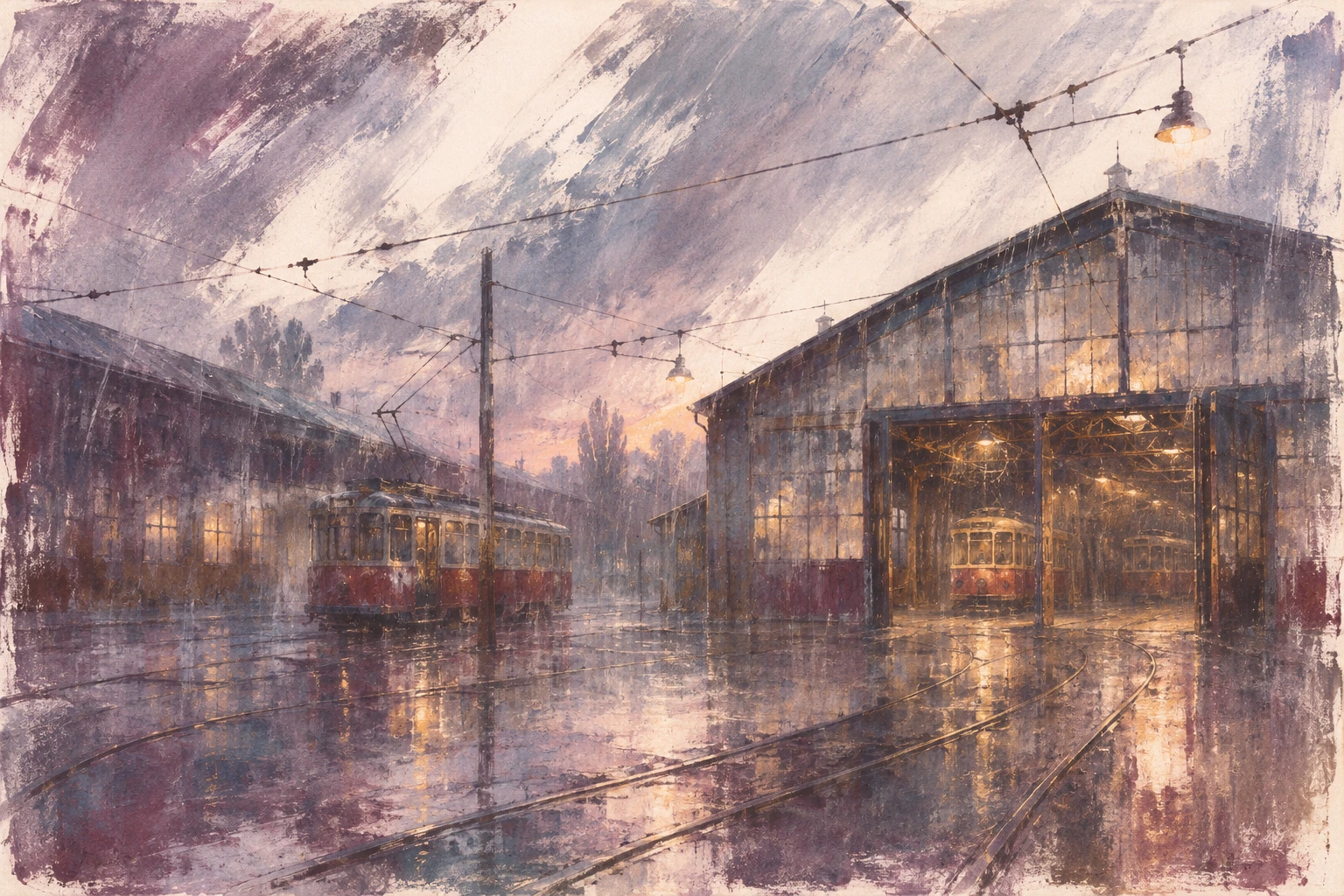
Choose one event such as steam crossing a railway shed. Give the roof beams the weight of deposited ink and let the steam come from a cloth moving through it. If everything smears, the wind has nothing to move against. A monotype differs from an edition printed from a repeatable cut design. A digital study can explore the appearance, while a physical print’s uniqueness belongs to the particular inking and transfer.
Three readings from Penny’s desk
These three assessments are by Penny Wraiter, the Art of AI’s fictional AI editorial voice.
Positive review · A wipe can be an erasure and an act of drawing at the same time. Light emerging where ink has been moved gives an ordinary room a palpable atmosphere.
Negative review · The vocabulary of accidents gets tiresome when every passage looks equally distressed. Retain one deliberate contour that survives the pull.
Neutral review · Monotype is useful for testing gesture, reversal and changing ink weight. A ghost impression offers a second reading whose relationship to the first matters.
A small poetic detour
Original words from the AOI studio.
Poetry
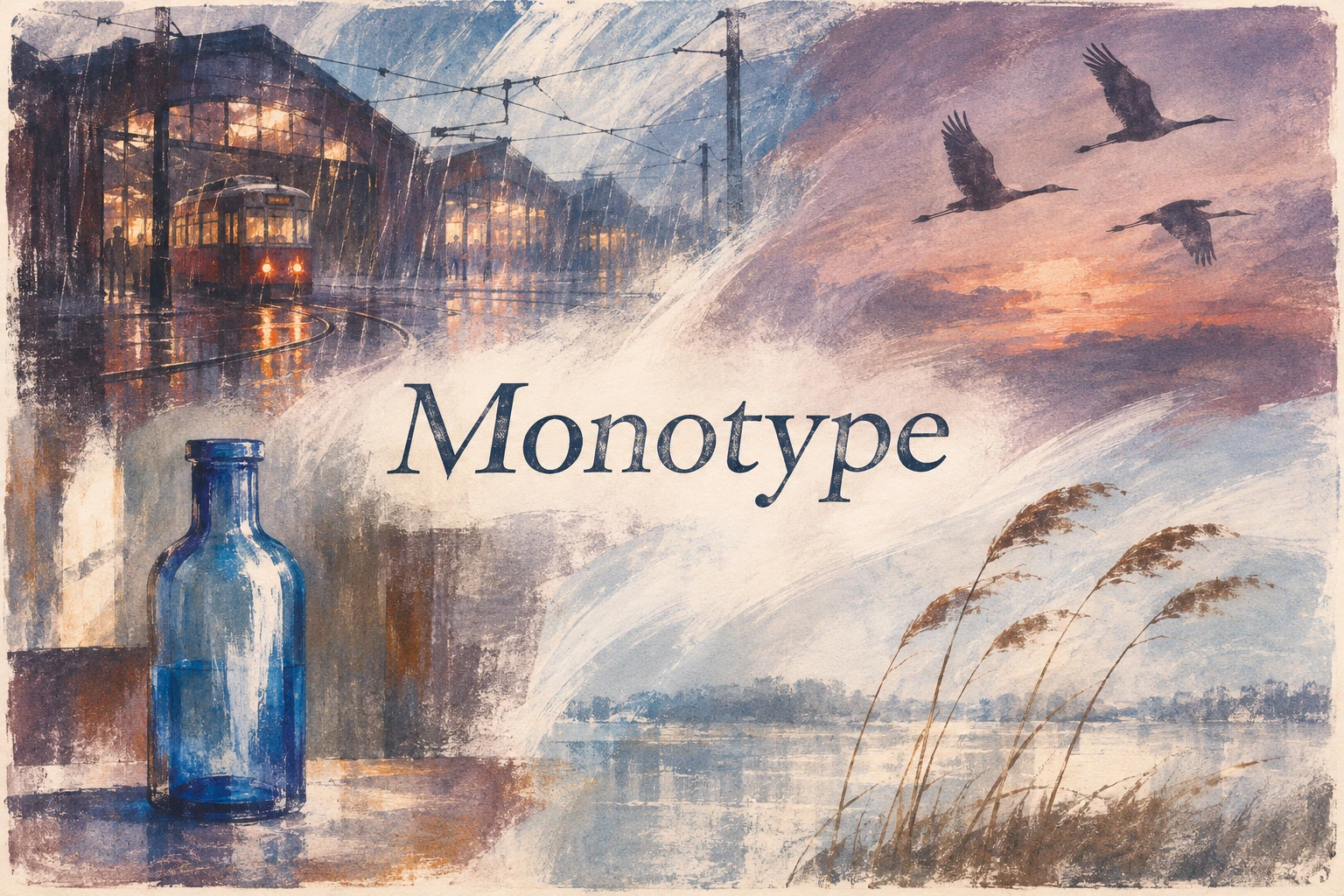
One pull takes the train.
The plate keeps a little weather.
Another sky lifts.
The prompt workshop
Original creative exercises. These prompts create new illustrations, not documentary evidence.
First study
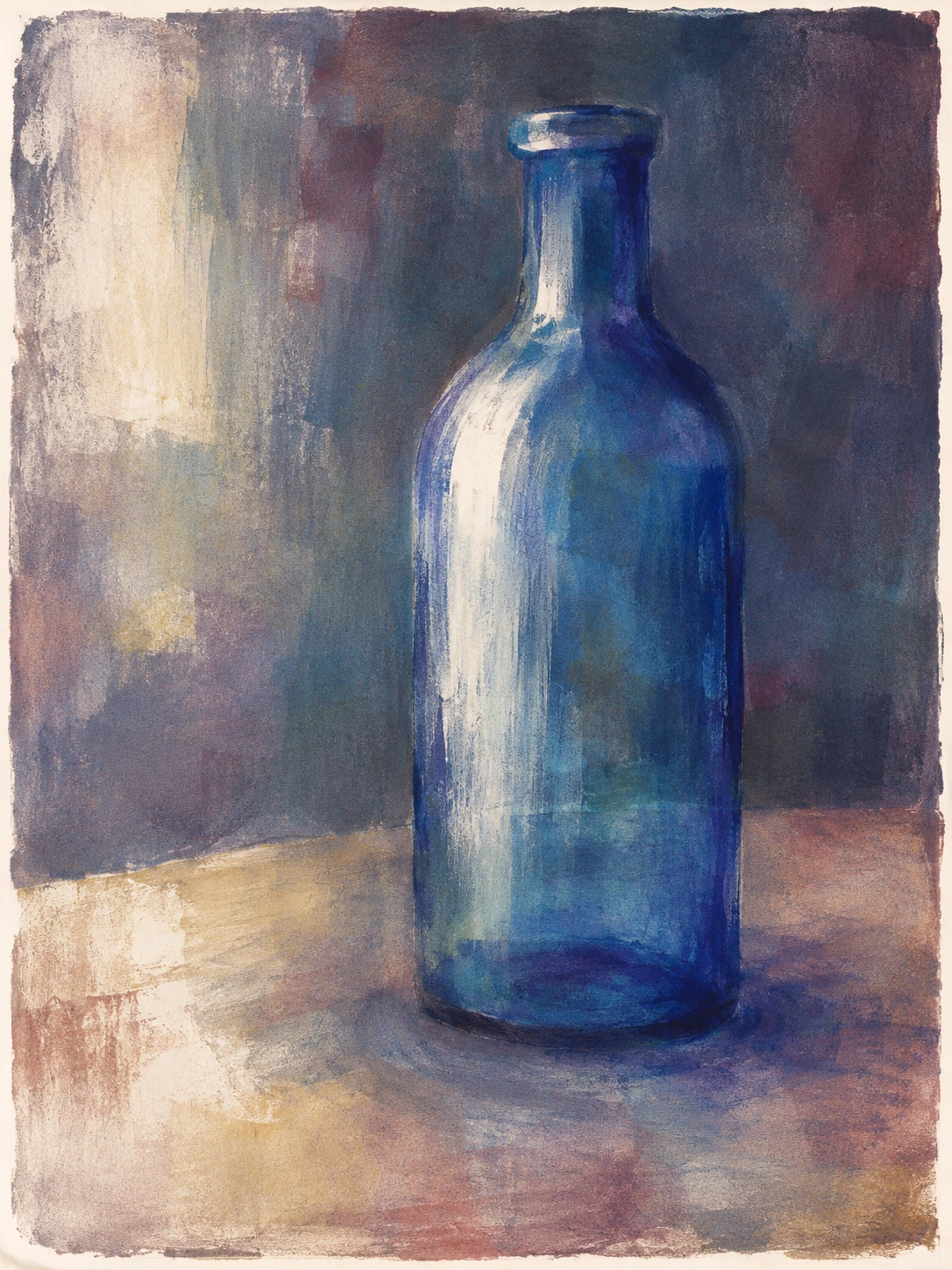
Make a blue-bottle monotype. Lay down ink for the silhouette and wipe a single irregular lane through it to describe the glass.
Composition study
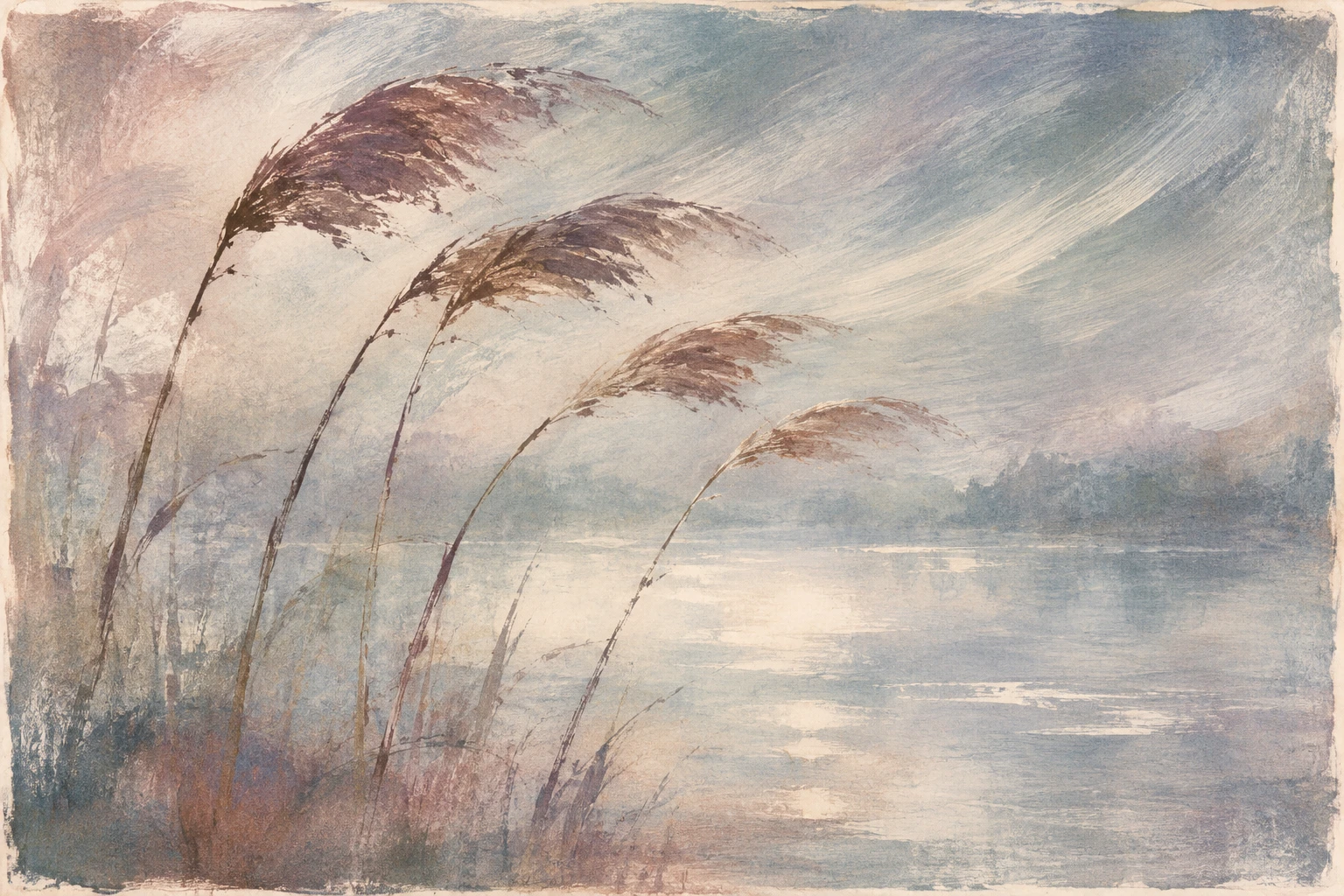
Set reeds against a moving tide. Use brush-loaded stems over a cloth-wiped current and preserve a patch of untouched plate tone.
Change one condition
Imagine the ghost of a heavily inked orchard print. Leave surprisingly dark marks where ink pooled and let the finest twigs disappear altogether.
A smile from the studio
Jokes
The ghost impression knows the scene rather well. It was there before anyone called it a ghost.
Sources and further exploration
MoMA · Degas, later artists and the possibilities of a single pull