
Compositional approach
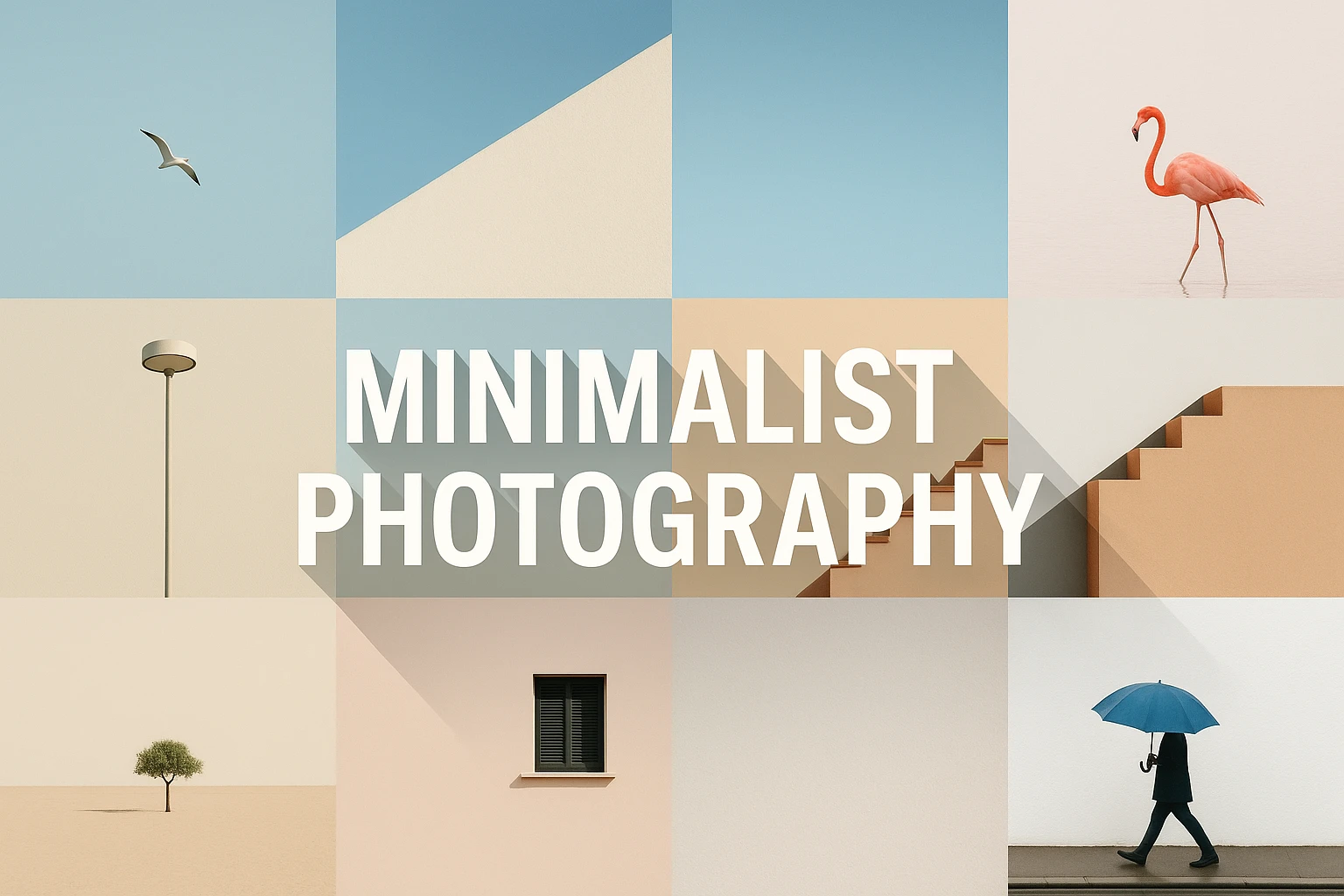
Minimalist photography uses selection, spacing and tonal control to make a few visual relationships carry an image.
A closer look
Start by identifying what the picture needs, then examine what competes with it.
Understanding the subject
Minimalist photography describes a compositional approach rather than a single historical school with a fixed membership. It may reduce the scene to a subject, a surrounding field and a small number of lines or colors. This should not be confused with a complete account of the historical Minimalist art movement. A sparse photograph can still depend on a precise place, moment and emotional association.
AOI looking and making workshop
Start by identifying what the picture needs, then examine what competes with it. A lone chair against a wall may need a shadow to feel grounded, but not every mark on that wall contributes. Negative space is active: its proportions affect the subject’s apparent isolation or ease. Inspect edges for accidental intrusions and test the image at thumbnail size. Avoid mistaking underexposure or blankness for clarity. One well-placed irregularity can give a disciplined composition more life than perfect symmetry.
The prompt workshop
Original creative exercises. These prompts create new illustrations, not documentary evidence.
One chair
Create a minimalist photographic interpretation of a single ochre chair against a pale blue wall, one soft diagonal shadow and generous empty space. Preserve subtle surface texture and clean frame edges.
Quiet shoreline
Create a sparse seascape with three dark posts, a pale horizon and one faint reflection. Use restrained gray-blue tones, deliberate unequal spacing and a calm horizontal composition without extra decorative objects.
A small interruption
Create an original geometric photograph-like composition of a broad white wall interrupted by one narrow red window and a tiny creeping plant. Balance severe architecture with an irregular organic detail.
Your next inspiration
Discover another art style
Follow a visual thread to the next subject.