AOI creative concept · Paper and printed matter
Treat the blank margins of a printed-looking page as the only places where an orchard may grow.
An AOI creative concept, not an established historical movement.
A closer look
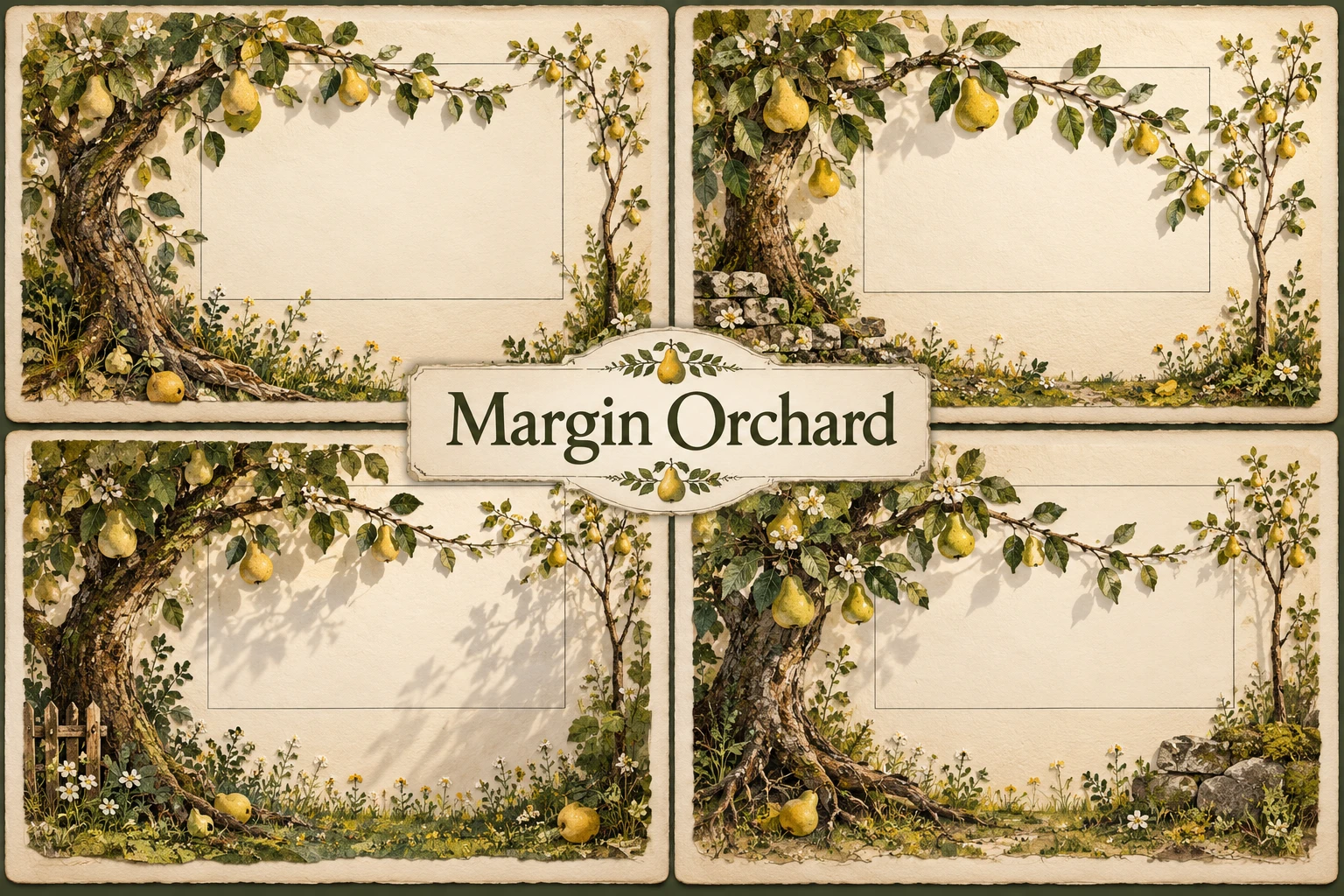
Warm ivory, moss green and pear yellow; ink and cut paper. The focal scene: an orchard growing around a blank page.
The edge sets the rule
Treat the blank margins of a printed-looking page as the only places where an orchard may grow. Branches can lean across the central rectangle, but roots and trunks must remain outside it. The empty center becomes an active obstacle.
Arrange the paper scene
Lay out two unequal side margins and a generous lower margin. Plant a heavy pear tree at the bottom left and a thin sapling high on the right. Let their branches almost touch across the blank rectangle. Draw small fruit with enough contrast to establish scale; omit readable body text so the page remains an invented composition.
Where the illusion weakens
The orchard should describe the absent page without enclosing it in a tidy wreath. If every margin carries equal foliage, prune one side severely. Avoid fake quotations, botanical labels and decorative lettering that steal attention from the spatial rule.
Technique notes
Replace the paper rectangle with a blank circular window; make every branch approach the opening without crossing its center.
When prompting an image model, spell out the rule and visible relationships. The invented style name alone is not a reliable instruction. Compare outputs against the critique above and revise the specific failed relationship.
The prompt workshop
Original creative exercises. These prompts create new illustrations, not documentary evidence.
Start with the defining rule
Create an original illustration of an orchard growing around a blank page. Treat the blank margins of a printed-looking page as the only places where an orchard may grow. Branches can lean across the central rectangle, but roots and trunks must remain outside it. The empty center becomes an active obstacle. Use warm ivory, moss green and pear yellow; ink and cut paper. Keep the composition readable, with a clear focal area and quiet surrounding space. No lettering, signatures or watermark.
Build the fuller composition
Create an original Margin Orchard composition. Lay out two unequal side margins and a generous lower margin. Plant a heavy pear tree at the bottom left and a thin sapling high on the right. Let their branches almost touch across the blank rectangle. Draw small fruit with enough contrast to establish scale; omit readable body text so the page remains an invented composition. Use warm ivory, moss green and pear yellow; ink and cut paper. Preserve the defining constraint: Treat the blank margins of a printed-looking page as the only places where an orchard may grow. Avoid decorative clutter, readable text and watermarks.
Try a deliberate variation
Create an experimental illustration based on this rule: Treat the blank margins of a printed-looking page as the only places where an orchard may grow. Branches can lean across the central rectangle, but roots and trunks must remain outside it. The empty center becomes an active obstacle. Variation: Replace the paper rectangle with a blank circular window; make every branch approach the opening without crossing its center. Use warm ivory, moss green and pear yellow; ink and cut paper. Make the changed relationship unmistakable while keeping supporting details restrained. No captions, signatures or watermark.
Look closer
Explore the image gallery
Select an image to enlarge it. Browse with the arrows, and press Escape to return.

Your next inspiration
Discover another art style
Follow a visual thread to the next subject.
Woodcut: A Celebration in Grain and Grooves
Related visual vocabulary from the existing AOI catalogue.