
Relief printmaking
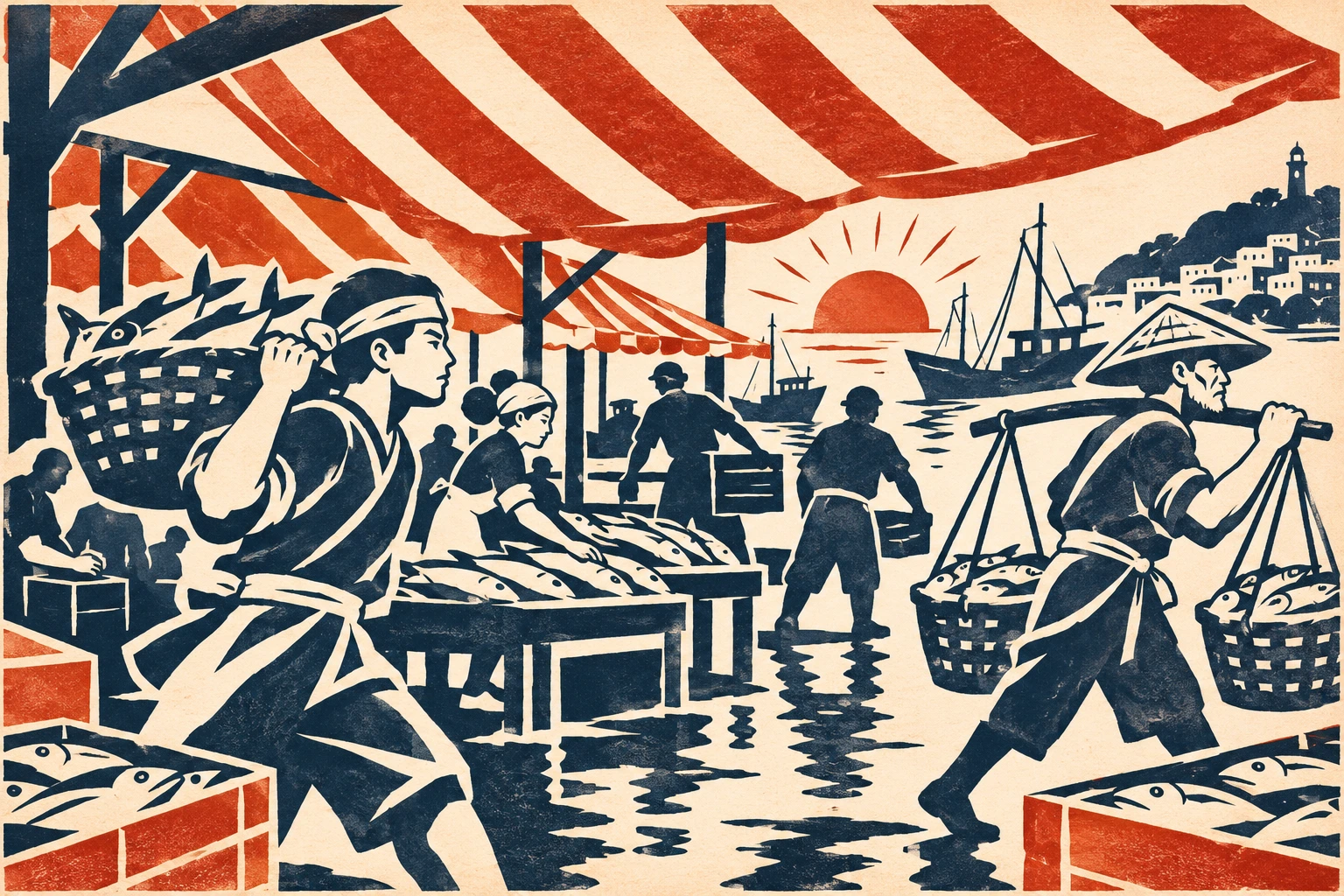
Think of the pale stripe on a dark fish as missing surface. In linocut, ink rolls onto the parts of a linoleum block left standing. Cut a channel and the paper can show through there. The image reverses in printing, which makes directional subjects such as a tram rounding a bend especially interesting to plan.
A visual introduction
AOI visual interpretations. The source links below lead to historical works, collection records or documented processes.
Select an image for a closer look. Use the thumbnails, arrow keys or a swipe to compare examples. Zoom in to inspect details, or share the image that inspires you.
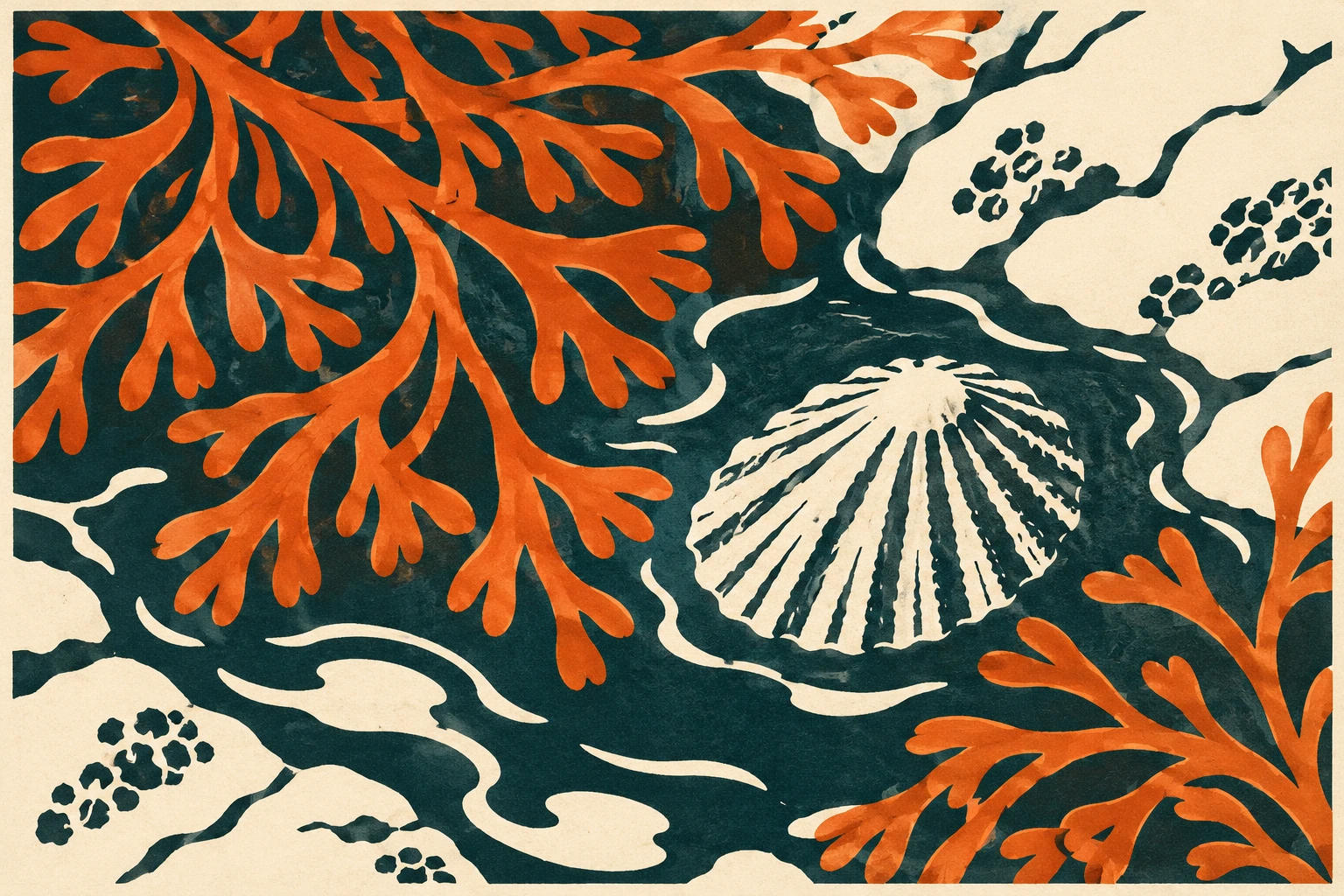
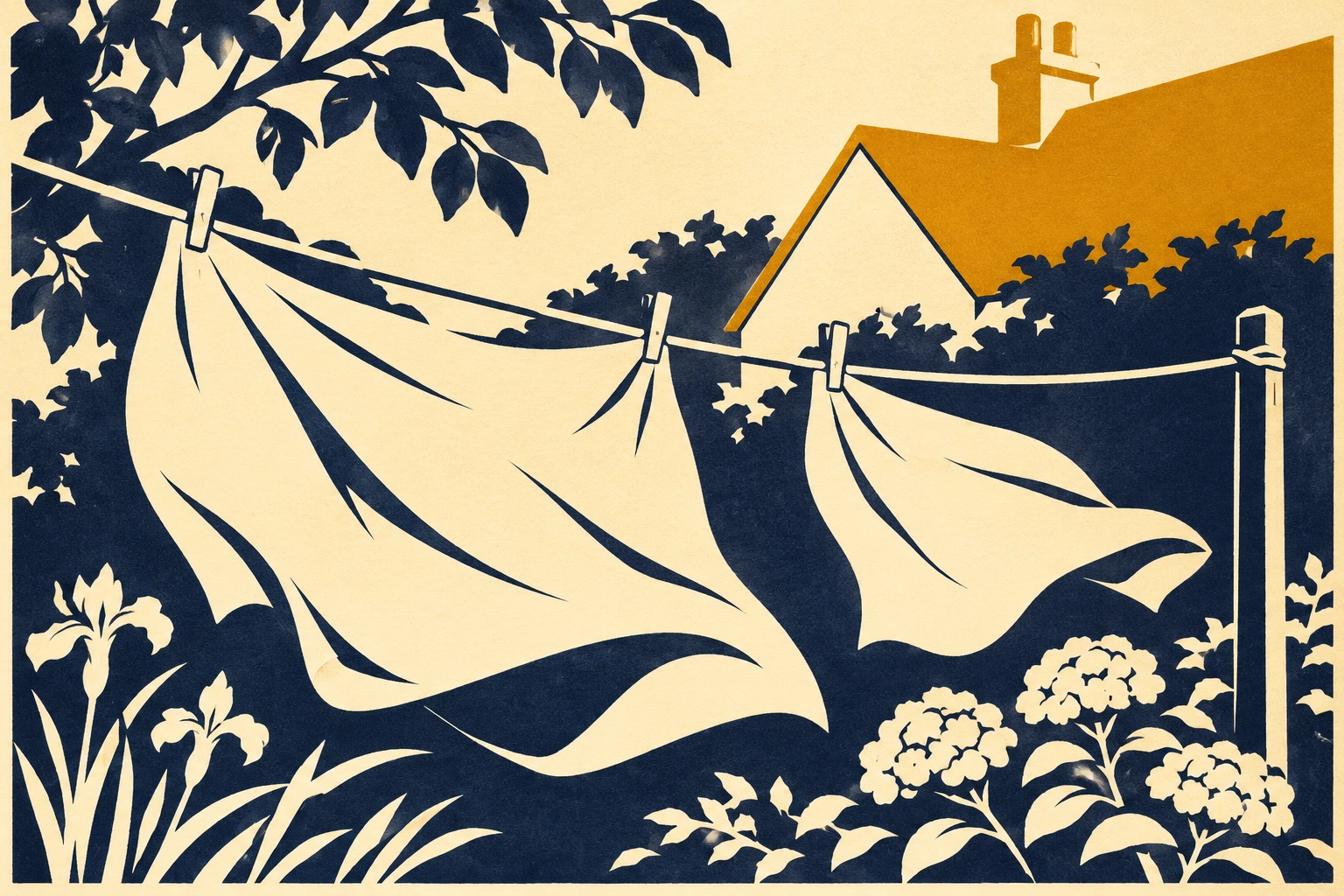
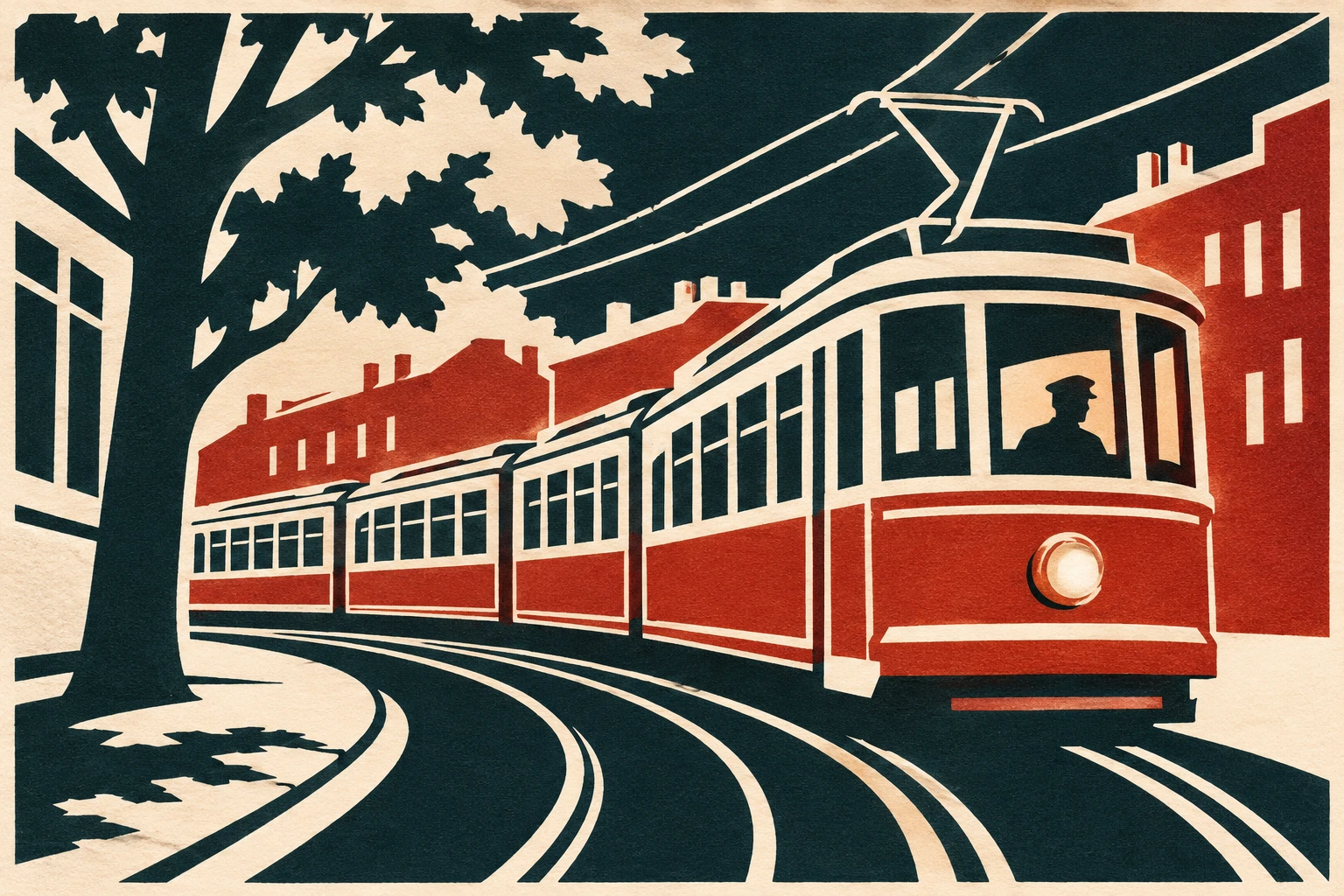
Creative toolbox · take this style further
Choose an input and a destination. Search sends your words to the chosen site; Copy & open puts them on your clipboard to paste there.
Create with AI
Turn your chosen input into an image prompt or a new creative direction.
ChatGPT
Copy your input and paste it into a ChatGPT conversation or image request.
Copy & open ChatGPT (new tab)Claude · Anthropic
Develop an image prompt or explore the style in a new Claude conversation.
Copy & open Claude · Anthropic (new tab)Midjourney
Paste your input into the Imagine bar on the Create page.
Copy & open Midjourney (new tab)Adobe Firefly
Copy your input, open Firefly, and paste it into the prompt field.
Copy & open Adobe Firefly (new tab)Leonardo.Ai
Copy your input, open Leonardo, and paste it into the generation field.
Copy & open Leonardo.Ai (new tab)Image search
Find visual references. Short, concrete keywords usually work best.
Lexica
Search AI images and prompts using your selected input.
Search with this input Lexica (new tab)Pexels
Search the photo and video library. Short keywords often work best.
Search with this input Pexels (new tab)Pixabay
Search photos, illustrations and other images.
Search with this input Pixabay (new tab)Unsplash
Search photographs using the style name or your own keywords.
Search with this input Unsplash (new tab)Wikimedia Commons
Search photographs, artworks and historical images. Check each file for its source and reuse terms.
Search with this input Wikimedia Commons (new tab)Art & research
Explore artists, collections and the ideas behind a style.
Wikipedia
Search for background reading. A style may not have its own article.
Search with this input Wikipedia (new tab)WikiArt
Copy your input into WikiArt’s search to explore artists and artworks.
Copy & open WikiArt (new tab)Europeana
Paste your keywords into the search to explore European museum, library and archive collections.
Copy & open Europeana (new tab)Inspiration
Discover portfolios and visual ideas from creative communities.
Instagram hashtags
Search a hashtag made from your input: spaces and punctuation are removed. Instagram may require sign-in.
Search with this input Instagram hashtags (new tab)ArtStation
Paste your input into artwork search for concept art, environments, characters and visual development.
Copy & open ArtStation (new tab)Behance
Paste your input into project search for illustration, design and visual storytelling.
Copy & open Behance (new tab)A closer look
Flat rolled color meets channels of unprinted paper. Clean turning cuts make a leaf or a rail legible, while broad islands of ink hold the larger design together.
The swing of a cut
Linoleum lacks a wood plank’s directional grain. A curve can turn cleanly from a broad shoulder into a narrow tail, though the gouge and the hand still have limits. Compare a rolling wave with a row of straight window cuts. Their contrast can separate water from buildings using only one ink. A digital interpretation often improves when given two families of cuts and one generous area of solid color.
Motion on a stationary block
The Art Gallery of New South Wales documents color linocuts associated with the Grosvenor School and their interest in rhythm and modern life. Look for repeated limbs, wheels or architecture. A group of bent backs under a market awning can establish tempo without mechanically copying a single shape. Repetition becomes expressive when the interval changes at the point where the activity changes.
Thinking in separate colors
Assign the pale paper to daylight, ochre to the pavement and dark blue to load-bearing shapes. Cover each ink mentally in turn. Does the design still hold together? Slight misregistration may reveal how colors meet, but scattering a decorative offset around every edge invents a printing problem without showing the logic of separate blocks.
Three readings from Penny’s desk
These three assessments are by Penny Wraiter, the Art of AI’s fictional AI editorial voice.
Positive review · An economical cut can describe a tram rail, direct the eye and reserve a slash of light at once. Large solid areas keep the action legible from a distance.
Negative review · Too many little gouges empty the printing surface. Restore a connected mass before adding detail to a silhouette.
Neutral review · Linocut can be delicate or blunt, monochrome or multicolor. Flat ink and a cut-away reserve are more revealing clues than a particular palette.
A small poetic detour
Original words from the AOI studio.
Poetry
A wheel turns left.
The cut runs right.
The print takes the morning tram.
The prompt workshop
Original creative exercises. These prompts create new illustrations, not documentary evidence.
First study
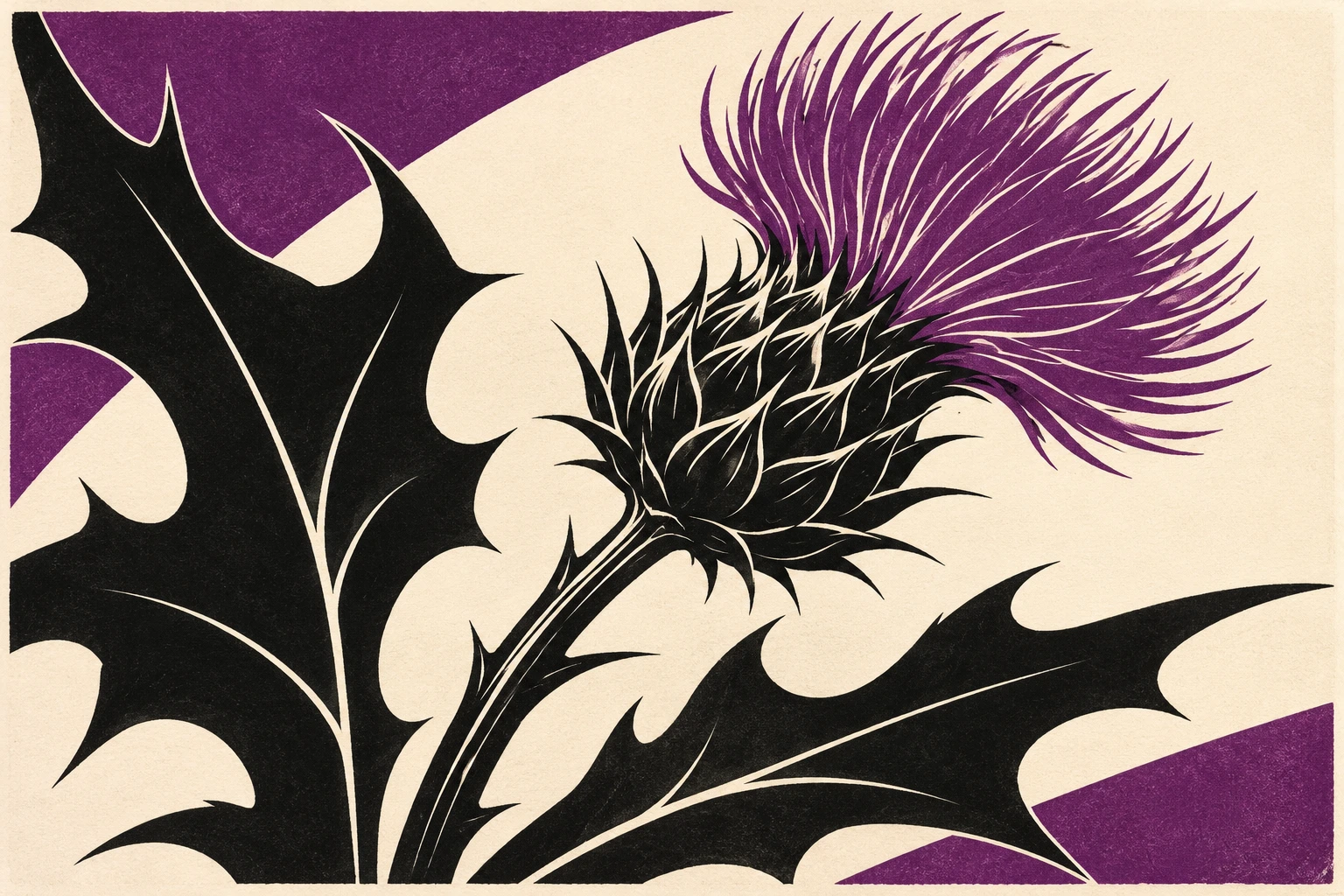
Make a two-ink linocut of a thistle. Spare two black leaf masses and carve a handful of white ribs that give each its direction.
Composition study
Arrange a fish market beneath awnings. Use one dark key block for the moving figures and one warm ink for the canopy rhythm.
Change one condition
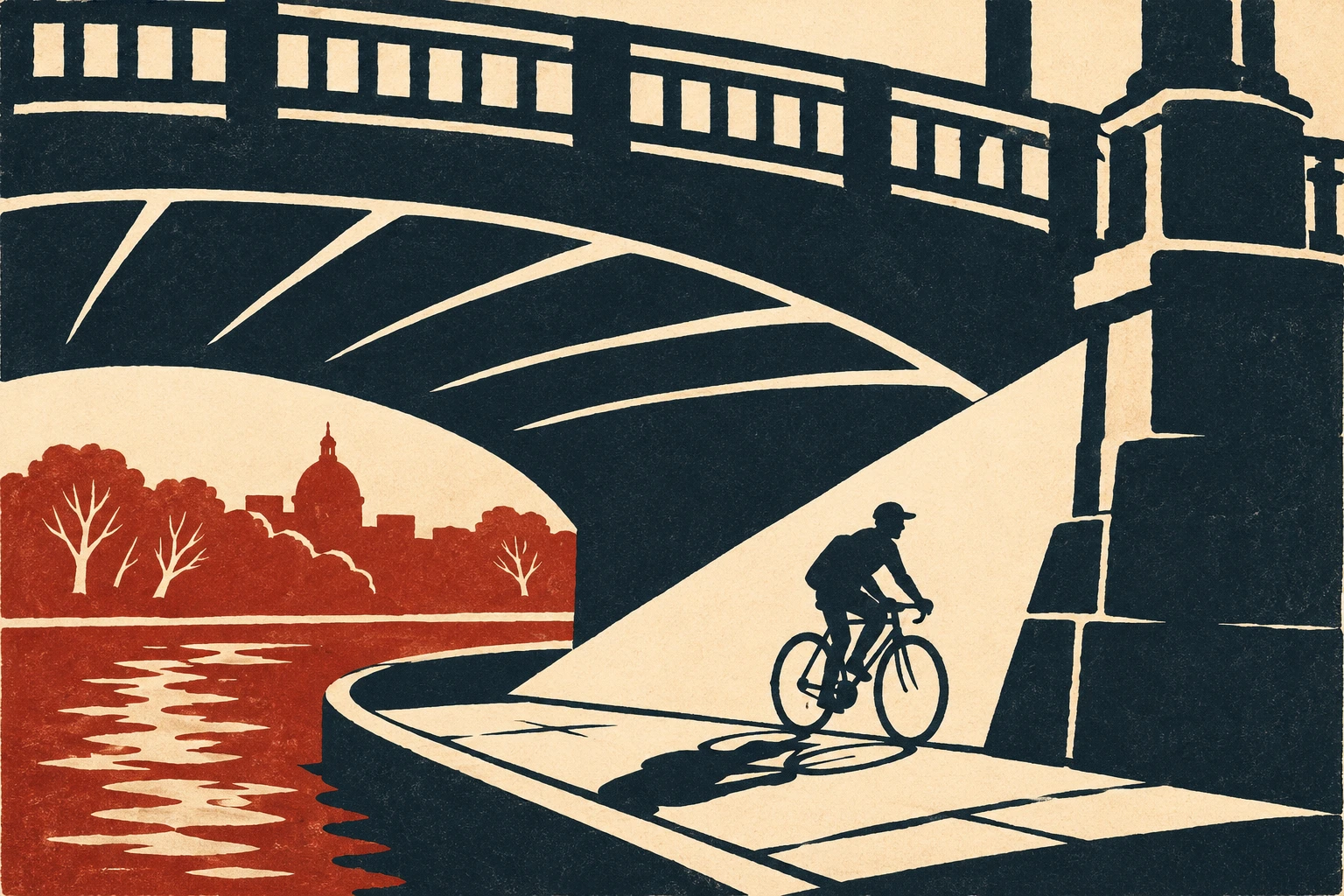
Design a tram on a curve with no outline around its body. Ask rail, wheel and building shapes to establish its turn through shared edges.
A smile from the studio
Jokes
Every block has a good side. It usually introduces itself backwards.
Sources and further exploration
Art Gallery of New South Wales · color linocuts by Ethel Spowers and her contemporaries