
Named AI-reference aesthetic · AOI interpretation of carved-looking, sinuous imagery
Linocut Serpentism combines the graphic force of black-and-white relief-print imagery with winding organic movement. Its strongest scenes use a continuous curve to guide the eye through dense, deliberately simplified forms.
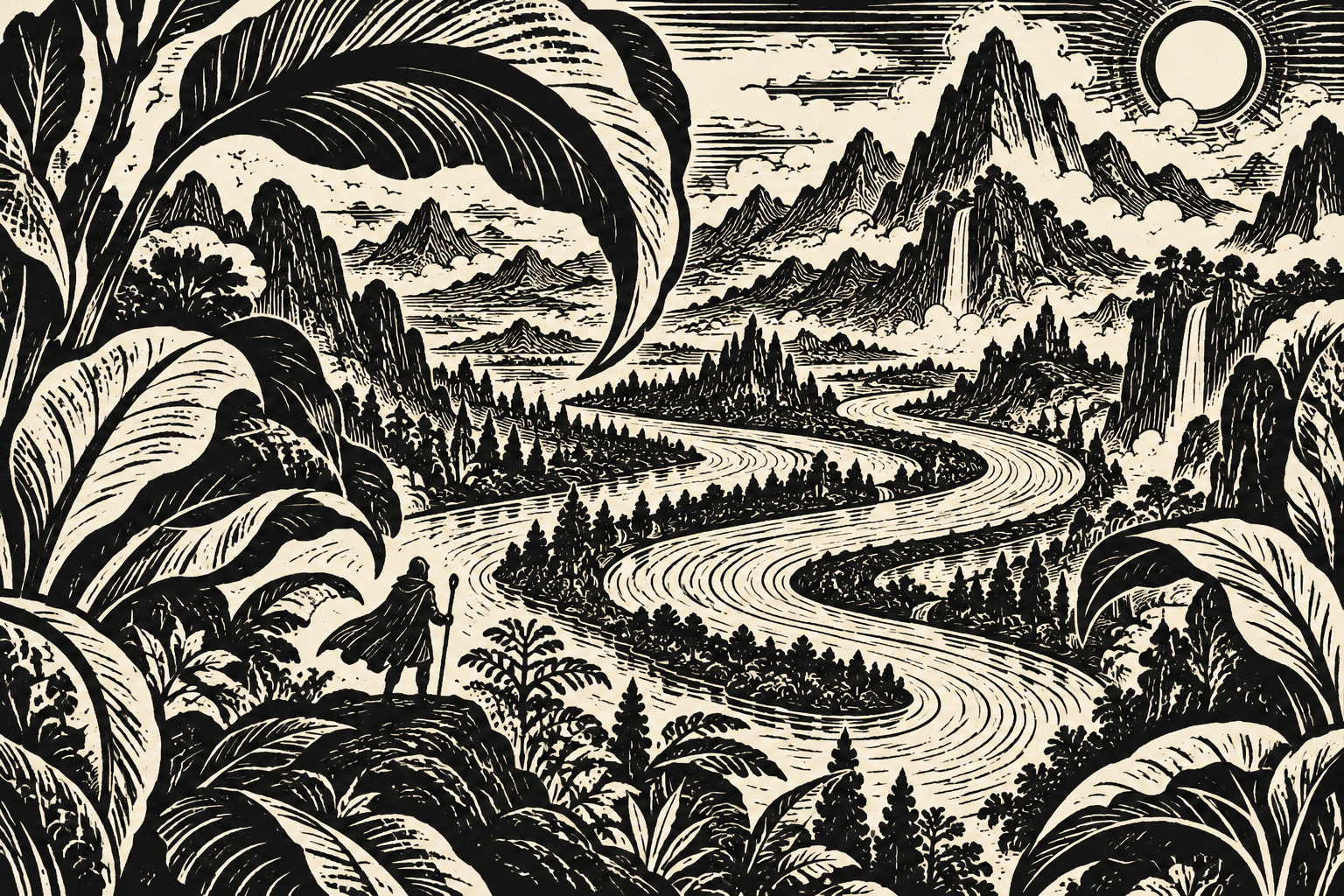
A visual introduction
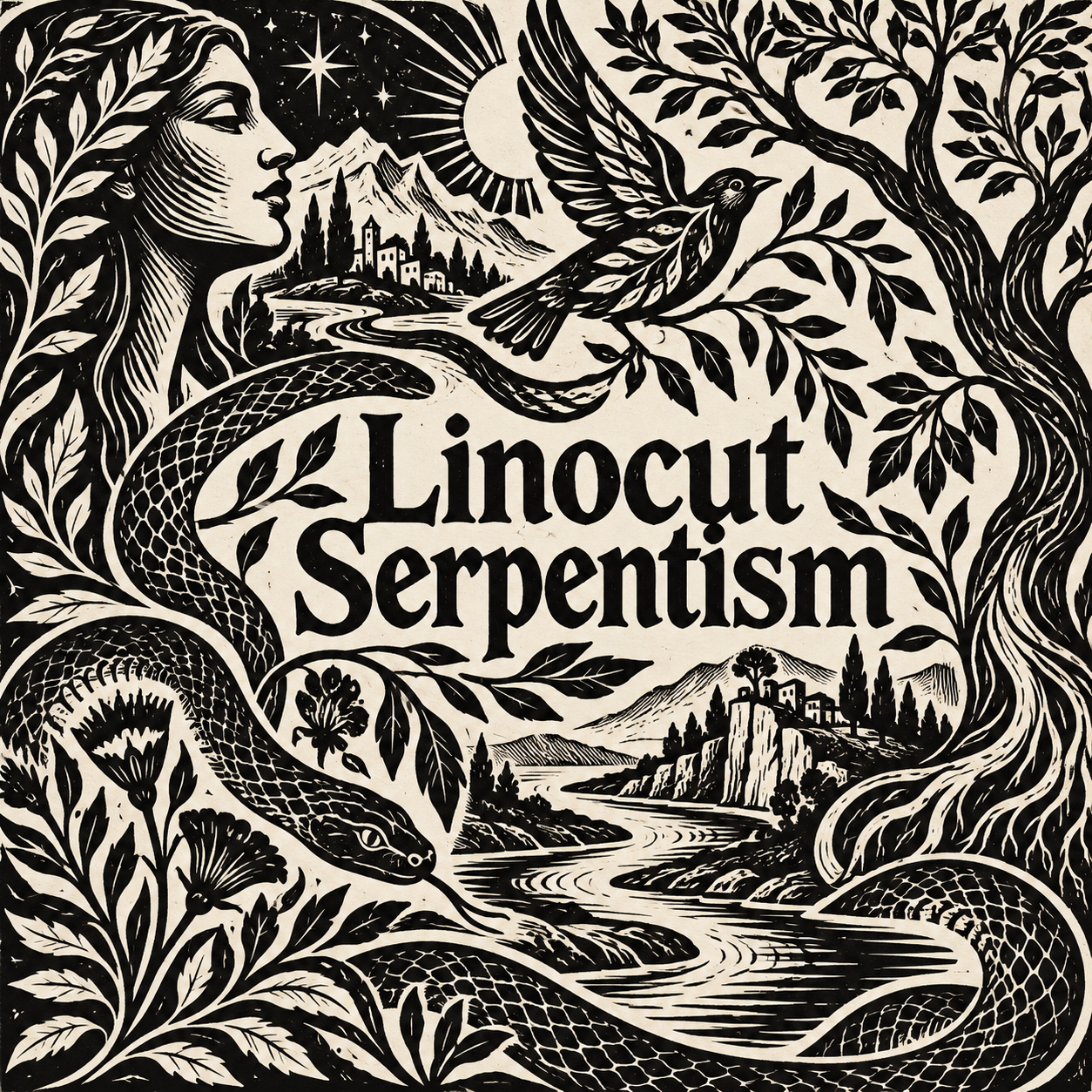
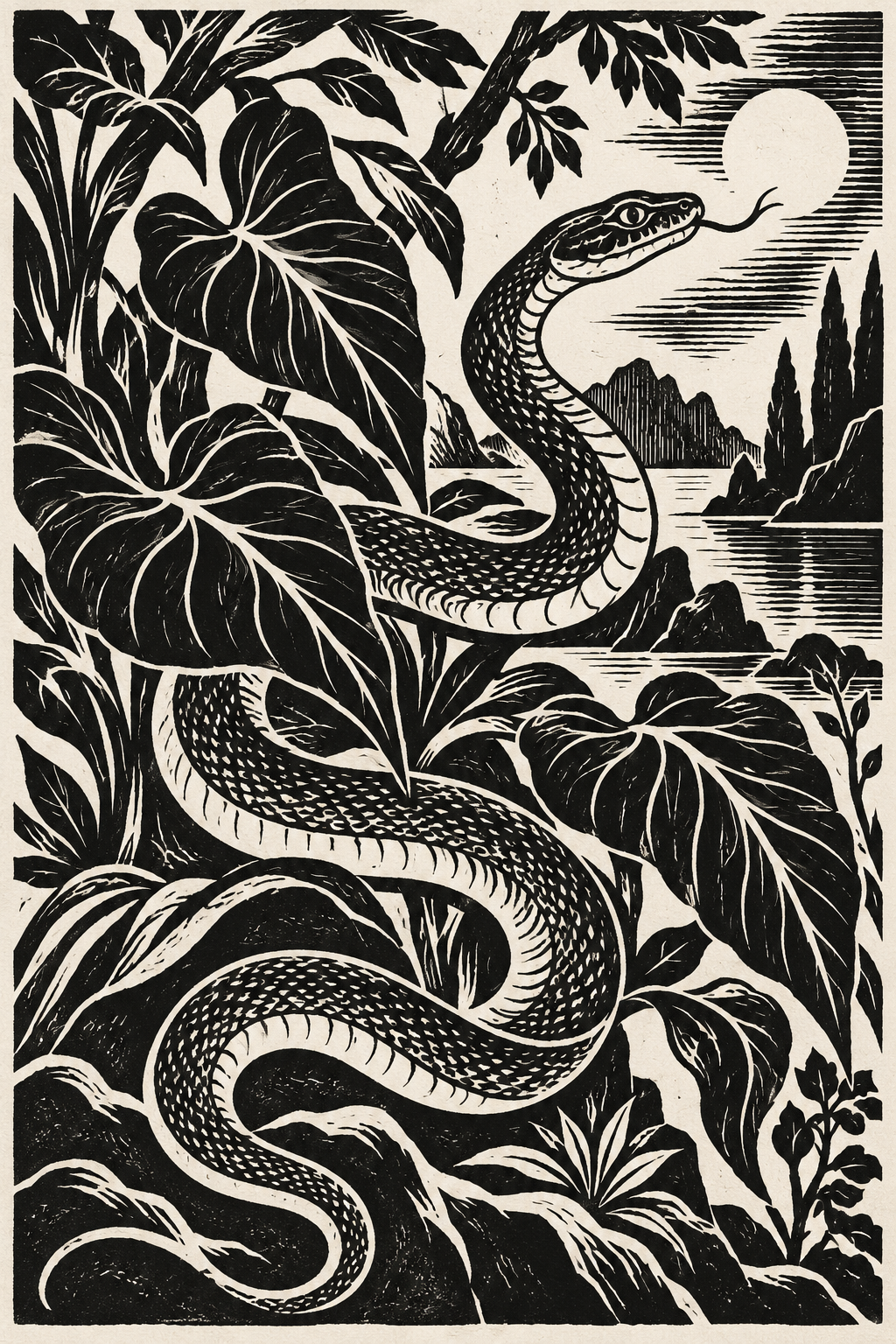
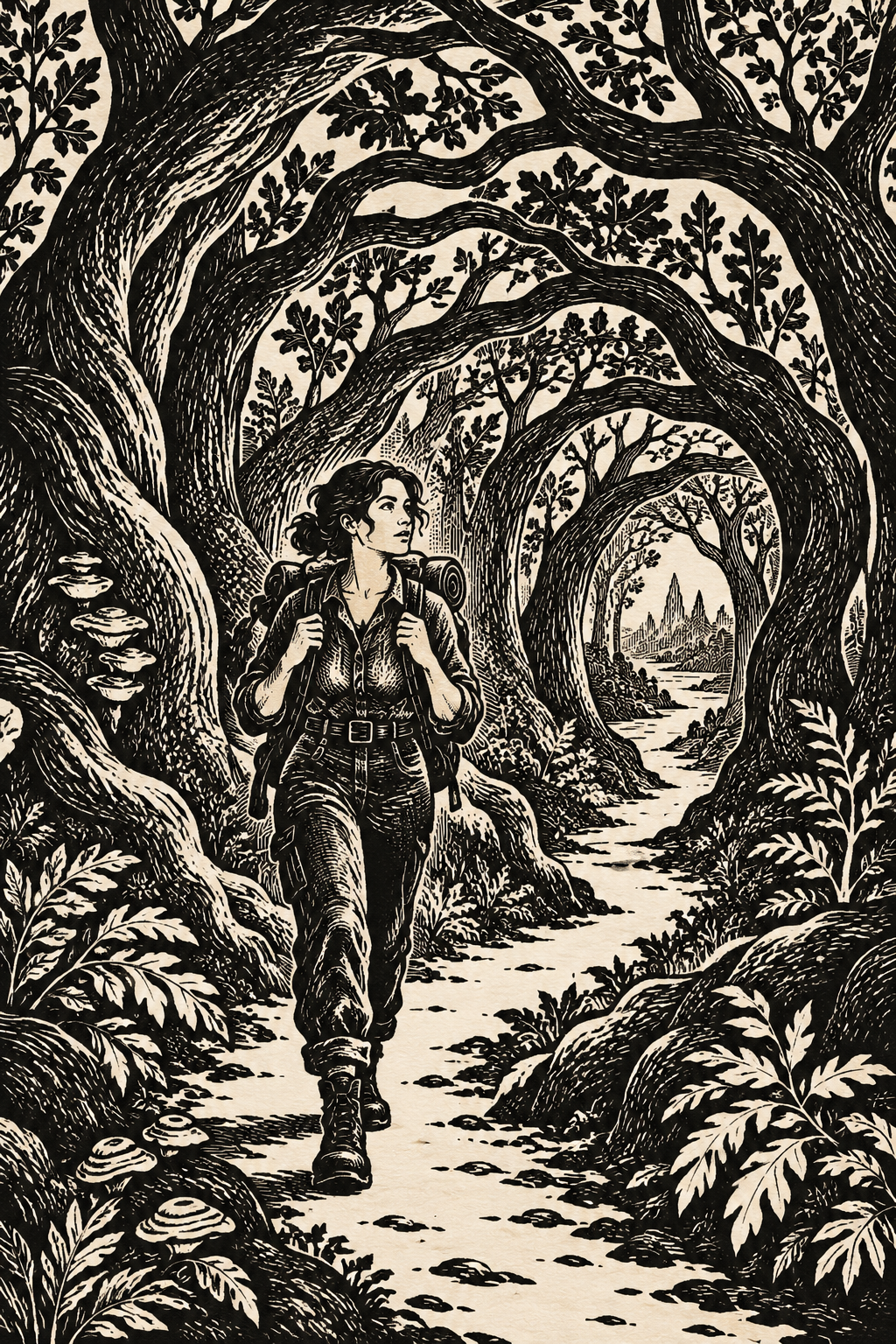
Five original AI-generated AOI interpretations: a dedicated banner, a centrally titled collage and three standalone studies. These are new illustrations, not historical objects or works by the referenced artist.
Select an image for a closer look. Use the thumbnails, arrow keys or a swipe to compare examples. Zoom in to inspect details, or share the image that inspires you.
Creative toolbox · take this style further
Choose an input and a destination. Search sends your words to the chosen site; Copy & open puts them on your clipboard to paste there.
Create with AI
Turn your chosen input into an image prompt or a new creative direction.
ChatGPT
Copy your input and paste it into a ChatGPT conversation or image request.
Copy & open ChatGPT (new tab)Claude · Anthropic
Develop an image prompt or explore the style in a new Claude conversation.
Copy & open Claude · Anthropic (new tab)Midjourney
Paste your input into the Imagine bar on the Create page.
Copy & open Midjourney (new tab)Adobe Firefly
Copy your input, open Firefly, and paste it into the prompt field.
Copy & open Adobe Firefly (new tab)Leonardo.Ai
Copy your input, open Leonardo, and paste it into the generation field.
Copy & open Leonardo.Ai (new tab)Image search
Find visual references. Short, concrete keywords usually work best.
Lexica
Search AI images and prompts using your selected input.
Search with this input Lexica (new tab)Pexels
Search the photo and video library. Short keywords often work best.
Search with this input Pexels (new tab)Pixabay
Search photos, illustrations and other images.
Search with this input Pixabay (new tab)Unsplash
Search photographs using the style name or your own keywords.
Search with this input Unsplash (new tab)Wikimedia Commons
Search photographs, artworks and historical images. Check each file for its source and reuse terms.
Search with this input Wikimedia Commons (new tab)Art & research
Explore artists, collections and the ideas behind a style.
Wikipedia
Search for background reading. A style may not have its own article.
Search with this input Wikipedia (new tab)WikiArt
Copy your input into WikiArt’s search to explore artists and artworks.
Copy & open WikiArt (new tab)Europeana
Paste your keywords into the search to explore European museum, library and archive collections.
Copy & open Europeana (new tab)Inspiration
Discover portfolios and visual ideas from creative communities.
Instagram hashtags
Search a hashtag made from your input: spaces and punctuation are removed. Instagram may require sign-in.
Search with this input Instagram hashtags (new tab)ArtStation
Paste your input into artwork search for concept art, environments, characters and visual development.
Copy & open ArtStation (new tab)Behance
Paste your input into project search for illustration, design and visual storytelling.
Copy & open Behance (new tab)A closer look
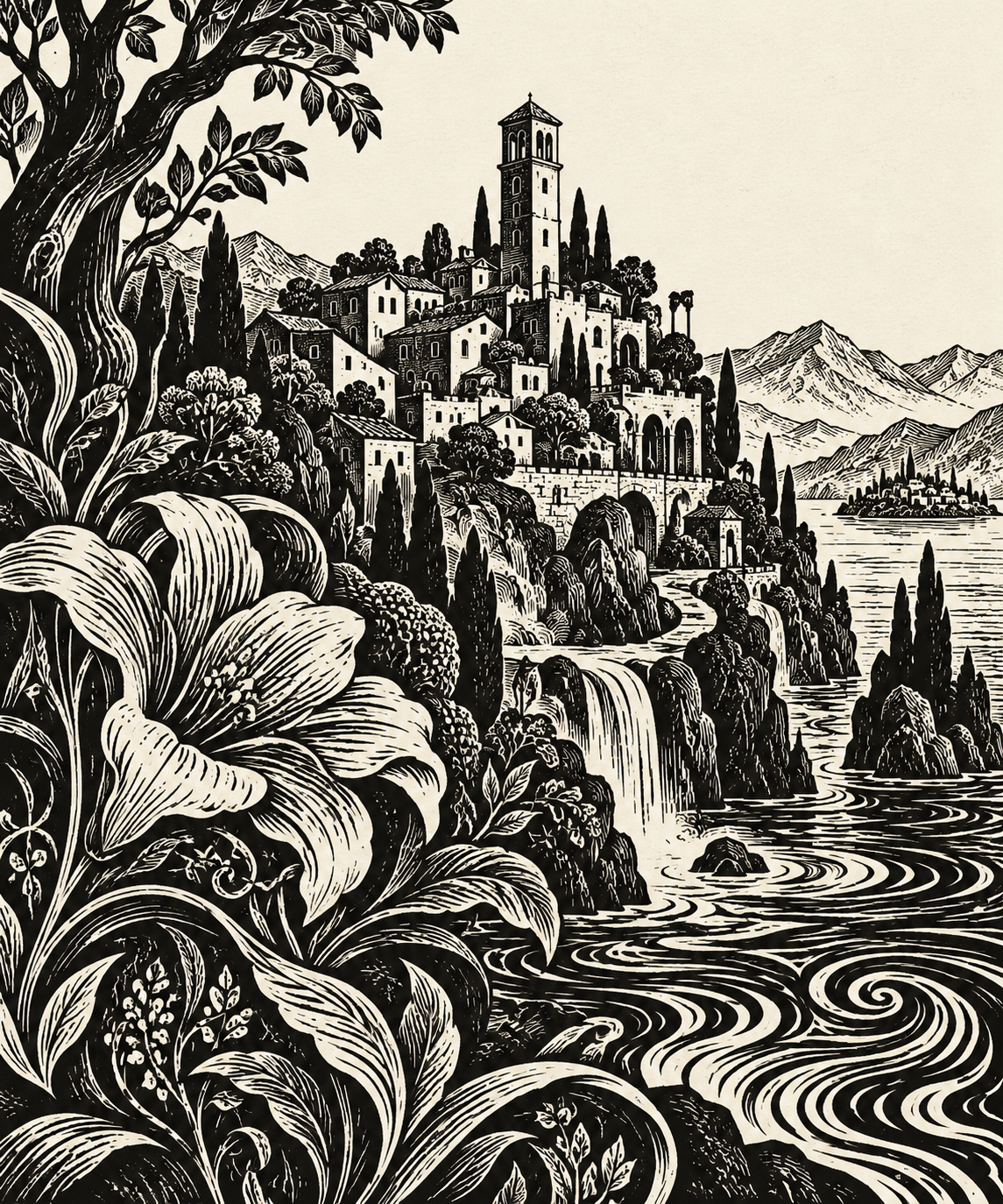
Thick contours, white cut-like openings and directional hatching create a dark, textured field. Rivers, stems and bodies bend through it, while quieter paper areas keep the composition legible.
Where the name comes from
The supplied Midlibrary entry presents Linocut Serpentism as a named style-reference aesthetic, not a documented printmaking movement. Its observations emphasize black-and-white ink-like imagery, heavy organic lines and dense hatching. AOI uses that reference as a starting point for original compositions rather than claiming a historical school or fixed physical process.
A model reference can change across model versions. For a repeatable study, describe the visible decisions you want instead of relying only on a name or code. Here the central decision is sinuous movement constrained by a strong black-and-white design. A snake can demonstrate it, but the image need not contain a literal serpent.
Find one continuous route
Draw an imaginary line through the composition: a river from foreground to distance, a vine across a page, or a path winding between trees. Place the strongest contrasts along selected parts of that route. If every corner is equally dark and detailed, the route disappears into a decorative thicket.
Use large masses before small marks. A white path can separate two black foliage groups; a broad black trunk can stabilize a field of thin branches. Let curves change radius and spacing. Repeating an identical coil produces a mechanical ornament, whereas varied turns can imply pressure, growth and changing terrain.
Make hatching describe form
Hatching should turn with a hill, leaf or body rather than filling every region at the same angle. Reserve dense marks for places where shadow, texture or depth needs emphasis. Leave other areas almost untouched. White channels are active shapes, not merely the leftover space between black lines.
The illustrations simulate a carved or printed appearance. A real relief print has material constraints: a mark that looks attractive digitally may be too fragile or crowded to cut and print successfully at the chosen size. Before translating a design into a physical block, simplify it and test the important passages at actual scale.
Test the image at two distances
At thumbnail size, the main subject and route should still read. At close range, the cut-like marks can reward inspection. A serpent study needs a continuous body and a clearly attached head; a town scene needs an architectural focal point that survives the surrounding vegetation.
Try a botanical snake, an invented traveler under arching branches and a hill town above water. These change the subject while keeping the visual grammar. Avoid filling every available surface with scratches. One generous white opening can give the entire print-like composition a stronger sense of intention.
A small poetic detour
Original words from the AOI studio.
Poetry
The white path
The river turns without a sound;
the black leaves lean across its track.
A narrow line of untouched ground
persuades the crowded forest back.
The hill is made of little cuts,
the sky of what the hand leaves clear.
A branch uncoils, a shadow shuts,
a traveler becomes small here.
One winding opening survives:
the paper breathes between the knives.
The prompt workshop
Original creative exercises. These prompts create new illustrations, not documentary evidence.
Design a continuous curve
Make an original black-and-white relief-print-like image of a snake winding through broad leaves. Use one continuous body, thick contours and generous white openings.
Check anatomy and silhouette before adding hatching.
Give a path priority
Create a traveler beneath arching forest branches, with a pale path guiding the eye through dense black foliage and directional cut-like marks.
Preserve an obvious route through the image.
Change scale without changing grammar
Design a hill town above swirling water using broad black masses, small white architectural details and an open sky.
Review at thumbnail and full size.
Your next inspiration
Discover another art style
Follow a visual thread to the next subject.
A smile from the studio
Jokes
The snake asked the printmaker for a flattering portrait. “Longer?” asked the printmaker. “No, I already have that covered. I would like more negative space.” The foliage objected, but after several leaves were removed, everybody agreed that the snake finally had room to make an entrance.
Sources and further exploration
Midlibrary — the supplied Linocut Serpentism reference and version-dependent visual observations