
Light-based artistic practice · installation, projection and performance
Laser light art uses concentrated light as a line, a moving graphic or a structure within space. Its expressive material is the relationship between a bright trace, the darkness around it and the time it takes to change.
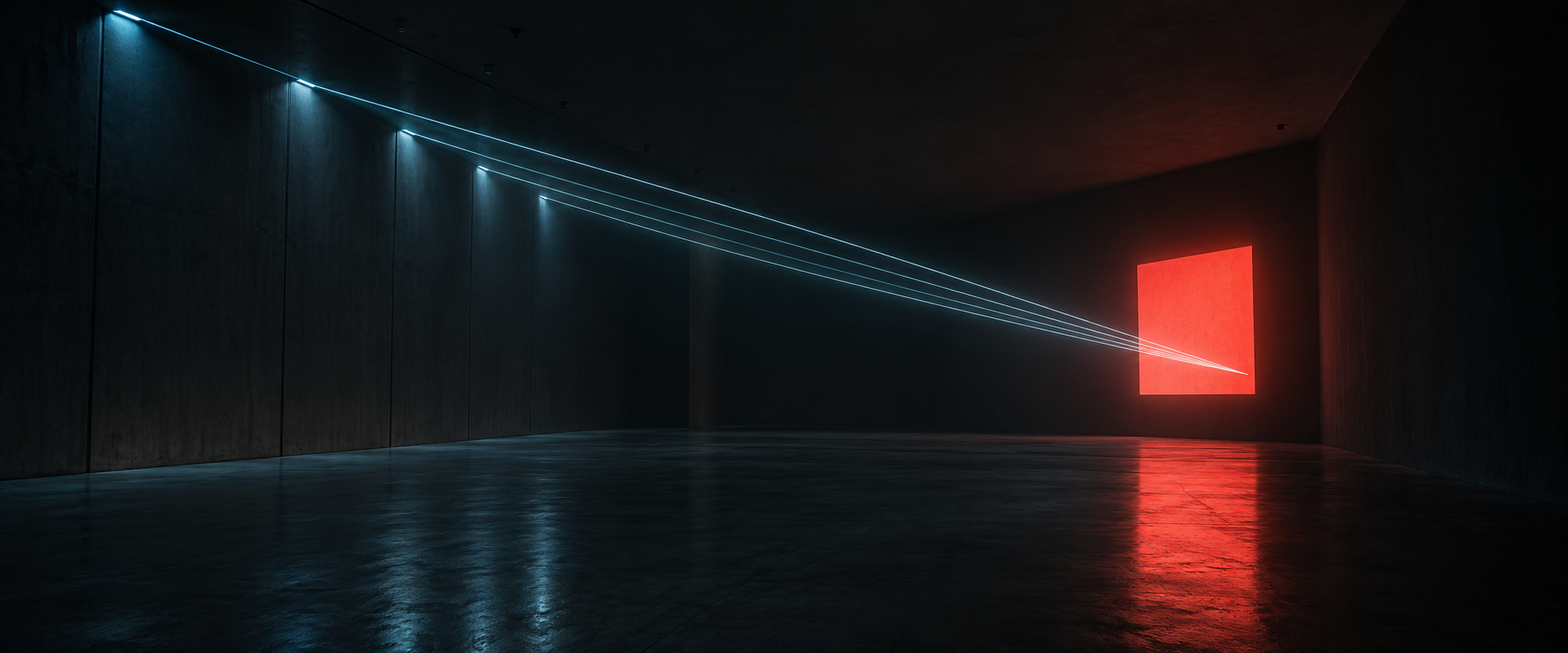
A visual introduction
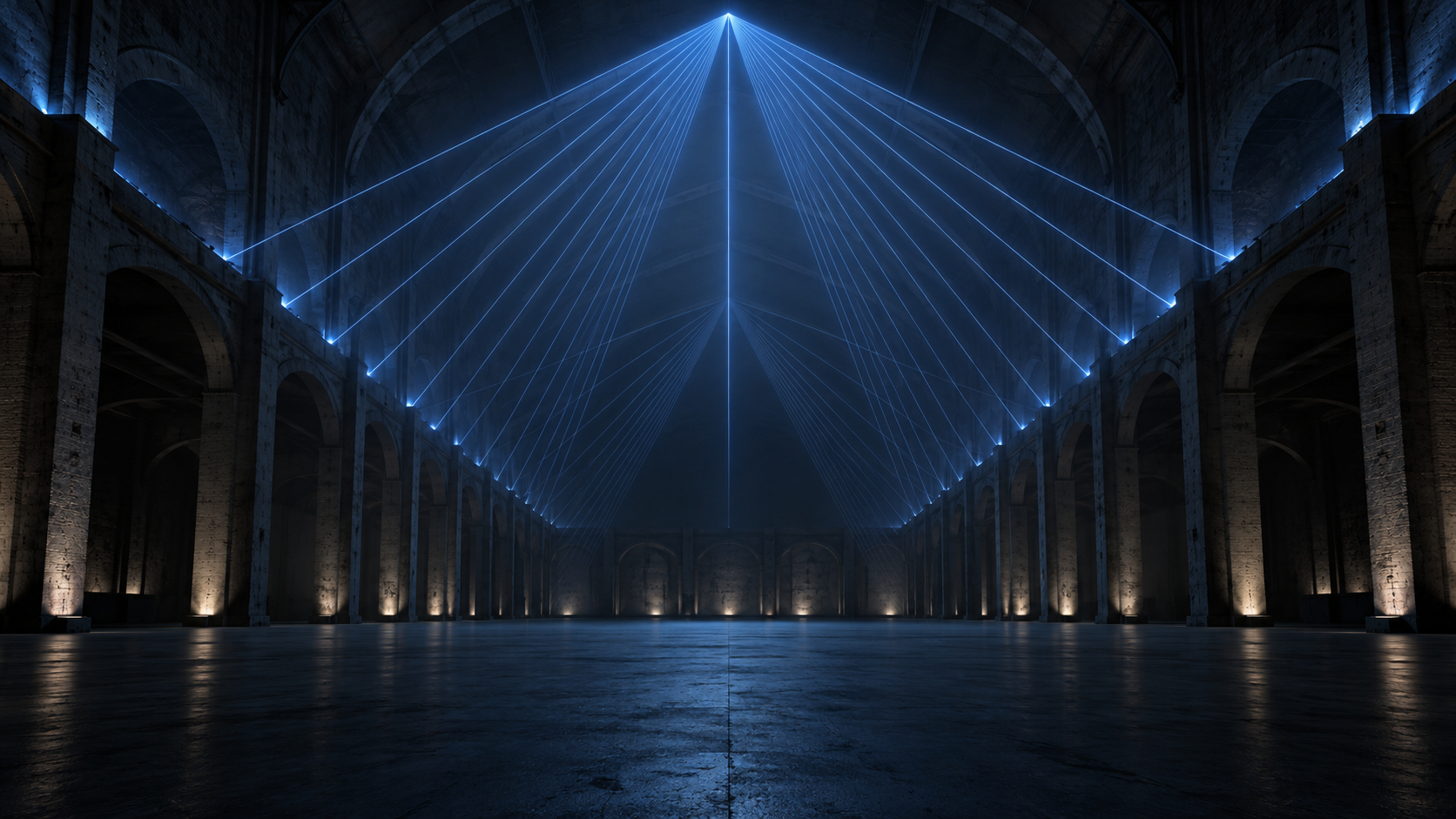
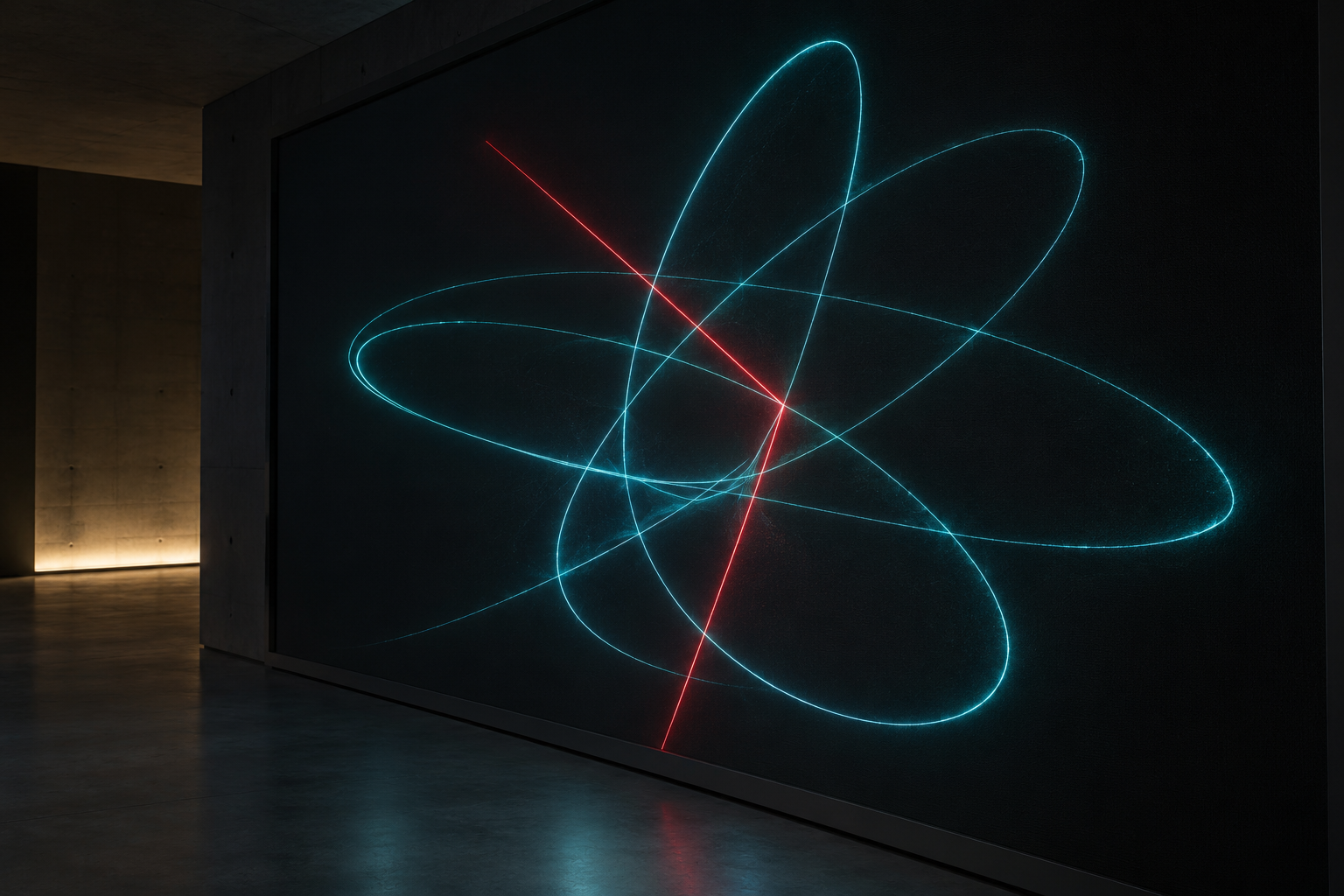
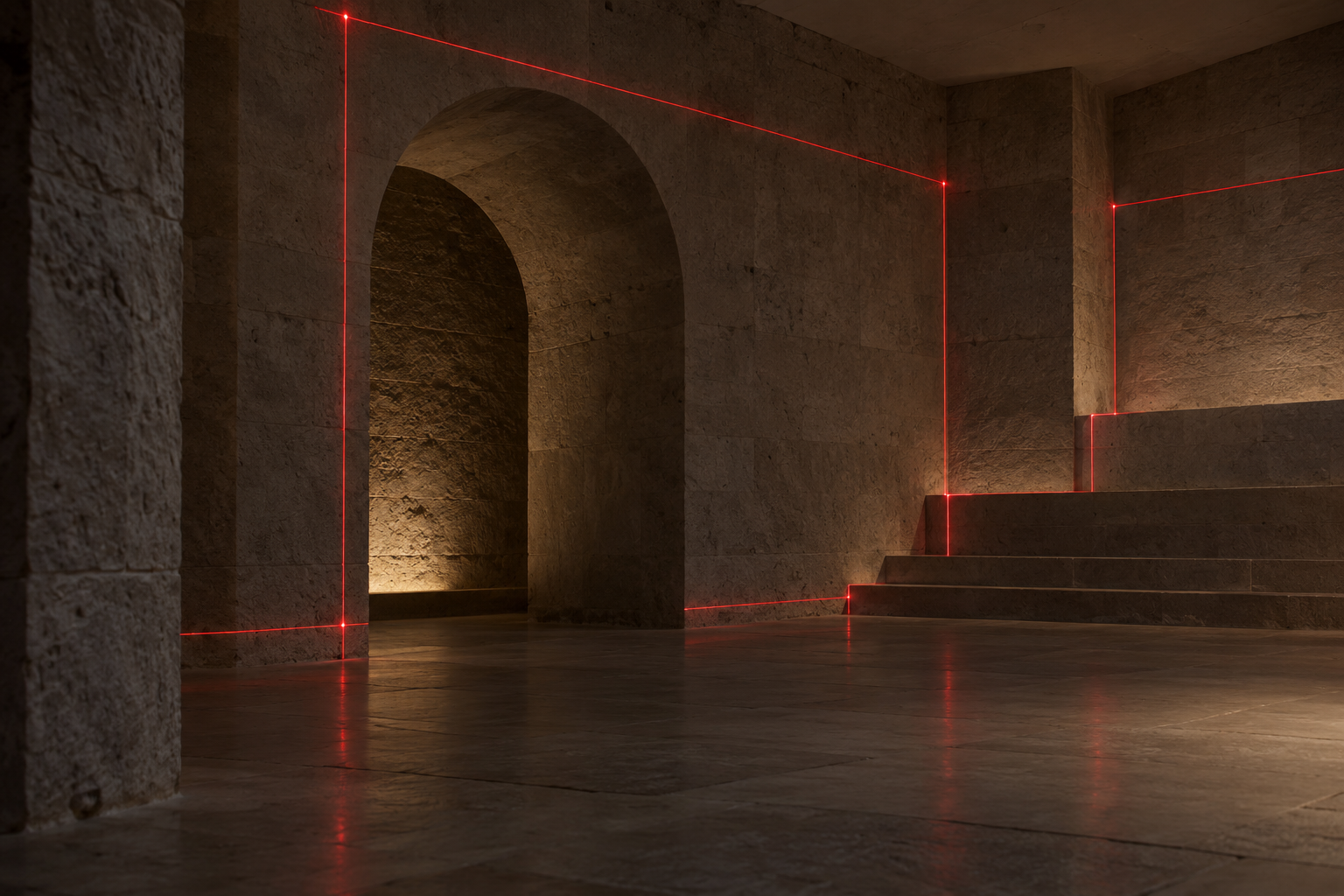
Seven original AI-generated AOI interpretations: a dedicated banner, centrally titled collage and five standalone studies of spatial beams, projected drawing, architectural surfaces and time. These are fictional visual studies, not documentary photographs or validated installation plans.
Select an image for a closer look. Use the thumbnails, arrow keys or a swipe to compare examples. Zoom in to inspect details, or share the image that inspires you.
Creative toolbox · take this style further
Choose an input and a destination. Search sends your words to the chosen site; Copy & open puts them on your clipboard to paste there.
Create with AI
Turn your chosen input into an image prompt or a new creative direction.
ChatGPT
Copy your input and paste it into a ChatGPT conversation or image request.
Copy & open ChatGPT (new tab)Claude · Anthropic
Develop an image prompt or explore the style in a new Claude conversation.
Copy & open Claude · Anthropic (new tab)Midjourney
Paste your input into the Imagine bar on the Create page.
Copy & open Midjourney (new tab)Adobe Firefly
Copy your input, open Firefly, and paste it into the prompt field.
Copy & open Adobe Firefly (new tab)Leonardo.Ai
Copy your input, open Leonardo, and paste it into the generation field.
Copy & open Leonardo.Ai (new tab)Image search
Find visual references. Short, concrete keywords usually work best.
Lexica
Search AI images and prompts using your selected input.
Search with this input Lexica (new tab)Pexels
Search the photo and video library. Short keywords often work best.
Search with this input Pexels (new tab)Pixabay
Search photos, illustrations and other images.
Search with this input Pixabay (new tab)Unsplash
Search photographs using the style name or your own keywords.
Search with this input Unsplash (new tab)Wikimedia Commons
Search photographs, artworks and historical images. Check each file for its source and reuse terms.
Search with this input Wikimedia Commons (new tab)Art & research
Explore artists, collections and the ideas behind a style.
Wikipedia
Search for background reading. A style may not have its own article.
Search with this input Wikipedia (new tab)WikiArt
Copy your input into WikiArt’s search to explore artists and artworks.
Copy & open WikiArt (new tab)Europeana
Paste your keywords into the search to explore European museum, library and archive collections.
Copy & open Europeana (new tab)Inspiration
Discover portfolios and visual ideas from creative communities.
Instagram hashtags
Search a hashtag made from your input: spaces and punctuation are removed. Instagram may require sign-in.
Search with this input Instagram hashtags (new tab)ArtStation
Paste your input into artwork search for concept art, environments, characters and visual development.
Copy & open ArtStation (new tab)Behance
Paste your input into project search for illustration, design and visual storytelling.
Copy & open Behance (new tab)A closer look
Fine, saturated lines meet deep darkness, atmospheric scatter and architectural surfaces. Repetition, intersections, gaps and controlled movement can make a room feel measured, divided or temporarily rebuilt.
A line that changes the room
Laser Light Art is a broad artistic practice, not a single historical movement or a synonym for anything neon-colored. The laser can supply a precise mark on a surface, a visible path through an atmosphere, or one element within a larger moving installation. What matters artistically is the relationship it establishes: between two walls, between a form and its empty center, or between a visual event and a sound.
Begin by asking where the work exists. Is the important image on a wall? Is it the apparent plane crossing the room? Or is it a sequence that only becomes meaningful over time? These are different compositional problems. A prompt that specifies only “dramatic lasers” has delegated the entire argument to the lighting department.
From spatial sculpture to audiovisual composition
Rockne Krebs is an important historical reference for treating laser light as a sculptural medium. The Spencer Museum of Art documents his installations at both interior and urban scales, as well as the drawings and photographs that remain after temporary works disappear. His estate's archive records projects including Stern Line (1970) and The Source (1980). These examples make a useful distinction: the surrounding architecture and landscape are part of the work, not merely its backdrop.
Robert Henke's Lumière series, begun in 2013, develops another approach through abstract projected laser graphics and sound. Henke describes a language of simple forms whose transformations and timing create complexity. In Deep Web (2016), Christopher Bauder and Henke combine lasers with moving illuminated spheres and a musical score. The first emphasizes a drawn audiovisual language; the second makes changing positions in space central to the experience.
Beam, projected drawing, photograph: choose the subject
A spatial beam composition is read through direction, intersection and depth. Light scattered toward the viewer by particles in the air helps reveal the beam's path. Without a suitable scattering medium, a laser's route across a room may be much less visible than the spot where it reaches a surface. A glowing line in a photograph should not be mistaken for a solid rod.
Projected laser graphics use a moving beam to trace an image on a surface. The apparent drawing can be made from sequential marks rather than a complete luminous outline existing everywhere at once. A photographic exposure can combine several moments into one frame, so a dense photograph may record more of the sequence than a viewer sees at any single instant.
For an AI image, state which of these you intend. “An installation photograph of straight beams in a lightly hazed room” gives a different assignment from “a long-exposure interpretation of a changing vector drawing projected onto a matte wall.” Neither requires an invented floating hologram.
Give the darkness a job
The empty interval between two lines can be the most deliberate part of the image. Use a diagonal to challenge a room's horizontal floor, a repeated set of lines to reveal depth, or a single projected contour to draw attention to an uneven surface. Choose one dominant relationship before adding a second system.
Large dark areas let the geometry remain readable. If haze, reflections and bloom brighten every corner, the image loses the separation that gave it force. A useful thumbnail test is to reduce the composition until only the room's silhouette and the principal light structure remain. The spatial idea should still be apparent.
Hard edges, soft atmosphere
A fine bright core suggests a directed line; a restrained surrounding halo gives that line a place in an atmosphere. Widening the glow everywhere can turn precise drawing into a fluorescent tube aesthetic. Softness should explain distance, scatter or exposure rather than conceal an incoherent shape.
A sharp projected mark on a wall and a softer visible path through air are compatible in the same scene because they describe different interactions with light. Reflections should follow the surface that carries them. A rough wall scatters light differently from a polished floor; a reflection does not license a second, unrelated geometry.
Use color as a structural choice. A monochrome green study can make intersections and depth its subject. A warm projected line on a cool architectural surface creates a different hierarchy. Several colors are useful when they distinguish separate systems; a rainbow is not a substitute for deciding what those systems do.
Time belongs in the composition
Henke's account of Lumière is useful because it treats visual and sonic events as related compositional decisions, while acknowledging the limits of drawing with rapidly moving mirrors. For your own visual study, this suggests working with a small vocabulary and giving its transformations a clear rhythm.
A sequence might begin with one line, introduce an interruption, then return to the original form at a different scale. A still image can suggest that progression through controlled repetition or a deliberately integrated exposure. It should be labeled accordingly. Reproducing a luminous blur is easier than communicating why the form changed.
Keep neighboring techniques distinct
Light art is the larger category. Neon tubes, LED strips, video projection and laser systems can all contribute to it, but they produce and shape light differently. Anthony McCall's Line Describing a Cone (1973), for example, is a 16 mm film installation. Its apparent volume is a valuable comparison for thinking about space, without reclassifying the work as laser art.
Holography is also a distinct optical method involving the recording and reconstruction of light waves; Dennis Gabor's Nobel lecture is a primary introduction. A hovering-looking image, a visible laser fan or a glowing wireframe is not automatically a hologram.
Nor does every laser artwork produce only the familiar visible beam. Henke's Phosphor uses an ultraviolet laser to excite afterglow pigments. The luminous trace persists as the pigment's response, making the distinction between the light source and the visible result part of the work. That does not make every fluorescence photograph a laser artwork.
How to develop an original image study
Choose a setting with a readable structure: a long gallery, a vaulted hall, a rough wall or a small arrangement of matte forms. Then choose what the light reveals about that setting. A projection can distort across different depths; a high fan can echo a ceiling's rhythm; one sparse diagonal can expose a room's proportions.
Vary the problem across a series. Compare spatial beams with surface drawing, one color with two, crisp instantaneous geometry with an integrated long-exposure interpretation, or near detail with a room-wide composition. Changing only the hue of the same tunnel produces a color chart, not five different investigations.
For generated imagery, check that free-space beam segments follow plausible straight paths between sources, surfaces and optical elements. Curved or looping projected marks belong on a receiving surface, or should be explicitly described as an exposure of changing directions. An AI illustration can propose an atmosphere, but it cannot certify a buildable installation or an optical measurement.
Real installations need a different kind of preparation
The image prompts here describe fictional visual studies, not instructions for operating a laser installation. Real systems can present eye, skin, fire and distraction hazards. Use qualified laser professionals and the applicable venue and jurisdiction requirements; a picture of a beam arrangement is not a safety assessment. The FDA's laser-light-show guidance is a useful official starting point for U.S. work.
For this gallery, unoccupied settings and controlled architectural compositions keep the visual study focused on line and space. They should not be read as evidence that any depicted setup is technically safe.
Positive editorial review — AI-authored
AI-authored editorial assessment. Laser light art can make an architectural relationship visible with remarkably little material. A single diagonal exposes the depth of a room; a disciplined sequence of projected marks gives time a graphic structure. The strongest work uses darkness, intervals and changes of viewpoint as actively as the bright line. Its intensity is earned when the form belongs to its particular space or musical phrase. Removing an unnecessary beam can improve the work more than adding another color.
Negative editorial review — AI-authored
AI-authored editorial assessment. This medium can confuse technical spectacle with a developed idea. Repeated tunnels, rainbow fans and rapid geometric changes become interchangeable when they have no spatial or temporal purpose. Photographs may amplify the problem by turning an evolving work into a saturated trophy image. A useful correction is to reduce the palette, establish one relationship to the room, and give each transition a reason. If the scene would mean the same thing in any venue, its supposed architectural sensitivity needs another look.
Neutral editorial review — AI-authored
AI-authored editorial assessment. Laser light art covers several practices rather than a single appearance: visible beam structures, surface projections, kinetic installations and audiovisual performances. It is useful when precise lines, changing geometry or the perception of space are central to the work. Its realization depends on equipment, environmental conditions, technical maintenance and professional safety planning. A still image communicates some of its formal qualities but cannot fully represent duration, sound, movement or the viewer's changing position.
A small poetic detour
Original words from the AOI studio.
Poetry
Temporary architecture
A green line measures what the wall forgot.
It crosses dust and finds the farther stone.
The room acquires a corner it had not;
the darkness keeps a portion of its own.
A second trace arrives, then slips away.
Its absence leaves a rhythm in the air.
No mason could persuade these walls to stay;
no hand can lift the beam and set it there.
When power leaves, the ordinary room
returns, its silent distances intact.
Yet something in the eye continues through:
a bright, impossible, remembered fact.
The prompt workshop
Original creative exercises. These prompts create new illustrations, not documentary evidence.
One line, one room
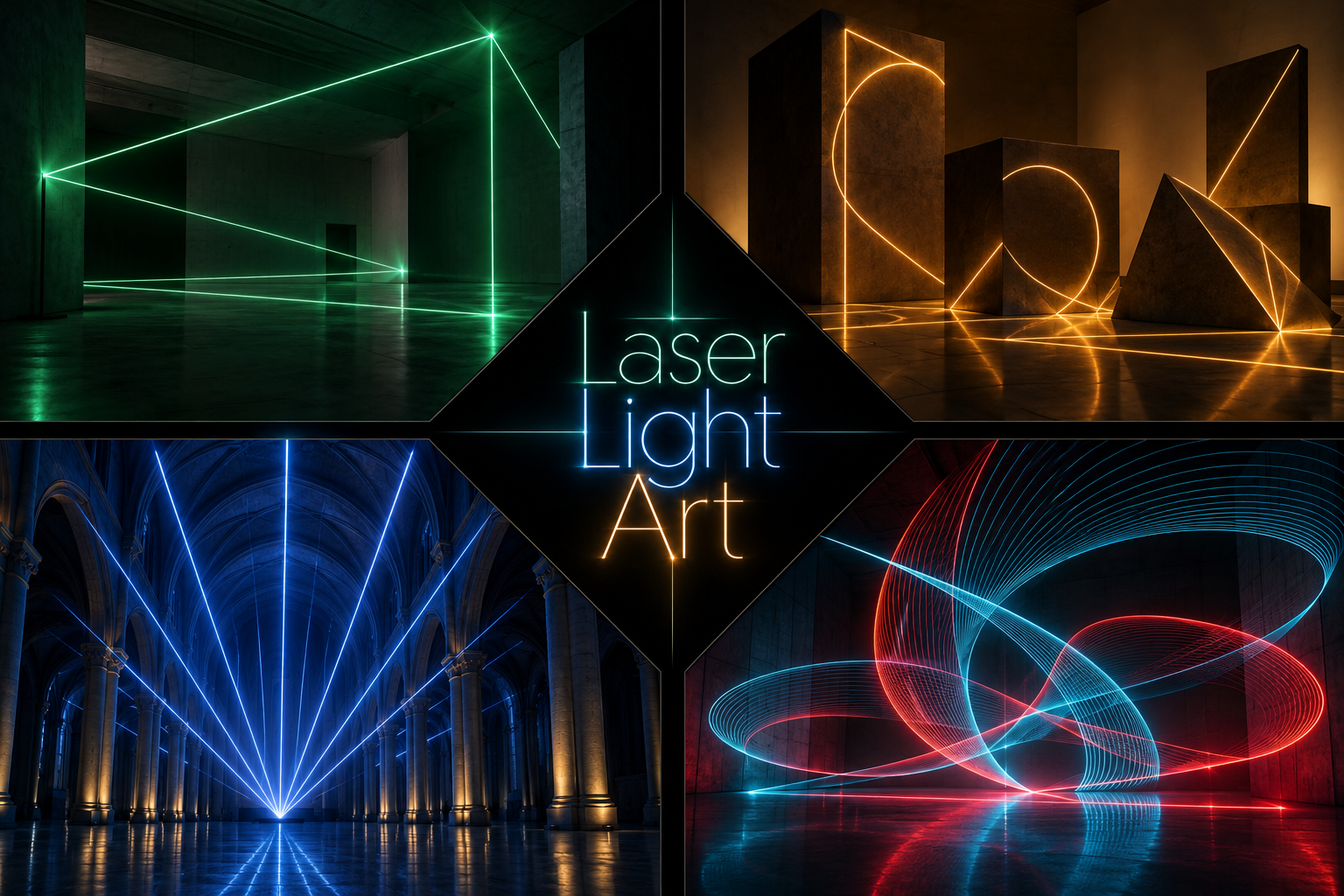
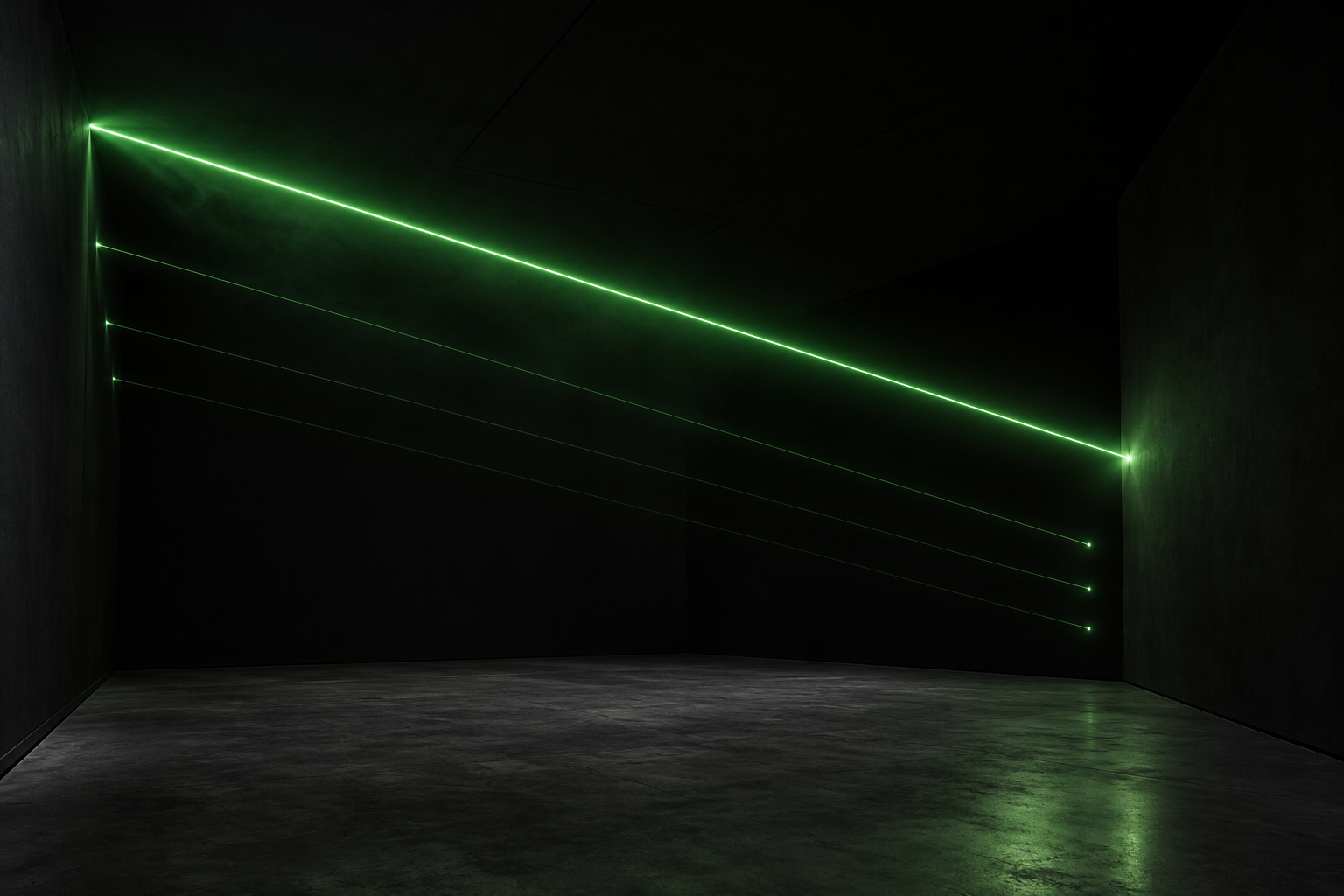
Create an original installation-image concept for Laser Light Art: one precise green diagonal and a small group of parallel green beams establish depth in an empty dark rectangular gallery. Use faint atmospheric scatter, restrained bloom and a visible far wall. Let the unlit space dominate.
Identify what the line changes about the room. This is a fictional image study, not a laser-operation plan.
Draw on a surface
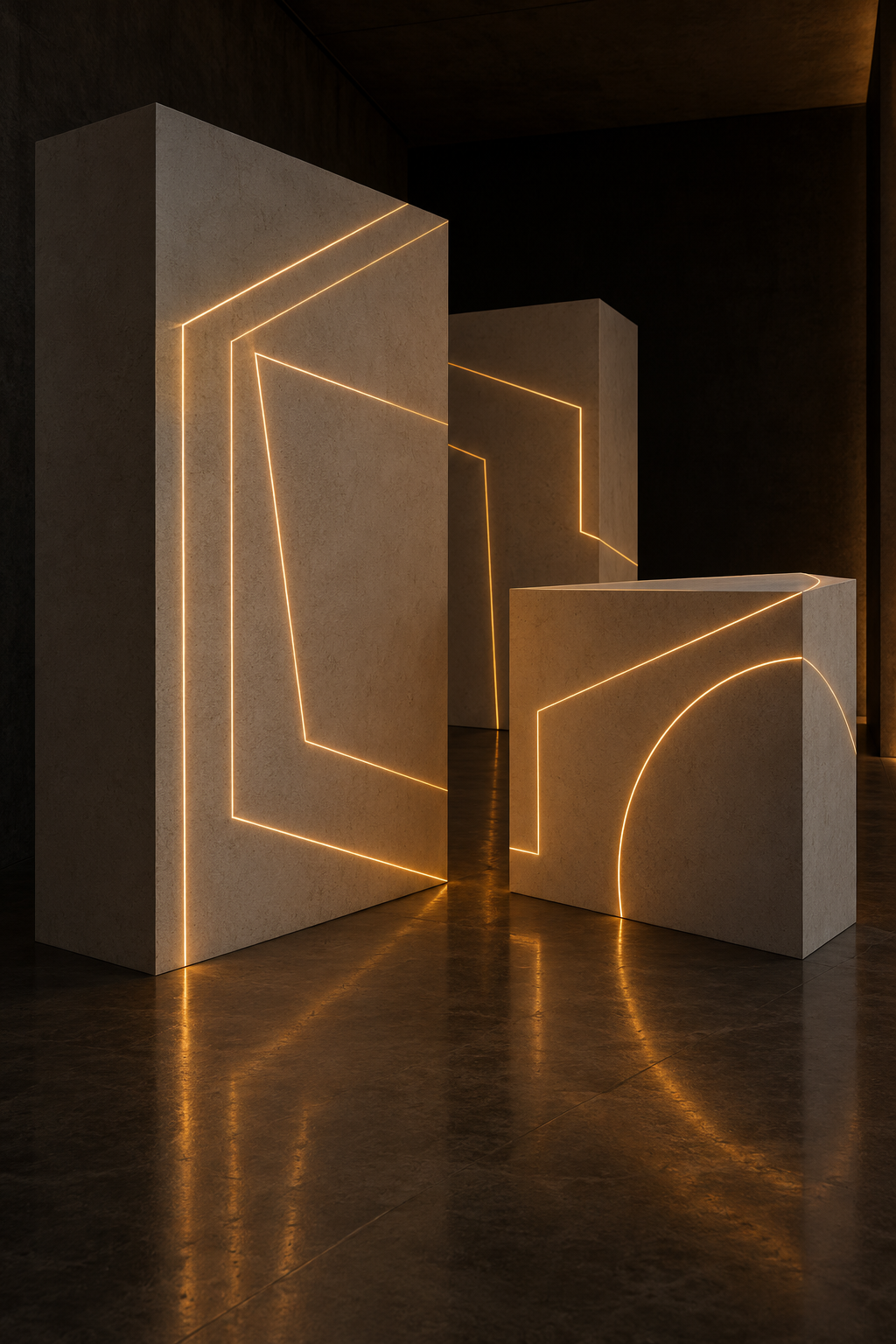
Imagine an original amber laser vector drawing projected across three matte architectural blocks of different depths. Keep the fine luminous contours attached to the receiving surfaces, with clear interruptions at edges and broad areas of darkness. Show the arrangement from an oblique gallery viewpoint.
Surface projection should respond to the objects. Avoid substituting floating neon tubes or an unexplained hologram.
Let the exposure collect time
Create a fictional long-exposure interpretation of a changing laser vector drawing on a dark matte screen: a few interlaced cyan ellipses with one warm red interruption, controlled overlapping traces and a quiet visible screen border. The curves are projected marks accumulated over time, not bent free-space beams.
Compare a sparse instantaneous drawing with an integrated exposure while holding the camera view and palette constant.
Your next inspiration
Discover another art style
Follow a visual thread to the next subject.

A smile from the studio
Jokes
The architect asked the laser artist for a wall that could divide the room without reducing its usable floor area. The artist drew one luminous plane and sent an invoice. The architect admired the elegance, the client admired the budget, and Facilities asked where to hang the fire extinguisher. Then somebody switched on the cleaning lights. “Your wall has disappeared,” said the client. “Excellent,” replied the artist. “You have discovered the open-plan option. That is a separate fee.”
Sources and further exploration
Rockne Krebs estate — urban-scale laser sculpture archive and dated project documentation
Robert Henke — Phosphor; ultraviolet laser excitation and the fading memory of afterglow pigments
TBA21 — Anthony McCall's Line Describing a Cone; a film-projection comparison, not a laser work
Dennis Gabor — Nobel lecture on holography; a primary explanation of the distinct optical method