
AOI creative concept · Night and luminous space
Let the light around a moving-looking lamp describe an imaginary map.
An AOI creative concept, not an established historical movement.
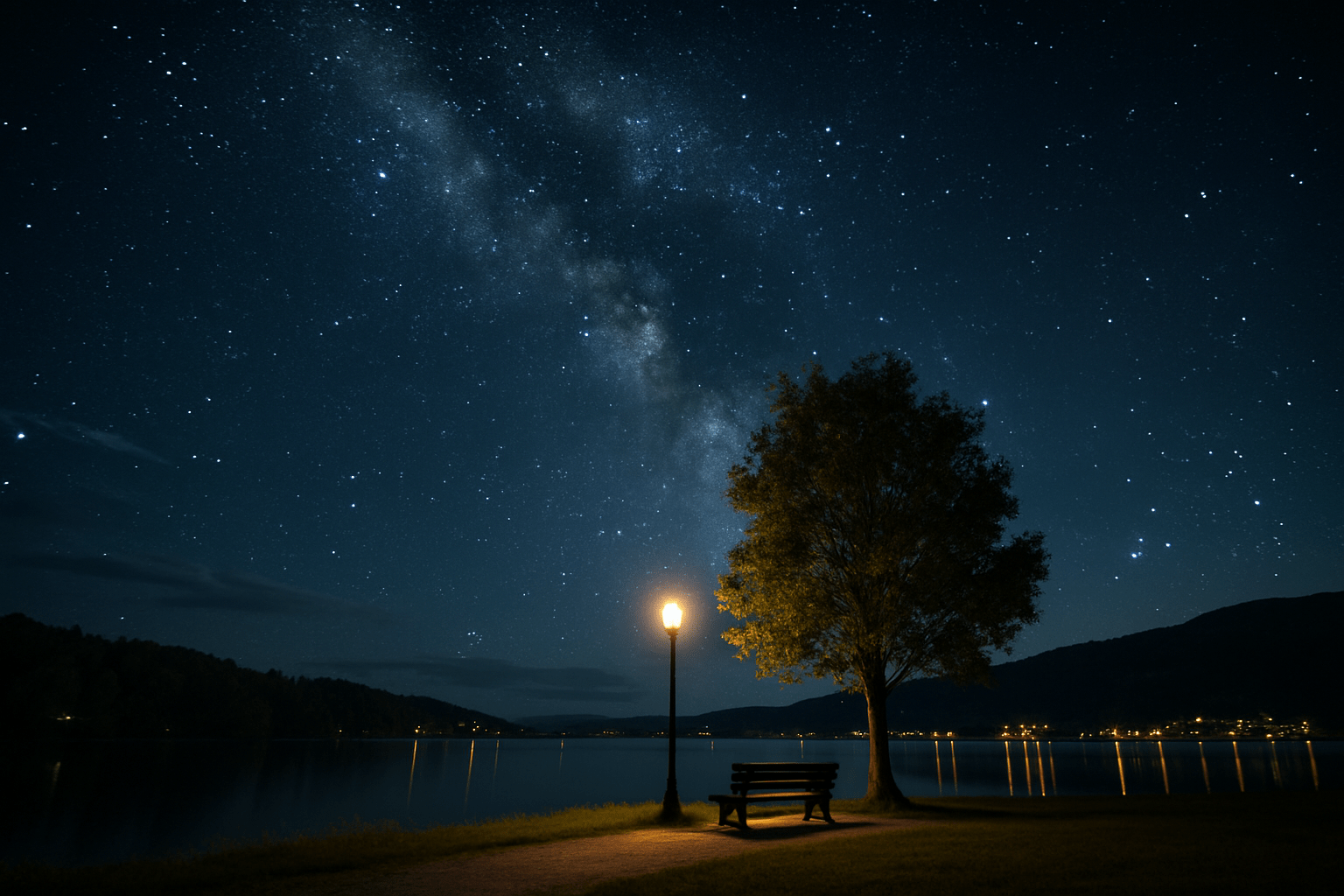
A closer look
Amber, slate black and muted silver; wet stone or foil reflections. The focal scene: a small lantern whose reflection forms an invented map.
Concentrate the light
Let the light around a moving-looking lamp describe an imaginary map. Concentric pools become districts and thin reflections become routes, while the lamp itself remains a humble object. The map is metaphorical and should contain no geographic labels.
Build the quiet scene
Set a small lantern on a dark wet surface viewed from above. Break its reflection with three shallow ridges that create branching channels. Keep the lantern near one edge and let the largest pool extend into the opposite half. A few dry islands can interrupt the light and give the invented territory a readable shape.
Resist the extra glow
If the channels do not connect to the light source, the map effect feels pasted on. Simplify the surface until the reflection alone explains the routes. Avoid fake legends or coordinates that suggest a real survey.
Technique notes
Use a suspended bulb above crumpled foil, letting the foil ridges redirect the same limited pool into a denser imaginary district.
When prompting an image model, spell out the rule and visible relationships. The invented style name alone is not a reliable instruction. Compare outputs against the critique above and revise the specific failed relationship.
The prompt workshop
Original creative exercises. These prompts create new illustrations, not documentary evidence.
Start with the defining rule
Create an original illustration of a small lantern whose reflection forms an invented map. Let the light around a moving-looking lamp describe an imaginary map. Concentric pools become districts and thin reflections become routes, while the lamp itself remains a humble object. The map is metaphorical and should contain no geographic labels. Use amber, slate black and muted silver; wet stone or foil reflections. Keep the composition readable, with a clear focal area and quiet surrounding space. No lettering, signatures or watermark.
Build the fuller composition
Create an original Lampwake Cartography composition. Set a small lantern on a dark wet surface viewed from above. Break its reflection with three shallow ridges that create branching channels. Keep the lantern near one edge and let the largest pool extend into the opposite half. A few dry islands can interrupt the light and give the invented territory a readable shape. Use amber, slate black and muted silver; wet stone or foil reflections. Preserve the defining constraint: Let the light around a moving-looking lamp describe an imaginary map. Avoid decorative clutter, readable text and watermarks.
Try a deliberate variation
Create an experimental illustration based on this rule: Let the light around a moving-looking lamp describe an imaginary map. Concentric pools become districts and thin reflections become routes, while the lamp itself remains a humble object. The map is metaphorical and should contain no geographic labels. Variation: Use a suspended bulb above crumpled foil, letting the foil ridges redirect the same limited pool into a denser imaginary district. Use amber, slate black and muted silver; wet stone or foil reflections. Make the changed relationship unmistakable while keeping supporting details restrained. No captions, signatures or watermark.
Look closer
Explore the image gallery
Select an image to enlarge it. Browse with the arrows, and press Escape to return.

Your next inspiration
Discover another art style
Follow a visual thread to the next subject.