
Contemporary decorative approach · AOI interpretation
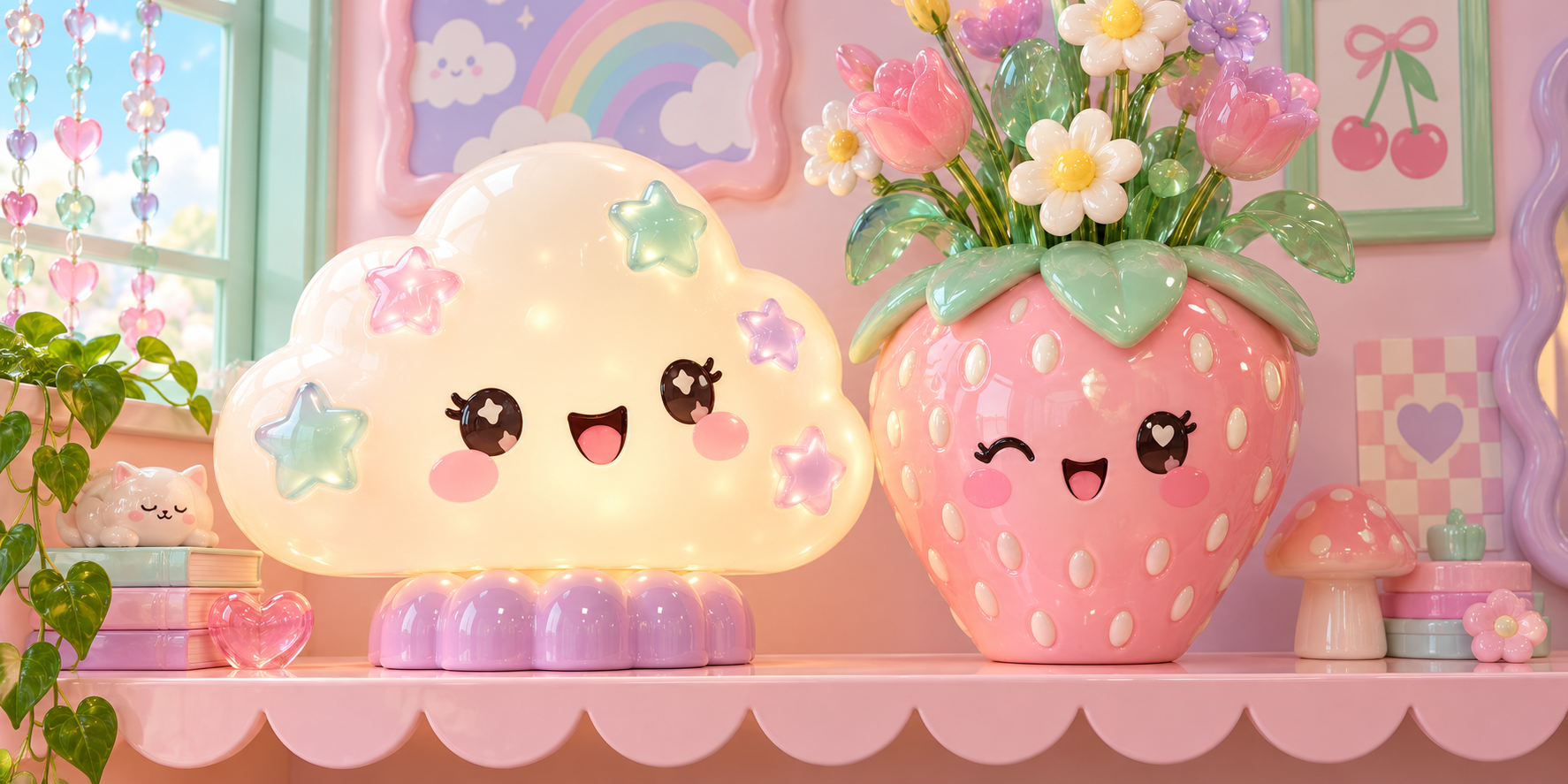
Kids Kitsch (Modern) turns everyday decoration into a cheerful cast of characters. Smiling lamps, fruit-shaped vessels and oversized soft motifs combine sentimental appeal with the polished surfaces of contemporary illustration.
A visual introduction
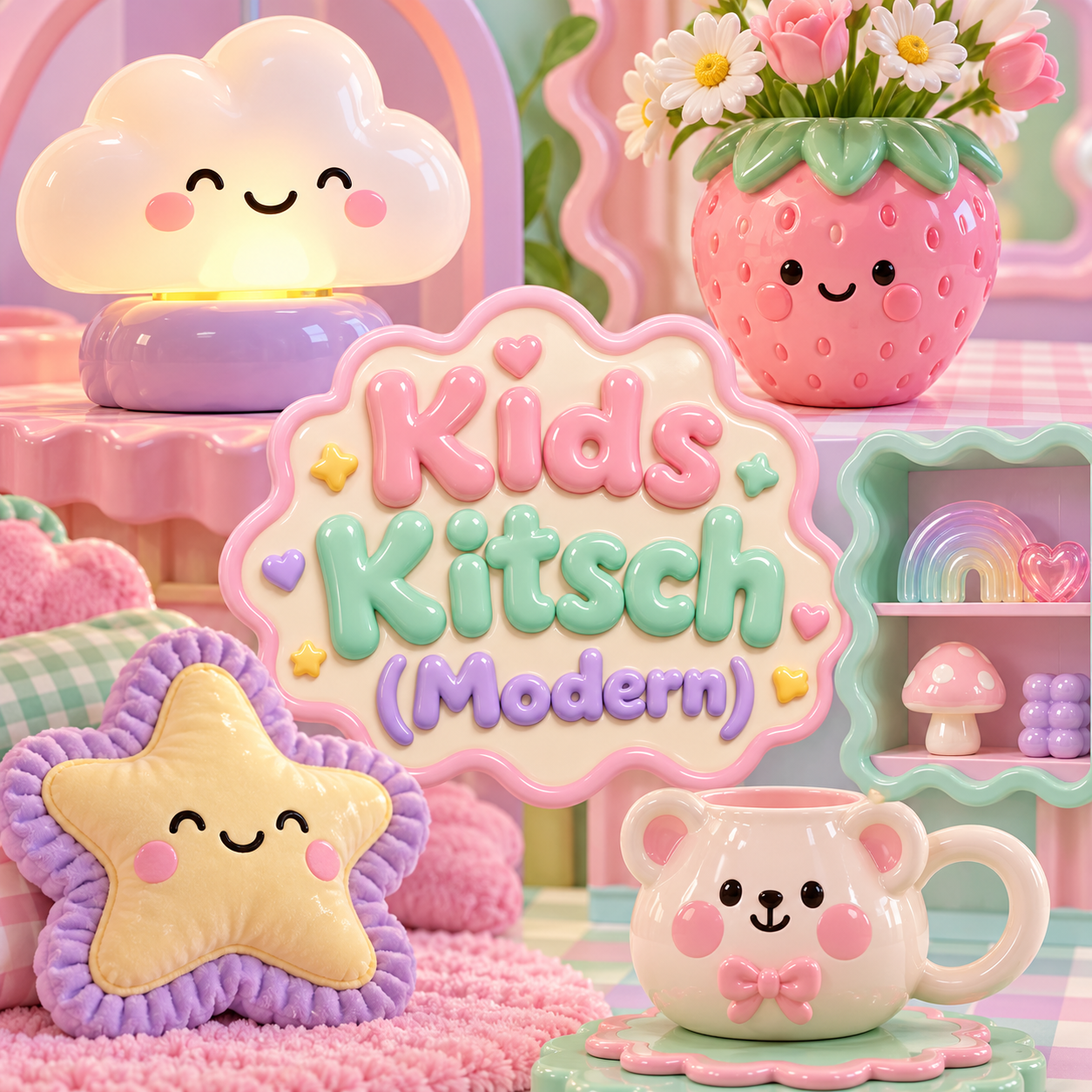
Five original AI-generated AOI interpretations: a dedicated banner, centrally titled collage and three standalone studies. These are illustrative concepts, not historical objects or commercial products.
Select an image for a closer look. Use the thumbnails, arrow keys or a swipe to compare examples. Zoom in to inspect details, or share the image that inspires you.
Creative toolbox · take this style further
Choose an input and a destination. Search sends your words to the chosen site; Copy & open puts them on your clipboard to paste there.
Create with AI
Turn your chosen input into an image prompt or a new creative direction.
ChatGPT
Copy your input and paste it into a ChatGPT conversation or image request.
Copy & open ChatGPT (new tab)Claude · Anthropic
Develop an image prompt or explore the style in a new Claude conversation.
Copy & open Claude · Anthropic (new tab)Midjourney
Paste your input into the Imagine bar on the Create page.
Copy & open Midjourney (new tab)Adobe Firefly
Copy your input, open Firefly, and paste it into the prompt field.
Copy & open Adobe Firefly (new tab)Leonardo.Ai
Copy your input, open Leonardo, and paste it into the generation field.
Copy & open Leonardo.Ai (new tab)Image search
Find visual references. Short, concrete keywords usually work best.
Lexica
Search AI images and prompts using your selected input.
Search with this input Lexica (new tab)Pexels
Search the photo and video library. Short keywords often work best.
Search with this input Pexels (new tab)Pixabay
Search photos, illustrations and other images.
Search with this input Pixabay (new tab)Unsplash
Search photographs using the style name or your own keywords.
Search with this input Unsplash (new tab)Wikimedia Commons
Search photographs, artworks and historical images. Check each file for its source and reuse terms.
Search with this input Wikimedia Commons (new tab)Art & research
Explore artists, collections and the ideas behind a style.
Wikipedia
Search for background reading. A style may not have its own article.
Search with this input Wikipedia (new tab)WikiArt
Copy your input into WikiArt’s search to explore artists and artworks.
Copy & open WikiArt (new tab)Europeana
Paste your keywords into the search to explore European museum, library and archive collections.
Copy & open Europeana (new tab)Inspiration
Discover portfolios and visual ideas from creative communities.
Instagram hashtags
Search a hashtag made from your input: spaces and punctuation are removed. Instagram may require sign-in.
Search with this input Instagram hashtags (new tab)ArtStation
Paste your input into artwork search for concept art, environments, characters and visual development.
Copy & open ArtStation (new tab)Behance
Paste your input into project search for illustration, design and visual storytelling.
Copy & open Behance (new tab)A closer look
Rounded silhouettes, candy colors, friendly faces and scalloped edges create immediate charm. Glossy ceramics, jelly-like translucency and plush textures contrast within a clearly organized composition.
An editorial label for a specific kind of play
Kids Kitsch (Modern) is AOI's working label for contemporary childlike decorative imagery: familiar things become cute companions, and ornament is allowed to be exuberant. It is not presented as a formally established movement with a founder or manifesto. Kids describes the visual vocabulary; adults can enjoy or create it too.
The label overlaps with current playful product and surface design. Jewel Branding's back-to-school trend discussion, for example, describes nostalgic decorative clashes, kitschy animals and scrapbook-like combinations. That is contemporary industry context rather than evidence that this exact AOI label names a unified school.
Distinguish it from its neighbors
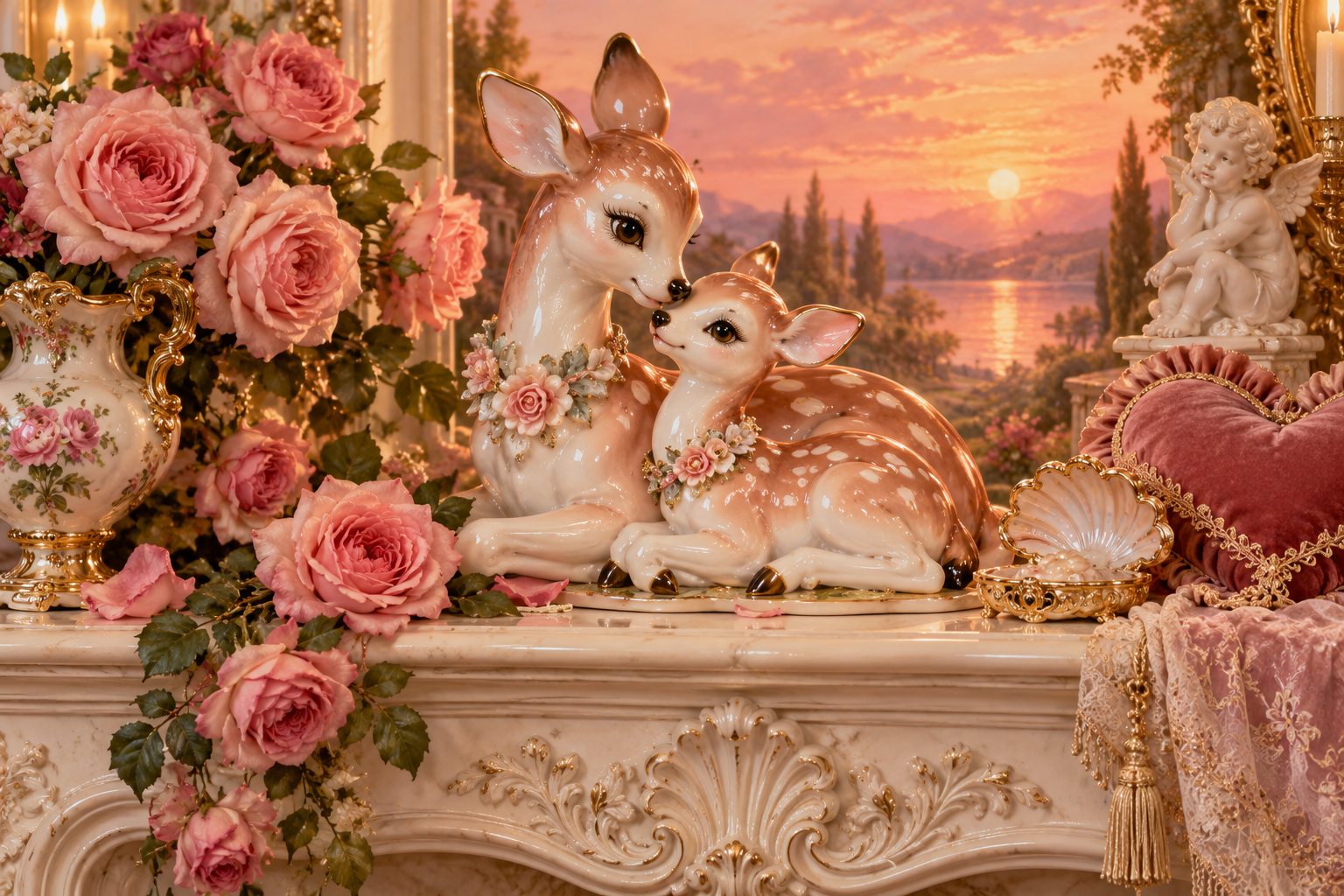
Classic kitsch often draws on sentimental landscapes, porcelain animals, souvenirs and idealized domestic scenes. This modern interpretation favors simplified toy-like forms, clean digital lighting and candy-colored objects. A smiling strawberry vase belongs to a different visual register from a gilt-framed cottage painting, even when both offer uncomplicated delight.
Kidcore is broader: it can organize clothing, accessories, digital collages and remembered school-day objects around childhood nostalgia. Kids Kitsch (Modern) concentrates on decorative objects and the deliberate amplification of cuteness. An image can participate in both, but the terms need not become interchangeable.
Give the object a recognizable character
Begin with a silhouette that reads without a face: cloud, fruit, star or rounded animal. Add the smallest expression that changes its personality. Two eyes and a mouth are enough when their placement agrees with the object's volume. Uneven eye sizes can feel lively; accidental distortion usually feels unresolved.
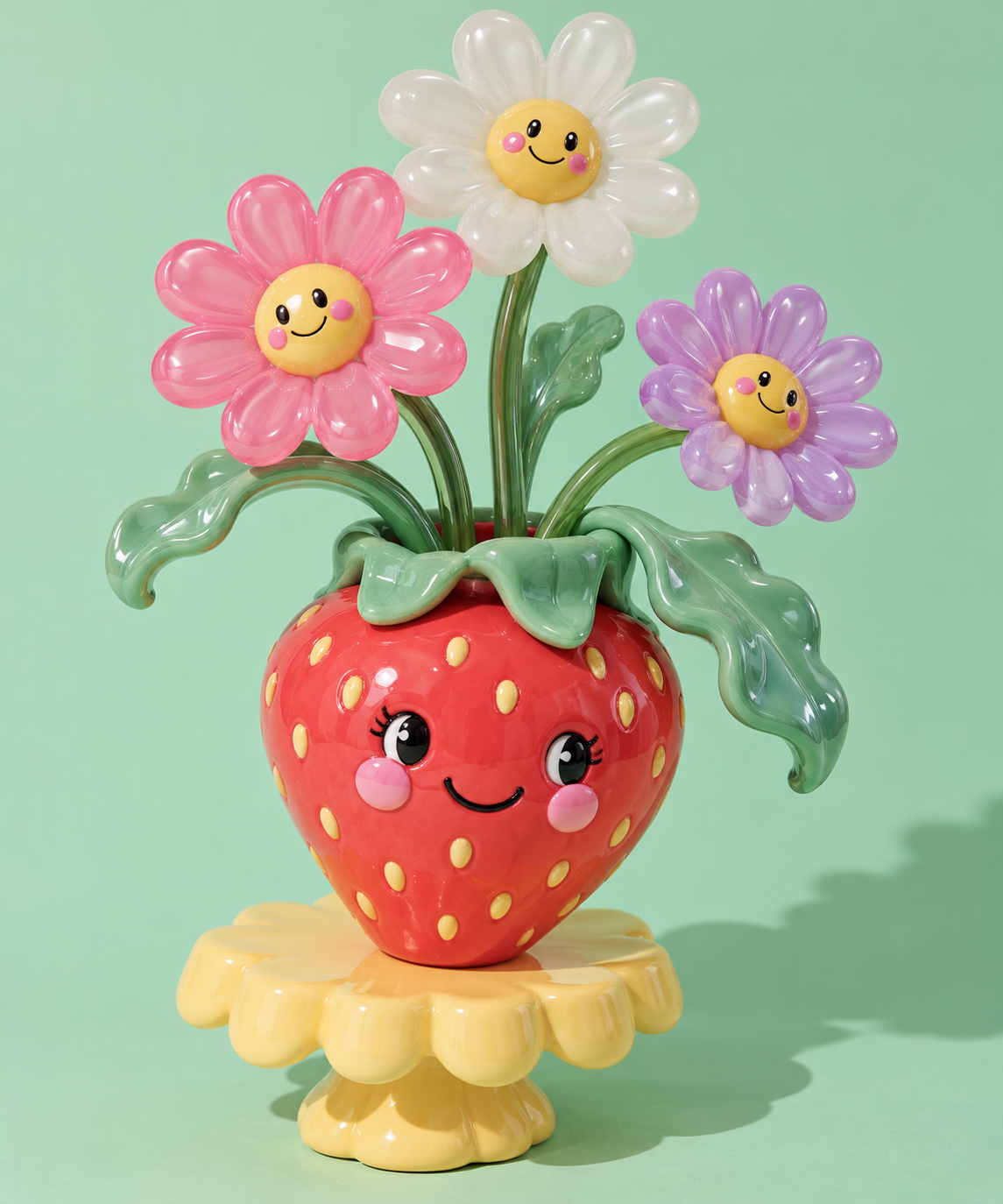
Keep the object's function legible. A vase needs an opening, a lamp needs a convincing luminous region, and a mug needs a usable handle. The strawberry study combines a fruit-shaped vessel with three stylized smiling flowers. Its scalloped pedestal adds another rhythm without hiding the main form.
Choose surfaces that disagree gently
Gloss and softness make useful partners. A polished ceramic face becomes more prominent beside a plush cushion, while translucent petals can appear lighter than an opaque vessel. Give each surface distinct reflections. Applying the same plastic shine to everything removes the material contrast that makes the scene appealing.
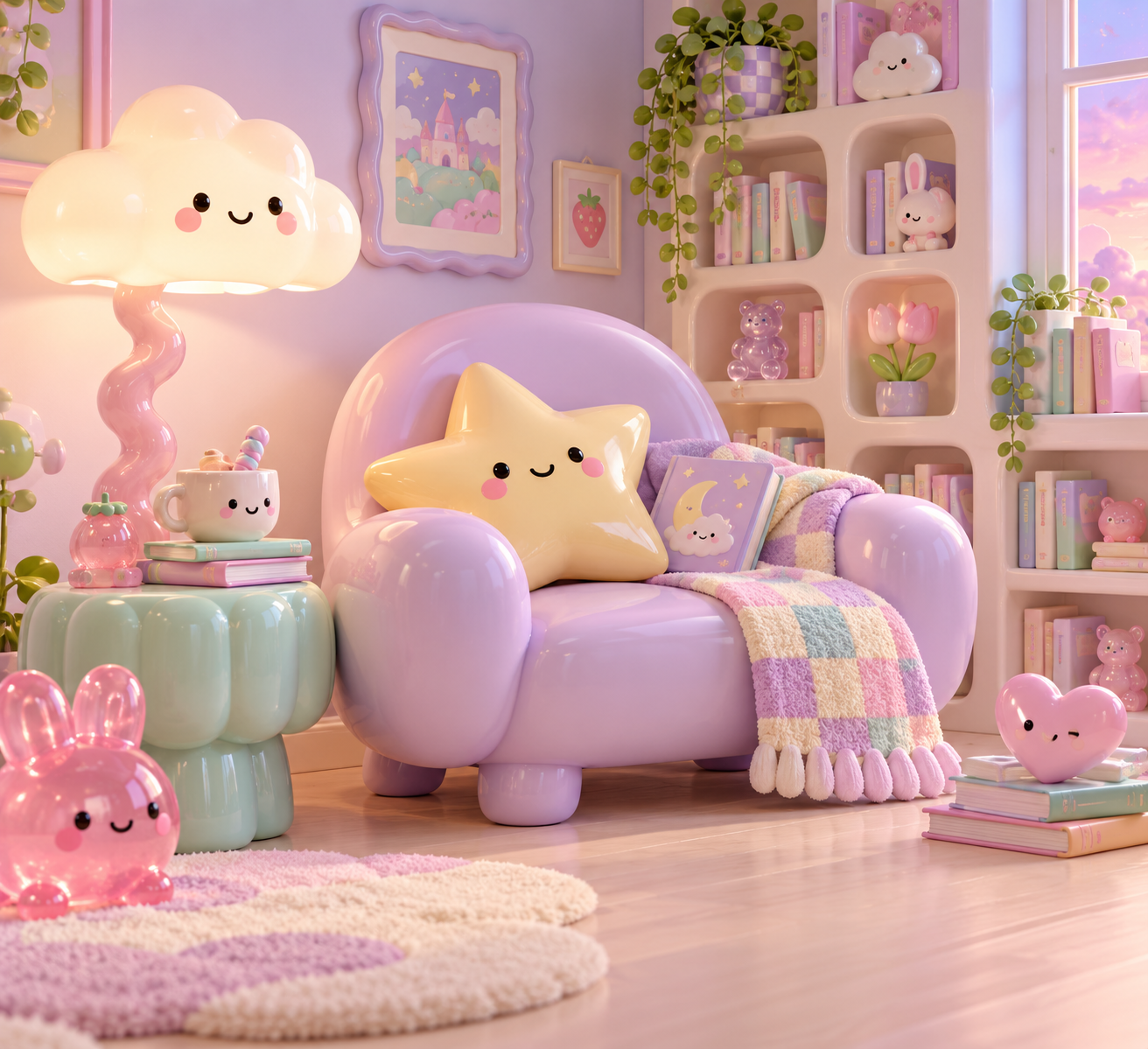
Candy pink, mint and lilac provide a starting palette; a warm yellow focal object can organize the softer surroundings. Saturation is another tool. Keep some supporting colors quieter so the image does not become an undifferentiated wall of sweets. The reading-corner study uses furniture scale and open floor space to make the decorative elements feel placed.
Compose delight with a clear hierarchy
Use one large character and a few supporting motifs. Repeat a curve or color in different sizes to connect them. A scalloped shelf can echo a cloud edge; a star cushion can repeat a small lamp ornament. Repetition gives abundance a reason.
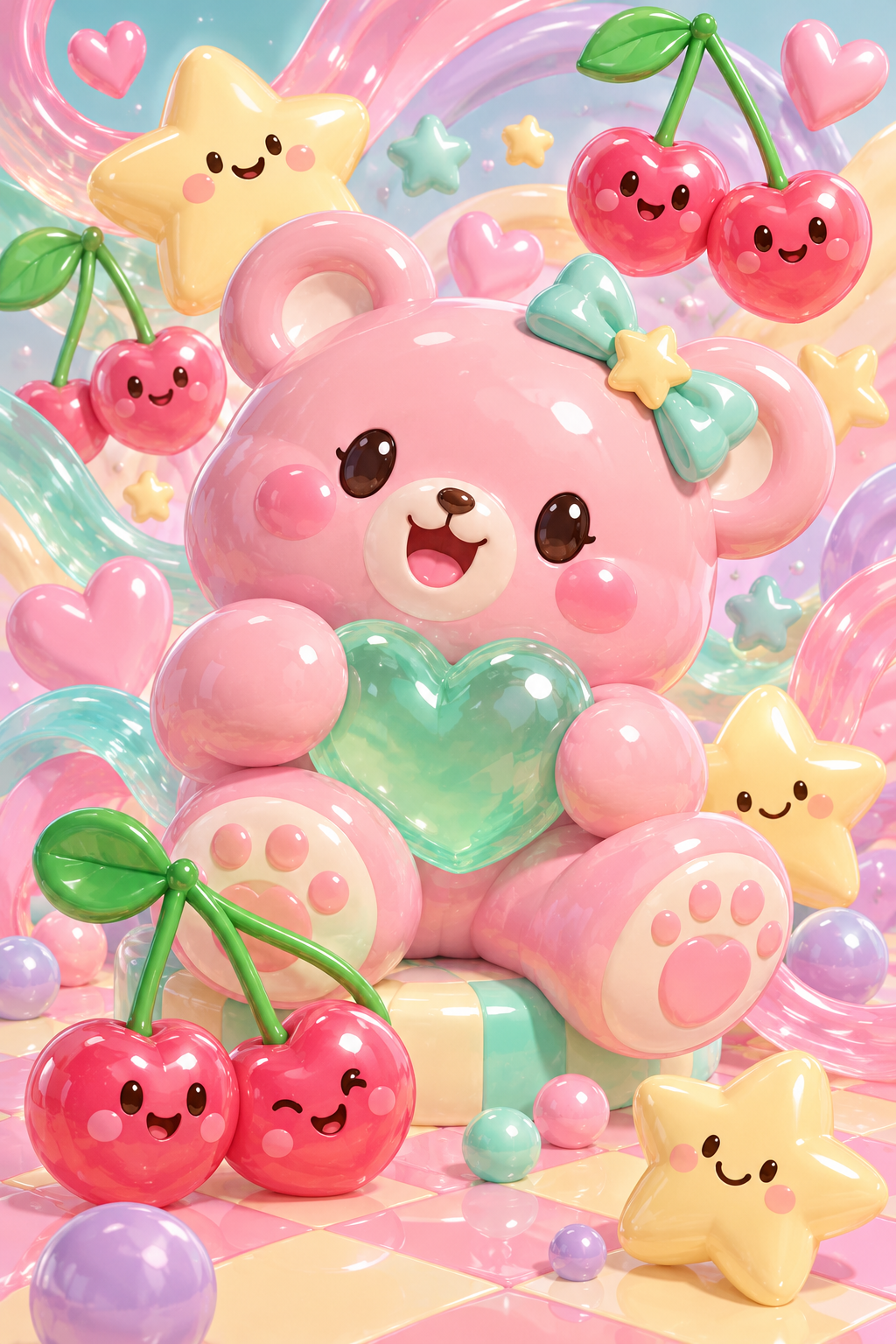
The decorative poster study translates the same idea into a dimensional character composition. A bear is the focal anchor, with cherries and stars acting as accents. This is useful for surface-pattern concepts, stationery and playful editorial illustration. For actual products, construction, durability and suitability require their own design work; a charming render is only a visual proposal.
When cute becomes clutter
Common failures are too many faces, identical expressions and unrelated decorative layers. Remove half the accents and see whether the main character becomes more memorable. Leave a clear background interval around the strongest silhouette.
A useful exercise is to draw the same ordinary vessel three ways: neutral, gently friendly and extravagantly cute. Change one feature at a time. The comparison reveals where personality comes from, and where additional decoration merely repeats what the viewer already understands.
A small poetic detour
Original words from the AOI studio.
Poetry
The shelf committee
The cloud has volunteered for light;
the strawberry will keep the flowers.
A little star prepares for night
and cushions all the quieter hours.
The mug arrives with rounded ears,
the daisies nod in pink and green.
No chair remembers all my fears;
they make a gentler place between.
I leave one ordinary space.
The room replies with one more face.
The prompt workshop
Original creative exercises. These prompts create new illustrations, not documentary evidence.
Start with one friendly object
Design an original smiling strawberry-shaped ceramic vase on a scalloped yellow pedestal. Use mint surroundings, three stylized flowers and coherent glossy highlights. Keep the vessel opening and main silhouette clear.
Personality should support the object's form.
Give the room a small cast
Create a modern playful reading corner with a cloud lamp, star cushion and rounded lilac chair. Use candy accents, contrasting soft and glossy materials, and clear floor space.
Limit the number of faces so each remains distinctive.
Translate objects into a poster
Create a wordless decorative poster with a friendly rounded bear, smiling cherries and puffy stars. Use mint, pink and butter yellow, varied motif scale and one clear focal bear.
Keep the graphic hierarchy even when the motifs are exuberant.
Your next inspiration
Discover another art style
Follow a visual thread to the next subject.
A smile from the studio
Jokes
The designer gave the lamp a smile, the vase a wink and the cushion a cheerful expression. The client was delighted until the plain storage box began to look left out. “Should we give that a face too?” After careful consideration, they gave it a tiny frown. Finally, someone in the room could represent Monday.