
Artist reference · expressive landscape color
Johnathan Harris transforms landscape through intense color and dark-edged shapes, balancing recognizable terrain with a deliberately expressive palette.
A visual introduction
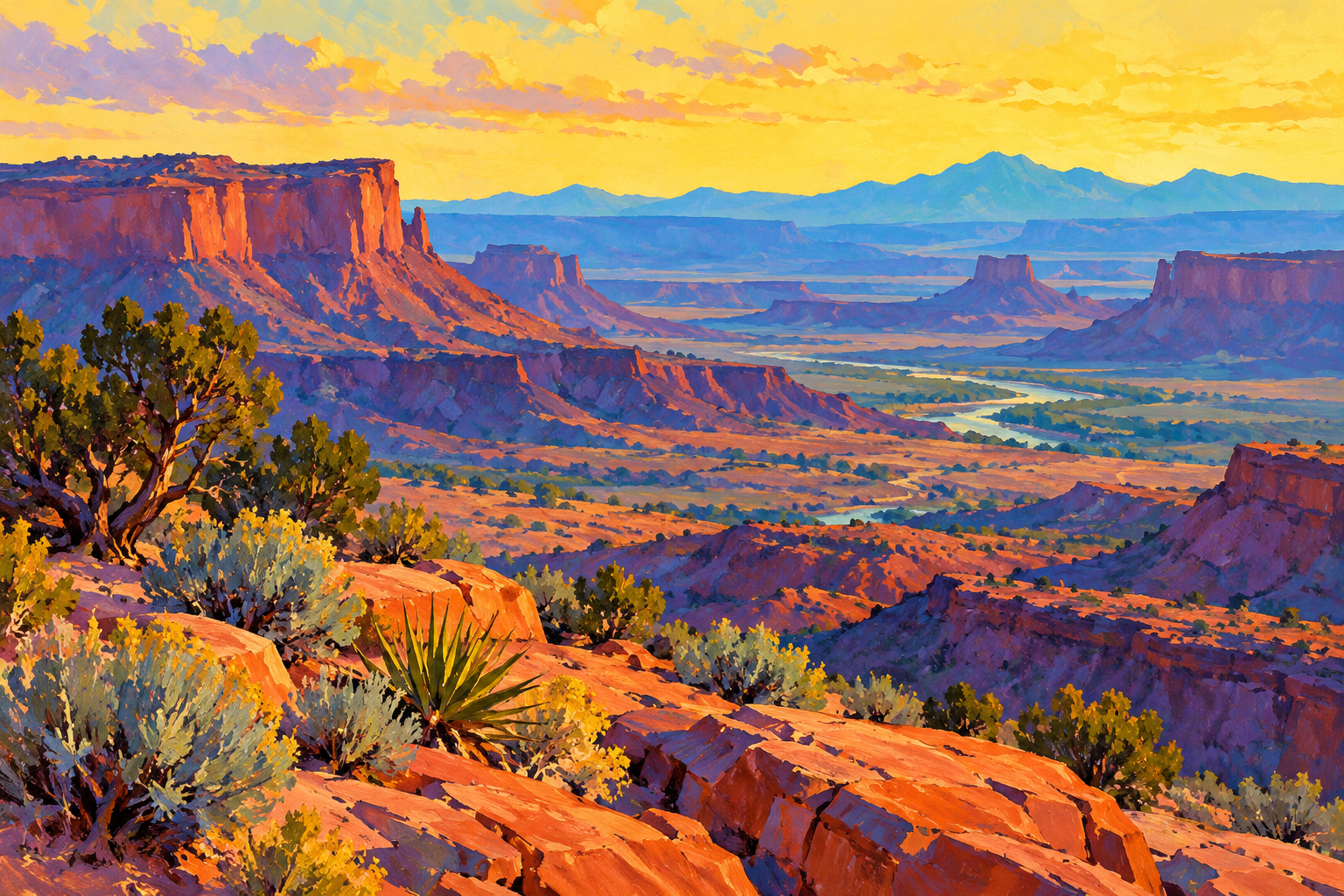
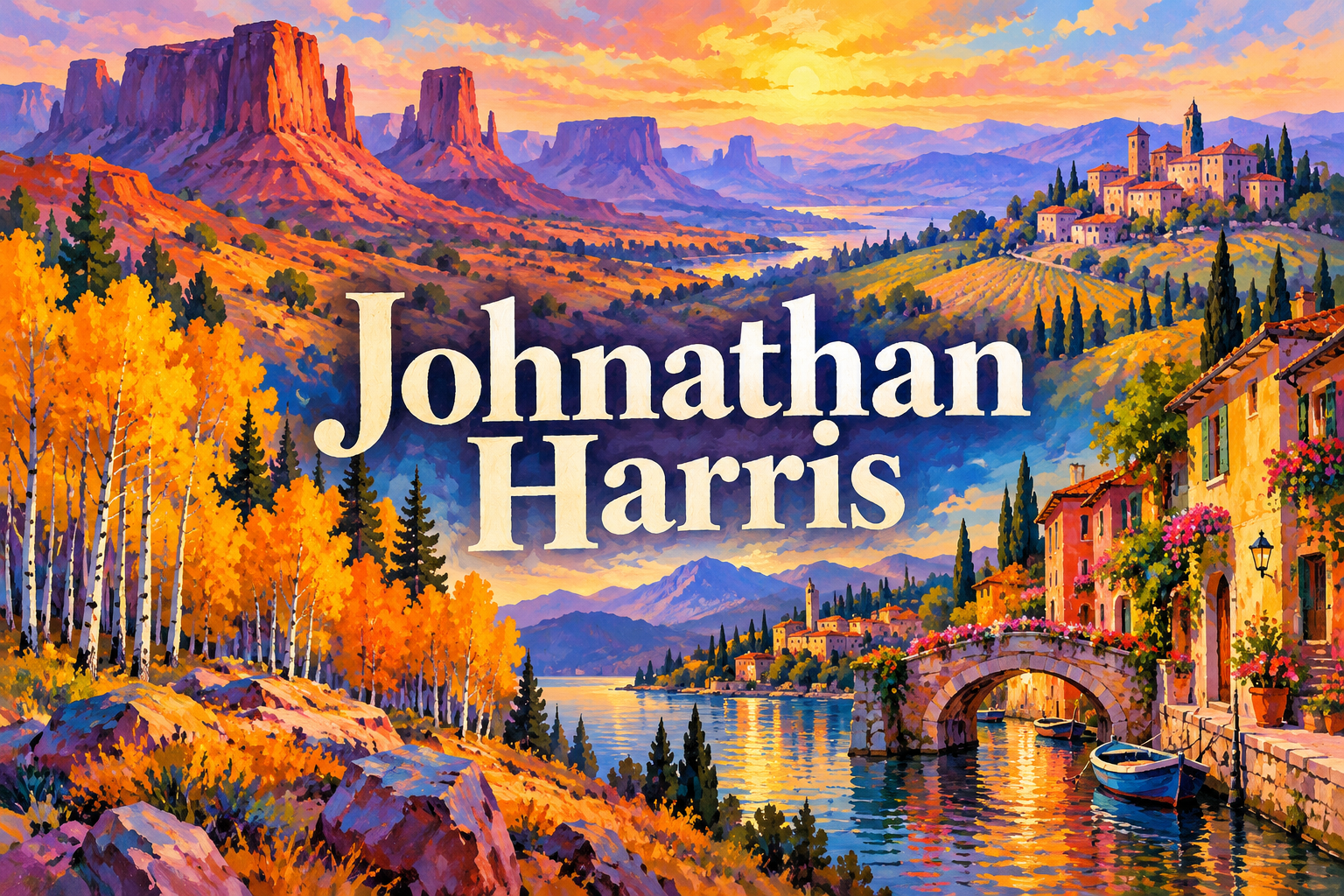
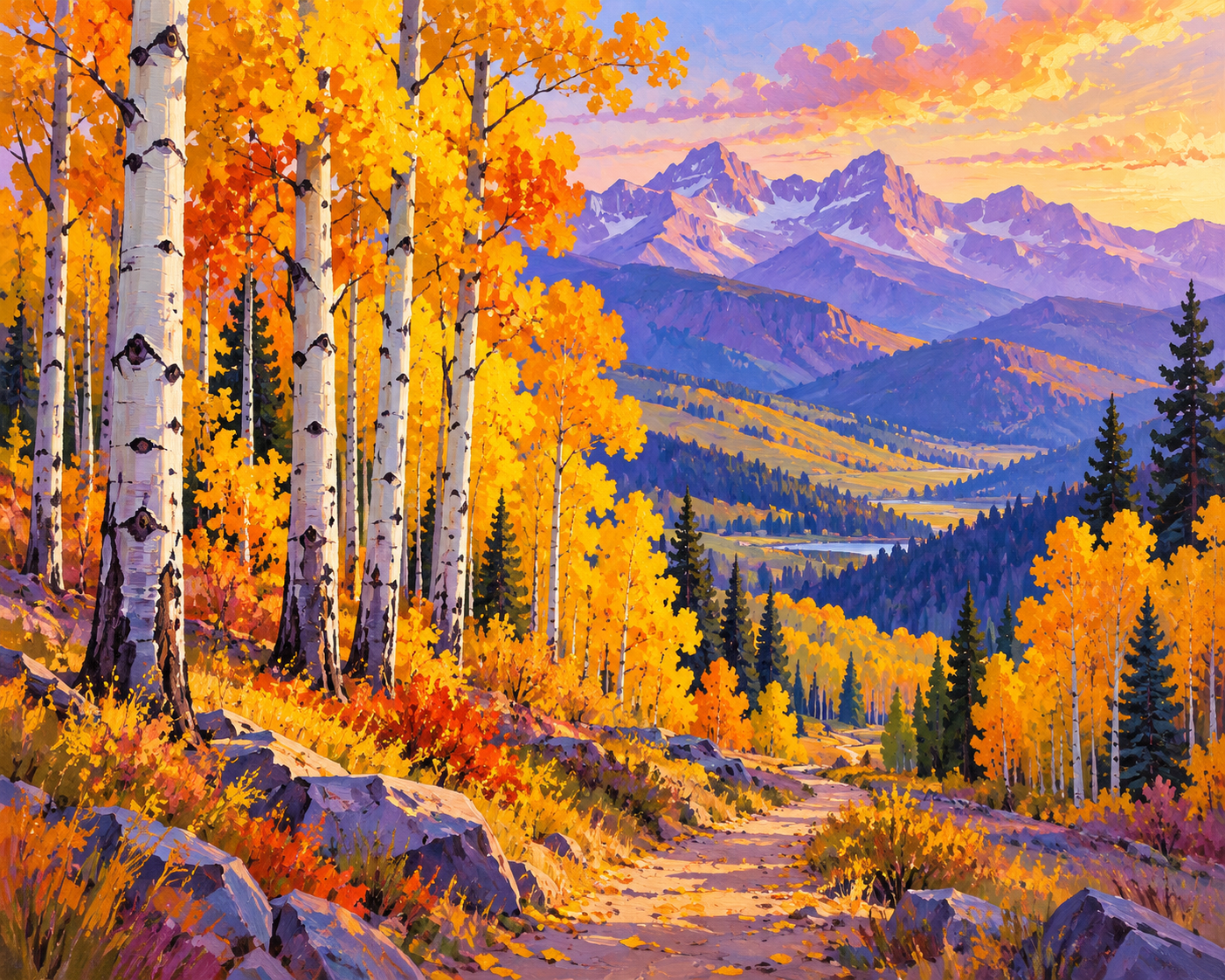
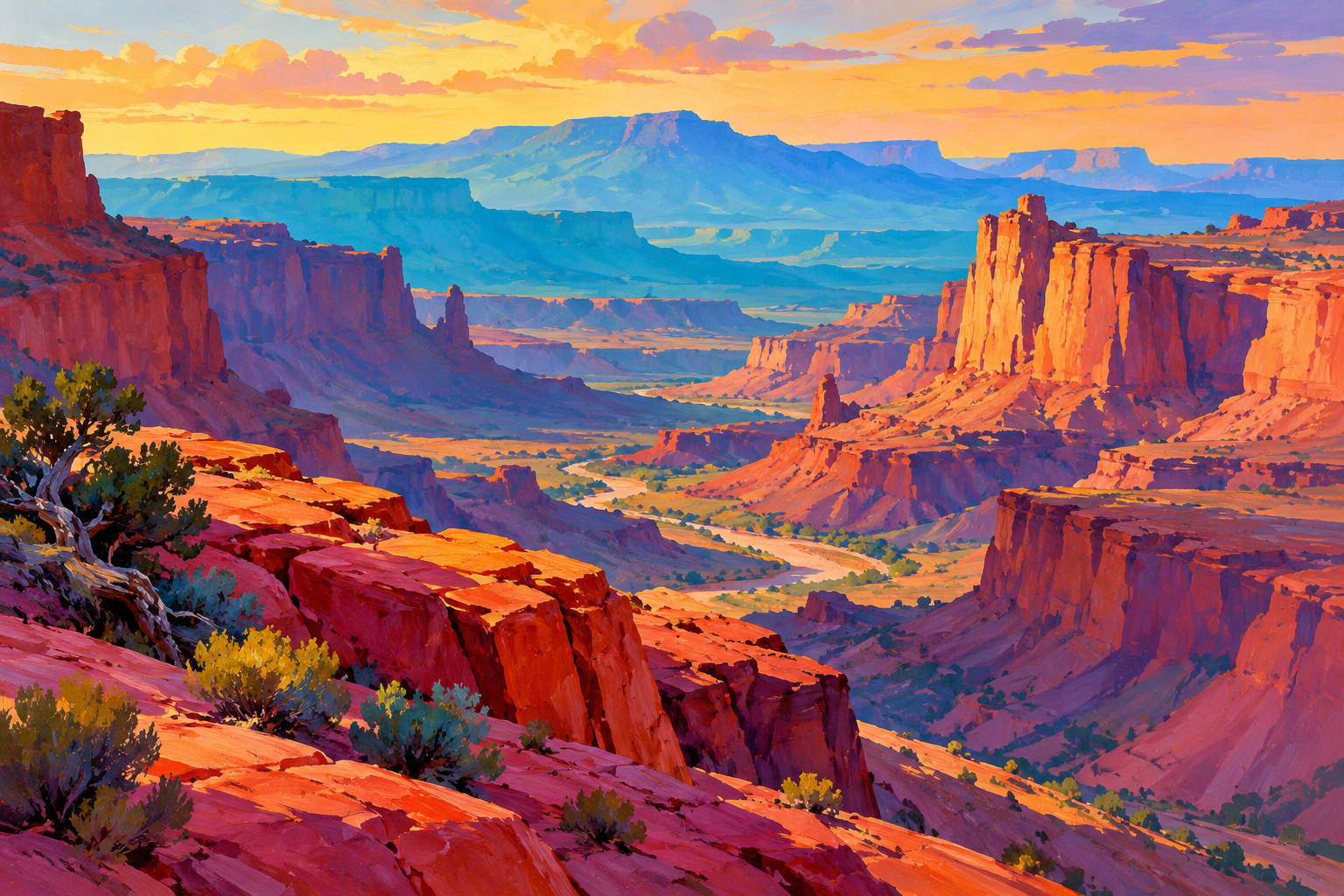
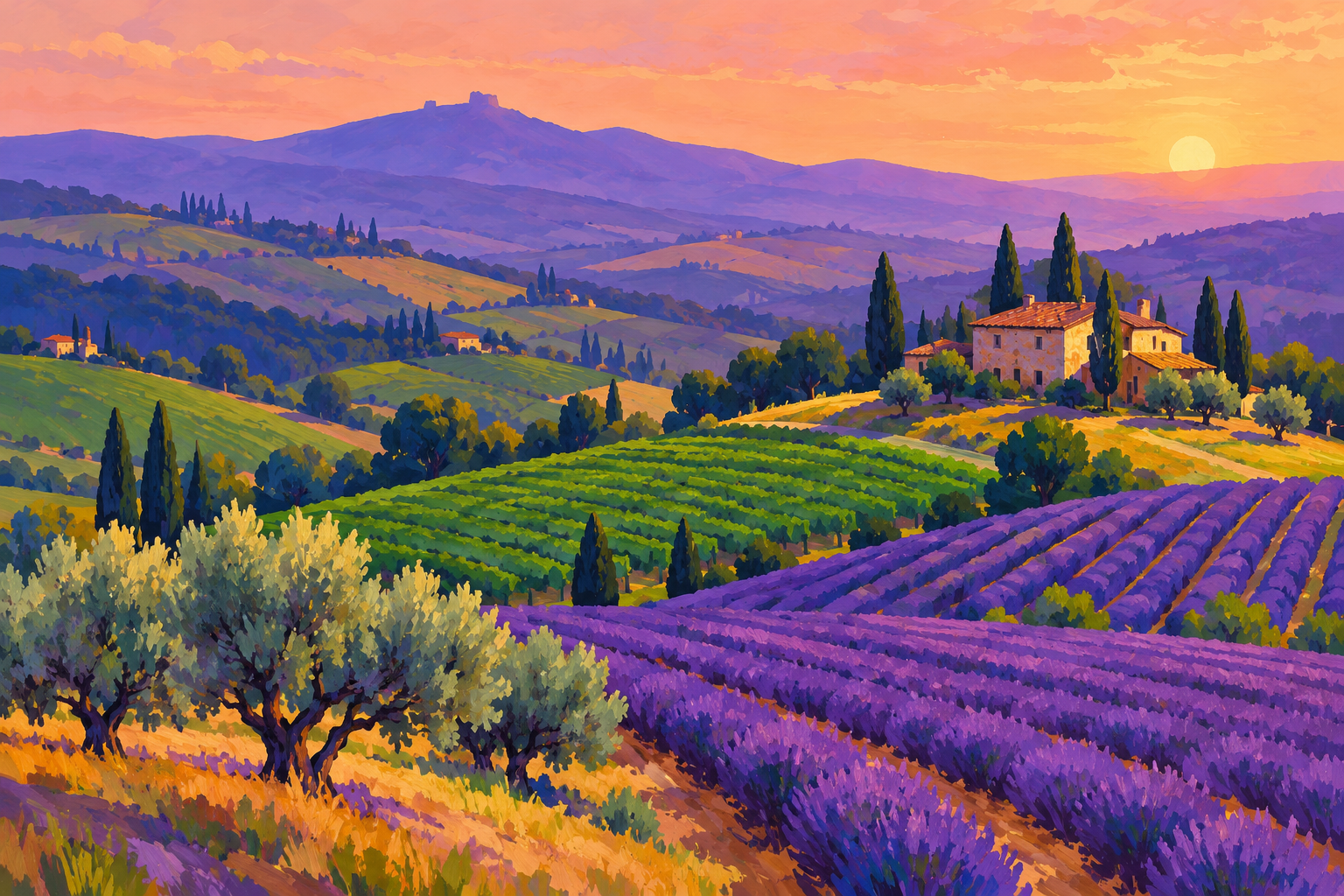
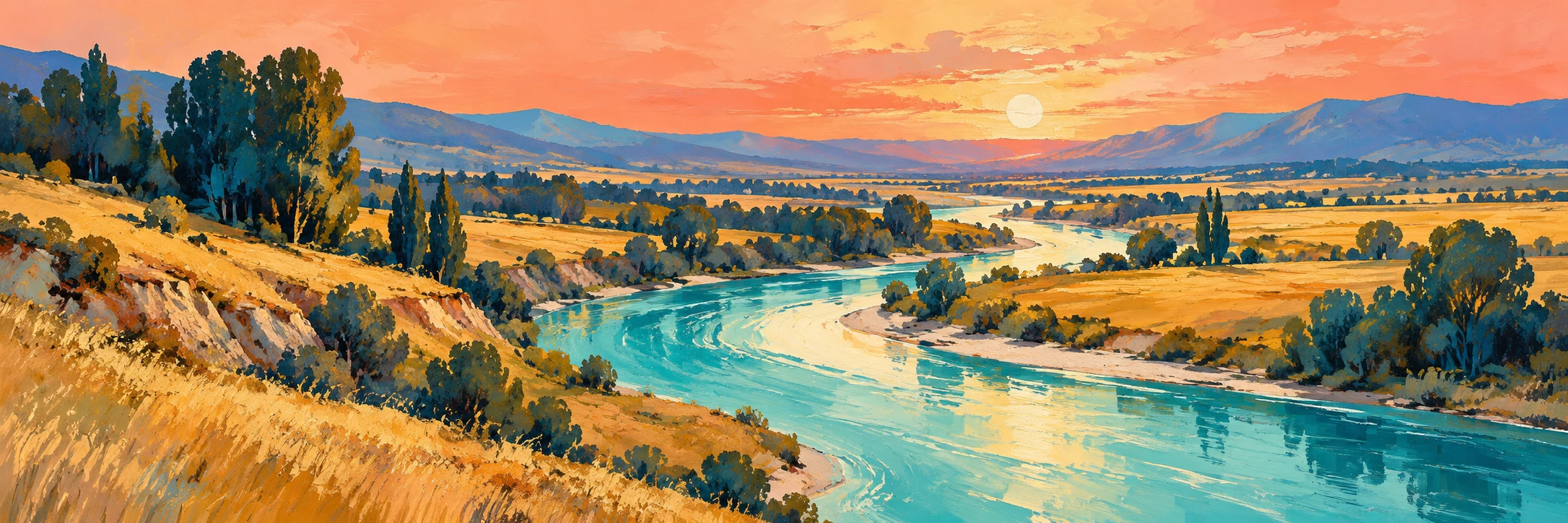
Five original AI-generated AOI interpretations: a dedicated banner, a centrally titled collage and three standalone studies. These are new illustrations, not historical objects or works by the referenced artist.
Select an image for a closer look. Use the thumbnails, arrow keys or a swipe to compare examples. Zoom in to inspect details, or share the image that inspires you.
Creative toolbox · take this style further
Choose an input and a destination. Search sends your words to the chosen site; Copy & open puts them on your clipboard to paste there.
Create with AI
Turn your chosen input into an image prompt or a new creative direction.
ChatGPT
Copy your input and paste it into a ChatGPT conversation or image request.
Copy & open ChatGPT (new tab)Claude · Anthropic
Develop an image prompt or explore the style in a new Claude conversation.
Copy & open Claude · Anthropic (new tab)Midjourney
Paste your input into the Imagine bar on the Create page.
Copy & open Midjourney (new tab)Adobe Firefly
Copy your input, open Firefly, and paste it into the prompt field.
Copy & open Adobe Firefly (new tab)Leonardo.Ai
Copy your input, open Leonardo, and paste it into the generation field.
Copy & open Leonardo.Ai (new tab)Image search
Find visual references. Short, concrete keywords usually work best.
Lexica
Search AI images and prompts using your selected input.
Search with this input Lexica (new tab)Pexels
Search the photo and video library. Short keywords often work best.
Search with this input Pexels (new tab)Pixabay
Search photos, illustrations and other images.
Search with this input Pixabay (new tab)Unsplash
Search photographs using the style name or your own keywords.
Search with this input Unsplash (new tab)Wikimedia Commons
Search photographs, artworks and historical images. Check each file for its source and reuse terms.
Search with this input Wikimedia Commons (new tab)Art & research
Explore artists, collections and the ideas behind a style.
Wikipedia
Search for background reading. A style may not have its own article.
Search with this input Wikipedia (new tab)WikiArt
Copy your input into WikiArt’s search to explore artists and artworks.
Copy & open WikiArt (new tab)Europeana
Paste your keywords into the search to explore European museum, library and archive collections.
Copy & open Europeana (new tab)Inspiration
Discover portfolios and visual ideas from creative communities.
Instagram hashtags
Search a hashtag made from your input: spaces and punctuation are removed. Instagram may require sign-in.
Search with this input Instagram hashtags (new tab)ArtStation
Paste your input into artwork search for concept art, environments, characters and visual development.
Copy & open ArtStation (new tab)Behance
Paste your input into project search for illustration, design and visual storytelling.
Copy & open Behance (new tab)A closer look
Vivid orange, yellow, violet and turquoise reshape mesas, trees and hills. Dark intervals separate color masses, while repeated trunks, contour changes and warm-cool relationships organize the view.
Identify the right Johnathan Harris
This entry concerns Johnathan Harris, the landscape painter represented by JH Fine Art. His own statement describes an Arkansas background, experience of the American Southwest and European locations, and the use of photographs, visits and memory in developing his images. The spelling Johnathan is important: this is not a profile of another artist named Jonathan Harris.
Harris describes working from dark to light and retaining dark borders between color passages. That is a useful clue for looking, not a complete recipe for his practice. The generated works here are original AOI studies of expressive landscape principles. They are not paintings by Harris, copies of portfolio works or illustrations of documented places unless specifically stated.
Let color change the place without losing it
A landscape can remain recognizable even when its colors depart strongly from observation. A mesa's stepped profile, an aspen's vertical rhythm or a valley's descending planes supplies structural information. Saturated color then changes the emotional temperature. Decide which features identify the place before replacing naturalistic hues.
Warm and cool colors should create relationships rather than merely alternate. An orange cliff can advance against violet distance; a yellow stand of trees can become the focal mass within blue ground. Preserve enough value contrast that adjacent saturated colors remain distinct. When every region is equally brilliant, the eye loses a route through the image.
Use the dark intervals deliberately
A dark understructure can bind the composition while leaving separate patches of color legible. Imagine the dark layer as a network whose width changes with importance. Broad intervals may anchor foreground forms; smaller gaps can articulate distant details. Uniform thick outlines around everything tend to flatten the scene into unrelated compartments.
For an acrylic-inspired digital study, specify opaque color passages, simplified contours and controlled brush texture. Keep the marks subordinate to the terrain's planes. Photographic detail plus arbitrary neon coloring often produces a different result: a tinted photograph rather than a painted interpretation. Use fewer shapes and clearer directional changes before asking for more surface detail.
Explore several landscape problems
An aspen study tests repetition: vary trunk width, spacing and interruptions so the grove has rhythm. A canyon study tests the arrangement of large planes and negative spaces. Rolling European hills test quieter transitions and the balance of curved fields against a distant horizon. These subjects can share color logic without becoming identical compositions.
This reference is useful for color exercises and expressive landscape illustration. Its limitations appear when intensified hue becomes a substitute for observation. Change the viewpoint, preserve a convincing landform and give the sky a specific role. A successful image feels like a response to a place, even when its violet shadows and orange distances belong to imagination.
A small poetic detour
Original words from the AOI studio.
Poetry
The canyon keeps its ancient shape
but borrows orange from the evening.
A violet shadow crosses stone;
a yellow tree announces autumn.
Between the fields a dark line travels,
remembering the road beneath the paint.
The hill is still a hill at distance,
though blue has entered all its folds.
We came to name the place precisely
and left with colors in our hands.
The land remains beyond the picture;
the picture teaches us to look.
The prompt workshop
Original creative exercises. These prompts create new illustrations, not documentary evidence.
Begin with a mesa
Original expressive painted landscape of an invented Southwestern mesa, stepped rock contours, orange and coral planes, violet shadows, turquoise sky, dark intervals between simplified color passages, no text or signature.
Keep the landform specific and the image independent of any existing painting.
Rhythm in an aspen grove
An original acrylic-like study of a bright aspen grove, irregular white trunks, dark structural gaps, yellow-orange foliage, blue-violet ground, varied spacing and a clear path of light.
Avoid evenly spaced trunks and identical patches of foliage.
Quiet terrain, intense color
An invented landscape of rolling fields and a distant European hill village, broad curved shapes, saturated warm-cool color relationships, retained dark edges, simplified architecture, restrained brush texture.
Let the large landforms carry the composition before adding buildings.
Your next inspiration
Discover another art style
Follow a visual thread to the next subject.
A smile from the studio
Jokes
The landscape requested a faithful portrait. Orange arrived early, violet took over the shadows, and turquoise volunteered for a job the sky had not advertised. The mesa studied the result and said, 'The outline is definitely mine.' The colors agreed that this was enough identification for a very good afternoon.