Cross-cultural reception
Japonism describes the reception and influence of Japanese art abroad. It is a history of exchange and interpretation, not a synonym for Japanese art itself.
A closer look
For an original exercise, study composition rather than borrowing cultural symbols indiscriminately.
Understanding the subject
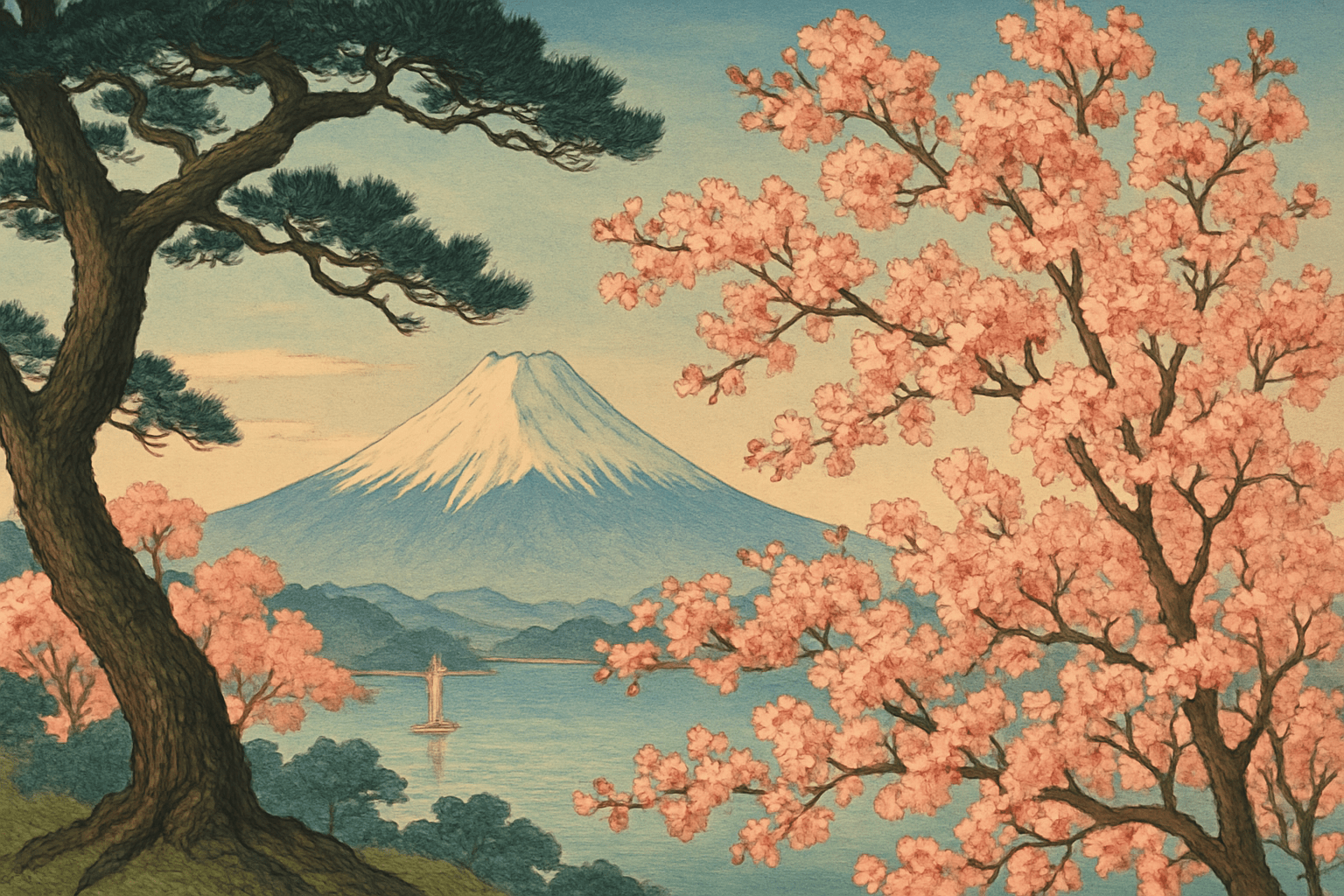
Japonism, often called Japonisme, concerns ways Japanese arts influenced artists and audiences elsewhere, especially in nineteenth-century European contexts. Prints and other objects offered different approaches to framing, pattern and pictorial space. Reception involved selection and reinterpretation, so the resulting works should not be treated as transparent accounts of Japanese culture. Individual artists and objects provide a more precise history than a universal list of exotic motifs.
AOI looking and making workshop
For an original exercise, study composition rather than borrowing cultural symbols indiscriminately. Try an off-center subject, a boldly cropped foreground form or a decorative surface that remains visibly flat. Compare how each choice changes the balance of the picture. Keep the source tradition and the new interpretation distinguishable in captions. A modern subject such as a railway platform can make the exercise explicit. Avoid using invented writing, generic costume or a red sun as a shortcut for an entire culture.
The prompt workshop
Original creative exercises. These prompts create new illustrations, not documentary evidence.
A cropped branch
Create a contemporary print-inspired image of a rainy railway platform with a large cropped branch in the foreground, asymmetrical balance and broad color areas. Use no decorative writing or stereotyped cultural symbols.
Pattern and depth
Create an original interior scene with a patterned curtain occupying one side, a small table off center and a distant window. Explore the tension between flat pattern and shallow spatial depth.
Unexpected framing
Create a modern botanical illustration in which a huge leaf cuts across the frame and a tiny pot sits near the lower edge. Use deliberate cropping, limited color and generous open space.
Your next inspiration
Discover another art style
Follow a visual thread to the next subject.