
An AOI spatial study
A lock gate, a library stair and a parcel route make good tests for a tiny cubic world. Iso-Voxel Diorama asks whether a visitor can work out how to get somewhere before noticing how carefully the little trees were made.
An A⊕I –[-.+] creαt¡ve c⊕ncept, n⊕t αn estαbl¡she∂ h¡st⊕r¡cαl m⊕vement.
A visual introduction
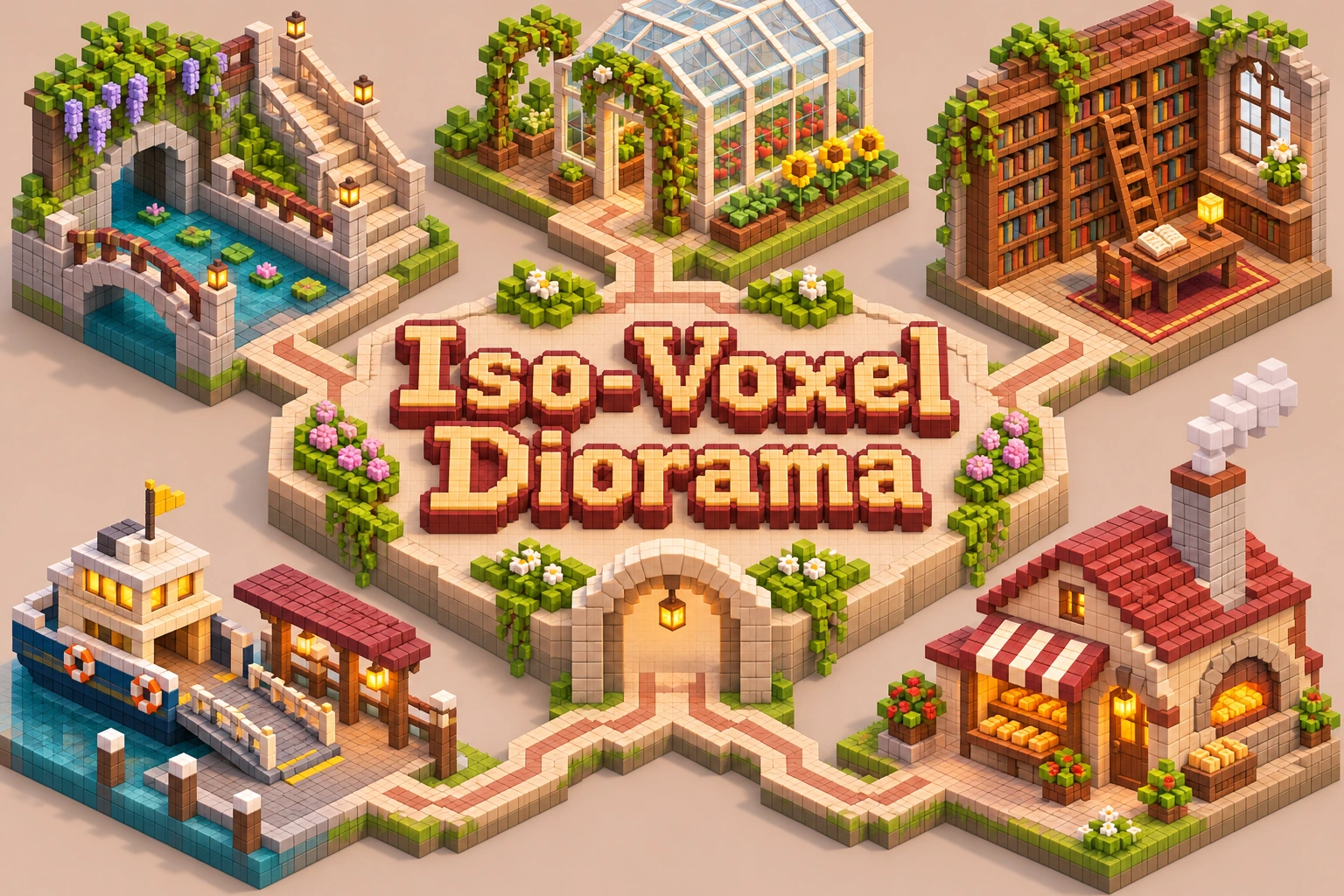
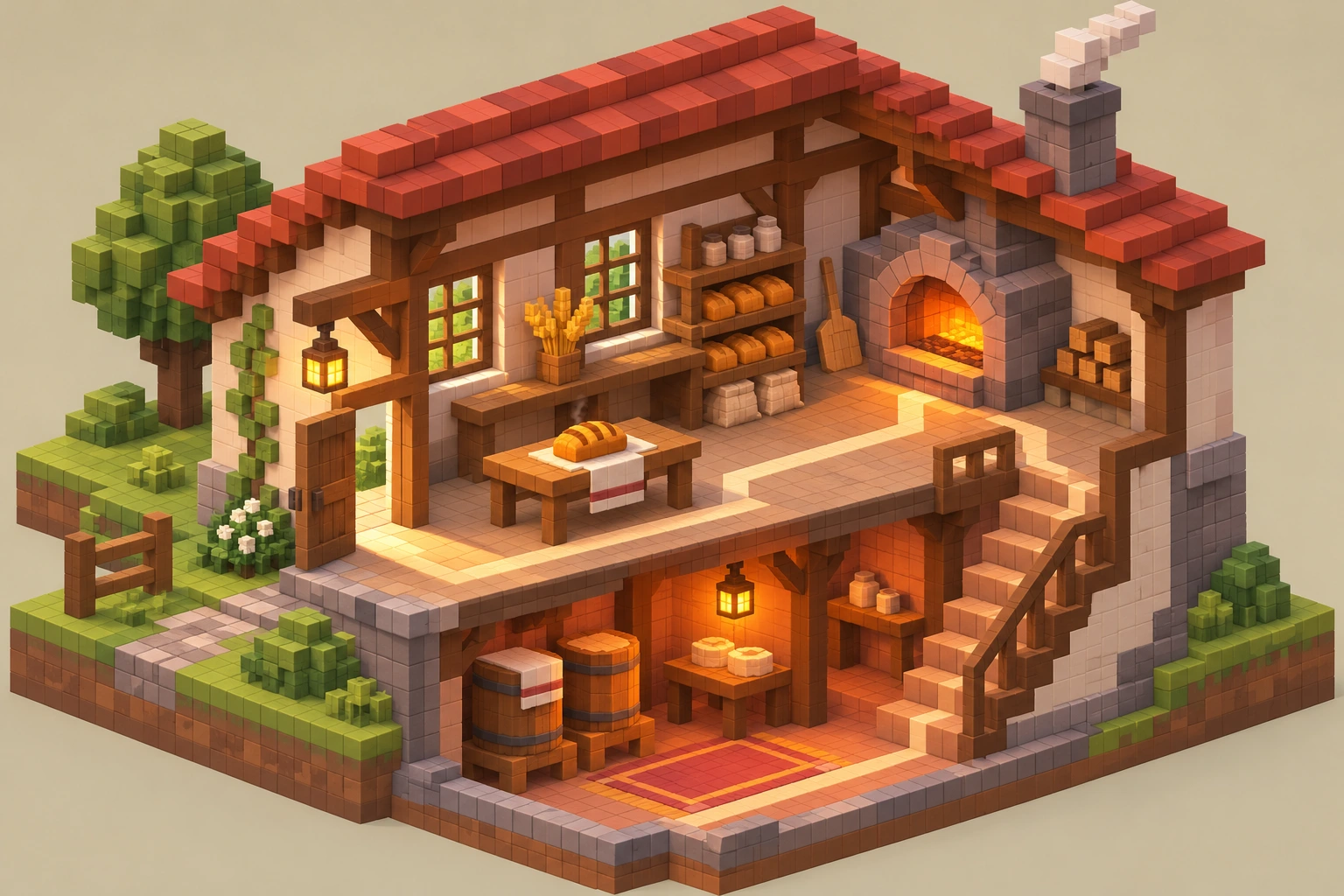
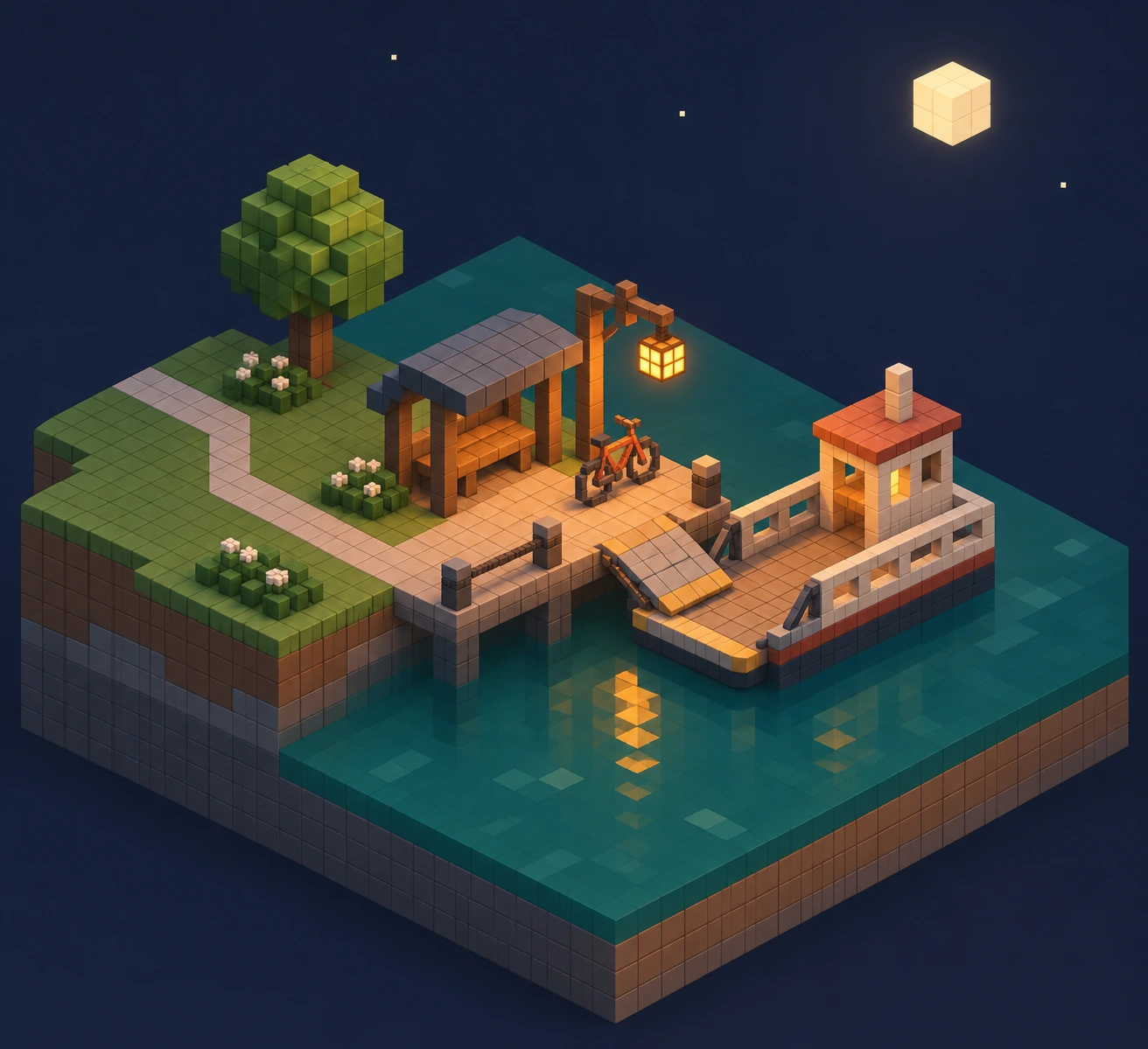
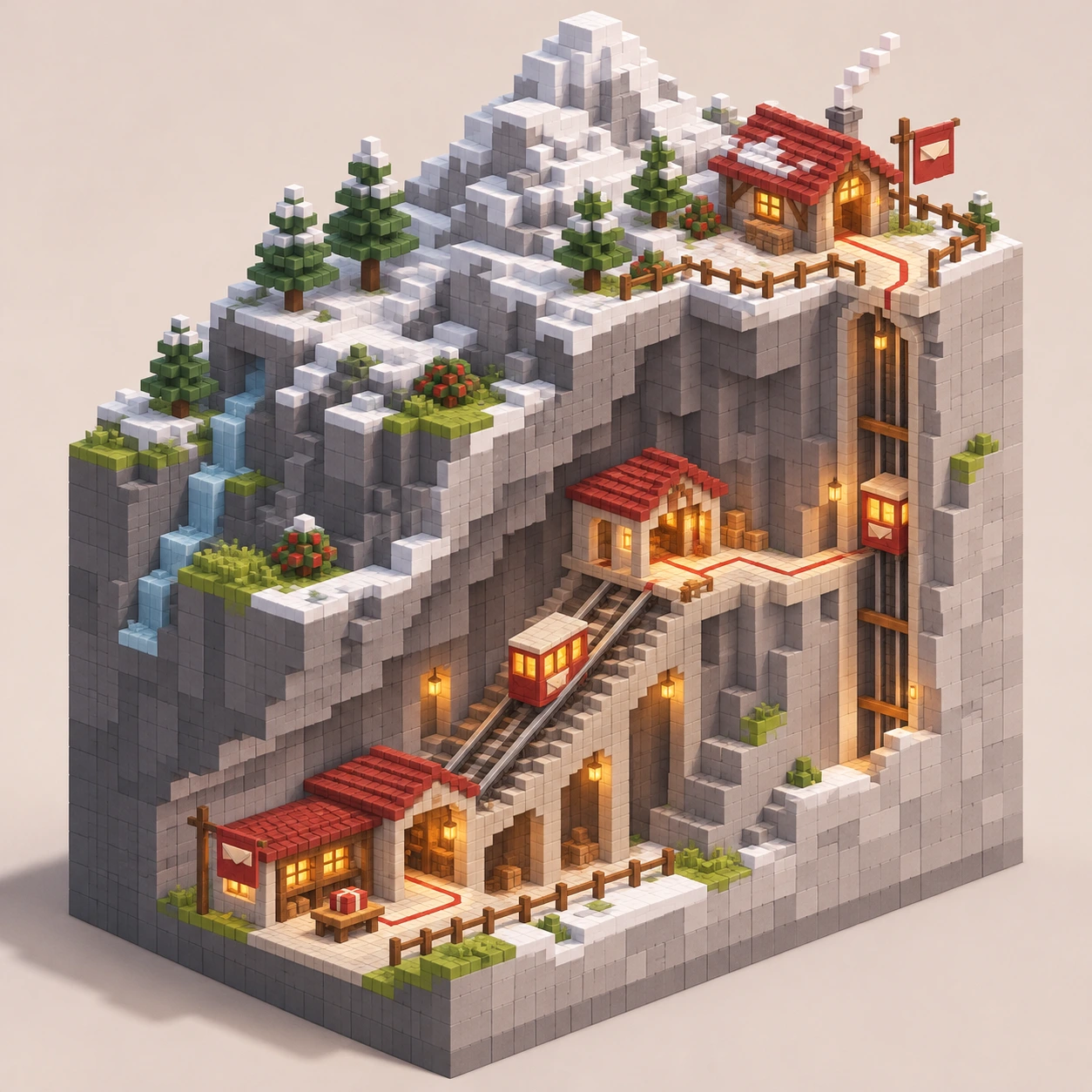
Seven AI-generated miniature worlds. Start at a doorway, landing or gangway and see how far the visible route takes you.
Select an image for a closer look. Use the thumbnails, arrow keys or a swipe to compare examples. Zoom in to inspect details, or share the image that inspires you.
Creative toolbox · take this style further
Choose an input and a destination. Search sends your words to the chosen site; Copy & open puts them on your clipboard to paste there.
Create with AI
Turn your chosen input into an image prompt or a new creative direction.
ChatGPT
Copy your input and paste it into a ChatGPT conversation or image request.
Copy & open ChatGPT (new tab)Claude · Anthropic
Develop an image prompt or explore the style in a new Claude conversation.
Copy & open Claude · Anthropic (new tab)Midjourney
Paste your input into the Imagine bar on the Create page.
Copy & open Midjourney (new tab)Adobe Firefly
Copy your input, open Firefly, and paste it into the prompt field.
Copy & open Adobe Firefly (new tab)Leonardo.Ai
Copy your input, open Leonardo, and paste it into the generation field.
Copy & open Leonardo.Ai (new tab)Image search
Find visual references. Short, concrete keywords usually work best.
Lexica
Search AI images and prompts using your selected input.
Search with this input Lexica (new tab)Pexels
Search the photo and video library. Short keywords often work best.
Search with this input Pexels (new tab)Pixabay
Search photos, illustrations and other images.
Search with this input Pixabay (new tab)Unsplash
Search photographs using the style name or your own keywords.
Search with this input Unsplash (new tab)Wikimedia Commons
Search photographs, artworks and historical images. Check each file for its source and reuse terms.
Search with this input Wikimedia Commons (new tab)Art & research
Explore artists, collections and the ideas behind a style.
Wikipedia
Search for background reading. A style may not have its own article.
Search with this input Wikipedia (new tab)WikiArt
Copy your input into WikiArt’s search to explore artists and artworks.
Copy & open WikiArt (new tab)Europeana
Paste your keywords into the search to explore European museum, library and archive collections.
Copy & open Europeana (new tab)Inspiration
Discover portfolios and visual ideas from creative communities.
Instagram hashtags
Search a hashtag made from your input: spaces and punctuation are removed. Instagram may require sign-in.
Search with this input Instagram hashtags (new tab)ArtStation
Paste your input into artwork search for concept art, environments, characters and visual development.
Copy & open ArtStation (new tab)Behance
Paste your input into project search for illustration, design and visual storytelling.
Copy & open Behance (new tab)A closer look
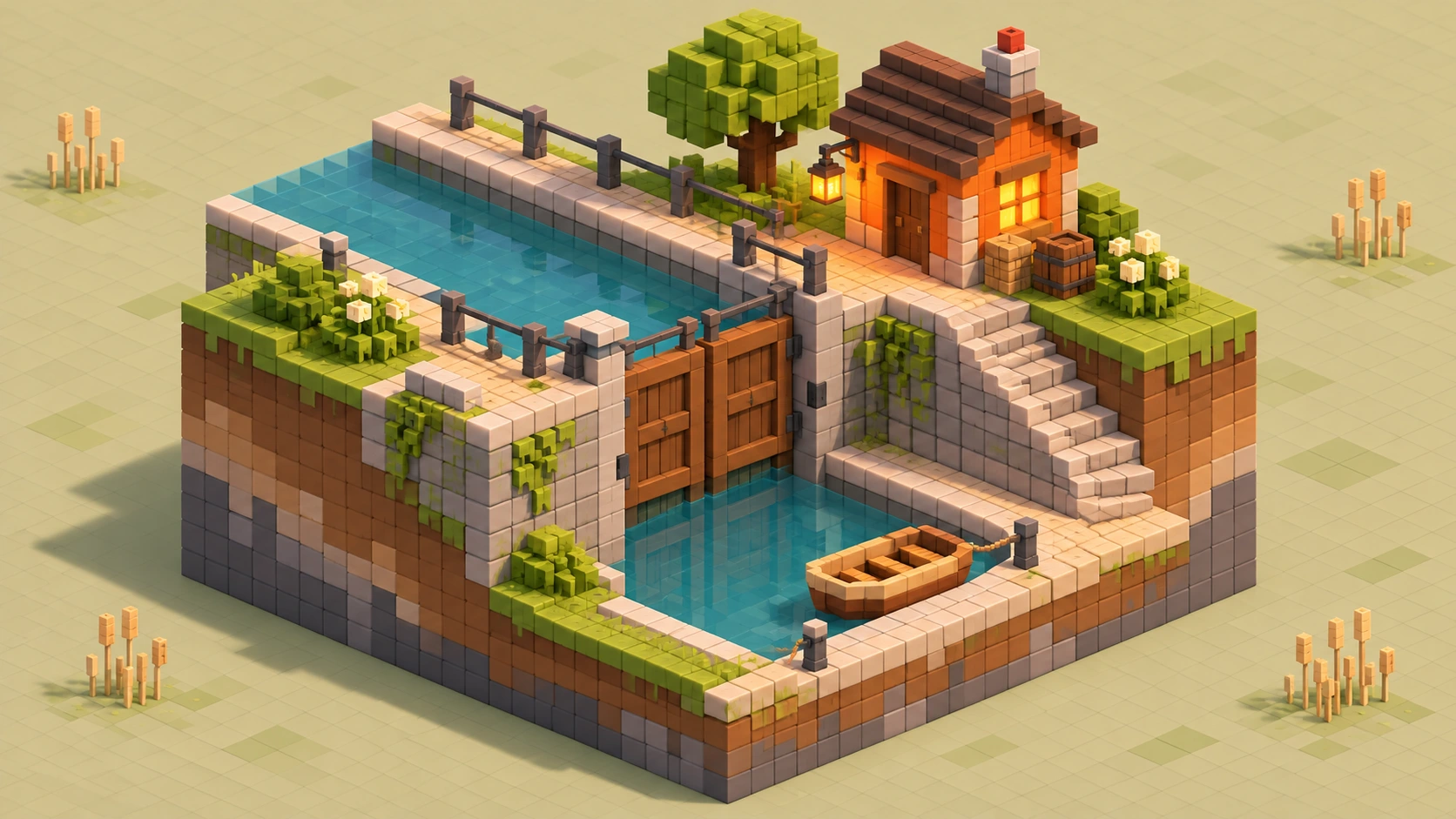
Repeated cubic units describe walls, water and cliff strata. A consistent elevated view keeps three faces legible, while one continuous route turns a display model into a place.
Two separate choices make the little world
A voxel is a volume element on a three-dimensional grid. Imagine filling a space with equal little boxes and deciding what occupies each one. The Blender manual uses voxel size to describe the resolution of a volumetric remesh. A grid is a way to organise the subject. A camera projection is a separate decision about how to show it.
An orthographic camera keeps parallel lines parallel and objects the same apparent size with distance. In a conventional isometric orientation, the three principal directions have equal foreshortening. Two plan axes often appear about thirty degrees from the horizontal. Our generated illustrations approximate that look. They are pictures, and the archive contains raster images rather than editable voxel models.
Follow the route with one finger
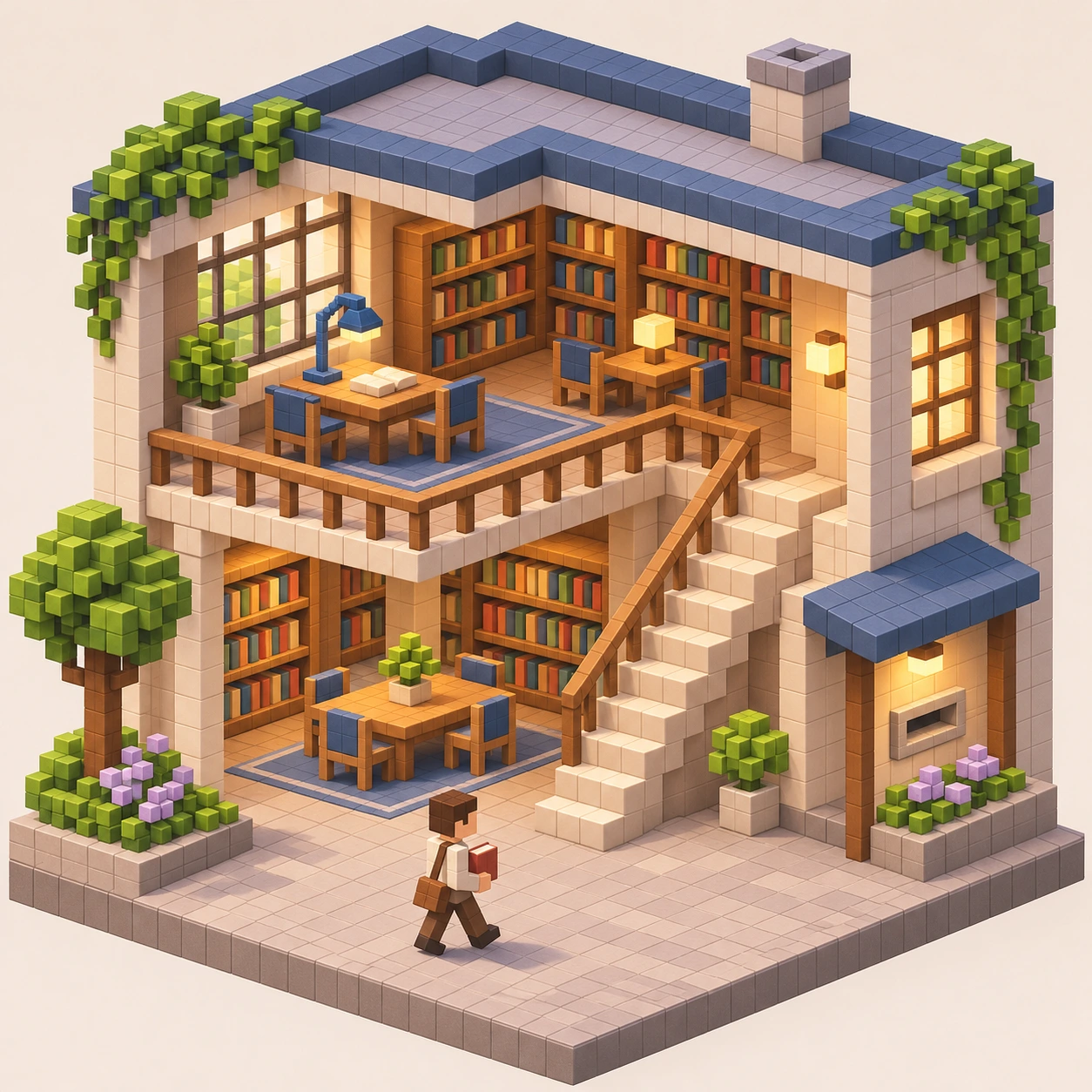
Begin at the lower edge of the library, find the stairs and choose a reading table upstairs. The shelving reveals the wall thickness. The open side tells you why both floors can be seen. Then visit the canal. Boats, steps and gates all refer to the same change in water level, so the little building at the top has a reason to be there.
A practical test for your own image is to trace one journey without lifting a finger. A parcel should be able to leave the lower mountain station and arrive somewhere. A ferry passenger should be able to reach the gangway. If a landing ends in a blank wall, the finest set of tiny roof tiles will only make the predicament more picturesque.
Spend the grid where it can be read
Make the smallest important object two or three units across in your thumbnail. A dark line beside a warm one can stand for a rail. A run of identical steps explains a slope. On the ferry, broad dark water quiets the foreground and one square lamp spends the brightest value on the handover between land and boat.
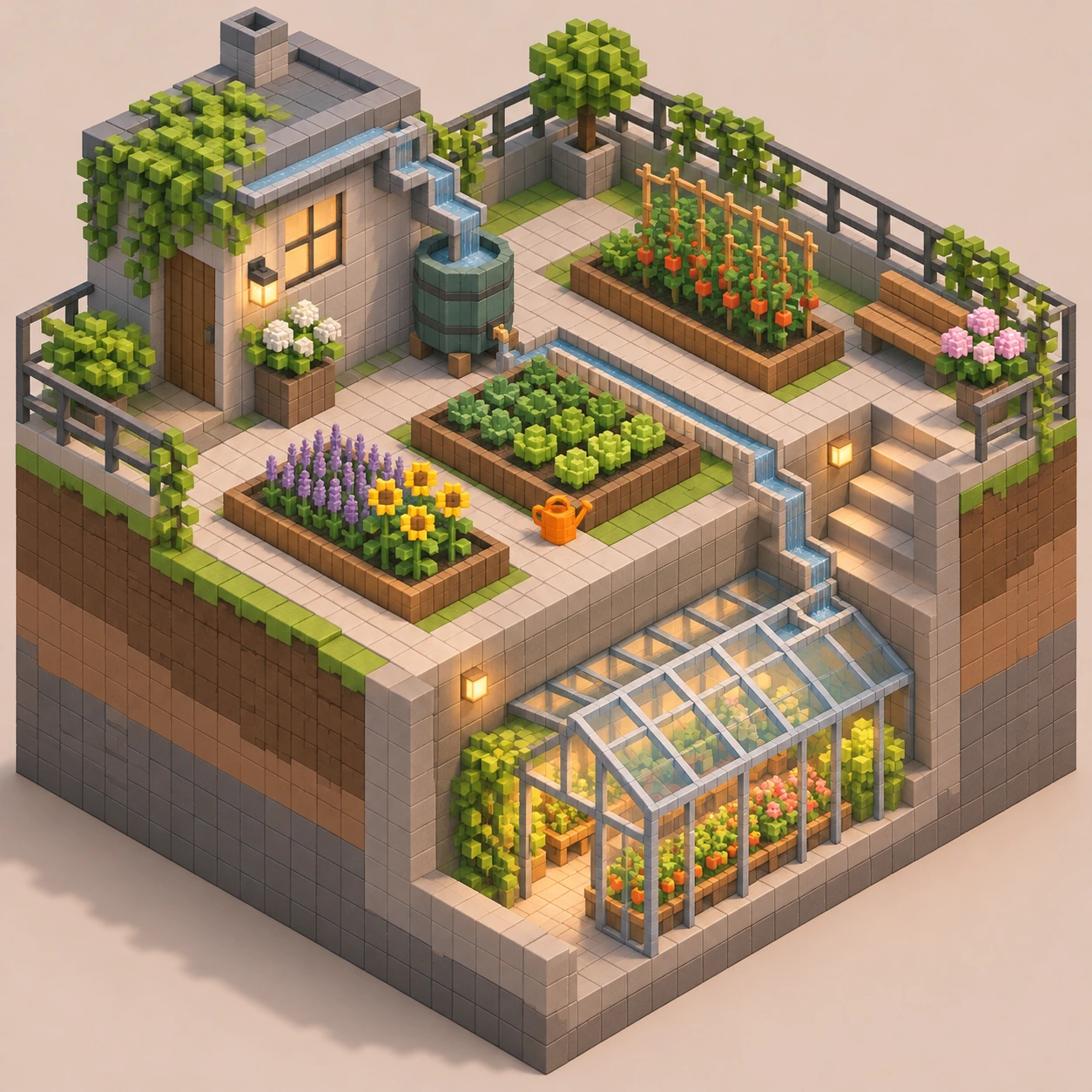
The greenhouse is a harder test. Transparent roof, pale stair and planted beds nearly compete for the same little square of ground. Give each system its own height and one distinctive colour. The moment you can sketch the water route on the back of an envelope, you can afford another row of flowers.
Three readings from Penny’s desk
Positive review. The library stair makes two storeys readable even with the book spines reduced to tiny coloured marks.
Negative review. At the garden’s smallest scale a water channel and a walkway can become the same pale line.
Neutral review. A consistent view supports route-reading. It does not establish a dimensionally accurate model.
A small poetic detour
Original words from the AOI studio.
Poetry
The boat is three cubes wide.
The lamp is one cube high.
A square of yellow on the dock
keeps half a little town awake.
The prompt workshop
Original creative exercises. These prompts create new illustrations, not documentary evidence.
Give the lock a level change
A cubic canal lock diorama viewed from one elevated orthographic angle. A narrow boat waits below a pair of square gates. Expose one cut face of earth and give the lockkeeper continuous steps between the two levels.
Test a stair
A two-floor voxel library, one open wall, equal-sized blocks, a reader outside and a continuous stair with a landing. Make every doorway fit the same small visitor. Use warm interior light against a pale plinth.
Carry a parcel uphill
Build a mountain post route on a cutaway cubic block. Show a lower station, a short ascending railway and the receiving platform beside a summit hut. Use one red parcel colour to connect departure and arrival.
A smile from the studio
Jokes
The tiny librarian approved every book. The stairs were the real volume problem.