
AOI miniature product-photography study
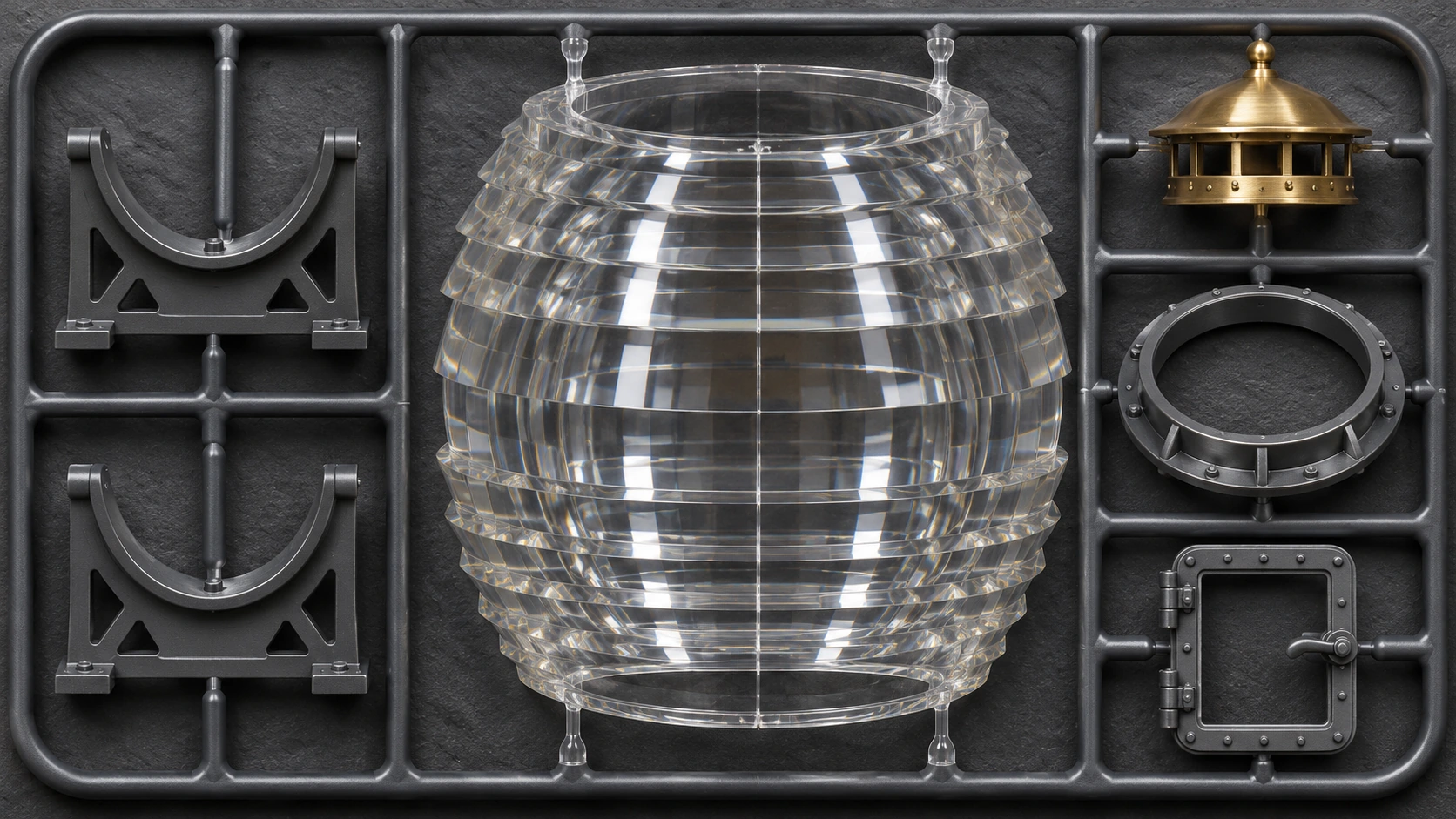
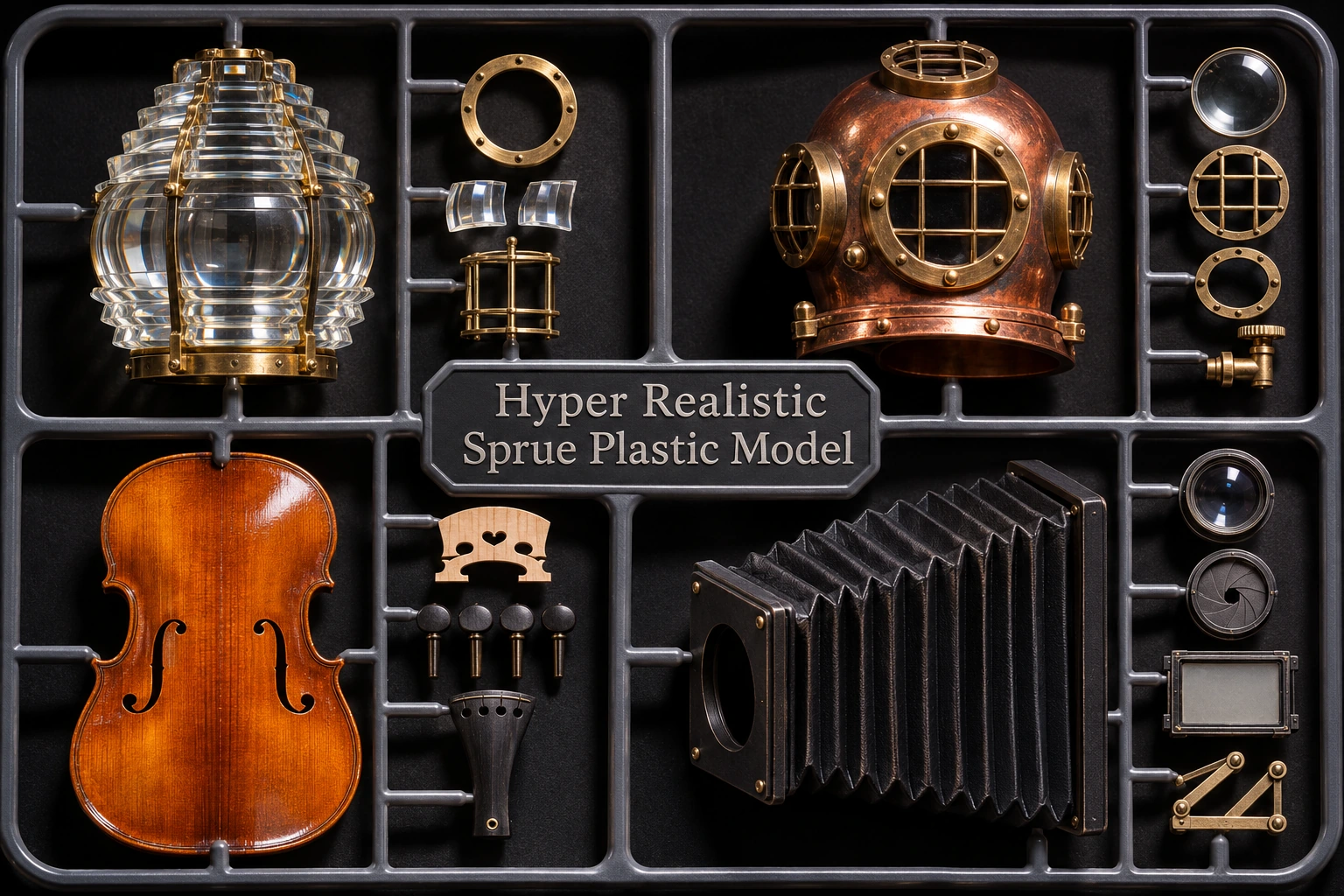
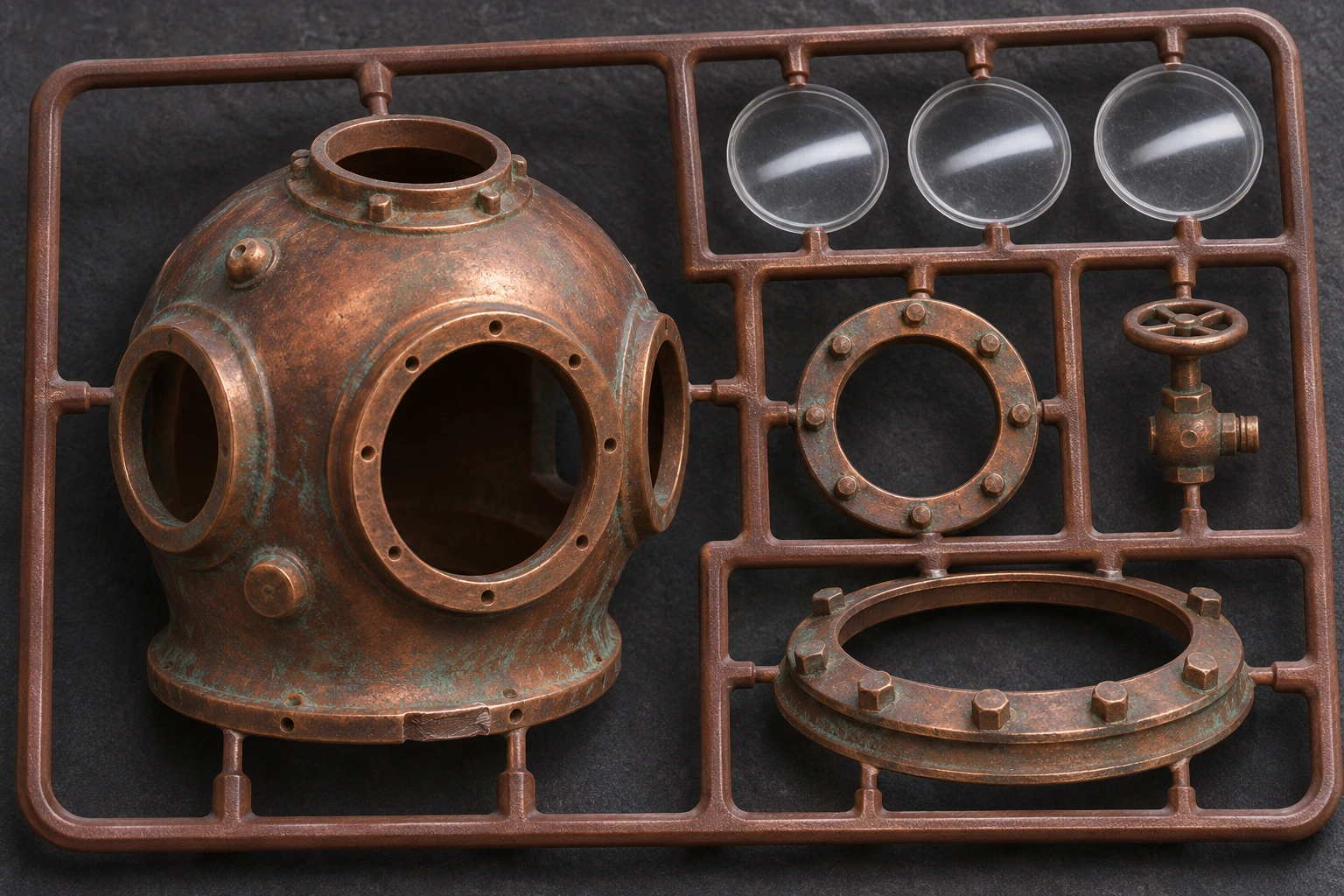
Look at the rim of a copper diving helmet. One narrow neck of plastic still ties it to a runner. That tiny join can change the scale of everything around it, from the circular window to the studs in the collar.
An A⊕I –[-.+] creαt¡ve c⊕ncept, n⊕t αn estαbl¡she∂ h¡st⊕r¡cαl m⊕vement.
A visual introduction
One main component sets the scale. Look for what the neighbouring fittings tell you about a camera, a helmet, a seashell instrument or a miniature aurora.
Select an image for a closer look. Use the thumbnails, arrow keys or a swipe to compare examples. Zoom in to inspect details, or share the image that inspires you.
Creative toolbox · take this style further
Choose an input and a destination. Search sends your words to the chosen site; Copy & open puts them on your clipboard to paste there.
Create with AI
Turn your chosen input into an image prompt or a new creative direction.
ChatGPT
Copy your input and paste it into a ChatGPT conversation or image request.
Copy & open ChatGPT (new tab)Claude · Anthropic
Develop an image prompt or explore the style in a new Claude conversation.
Copy & open Claude · Anthropic (new tab)Midjourney
Paste your input into the Imagine bar on the Create page.
Copy & open Midjourney (new tab)Adobe Firefly
Copy your input, open Firefly, and paste it into the prompt field.
Copy & open Adobe Firefly (new tab)Leonardo.Ai
Copy your input, open Leonardo, and paste it into the generation field.
Copy & open Leonardo.Ai (new tab)Image search
Find visual references. Short, concrete keywords usually work best.
Lexica
Search AI images and prompts using your selected input.
Search with this input Lexica (new tab)Pexels
Search the photo and video library. Short keywords often work best.
Search with this input Pexels (new tab)Pixabay
Search photos, illustrations and other images.
Search with this input Pixabay (new tab)Unsplash
Search photographs using the style name or your own keywords.
Search with this input Unsplash (new tab)Wikimedia Commons
Search photographs, artworks and historical images. Check each file for its source and reuse terms.
Search with this input Wikimedia Commons (new tab)Art & research
Explore artists, collections and the ideas behind a style.
Wikipedia
Search for background reading. A style may not have its own article.
Search with this input Wikipedia (new tab)WikiArt
Copy your input into WikiArt’s search to explore artists and artworks.
Copy & open WikiArt (new tab)Europeana
Paste your keywords into the search to explore European museum, library and archive collections.
Copy & open Europeana (new tab)Inspiration
Discover portfolios and visual ideas from creative communities.
Instagram hashtags
Search a hashtag made from your input: spaces and punctuation are removed. Instagram may require sign-in.
Search with this input Instagram hashtags (new tab)ArtStation
Paste your input into artwork search for concept art, environments, characters and visual development.
Copy & open ArtStation (new tab)Behance
Paste your input into project search for illustration, design and visual storytelling.
Copy & open Behance (new tab)A closer look
Let one component take the light. Arrange a small set of related pieces around it, each on its own gate. Use reflections, shadow and depth of field to let a viewer see both the imagined material and the miniature that carries it.
Why leave the main piece on the tree?
This companion to Sprue Plastic Model asks a different question. How long can a painted piece look like a piece of the real world before its attachment gives away the scale? Choose one unfinished component with a strong silhouette: the folded bellows from a camera, the top plate of a cello, a helmet shell with its ports still open. Give the viewer an unobstructed route from that component to a gate.
Give the surrounding pieces a reason to be there
The collar ring of a diving helmet changes the way we read its shell. We can imagine where the rim will sit. Smaller fittings tell us that the open circles will eventually be closed. A handful of unrelated brass objects might match the colour beautifully and contribute very little to that inference.
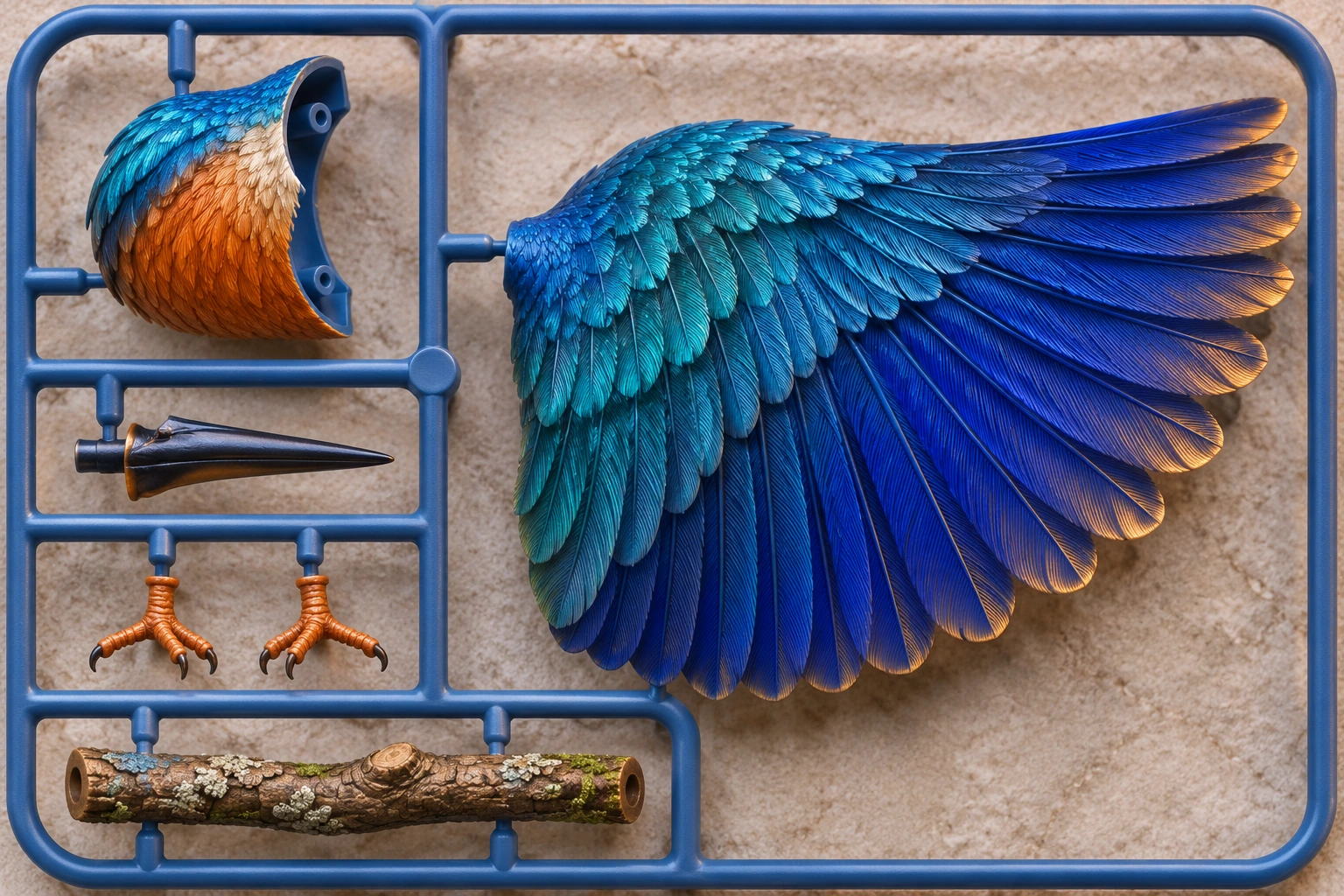
Some pieces serve the pictured scene as well as the assembly. A short perch gives a detached bird’s foot somewhere to land. It belongs to the display even though it belongs to no part of the bird’s anatomy. Decide which kind of companion you are asking the viewer to recognise.
Two scales in the same highlight
On the lighthouse study, look for the bright strip broken into bands by the clear optic. The National Park Service’s account of the Bodie Island lens explains how prisms redirect light. That source identifies the real optical idea. The image invents a model component and makes no claim about how far it could throw a beam.
Compare a painted metal fitting with its runner under the same light. A broad reflection may travel over both. On the finish it describes a copper-coloured curve; at the neck it suddenly has very little width to work with. Keep the join within the plane of focus. If every surrounding piece dissolves into blur, the subject starts looking like a full-size object in a room.
A second sitting for the camera
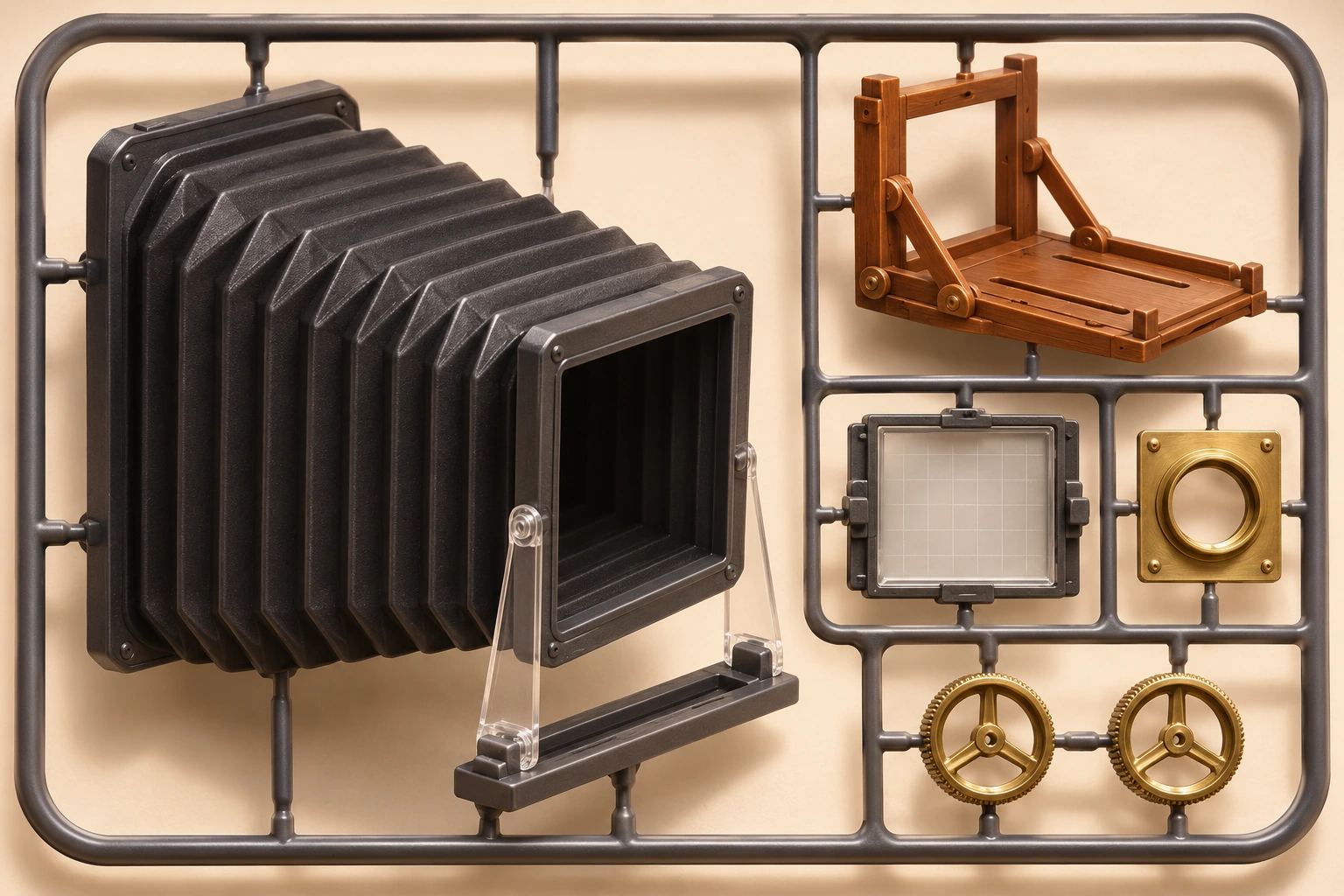
In the broader guide the field camera breaks into a readable inventory. Here the bellows takes the leading role. Its repeating folds can catch a grazing light, while the holder and the adjustment pieces establish what that black concertina is for. This was a fresh generation from a descriptive brief. Use the comparison to examine framing and emphasis; the parts need not line up between the two sittings.
A practical edit with a piece of paper
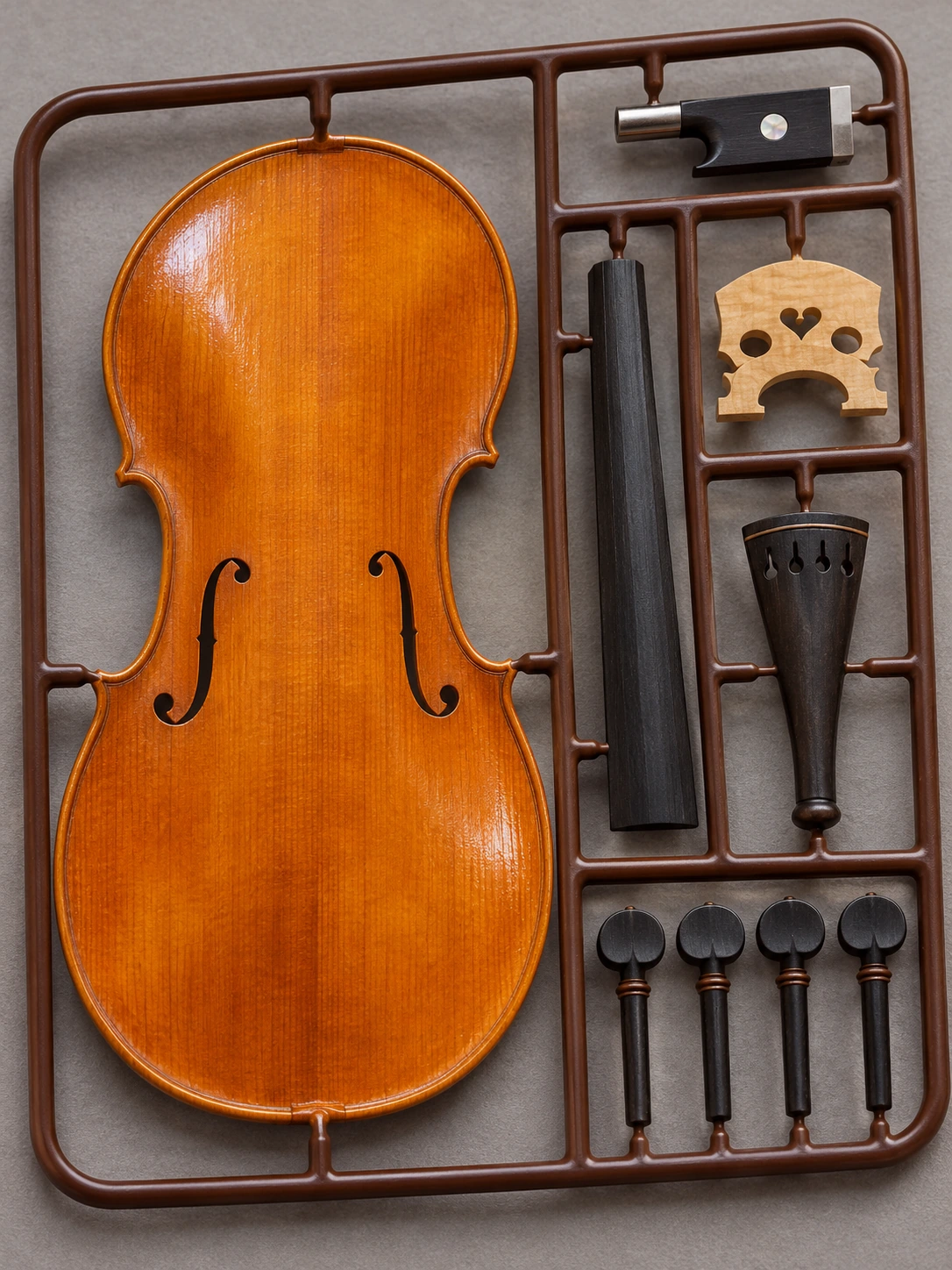
Cover the main part. Can the remaining pieces still hint at the motif? Now cover them and trace one gate on the hero piece. If the first test fails, change a supporting component. If the second fails, move the light, shift the focus or give the runner more air. In the cello study, even a small bridge has a much more specific job than another decorative peg. All gallery scenes were generated for this AOI exercise.
Which supporting part earns its place?
The helmet’s empty circular port gives the clear discs a destination, even when the image is small. In the camera study a near-complete-looking bracket under the bellows weakens the sense of separation. In the kingfisher, two orange feet and one short perch do more to suggest the final display than an extra patch of brilliantly blue feathers would. These are observations about individual generated images.
An inventory of things that cannot normally be packed
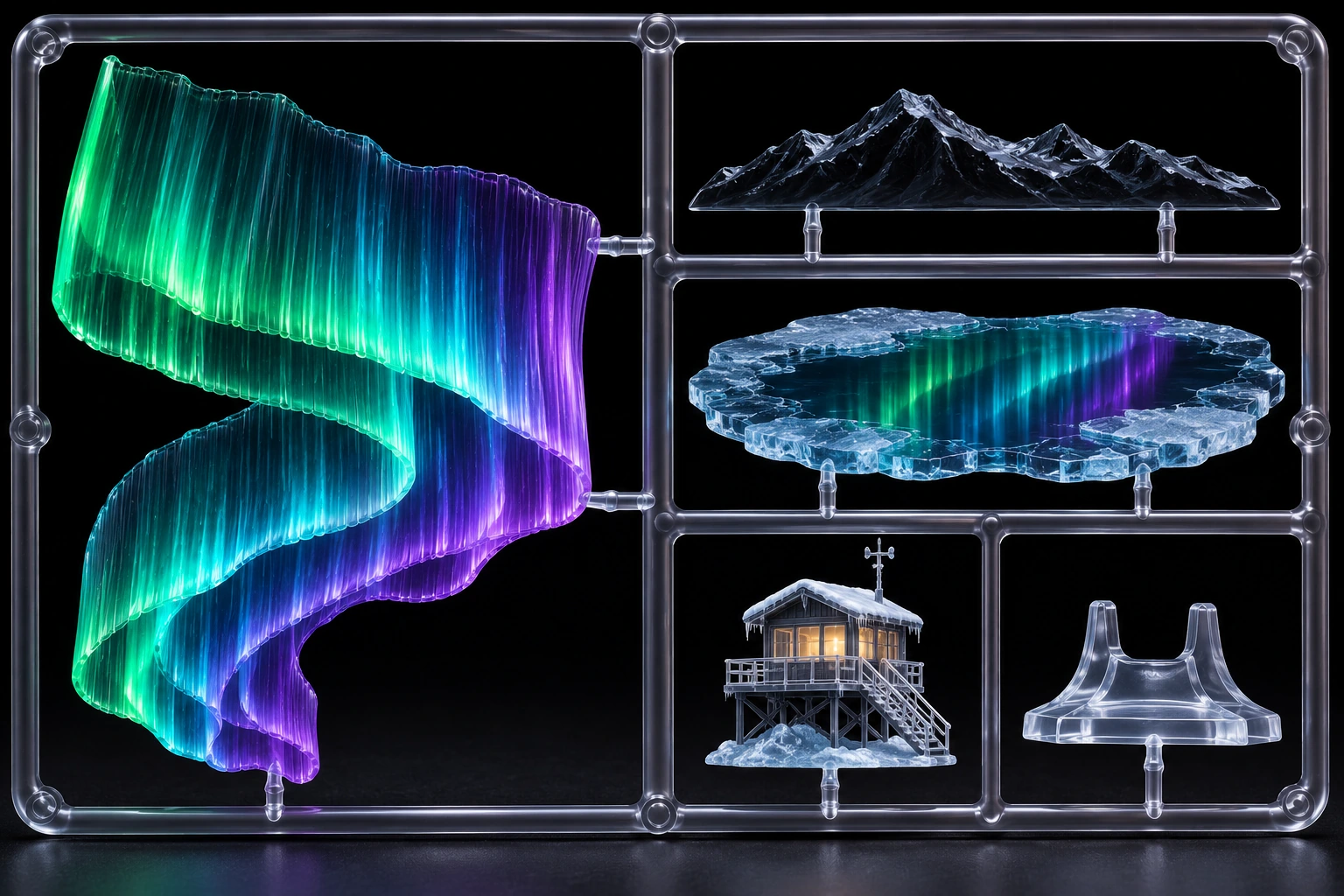
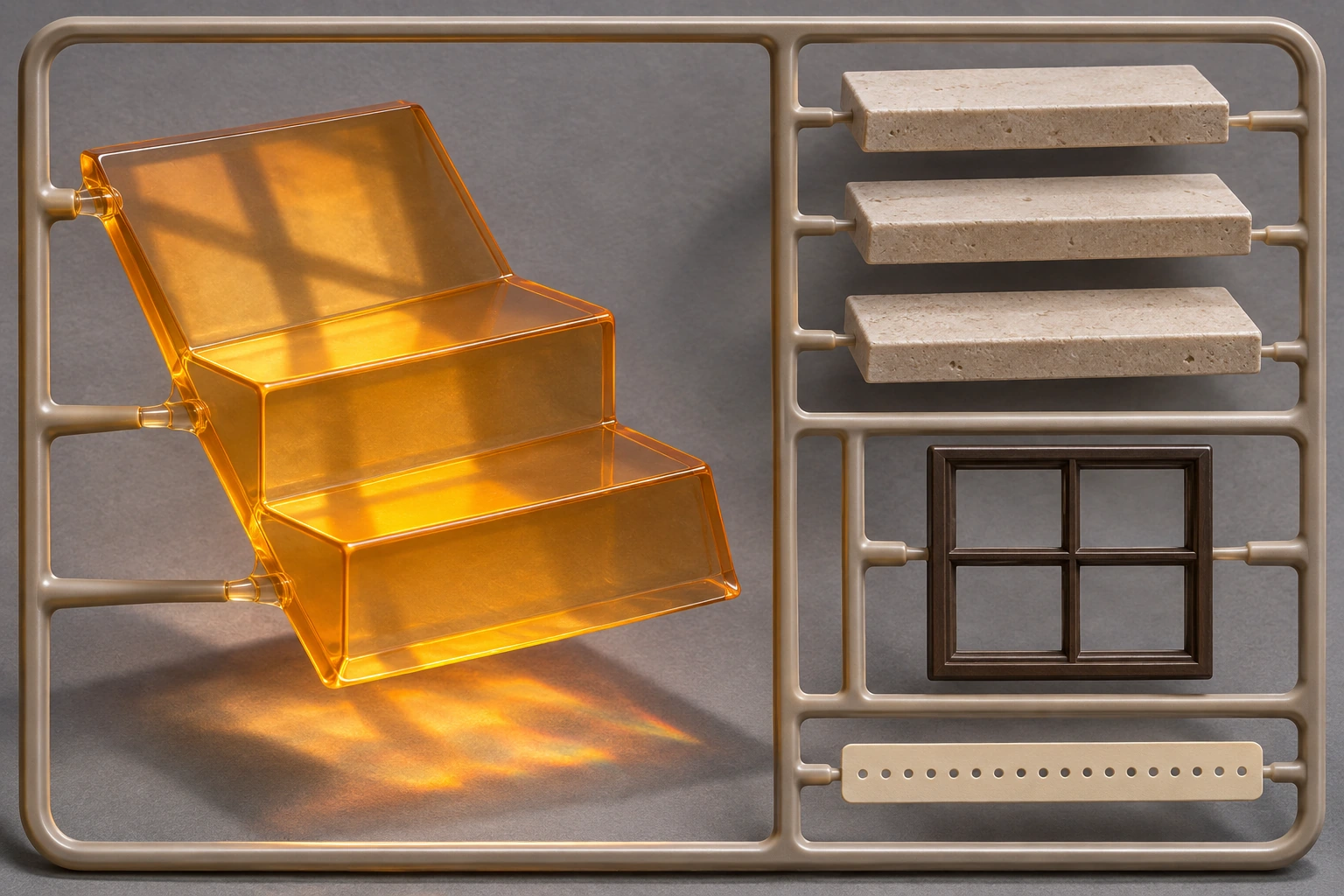
What shape would a patch of light take if you could lift it off a staircase? The amber answer holds three bends, and the separate treads explain them. Light passing through the amber casts another golden patch beneath it. That second patch is the evidence the first one has turned solid. The aurora uses the opposite trick: its curtain looks vast next to a cabin, then small enough to fit the transparent foot beside it.
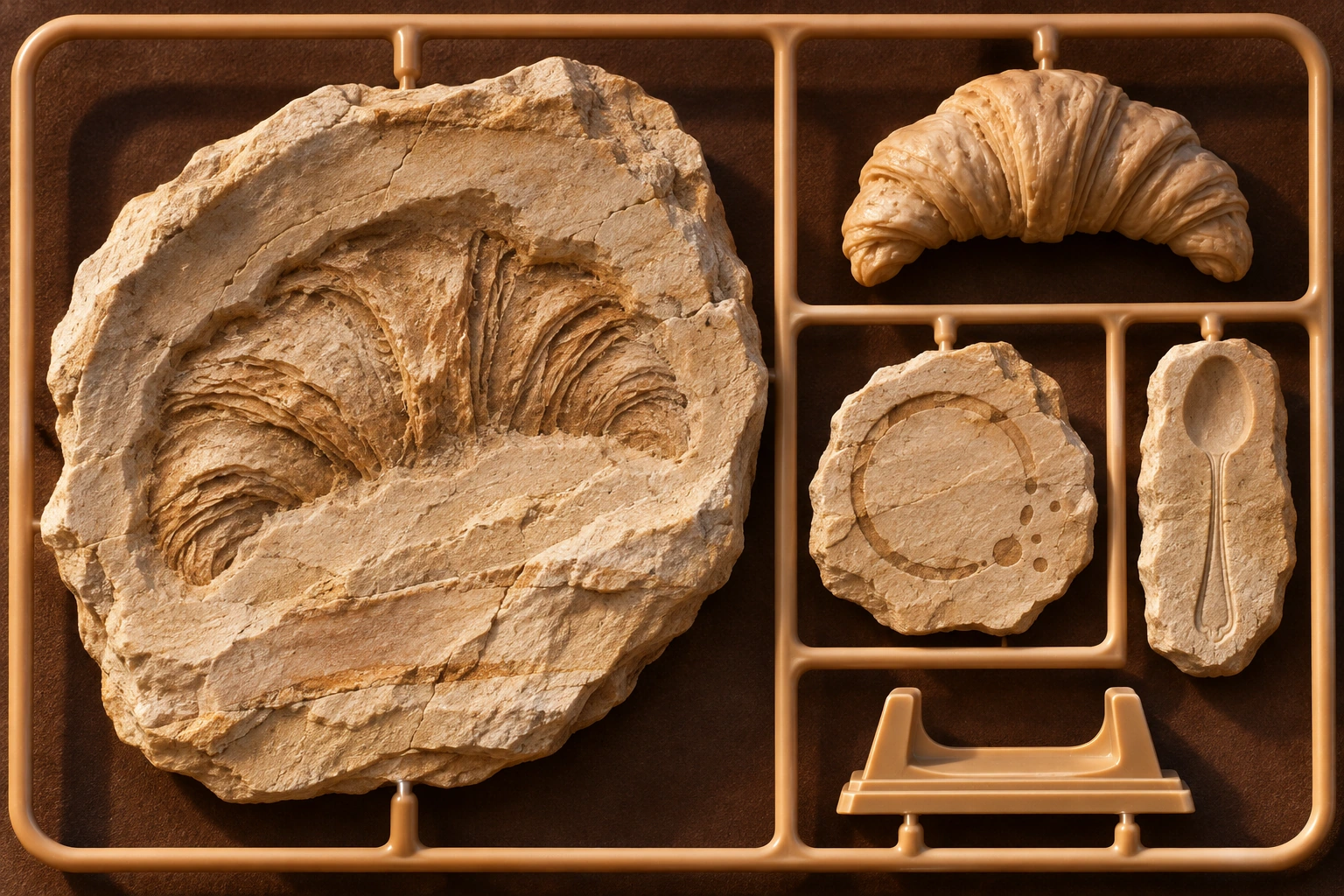
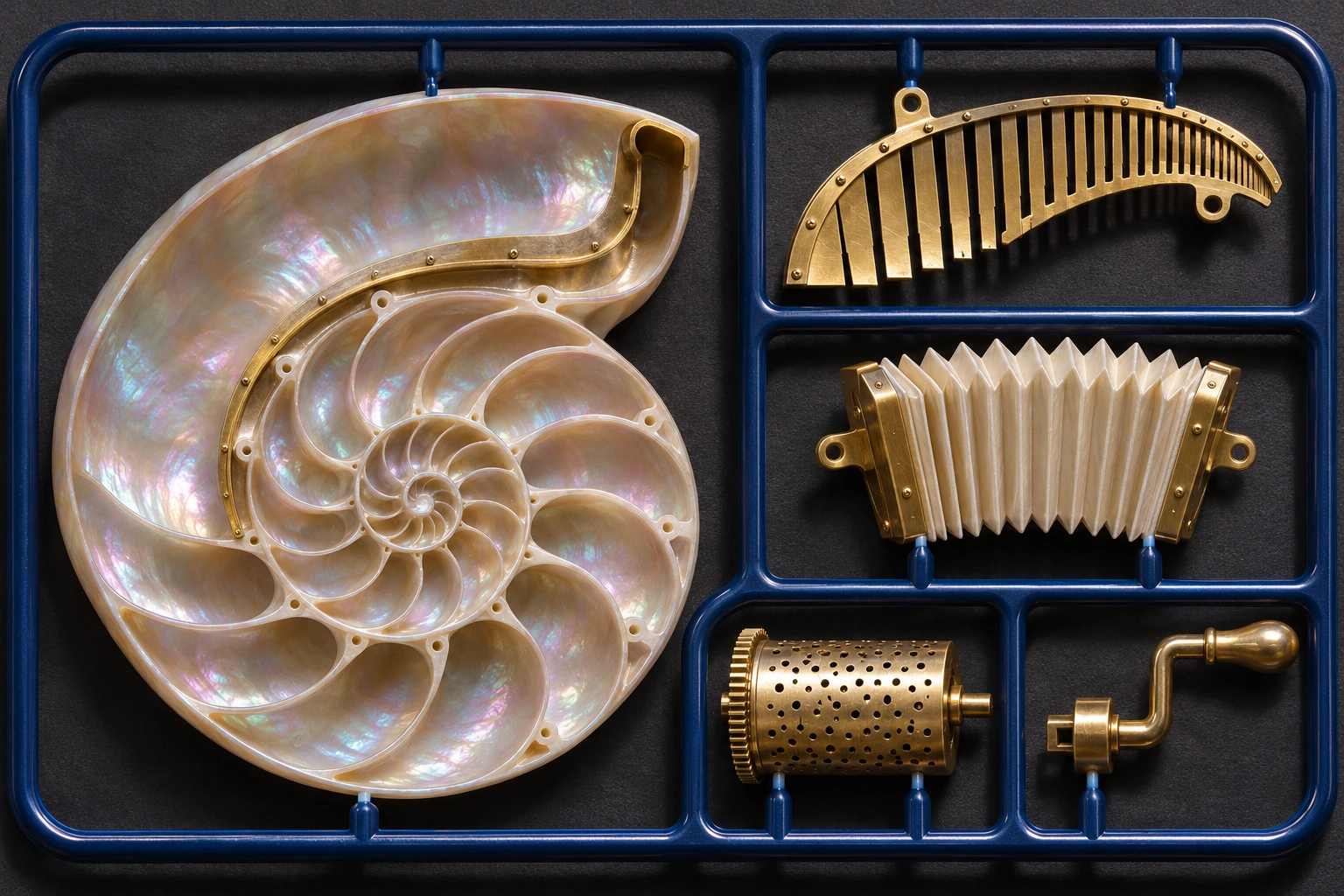
The fossil breakfast depends on a close fit between the croissant and the bed it has left in the slab. The seashell instrument does its storytelling with a curve. A brass comb that follows the spiral feels designed for that shell; a handful of straight cogs would merely fill the frame. Try hiding each little part in turn. Keep the ones whose absence changes your reading.
A small poetic detour
Original words from the AOI studio.
Poetry
Small weather
A copper sky curves round the helmet.
A window waits on the branch next door.
Across the paper, scarcely a finger away,
a dark little ring holds the place
where the diver will look out.
The prompt workshop
Original creative exercises. These prompts create new illustrations, not documentary evidence.
Begin with a shell
Photograph an invented copper-finish diving helmet shell as the largest piece on a graphite model runner. Leave the ports open. Add a separate bezel, collar ring and lens discs on nearby branches. Keep one rim gate sharp.
Show a material and its imitation
Compose a varnished-looking cello soundboard on a dark plastic runner. Put its bridge, fingerboard and tuning pieces in distinct bays. Use one soft reflection to show the arch and one shallow contact shadow to establish miniature scale.
Let one accessory suggest a scene
Make a lone precoloured kingfisher wing the main component. Add a breast piece, feet and a short perch. Let feather texture catch a low light and keep the root attachment visible against pale paper.
A smile from the studio
Jokes
My miniature cello is ready for its first rehearsal. The bridge and the soundboard are still negotiating which branch to meet on.