
Named AI prompt aesthetic · Midlibrary reference
Hillside Letterform is a named Midlibrary prompt aesthetic explored here through delicate monochrome drawing, generous white space and gently impossible storybook encounters.
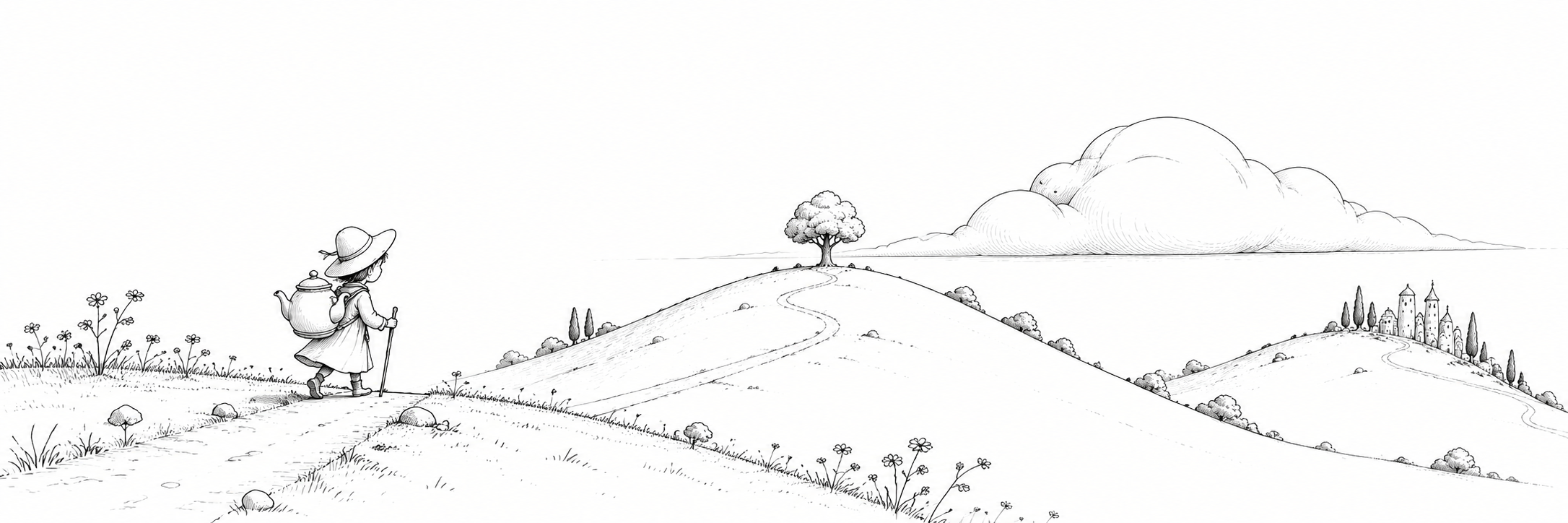
A visual introduction
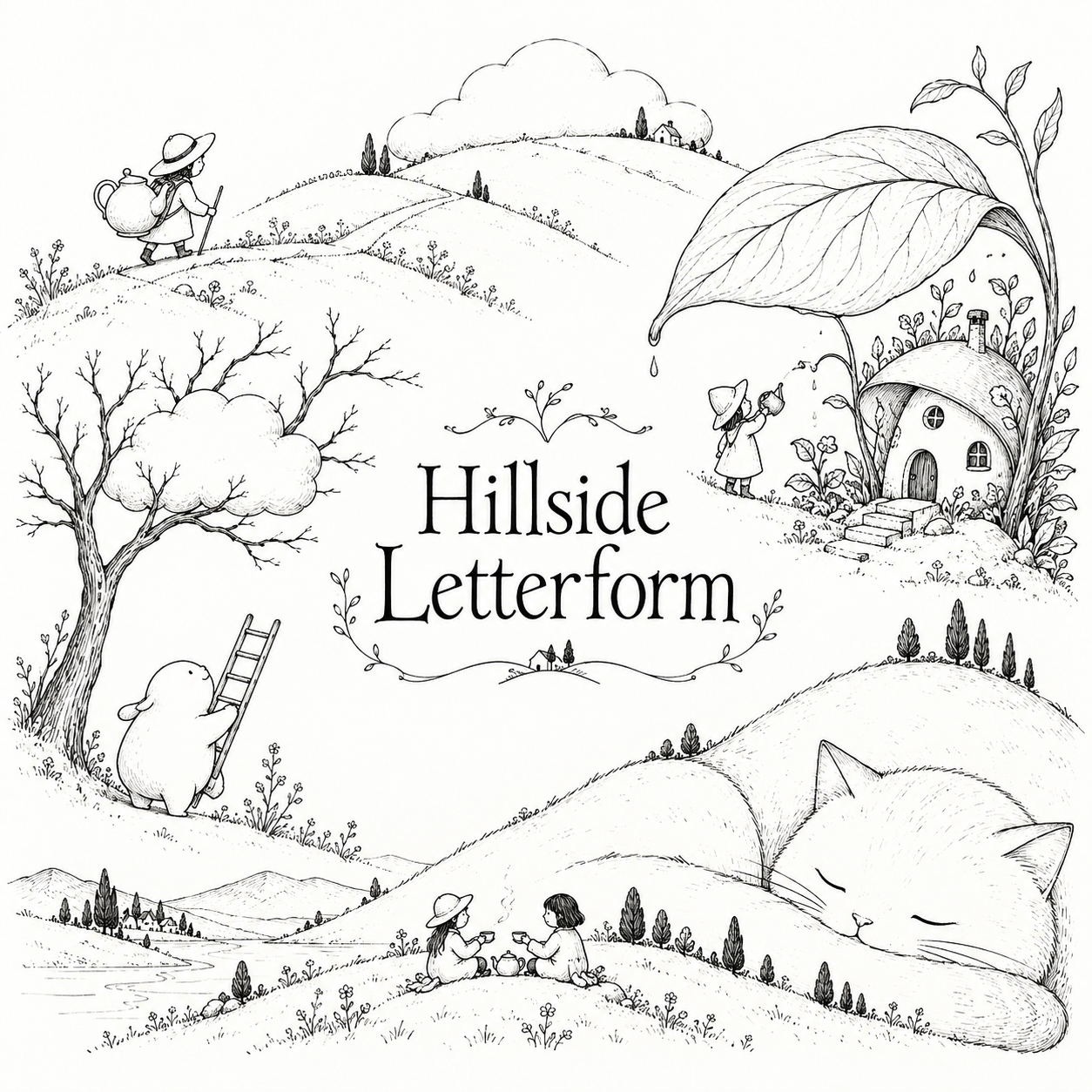
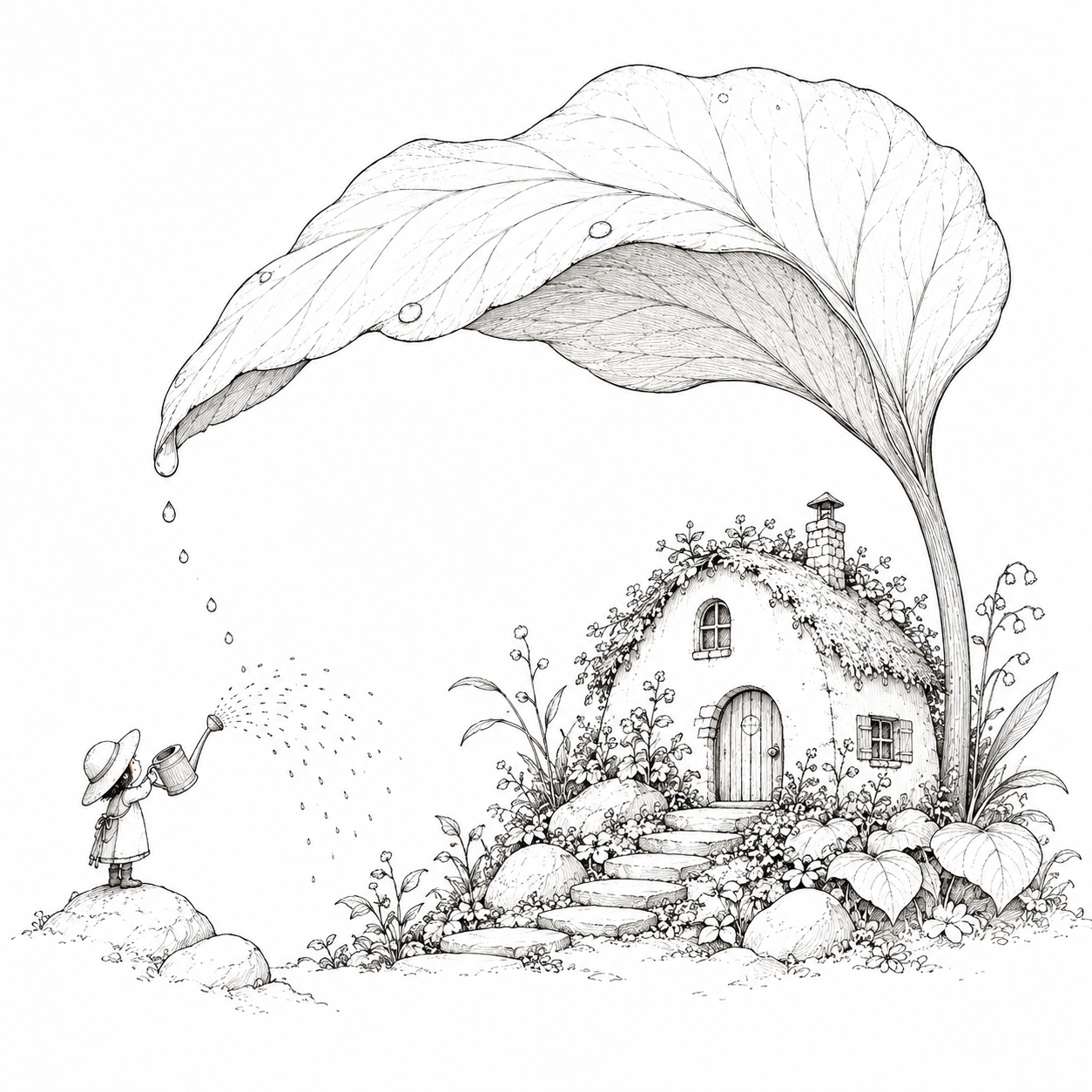
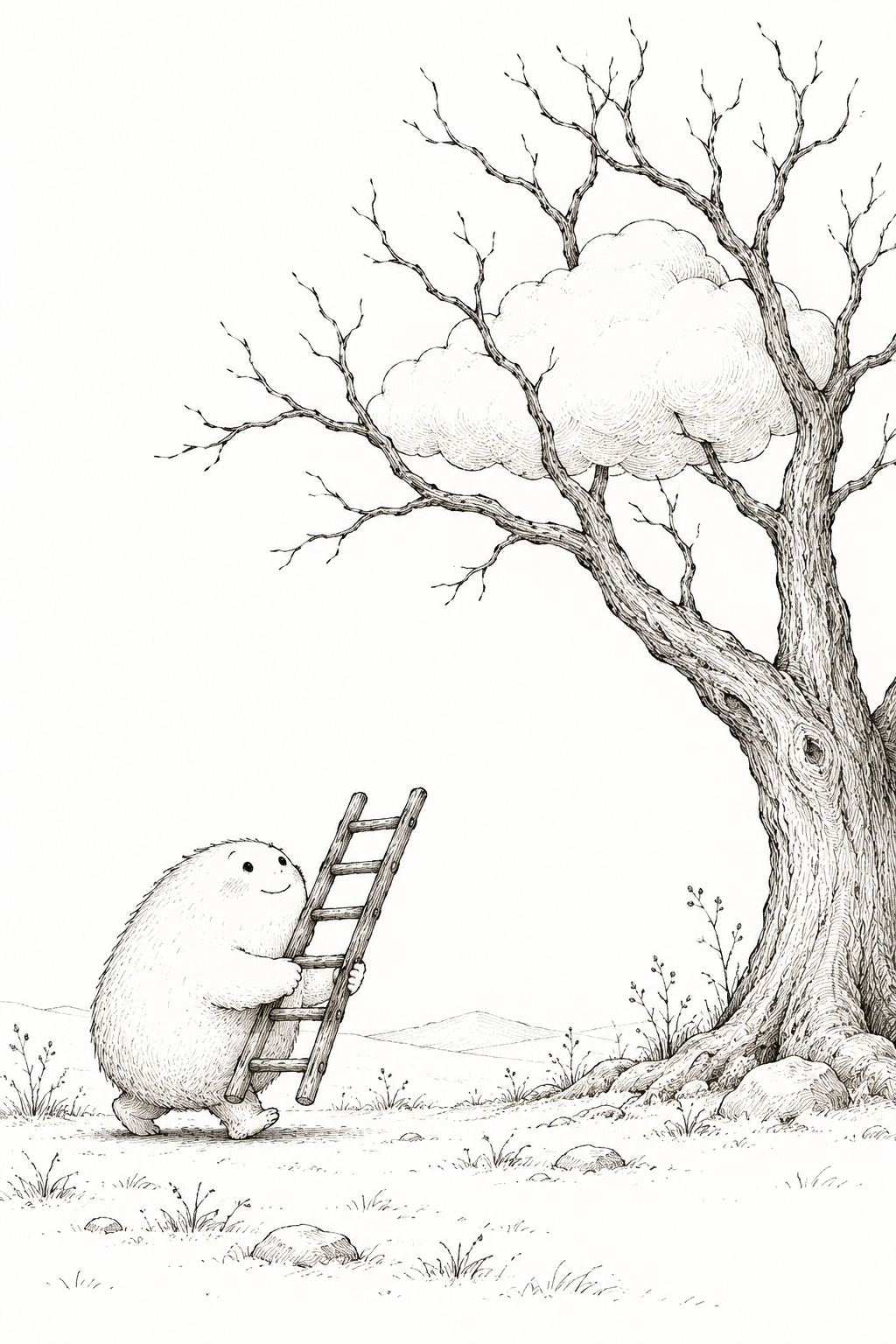
Five original AI-generated AOI interpretations of the referenced aesthetic: a banner, centrally titled collage and three standalone studies.
Select an image for a closer look. Use the thumbnails, arrow keys or a swipe to compare examples. Zoom in to inspect details, or share the image that inspires you.
Creative toolbox · take this style further
Choose an input and a destination. Search sends your words to the chosen site; Copy & open puts them on your clipboard to paste there.
Create with AI
Turn your chosen input into an image prompt or a new creative direction.
ChatGPT
Copy your input and paste it into a ChatGPT conversation or image request.
Copy & open ChatGPT (new tab)Claude · Anthropic
Develop an image prompt or explore the style in a new Claude conversation.
Copy & open Claude · Anthropic (new tab)Midjourney
Paste your input into the Imagine bar on the Create page.
Copy & open Midjourney (new tab)Adobe Firefly
Copy your input, open Firefly, and paste it into the prompt field.
Copy & open Adobe Firefly (new tab)Leonardo.Ai
Copy your input, open Leonardo, and paste it into the generation field.
Copy & open Leonardo.Ai (new tab)Image search
Find visual references. Short, concrete keywords usually work best.
Lexica
Search AI images and prompts using your selected input.
Search with this input Lexica (new tab)Pexels
Search the photo and video library. Short keywords often work best.
Search with this input Pexels (new tab)Pixabay
Search photos, illustrations and other images.
Search with this input Pixabay (new tab)Unsplash
Search photographs using the style name or your own keywords.
Search with this input Unsplash (new tab)Wikimedia Commons
Search photographs, artworks and historical images. Check each file for its source and reuse terms.
Search with this input Wikimedia Commons (new tab)Art & research
Explore artists, collections and the ideas behind a style.
Wikipedia
Search for background reading. A style may not have its own article.
Search with this input Wikipedia (new tab)WikiArt
Copy your input into WikiArt’s search to explore artists and artworks.
Copy & open WikiArt (new tab)Europeana
Paste your keywords into the search to explore European museum, library and archive collections.
Copy & open Europeana (new tab)Inspiration
Discover portfolios and visual ideas from creative communities.
Instagram hashtags
Search a hashtag made from your input: spaces and punctuation are removed. Instagram may require sign-in.
Search with this input Instagram hashtags (new tab)ArtStation
Paste your input into artwork search for concept art, environments, characters and visual development.
Copy & open ArtStation (new tab)Behance
Paste your input into project search for illustration, design and visual storytelling.
Copy & open Behance (new tab)A closer look
Thin black contours, spare hatching and rounded forms leave the white page active. Small figures meet oversized leaves, clouds and hills that quietly become animals.
A name to look through, not take literally
Midlibrary currently presents Hillside Letterform as a fine-line, monochrome aesthetic. The name is a catalog label, not evidence of a historical lettering movement. Our studies follow the visual reference's light drawing and playful scale, rather than turning every hillside into a word. An image can belong to this interpretation without containing any typography at all.
Let the page do some of the drawing
Use an economical contour to establish the subject, then leave space around it. A tiny house beneath an enormous leaf needs a few convincing junctions: stem to leaf, roof to wall, feet to ground. Sparse hatching can suggest curvature or a little shade. Filling every gap with texture removes the airy quality that makes the impossible situation feel unforced.
White space is not an unfinished background. It separates actions, controls pace and gives the viewer room to imagine what lies beyond the line. In a small illustration, keep the key silhouette stronger than the incidental grass or distant cloud.
Make one change of scale matter
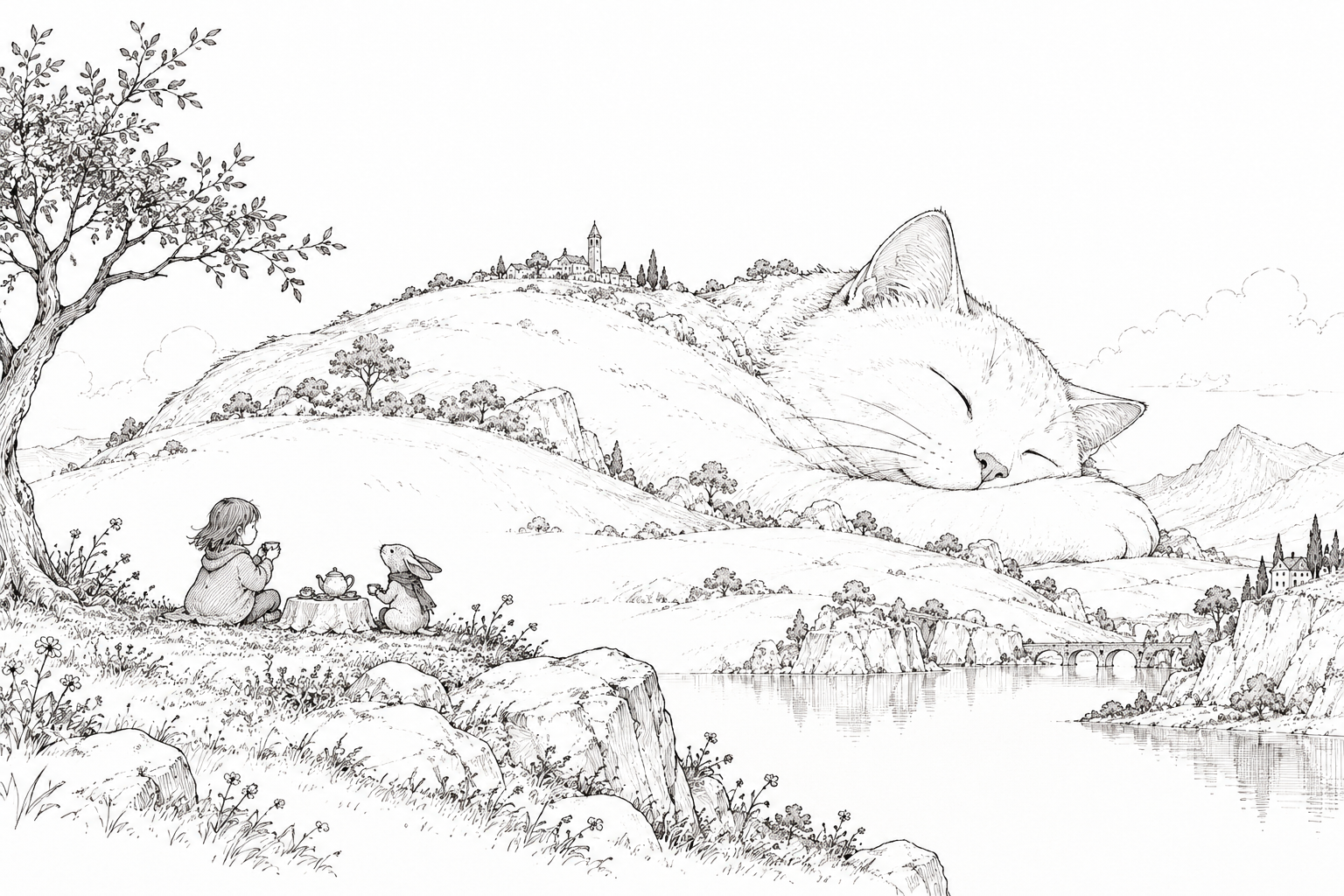
A gardener watering a roof-sized leaf reads as care; a round creature carrying a ladder toward a cloud reads as practical optimism. These scenes work because the action remains ordinary while one relationship becomes extraordinary. A teapot backpack offers a smaller change; an enormous sleeping cat embedded in the landscape offers a larger one.
Keep the character's posture legible. A hand reaching, a head tilted toward a problem or a small pause in the path supplies narrative without a caption. A dozen unrelated oddities tend to cancel one another out.
Soft shapes, precise lines
Rounded creatures and rolling hills can feel gentle even when their boundaries are crisp. Softness here comes from shape and pacing, not necessarily blur. Try a clean pen edge beside a lightly hatched shadow. A fuzzy digital airbrush may reduce the clarity of the line and make the drawing feel less intentional.
For a handmade version, test line pressure, spacing and the direction of short marks before adding detail. For an image prompt, describe the amount of untouched paper and the scale relationship explicitly. Asking only for whimsy gives the model much less guidance.
Uses and useful restraint
This approach suits short visual stories, quiet editorial spots, stationery and book illustrations with breathing room for text. It becomes generic when every figure has the same round face or every scene ends with another smiling cloud. Change the action, camera distance or emotional pause while retaining the sparse mark language.
The gallery moves between a landscape journey, a sheltered house, a small rescue attempt and a shared tea beside a sleeping hillside. Their coherence comes from the line and spatial restraint, rather than a repeated central subject.
Read the reference with its version
At the time of this research, Midlibrary associates Hillside Letterform with –sref 3383230063 –v 8.2. Its page also warns that the same numeric code can produce a different aesthetic under earlier versions. Treat the code and version as a pair, and check the linked reference before reusing it.
The AOI images here are newly generated interpretations of the observed visual vocabulary, not outputs produced by executing that Midjourney code. The written prompts describe visible decisions so that the ideas can also be explored with other tools or by hand.
A small poetic detour
Original words from the AOI studio.
Poetry
The hill leaves room
A little ladder leans against the air;
a cloud has caught its sleeve upon a tree.
The creature underneath takes patient care
of things too high and light for you or me.
Beyond the house, a leaf becomes a roof.
Beyond the roof, the page is mostly sky.
The smallest line can offer quiet proof
that worlds need not be crowded to be wide.
The prompt workshop
Original creative exercises. These prompts create new illustrations, not documentary evidence.
Start with one scale shift
Draw a tiny gardener watering an enormous leaf that shelters a little house. Use delicate black pen lines, sparse hatching and abundant untouched white paper. Keep the action clear and the mood gentle.
Compare the focal point, edge treatment and distribution of detail before adding more motifs.
Give the character a modest problem
Create a monochrome storybook drawing of a round creature carrying a short ladder toward a cloud caught in a bare tree. Use a simple readable pose and a few precise ground marks.
Compare the focal point, edge treatment and distribution of detail before adding more motifs.
Find an animal in the landscape
Draw two small companions sharing tea beside a hill whose contour becomes a sleeping cat. Preserve a calm horizon and large open areas; let the transformation emerge slowly from one continuous line.
Compare the focal point, edge treatment and distribution of detail before adding more motifs.
Your next inspiration
Discover another art style
Follow a visual thread to the next subject.
A smile from the studio
Jokes
The gardener bought a house with excellent natural shade. The estate agent neglected to mention that the roof needed watering. On the bright side, the guttering had grown its own flowers, and the upstairs room now qualified as a treehouse without any additional paperwork.
Sources and further exploration
Midlibrary — current reference images, style observations and version-specific SREF information