
Designer and house reference · bandage-knit fashion
Hervé Léger fashion makes the direction of a band part of the structure of a dress. Repeated knitted strips, controlled stretch and clear changes of angle turn a fitted silhouette into a study of rhythm, surface and construction.
A visual introduction
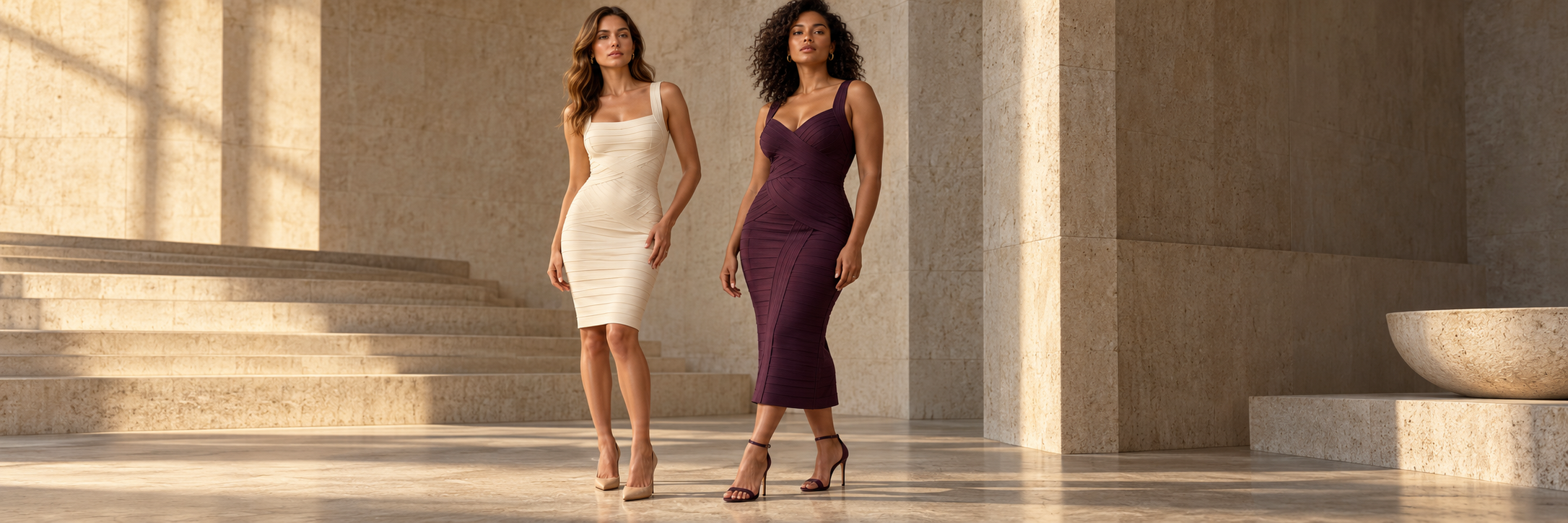
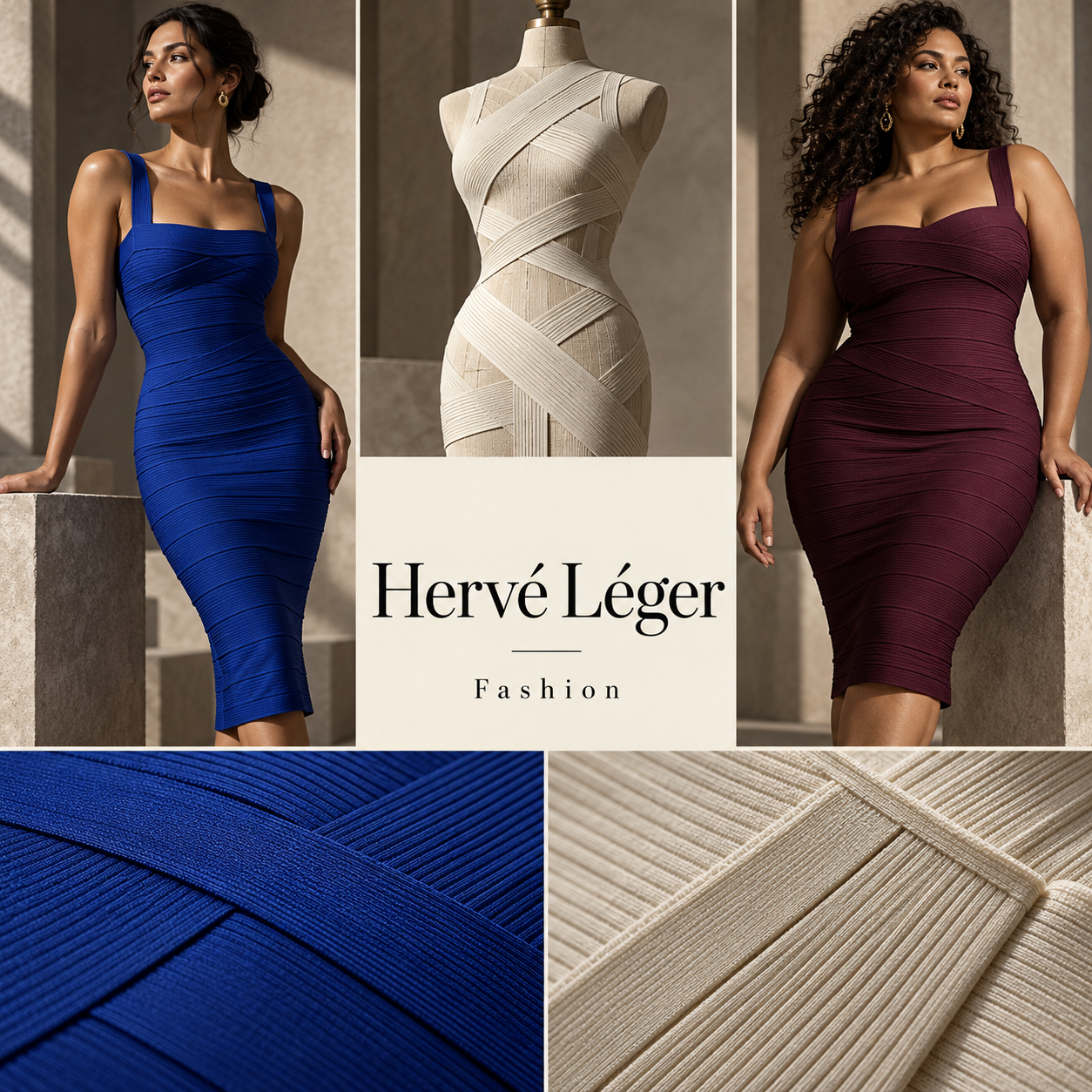
Five original AI-generated AOI interpretations: a dedicated banner, a centrally titled collage and three standalone studies.
Select an image for a closer look. Use the thumbnails, arrow keys or a swipe to compare examples. Zoom in to inspect details, or share the image that inspires you.
Creative toolbox · take this style further
Choose an input and a destination. Search sends your words to the chosen site; Copy & open puts them on your clipboard to paste there.
Create with AI
Turn your chosen input into an image prompt or a new creative direction.
ChatGPT
Copy your input and paste it into a ChatGPT conversation or image request.
Copy & open ChatGPT (new tab)Claude · Anthropic
Develop an image prompt or explore the style in a new Claude conversation.
Copy & open Claude · Anthropic (new tab)Midjourney
Paste your input into the Imagine bar on the Create page.
Copy & open Midjourney (new tab)Adobe Firefly
Copy your input, open Firefly, and paste it into the prompt field.
Copy & open Adobe Firefly (new tab)Leonardo.Ai
Copy your input, open Leonardo, and paste it into the generation field.
Copy & open Leonardo.Ai (new tab)Image search
Find visual references. Short, concrete keywords usually work best.
Lexica
Search AI images and prompts using your selected input.
Search with this input Lexica (new tab)Pexels
Search the photo and video library. Short keywords often work best.
Search with this input Pexels (new tab)Pixabay
Search photos, illustrations and other images.
Search with this input Pixabay (new tab)Unsplash
Search photographs using the style name or your own keywords.
Search with this input Unsplash (new tab)Wikimedia Commons
Search photographs, artworks and historical images. Check each file for its source and reuse terms.
Search with this input Wikimedia Commons (new tab)Art & research
Explore artists, collections and the ideas behind a style.
Wikipedia
Search for background reading. A style may not have its own article.
Search with this input Wikipedia (new tab)WikiArt
Copy your input into WikiArt’s search to explore artists and artworks.
Copy & open WikiArt (new tab)Europeana
Paste your keywords into the search to explore European museum, library and archive collections.
Copy & open Europeana (new tab)Inspiration
Discover portfolios and visual ideas from creative communities.
Instagram hashtags
Search a hashtag made from your input: spaces and punctuation are removed. Instagram may require sign-in.
Search with this input Instagram hashtags (new tab)ArtStation
Paste your input into artwork search for concept art, environments, characters and visual development.
Copy & open ArtStation (new tab)Behance
Paste your input into project search for illustration, design and visual storytelling.
Copy & open Behance (new tab)A closer look
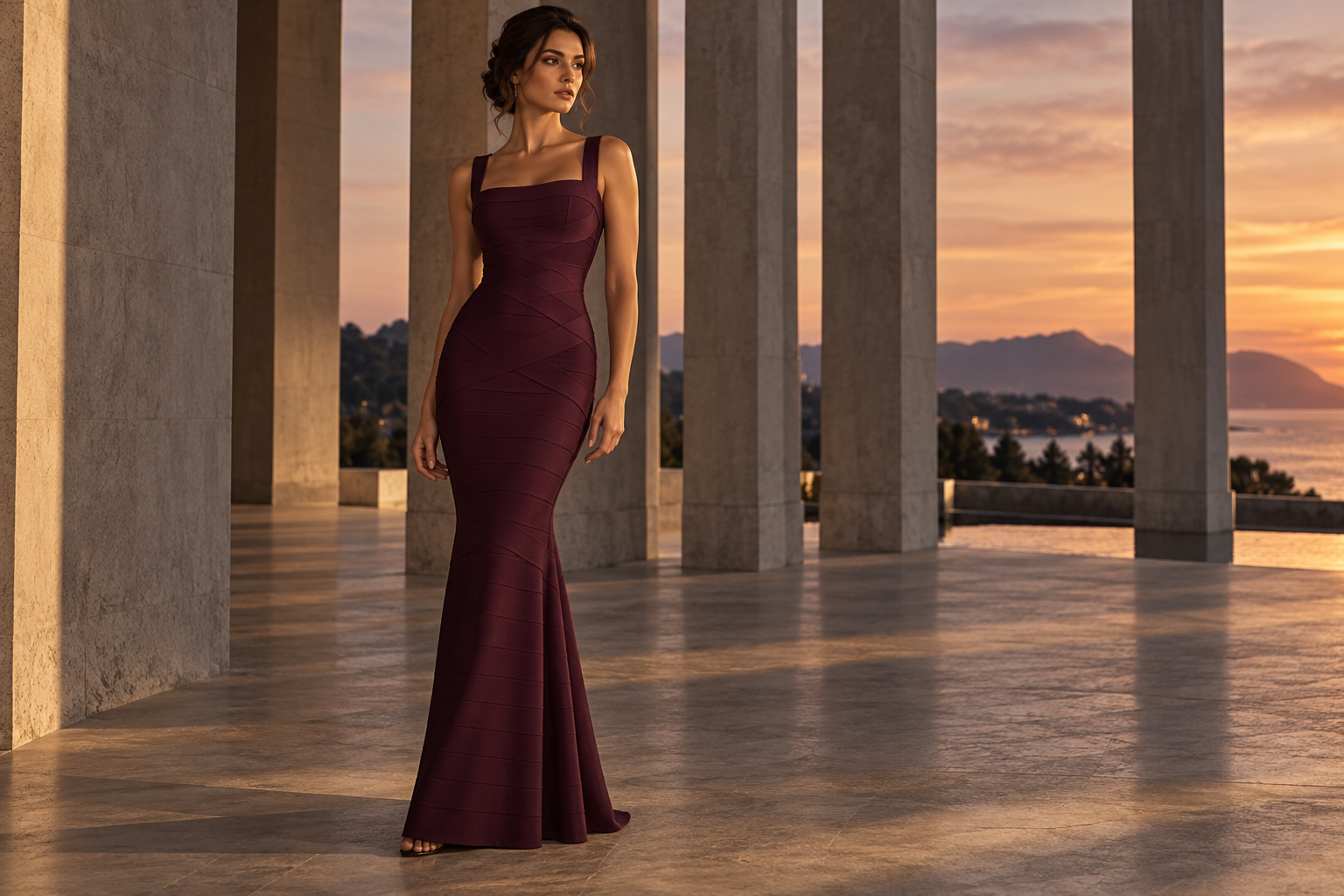
Horizontal bands, diagonal chevrons and clean finished edges follow a fitted garment; a restrained setting makes the opaque knit texture, continuous curves and band direction easy to read.
A documented fashion reference
The name refers both to the designer associated with the house and to the fashion label, so attribution should be specific. LACMA's Woman's Dress, dated circa 1990, provides a useful historical anchor: its record identifies Hervé Léger and a rayon, nylon and spandex knit. The current official brand collection continues to emphasize bandage construction. A museum garment and a contemporary product are different evidence, even when they share a recognisable visual language.
Bands describe a body in space
The band is more than a printed stripe. Its edge, width and direction help articulate the garment's volume. Horizontal sequences can establish a steady rhythm; diagonal changes can turn the eye around the waist; a chevron can organize the front as a focal structure. In an illustration, follow those bands around the form rather than drawing a flat striped texture across it. The visible joins should make sense at the sides, neckline and armholes.
Material before shine
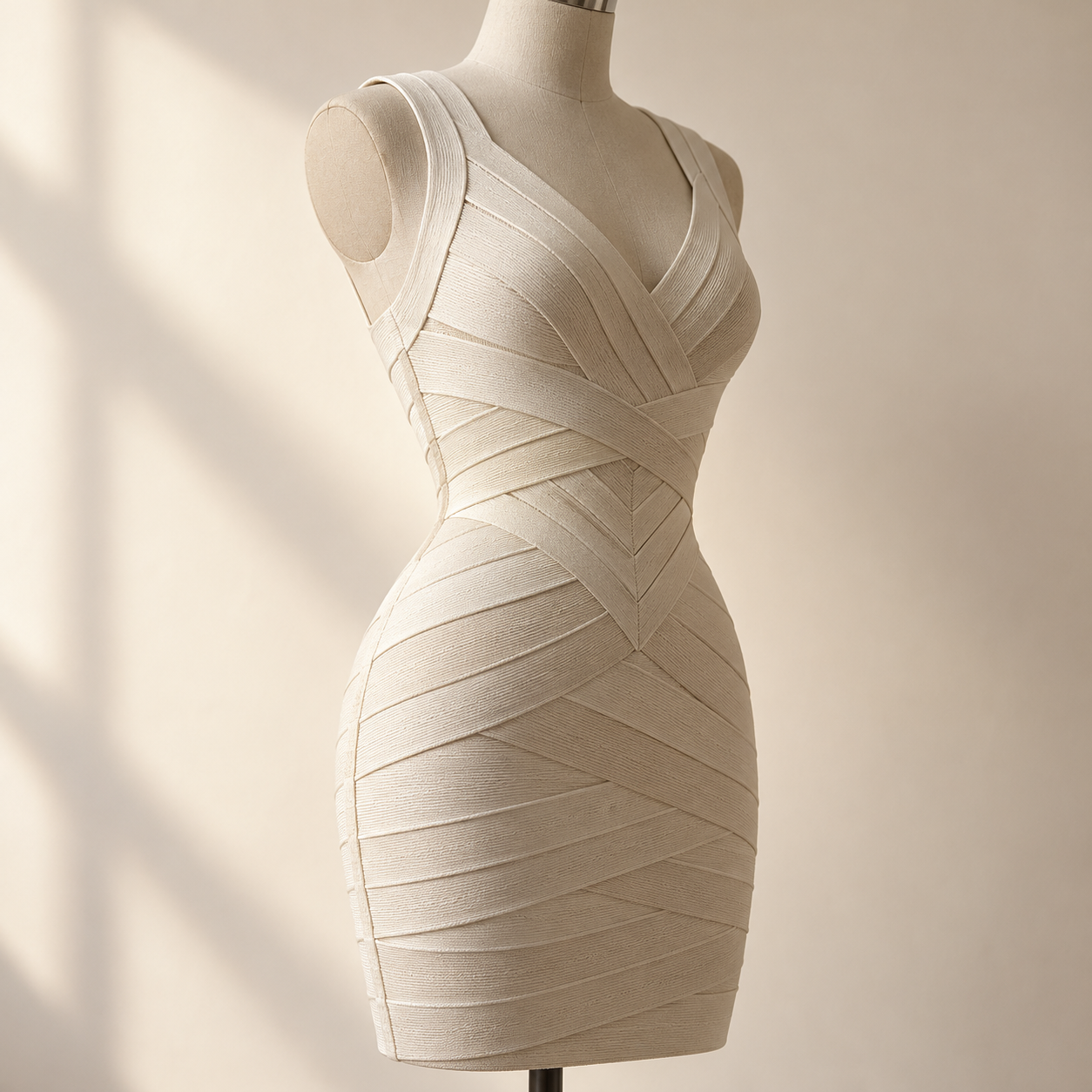
A fitted dress does not need to look like polished plastic. Use soft raking light to reveal knit grain and subtle raised edges, then allow larger shadow areas to describe the body. The ivory dress-form example makes that surface especially clear. Actual fabric blends vary by garment; one product's composition is not a universal recipe for the house. A generated image can explore construction visually but cannot establish stretch, comfort, fit or performance.
Three ways to stage the same principle
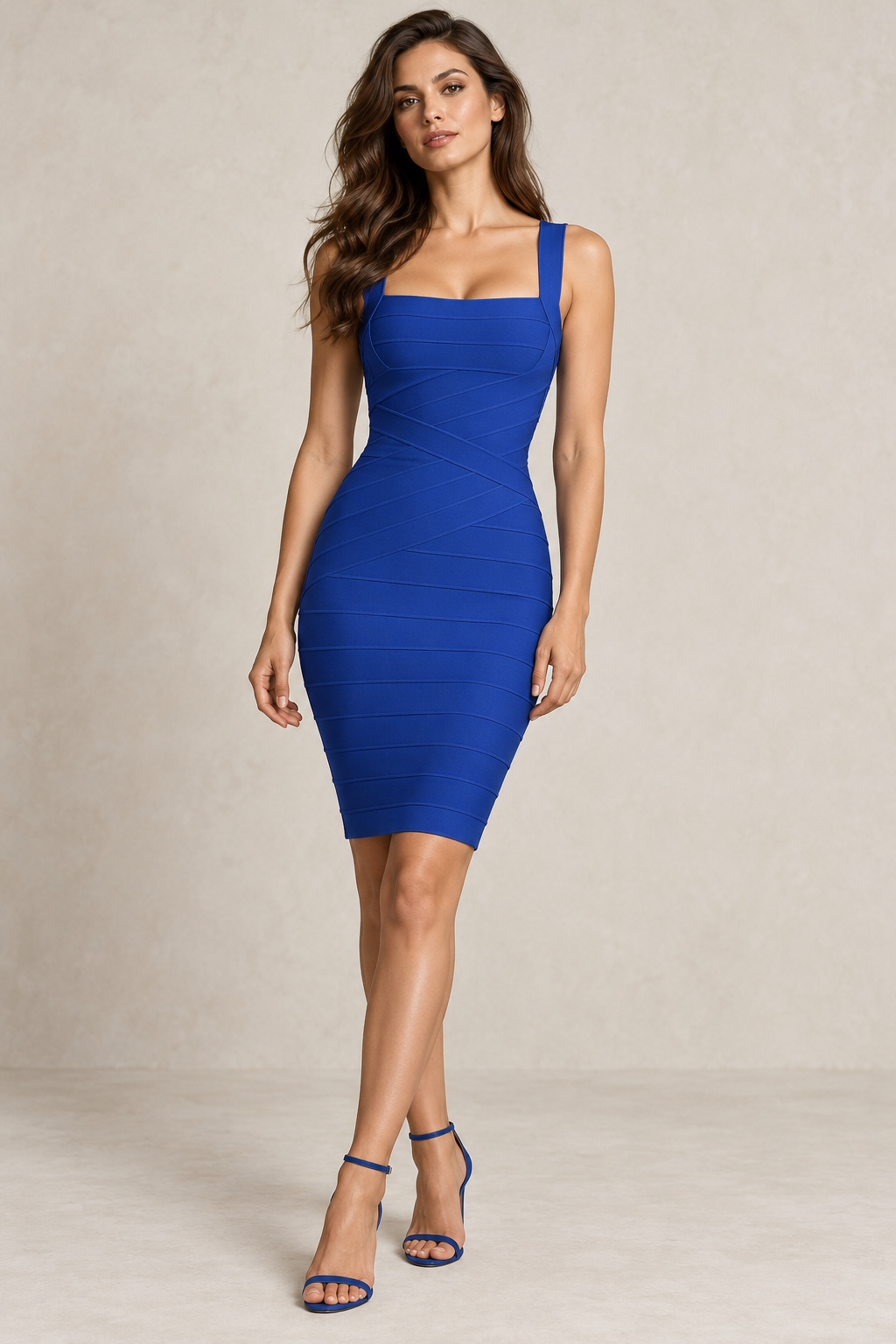
The cobalt studio study isolates a knee-length silhouette and gives the band changes a clean backdrop. The ivory form removes pose and facial expression so the garment becomes the subject. The plum evening image introduces architecture and dusk light while keeping the dress legible. The banner brings two colours into one setting. All are original speculative AOI images; none depicts a verified Hervé Léger product, collection or campaign.
Avoid the body-shaping cliché
Describe what the garment does visually instead of promising an ideal figure. A confident stance, comfortable expression and coherent anatomy make a better fashion image than exaggerated proportions. Keep skin and cloth distinct, preserve credible hands and feet, and check that the hem reaches the ground or ends where intended. Strong colour can carry the scene, but busy accessories and backgrounds may hide the very band structure the entry is meant to explain.
From reference to an original design brief
This vocabulary suits fashion illustration, textile studies and editorial composition. Try changing band width, diagonal direction or colour while keeping one silhouette fixed; the comparison reveals which decisions alter rhythm and emphasis. Use the official collection and museum record for material and historical context. Treat the Midlibrary page as a separate AI prompt experiment, since a name prompt can produce imagery that does not accurately describe a designer's real garments.
A small poetic detour
Original words from the AOI studio.
Poetry
A measured curve
One band begins where another leaves the light;
a quiet edge gives shape a place to turn.
The blue keeps all its richness through the night,
the ivory lets the smaller shadows learn.
No line is merely passing through the dress.
Each takes a little journey round the form.
The cloth can speak in rhythm and caress,
and leave the person free to keep them warm.
The prompt workshop
Original creative exercises. These prompts create new illustrations, not documentary evidence.
Let the bands do the work
Create an original opaque cobalt bandage-knit dress on an adult model, with clear horizontal bands and a deliberate diagonal change at the waist. Use natural proportions and a quiet studio.
Describe the construction; do not add a brand logo.
Study the textile
Show an original ivory dress on a neutral dress form. Arrange broad knitted bands into a coherent chevron, with soft side light revealing grain and finished edges.
Check that bands join convincingly around the body.
Change direction, preserve silhouette
Develop two original dresses with the same overall shape and colour, one with mostly horizontal bands and one with controlled diagonals. Use matched lighting and camera.
Compare rhythm and focal emphasis without changing the wearer.
Your next inspiration
Discover another art style
Follow a visual thread to the next subject.

A smile from the studio
Jokes
The stylist asked for a look with more structure. The dress replied that it had been built entirely out of structure and would appreciate a more specific brief. After a short meeting, they changed the lighting. The dress accepted the revision without adding a single band.