
AOI creative concept · Thread and tactile surfaces
Use the hem of a hanging fabric as a landscape horizon.
An AOI creative concept, not an established historical movement.
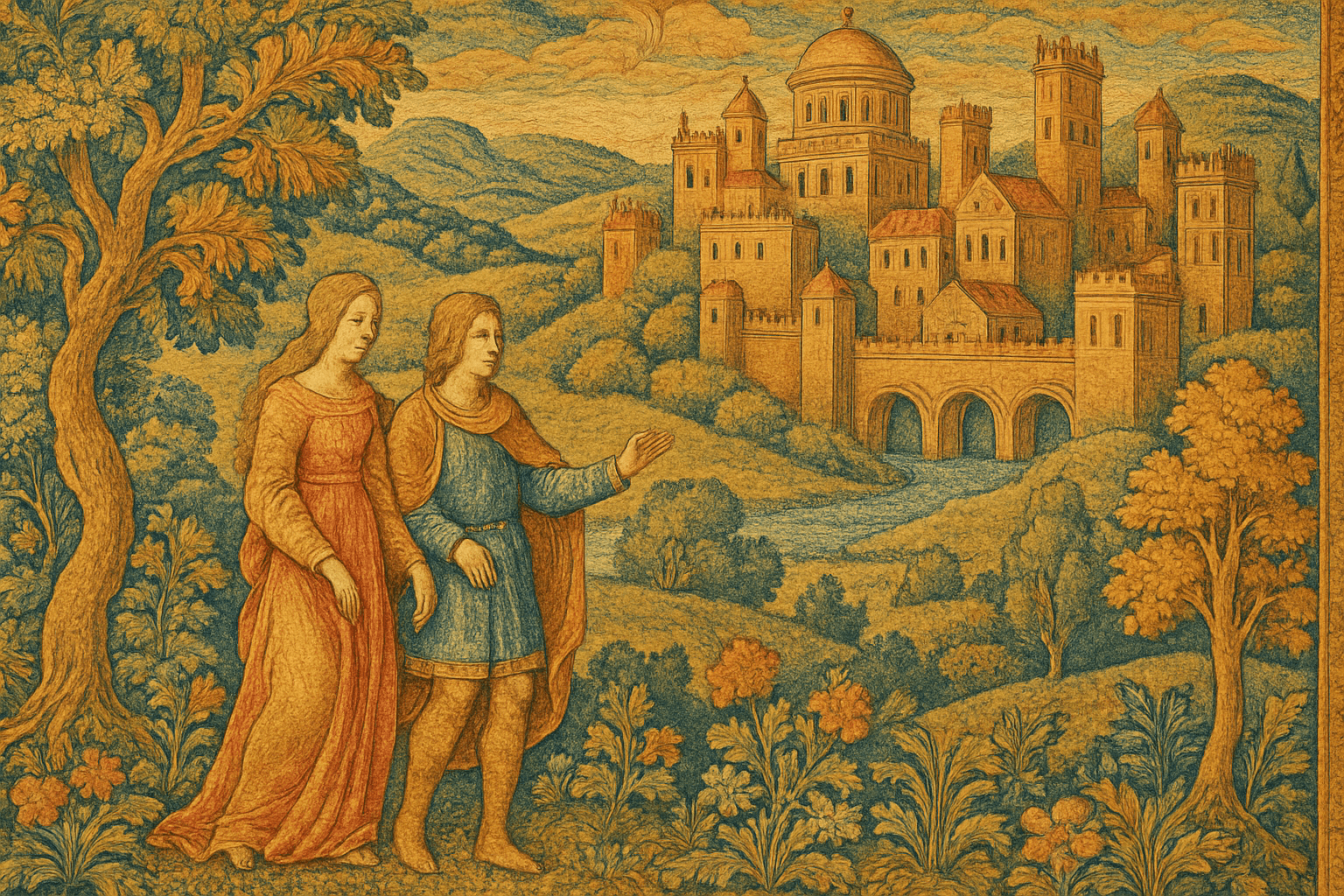
A closer look
Slate blue, ivory and muted silver; hanging woven fabric. The focal scene: a cloth hem becoming the horizon above a tiny boat.
Let the material decide
Use the hem of a hanging fabric as a landscape horizon. Everything above belongs to the cloth; everything below becomes an imagined distance suggested by shadows and a few restrained marks. The stitched edge must remain the central transition.
Construct the surface
Hang a blue-gray cloth so its lower edge rises gently toward one corner. Beneath it, paint a tiny pale boat and two low horizontal reflections on the background. Let the hem's shadow act as a distant shoreline. Show enough fabric folds above to preserve the material reading, but keep them quieter than the lower edge.
Texture needs a purpose
If a complete seascape appears behind the cloth, the hem becomes incidental. Remove competing horizon lines and let the stitched edge do the work. Avoid literal explanations of the scene; the pleasure lies in seeing one boundary serve two scales.
Technique notes
Replace the boat with a small cluster of rooftops and use the hem as a mountain ridge above an almost empty valley.
When prompting an image model, spell out the rule and visible relationships. The invented style name alone is not a reliable instruction. Compare outputs against the critique above and revise the specific failed relationship.
The prompt workshop
Original creative exercises. These prompts create new illustrations, not documentary evidence.
Start with the defining rule
Create an original illustration of a cloth hem becoming the horizon above a tiny boat. Use the hem of a hanging fabric as a landscape horizon. Everything above belongs to the cloth; everything below becomes an imagined distance suggested by shadows and a few restrained marks. The stitched edge must remain the central transition. Use slate blue, ivory and muted silver; hanging woven fabric. Keep the composition readable, with a clear focal area and quiet surrounding space. No lettering, signatures or watermark.
Build the fuller composition
Create an original Hemline Horizons composition. Hang a blue-gray cloth so its lower edge rises gently toward one corner. Beneath it, paint a tiny pale boat and two low horizontal reflections on the background. Let the hem's shadow act as a distant shoreline. Show enough fabric folds above to preserve the material reading, but keep them quieter than the lower edge. Use slate blue, ivory and muted silver; hanging woven fabric. Preserve the defining constraint: Use the hem of a hanging fabric as a landscape horizon. Avoid decorative clutter, readable text and watermarks.
Try a deliberate variation
Create an experimental illustration based on this rule: Use the hem of a hanging fabric as a landscape horizon. Everything above belongs to the cloth; everything below becomes an imagined distance suggested by shadows and a few restrained marks. The stitched edge must remain the central transition. Variation: Replace the boat with a small cluster of rooftops and use the hem as a mountain ridge above an almost empty valley. Use slate blue, ivory and muted silver; hanging woven fabric. Make the changed relationship unmistakable while keeping supporting details restrained. No captions, signatures or watermark.
Look closer
Explore the image gallery
Select an image to enlarge it. Browse with the arrows, and press Escape to return.

Your next inspiration
Discover another art style
Follow a visual thread to the next subject.