
Cultural and artistic movement
The Harlem Renaissance transformed representations of modern Black life through painting, sculpture, photography, print and cultural exchange. Explore its variety beyond a single jazz-age look.
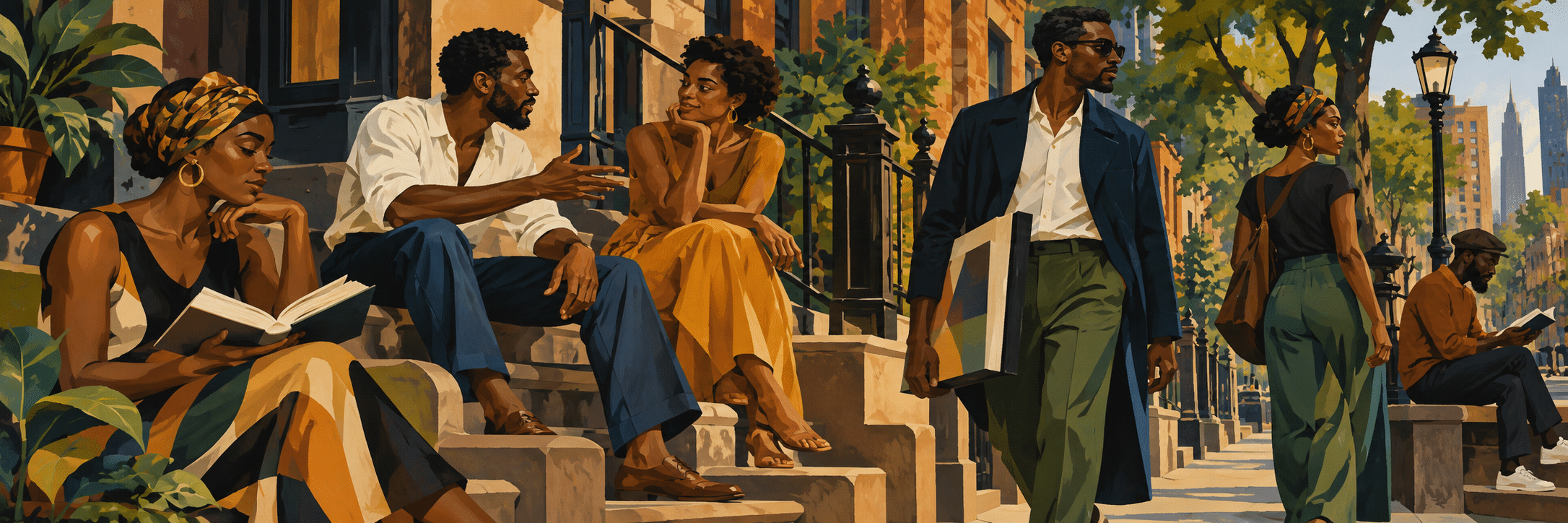
A visual introduction
Select an image for a closer look. Use the thumbnails, arrow keys or a swipe to compare examples. Zoom in to inspect details, or share the image that inspires you.
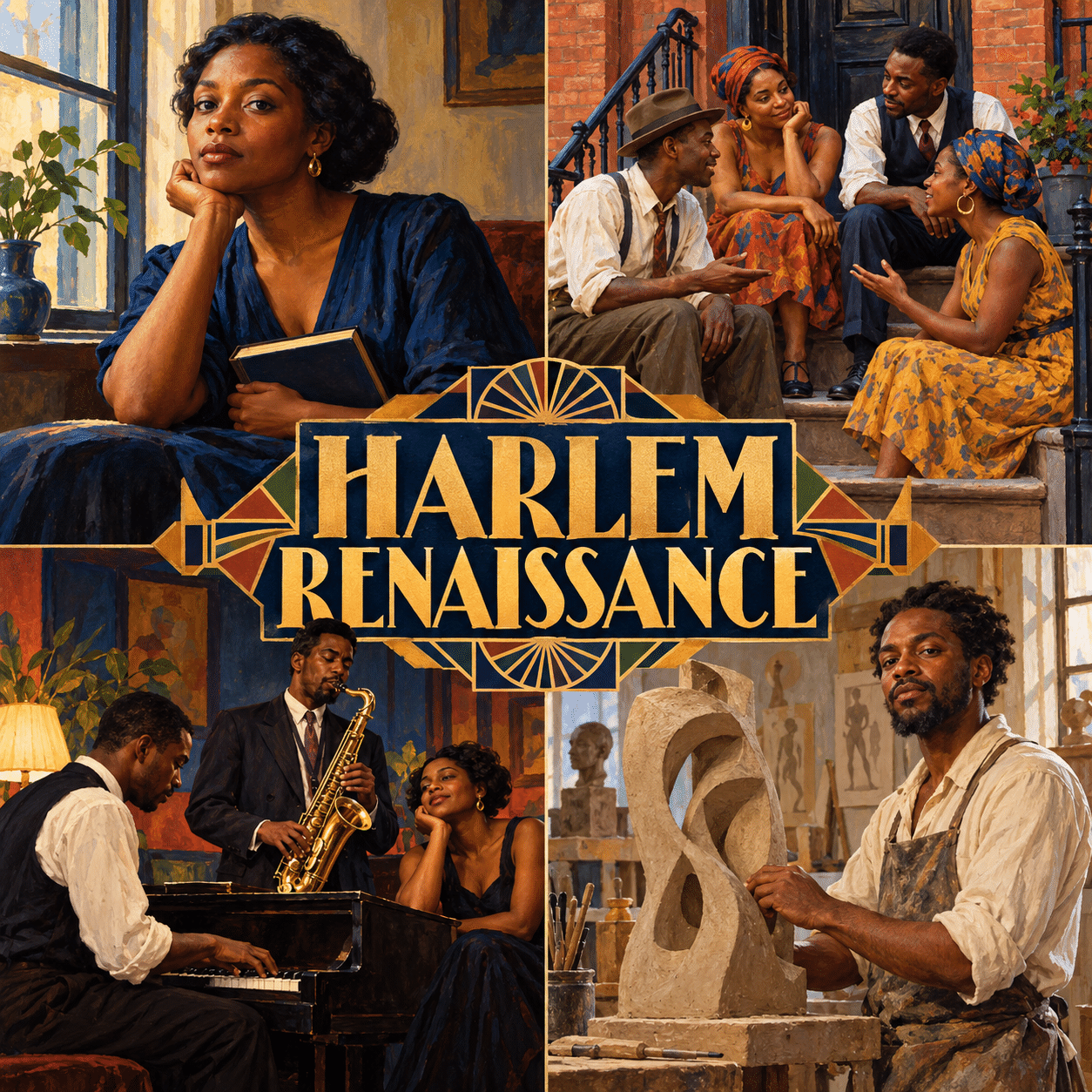
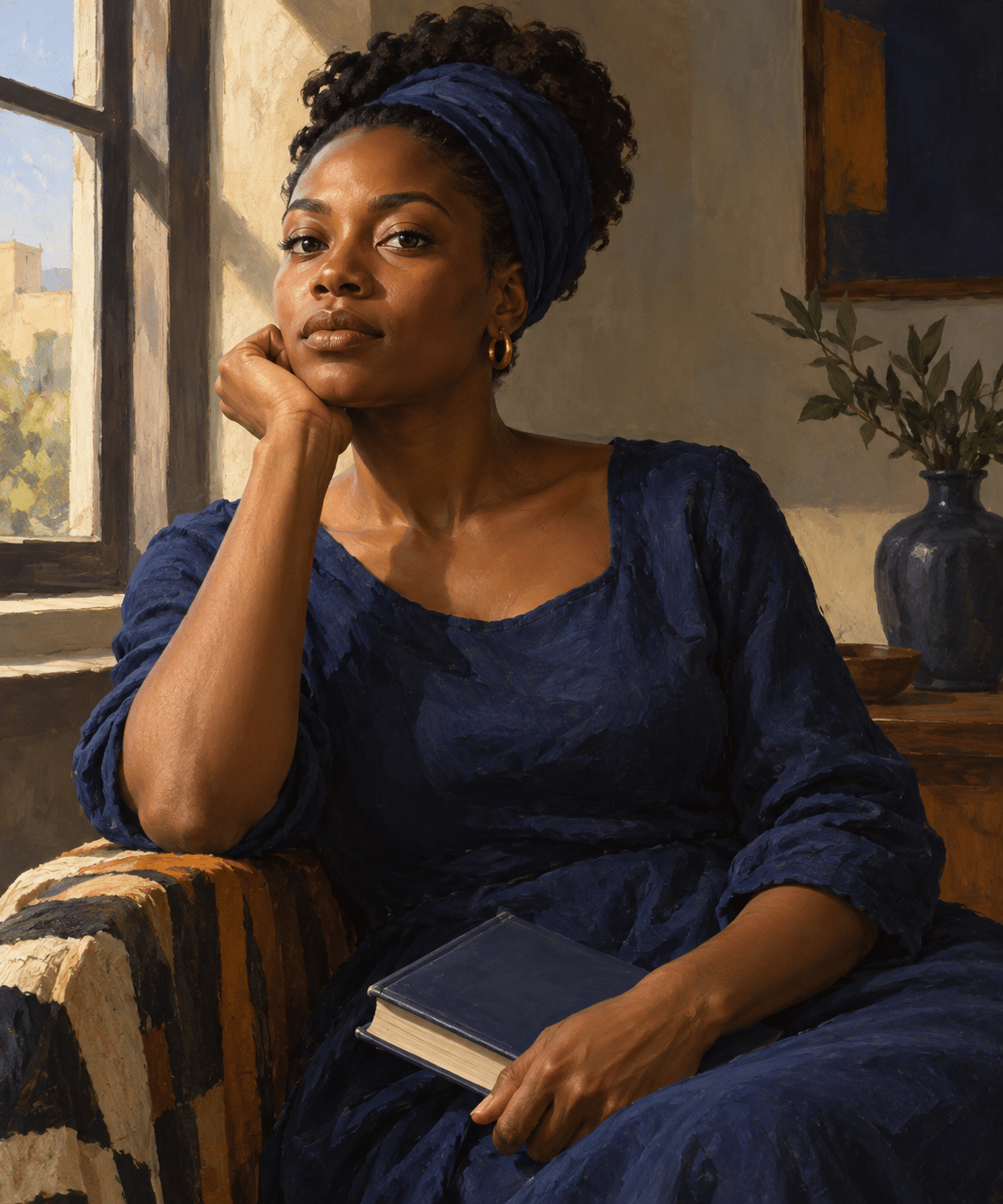
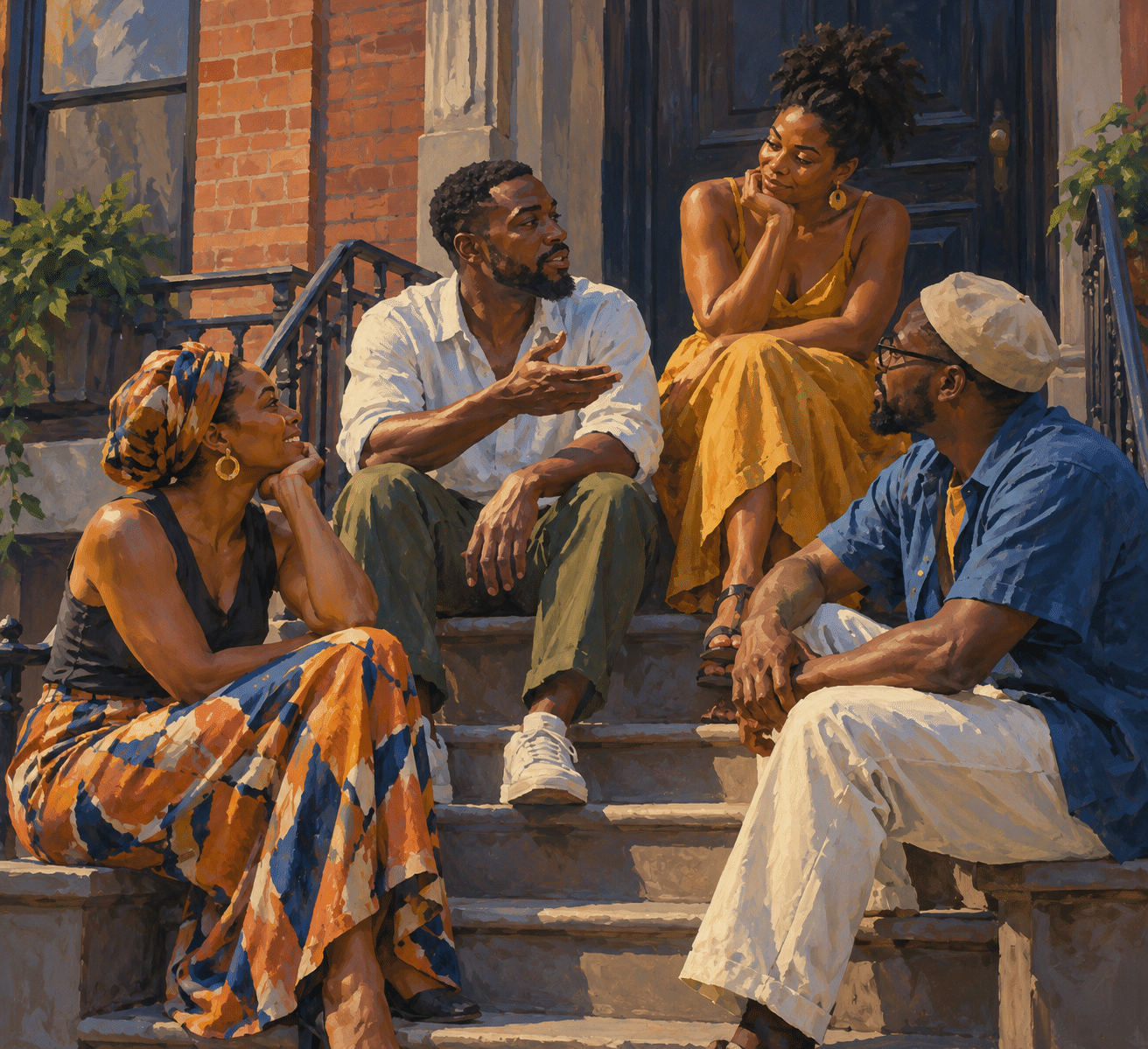


Creative toolbox · take this style further
Choose an input and a destination. Search sends your words to the chosen site; Copy & open puts them on your clipboard to paste there.
Create with AI
Turn your chosen input into an image prompt or a new creative direction.
ChatGPT
Copy your input and paste it into a ChatGPT conversation or image request.
Copy & open ChatGPT (new tab)Claude · Anthropic
Develop an image prompt or explore the style in a new Claude conversation.
Copy & open Claude · Anthropic (new tab)Midjourney
Paste your input into the Imagine bar on the Create page.
Copy & open Midjourney (new tab)Adobe Firefly
Copy your input, open Firefly, and paste it into the prompt field.
Copy & open Adobe Firefly (new tab)Leonardo.Ai
Copy your input, open Leonardo, and paste it into the generation field.
Copy & open Leonardo.Ai (new tab)Image search
Find visual references. Short, concrete keywords usually work best.
Lexica
Search AI images and prompts using your selected input.
Search with this input Lexica (new tab)Pexels
Search the photo and video library. Short keywords often work best.
Search with this input Pexels (new tab)Pixabay
Search photos, illustrations and other images.
Search with this input Pixabay (new tab)Unsplash
Search photographs using the style name or your own keywords.
Search with this input Unsplash (new tab)Wikimedia Commons
Search photographs, artworks and historical images. Check each file for its source and reuse terms.
Search with this input Wikimedia Commons (new tab)Art & research
Explore artists, collections and the ideas behind a style.
Wikipedia
Search for background reading. A style may not have its own article.
Search with this input Wikipedia (new tab)WikiArt
Copy your input into WikiArt’s search to explore artists and artworks.
Copy & open WikiArt (new tab)Europeana
Paste your keywords into the search to explore European museum, library and archive collections.
Copy & open Europeana (new tab)Inspiration
Discover portfolios and visual ideas from creative communities.
Instagram hashtags
Search a hashtag made from your input: spaces and punctuation are removed. Instagram may require sign-in.
Search with this input Instagram hashtags (new tab)ArtStation
Paste your input into artwork search for concept art, environments, characters and visual development.
Copy & open ArtStation (new tab)Behance
Paste your input into project search for illustration, design and visual storytelling.
Copy & open Behance (new tab)A closer look
No single visual formula: dignified portraiture, dynamic urban scenes, stylized geometry, graphic illustration and sculptural presence can articulate modern Black experience. Subject agency, composition and cultural context matter together.
A movement larger than one neighbourhood
The Harlem Renaissance was a major flowering of Black artistic and intellectual life, strongly associated with the 1920s and 1930s but extending through wider networks and changing timelines. Harlem was a vital centre, not the movement’s only location. The Metropolitan Museum’s research connects modern Black urban life with the Great Migration and with exchanges across the Atlantic.
The visual arts belong at the centre of this history alongside literature and music. Painting, sculpture, photography and illustration helped artists define how Black people could appear as modern subjects. The movement should not be reduced to nightclub scenes, a decorative period costume or a generic celebration that leaves individual artists and their choices unnamed.
Self-definition takes different visual forms
The Met emphasizes the variety of approaches used by artists including Aaron Douglas, Laura Wheeler Waring, Augusta Savage, Archibald Motley and James Van Der Zee. Their work cannot be compressed into one style. Portraiture, public imagery and scenes of everyday life could all challenge prevailing stereotypes while pursuing distinct artistic aims.
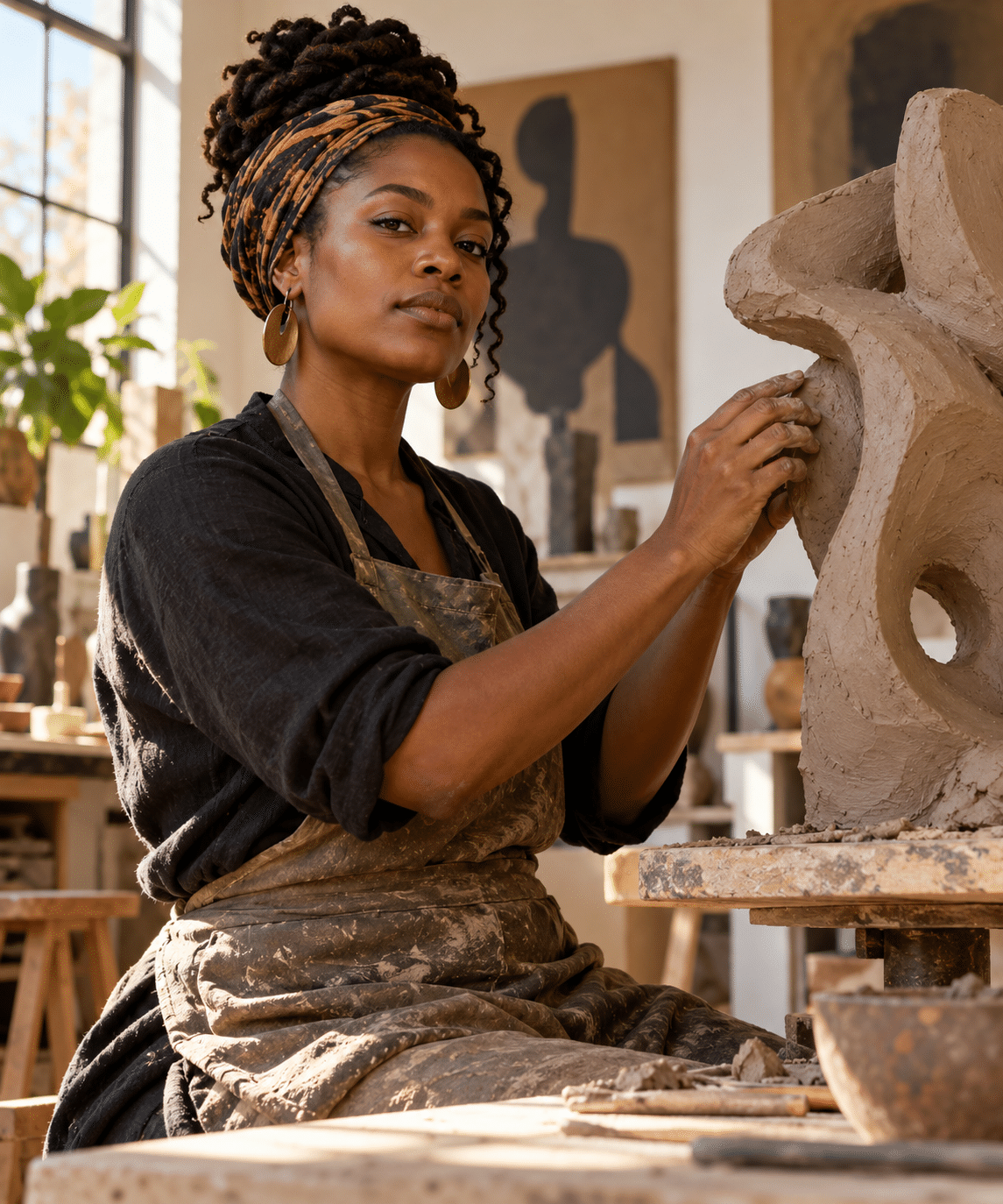
For a contemporary interpretation, begin with a specific person or situation rather than a symbolic stand-in for an entire community. A reader, an artist at work or neighbours in conversation can convey agency through posture, gaze and setting. The subject should seem to have a life beyond the viewer’s demand for an easily recognizable historical theme.
Geometry can carry rhythm and meaning
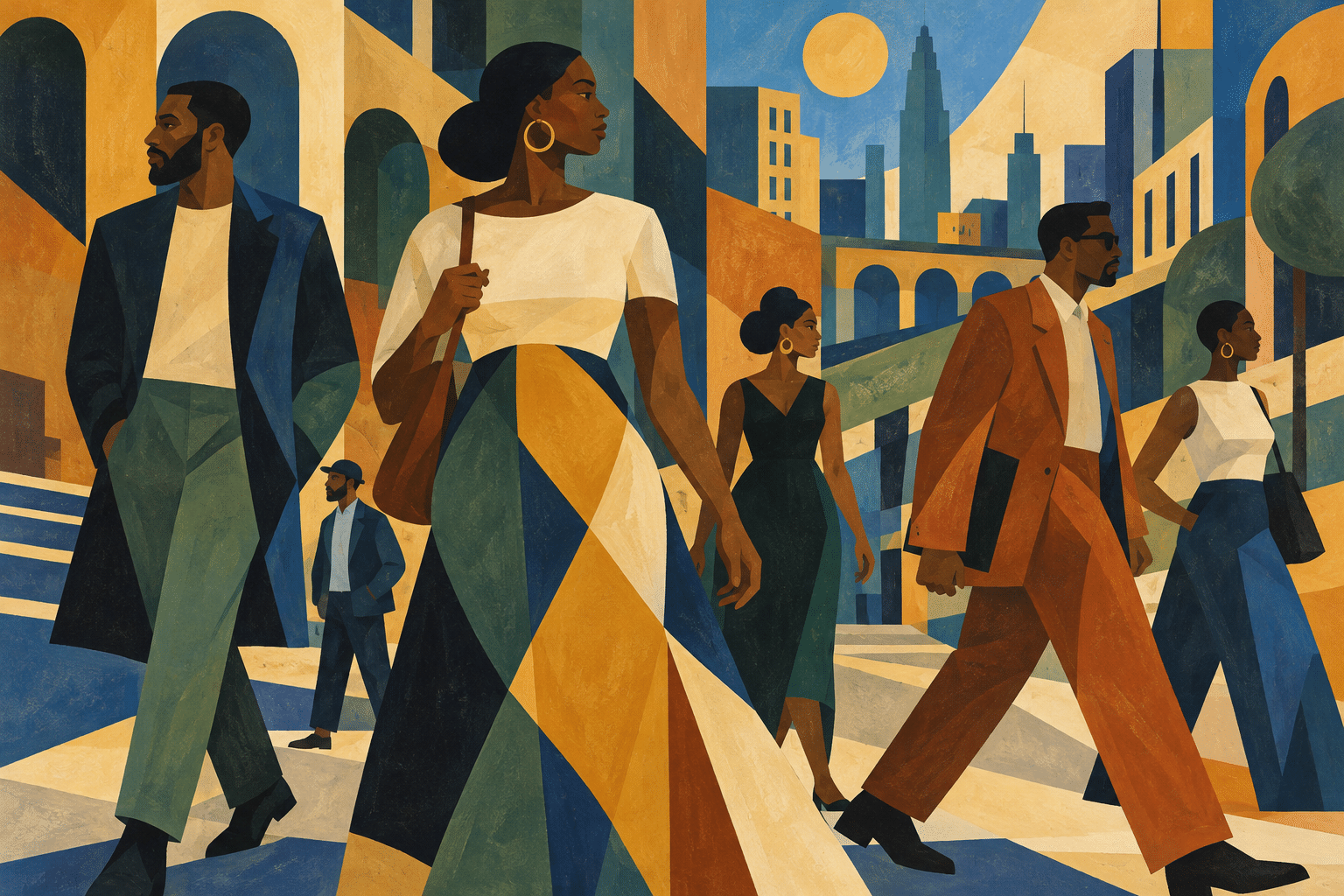
The National Gallery of Art discusses Aaron Douglas’s engagement with stylized forms, graphic design and varied artistic sources. His example helps explain how simplification can intensify an image rather than make it less thoughtful. Silhouette, overlapping shapes and directional rhythms can connect figures to a broader pictorial argument.
An original study can explore rhythm through repeated verticals, alternating light and dark shapes or a carefully placed diagonal. Avoid copying an artist’s signature composition or treating all African-derived forms as interchangeable. The useful lesson is to connect formal decisions with meaning, then research particular historical references before making claims about their origins.
Portraits and streets offer different encounters
A portrait can establish presence through an attentive expression, controlled lighting and a considered relationship with the frame. An urban scene can distribute attention among several people, making the street a network of meetings, routines and aspirations. These approaches have different demands and should not be forced into the same compositional recipe.
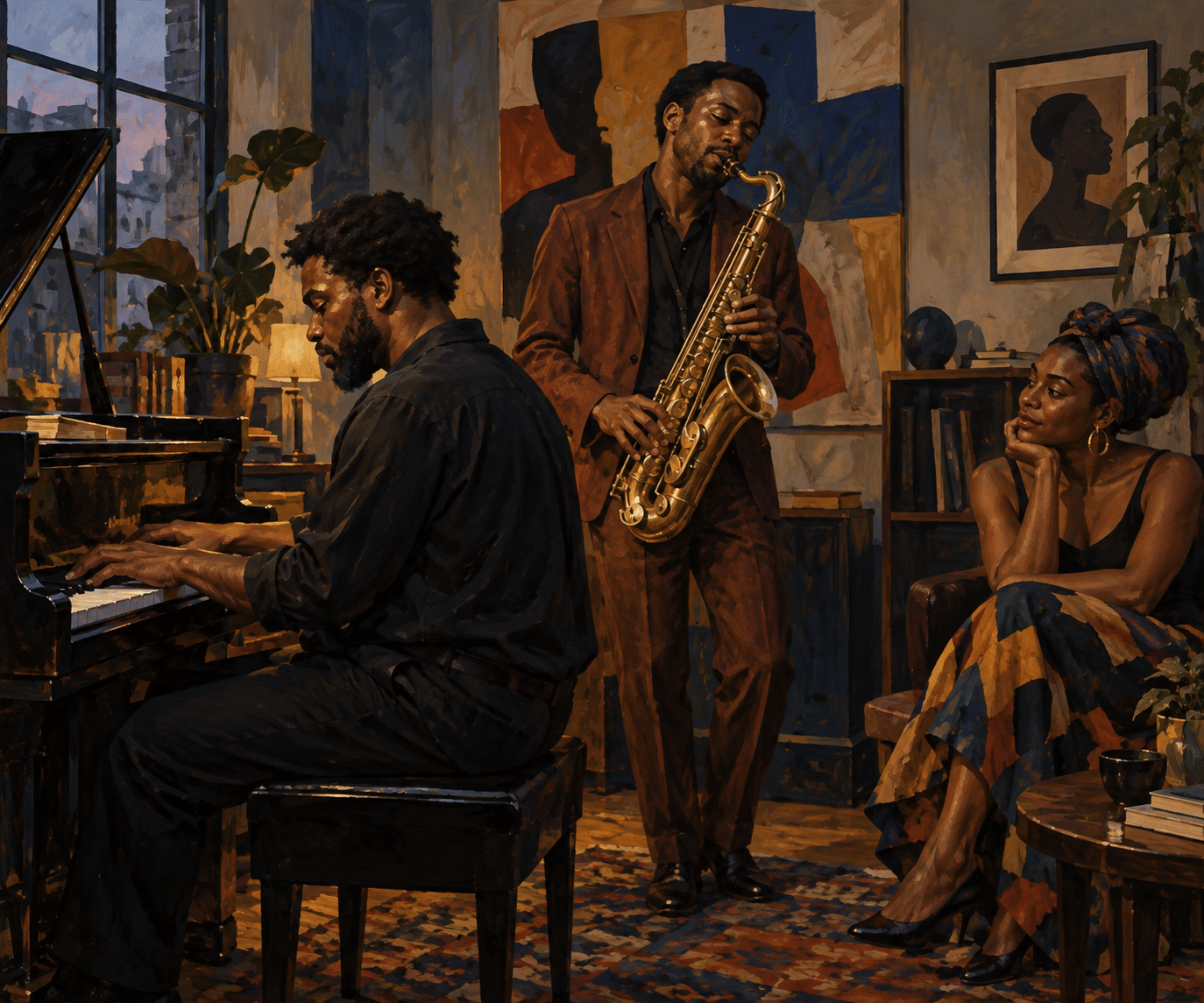
In a group scene, vary gestures and give people room to interact. In a portrait, let clothing, objects and setting support the sitter without becoming a catalogue of period accessories. A musical subject benefits from credible instruments and bodily relationships, but music is one part of the movement’s breadth, not its compulsory shorthand.
Interpretation is not historical documentation
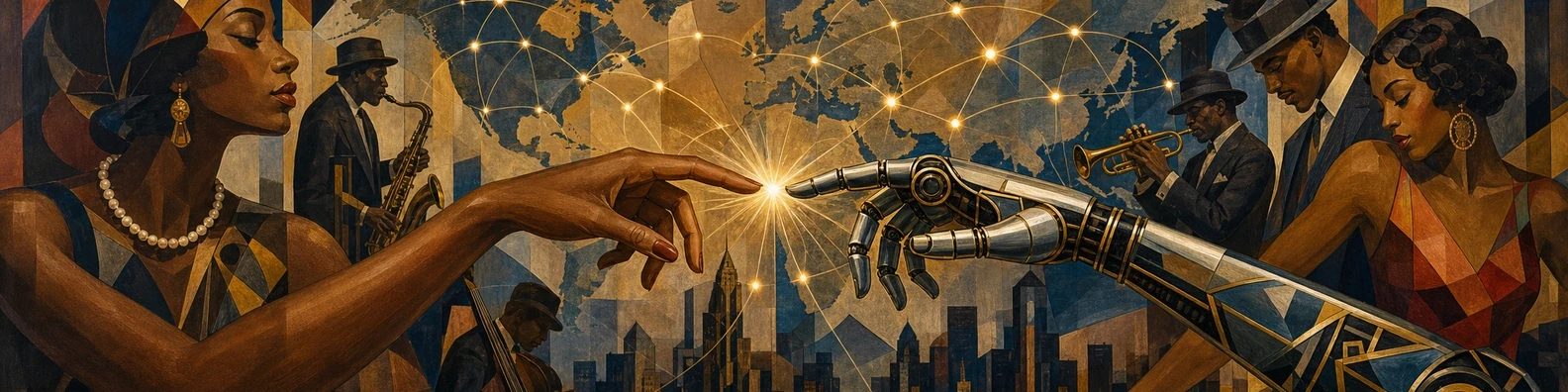
The new AI-generated gallery includes a reader’s portrait, a neighbourhood scene, a musical gathering, an artist’s workspace and a geometric composition about urban movement. These are original educational interpretations. They do not depict identified historical people, document real Harlem events or reproduce works by the movement’s artists.
Prompt with a clear subject, medium, visual structure and purpose. Avoid exaggerated caricature and a uniform nostalgic filter. Pair generated studies with museum sources and named historical works when learning about the movement. AI can help explore compositional possibilities, but its invented scene cannot supply evidence about a community’s actual experience or replace the artists’ own images.
Positive editorial assessment — AI-authored
The Harlem Renaissance offers powerful examples of artistic self-definition and formal variety. Its strongest works make modern Black life visible through specific people, spaces and expressive choices. Studying that diversity expands the idea of modernism beyond a narrow sequence of European movements.
Critical editorial assessment — AI-authored
Contemporary pastiche often collapses the subject into jazz instruments, Art Deco patterns and fashionable nostalgia. This can obscure the movement’s intellectual ambitions and varied experiences. Improve an interpretation by choosing a specific encounter, granting subjects agency and grounding historical claims in particular artists and sources.
Neutral editorial assessment — AI-authored
The Harlem Renaissance is a cultural movement with many visual practices and geographic connections. It provides rich material for studying portraiture, representation, urban life and artistic exchange. Its meaning cannot be inferred from palette or clothing alone; context and individual works remain essential.
A small poetic detour
Original words from the AOI studio.
Poetry
A window lights a reader’s face;
a street holds more than one refrain.
The portrait makes a room for grace,
the doorway opens into rain.
A painted rhythm crosses town,
a voice decides how it is heard.
No single image writes life down;
the next one has another word.
The prompt workshop
Original creative exercises. These prompts create new illustrations, not documentary evidence.
A reader with presence
Original modern figurative portrait of an unknown Black adult reader beside a window, thoughtful direct gaze, a closed book and simple carefully observed clothing, restrained painterly colour and dignified presence. Educational interpretation, no real historical identity or copied artwork.
A neighbourhood encounter
Original modernist painting of Black neighbours conversing on a city stoop, distinct gestures and attentive relationships, rhythmic building verticals and warm-cool colour balance. No caricature, invented signage or claim to document an actual historical event.
Urban rhythm
Original geometric figurative composition of Black adults moving through an imagined city, simplified silhouettes and carefully spaced architectural shapes, rhythmic ochre blue and green, clear individual gestures. No copied artist composition or generic cultural symbols.
Your next inspiration
Discover another art style
Follow a visual thread to the next subject.
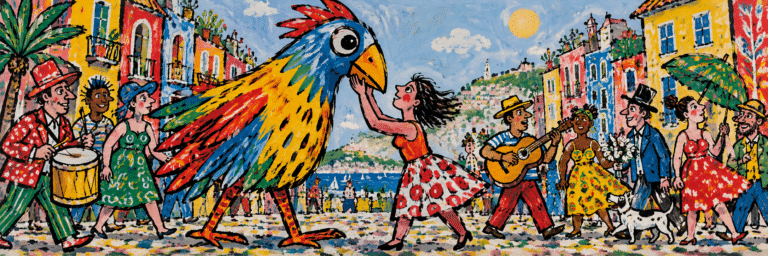
Figuration Libre: Figures, Popular Culture and Unruly Painting
Compare different relationships between culture and figuration.

Feminist Art: Representation, Power and the Right to Be Seen
Explore identity and representation through another historical lens.
A smile from the studio
Jokes
The portrait’s background requested a louder pattern. The sitter reminded it whose name belonged on the exhibition label.