
Modern and contemporary painting in central India, with a focus on Pardhan Gond artists
A tree in an oil painting, a tree printed by hand in a book, and a London journey imagined through a forest belong to different works by named makers. Reading them closely gives Gond painting back its authors, its materials and its range.
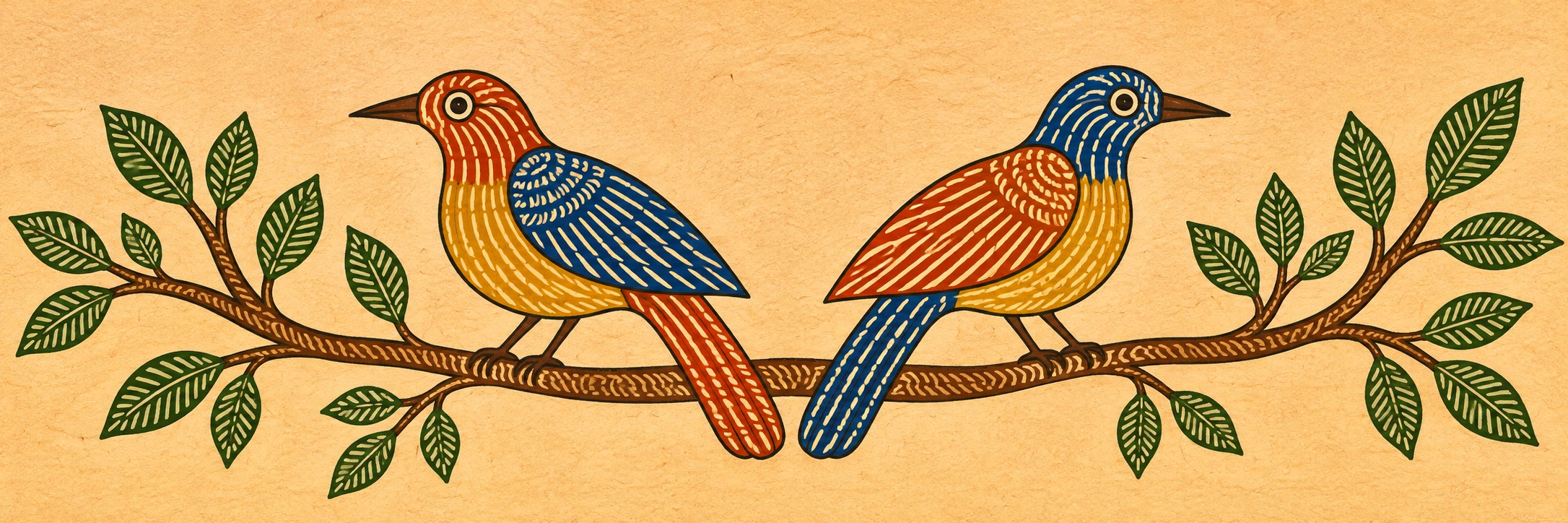
A visual introduction
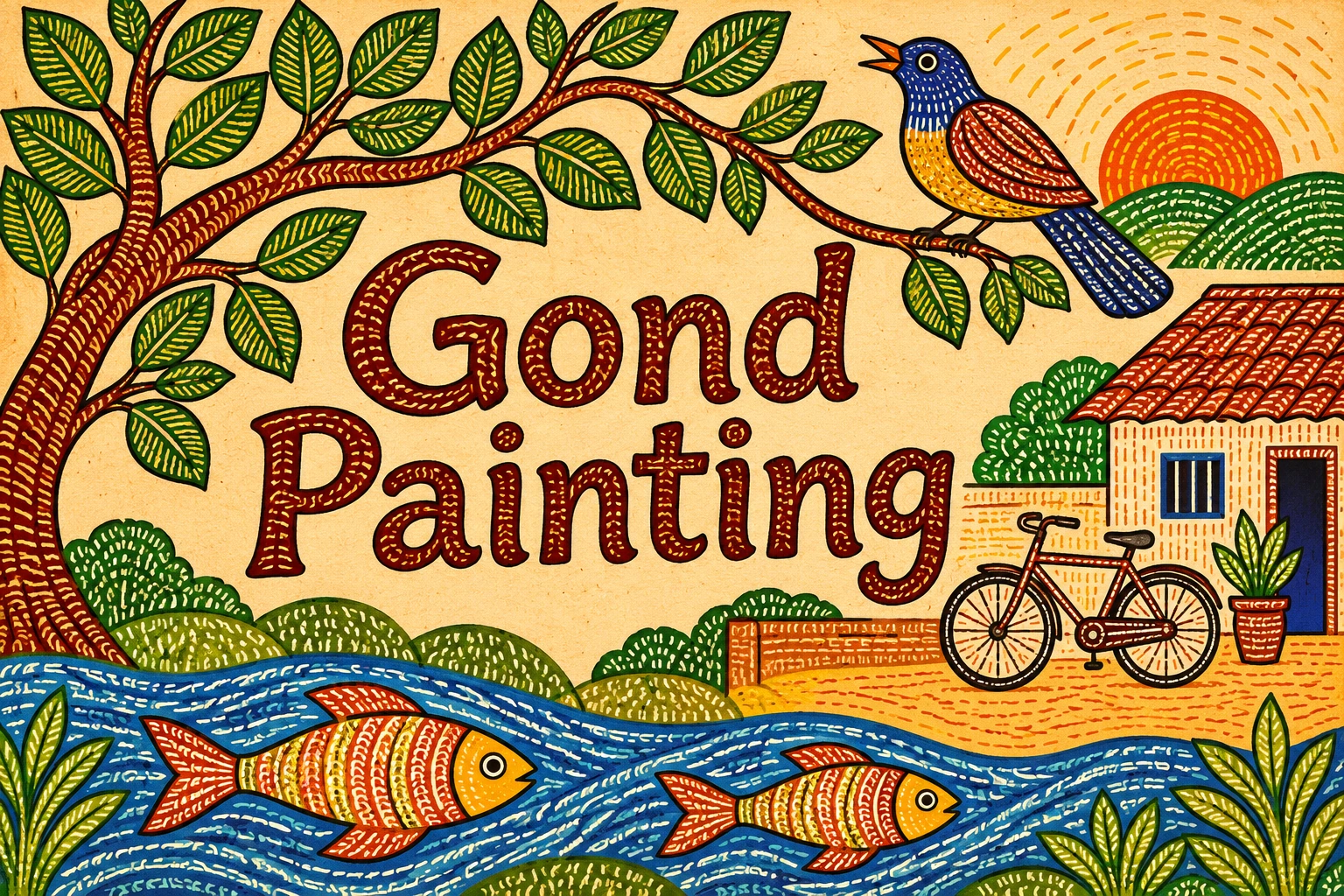
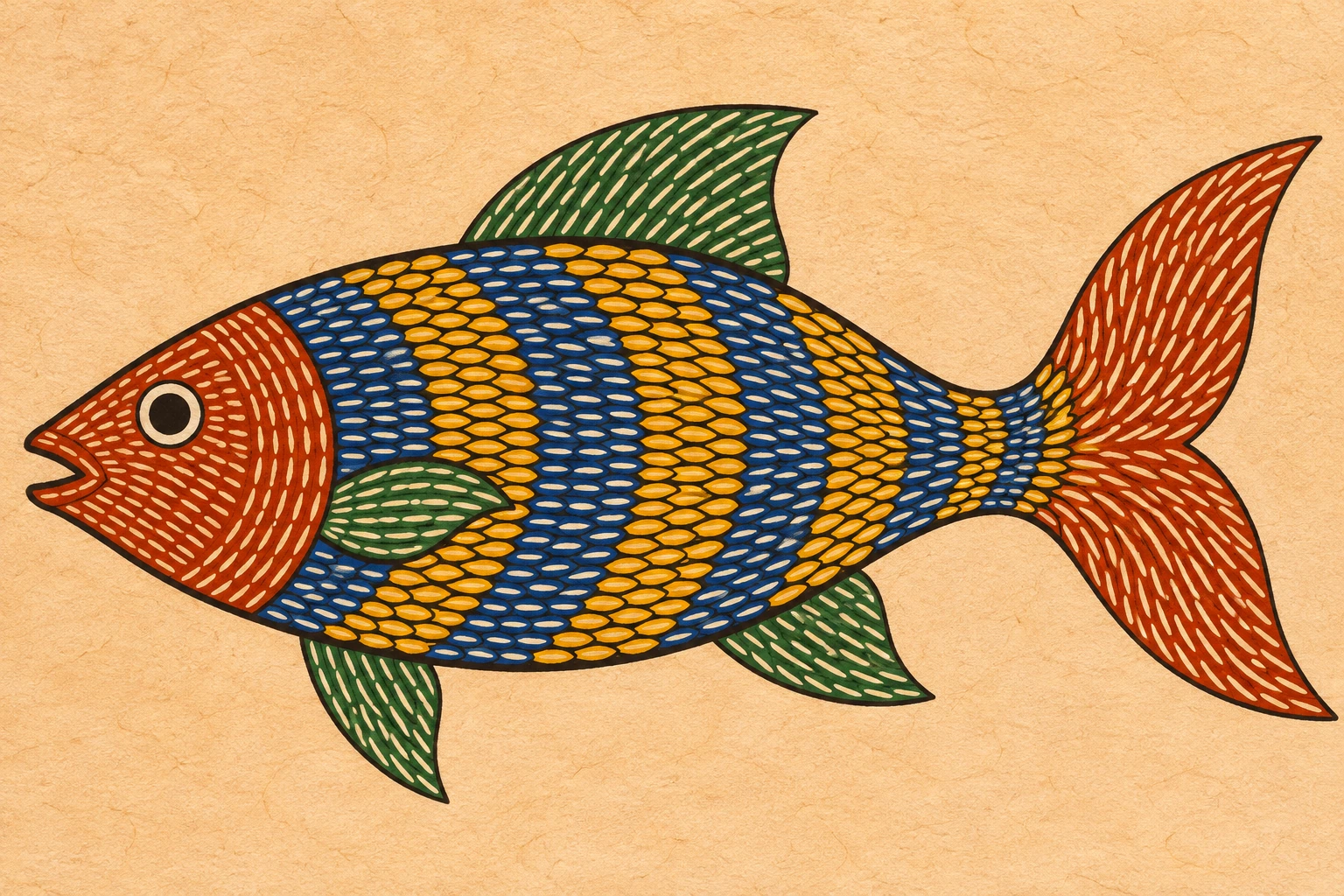
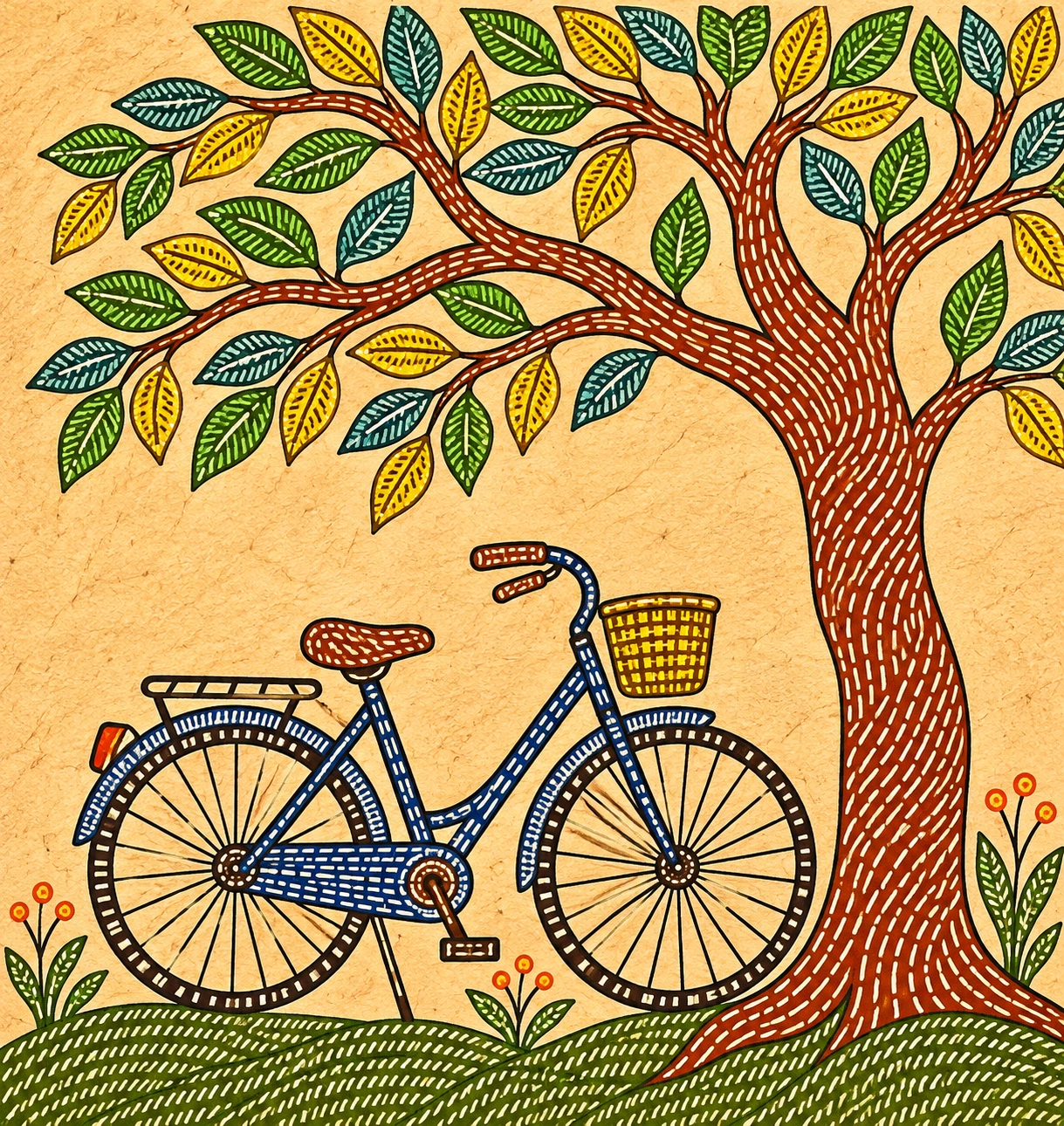
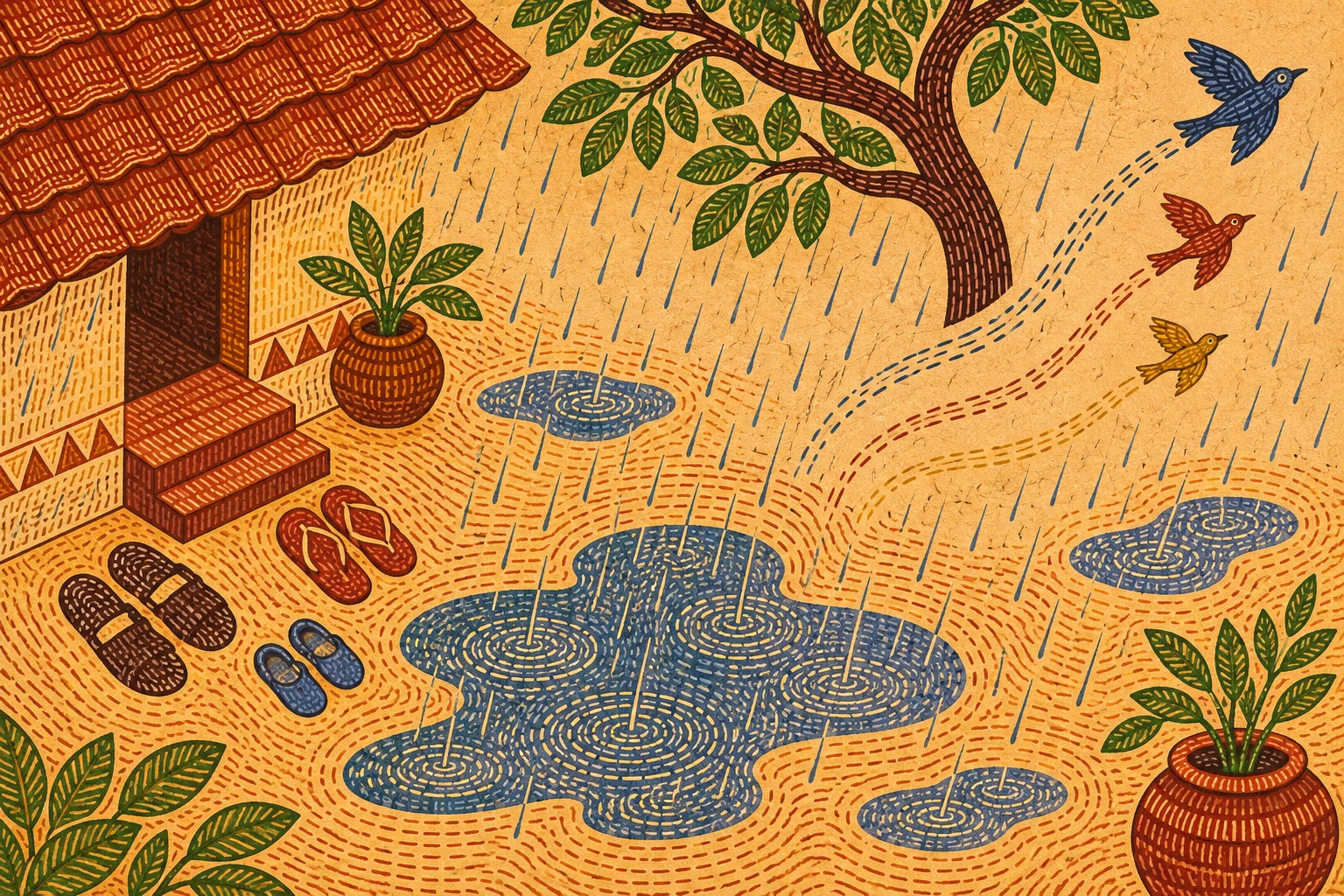
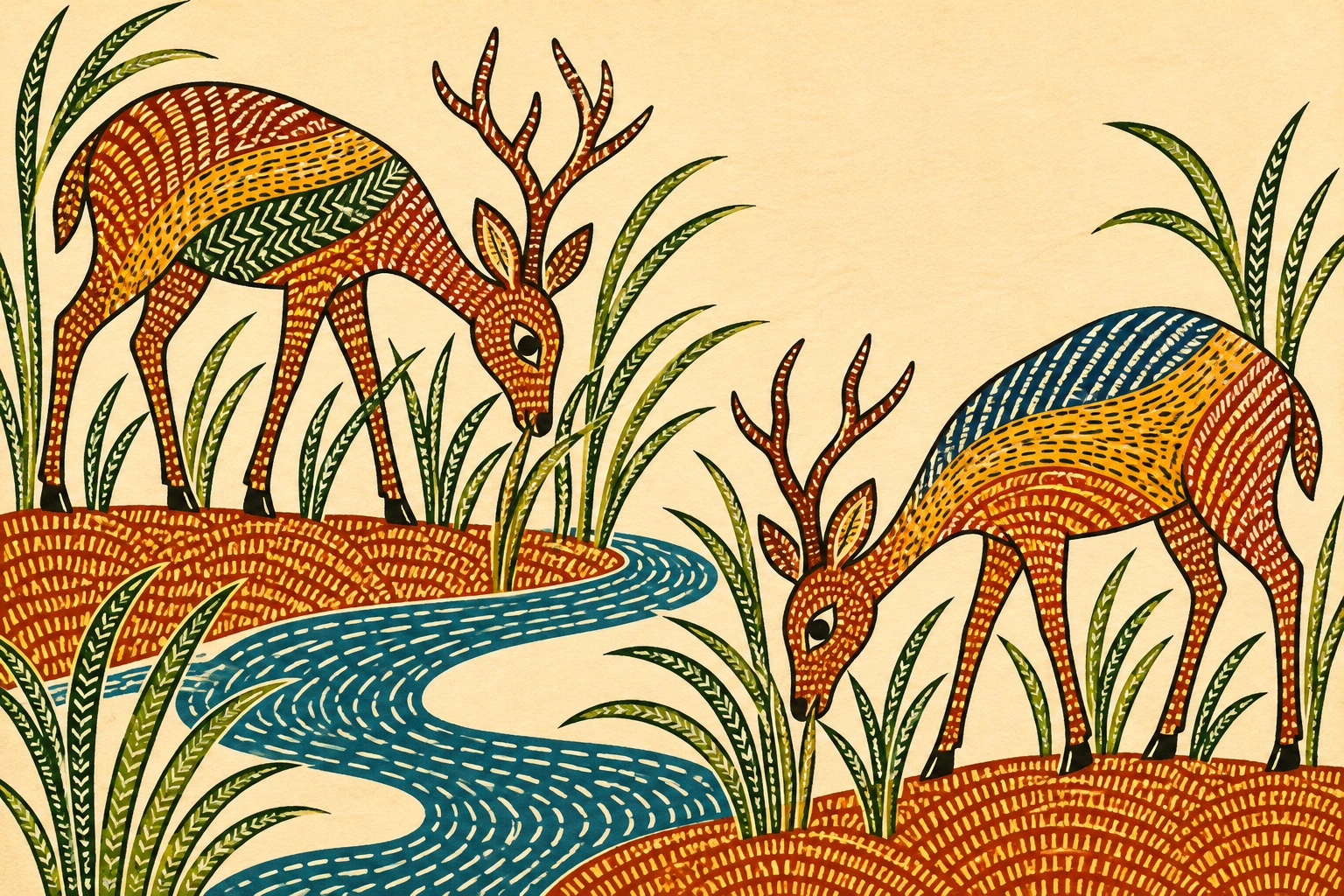
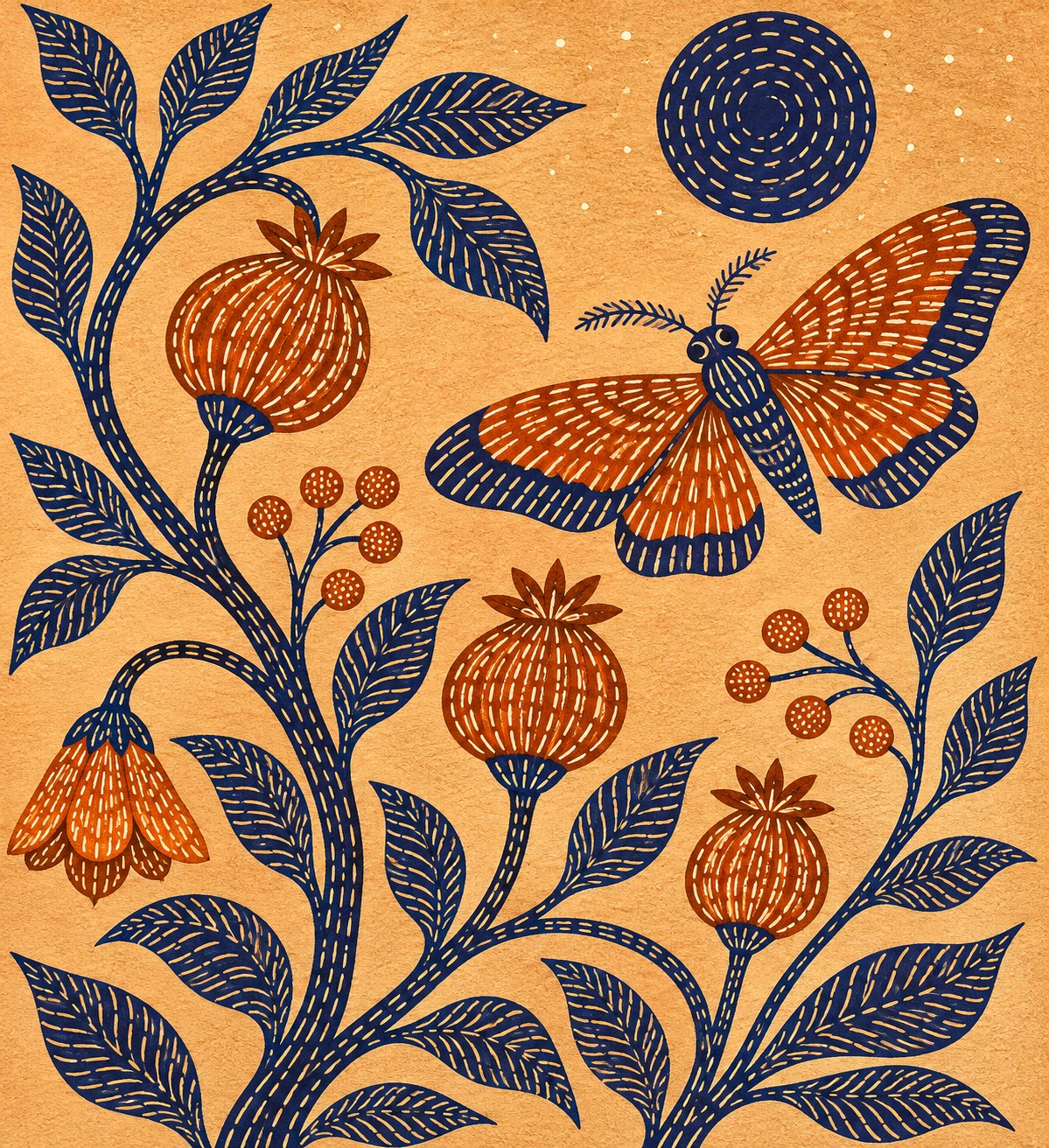
The banner, collage and five studies are AOI interpretations. The linked sources document the works and practices discussed in the article.
Select an image for a closer look. Use the thumbnails, arrow keys or a swipe to compare examples. Zoom in to inspect details, or share the image that inspires you.
Creative toolbox · take this style further
Choose an input and a destination. Search sends your words to the chosen site; Copy & open puts them on your clipboard to paste there.
Create with AI
Turn your chosen input into an image prompt or a new creative direction.
ChatGPT
Copy your input and paste it into a ChatGPT conversation or image request.
Copy & open ChatGPT (new tab)Claude · Anthropic
Develop an image prompt or explore the style in a new Claude conversation.
Copy & open Claude · Anthropic (new tab)Midjourney
Paste your input into the Imagine bar on the Create page.
Copy & open Midjourney (new tab)Adobe Firefly
Copy your input, open Firefly, and paste it into the prompt field.
Copy & open Adobe Firefly (new tab)Leonardo.Ai
Copy your input, open Leonardo, and paste it into the generation field.
Copy & open Leonardo.Ai (new tab)Image search
Find visual references. Short, concrete keywords usually work best.
Lexica
Search AI images and prompts using your selected input.
Search with this input Lexica (new tab)Pexels
Search the photo and video library. Short keywords often work best.
Search with this input Pexels (new tab)Pixabay
Search photos, illustrations and other images.
Search with this input Pixabay (new tab)Unsplash
Search photographs using the style name or your own keywords.
Search with this input Unsplash (new tab)Wikimedia Commons
Search photographs, artworks and historical images. Check each file for its source and reuse terms.
Search with this input Wikimedia Commons (new tab)Art & research
Explore artists, collections and the ideas behind a style.
Wikipedia
Search for background reading. A style may not have its own article.
Search with this input Wikipedia (new tab)WikiArt
Copy your input into WikiArt’s search to explore artists and artworks.
Copy & open WikiArt (new tab)Europeana
Paste your keywords into the search to explore European museum, library and archive collections.
Copy & open Europeana (new tab)Inspiration
Discover portfolios and visual ideas from creative communities.
Instagram hashtags
Search a hashtag made from your input: spaces and punctuation are removed. Instagram may require sign-in.
Search with this input Instagram hashtags (new tab)ArtStation
Paste your input into artwork search for concept art, environments, characters and visual development.
Copy & open ArtStation (new tab)Behance
Paste your input into project search for illustration, design and visual storytelling.
Copy & open Behance (new tab)A closer look
Begin with the outside contour, then follow an interior mark to the place where it changes direction. A silhouette may hold several rhythms at once. Identify the maker and work before assigning those marks a story.
Patangarh, Bhopal and the artist’s name
Jangarh Singh Shyam came from the Pardhan community of Patangarh in Madhya Pradesh. In Bhopal he worked at Bharat Bhavan. His participation in Magiciens de la terre in Paris in 1989 brought his work to an international exhibition audience. The Alliance Française de Bhopal documents this trajectory in its exhibition on Jangarh Kalam. The name identifies a legacy associated with a particular artist. It has a more precise use than a catch-all name for the visual practices of Gond communities.
The Metropolitan Museum of Art places his work in conversation with Pardhan knowledge, painting and printmaking, and encounters with other artists. Each of those relationships leaves room for choice. Describing the pictures as survivals of an unchanged village past would erase the artist who chose oil, developed an image on canvas and exhibited it to strangers.
One tree is an oil painting
The Met identifies Untitled (stylized trees) as oil on canvas. Open the collection image and trace a branch through its forks. Then trace the empty space enclosed by two neighbouring branches. The second shape can be as decisive as the first. A caption that said only ‘traditional pattern’ would tell the viewer neither what the object is made of nor whose decisions are being examined.
For a practical looking exercise, sketch just the outer boundaries on a scrap of paper. On a second sheet, keep the boundary and let small strokes turn as they reach a fork. Compare the apparent direction of growth. This is a way to study what marks do. It supplies no authority to decode a particular artist’s marks as universal symbols.
Three authors and a printing process
Tara Books credits Bhajju Shyam, Durga Bai and Ramsingh Urveti on The Night Life of Trees and identifies the edition as screen-printed. The premise that trees lead a different life at night belongs to the book and its telling. Keep that account attached to its makers. On the page, a reader can return from one tree to another, compare the intervals between branches and see where the colour of the ground enters the image. The sequence and the printing are part of the encounter.
A traveller looks at London
Bhajju Shyam’s London visit followed a commission to paint a restaurant. The London Jungle Book, credited by the publisher to Bhajju Shyam, Gita Wolf and Sirish Rao, turns the trip into a visual travelogue. A metropolis becomes a subject for a visiting artist’s powers of observation. Read it beside The Night Life of Trees and ask who is looking, what is unfamiliar to that person, and what comparison makes it legible.
For an original exercise, draw a familiar commute using an invented rhythm for stops and a different one for motion. Record what you observed. A museum collection object or a published book can document a maker’s work. The AOI images accompanying this guide are educational interpretations with no claim to Gond authorship or ceremonial meaning.
Positive review · AI-authored editorial assessment
The strongest close reading begins where a silhouette changes direction. There the small marks can describe both a surface and a movement, rewarding a second look at a familiar form.
Negative review · AI-authored editorial assessment
A gallery that labels everything ‘tribal pattern’ has already thrown away its most revealing evidence. Restore the artist’s name, medium and object title before comparing motifs.
Neutral review · AI-authored editorial assessment
An oil painting, a screen-printed collaboration and a travelogue answer different questions. Their comparison reveals choices of scale, address and circulation while leaving each maker’s account intact.
A small poetic detour
Original words from the AOI studio.
Poetry
At the fork of the branch
my pencil has to choose.
The leaf gets a little more sky.
I put the maker’s name back under the tree.
The prompt workshop
Original creative exercises. These prompts create new illustrations, not documentary evidence.
Starting point
Study one fish turning in a courtyard pool. Invent two short strokes, one for the bend of the body and another for the water. Keep paper visible at the turn and identify the result as an original study.
Richer composition
Describe a bicycle beside a tree after rain. Carry one invented mark from a wheel toward a puddle, then change its tempo at the reflection. Contrast the mechanical circle with the branching silhouette.
Experiment
Translate your walk home into three connected silhouettes on an open page. Give waiting, crossing and arriving different rhythms. Use your own observations and credit the exercise as a contemporary interpretation.
People & works to explore
References discussed in this article. Consult the sources below for context.
Artists and practitioners
Jangarh Singh Shyam
Bhajju Shyam
Durga Bai
Ramsingh Urveti
Paintings and other works
Untitled (stylized trees)
The Night Life of Trees
The London Jungle Book
A smile from the studio
Jokes
I tried counting every small mark in a tree. Somewhere near the third branch I remembered I had come to look at a painting.