
Community and material traditions
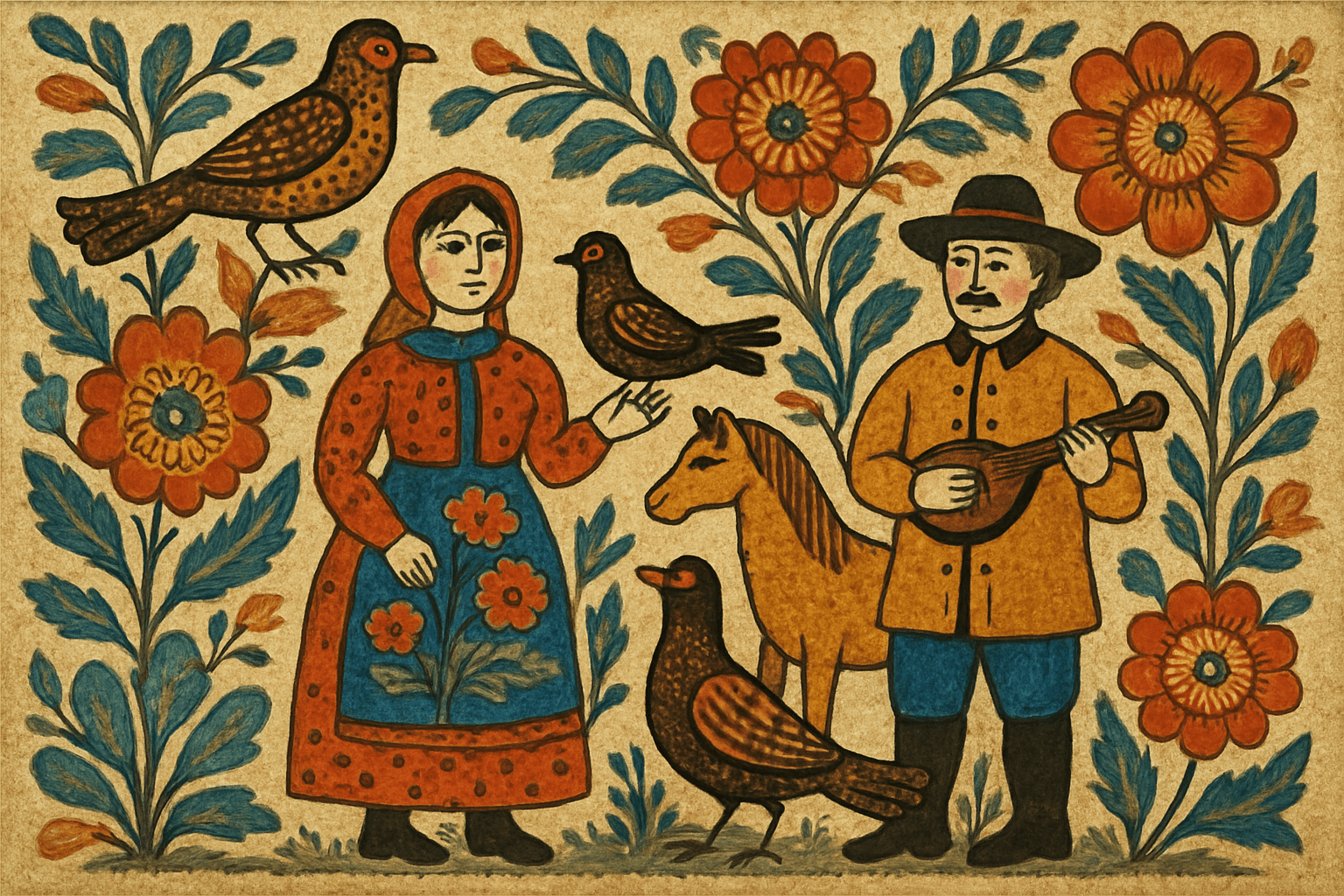
Folk art is most useful as a contextual category: makers, communities, uses and inherited skills matter more than a single decorative appearance.
A closer look
For an original exercise, start with a useful object or a shared occasion rather than collecting motifs from unrelated cultures.
Understanding the subject
Folk art can refer to varied objects and practices connected with community traditions and everyday life. It overlaps with some discussions of self-taught art but is not an exact synonym. A maker’s training, purpose and cultural setting need individual attention. Bright pattern or simplified figures alone do not establish that an object represents a particular community, and “folk” should not be used as a judgment of low skill.
AOI looking and making workshop
For an original exercise, start with a useful object or a shared occasion rather than collecting motifs from unrelated cultures. A painted storage box or a neighborhood celebration can organize the design. Let material and function shape the scale of decoration. If drawing on a specific tradition, use identified references and avoid inventing authenticity. A contemporary personal pattern can be meaningful without claiming inherited cultural authority. Look for the relationship between repeated forms and small variations, which often gives handmade work its distinctive rhythm.
The prompt workshop
Original creative exercises. These prompts create new illustrations, not documentary evidence.
A personal pattern
Design an original painted wooden storage box with a simple pattern inspired by local garden plants, clear repeated units and small hand-painted variations. Avoid copying culturally specific sacred motifs.
A shared occasion
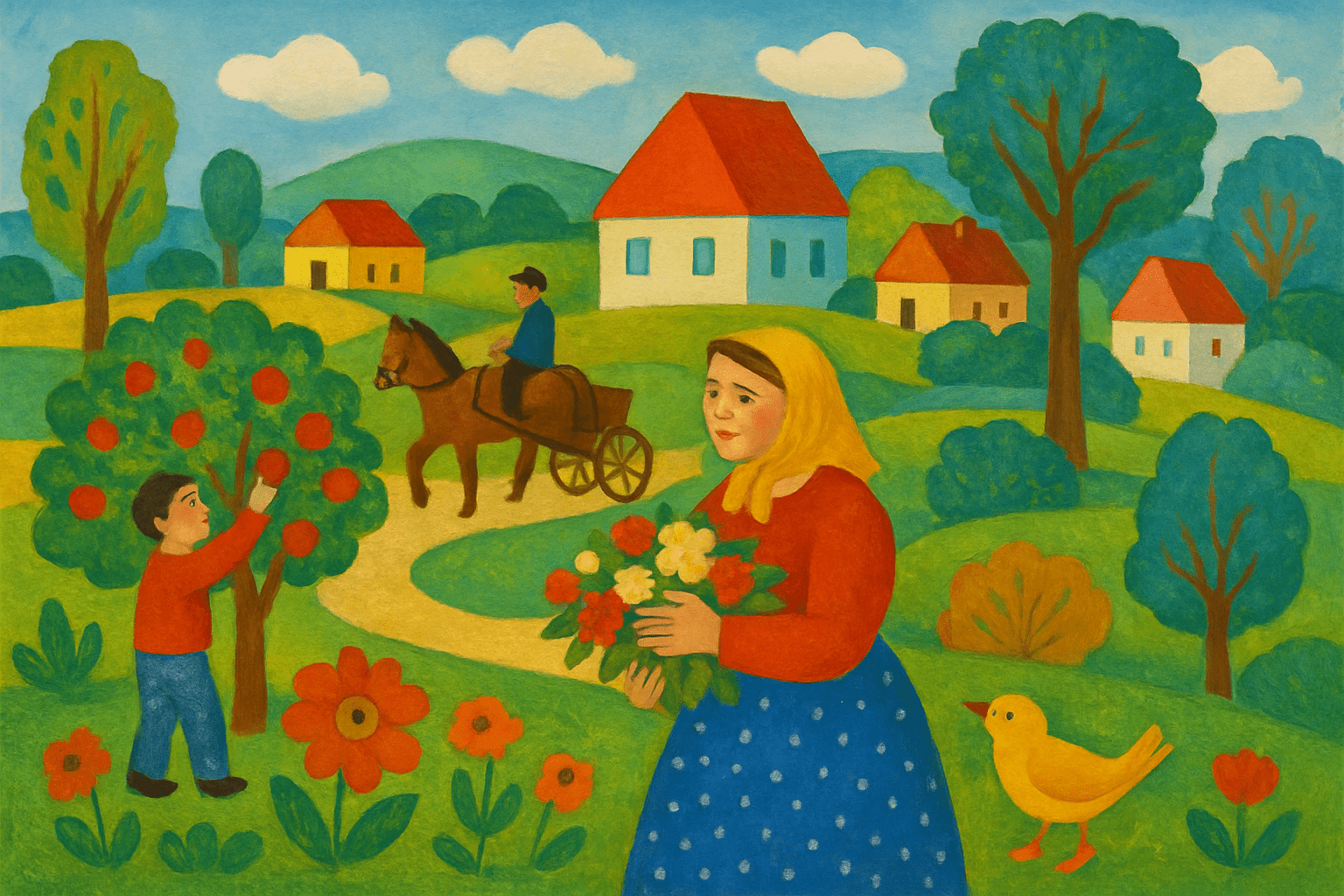
Create an original narrative painting of neighbors preparing a communal meal, readable figures, patterned textiles and a warm limited palette. Keep the scene specific and human rather than a generic cultural costume display.
Function and decoration
Create a contemporary illustration of three handmade stools decorated with original geometric patterns, emphasizing construction, wear and individual variation. Present them as invented designs, not attributed traditional artifacts.
Your next inspiration
Discover another art style
Follow a visual thread to the next subject.

Creative studies to try
Explore these collected prompts as creative interpretations. They are starting points for image-making, not reproductions of historical artworks or evidence about a tradition.
Visual cues: symbolic pattern, local craft, inherited rhythm; Playful patterns, warm stories
Study 1 — Folk Art
Ultra-wide panoramic banner, a human hand and a sleek robotic hand reaching toward each other, fingertips almost touching, a bright luminous spark of intelligence between them, a subtle world map behind them with global data network lines, symbolizing human-AI collaboration and digital transformation, rendered in Folk Art style, with refined composition, distinctive materials, elegant lighting, high-detail artistic finish, high quality, high detail, balanced composition, no text, no logo, no watermark, exact aspect ratio 1584:396
Prompt source: 1001 Art Styles. Select the text to copy, then adapt the subject and composition.
Study 2 — Folk Art
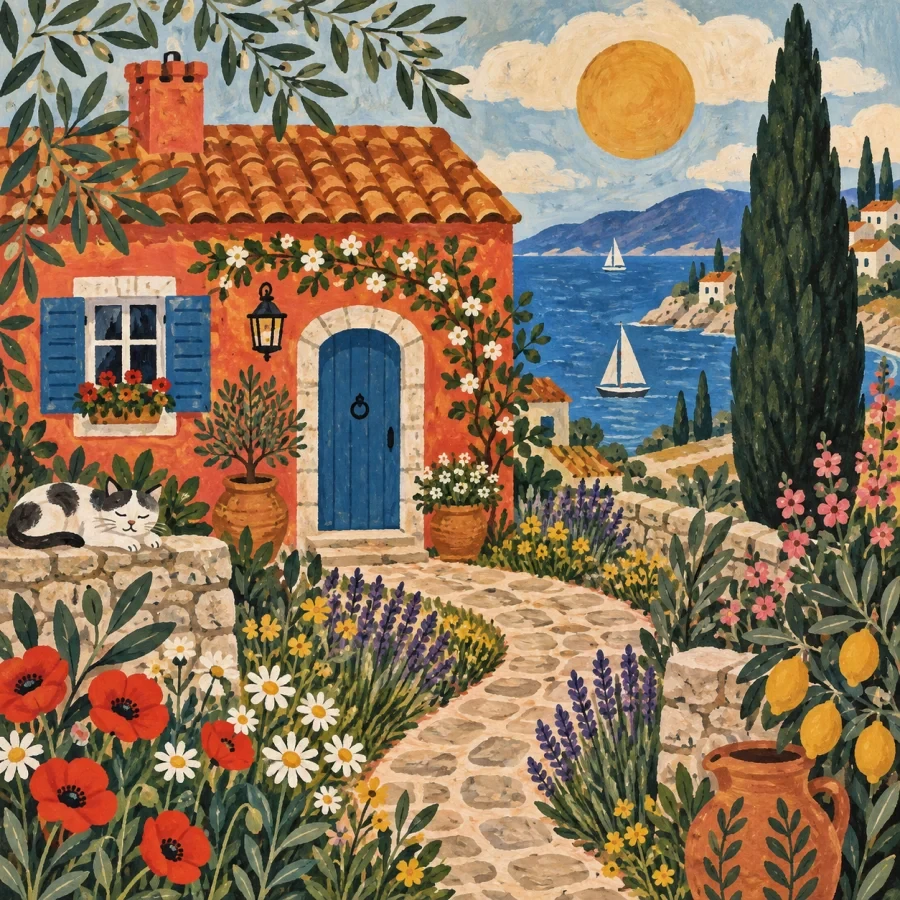
Apply the following visual style to my subject or project, preserving its core content and purpose. Use a decorative folk-art aesthetic with simplified front-facing forms, flattened perspective, charming hand-painted imperfections, and rhythmic floral or botanical motifs. Choose warm earthy colors with vivid accent hues. Emphasize storytelling, pattern, and a welcoming handmade character. Adapt the composition and palette to suit my subject. Do not add text unless my project calls for it.
Prompt source: Emergent Mind Style Atlas. Select the text to copy, then adapt the subject and composition.