
AOI concept · collection order and feral energy
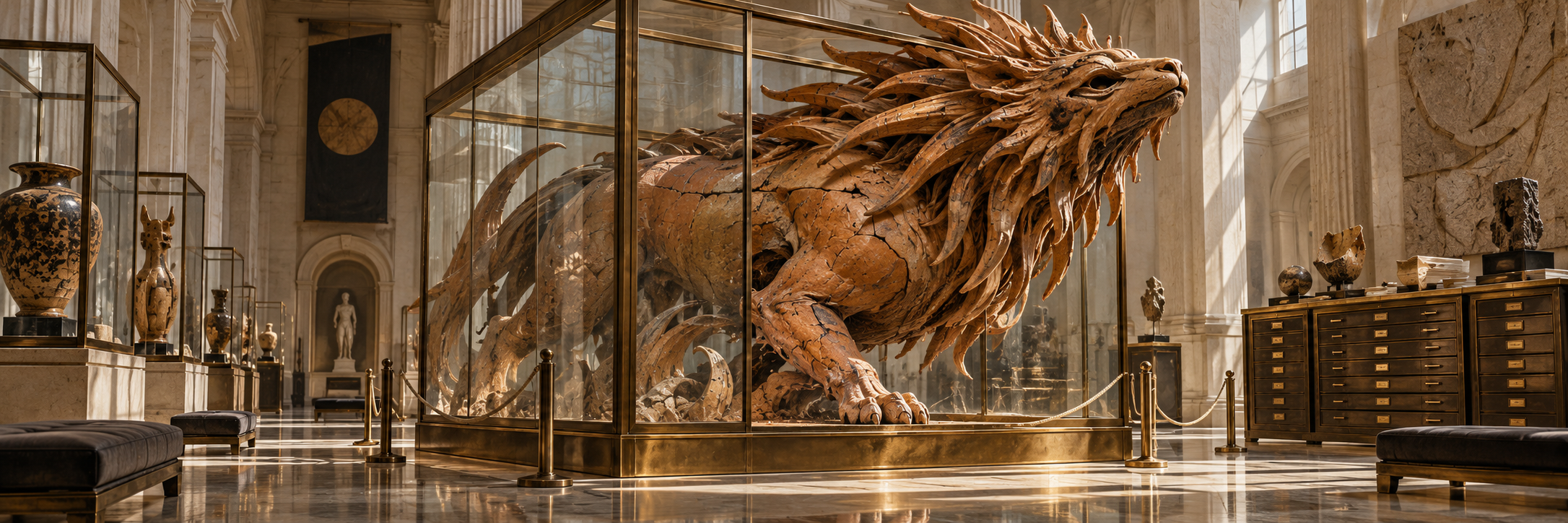
Ferocious Musealism imagines the museum losing its polite grip on an object. A vitrine, specimen mount or conservation frame establishes order; thorn, feather, charcoal or sculptural force pushes beyond it.
An A⊕I –[-.+] creαt¡ve c⊕ncept, n⊕t αn estαbl¡she∂ h¡st⊕r¡cαl m⊕vement.
A visual introduction
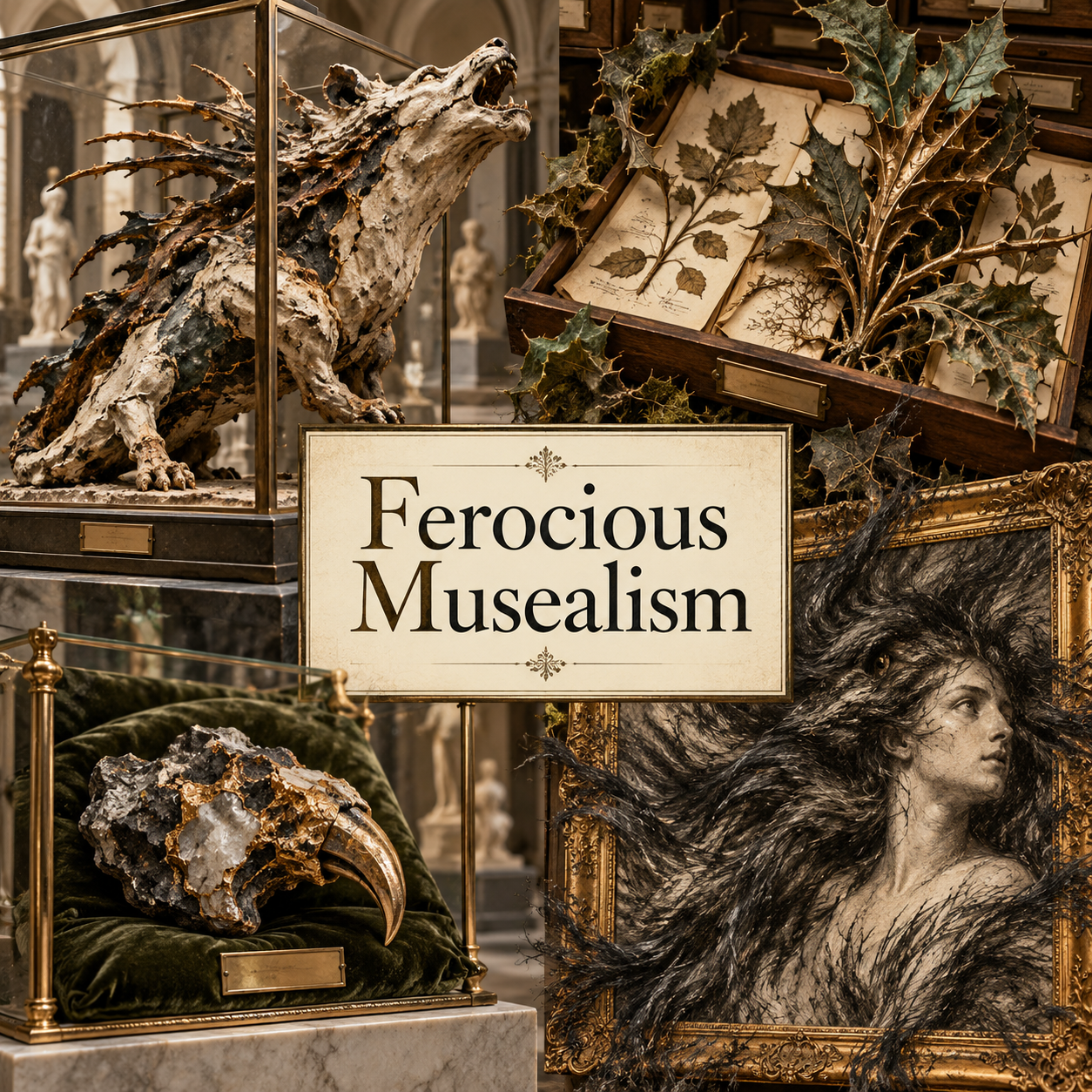
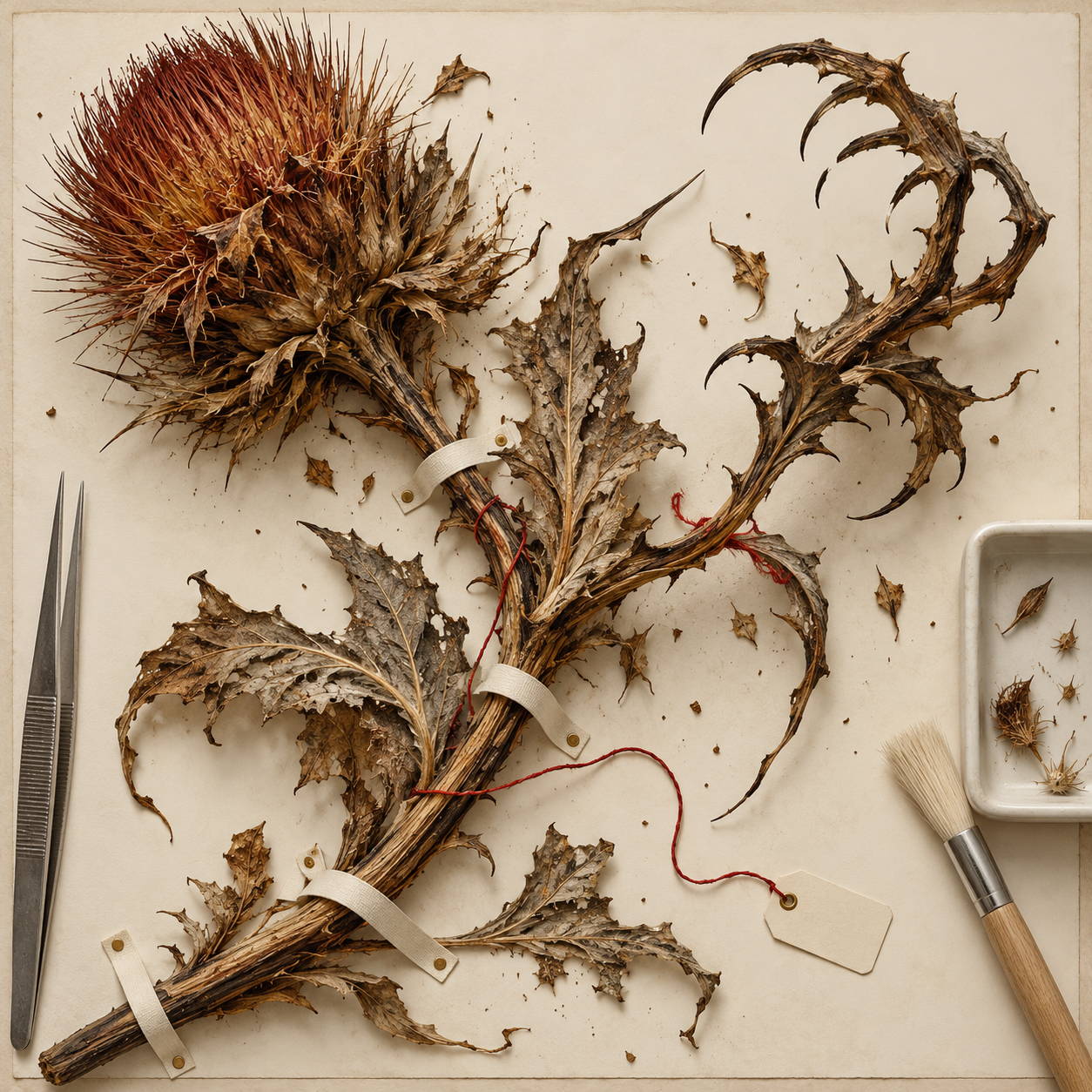
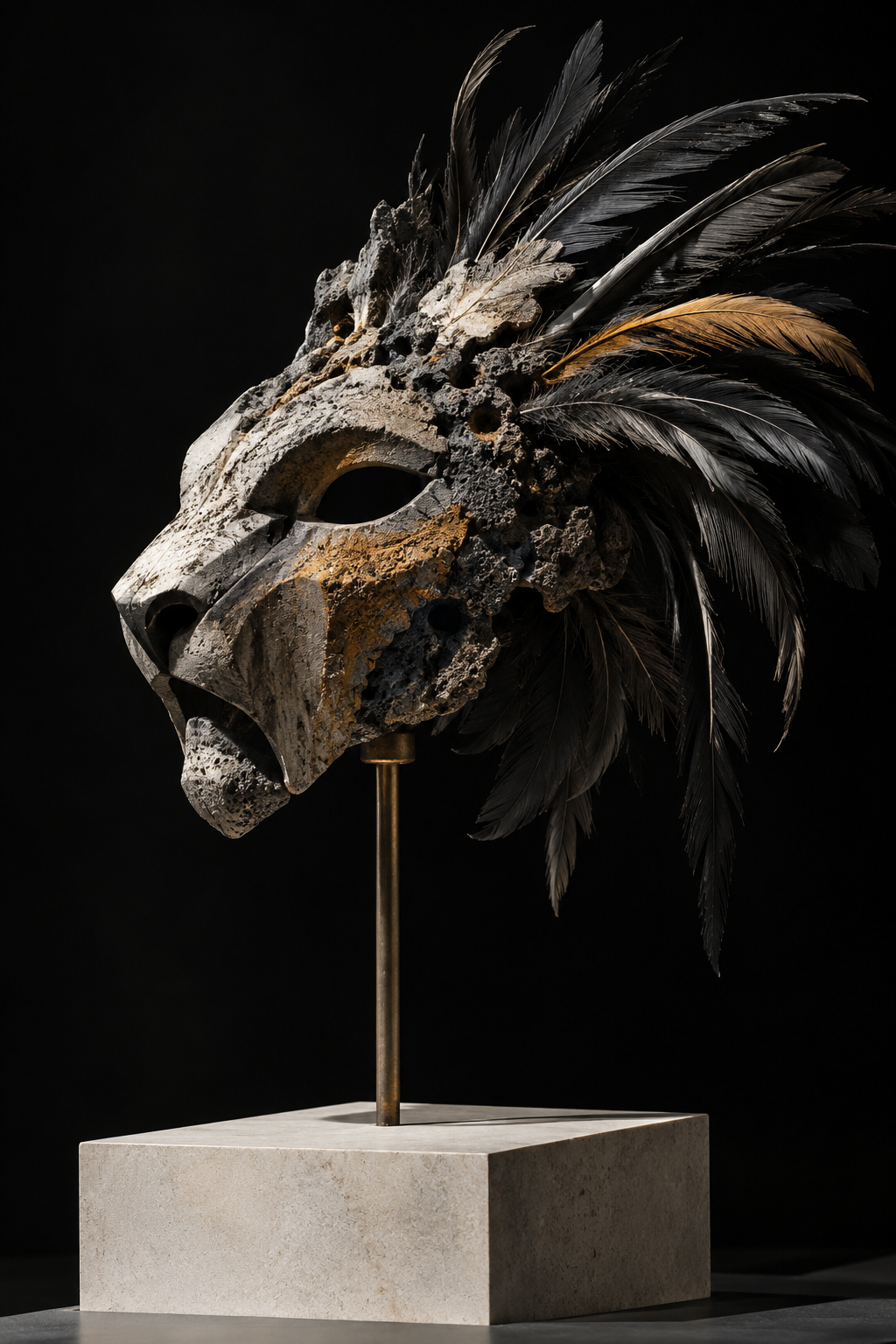
Five original AI-generated AOI interpretations: a dedicated banner, a centrally titled collage and three standalone studies.
Select an image for a closer look. Use the thumbnails, arrow keys or a swipe to compare examples. Zoom in to inspect details, or share the image that inspires you.
Creative toolbox · take this style further
Choose an input and a destination. Search sends your words to the chosen site; Copy & open puts them on your clipboard to paste there.
Create with AI
Turn your chosen input into an image prompt or a new creative direction.
ChatGPT
Copy your input and paste it into a ChatGPT conversation or image request.
Copy & open ChatGPT (new tab)Claude · Anthropic
Develop an image prompt or explore the style in a new Claude conversation.
Copy & open Claude · Anthropic (new tab)Midjourney
Paste your input into the Imagine bar on the Create page.
Copy & open Midjourney (new tab)Adobe Firefly
Copy your input, open Firefly, and paste it into the prompt field.
Copy & open Adobe Firefly (new tab)Leonardo.Ai
Copy your input, open Leonardo, and paste it into the generation field.
Copy & open Leonardo.Ai (new tab)Image search
Find visual references. Short, concrete keywords usually work best.
Lexica
Search AI images and prompts using your selected input.
Search with this input Lexica (new tab)Pexels
Search the photo and video library. Short keywords often work best.
Search with this input Pexels (new tab)Pixabay
Search photos, illustrations and other images.
Search with this input Pixabay (new tab)Unsplash
Search photographs using the style name or your own keywords.
Search with this input Unsplash (new tab)Wikimedia Commons
Search photographs, artworks and historical images. Check each file for its source and reuse terms.
Search with this input Wikimedia Commons (new tab)Art & research
Explore artists, collections and the ideas behind a style.
Wikipedia
Search for background reading. A style may not have its own article.
Search with this input Wikipedia (new tab)WikiArt
Copy your input into WikiArt’s search to explore artists and artworks.
Copy & open WikiArt (new tab)Europeana
Paste your keywords into the search to explore European museum, library and archive collections.
Copy & open Europeana (new tab)Inspiration
Discover portfolios and visual ideas from creative communities.
Instagram hashtags
Search a hashtag made from your input: spaces and punctuation are removed. Instagram may require sign-in.
Search with this input Instagram hashtags (new tab)ArtStation
Paste your input into artwork search for concept art, environments, characters and visual development.
Copy & open ArtStation (new tab)Behance
Paste your input into project search for illustration, design and visual storytelling.
Copy & open Behance (new tab)A closer look
Precise display geometry meets unruly organic contours. Cream archival surfaces, bronze supports and charcoal shadows make ochre growth and sharp silhouettes feel unusually alive.
An object that refuses to stay catalogued
This is an original AOI interpretation of the requested name, not a historical movement. Its central device is a conflict between two kinds of attention: the institution measures, protects and explains, while the displayed object seems to grow, resist or become something else. Neither side should disappear. A wild animal in an empty room is fantasy; a neatly mounted specimen is display. Ferocious Musealism needs the visible pressure between the two.
Build the order before breaking it
Start with a convincing system: parallel drawers, an evenly lit plinth, archival ties, a support rod or a conservation frame. Give that system enough clarity to be understood at thumbnail size. Then choose a single breach. A thorny stem curls beyond its mount; feathers interrupt the measured silhouette of a stone mask; charcoal strokes escape a framed surface. Repeating the same eruption everywhere weakens the contrast and turns the scene into general visual noise.
Let materials carry the argument
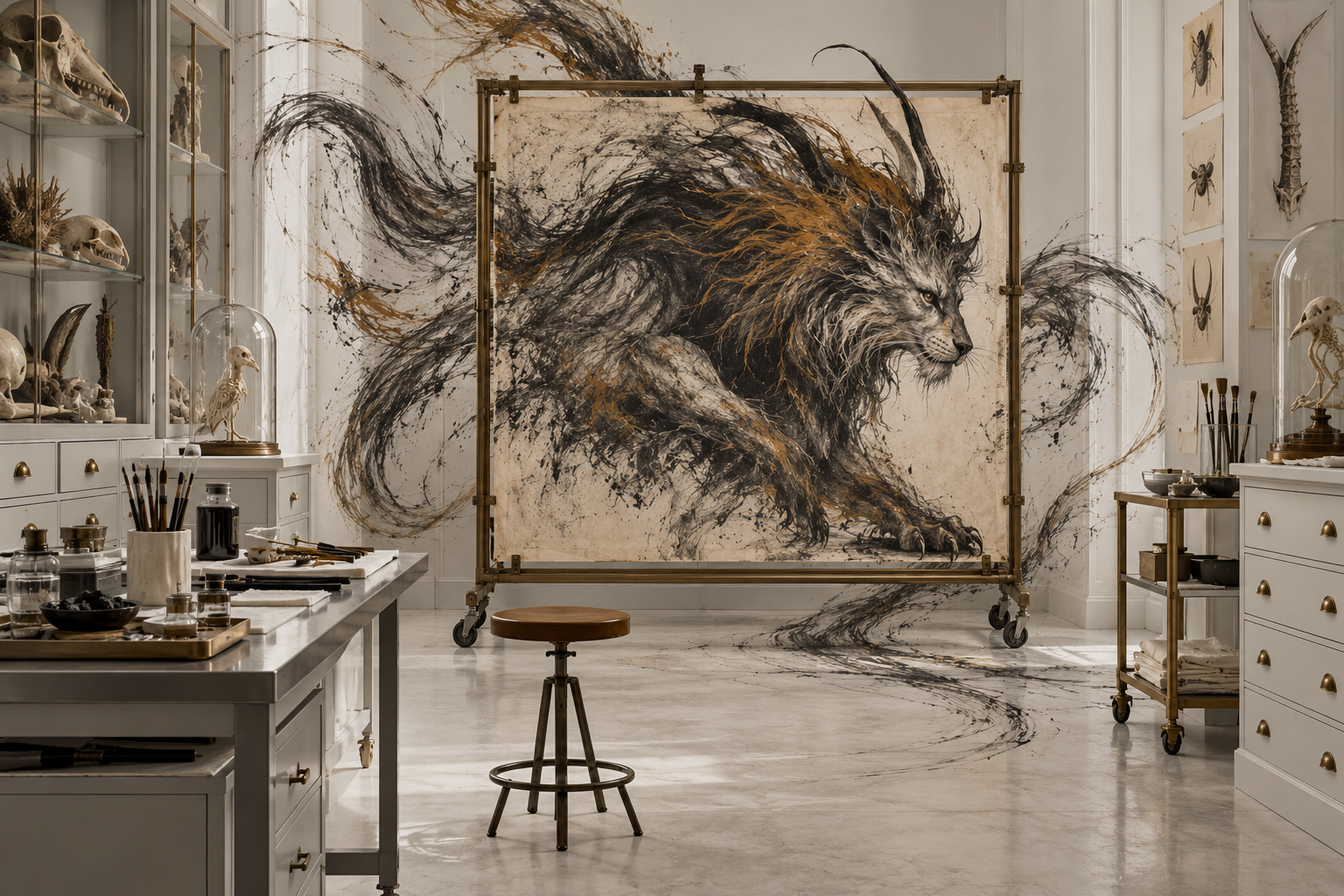
Smooth glass and careful metalwork suggest containment; porous stone, dry botanical fibres and ragged marks suggest energy that cannot be fully contained. Use side light to reveal their different surfaces. The botanical study keeps its blank tag and red thread small, so the claw-like growth remains the subject. The imaginary mask uses a narrow support against a broad erupting silhouette. The laboratory scene moves the same idea from an object to an entire room.
Conservation is the setting, not the villain
Real preventive conservation aims to reduce deterioration and damage, as the Smithsonian Museum Conservation Institute explains. Here that careful work supplies a visual counterpoint, not a claim that museums literally suppress living objects. Invented artifacts are especially useful: they let the picture explore classification without pretending a fabricated object belongs to a real culture or collection. Give any real borrowed object its actual identity and context instead of using it as anonymous exotic decoration.
Compose for tension, then edit
Keep the palette narrow enough to make a single warm accent meaningful. A hard glass edge beside soft charcoal can communicate more than a room full of shattered cases. This approach suits speculative exhibition imagery, book covers and editorial illustrations about memory, categories or institutional order. It becomes predictable when every picture is merely a monster escaping a box. Try a quieter disruption: a tag that cannot fit its specimen, a shadow extending beyond the plinth, or one carefully tied branch that continues growing.
A small poetic detour
Original words from the AOI studio.
Poetry
The specimen declines
We gave the thorn a number and a bed,
a ribbon white enough to quiet rain.
It curled beyond the place the pencil said
and made a small dark forest of its name.
The glass held light. The drawer remembered dust.
The careful hands had meant to keep it whole.
Yet something in the dry and patient husk
still leaned toward weather, hunger, root and soil.
The prompt workshop
Original creative exercises. These prompts create new illustrations, not documentary evidence.
One controlled breach
Create an original museum specimen study: a dried branch secured to cream archival board begins curling into a claw-like silhouette. Keep the mounting ties precise, the tag blank and the palette restrained.
Choose one point where order gives way.
A whole room in tension
Imagine a conservation laboratory with a wheeled frame holding an animal-like charcoal drawing. Let a few vigorous marks extend into the otherwise orderly room. Use tactile surfaces and quiet daylight.
The frame, tools and empty floor should remain believable.
Change only the boundary
Develop two versions of an imaginary stone object on a plinth: one entirely contained, the other with feather-like growth extending beyond the support. Keep light, camera and material constant.
Compare how a small silhouette change alters the narrative.
Your next inspiration
Discover another art style
Follow a visual thread to the next subject.

A smile from the studio
Jokes
The curator completed the condition report: “Stable, with minor surface activity.” By lunchtime the surface activity had developed antlers and requested a larger vitrine. The registrar asked whether this counted as an acquisition or an internal transfer. The object declined to comment, but ate the pencil.
Sources and further exploration
Smithsonian Museum Conservation Institute — the real aims of preventive conservation