Cultural and historical umbrella
Egyptian art spans much more than a set of ancient motifs. Context, function and material help explain the conventions of individual works.
A closer look
Study one object’s purpose before borrowing its appearance.
Understanding the subject
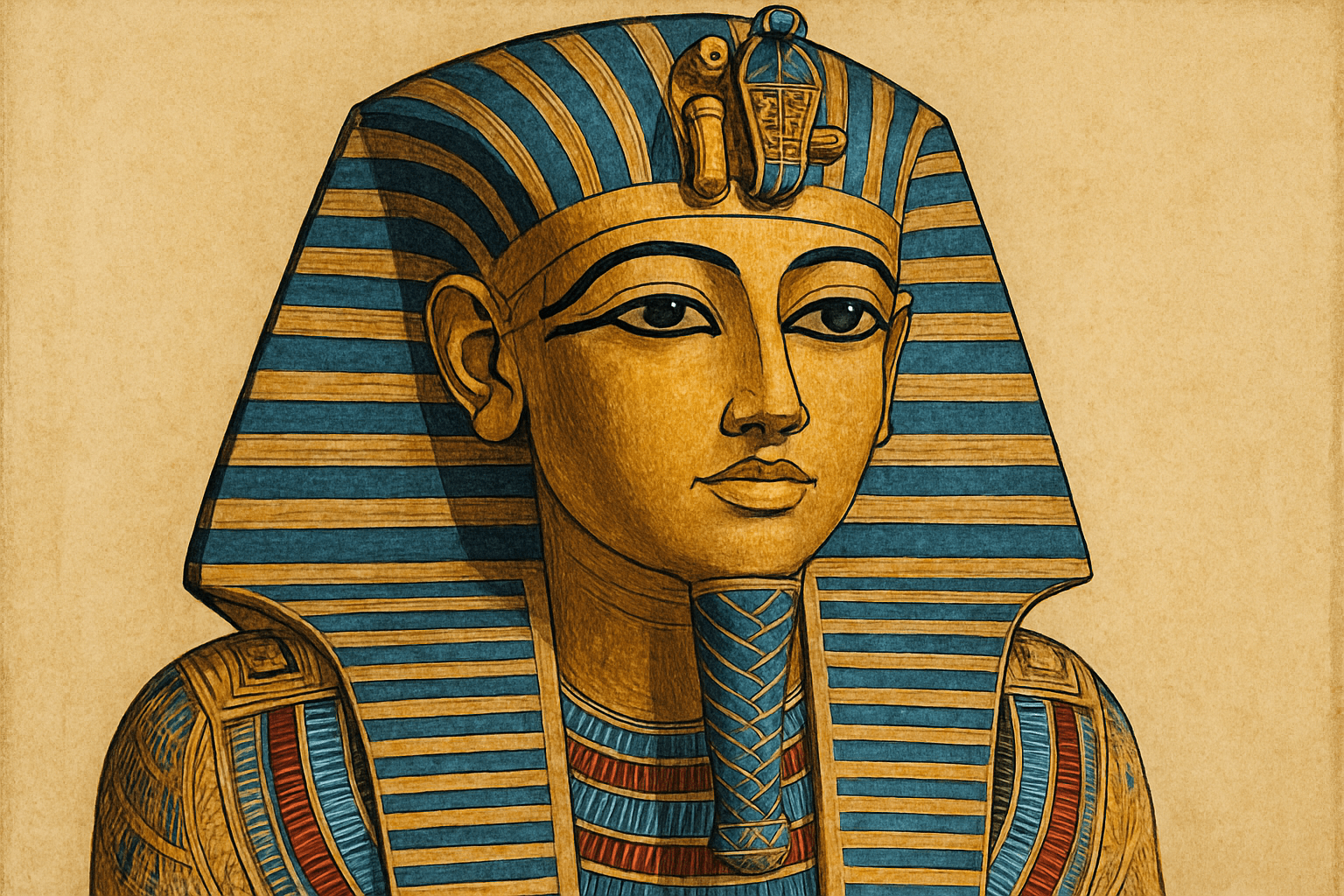
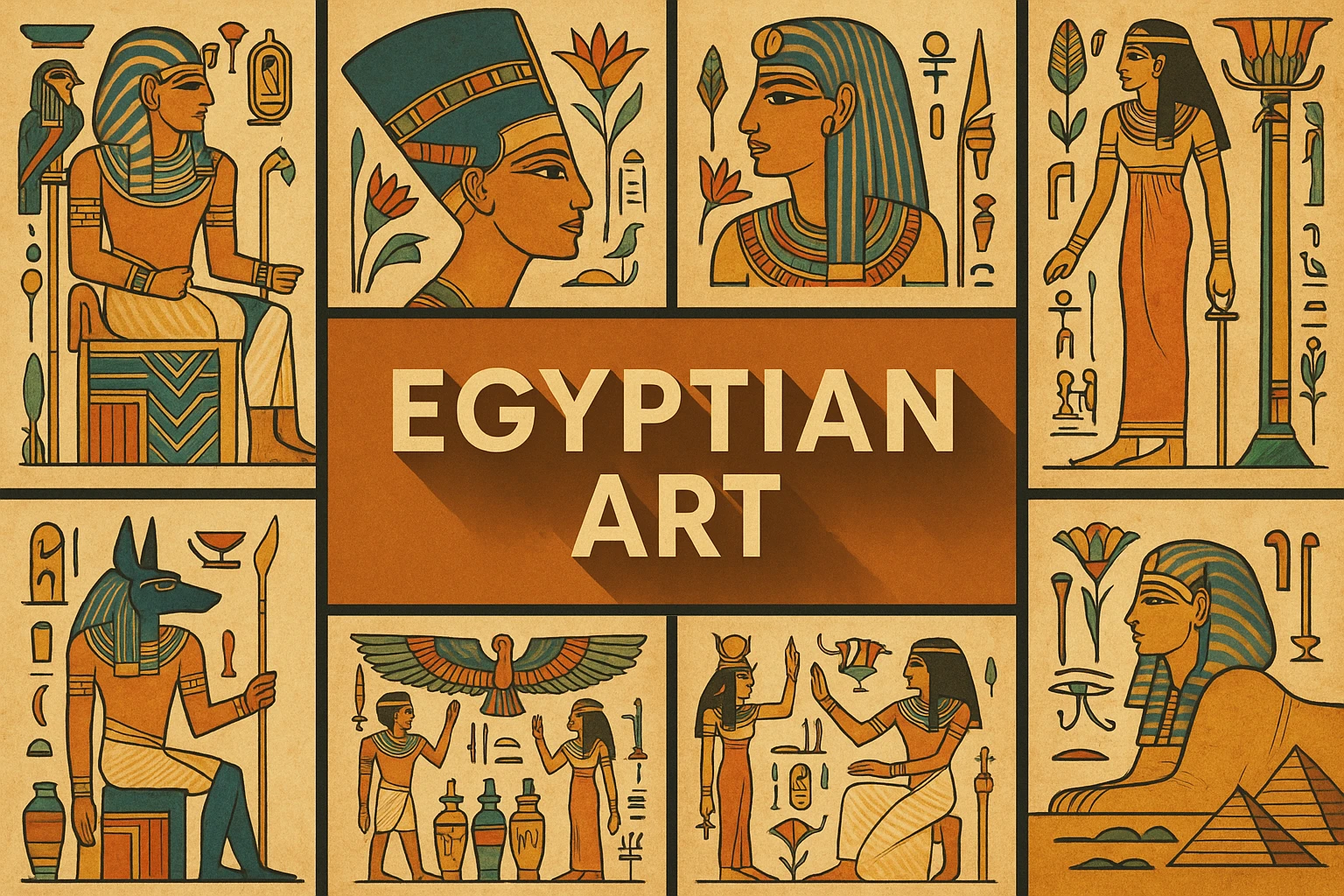
Egyptian art includes a long history and diverse forms, and ancient works alone cover substantial changes over time. In selected ancient examples, proportion, composite viewpoints and scale can communicate order or importance rather than reproduce a moment seen from one camera position. These conventions should be understood through particular objects and contexts. They are not evidence that all Egyptian artists, past or present, use one timeless national style.
AOI looking and making workshop
Study one object’s purpose before borrowing its appearance. A small personal object, a tomb scene and a monumental statue invite different viewing distances and kinds of attention. For an original design, choose a limited set of formal decisions—balanced masses, clear profiles or repeated bands—and apply them consistently. Do not combine sacred signs merely because they look attractive. Contemporary exercises can explore symmetry and contour with invented secular subjects, while captions make clear that the result is an interpretation rather than a historical document.
The prompt workshop
Original creative exercises. These prompts create new illustrations, not documentary evidence.
Balanced forms
Create an original contemporary composition of two seated figures facing a central flowering plant, strong profiles, balanced masses and a restrained stone-and-blue palette. Use no sacred emblems or simulated inscriptions.
An object study
Create a carefully lit illustration of an invented small carved vessel with a simple geometric border, emphasizing material, proportion and surface. Avoid artificial excavation labels or claims of historical provenance.
Convention reimagined
Design a contemporary poster-like image of urban gardeners using clear profiles and repeated horizontal bands. Keep the modern subject explicit and explore visual order without copying an ancient scene.
Your next inspiration
Discover another art style
Follow a visual thread to the next subject.