
Moving-image motif and typographic effect
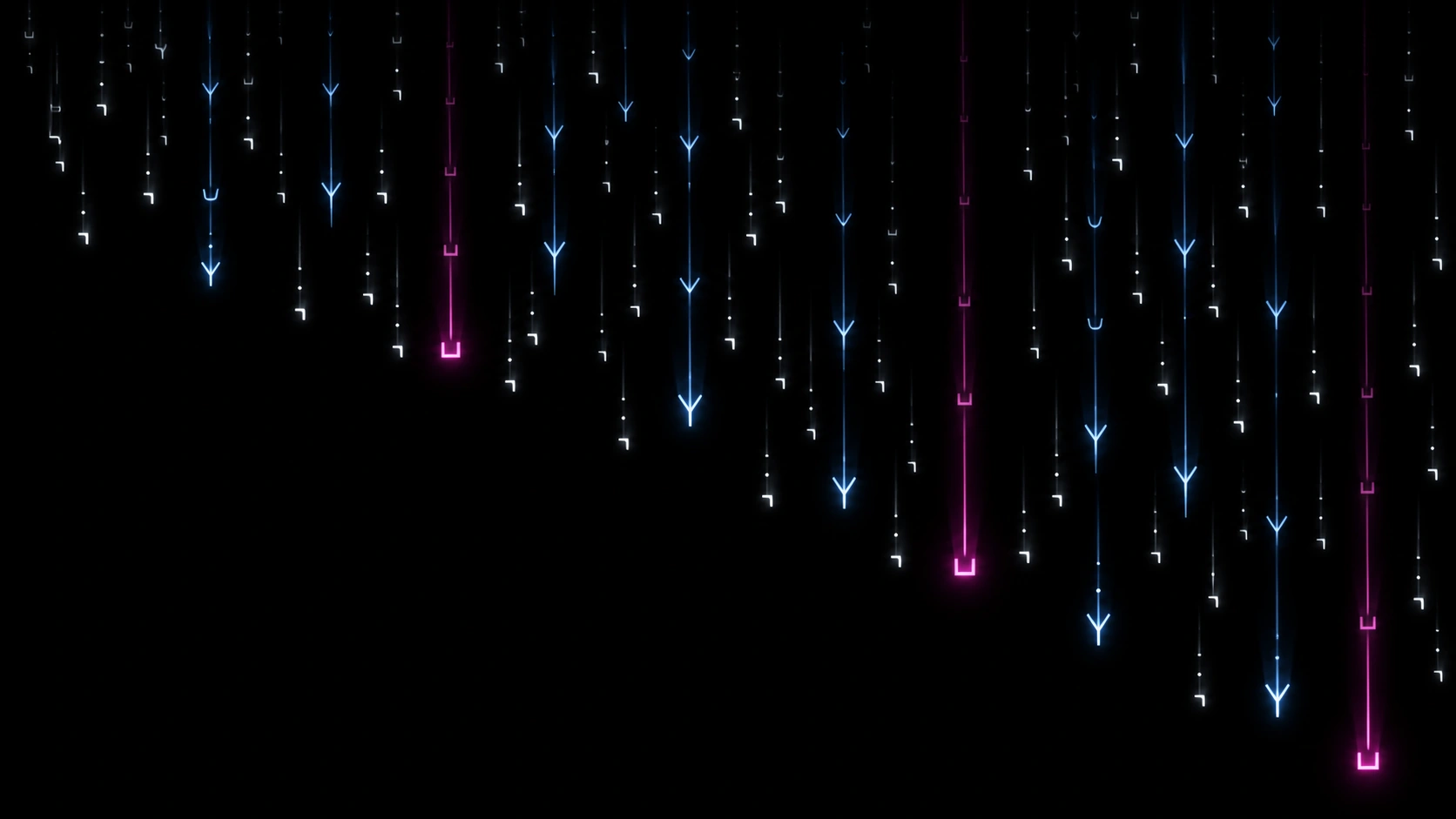
Take a falling column of marks and cover its brightest one. In the right drawing you can still tell which way it was going. Digital Rain is the pleasure of seeing time inside a row of signs. The Matrix made the green version famous. Our whale, station and bell ask what else the arrangement can show.
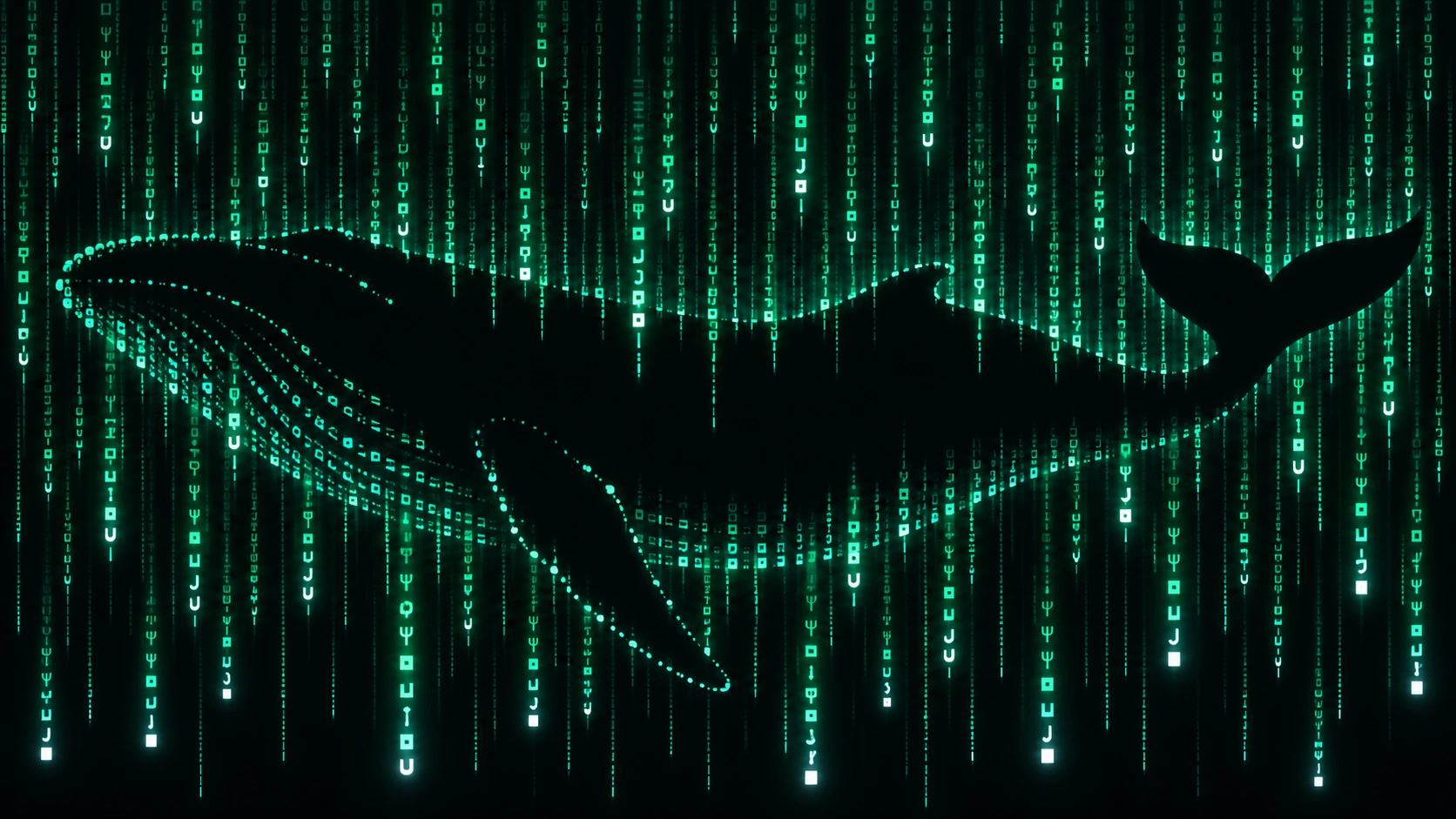
A visual introduction
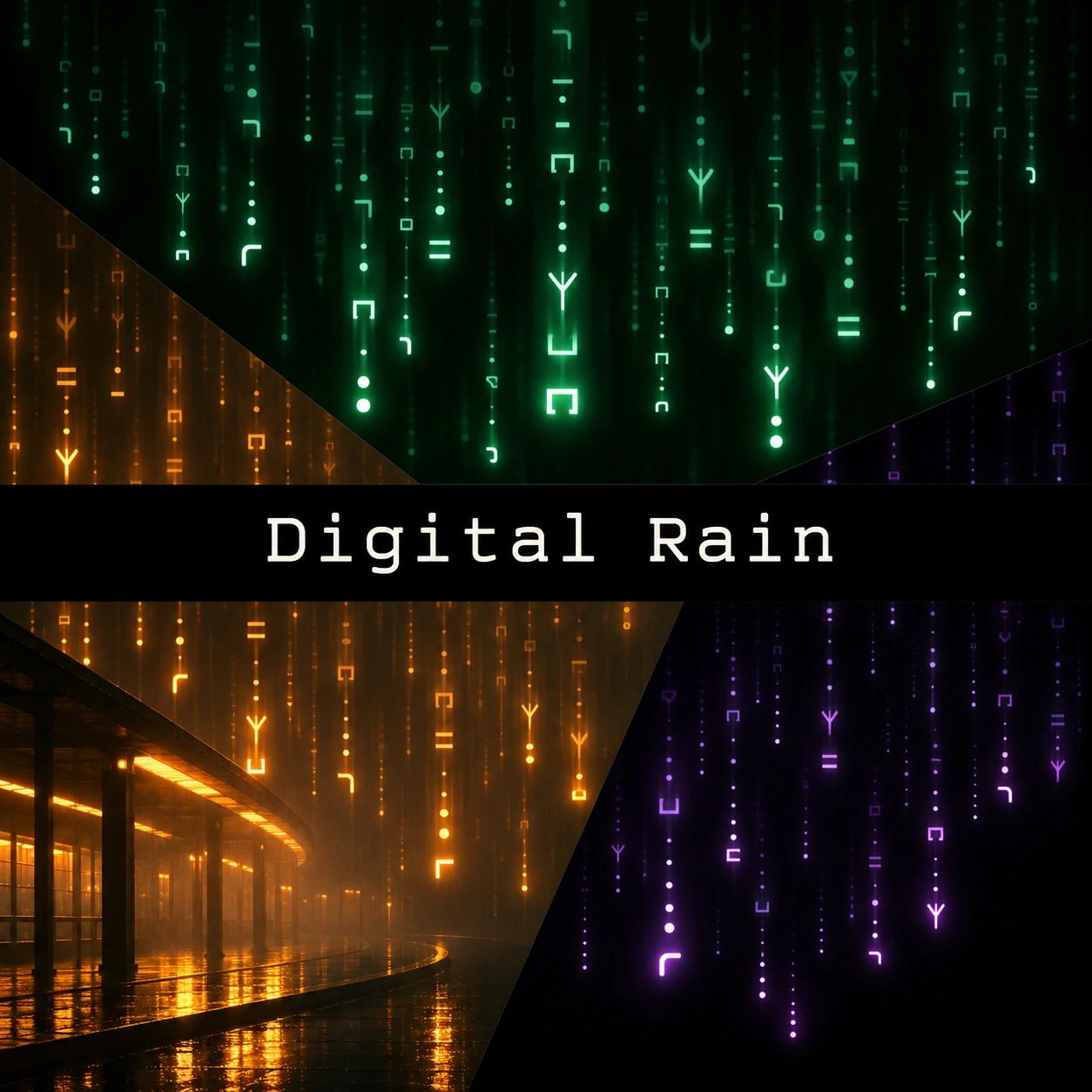
These five original AI interpretations use invented glyphs. The production interviews document the film effect. The whale, platform, bell and abstract score were composed for this guide.
Select an image for a closer look. Use the thumbnails, arrow keys or a swipe to compare examples. Zoom in to inspect details, or share the image that inspires you.
Creative toolbox · take this style further
Choose an input and a destination. Search sends your words to the chosen site; Copy & open puts them on your clipboard to paste there.
Create with AI
Turn your chosen input into an image prompt or a new creative direction.
ChatGPT
Copy your input and paste it into a ChatGPT conversation or image request.
Copy & open ChatGPT (new tab)Claude · Anthropic
Develop an image prompt or explore the style in a new Claude conversation.
Copy & open Claude · Anthropic (new tab)Midjourney
Paste your input into the Imagine bar on the Create page.
Copy & open Midjourney (new tab)Adobe Firefly
Copy your input, open Firefly, and paste it into the prompt field.
Copy & open Adobe Firefly (new tab)Leonardo.Ai
Copy your input, open Leonardo, and paste it into the generation field.
Copy & open Leonardo.Ai (new tab)Image search
Find visual references. Short, concrete keywords usually work best.
Lexica
Search AI images and prompts using your selected input.
Search with this input Lexica (new tab)Pexels
Search the photo and video library. Short keywords often work best.
Search with this input Pexels (new tab)Pixabay
Search photos, illustrations and other images.
Search with this input Pixabay (new tab)Unsplash
Search photographs using the style name or your own keywords.
Search with this input Unsplash (new tab)Wikimedia Commons
Search photographs, artworks and historical images. Check each file for its source and reuse terms.
Search with this input Wikimedia Commons (new tab)Art & research
Explore artists, collections and the ideas behind a style.
Wikipedia
Search for background reading. A style may not have its own article.
Search with this input Wikipedia (new tab)WikiArt
Copy your input into WikiArt’s search to explore artists and artworks.
Copy & open WikiArt (new tab)Europeana
Paste your keywords into the search to explore European museum, library and archive collections.
Copy & open Europeana (new tab)Inspiration
Discover portfolios and visual ideas from creative communities.
Instagram hashtags
Search a hashtag made from your input: spaces and punctuation are removed. Instagram may require sign-in.
Search with this input Instagram hashtags (new tab)ArtStation
Paste your input into artwork search for concept art, environments, characters and visual development.
Copy & open ArtStation (new tab)Behance
Paste your input into project search for illustration, design and visual storytelling.
Copy & open Behance (new tab)A closer look
A leading mark carries the strongest light. Older marks taper unevenly behind it, and neighbouring columns reach different depths. The intervals of black do as much drawing as the luminous strokes. A thin field can suggest a pane of glass. One long interruption can give an entire animal its weight.
Who drew the marks, and who made them fall?
For the 1999 film The Matrix, Simon Whiteley at Animal Logic drew characters informed by Japanese katakana and by cookbooks belonging to his wife, Miki. In his account for Ausfilm he describes mixing those forms with hand-drawn numerals and punctuation, then scanning the marks. He credits Justen Marshall with scripting their movement and fade. That division of labour is worth remembering. Someone designed what a single sign looked like, and someone gave a multitude of signs a way to behave.
Whiteley also describes aiming for the green appearance of an older phosphor monitor. In his interview with Alan French, he recalls experimenting with a sideways movement before turning the marks downward and slowing them. The cookbook story is his account of a source of shapes. Treating the image as a transcribed menu misses what those two artists managed to do with timing.
Put a little past above the present
Draw three marks in the same vertical lane. Leave the bottom one crisp, dim the middle one, and let the upper one almost disappear. Now place a second lane beside it with a different start and stop. A whole picture can grow out of that modest inequality. When every column begins at the top and lands on the same baseline, a viewer may quite reasonably see a beaded curtain.
Choose a small vocabulary of marks whose shapes survive dimming. A hook, a fork and a square notch remain different at a distance. Our studies use invented signs. The letters of a real script have histories and readers. If a commission needs text in a named language, use meaningful, checked text and decide which parts ought to remain readable.
Let an object interrupt the signal
To reveal a whale, begin with a dark body-shaped reserve and allow only a few streams to cross it. The first uninterrupted column beneath the belly tells the eye how broad the animal is. If you trace every inch of its outline in light, the whale looks pasted over the rain. Give the viewer one stretch of back to finish in the dark.
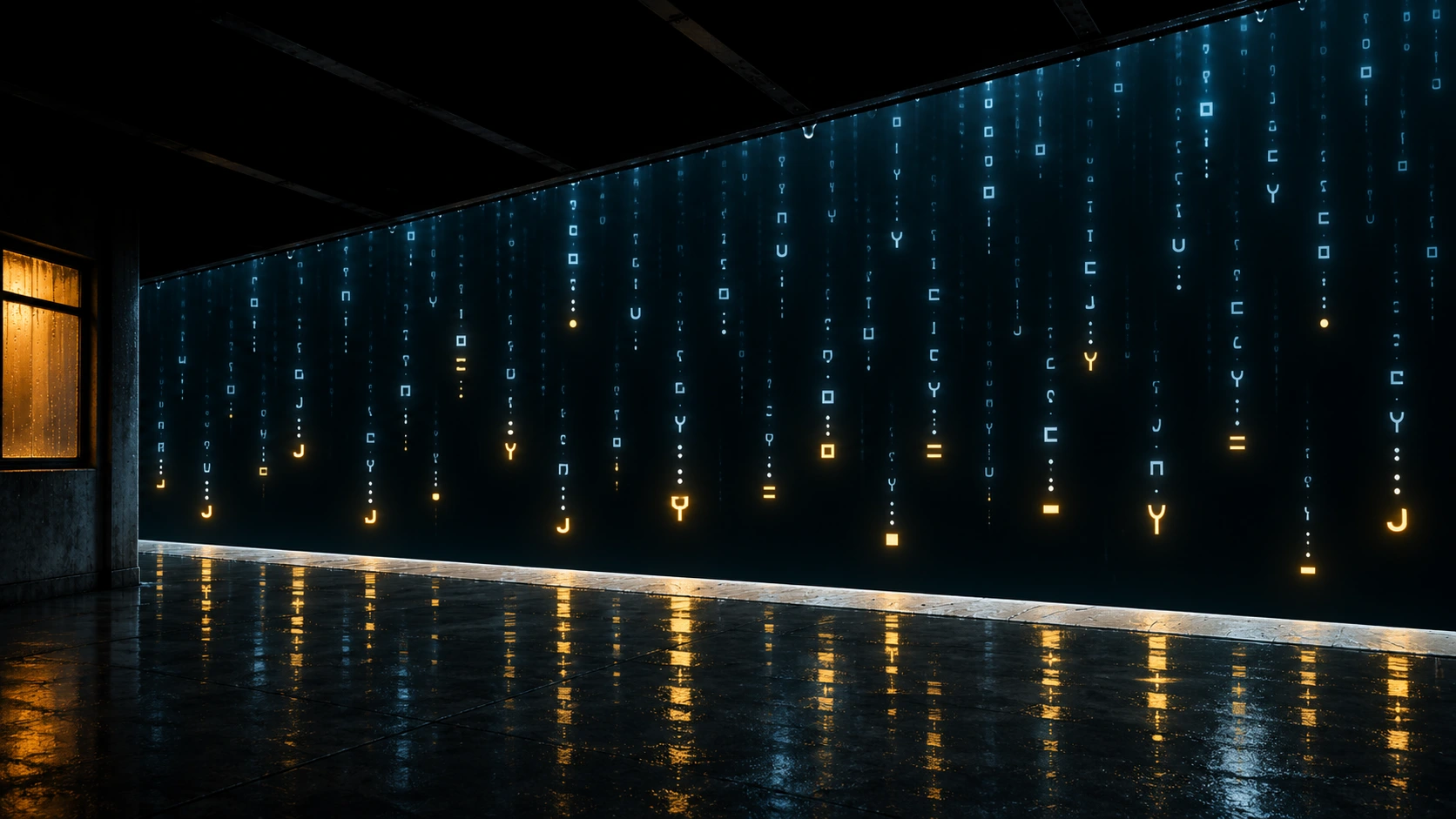
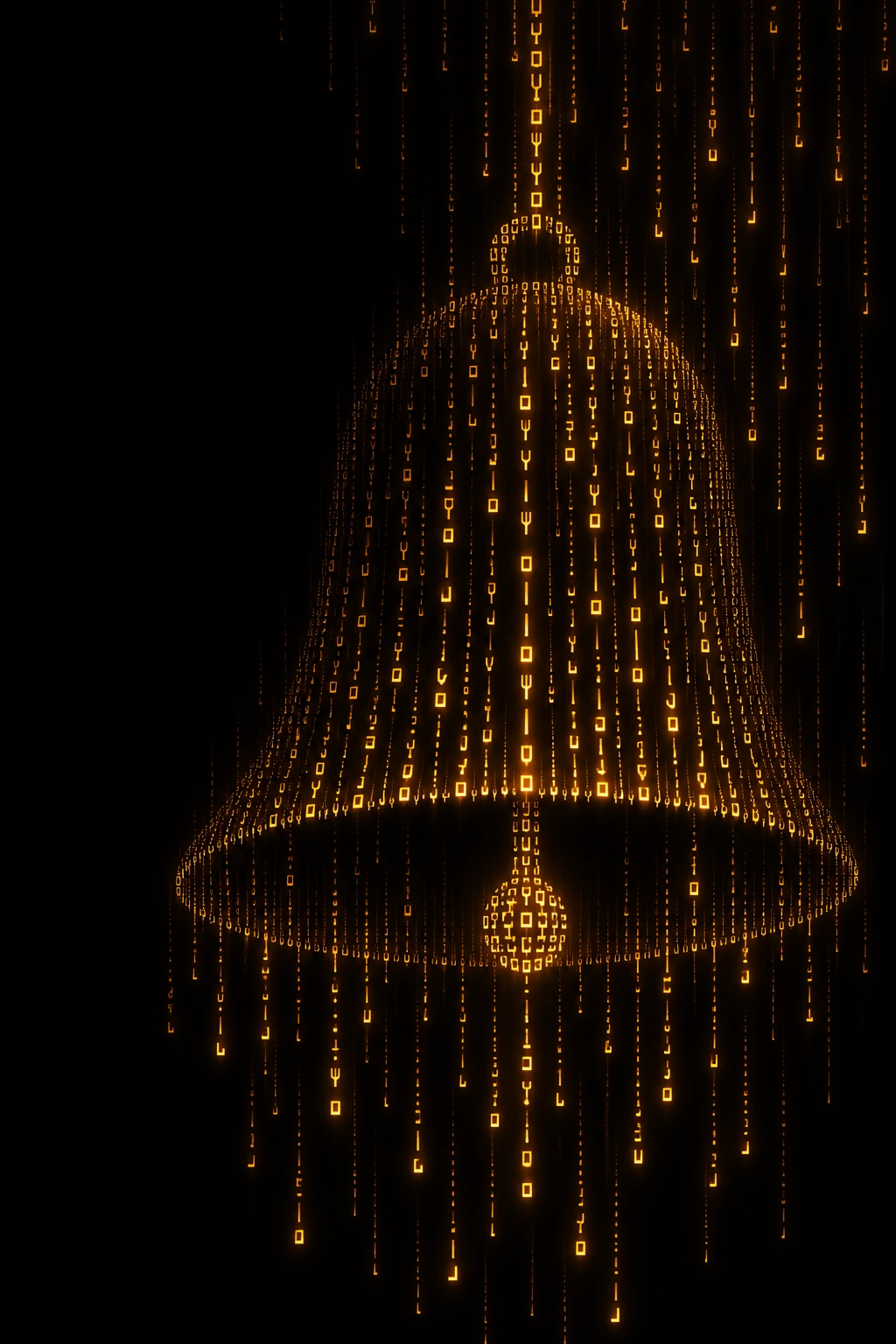
A station canopy offers a different test. Put a roof across active columns and leave the strip below it quiet. The same marks now describe shelter and distance. For a bell, all you may need are the places at which columns end and begin again. The gap at its mouth should still read after the brightest amber has been turned down.
Colour, tempo and a comparison
There is room beyond phosphor green. Rezmason’s independent browser project documents palette variations and several forms of code rain. As an experiment on paper, assign three trail lengths to three families of signs, then take all the colour away. If the groups still feel as though they move differently, colour can come back as an accent.
Compare ASCII Art, where the distribution of characters can build a still image, and Glitch Art, where a break in the image-making process can become the subject. For Digital Rain I would ask a smaller question. Can one quiet part of the picture tell us where a particular mark has just been? A single well-placed gap is a much cheaper storytelling device than another thousand luminous characters.
A small poetic detour
Original words from the AOI studio.
Poetry
One hook arrives. Its elder fades.
The dark keeps neither score nor name.
A bell takes shape where nothing lands.
The light below resumes its game.
The prompt workshop
Original creative exercises. These prompts create new illustrations, not documentary evidence.
Make three columns fall
On black paper, invent three small signs. Draw three narrow columns with different stopping heights. Make the lowest sign in each column brightest and fade the separated marks above it. Keep a broad patch of untouched black.
Give the rain a roof
Invent an empty subterranean platform and one amber window. Put blue-white falling glyphs beyond the canopy, with a clean interruption beneath the roof. Let a few broken reflections show the level of the platform.
Ring a silent bell
Compose a tall amber bell using only places where falling columns cease and resume. Gather a few bright glyphs into a clapper, leave the lip open and keep the darkest interior free of outline.
People & works to explore
References discussed in this article. Consult the sources below for context.
Artists and practitioners
Simon Whiteley — Designer of the drawn code characters for The Matrix
Justen Marshall — Wrote the script that animated their motion and fade at Animal Logic
Paintings and other works
The Matrix (1999) — The falling screen code documented in Animal Logic’s production recollections
matrix — Rezmason’s independent browser-based code-rain project
A smile from the studio
Jokes
The station clock reported a delay. Apparently the last column of digits had just missed its window.