
Animation reference · Dexter’s Laboratory
A tiny inventor faces a room of oversized machines; a confident pose meets one unpredictable interruption. Dexter’s Laboratory is a Cartoon Network animated series created by Genndy Tartakovsky. This visual guide explores readable silhouettes, graphic contrast and comic staging, then turns those observations into original character and environment exercises.
A visual introduction
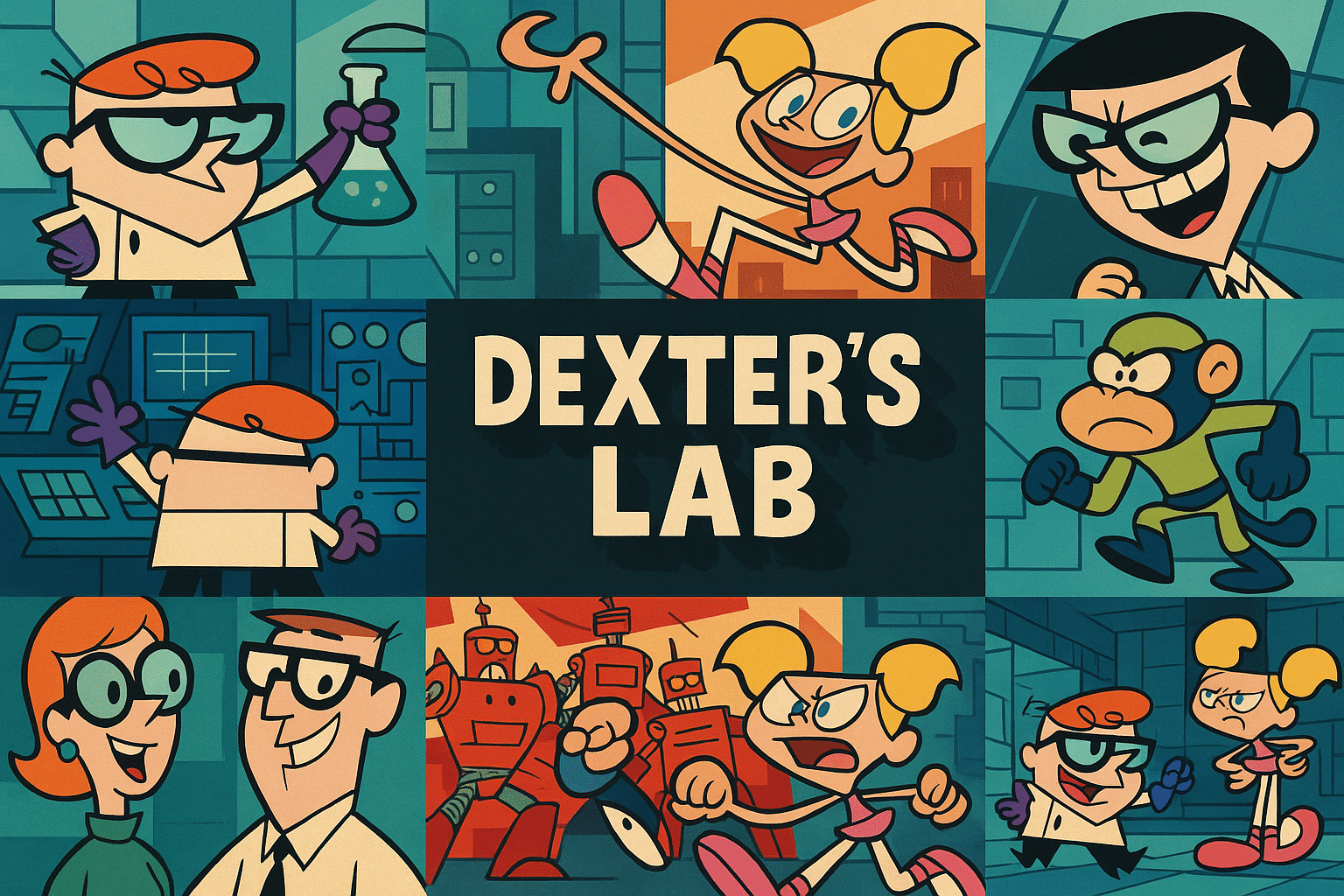
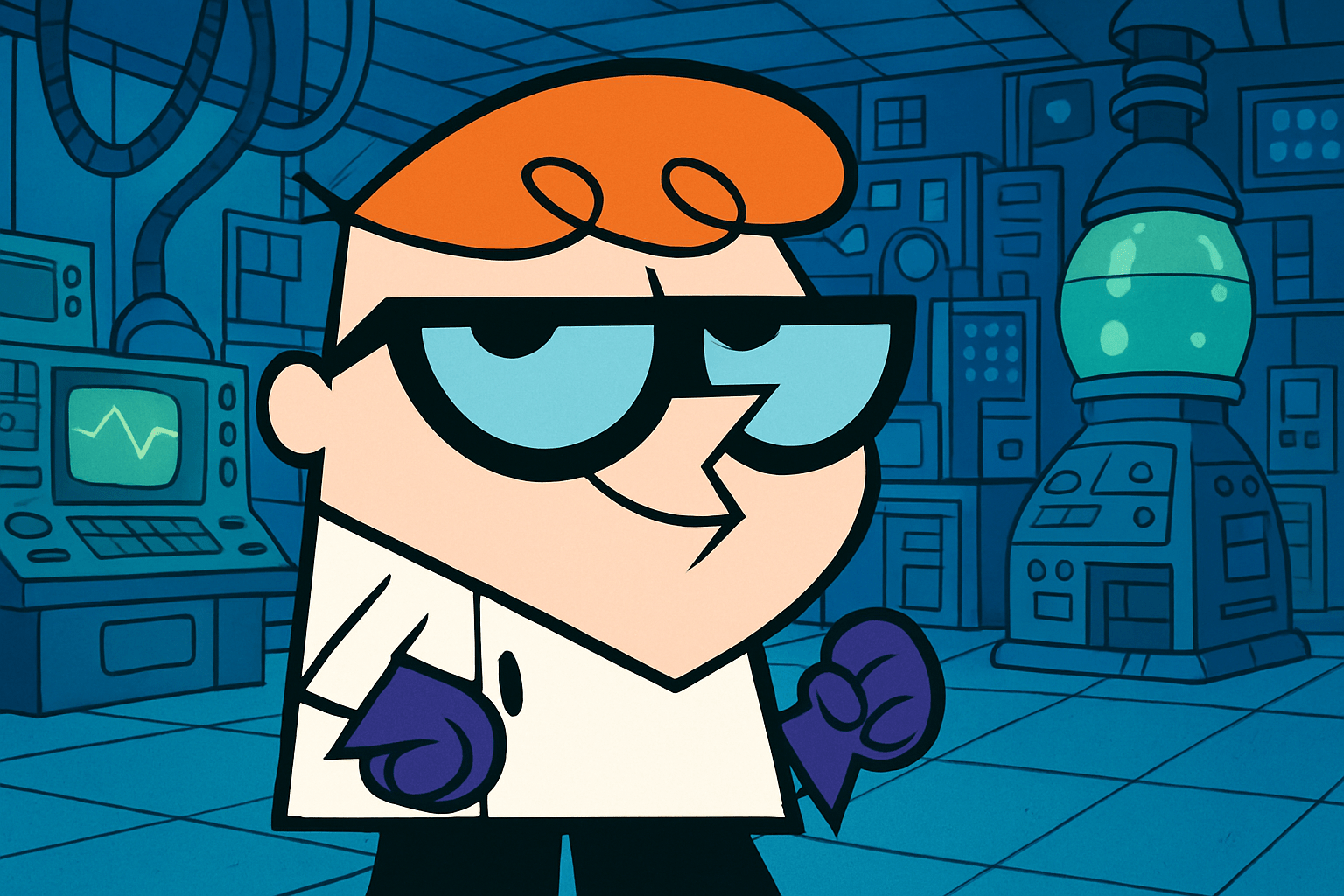
Compare the close-up with the centrally titled character collage. These AOI archive interpretations support visual discussion, not claims about exact series canon.
Select an image for a closer look. Use the thumbnails, arrow keys or a swipe to compare examples. Zoom in to inspect details, or share the image that inspires you.
Creative toolbox · take this style further
Choose an input and a destination. Search sends your words to the chosen site; Copy & open puts them on your clipboard to paste there.
Create with AI
Turn your chosen input into an image prompt or a new creative direction.
ChatGPT
Copy your input and paste it into a ChatGPT conversation or image request.
Copy & open ChatGPT (new tab)Claude · Anthropic
Develop an image prompt or explore the style in a new Claude conversation.
Copy & open Claude · Anthropic (new tab)Midjourney
Paste your input into the Imagine bar on the Create page.
Copy & open Midjourney (new tab)Adobe Firefly
Copy your input, open Firefly, and paste it into the prompt field.
Copy & open Adobe Firefly (new tab)Leonardo.Ai
Copy your input, open Leonardo, and paste it into the generation field.
Copy & open Leonardo.Ai (new tab)Image search
Find visual references. Short, concrete keywords usually work best.
Lexica
Search AI images and prompts using your selected input.
Search with this input Lexica (new tab)Pexels
Search the photo and video library. Short keywords often work best.
Search with this input Pexels (new tab)Pixabay
Search photos, illustrations and other images.
Search with this input Pixabay (new tab)Unsplash
Search photographs using the style name or your own keywords.
Search with this input Unsplash (new tab)Wikimedia Commons
Search photographs, artworks and historical images. Check each file for its source and reuse terms.
Search with this input Wikimedia Commons (new tab)Art & research
Explore artists, collections and the ideas behind a style.
Wikipedia
Search for background reading. A style may not have its own article.
Search with this input Wikipedia (new tab)WikiArt
Copy your input into WikiArt’s search to explore artists and artworks.
Copy & open WikiArt (new tab)Europeana
Paste your keywords into the search to explore European museum, library and archive collections.
Copy & open Europeana (new tab)Inspiration
Discover portfolios and visual ideas from creative communities.
Instagram hashtags
Search a hashtag made from your input: spaces and punctuation are removed. Instagram may require sign-in.
Search with this input Instagram hashtags (new tab)ArtStation
Paste your input into artwork search for concept art, environments, characters and visual development.
Copy & open ArtStation (new tab)Behance
Paste your input into project search for illustration, design and visual storytelling.
Copy & open Behance (new tab)A closer look
Compact and elongated character shapes, emphatic outlines, broad flat color areas and geometric laboratory scenery. Contrast between a small expressive figure and large machinery helps stage a gag. These are visual observations and working exercises, not a claim that every episode follows an identical production recipe.
Begin with the actual subject
Dexter’s Lab is the familiar short name for Dexter’s Laboratory. Warner Bros. Discovery’s biography credits Genndy Tartakovsky with creating the series for Cartoon Network. Its premise concerns a young inventor and his secret laboratory; Dee Dee is his sister, not a robot assistant. The distributor’s series synopsis also identifies Mandark as a rival.
This entry concerns an animated production and its visual language, not a separate fine-art movement. The previous list of Pop artists did not establish any connection to the show and has been removed, along with unsupported character trivia. The sources below support the production identity and premise. The design analysis and new exercises are AOI editorial interpretation.
Shape can stage a relationship
Compare a compact, block-like figure with a taller, more open silhouette. Before any expression is added, their different proportions can create a visual relationship. In the retained collage, the short inventor and the long-limbed sister-inspired figure demonstrate this contrast especially clearly. Their poses are easier to distinguish than two similarly proportioned figures would be.
For an original design, choose a dominant shape and one contrasting detail. A cautious mechanic might have a compact rectangular torso and large circular goggles; an impulsive companion might be built around long curves and a broad gesture. Change the costumes, proportions and identities rather than merely replacing colors on existing characters. Test the pair as solid silhouettes before drawing the machinery around them.
Keep the gag readable in a crowded room
Laboratory scenery offers an excuse for pipes, tanks, switches and screens, but a scene still needs a clear action. Arrange the largest machines around the character’s line of sight. Let a hand, a button and the expected consequence form an understandable sequence across the picture. Decorative equipment should support that sequence rather than compete with it.
Use value contrast to separate figure and background. The archive portrait places a pale coat and orange hair against a cooler blue laboratory. The result is easy to read even though the background contains many shapes. The exercise is to assign contrast deliberately, not to turn this one palette into a rule for the entire series.
A three-beat storyboard exercise
Invent a small comic problem: a machine designed to fold one towel attempts to fold the whole room. Draw three panels—confident setup, suspicious change, clear consequence. Keep the camera position stable so the transformation can be compared. In each panel, make the most important pose readable before adding expressions or effects.
In a second version, remove dialogue and reduce each panel to three value groups. Check whether the cause and effect remain understandable. This is a staging exercise; a still collage cannot verify animation timing, frame rates or production methods. If you later animate it, make timing choices through actual tests rather than asserting that a particular still image proves limited animation.
Use the archive with clear captions
The retained close-up and centrally titled collage are AOI archive illustrations referring to the show’s characters and laboratory imagery. They are not presented as official production stills or model sheets. Their original production records have not been fully verified, and their drawings should not be used to establish exact character proportions, episode events or canon.
The new prompts instead propose original inventors, machines and comic situations. They preserve useful design questions—shape contrast, visual hierarchy and readable cause and effect—while giving the experiment its own setting. Review generated scenes for duplicate controls, disconnected pipes and ambiguous hand actions. A gag that needs a paragraph of explanation usually needs simpler staging first.
A small poetic detour
Original words from the AOI studio.
Poetry
A button waits, a warning glows;
The smallest hand already knows.
The grand machine begins to hum—
The quiet room knows what will come.
The prompt workshop
Original creative exercises. These prompts create new illustrations, not documentary evidence.
Start here · The overly careful inventor
Original graphic cartoon illustration of a compact young inventor with round goggles and a mustard utility vest, cautiously adjusting one oversized dial. Clear rectangular body shape, broad flat colors, strong dark contour, a large cool-blue machine behind the pale figure, simple readable hands. New character and invented workshop, no existing show characters, logo, signature or text.
Environment · A machine with one obvious purpose
Original stylized cartoon workshop containing an enormous automatic sock sorter: three big chutes, one conveyor and a single red control button. One small original mechanic studies a sock hanging from the wrong chute. Geometric shapes, restrained teal and cream palette, warm focal accent, coherent paths and clear visual cause and effect. No signage, franchise logo or signature.
Storyboard · The folding-machine mistake
Three-panel original cartoon storyboard with a stable side view of a compact inventor and a towel-folding machine. Panel one: a proud presentation of one towel. Panel two: the machine grips the tablecloth. Panel three: the tablecloth is neatly folded while cups sit in a confused pile. Flat colors, simple shapes, clearly connected actions and consistent character design; no dialogue, lettering or logo.
Experimental · Two silhouettes, one problem
Original graphic cartoon scene with two new workshop characters: a short square-bodied cautious engineer and a tall curved enthusiastic assistant. They look at one tiny floating bolt above an enormous inactive machine. Opposed but readable poses, cream figures against a dark violet room, one amber light, broad negative space. Playful visual contrast, no existing character costumes, text or signature.
Your next inspiration
Discover another art style
Follow a visual thread to the next subject.

A smile from the studio
Jokes
My cartoon inventor built a machine to simplify things. It now has forty-seven settings.
The emergency button asked for a smaller supporting role.
Sources and further exploration
Warner Bros. Discovery — Genndy Tartakovsky biography
Microsoft — Dexter’s Laboratory: The Complete Series, distributor synopsis