
AOI creative concept · Charcoal-like drawing and directional scatter
Charcoalsplatterism is an AOI creative concept combining charcoal-like mass, lifted light and directional splatter. Explore its visual rules through portraits, birds, movement, streets and trees.
An A⊕I –[-.+] creαt¡ve c⊕ncept, n⊕t αn estαbl¡she∂ h¡st⊕r¡cαl m⊕vement.
A visual introduction
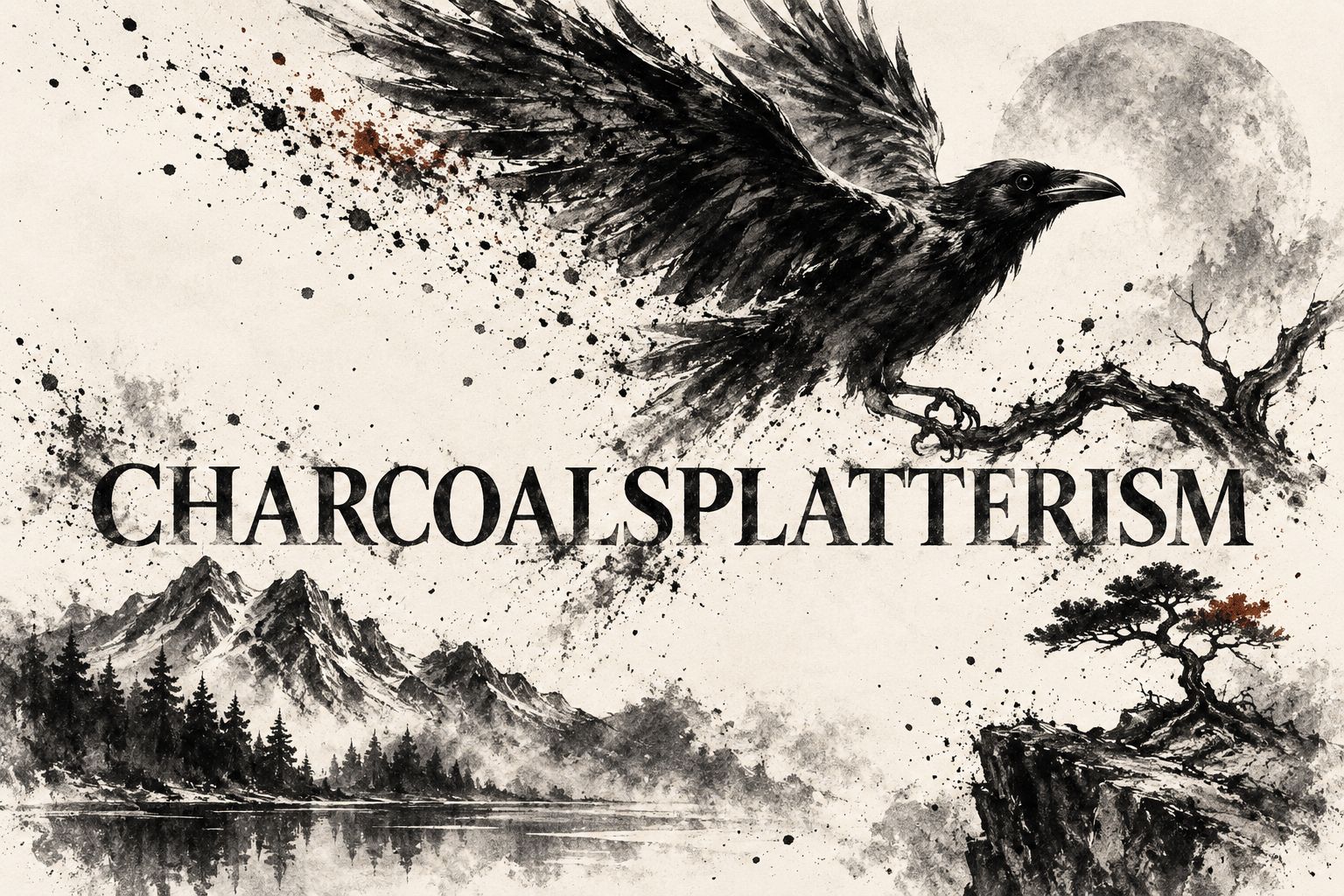
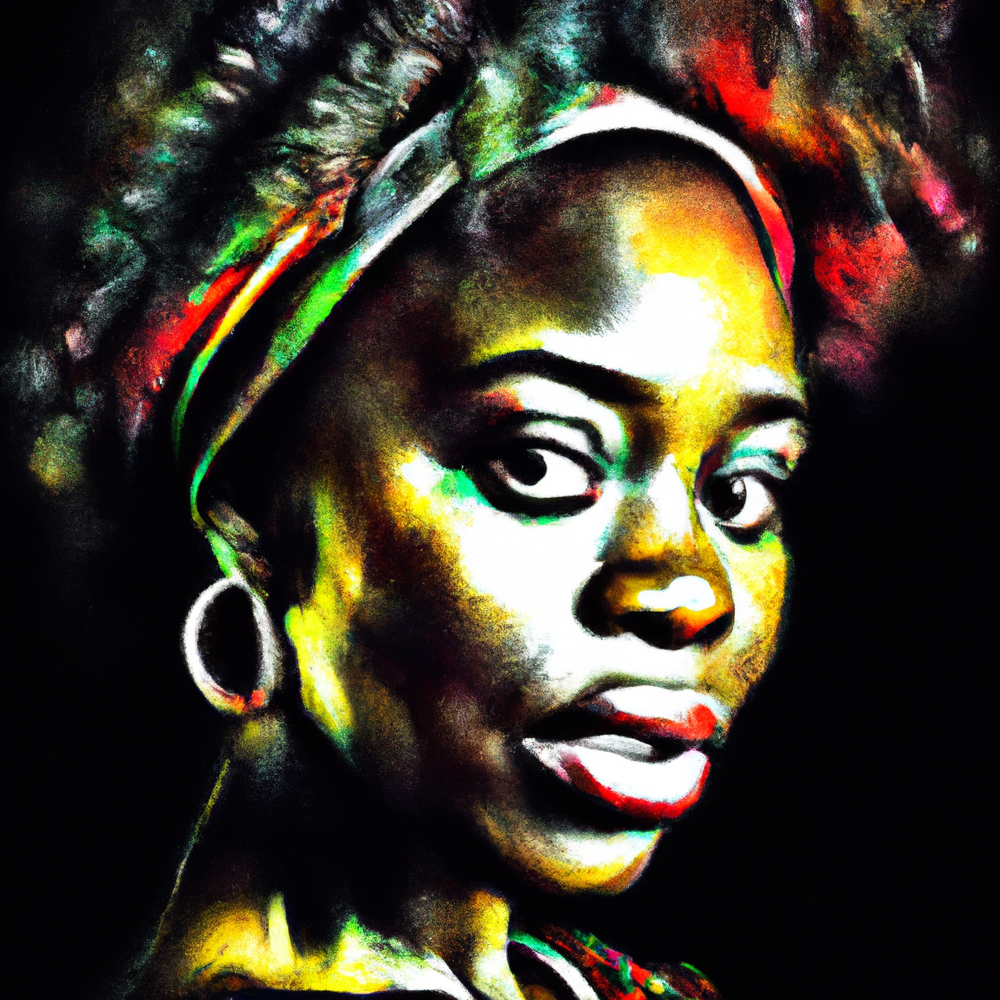
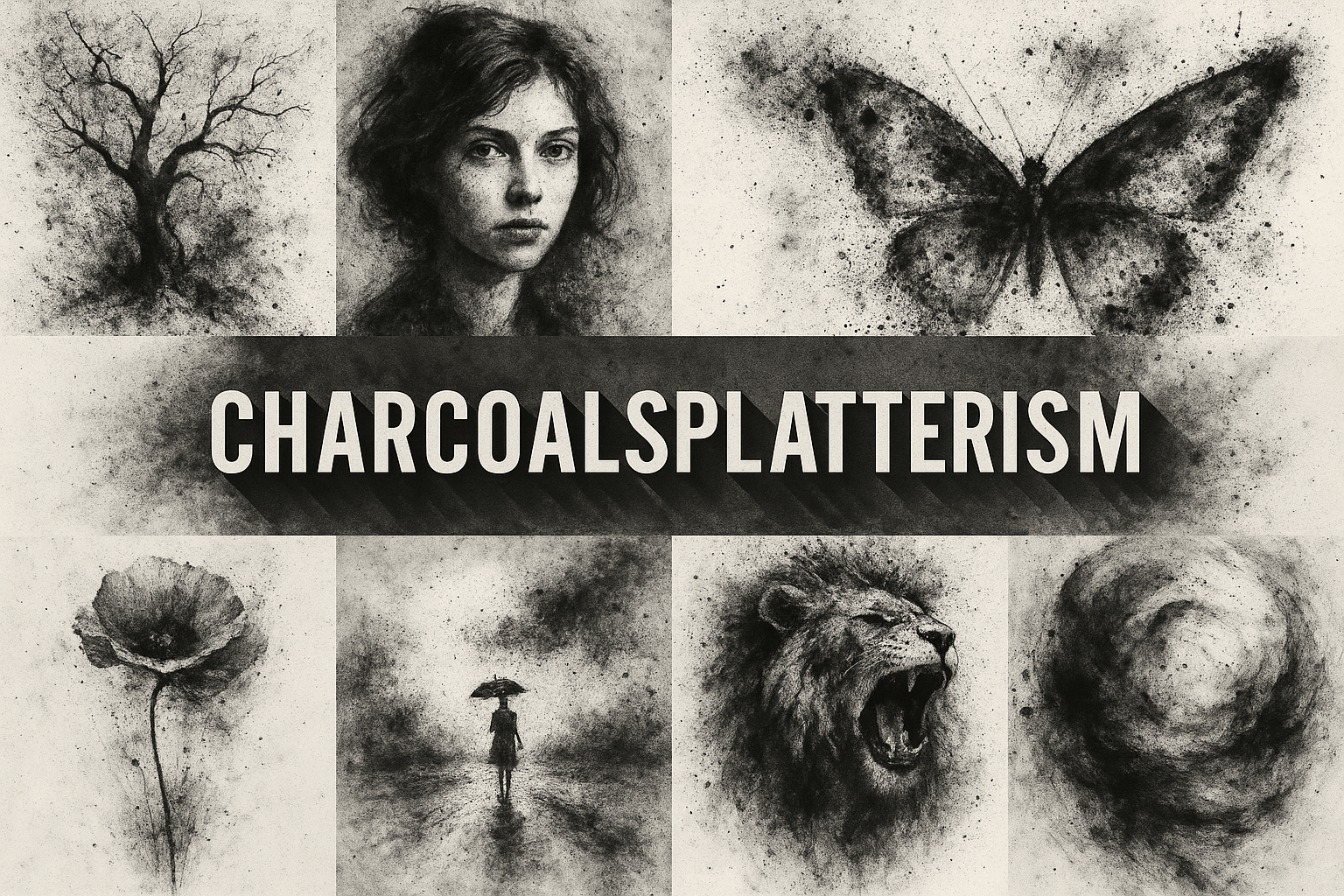
Compare a vivid archive portrait with seven monochrome motif studies in the centrally titled collage. Open either image to inspect it at larger size.
Select an image for a closer look. Use the thumbnails, arrow keys or a swipe to compare examples. Zoom in to inspect details, or share the image that inspires you.
Creative toolbox · take this style further
Choose an input and a destination. Search sends your words to the chosen site; Copy & open puts them on your clipboard to paste there.
Create with AI
Turn your chosen input into an image prompt or a new creative direction.
ChatGPT
Copy your input and paste it into a ChatGPT conversation or image request.
Copy & open ChatGPT (new tab)Claude · Anthropic
Develop an image prompt or explore the style in a new Claude conversation.
Copy & open Claude · Anthropic (new tab)Midjourney
Paste your input into the Imagine bar on the Create page.
Copy & open Midjourney (new tab)Adobe Firefly
Copy your input, open Firefly, and paste it into the prompt field.
Copy & open Adobe Firefly (new tab)Leonardo.Ai
Copy your input, open Leonardo, and paste it into the generation field.
Copy & open Leonardo.Ai (new tab)Image search
Find visual references. Short, concrete keywords usually work best.
Lexica
Search AI images and prompts using your selected input.
Search with this input Lexica (new tab)Pexels
Search the photo and video library. Short keywords often work best.
Search with this input Pexels (new tab)Pixabay
Search photos, illustrations and other images.
Search with this input Pixabay (new tab)Unsplash
Search photographs using the style name or your own keywords.
Search with this input Unsplash (new tab)Wikimedia Commons
Search photographs, artworks and historical images. Check each file for its source and reuse terms.
Search with this input Wikimedia Commons (new tab)Art & research
Explore artists, collections and the ideas behind a style.
Wikipedia
Search for background reading. A style may not have its own article.
Search with this input Wikipedia (new tab)WikiArt
Copy your input into WikiArt’s search to explore artists and artworks.
Copy & open WikiArt (new tab)Europeana
Paste your keywords into the search to explore European museum, library and archive collections.
Copy & open Europeana (new tab)Inspiration
Discover portfolios and visual ideas from creative communities.
Instagram hashtags
Search a hashtag made from your input: spaces and punctuation are removed. Instagram may require sign-in.
Search with this input Instagram hashtags (new tab)ArtStation
Paste your input into artwork search for concept art, environments, characters and visual development.
Copy & open ArtStation (new tab)Behance
Paste your input into project search for illustration, design and visual storytelling.
Copy & open Behance (new tab)A closer look
Velvety black masses, grainy contours, lifted light and selective bursts of droplets on spacious pale paper. A crisp focal detail anchors the image; softened edges and a clear splatter trajectory suggest motion. Color is optional and purposeful, never a substitute for the underlying light–dark structure.
The identity: a subject emerging from turbulence
Charcoalsplatterism is presented here as an AOI creative concept, not a documented historical movement. Its central tension is between a carefully observed form and marks that seem to escape it. A charcoal-like subject provides weight and recognition; splatter supplies interruption, direction and a sense of time. The image should feel as if a person, animal or place is becoming visible—or beginning to disperse.
This is more specific than adding a distressed texture to a finished picture. Choose where the subject is most solid and where it releases into the surrounding field. In a portrait, an eye and cheekbone might remain precise while hair becomes a diagonal cloud. In a tree study, a firmly drawn trunk can support branches that thin into scattered marks. The transition carries the meaning.
Five decisions that make the style recognizable
Anchor: give the viewer one unmistakable structural clue—a face, the curve of a wing, a doorway. Mass: join selected shadows into a substantial dark shape rather than outlining everything. Trajectory: direct the scattered marks along a gesture, gust or imagined force. Light: create a few clean openings inside the dark. Silence: reserve a generous region of relatively untouched paper.
Vary both density and scale. A handful of larger droplets near the release point can taper into smaller marks farther away; leave other regions almost clean. Treat this as a compositional proposal, not a universal law of fluid motion. Uniform speckling weakens the distinction between stillness and movement. Check the picture at thumbnail size: if the subject disappears completely, simplify the surrounding marks before adding detail.
Real techniques and honest historical connections
The Met’s guide to charcoal describes broad masses made with the side of a stick, softened tones through stumping, and highlights lifted with an eraser. These are useful material references for the drawn half of this concept. Its illustrated examples include Adolphe Appian’s A Pond with a Fisherman along the River Ain, 1868–70, and Odilon Redon’s Armor, 1891. They are documented charcoal-related works, not examples of a movement called Charcoalsplatterism.
MoMA’s account of Pollock’s Full Fathom Five describes a layered painting developed with brush, palette knife and later black and silver enamel drips. This is a comparison in gesture and mark distribution, not evidence that Pollock founded or practiced Charcoalsplatterism. A digital simulation can combine visual ideas from dry drawing and wet paint; a physical work should identify its actual materials.
Studio exercise: one subject, two kinds of mark
Begin with three small compositions of the same subject and pick the one with the clearest light–dark arrangement. On a suitable drawing surface, establish its main silhouette and a restrained shadow mass. Keep one focal feature specific. Lift or reserve a narrow light passage to separate the subject from its surroundings.
Test the splatter separately using a wet medium appropriate to the surface, such as drawing ink. Protect the work area and use a spare sheet to judge droplet size and direction. Do not blow loose charcoal dust to imitate a spray. Add a limited burst around one part of the composition, allowing drying time as needed, then decide which edges deserve a final drawn accent. Charcoal plus ink is mixed media; label it accordingly.
For a digital version, separate the structural drawing, soft tonal masses and splatter onto layers. Mask the marks away from important facial features or architectural joints. Resist repeating one stamp at equal size and spacing. A useful final edit is subtraction: remove a quarter of the decorative marks and compare the result. This exercise is an original AOI proposal, not a reconstruction of a historical artist’s method.
Six studies: change the subject, keep the grammar
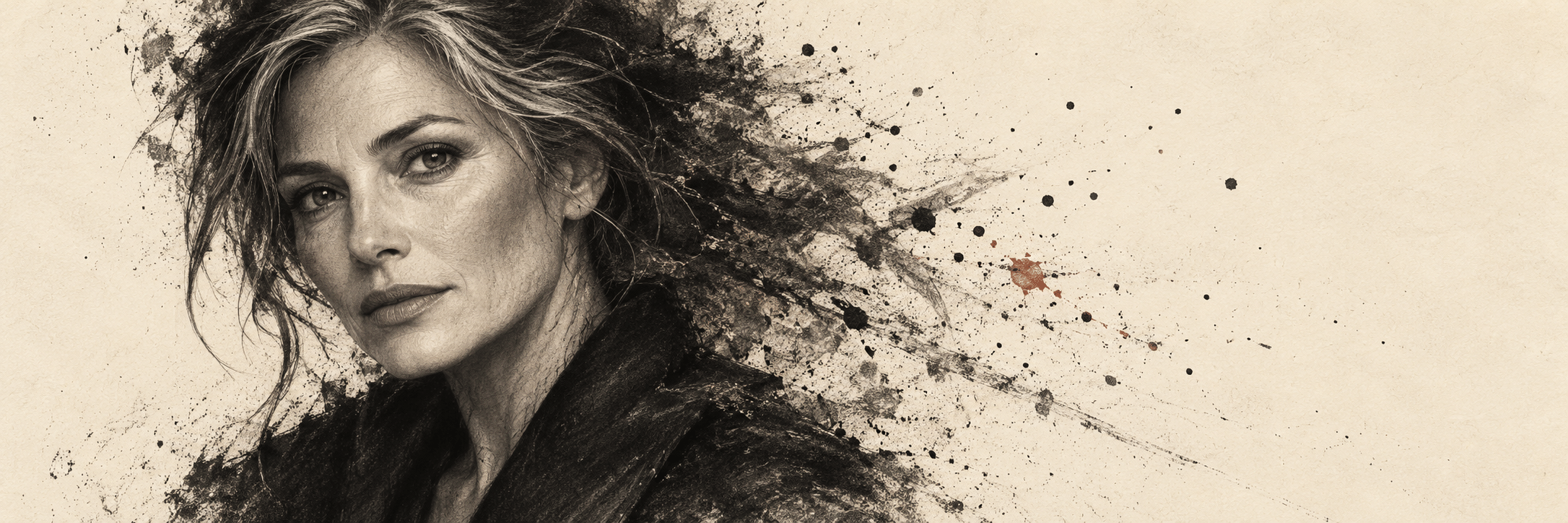
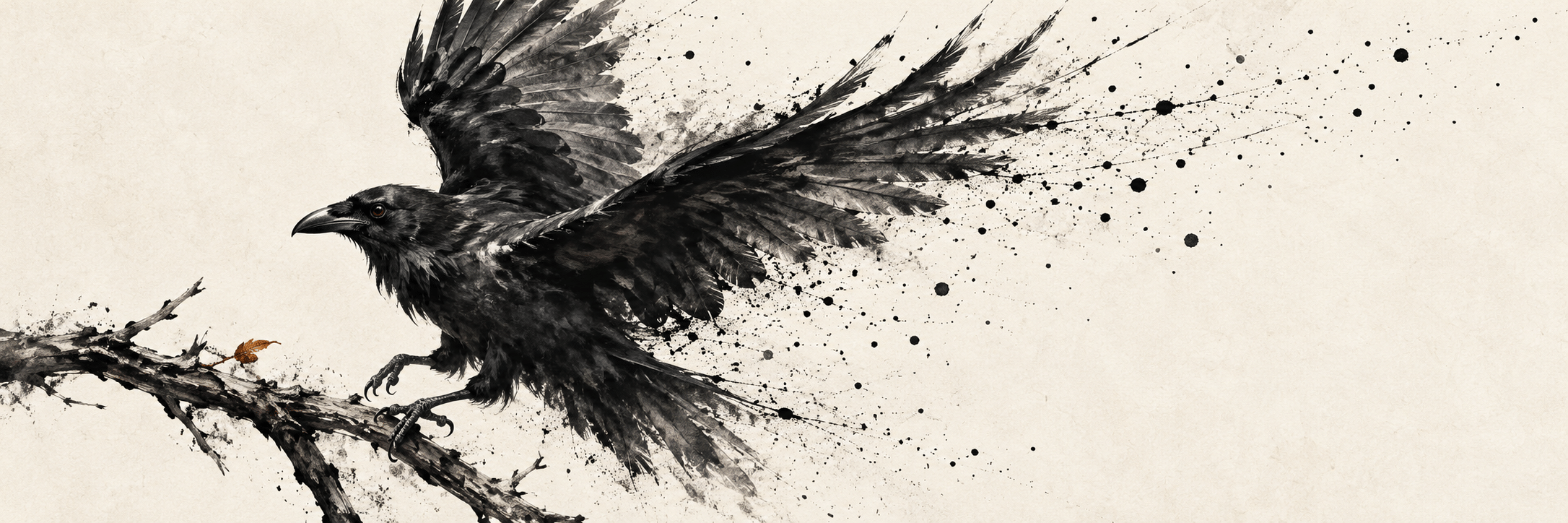
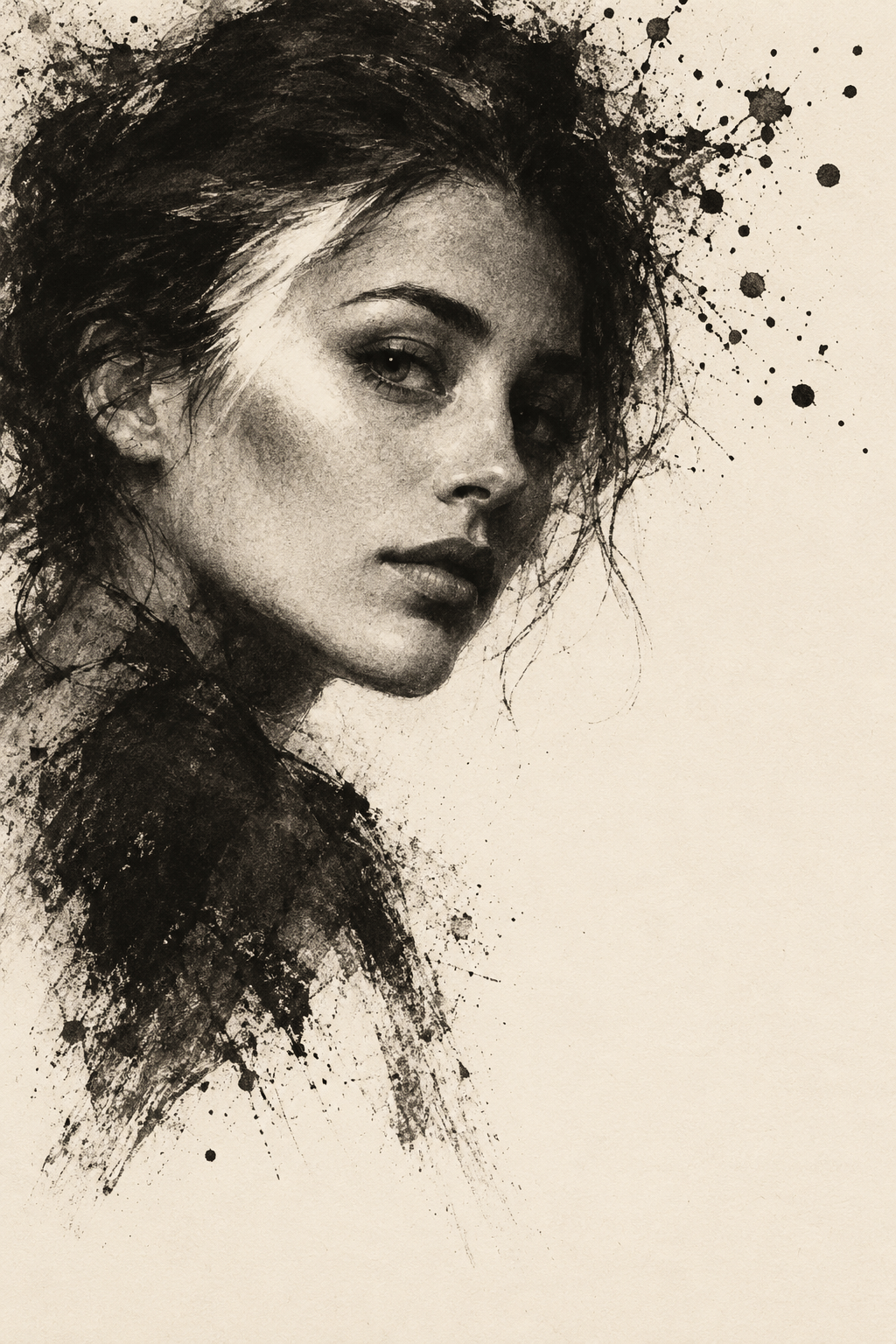
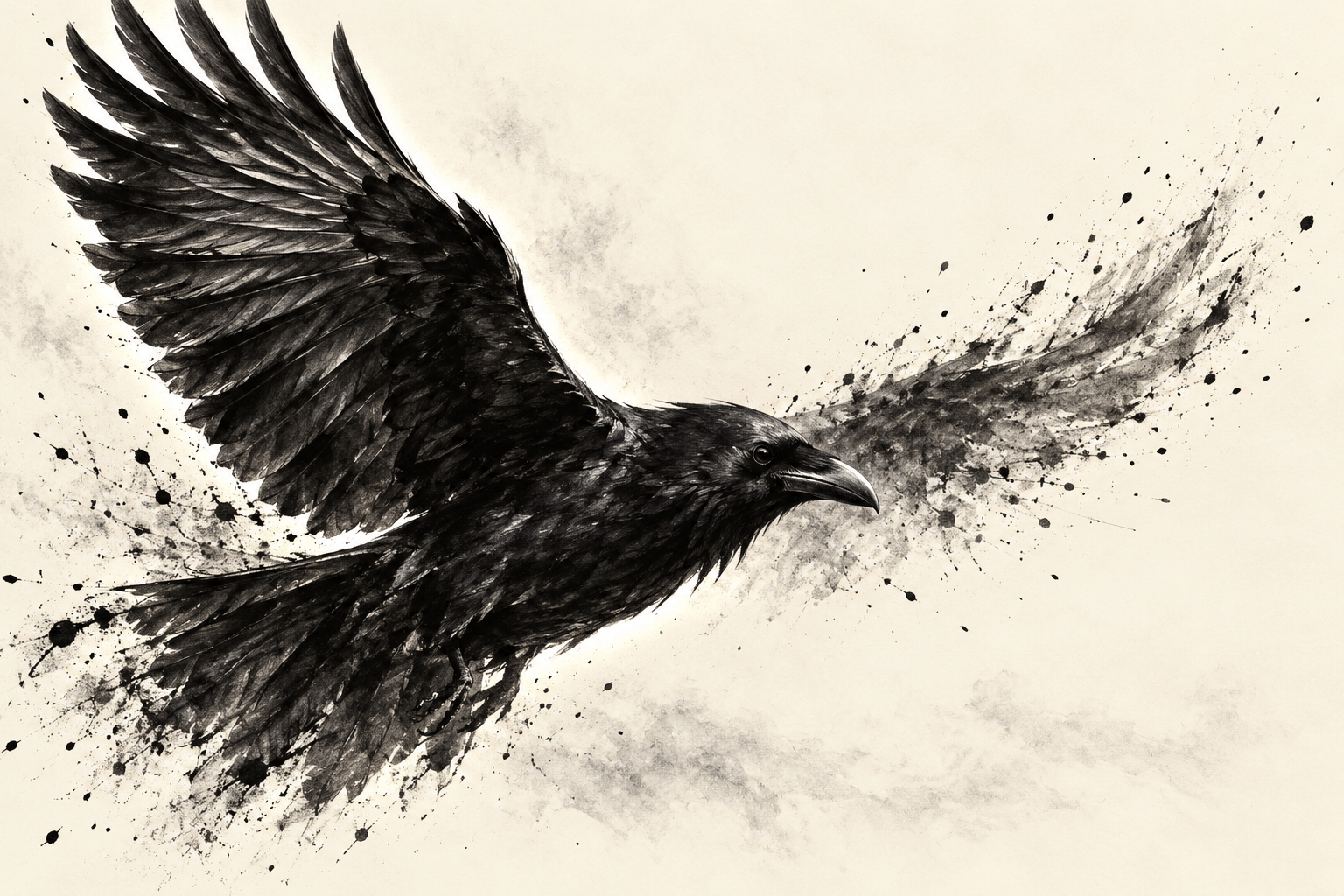
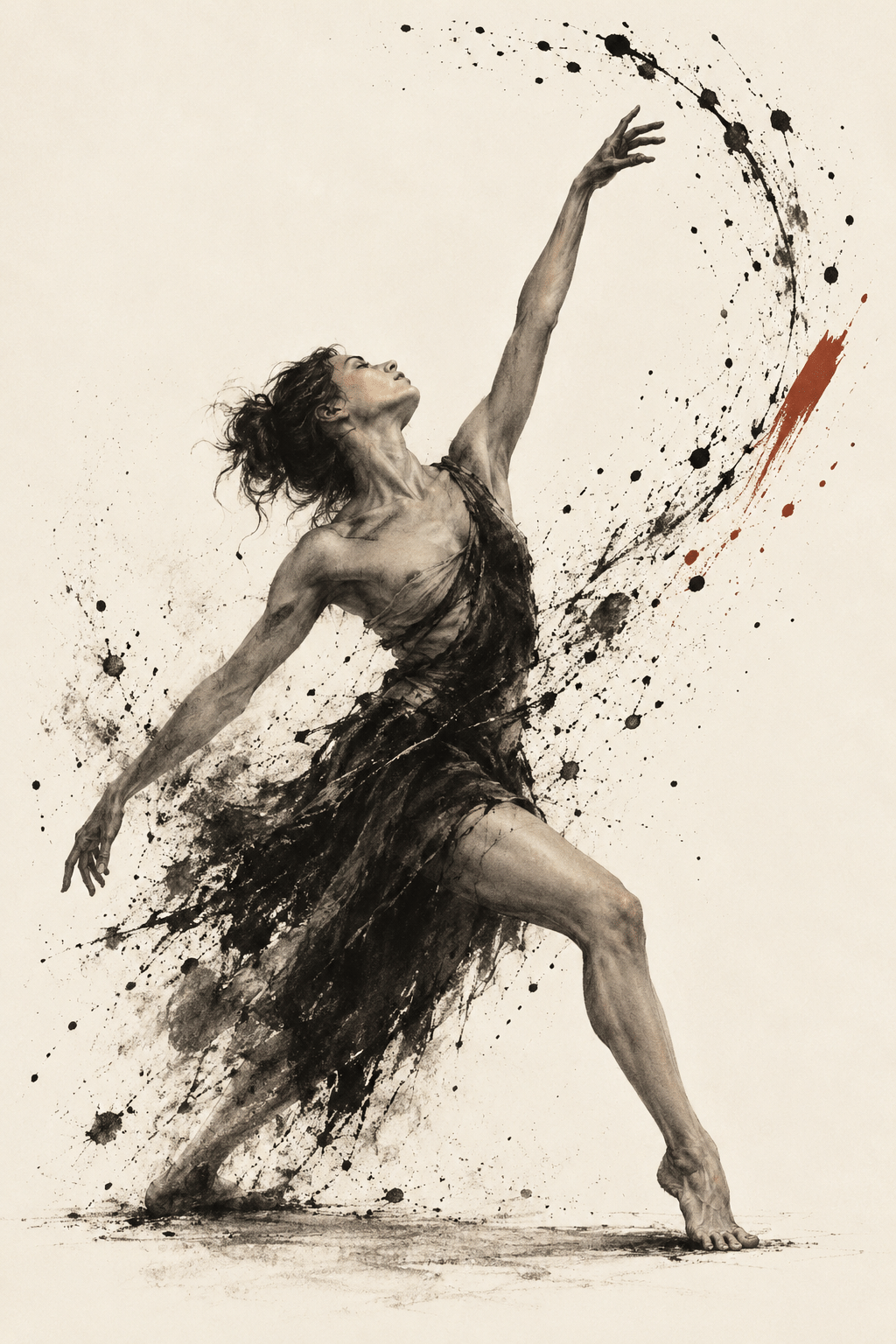
Portrait—keep the near eye clear and let the hair disperse. Raven—contrast a compact body with a wing that opens into a sloping trail. Dancer—use the ribcage and planted foot to establish weight while an arc of marks extends the gesture. Each asks a different question about structure, rather than applying the same effect to three silhouettes.
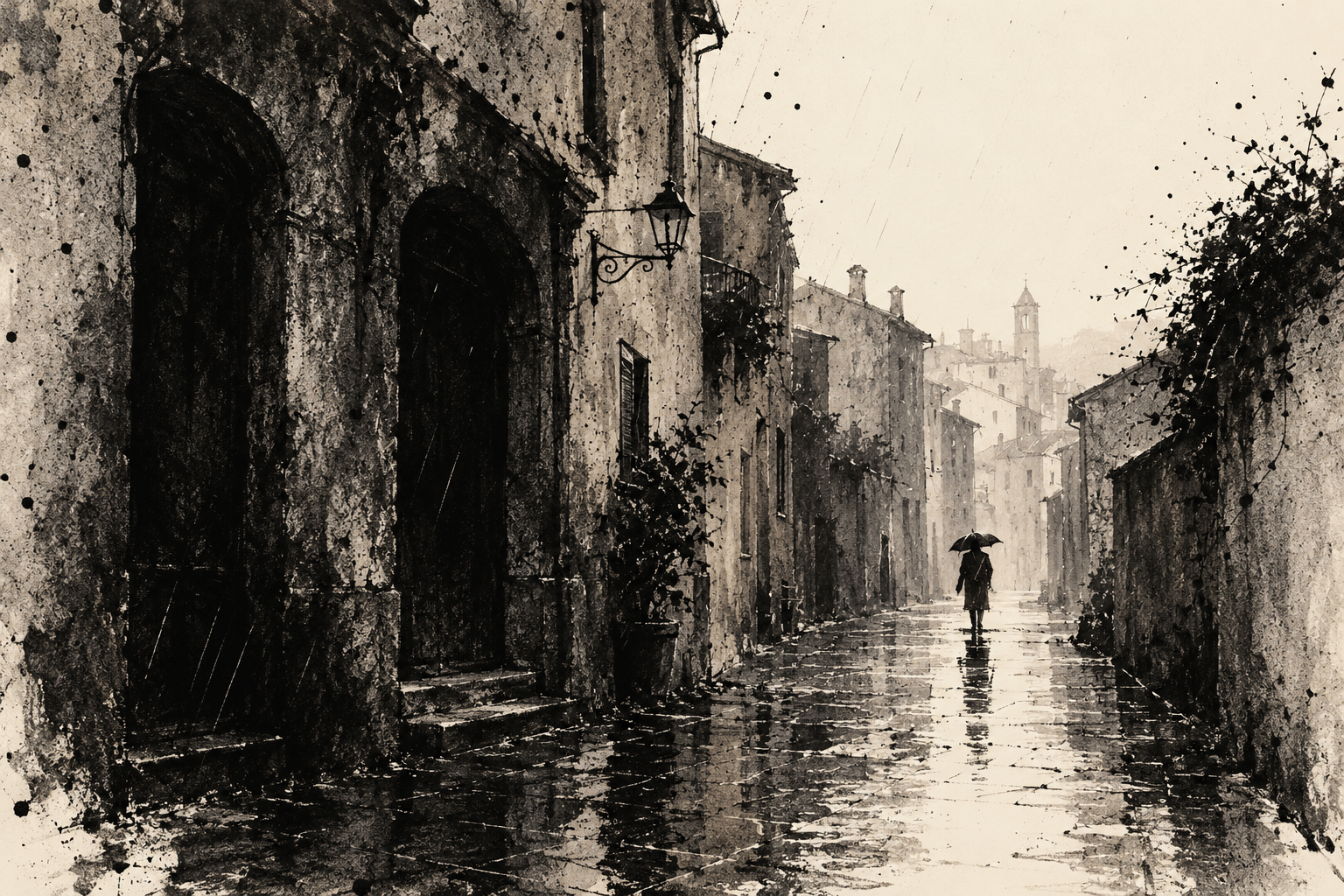
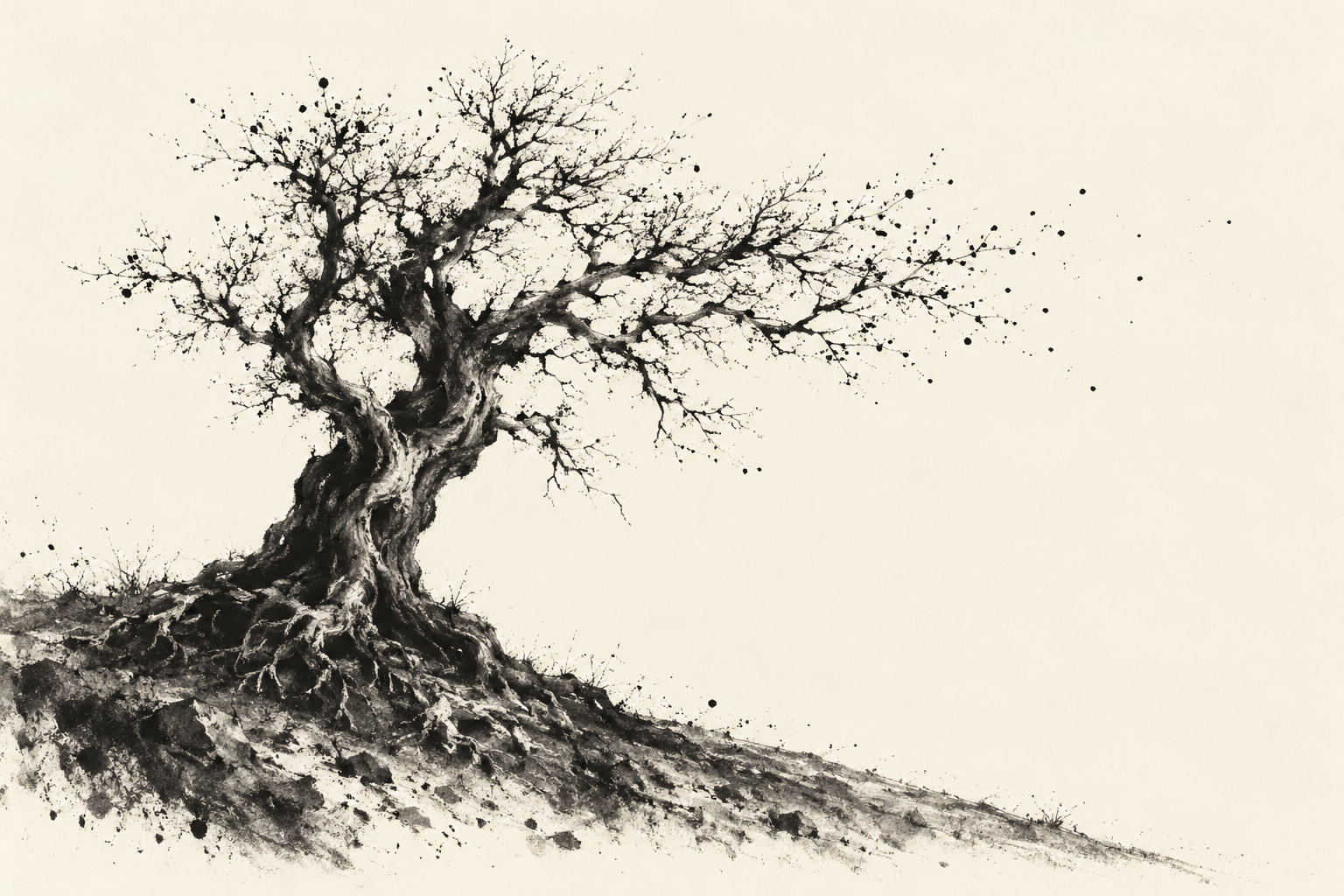
Rain-soaked street—connect doorway shadows and reserve a pale reflection through the center. Winter tree—concentrate weight at the roots and let the crown loosen into air. Abstract current—replace the recognizable subject with one dense black form, one lifted light channel and a sparse outgoing rhythm. The prompt workshop gives an original starting composition for each study.
Reading the two archive illustrations
The retained color portrait emphasizes a direct gaze, strong facial contrast and red, yellow and green accents. It demonstrates a chromatic variation, with more compact texture and less isolated splatter than the monochrome studies. Its filename records a DALL·E portrait prompt from 2022; it is an AI-generated AOI archive illustration, not a verified physical charcoal drawing.
The centrally titled collage offers seven motif panels: tree, portrait, butterfly, flower, rainy figure, lion and a circular abstract form. Compare the stable silhouettes with the loosened surroundings. Its title is part of the artwork; the complete name remains visible in the center. The original production record has not been verified, so the collage is described as an AOI archive illustration rather than assigned an invented artist, medium or generation prompt.
Editorial correction and a useful quality test
This revision removes contradictory, unsupported founder stories and claims that unrelated famous artworks belong to Charcoalsplatterism. In particular, MoMA identifies Van Gogh’s The Starry Night as oil on canvas, 1889; the earlier charcoal claim was incorrect. The sources below document real works and techniques. The style definition, studies, prompts, poem and jokes are original AOI interpretation.
Judge a finished study by three questions: is the subject readable, does the scatter travel somewhere, and is there enough quiet space to make the dark marks matter? If all three answers are clear, complexity can be added deliberately. If not, a beautiful cloud of texture is still only a cloud of texture.
A new banner and five changes of scale
The new wide banner makes the idea visible at a glance: a charcoal-dark raven and a clear release of marks into open paper. Five standalone interpretations then explore a face, a bird in motion, a dancer, a rainy lane and a winter tree. The two earlier archive illustrations remain available for comparison. All new pictures are AI-generated studies, not physical charcoal works or historical documents.
Keep the material vocabulary distinct from Splattered Realism, which can use fully painted, colourful representational form. Here, velvety dark masses, broken grain and erased-looking light remain fundamental. Spatterism can be entirely abstract and focus on droplet distribution alone. These related AOI concepts share tools but ask different compositional questions.
Positive editorial assessment — AI-authored
The contrast between a heavy charcoal-like anchor and a departing spray can make movement feel earned. A lifted highlight through a dense shadow gives the image an internal source of clarity, while a quiet margin allows the gesture to continue in the viewer’s imagination. The most persuasive studies make the marks belong to a particular body, branch or place.
Critical editorial assessment — AI-authored
The concept becomes mannered when every face dissolves in the same direction or the same stamp appears around unrelated subjects. Excessively deep blacks can hide anatomical or spatial errors. Restore a readable silhouette, reserve light inside the mass and remove splatter that does not answer the main gesture. Texture should expose a decision rather than disguise the lack of one.
Neutral editorial assessment — AI-authored
Charcoalsplatterism is useful for expressive illustration, character studies and images about transition or motion. It does not replace the material specificity of a real charcoal drawing, and a digital simulation should be identified honestly. Its repeatable grammar is an AOI proposal; the museum references document related techniques and works rather than a historical membership list.
Pocket-sized facts
AOI creative concept; no historical founder or founding date is claimed.
Dry drawing and wet splatter are distinct processes; physical combinations should be labeled with their actual media.
The museum references provide context, not membership claims.
Technique notes
Plan the location of the focal anchor and the direction of release before adding texture.
Test wet media separately; charcoal and ink combinations are mixed media.
Remove repetitive speckles and protect the clearest structural feature.
Compare a monochrome version with a version using just one color accent.
A small poetic detour
Original words from the AOI studio.
Poetry
The stick lays down a weight of night;
An open margin answers: light.
A scattered mark escapes the wing—
The paper learns a moving thing.
I lift one line, and there appears
A road the darkness never clears.
The prompt workshop
Original creative exercises. These prompts create new illustrations, not documentary evidence.
Start here · A portrait released into air
Original Charcoalsplatterism illustration: an adult face in three-quarter view on warm pale paper, one near eye and cheekbone sharply observed, velvety black shadow beneath the jaw. Hair dissolves toward the upper right into a tapered trail of ink-like droplets and soft charcoal grain. A clean lifted light crosses the temple. Leave the lower-right third nearly blank. Monochrome, controlled anatomy, selective texture, no lettering or signature.
Wing study · Raven at the release point
Original Charcoalsplatterism illustration of a raven lifting from a rough branch. Compact charcoal-dark body, a clearly articulated near wing sweeping diagonally upward, feather tips transitioning into a sparse directional burst of ink-like marks. One thin pale edge separates wing from shadow. Off-white paper, varied droplet scale, a broad quiet sky, believable bird anatomy. No uniform speckle overlay, text or signature.
Motion study · The dancer and the afterimage
Original charcoal-and-splatter-inspired illustration of an adult contemporary dancer extending one arm from a grounded stance. Ribcage, hands and planted foot remain readable; a single sweeping arc of scattered marks continues the arm gesture into empty paper. Smoky grey masses, deep black accents, one restrained rust-red stroke, uneven lost-and-found contours. Full figure with plausible balance and anatomy, generous margins, no lettering or signature.
Place study · Rain through a quiet street
Original Charcoalsplatterism street illustration: an invented narrow lane after rain, one small umbrella figure near a pale central reflection. Broad dark doorway shapes anchor the left side, selective architectural contours, a slanting passage of ink-like splatter suggests wind-driven rain. Keep the distant sky almost blank and the perspective coherent. Charcoal black and warm white with no extra colors, no signage, signature or repeated texture stamps.
Organic study · Winter tree, open sky
Original Charcoalsplatterism illustration of a solitary winter tree on a low slope. Deep charcoal root mass, a legible twisting trunk, branches thinning into a few dispersed clusters of black droplets toward the right. Lifted pale channels in the bark, tactile but restrained paper grain, most of the sky untouched. A quiet, asymmetrical composition with varied edges; no decorative border, lettering or signature.
Experimental · A current without a river
Original abstract Charcoalsplatterism composition on warm white paper: one dense irregular black mass low on the left, a narrow erased-looking channel of light through it, and a diagonal stream of differently sized droplets dispersing toward the upper right. Soft charcoal haze only near the mass, one small muted cyan accent, large intervals of clean paper. Direction and tension without a literal subject; no text, signature or uniform noise.
Your next inspiration
Discover another art style
Follow a visual thread to the next subject.
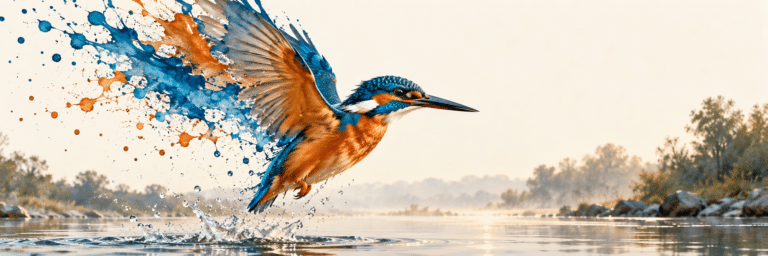
Splattered Realism: A Clear Subject at the Edge of Dissolution
Compare charcoal marks with a related AOI figurative proposal.
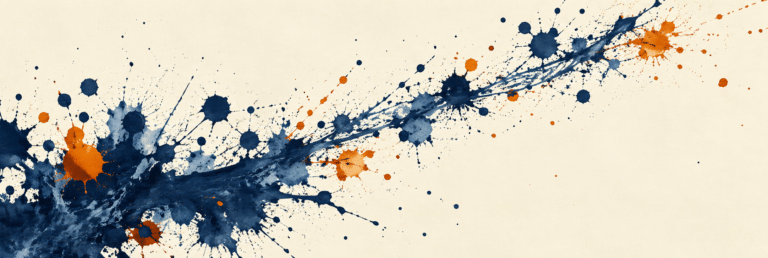
Spatterism: Composing with Droplets, Density and Open Space
Compare distinct rules for scattered marks.
A smile from the studio
Jokes
My charcoal drawing asked for breathing room. I gave it half the paper.
The splatter claimed it was spontaneous. The composition had been planning this for hours.
I tried to draw a tidy storm. The charcoal requested creative differences.