
An original Art of AI concept
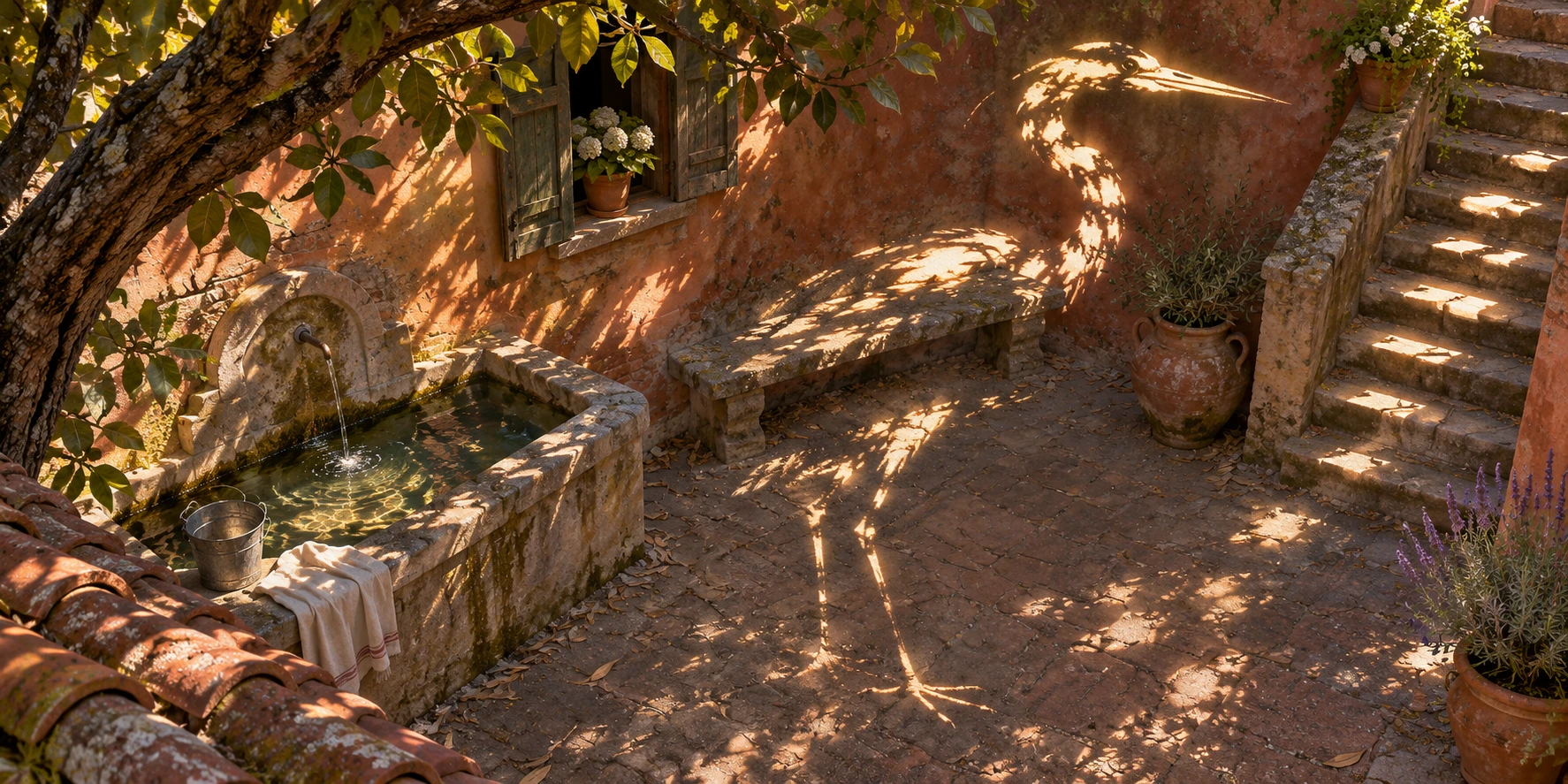
First you see a yard where someone has put down a bucket. From the other end of the room, a long-legged bird appears. The bucket is still a bucket. Dapplegory gives ordinary pools of light a second, collective job.
An A⊕I –[-.+] creαt¡ve c⊕ncept, n⊕t αn estαbl¡she∂ h¡st⊕r¡cαl m⊕vement.
A visual introduction
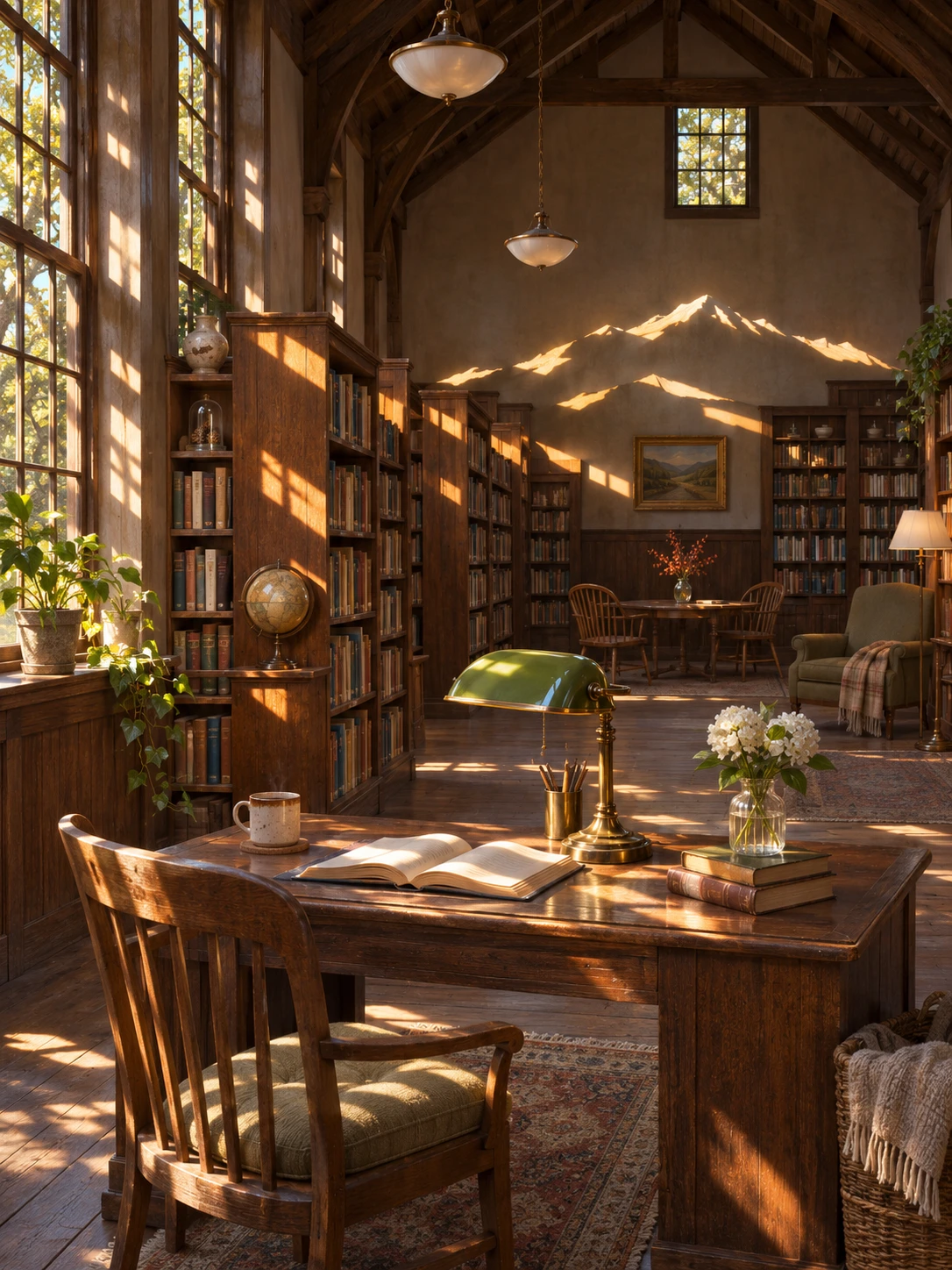
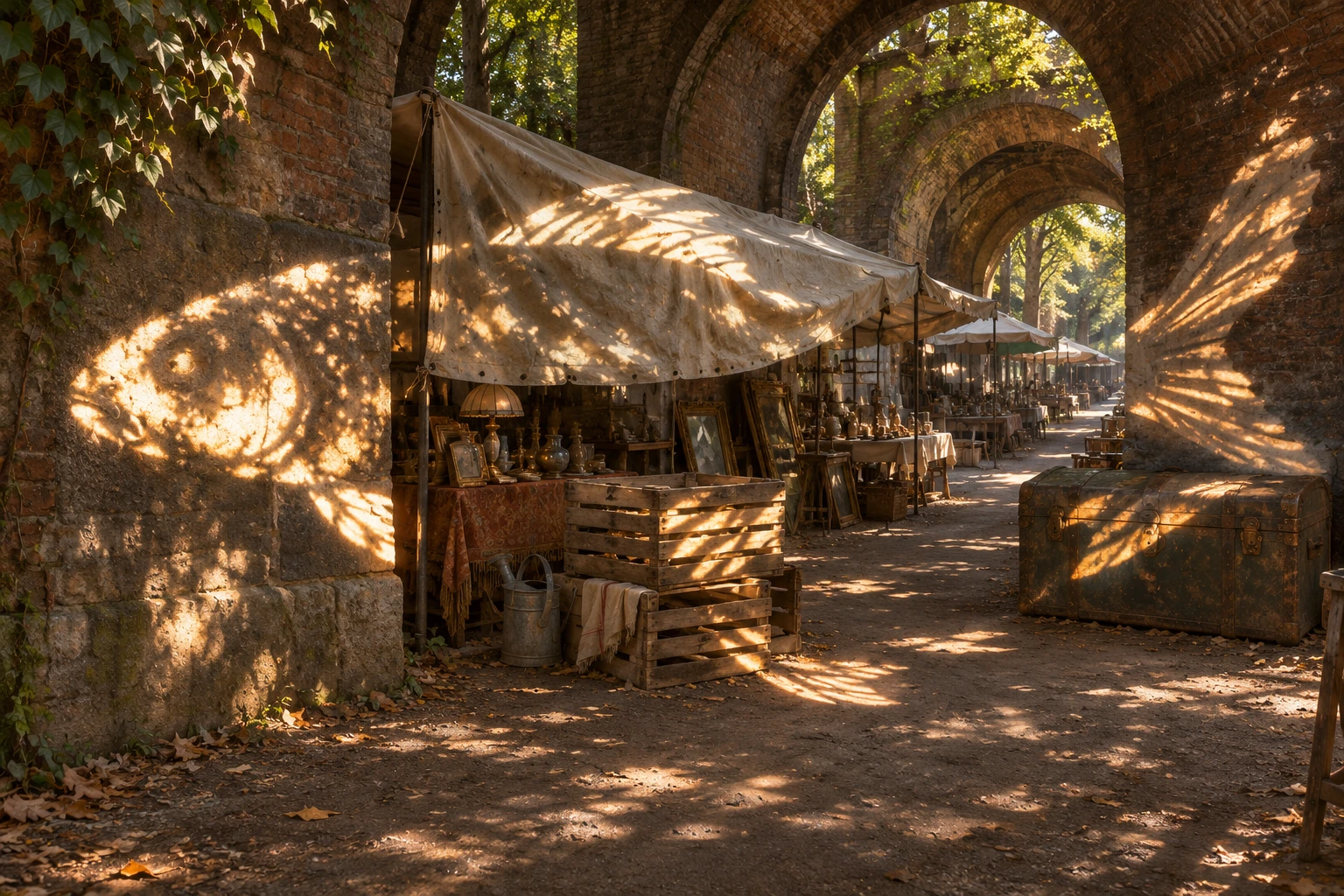
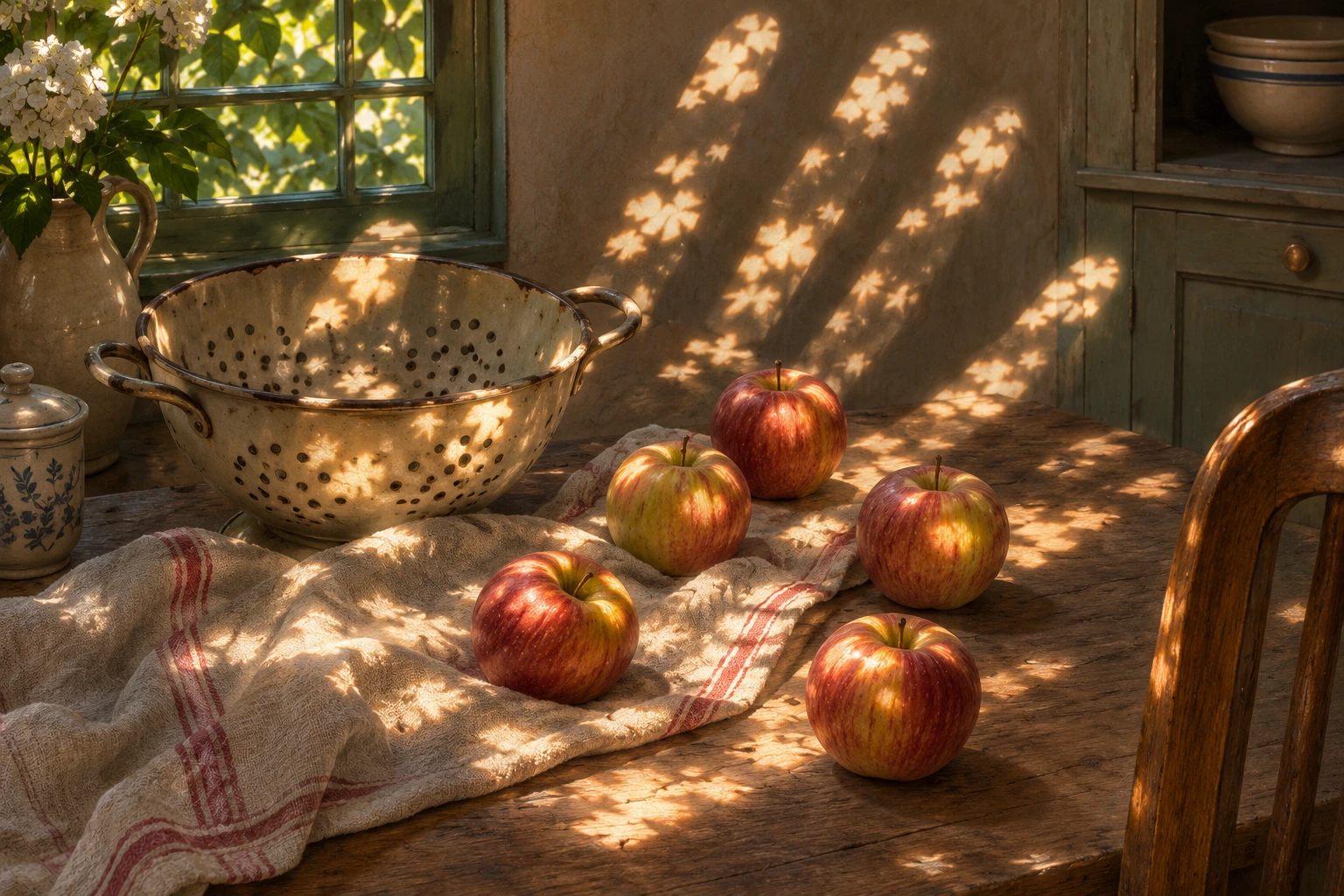
Five invented places and still lifes ask how little information a second image needs. Try viewing the studies small before opening them.
Select an image for a closer look. Use the thumbnails, arrow keys or a swipe to compare examples. Zoom in to inspect details, or share the image that inspires you.
Creative toolbox · take this style further
Choose an input and a destination. Search sends your words to the chosen site; Copy & open puts them on your clipboard to paste there.
Create with AI
Turn your chosen input into an image prompt or a new creative direction.
ChatGPT
Copy your input and paste it into a ChatGPT conversation or image request.
Copy & open ChatGPT (new tab)Claude · Anthropic
Develop an image prompt or explore the style in a new Claude conversation.
Copy & open Claude · Anthropic (new tab)Midjourney
Paste your input into the Imagine bar on the Create page.
Copy & open Midjourney (new tab)Adobe Firefly
Copy your input, open Firefly, and paste it into the prompt field.
Copy & open Adobe Firefly (new tab)Leonardo.Ai
Copy your input, open Leonardo, and paste it into the generation field.
Copy & open Leonardo.Ai (new tab)Image search
Find visual references. Short, concrete keywords usually work best.
Lexica
Search AI images and prompts using your selected input.
Search with this input Lexica (new tab)Pexels
Search the photo and video library. Short keywords often work best.
Search with this input Pexels (new tab)Pixabay
Search photos, illustrations and other images.
Search with this input Pixabay (new tab)Unsplash
Search photographs using the style name or your own keywords.
Search with this input Unsplash (new tab)Wikimedia Commons
Search photographs, artworks and historical images. Check each file for its source and reuse terms.
Search with this input Wikimedia Commons (new tab)Art & research
Explore artists, collections and the ideas behind a style.
Wikipedia
Search for background reading. A style may not have its own article.
Search with this input Wikipedia (new tab)WikiArt
Copy your input into WikiArt’s search to explore artists and artworks.
Copy & open WikiArt (new tab)Europeana
Paste your keywords into the search to explore European museum, library and archive collections.
Copy & open Europeana (new tab)Inspiration
Discover portfolios and visual ideas from creative communities.
Instagram hashtags
Search a hashtag made from your input: spaces and punctuation are removed. Instagram may require sign-in.
Search with this input Instagram hashtags (new tab)ArtStation
Paste your input into artwork search for concept art, environments, characters and visual development.
Copy & open ArtStation (new tab)Behance
Paste your input into project search for illustration, design and visual storytelling.
Copy & open Behance (new tab)A closer look
Build the near scene from surfaces a viewer could recognise by touch. Give the larger image a few decisive features, distribute them across different objects, and put a useful stretch of shade between the patches that carry them.
Begin with the paving stones
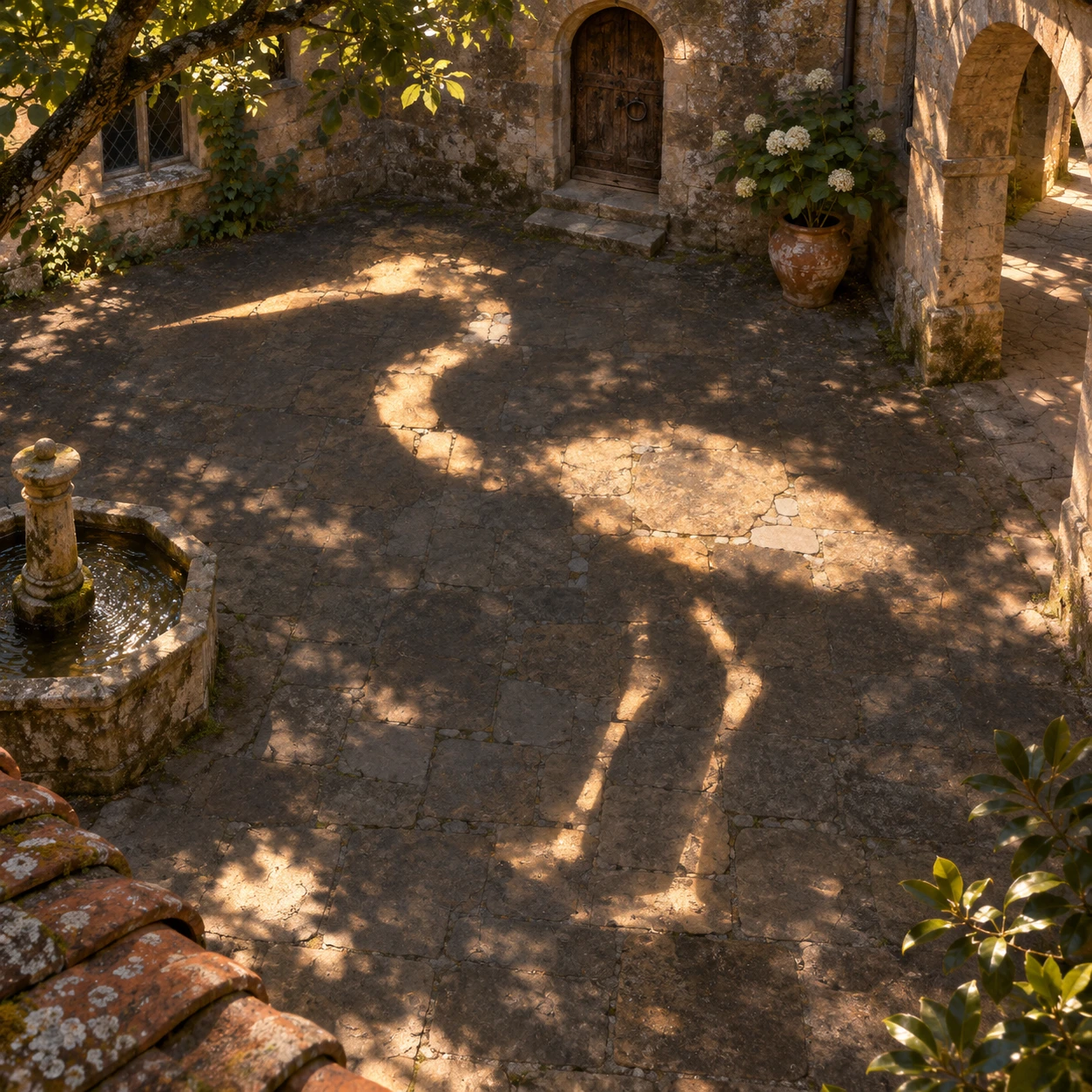
A seam in a stone should continue through a sun patch. A patch that crosses a step changes shape at the riser. Work out these local facts before arranging the hidden bird. A yard that can stand up to close looking has something to offer the person who never finds it. Even the water trough needs a sensible place to drain.
At thumbnail size the material detail falls away. What remains is the relation between a narrow bright bend, a broad pale mass and two little interruptions below it. A heron is a generous first subject because its neck can do so much work. Make a square of scrap paper with two cut-out windows and hide one patch at a time. The patch whose disappearance loses the bird is where to spend your care.
Two pictures, one orientation
The National Gallery of Art’s Arcimboldo brochure shows a vegetable still life that becomes a face when turned over. It is a fine exercise in paying for two readings with the same marks. In this AOI proposal the yard stays the right way up and the vegetables can stay in the kitchen. The change happens when we vary the distance at which we look. Sunlight, broken across several surfaces, supplies the second arrangement.
If a wing behaves like an accurate stencil on every wall, the source of the image becomes too easy to explain. Widen one gap. Move the beak onto a ledge at a different depth. Preserve the local slope and allow the reader to finish a small part of the animal.
Change the recognisable feature
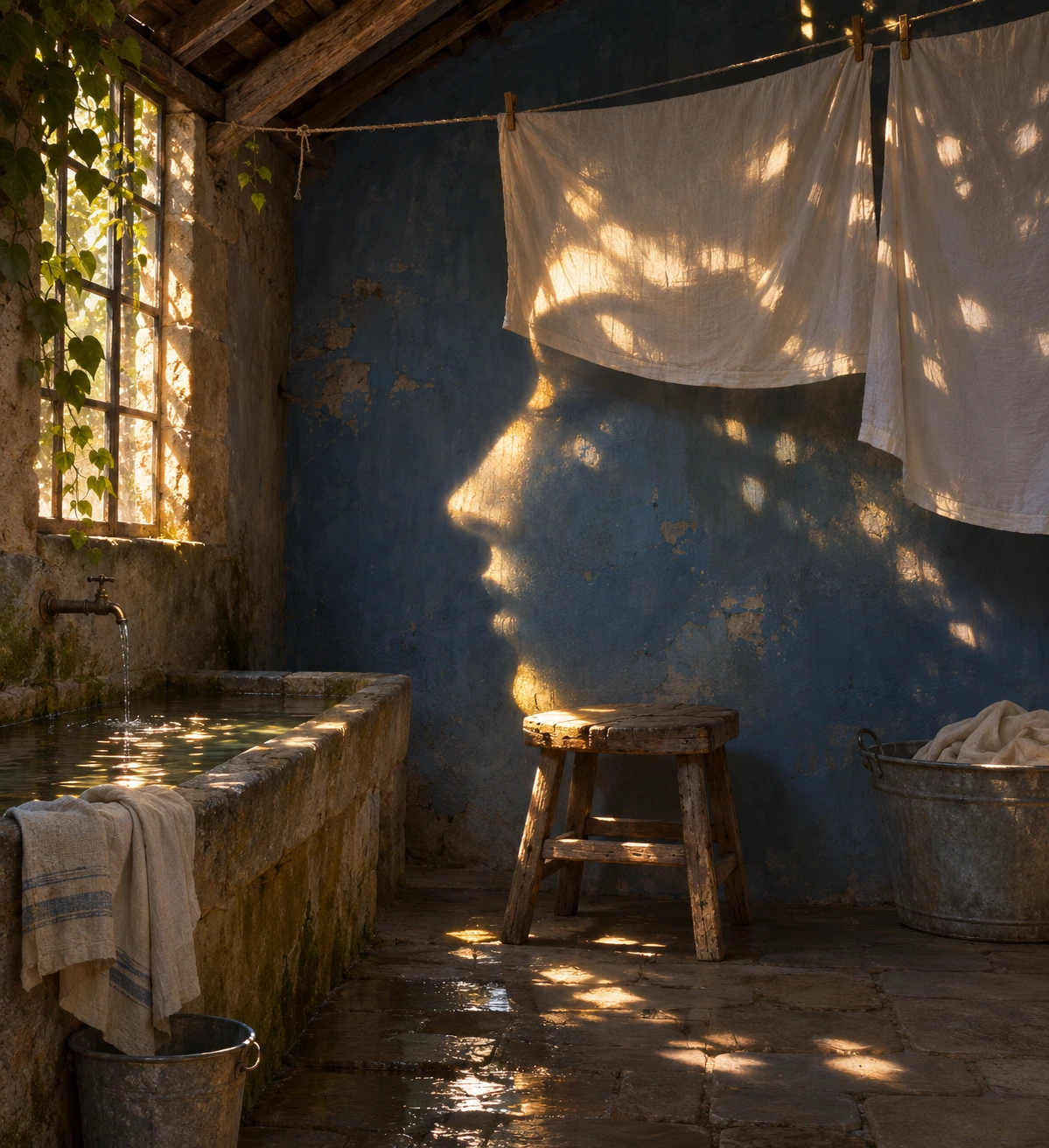
For a profile, put the brow on linen, the nose on plaster and the chin low on the stool. A mountain can manage with a stepped line and a valley. A human hand is harder. Five equal bright strokes are likely to read as a comb. Give the thumb a different angle and let one finger vanish behind an apple. Then look once with the image reduced and once with the nearest object at life size. A reading room and a mountain should both survive the trip.
Three readings from Penny’s desk
Positive review. The delayed discovery gives an unremarkable courtyard a second visit. A person who misses the bird can still enjoy a convincing stone bench in afternoon light.
Negative review. An outlined animal laid over the scene turns the hunt into a logo reveal. Cover the outline and try again with three separated pools of light.
Neutral review. It is valuable to ask two readers what they see before giving them the title. One may discover a bird, another a ridge. Both responses say something about the spacing of the marks.
A small poetic detour
Original words from the AOI studio.
Poetry
The yard keeps all its stones when it takes wing.
The bench stays put beneath a lifted throat.
I walk back in. A bucket has a dent.
I step away. The long bird drinks again.
The prompt workshop
Original creative exercises. These prompts create new illustrations, not documentary evidence.
Borrow a heron’s neck
Draw an empty courtyard at noon. Spread six sun patches over the stones, bench and stair so their overall spacing calls up a heron. Leave its neck interrupted twice.
Put a mountain indoors
Let late light fall on alternating shelf ends, a desk and a chair. From across the room their highlights align as a mountain ridge. Keep the shelves persuasive at arm’s length.
The hand with one missing finger
Set five apples close to a colander. Arrange the dapple across their surfaces to suggest an open hand with one fingertip hidden. Preserve each apple’s curvature.
A smile from the studio
Jokes
The birdwatcher has logged a bench, two steps and a very promising drain.