
Named AI prompt aesthetic · Midlibrary reference
Cumulocelestial turns clouds into the architecture of an illustrated adventure: immense white formations, cobalt expanses and small travelers moving through an improbably buoyant world.
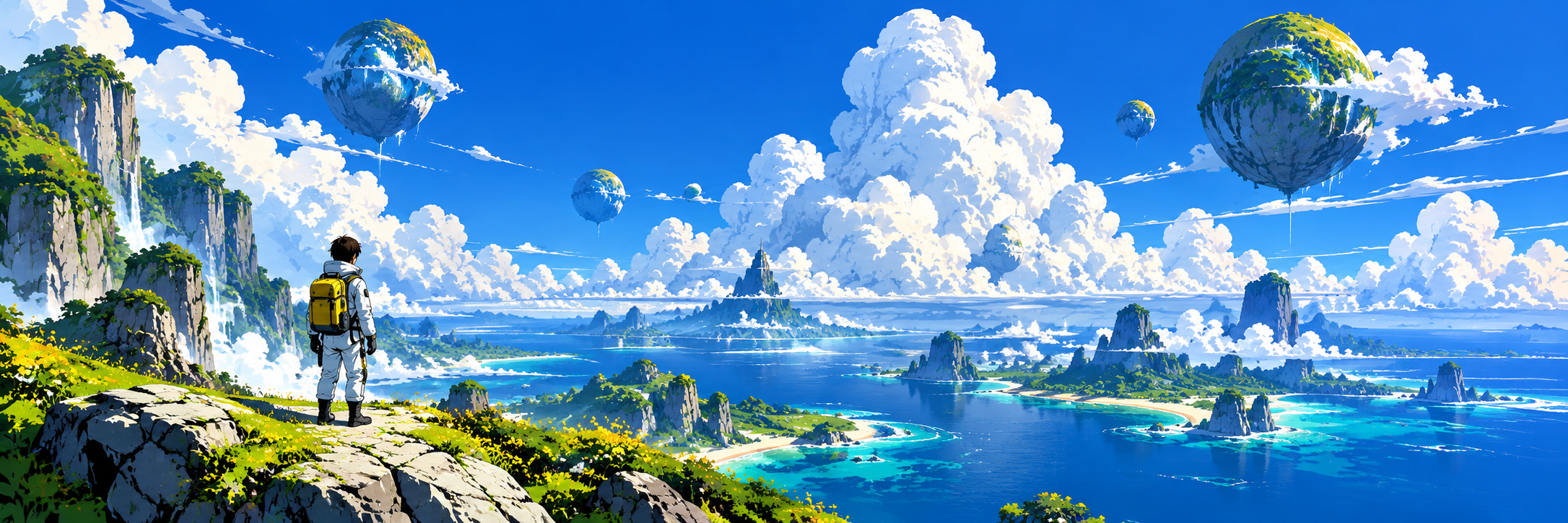
A visual introduction
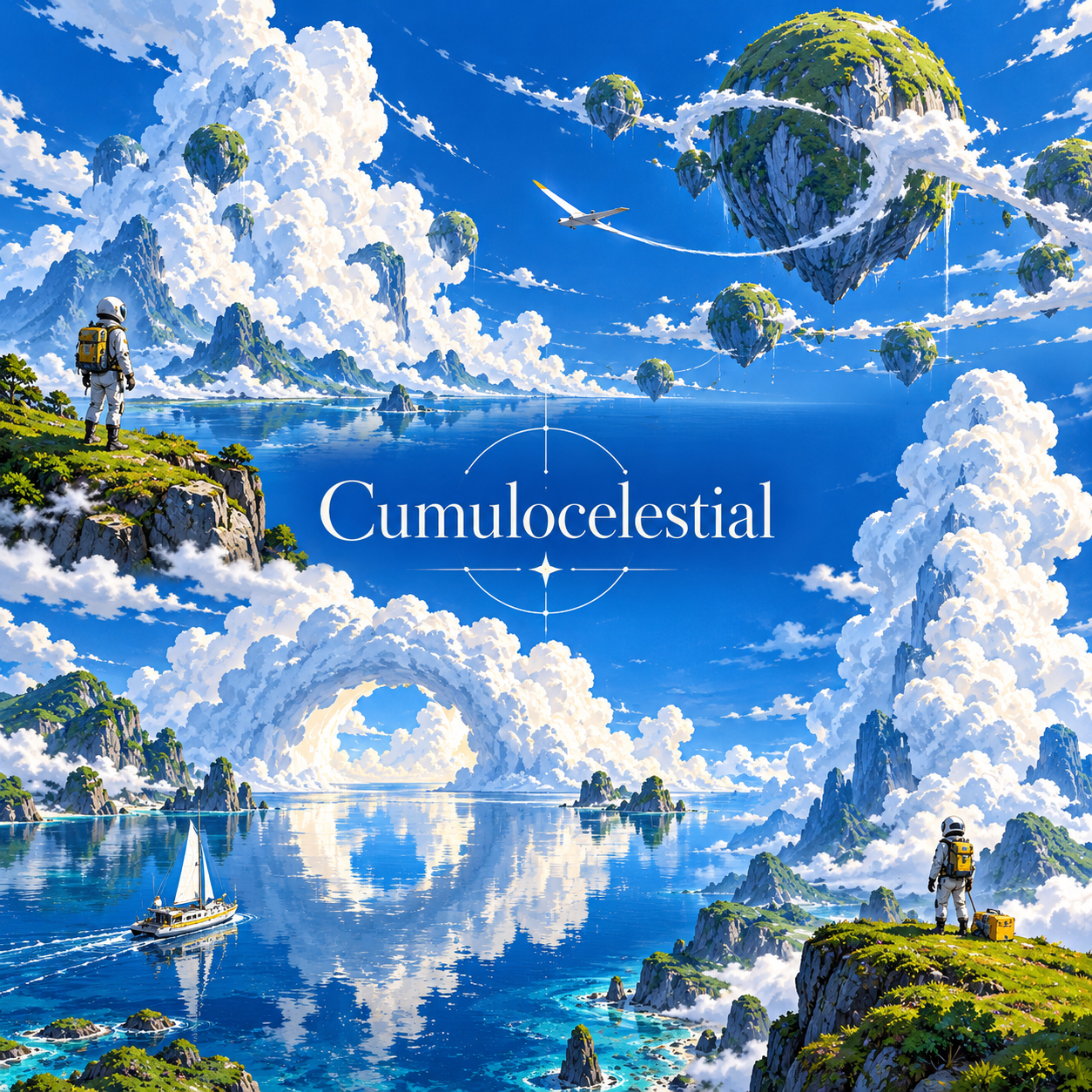
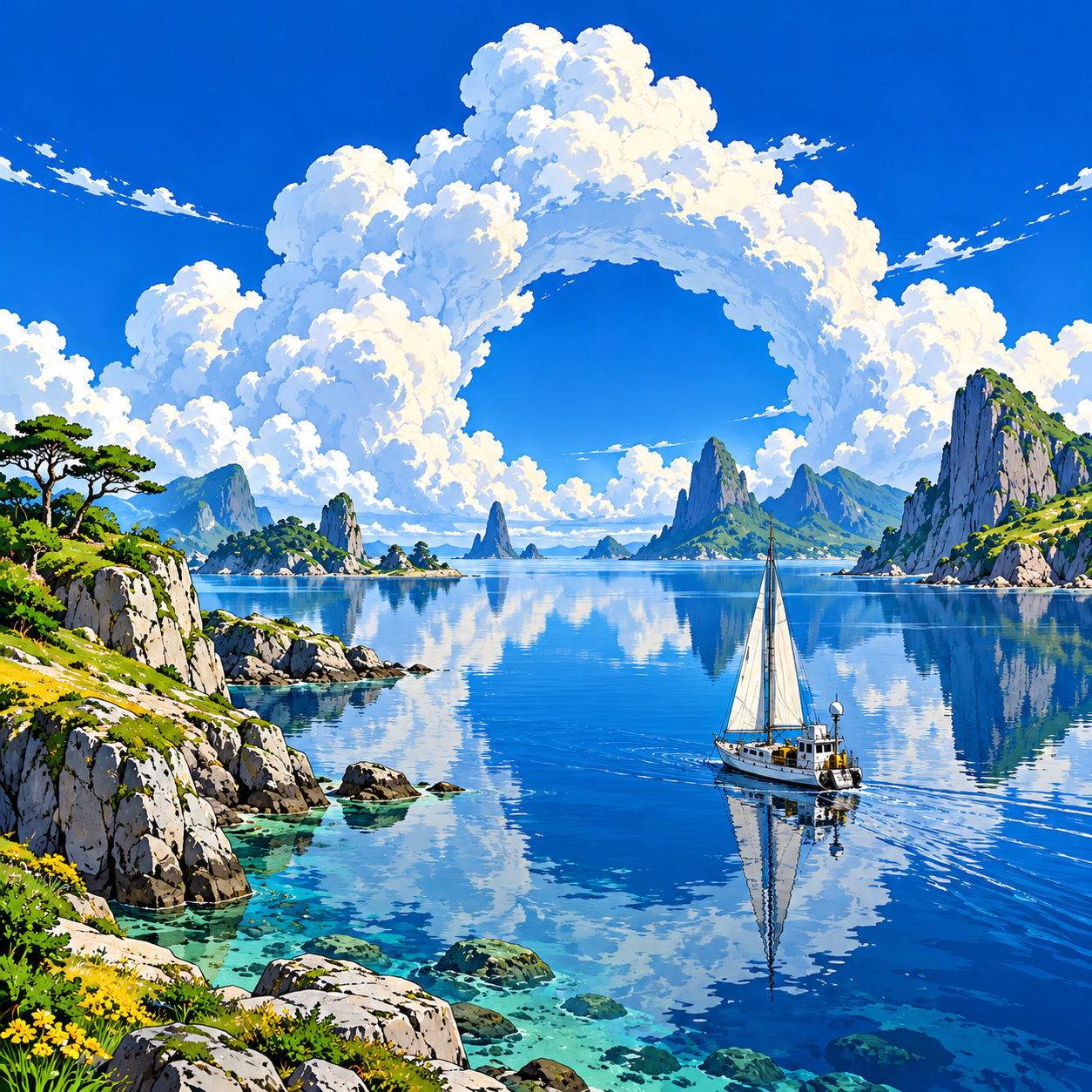
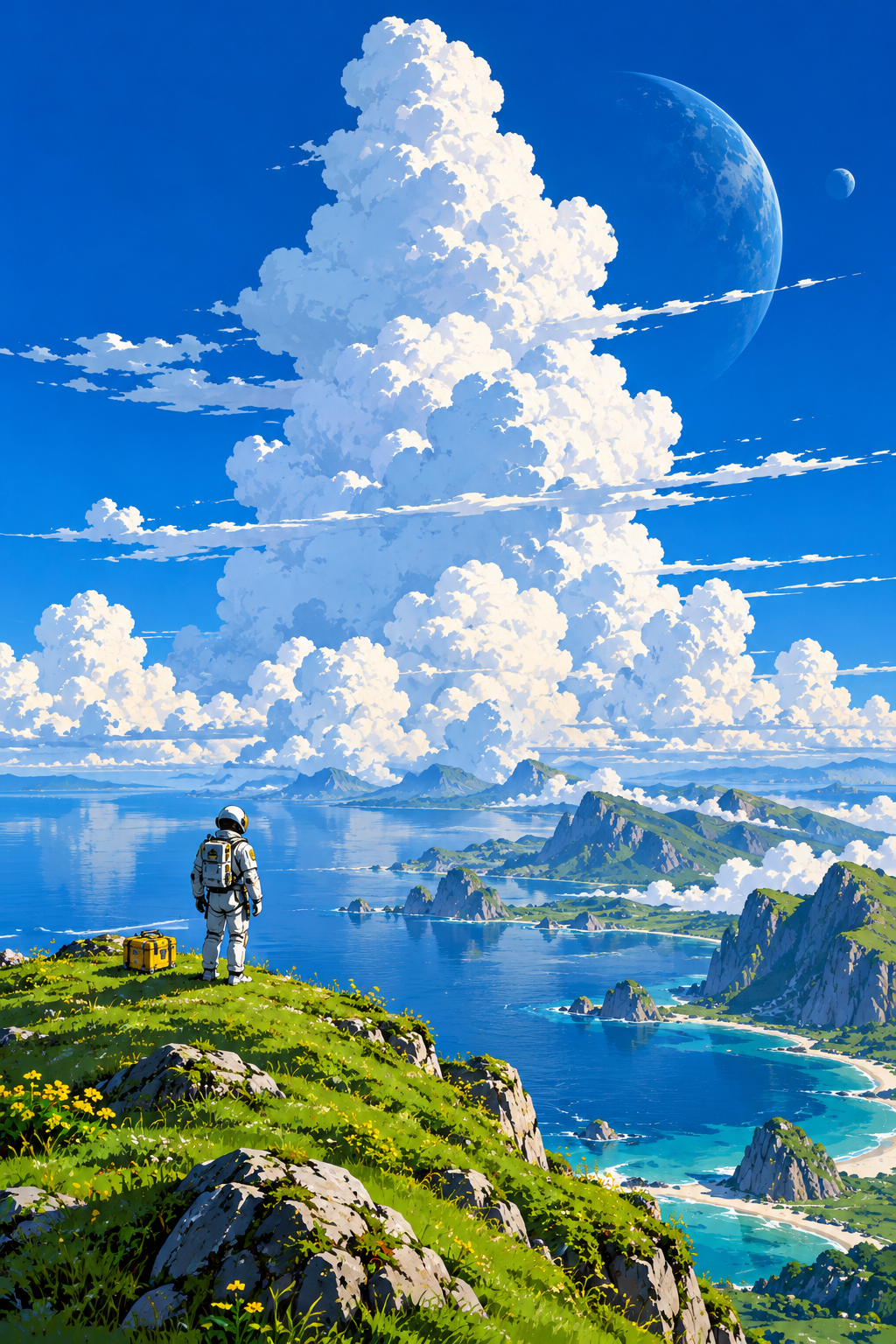
Five original AI-generated AOI interpretations: a dedicated banner, centrally titled collage and three standalone studies of cloud architecture and travel.
Select an image for a closer look. Use the thumbnails, arrow keys or a swipe to compare examples. Zoom in to inspect details, or share the image that inspires you.
Creative toolbox · take this style further
Choose an input and a destination. Search sends your words to the chosen site; Copy & open puts them on your clipboard to paste there.
Create with AI
Turn your chosen input into an image prompt or a new creative direction.
ChatGPT
Copy your input and paste it into a ChatGPT conversation or image request.
Copy & open ChatGPT (new tab)Claude · Anthropic
Develop an image prompt or explore the style in a new Claude conversation.
Copy & open Claude · Anthropic (new tab)Midjourney
Paste your input into the Imagine bar on the Create page.
Copy & open Midjourney (new tab)Adobe Firefly
Copy your input, open Firefly, and paste it into the prompt field.
Copy & open Adobe Firefly (new tab)Leonardo.Ai
Copy your input, open Leonardo, and paste it into the generation field.
Copy & open Leonardo.Ai (new tab)Image search
Find visual references. Short, concrete keywords usually work best.
Lexica
Search AI images and prompts using your selected input.
Search with this input Lexica (new tab)Pexels
Search the photo and video library. Short keywords often work best.
Search with this input Pexels (new tab)Pixabay
Search photos, illustrations and other images.
Search with this input Pixabay (new tab)Unsplash
Search photographs using the style name or your own keywords.
Search with this input Unsplash (new tab)Wikimedia Commons
Search photographs, artworks and historical images. Check each file for its source and reuse terms.
Search with this input Wikimedia Commons (new tab)Art & research
Explore artists, collections and the ideas behind a style.
Wikipedia
Search for background reading. A style may not have its own article.
Search with this input Wikipedia (new tab)WikiArt
Copy your input into WikiArt’s search to explore artists and artworks.
Copy & open WikiArt (new tab)Europeana
Paste your keywords into the search to explore European museum, library and archive collections.
Copy & open Europeana (new tab)Inspiration
Discover portfolios and visual ideas from creative communities.
Instagram hashtags
Search a hashtag made from your input: spaces and punctuation are removed. Instagram may require sign-in.
Search with this input Instagram hashtags (new tab)ArtStation
Paste your input into artwork search for concept art, environments, characters and visual development.
Copy & open ArtStation (new tab)Behance
Paste your input into project search for illustration, design and visual storytelling.
Copy & open Behance (new tab)A closer look
Brilliant white cloud masses rise against saturated blue sky and water. Green land, yellow accents, graphic shadows and selective dark contours give floating terrain a clear, adventurous silhouette.
The sky gets the leading role
Cumulocelestial is a named Midlibrary prompt aesthetic, not a documented historical art movement. Its referenced imagery suggests science-fiction adventure through cloud-filled vistas, floating forms and sharply organized color. AOI develops that vocabulary into original illustrations in which the atmosphere carries the composition. The sky is the place where the action happens, rather than the space left over after drawing the landscape.
The practical starting point is a relationship: a small, readable traveler faces a very large, readable cloud formation. Make that relationship work in a thumbnail before adding rock texture or elaborate equipment. The whole world can be impossible; its visual hierarchy should remain understandable.
Compose the blue before drawing the clouds
Sketch the open sky as deliberately as the solid-looking forms. A broad blue channel can steer the eye toward a sailboat, while an arch of white cloud frames the route ahead. A tall cloud column asks for a different composition: a low figure and a rising sequence of shapes make height the subject.
Leave intervals between major cloud masses. When every gap contains another spectacular formation, scale becomes difficult to judge and the scene loses its air. A useful editing pass removes one secondary cloud, one floating island and one unnecessary burst of detail. The weather can survive a modest reduction in staffing.
A small palette with a large job
In these studies, blue establishes continuity between sky and water; white provides the principal light shapes; green distinguishes inhabitable land; yellow marks a sail, flower or equipment accent. These are compositional roles rather than a compulsory color formula. Give the brightest or warmest accent to the element the viewer should notice first.
White clouds still need internal structure. Pale blue or lavender shadow planes can explain their volume without muddying the sunlit edges. Reserve the darkest drawing for important overlaps, near objects and small focal details. Equally heavy outlines around every distant cloud can turn depth into wallpaper.
Hard edges, soft air
Crisp contours and broad, clean shadow shapes produce a graphic adventure-poster feeling. Softer transitions inside the cloud masses make the same subject more atmospheric. The distinction matters: hard boundaries emphasize designed shapes, while gradual transitions suggest vapor and immense distance.
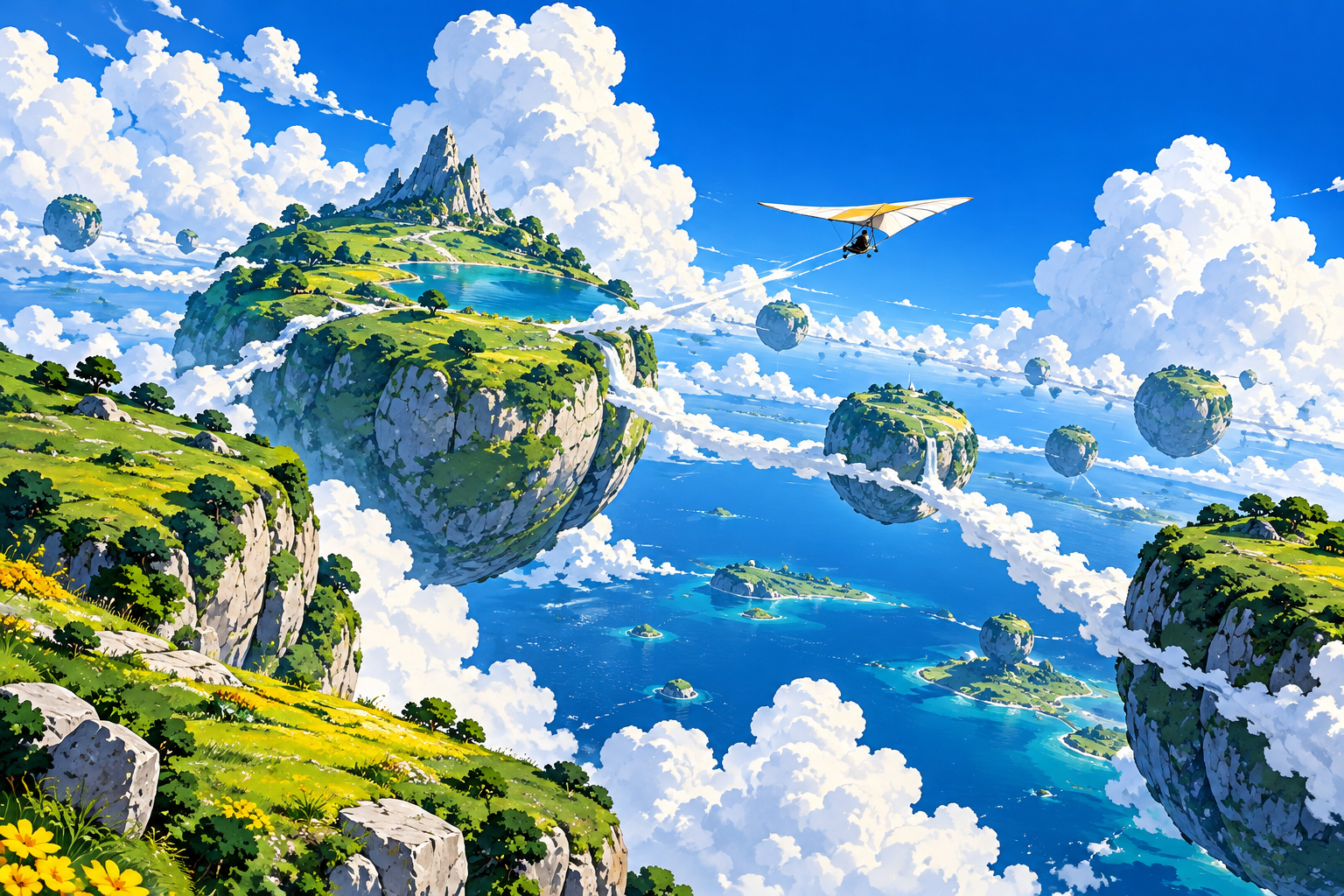
The AOI examples combine these approaches. The glider scene uses textured grass and rock against much quieter sky; its floating spheres feel tangible without requiring a physically possible explanation. For a stricter cel-shaded result, simplify foliage and break cloud shadows into fewer flat shapes. For a softer treatment, retain a crisp traveler and silhouette while reducing detail in the distance.
Three ways to travel through the image
The sailboat study gives the viewer a horizontal route beneath a cloud arch. Water provides a familiar surface, so the immense sky feels surprising rather than arbitrary. The astronaut study reverses that balance: a small figure and towering cloud form make the scene about vertical scale and an unfamiliar destination.
The glider study turns an archipelago of grassy spheres into a sequence of possible landings. Its diagonal flight path connects foreground terrain with open sky and distant islands. These are different compositional problems, not simply the same landscape with a different costume. An astronaut is optional; a clearly placed witness to the scale is the more useful principle.
Where the approach earns its space
Use this vocabulary for adventure illustration, speculative travel posters, book interiors or expansive banners. Its strong color separation can help a wide scene read at reduced size, provided the principal cloud silhouette remains intact. Keep the traveler and destination away from crop-sensitive edges when preparing a cover.
A common failure is decorative overload: enough cloud towers, planets and glowing portals to cancel one another out. Another is an image that resembles a generic blue fantasy landscape because the clouds do no structural work. Ask what would disappear from the composition if the cloud formation were removed. If the answer is only atmosphere, give it a clearer role.
A reference code needs its version
The Midlibrary page consulted for this entry pairs Cumulocelestial with –sref 2412597767 –v 8.2 and distinguishes its earlier-version results. Treat that pairing as a version-specific reference, not a universal definition of the name. Consult the linked page when working in Midjourney, since reference behavior can change.
The five illustrations here are original AI-generated AOI interpretations. They were not produced by executing that Midjourney reference code. The prompt workshop expresses visible decisions in ordinary language so that the compositional ideas can also be explored with another image tool or through drawing and painting.
A small poetic detour
Original words from the AOI studio.
Poetry
A country made of weather
The little sail cuts blue from blue;
a cloud lifts mountains into light.
No chart can tell the traveler who
has taught the islands how to take flight.
A grassy world goes drifting by,
its flowers facing an unmeasured sea.
I packed a compass for the sky;
it points to where the ground should be.
The prompt workshop
Original creative exercises. These prompts create new illustrations, not documentary evidence.
Sail beneath the cloud arch
Illustrate one small yellow-sailed boat on cobalt water beneath an immense white cloud arch. Preserve a broad clear route through the picture, use pale blue cloud shadows and keep fine detail near the boat.
The arch should frame the route. Reduce smaller clouds if they compete with its silhouette.
Make height the subject
Create a graphic science-fiction illustration of a lone astronaut on a green ledge beneath a towering cumulus formation. Use brilliant white against saturated blue, dark selective contours and one yellow equipment accent. Let the tiny figure establish the cloud's scale.
Place the figure low and leave enough open blue to read the tower as one large shape.
Compare crisp and atmospheric edges
Show a glider crossing a floating archipelago of grassy spherical islands, with white cloud streams and a wide cobalt sky. Keep the glider sharply defined. Explore one version with flat cloud-shadow shapes and another with soft transitions inside the same cloud silhouettes.
Hold composition and palette constant so that edge treatment becomes the variable.
Your next inspiration
Discover another art style
Follow a visual thread to the next subject.
A smile from the studio
Jokes
The expedition's brochure promised an island with excellent transport links. On arrival, the pilot discovered that the island itself was the transport. “When is the next departure?” asked a passenger. The pilot checked the clouds. “We left yesterday. Your luggage is on the mountain behind us, and that mountain has chosen a different career.”