
Established
Culture jamming redirects familiar media formats so that their own visual authority becomes a subject of criticism. An advertisement, package, broadcast or official-looking presentation is made to reveal a contradiction. It is a strategy of cultural intervention rather than one fixed palette, font or art movement.
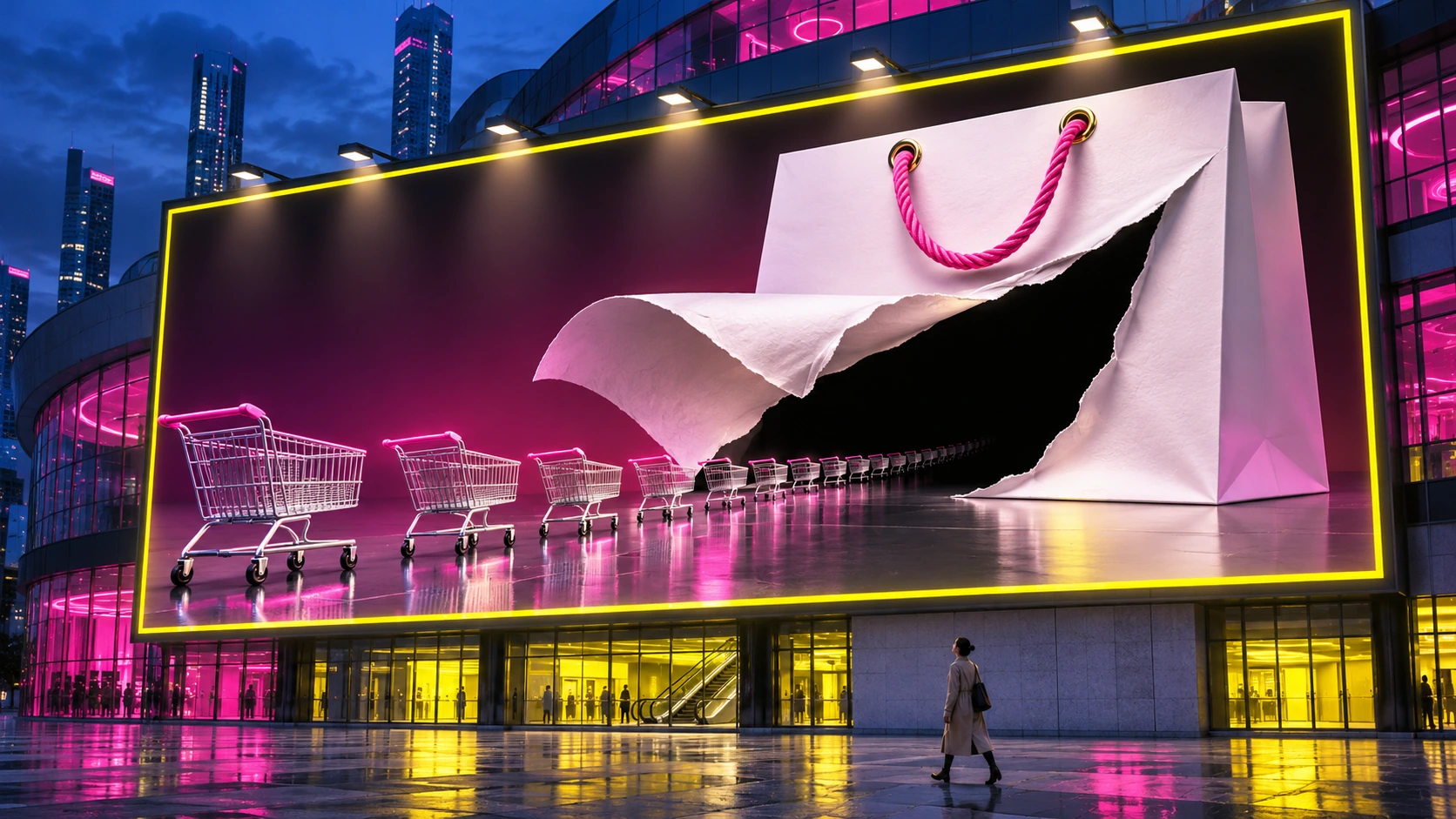
A visual introduction
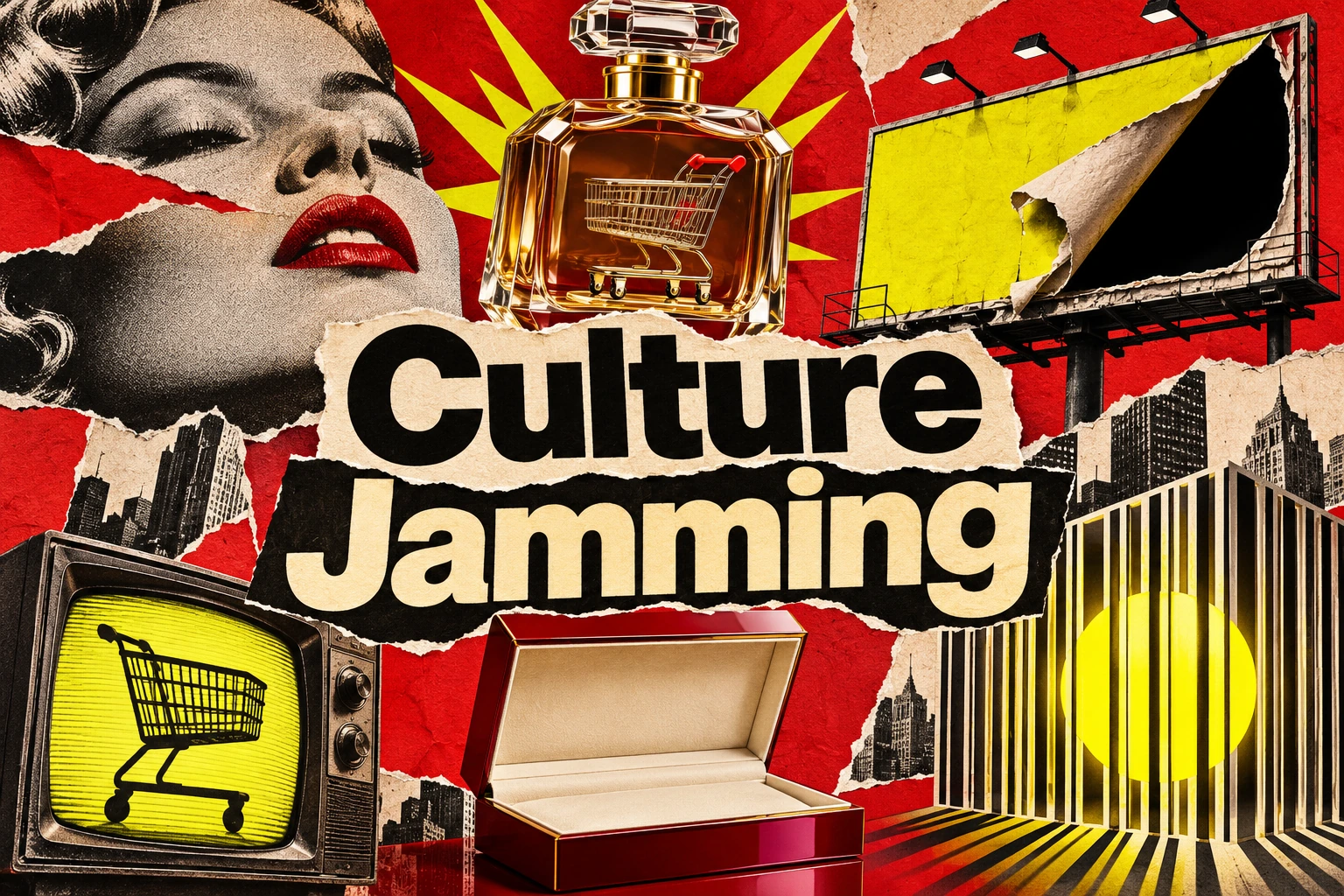
Seven original AI-generated studies explore this subject through a banner, a titled collage and five standalone examples.
Select an image for a closer look. Use the thumbnails, arrow keys or a swipe to compare examples. Zoom in to inspect details, or share the image that inspires you.
Creative toolbox · take this style further
Choose an input and a destination. Search sends your words to the chosen site; Copy & open puts them on your clipboard to paste there.
Create with AI
Turn your chosen input into an image prompt or a new creative direction.
ChatGPT
Copy your input and paste it into a ChatGPT conversation or image request.
Copy & open ChatGPT (new tab)Claude · Anthropic
Develop an image prompt or explore the style in a new Claude conversation.
Copy & open Claude · Anthropic (new tab)Midjourney
Paste your input into the Imagine bar on the Create page.
Copy & open Midjourney (new tab)Adobe Firefly
Copy your input, open Firefly, and paste it into the prompt field.
Copy & open Adobe Firefly (new tab)Leonardo.Ai
Copy your input, open Leonardo, and paste it into the generation field.
Copy & open Leonardo.Ai (new tab)Image search
Find visual references. Short, concrete keywords usually work best.
Lexica
Search AI images and prompts using your selected input.
Search with this input Lexica (new tab)Pexels
Search the photo and video library. Short keywords often work best.
Search with this input Pexels (new tab)Pixabay
Search photos, illustrations and other images.
Search with this input Pixabay (new tab)Unsplash
Search photographs using the style name or your own keywords.
Search with this input Unsplash (new tab)Wikimedia Commons
Search photographs, artworks and historical images. Check each file for its source and reuse terms.
Search with this input Wikimedia Commons (new tab)Art & research
Explore artists, collections and the ideas behind a style.
Wikipedia
Search for background reading. A style may not have its own article.
Search with this input Wikipedia (new tab)WikiArt
Copy your input into WikiArt’s search to explore artists and artworks.
Copy & open WikiArt (new tab)Europeana
Paste your keywords into the search to explore European museum, library and archive collections.
Copy & open Europeana (new tab)Inspiration
Discover portfolios and visual ideas from creative communities.
Instagram hashtags
Search a hashtag made from your input: spaces and punctuation are removed. Instagram may require sign-in.
Search with this input Instagram hashtags (new tab)ArtStation
Paste your input into artwork search for concept art, environments, characters and visual development.
Copy & open ArtStation (new tab)Behance
Paste your input into project search for illustration, design and visual storytelling.
Copy & open Behance (new tab)A closer look
Recognition comes first, then a reversal: polished advertising interrupted by an awkward truth, a desirable product turned inside out, or a confident slogan that contradicts its image. Commercial spacing, logos, packaging silhouettes, screen formats and public scale become material for the critique. Rough collage and pristine simulation are both possible.
The familiar message develops a fault
A successful visual jam depends on what the viewer recognizes. The format appears to promise something ordinary—a product, an aspiration, a reassuring announcement—then an image, word or material detail makes that promise unstable. The interruption should change the meaning, not merely add visual noise.
For this gallery, the targets are invented consumer promises and attention habits. The images are original AI-generated art studies, not photographs of real interventions or evidence of wrongdoing by a named company. Their central question is practical: what happens when the persuasive surface begins to argue against itself?
Where the term enters the story
Negativland's own account dates its use of culture jamming to 1984 and describes a practice of rearranging found media alongside original material so that the fragments suggest unintended meanings. That account makes sound and sequencing central; the history cannot be reduced to altered posters.
Mark Dery's account connects his 1990 journalism and 1993 Open Magazine pamphlet to the term's wider circulation. He places culture jamming among media interventions, satire and the repurposing of dominant messages, with Situationist détournement among its precedents. These are related histories rather than proof that every parody belongs to one organization or school.
Subvertising: keep the frame, turn the claim
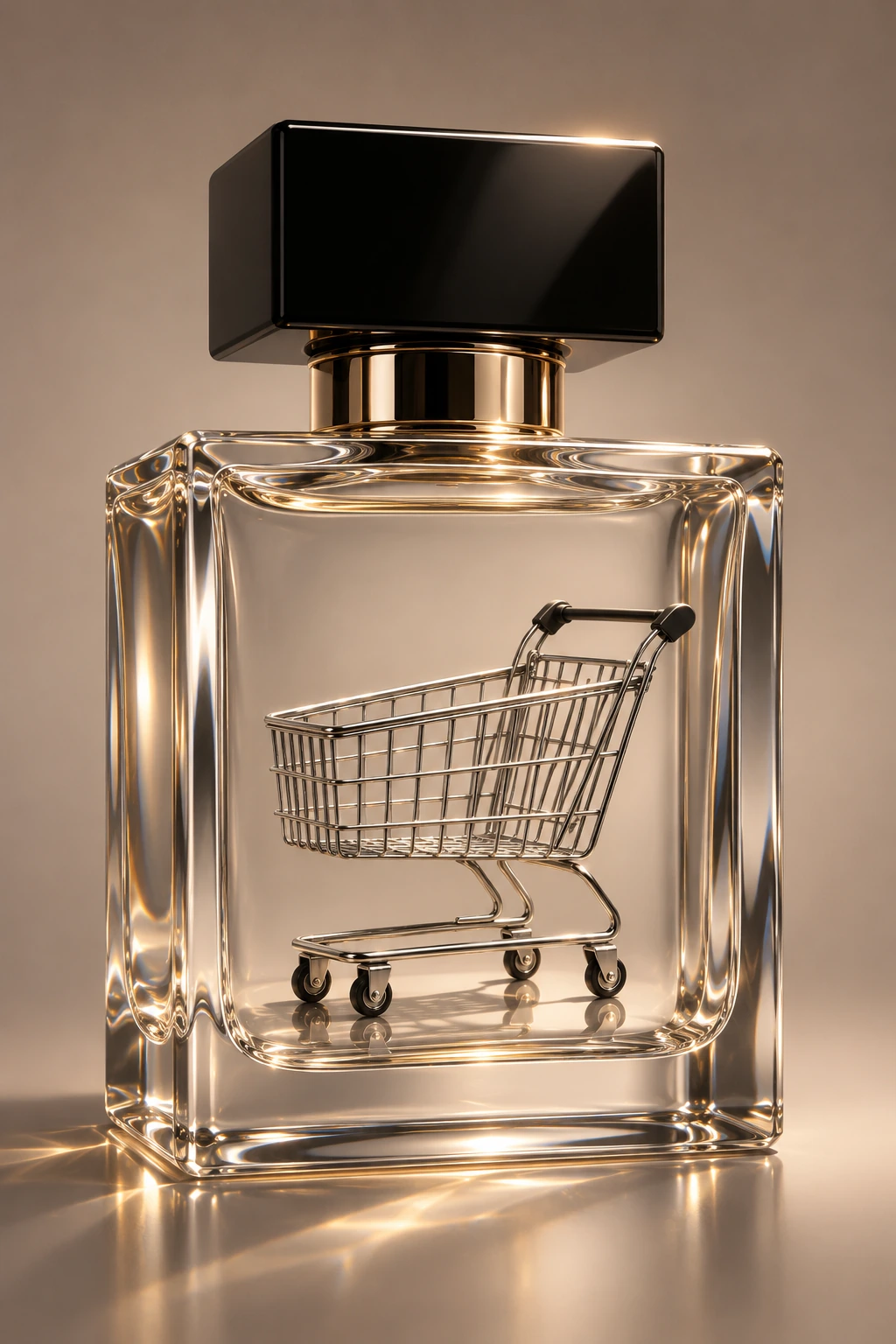
An advertising parody can preserve the smooth lighting, generous margins and instantly legible hierarchy of its source format. One deliberate change then carries the criticism. A perfume bottle that contains a queue of miniature workers, for example, could challenge the fantasy of effortless luxury without requiring a paragraph of tiny print.
In a new study, write the underlying promise in plain language before designing the image. Then choose one contradiction that is visible at a glance. If the work needs three unrelated jokes, six competing headlines and a glossary to explain its target, simplify the argument. Sharp recognition usually benefits from restraint.
The package can become the punchline
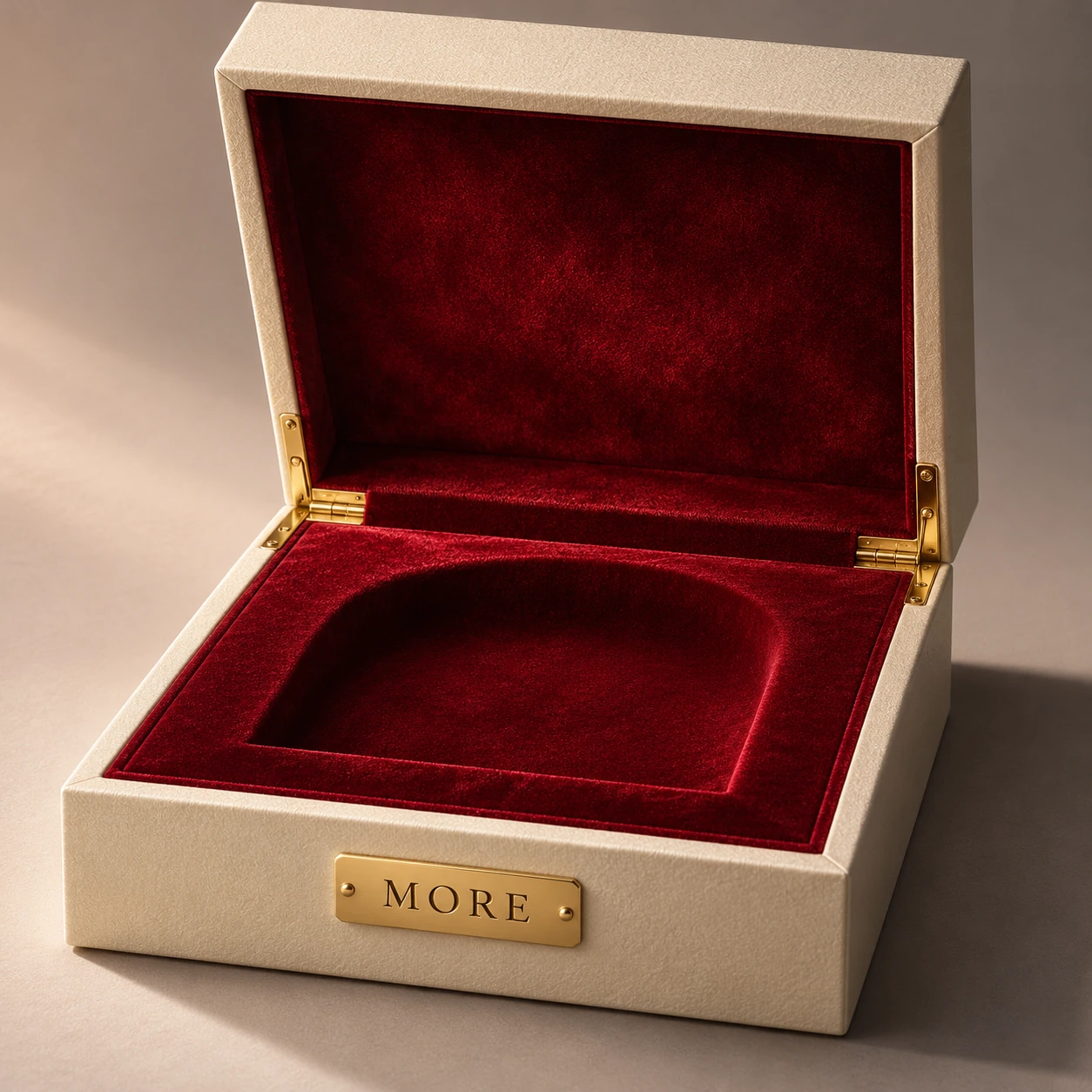
Packaging gives an ordinary object an identity through shape, material, typography and the choreography of opening it. A culture-jamming object can use that language to make emptiness, waste or artificial scarcity tangible. The polished box remains convincing long enough for its contents to undermine the sales pitch.
The gallery's fictional empty product is an exercise in this relationship. Its satire belongs to the contrast between expensive presentation and absent substance. Photographing a random broken box would produce a different image: the formal promise must survive for the reversal to work.
Beyond the poster: performance and circulation
The Yes Men describe their work through creative media actions and a tactic they call identity correction. Their Yes Lab account emphasizes campaign goals, collaboration, organizing and the development of an effective action. This places performance and circulation alongside the designed object.
A still image cannot demonstrate that such an action happened or changed anyone's behavior. An AI illustration can propose a stage, prop or visual argument, but it should remain identified as an illustration. The audience, setting and explanation influence whether a parody opens a question, disappears as a joke or is mistaken for a genuine announcement.
Readable criticism, not generic glitch
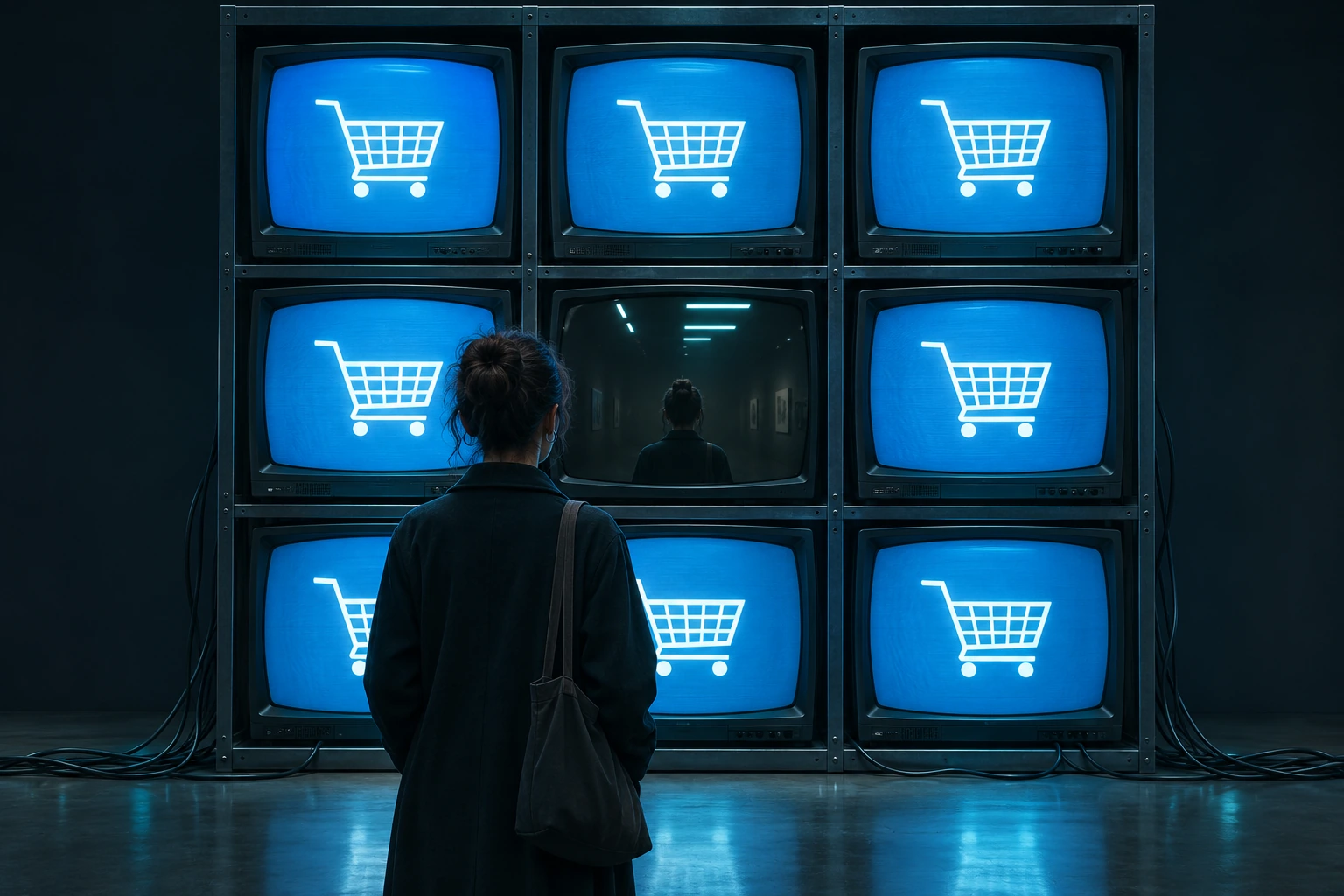
A glitched screen can suggest a failing transmission, but distortion alone is not culture jamming. Ask what message is being interrupted and why. A television that turns every shopping image into the same empty cart makes a specific visual proposition; random chromatic tearing may only supply atmosphere.
The same test applies to collage. Repetition can reveal a pattern of persuasion, scale can expose an imbalance, and an altered caption can redirect an otherwise familiar image. Choose the operation that makes the argument visible. A restrained intervention may be more effective than an aggressively distressed surface.
The awkward possibility of being sold back
Dery's discussion includes criticism of anti-consumerist imagery becoming merchandise. That tension remains useful for evaluating an artwork: a rebellious surface can become another desirable style while its original criticism fades. Visual appeal and critical force do not automatically travel together.
For an original project, compare the first reading with the second. What initially attracts attention? What changes after a closer look? If both readings simply say that the image is fashionable, the work may need a more precise contradiction. Avoid making the reader guess which factual claims are real; separate a fictional demonstration from documented history.
A compact working method
Choose a familiar format, identify the promise it makes, and introduce one visible reversal. Test the image at thumbnail size, then inspect the details that sustain the second reading. Keep supporting text short enough to be read in the intended setting. New slogans in these examples are AOI inventions, not historical quotations.
Culture jamming can inform editorial illustration, exhibition design, media-literacy teaching, satirical objects and speculative posters. It is less useful as a generic instruction to make something edgy. The strongest prompt names a medium, a target idea and a contradiction, then leaves the composition enough room to make the encounter surprising.
Positive editorial review (AI-authored)
Culture jamming can turn visual literacy into an active pleasure. When the familiar frame and the altered message remain in tension, a small change makes the viewer inspect assumptions that ordinary advertising encourages them to pass over. Its range across sound, objects, images and performance is a particular strength.
Negative editorial review (AI-authored)
A jam can become an in-joke, an attractive commodity or a confusing imitation whose critical point never arrives. Excessive distortion often weakens recognition, while a vague target substitutes attitude for analysis. The remedy is a clearer relationship between the borrowed format and the particular claim being challenged.
Neutral editorial review (AI-authored)
Culture jamming describes a family of critical media practices rather than a consistent visual style. It can use clean design, collage, appropriation, performance and parody. These AI-generated examples demonstrate selected compositional strategies; they do not document public actions, establish factual allegations or measure political effectiveness.
A small poetic detour
Original words from the AOI studio.
Poetry
The billboard cleared its perfect throat,
Then lost the line it meant to sell.
A smaller word slipped from its coat
And asked if all was quite so well.
The glossy surface kept its shine;
The question would not stay in line.
The prompt workshop
Original creative exercises. These prompts create new illustrations, not documentary evidence.
One promise, one reversal
Create an original culture-jamming poster for a fictional luxury product: a pristine transparent perfume bottle contains a tiny empty shopping cart. Elegant advertising lighting and generous white space make the absurd contents unmistakable. No real brand, no other objects, no text. Present it as an artwork, not a real advertisement.
The immaculate empty box
Create a satirical product photograph of an extravagant open presentation box, its velvet interior carefully fitted around absolutely nothing. A single front label reads 'MORE'. Elegant studio light, meticulous material detail, large calm negative space, no other wording or real brand. Make the contrast between premium presentation and absent substance the joke.
The broadcast becomes a mirror
Create an original culture-jamming installation concept: a wall of obsolete televisions shows identical empty shopping carts, except for one central screen that reflects a lone adult visitor. Dark gallery, coherent screens and cables, restrained cyan light, no text or real logos. Clearly a speculative art visualization, not evidence of a real event.
Your next inspiration
Discover another art style
Follow a visual thread to the next subject.

A smile from the studio
Jokes
The agency pitched a revolutionary anti-consumerist campaign. The client loved its courage, approved the rebellion and asked for a premium subscription tier. By Friday, resistance came in three sizes, the smallest of which required an annual commitment.