
Historical avant-garde context and collage technique
A contextual umbrella for collage experiments connected with Romanian avant-garde artists, using cut fragments, altered scale and surprising visual relationships.
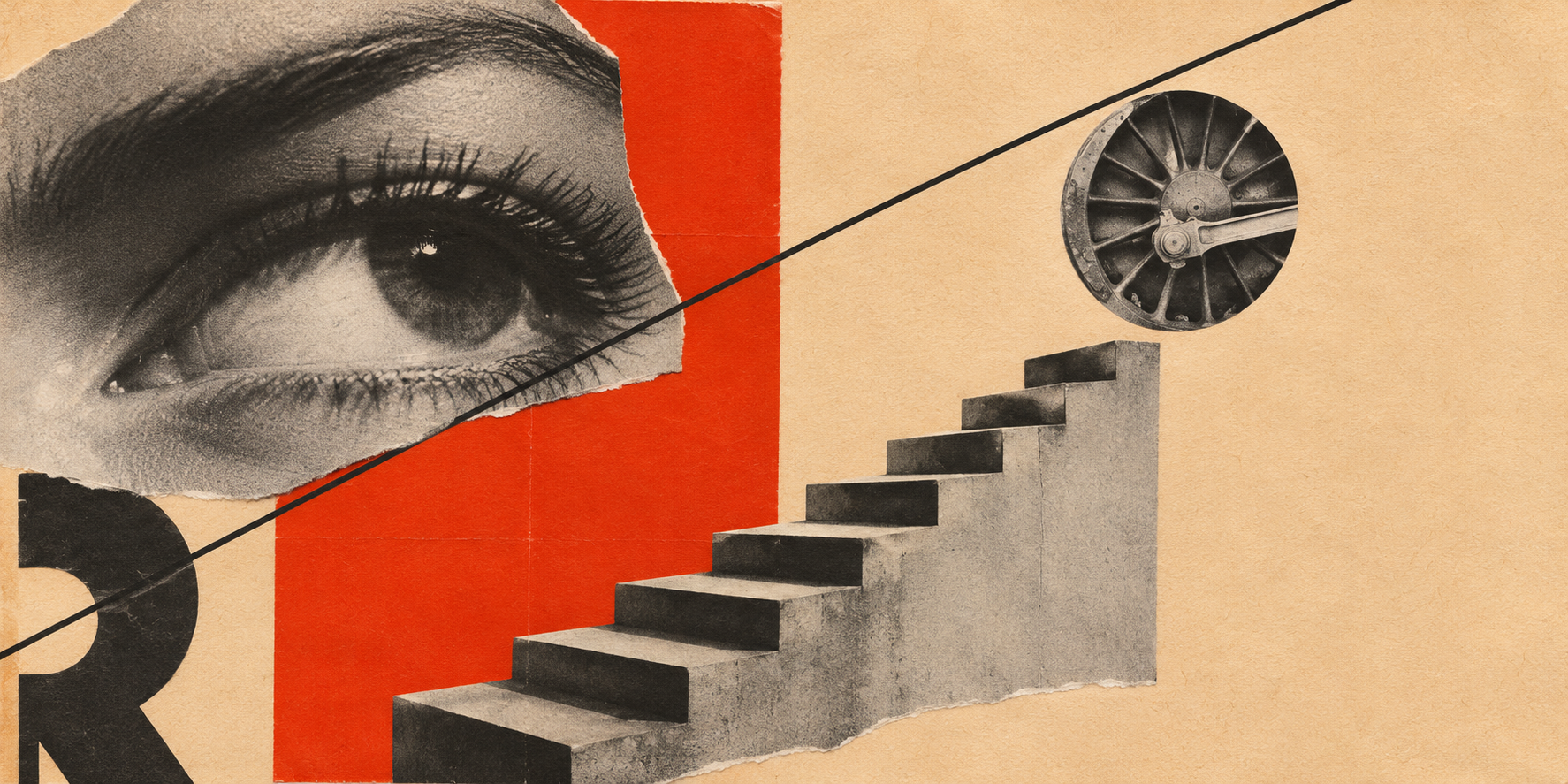
A visual introduction
Select an image for a closer look. Use the thumbnails, arrow keys or a swipe to compare examples. Zoom in to inspect details, or share the image that inspires you.
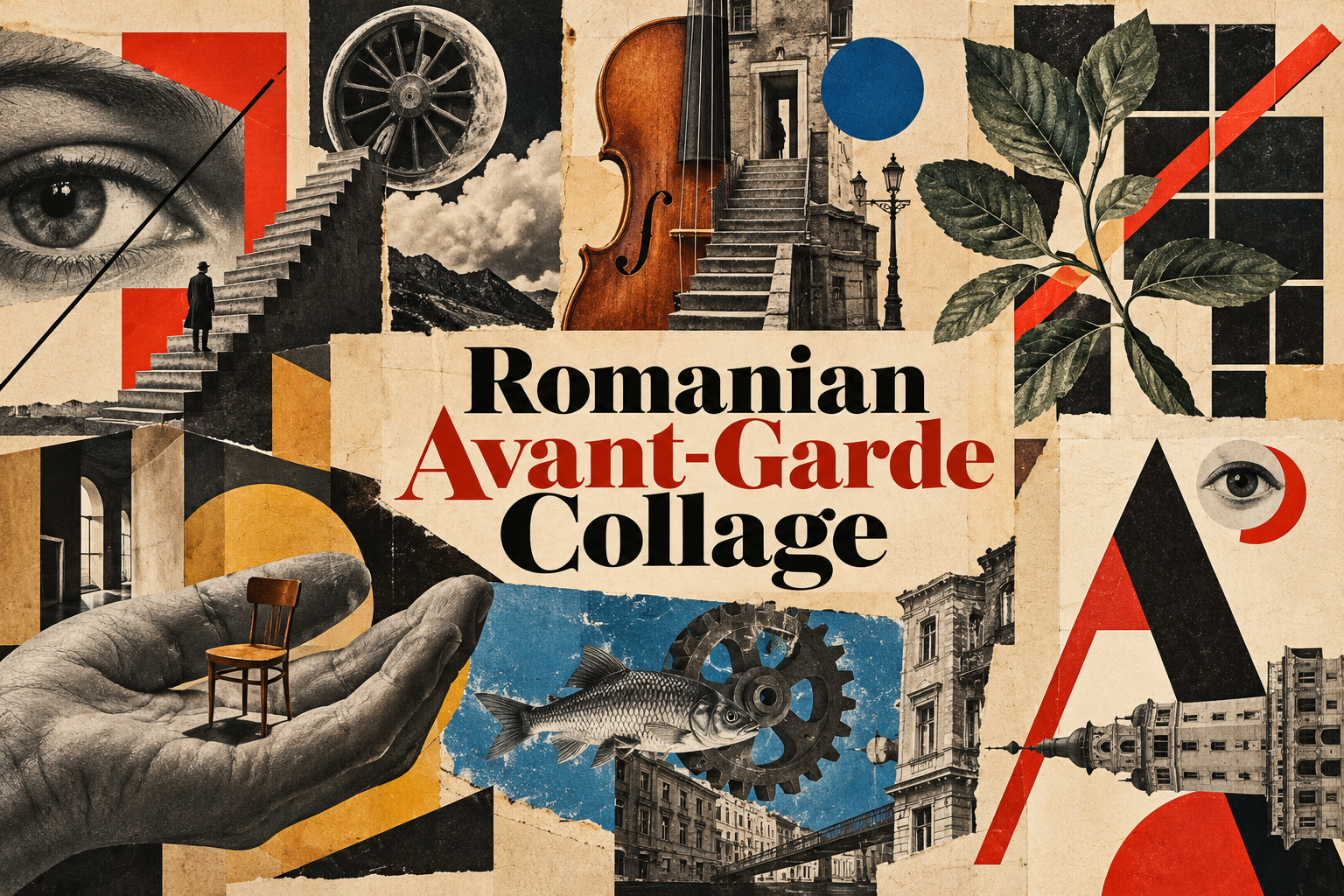
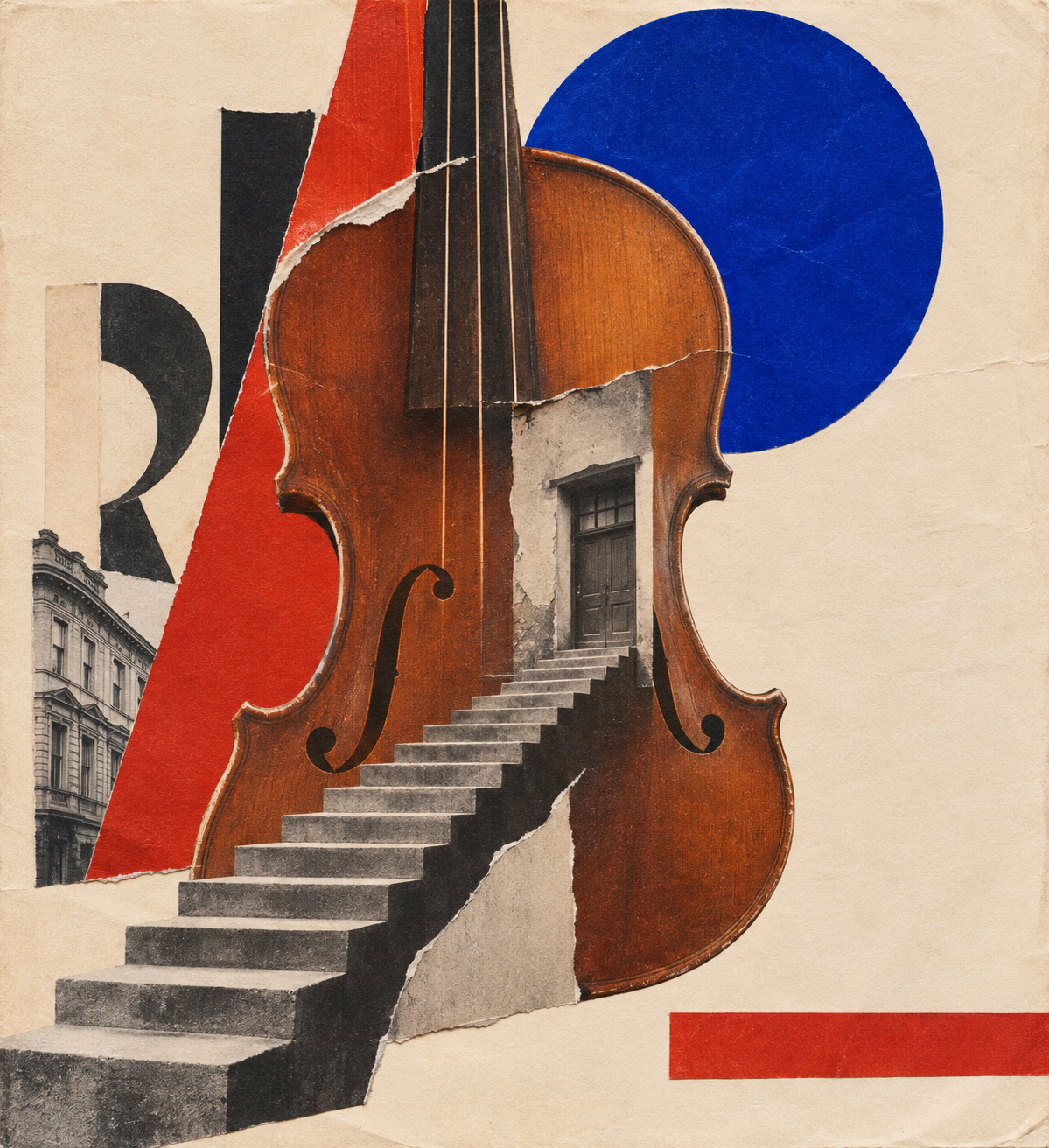
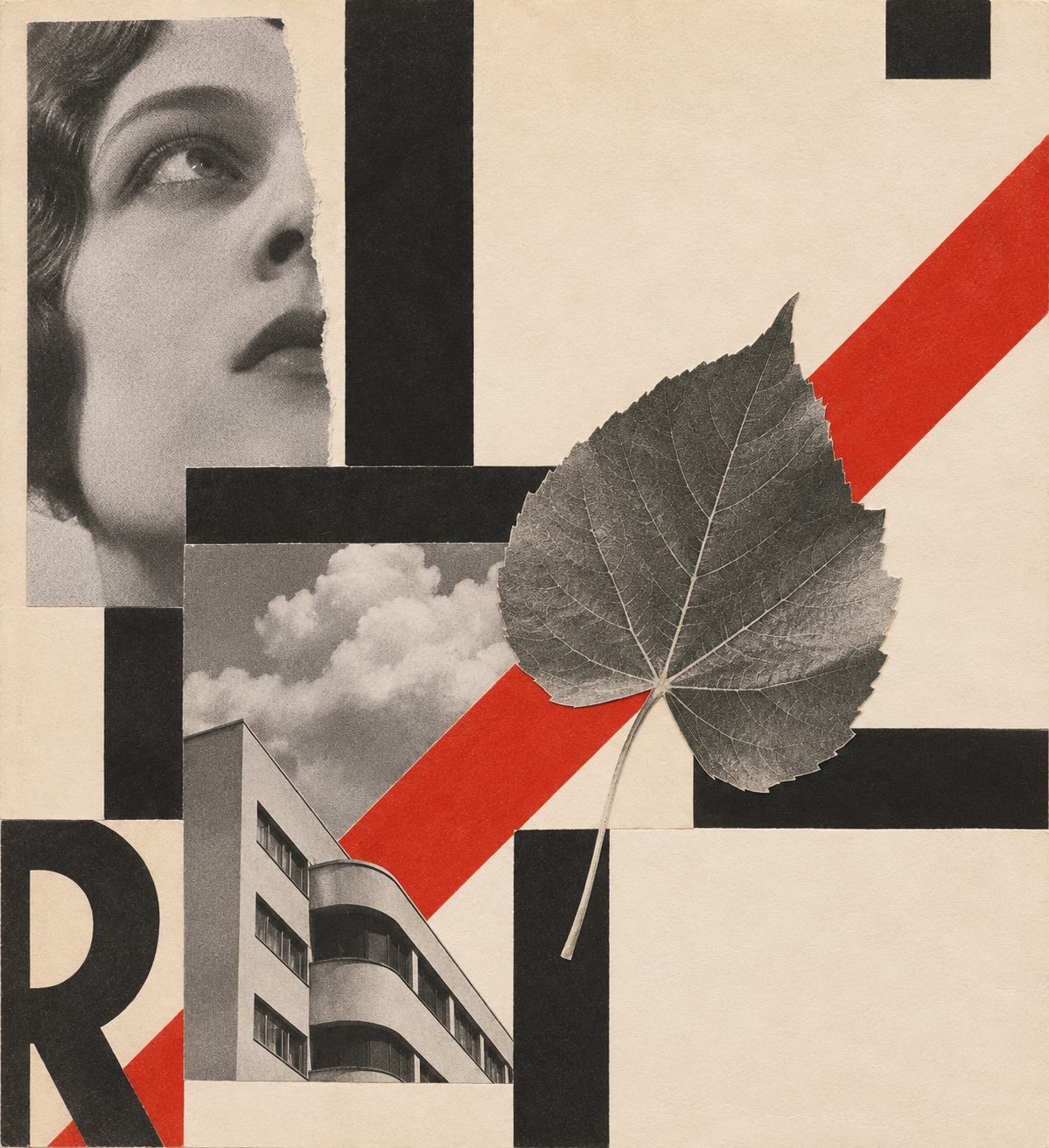
Creative toolbox · take this style further
Choose an input and a destination. Search sends your words to the chosen site; Copy & open puts them on your clipboard to paste there.
Create with AI
Turn your chosen input into an image prompt or a new creative direction.
ChatGPT
Copy your input and paste it into a ChatGPT conversation or image request.
Copy & open ChatGPT (new tab)Claude · Anthropic
Develop an image prompt or explore the style in a new Claude conversation.
Copy & open Claude · Anthropic (new tab)Midjourney
Paste your input into the Imagine bar on the Create page.
Copy & open Midjourney (new tab)Adobe Firefly
Copy your input, open Firefly, and paste it into the prompt field.
Copy & open Adobe Firefly (new tab)Leonardo.Ai
Copy your input, open Leonardo, and paste it into the generation field.
Copy & open Leonardo.Ai (new tab)Image search
Find visual references. Short, concrete keywords usually work best.
Lexica
Search AI images and prompts using your selected input.
Search with this input Lexica (new tab)Pexels
Search the photo and video library. Short keywords often work best.
Search with this input Pexels (new tab)Pixabay
Search photos, illustrations and other images.
Search with this input Pixabay (new tab)Unsplash
Search photographs using the style name or your own keywords.
Search with this input Unsplash (new tab)Wikimedia Commons
Search photographs, artworks and historical images. Check each file for its source and reuse terms.
Search with this input Wikimedia Commons (new tab)Art & research
Explore artists, collections and the ideas behind a style.
Wikipedia
Search for background reading. A style may not have its own article.
Search with this input Wikipedia (new tab)WikiArt
Copy your input into WikiArt’s search to explore artists and artworks.
Copy & open WikiArt (new tab)Europeana
Paste your keywords into the search to explore European museum, library and archive collections.
Copy & open Europeana (new tab)Inspiration
Discover portfolios and visual ideas from creative communities.
Instagram hashtags
Search a hashtag made from your input: spaces and punctuation are removed. Instagram may require sign-in.
Search with this input Instagram hashtags (new tab)ArtStation
Paste your input into artwork search for concept art, environments, characters and visual development.
Copy & open ArtStation (new tab)Behance
Paste your input into project search for illustration, design and visual storytelling.
Copy & open Behance (new tab)A closer look
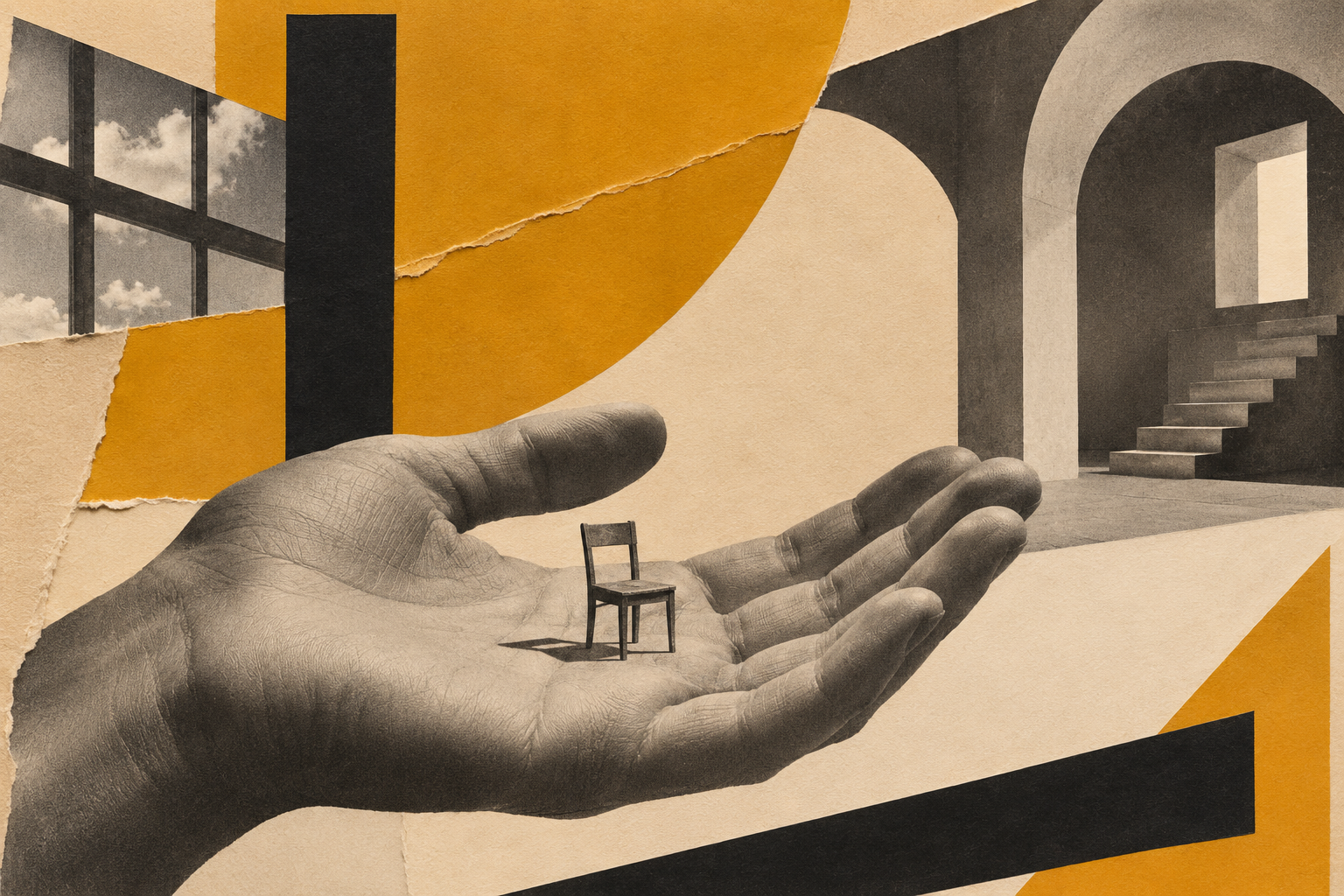
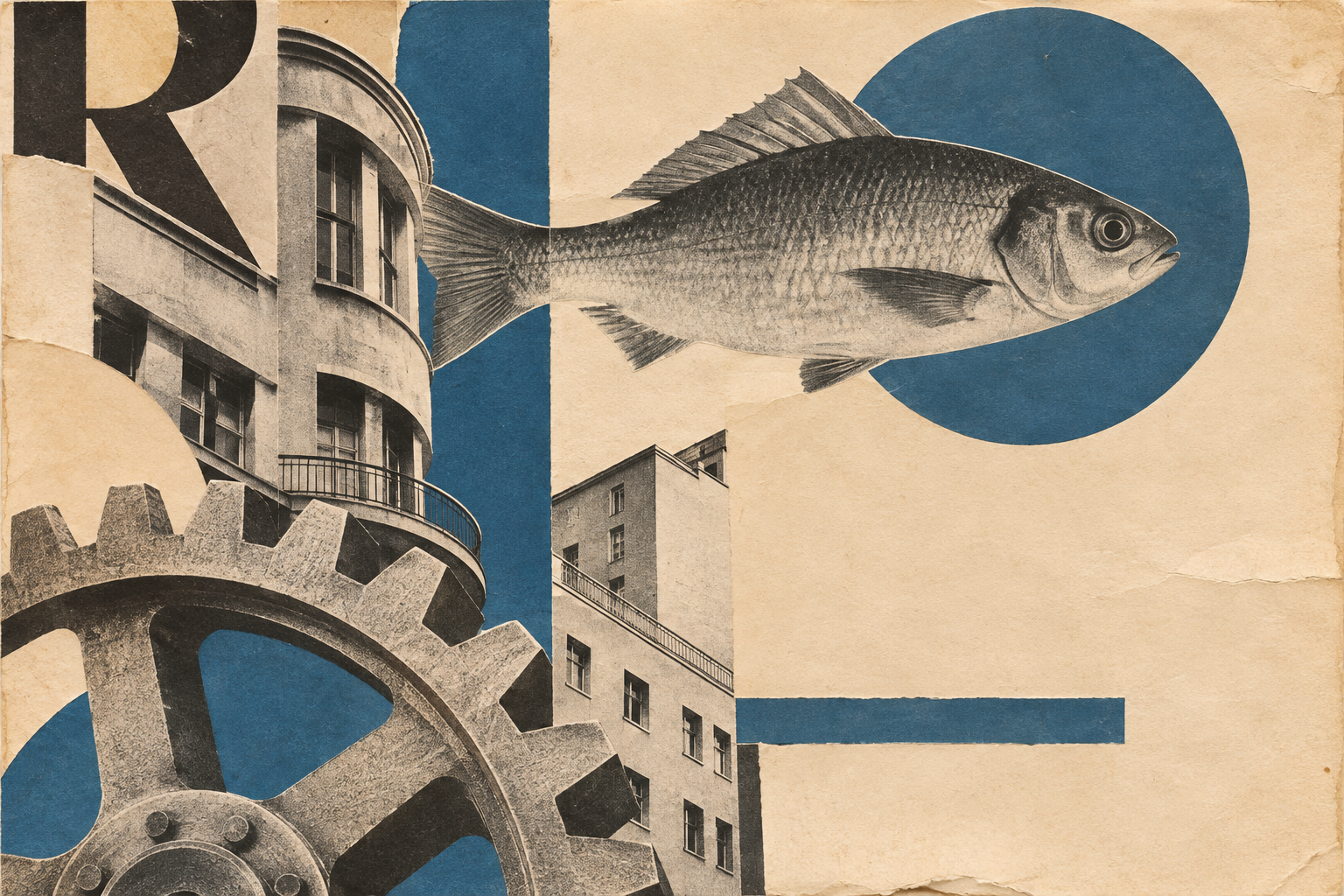
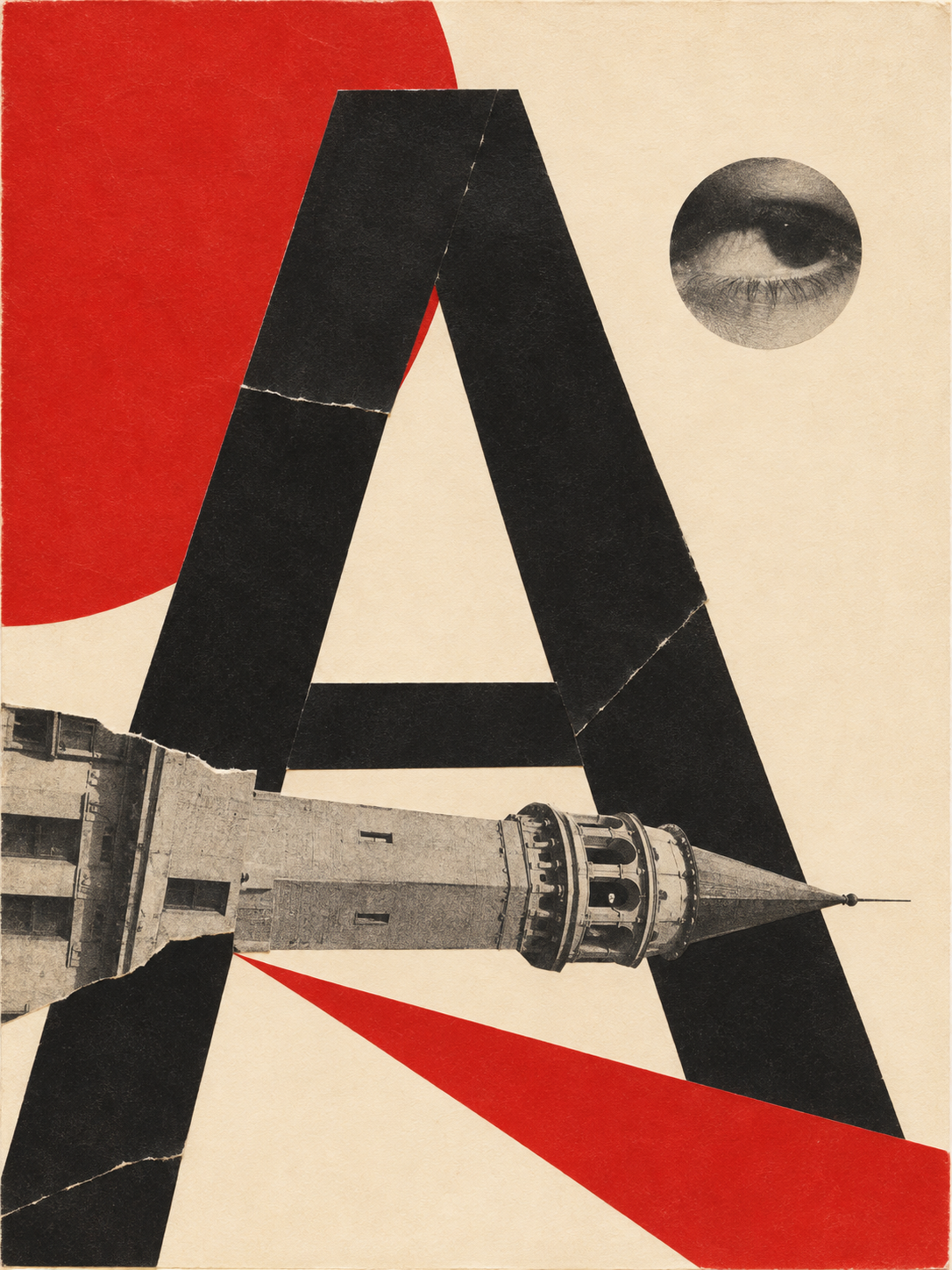
Abrupt seams between printed fragments, scale disruptions, spare typographic shapes, photographic and drawn elements with contrasting textures, deliberately unstable spatial logic.
An intersection, not a single house style
Romanian Avant-Garde Collage is a useful contextual umbrella, not a claim that every Romanian avant-garde artist made the same kind of collage. The National Museum of Art of Romania places M. H. Maxy, Marcel Iancu and Victor Brauner within Romania's contribution to the European avant-garde of the 1920s and 1930s. Their individual media and approaches still require separate study.
A concrete collage reference is Victor Brauner's Auxerre (1937), discussed by National Gallery of Victoria curator Cathy Leahy. Its combination of unrelated photographic fragments makes ordinary printed material behave strangely. That specific example supports an exploration of Surrealist dislocation; it does not establish a universal national formula.
Let the seam do some thinking
A productive collage join changes the meaning of both fragments. A staircase ending at a cloud suggests a different world from a cloud merely pasted behind a building. Keep enough of each source's original logic for the collision to remain readable: a familiar object, a convincing perspective, a recognizably printed surface.
Work with a few dominant fragments before adding detail. A large architectural piece, a smaller figure and one improbable object can generate more tension than twenty unrelated cutouts. The edge matters: scissors produce a decided contour; a tear leaves a softer, fibrous boundary. Mixing them can distinguish a deliberate insertion from a fragment that feels excavated.
Typography, paper and spatial contradiction
Letterforms can act as rhythm and weight without pretending to be a recovered historical text. Where readable wording is needed, compose original text deliberately. Where it is not, use blank paper blocks, rules and isolated geometric shapes rather than meaningless pseudo-newspaper writing.
A restricted palette keeps competing sources in conversation. Black-and-white fragments against one red plane are one possibility, not a compulsory historical recipe. Test an off-white ground, a large blank interval and one fragment with a different reproduction scale. The image should still have an intentional hierarchy when viewed as a small thumbnail.
Useful experiments and honest limits
Try an impossible room, a diagram that refuses to explain itself or a portrait assembled from objects with a coherent emotional association. These can serve editorial illustration, speculative book covers and visual essays. Invent your own fragments or use material with known reuse permission; an old-looking photograph is not automatically free to republish.
An AI-generated collage appearance does not prove that physical fragments were cut and assembled. Label it as a digital interpretation where appropriate. Avoid copying a specific work, inventing Romanian-language slogans or attributing a new design to a historical artist. An effective homage studies the relationship between fragments rather than borrowing an artist's signature.
Positive editorial perspective
AOI editorial perspective (AI-authored). Collage can make an argument through a single join. Contrasting reproduction scales and abrupt edges let the viewer feel an encounter between incompatible worlds, with wit that remains visible before any explanation.
Negative editorial perspective
AOI editorial perspective (AI-authored). Random fragments can masquerade as conceptual depth. If every object is equally strange, no relationship has emphasis. Reduce the inventory, choose a meaningful collision and remove ornamental faux-history.
Neutral editorial perspective
AOI editorial perspective (AI-authored). This entry connects collage practice with a specific Romanian avant-garde context. It is a framework for original experiments, not a uniform historical movement or an attribution of all collage methods to Romanian artists.
A small poetic detour
Original words from the AOI studio.
Poetry
A staircase climbs a borrowed sky;
A paper window lets it by.
The scissors stop. A seam remains,
A border crossing without trains.
A little room has lost its floor;
The moon applies to be its door.
Two printed worlds, once far apart,
Share one unreasonable heart.
I leave the join where it can show:
A narrow place for doubt to grow.
The page lies flat beneath my hand;
Its pieces will not understand.
The prompt workshop
Original creative exercises. These prompts create new illustrations, not documentary evidence.
Make one impossible join
Original avant-garde collage interpretation: a printed staircase rises into a dark cloud inside an otherwise empty room, three dominant paper fragments, visible cut edges, off-white ground, black ink and a restrained red accent, no text or signature.
Give each fragment recognizable space before breaking their connection.
Build a visual argument
An original surreal editorial collage of an adult figure, an oversized keyhole and an architectural plan, contrasting photographic and drawn paper textures, decisive cut silhouettes, one torn edge, large breathing space, no borrowed artwork or fake historical lettering.
Use the scale changes to express exclusion, curiosity or uncertainty.
Test the same fragments twice
Two adjacent original collage compositions using the same invented window, bird and stair fragments, one orderly and one spatially contradictory, consistent paper palette and visible seams, no lettering.
The experiment is how arrangement changes meaning, not how many scraps fit.
A smile from the studio
Jokes
The collage committee rejected the staircase because it led nowhere. The staircase appealed, explaining that nowhere had excellent lighting and no rent. The committee approved it, then moved its office into the moon. The glue is still waiting for its travel expenses.