
Cultural art overview
Explore Costa Rican art through Diquís stone spheres, painted oxcart craft, modern drawings and printmaking, and contemporary practice—without reducing a country to one visual style.
A visual introduction
Select an image for a closer look. Use the thumbnails, arrow keys or a swipe to compare examples. Zoom in to inspect details, or share the image that inspires you.



Creative toolbox · take this style further
Choose an input and a destination. Search sends your words to the chosen site; Copy & open puts them on your clipboard to paste there.
Create with AI
Turn your chosen input into an image prompt or a new creative direction.
ChatGPT
Copy your input and paste it into a ChatGPT conversation or image request.
Copy & open ChatGPT (new tab)Claude · Anthropic
Develop an image prompt or explore the style in a new Claude conversation.
Copy & open Claude · Anthropic (new tab)Midjourney
Paste your input into the Imagine bar on the Create page.
Copy & open Midjourney (new tab)Adobe Firefly
Copy your input, open Firefly, and paste it into the prompt field.
Copy & open Adobe Firefly (new tab)Leonardo.Ai
Copy your input, open Leonardo, and paste it into the generation field.
Copy & open Leonardo.Ai (new tab)Image search
Find visual references. Short, concrete keywords usually work best.
Lexica
Search AI images and prompts using your selected input.
Search with this input Lexica (new tab)Pexels
Search the photo and video library. Short keywords often work best.
Search with this input Pexels (new tab)Pixabay
Search photos, illustrations and other images.
Search with this input Pixabay (new tab)Unsplash
Search photographs using the style name or your own keywords.
Search with this input Unsplash (new tab)Wikimedia Commons
Search photographs, artworks and historical images. Check each file for its source and reuse terms.
Search with this input Wikimedia Commons (new tab)Art & research
Explore artists, collections and the ideas behind a style.
Wikipedia
Search for background reading. A style may not have its own article.
Search with this input Wikipedia (new tab)WikiArt
Copy your input into WikiArt’s search to explore artists and artworks.
Copy & open WikiArt (new tab)Europeana
Paste your keywords into the search to explore European museum, library and archive collections.
Copy & open Europeana (new tab)Inspiration
Discover portfolios and visual ideas from creative communities.
Instagram hashtags
Search a hashtag made from your input: spaces and punctuation are removed. Instagram may require sign-in.
Search with this input Instagram hashtags (new tab)ArtStation
Paste your input into artwork search for concept art, environments, characters and visual development.
Copy & open ArtStation (new tab)Behance
Paste your input into project search for illustration, design and visual storytelling.
Copy & open Behance (new tab)A closer look
Choose a specific practice: radial painted ornament, cut-looking graphic marks, stone texture and scale, geometric planes, or spatial installation. These belong to different contexts rather than one national visual formula.
A cultural overview, not a single national look
Costa Rican art includes archaeological objects, living craft practices, modern painting and printmaking, and contemporary work across many media. Nationality does not prescribe a palette or a technique. A painted oxcart wheel, a preparatory drawing and an installation ask different questions and belong to different contexts. This overview offers several entry points rather than a complete history or a recipe for making an image look Costa Rican.
The most useful starting question is specific: which maker, community, object, place or period is being discussed? Tropical scenery can be a subject, but it does not define the country’s artistic production. Equally, Indigenous heritage should not become anonymous decoration. Identify documented objects through their collection or site records, and keep speculative exercises clearly separate from them.
The Diquís spheres: form and archaeological context
UNESCO’s World Heritage record covers four sites in the Diquís Delta in southern Costa Rica, associated with complex settlements of AD 500–1500. Stone spheres occur alongside mounds, paved areas and burial sites. Their placement and surviving archaeological context matter as much as their striking geometry. UNESCO also stresses uncertainty about their meaning, use and production; an attractive explanation is not automatically an established one.
For a visual exercise, examine how a rounded stone mass meets the ground, how grazing light reveals texture and how scale changes its presence. A generated sphere can demonstrate those formal questions, but it cannot reconstruct a specific site or prove a ritual function. The gallery’s invented stone study is labelled accordingly. It is not an archaeological photograph or an authentic heritage object.
Painted oxcarts: an object, a craft and a social practice
UNESCO’s account of oxherding and oxcart traditions connects the carreta with nineteenth-century coffee transport between the Central Valley and Puntarenas. Decoration developed in the early twentieth century, including distinctive wheel patterns and increasingly elaborate imagery. The tradition also involves making, using and celebrating the carts; it is more than a portable set of ornamental shapes.
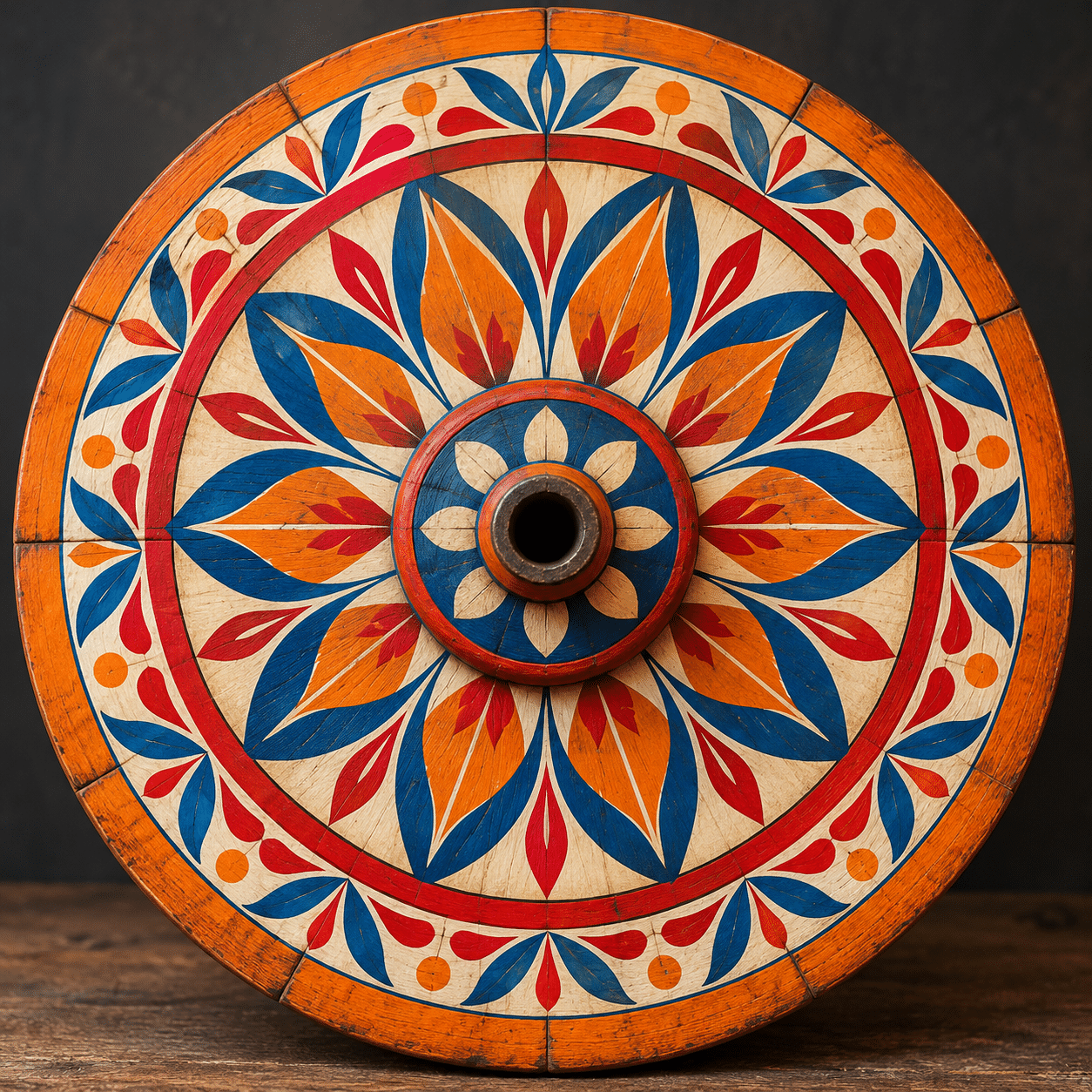
A wheel gives a painter a demanding compositional structure: concentric bands, radial repetition and changes of scale must cooperate around a centre. An original pattern study can explore those relationships without copying a particular workshop’s design. Name the exercise as an interpretation. Do not claim a newly generated wheel comes from Sarchí, a specific artisan or an established regional pattern unless that provenance is documented.
Modern art through the evidence of making
The Universidad de Costa Rica’s museum documents drawings by Francisco Amighetti (1907–1998) and Manuel de la Cruz González (1909–1986). Its account places both within the generation associated with the 1928–1937 fine-art exhibitions. Amighetti’s studies include evidence of transferring drawings toward woodcut production and testing colour. González’s drawings explore viewpoints, movement and simplification, anticipating his nonfigurative work from the 1950s.
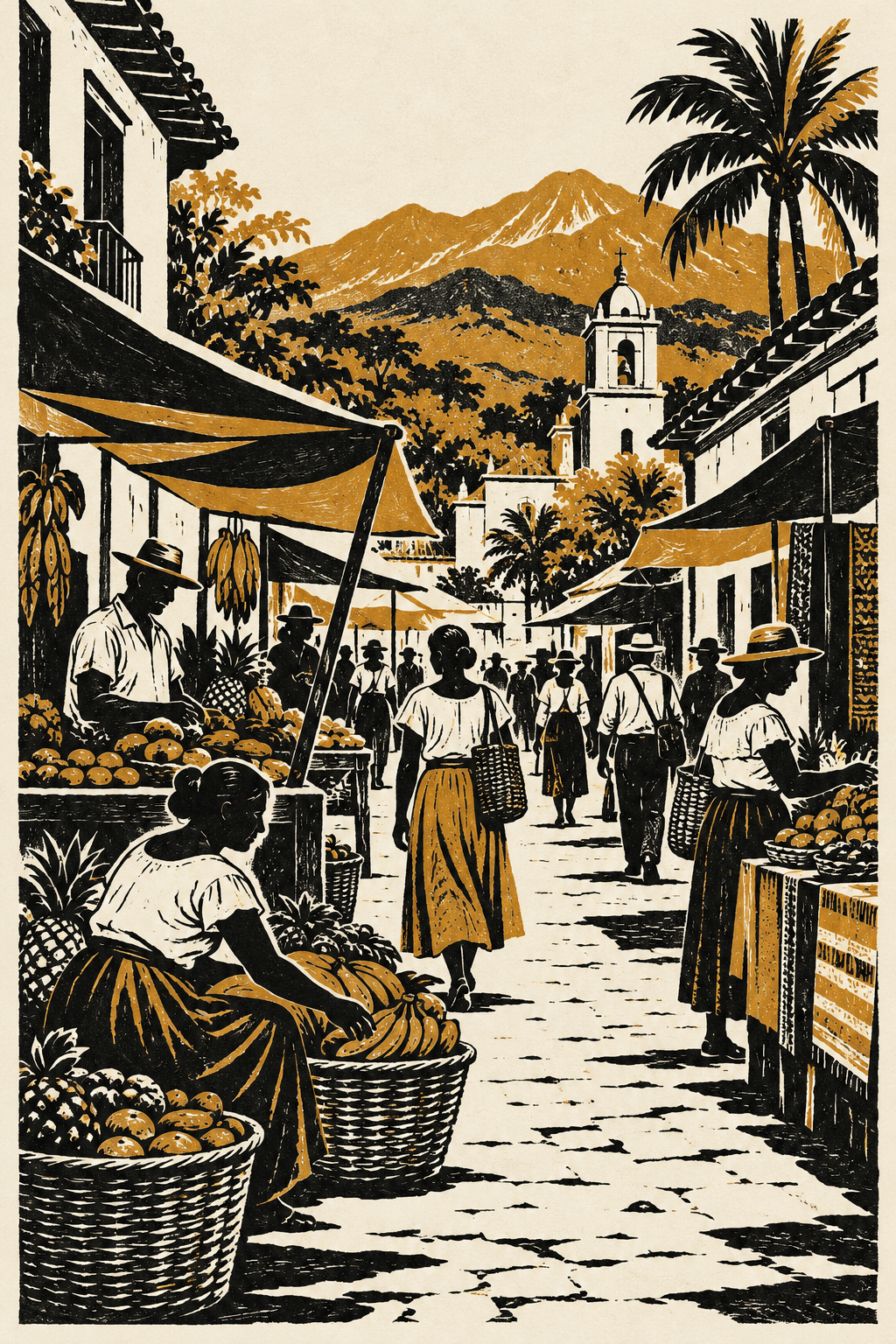
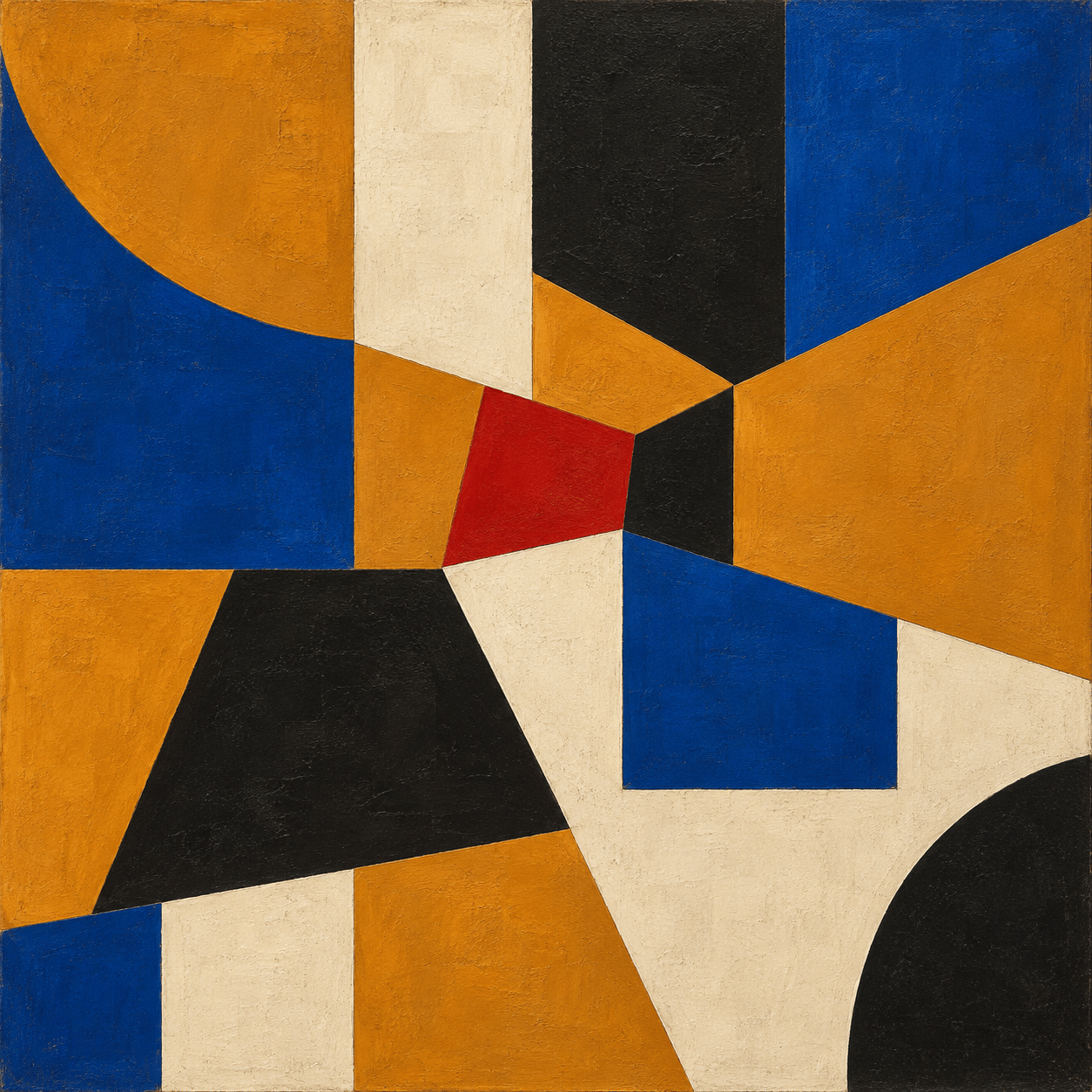
These records suggest a more useful way to look than assigning every artist a national colour scheme. Compare a contour sketch with a cut-looking black mass; ask what was removed, retained or reorganised. Compare a descriptive figure with an arrangement of planes. Preparatory work reveals decisions that a finished image can conceal. The new print-like and abstract studies illustrate those questions without imitating a named historical composition.
Contemporary practice keeps the overview open
The Museo de Arte y Diseño Contemporáneo provides another route into the subject through its exhibition programme and archive. Its documented projects include printed practices, design and contemporary artistic investigations. Follow individual artists and exhibitions there rather than treating present-day work as a decorative continuation of older traditions. A cultural overview should make further discovery easier, not close the subject with a list of supposed national traits.
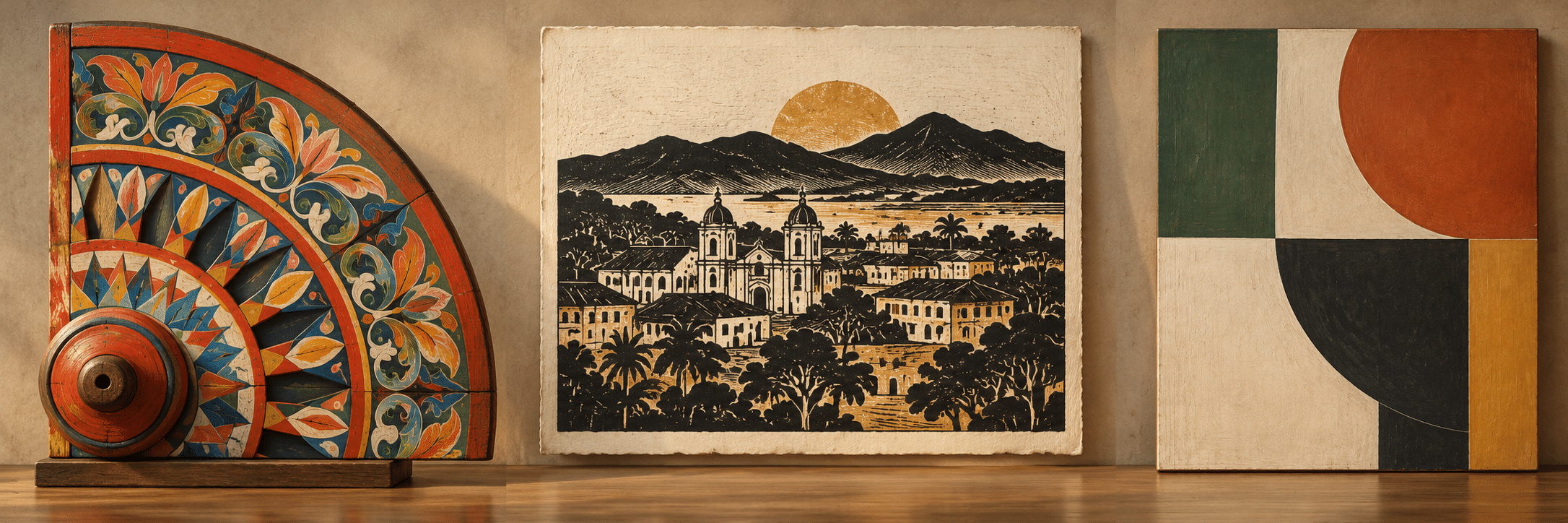
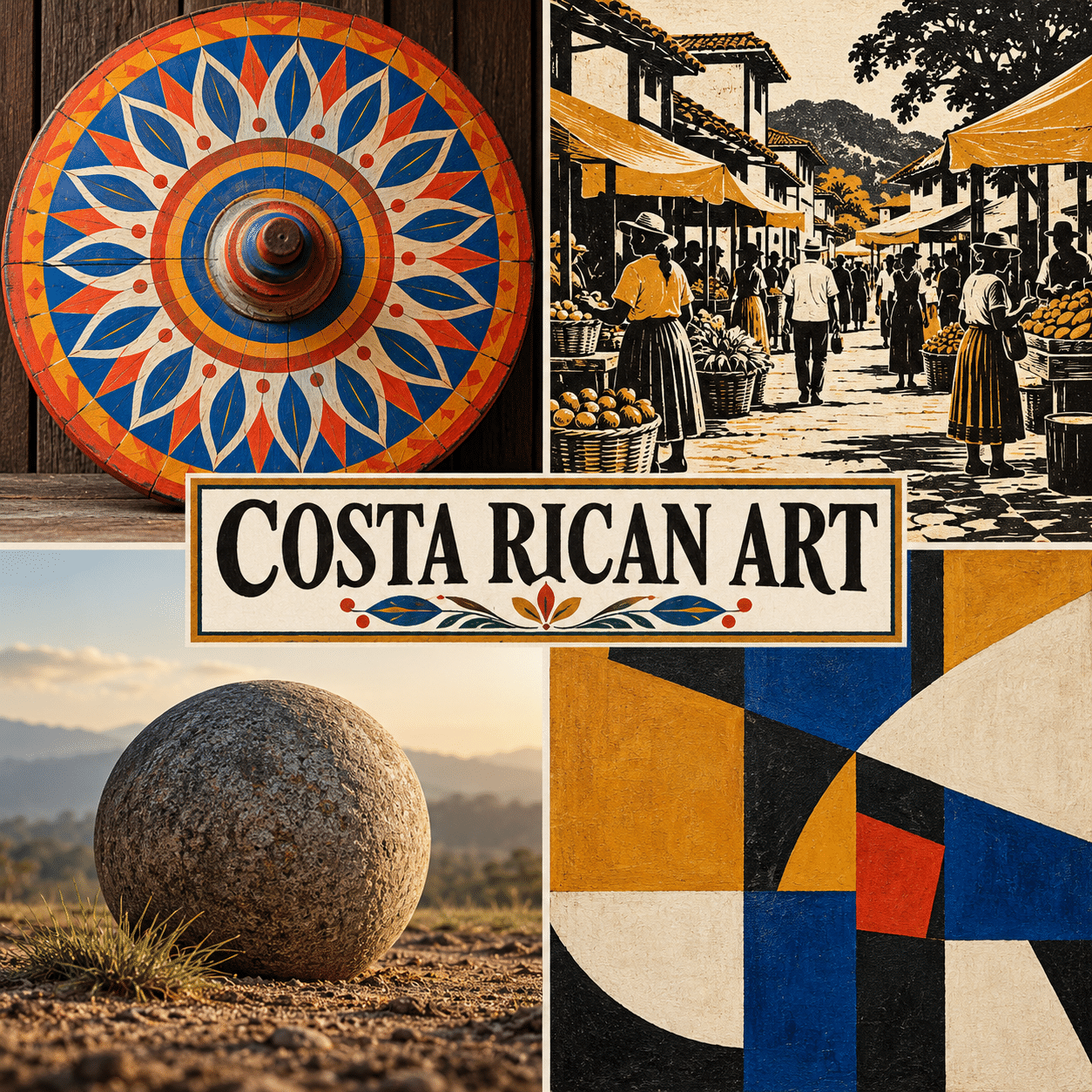
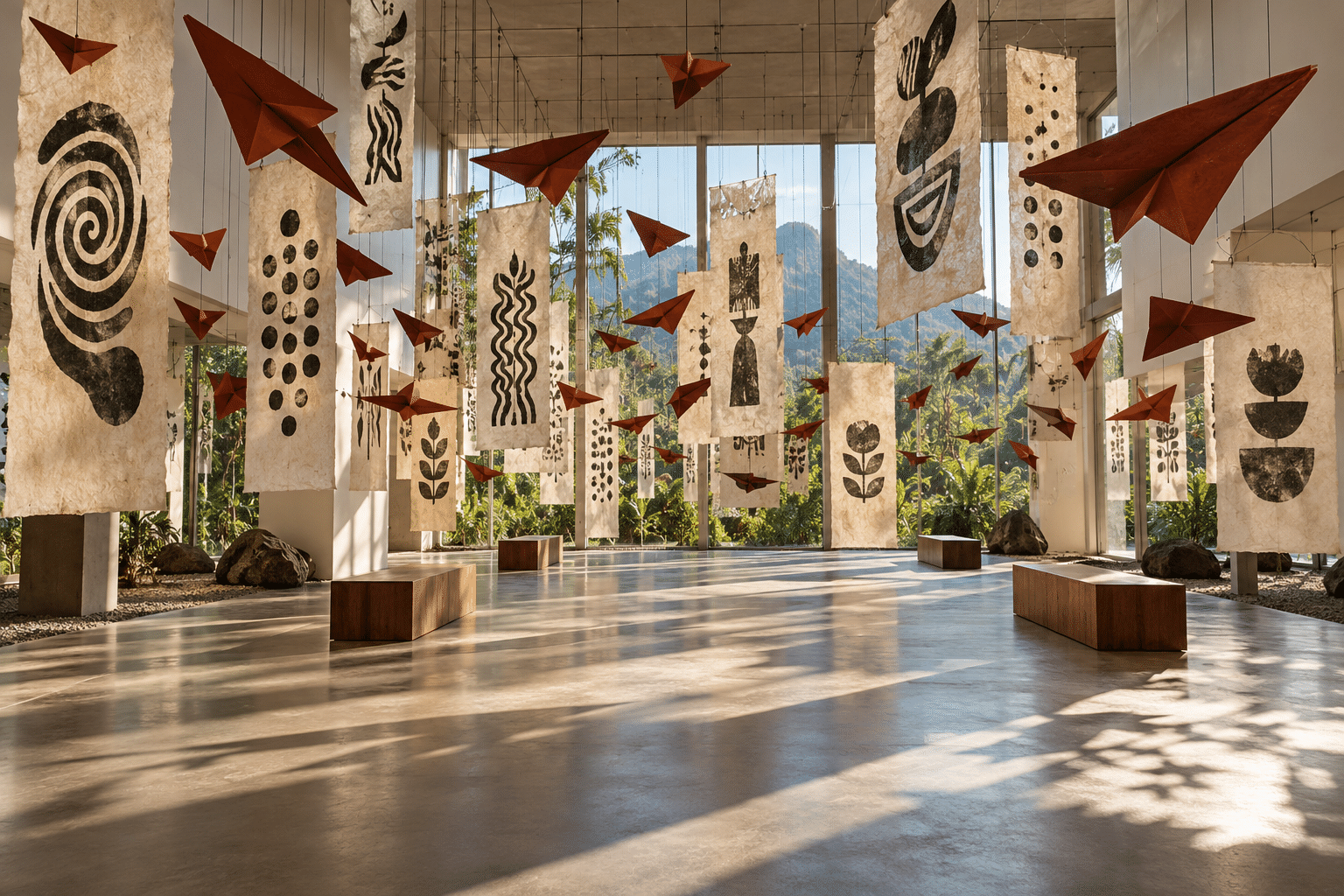
The gallery therefore varies its visual tasks: radial painted ornament, a print-like urban scene, stone and light, geometric abstraction, and a speculative paper installation. These are original AI-generated studies, not reproductions, commissioned artisan works or documentary records. The installation is a fictional composition and is not attributed to the museum. Their variety demonstrates why the entry cannot responsibly offer one universal Costa Rican style.
Using this overview in a prompt
Specify the medium and compositional decision before adding a geographic reference. Ask for a two-colour woodcut-like market scene with strong negative space, or a radial painted-wheel study with controlled repetition. If your aim is historical accuracy, begin with a documented object and its context, and verify the result against that record. If your aim is invention, make that status explicit and avoid borrowed claims of authenticity.
Positive perspective — AI-authored editorial assessment
A broad overview becomes valuable when it helps readers notice differences. The contrast between archaeological geometry, working craft, modern drawing and contemporary installation makes both material and context visible. The strongest visual studies invite close looking while directing readers toward actual collections and cultural records.
Critical perspective — AI-authored editorial assessment
The main risk is turning a country into a mood board of bright wheels, jungle animals and sunshine. That reduces complex histories to a tourist shorthand. Another risk is presenting synthetic objects as heritage evidence. Use precise captions, verify names and dates, and let specific artists and practices complicate the overview.
Neutral perspective — AI-authored editorial assessment
Costa Rican art is a field of study rather than a unified movement. This introduction selects a few documented routes into that field and pairs them with independent formal exercises. It does not rank traditions, exhaust contemporary practice or claim that generated examples represent a community’s own artistic voice.
A small poetic detour
Original words from the AOI studio.
Poetry
A wheel turns colour into time,
A cut leaves paper bright.
A stone receives the passing cloud
And gives no easy rite.
A drawing keeps the changed decision,
A room receives the new;
No single colour names a country—
There is more than one way through.
The prompt workshop
Original creative exercises. These prompts create new illustrations, not documentary evidence.
A radial pattern study
Original educational painted-wheel design inspired by the radial organisation of Costa Rican oxcart decoration: concentric bands, repeated leaf-like forms, orange blue red and ivory, clear central hierarchy. An invented design on a studio object; do not claim a specific artisan, regional pattern or authentic provenance.
A print-like urban scene
Original two-colour woodcut-like image of an imagined market street, black cut-looking masses and warm ochre, varied adult figures, broad negative spaces, coherent perspective and deliberate carving-like marks. Independent contemporary exercise, not a reproduction of a named artist's print.
Material, shadow and contemporary space
Speculative gallery installation of folded paper planes and suspended printed sheets, a path through the composition, sunlight casting offset shadows, restrained earth red and charcoal palette. Invented artwork and exhibition; no claim to document an actual Costa Rican museum installation.
A smile from the studio
Jokes
The pattern asked the wheel for a straight answer. They agreed to go around the question once more.
Sources and further exploration
UNESCO World Heritage — Diquís settlements, stone spheres and limits of current interpretation
UNESCO Intangible Heritage — oxherding, oxcart craft and painted decoration
Museo UCR — Amighetti and González drawings as evidence of artistic process
Museo de Arte y Diseño Contemporáneo — exhibitions and contemporary research