
Artist-defined practice · scanning, motion and duration
Explore Compressionism’s moving-scanner practice, its distinct uses of the name, and new studies of flowers, wood, water and brick transformed into image traces.
A visual introduction
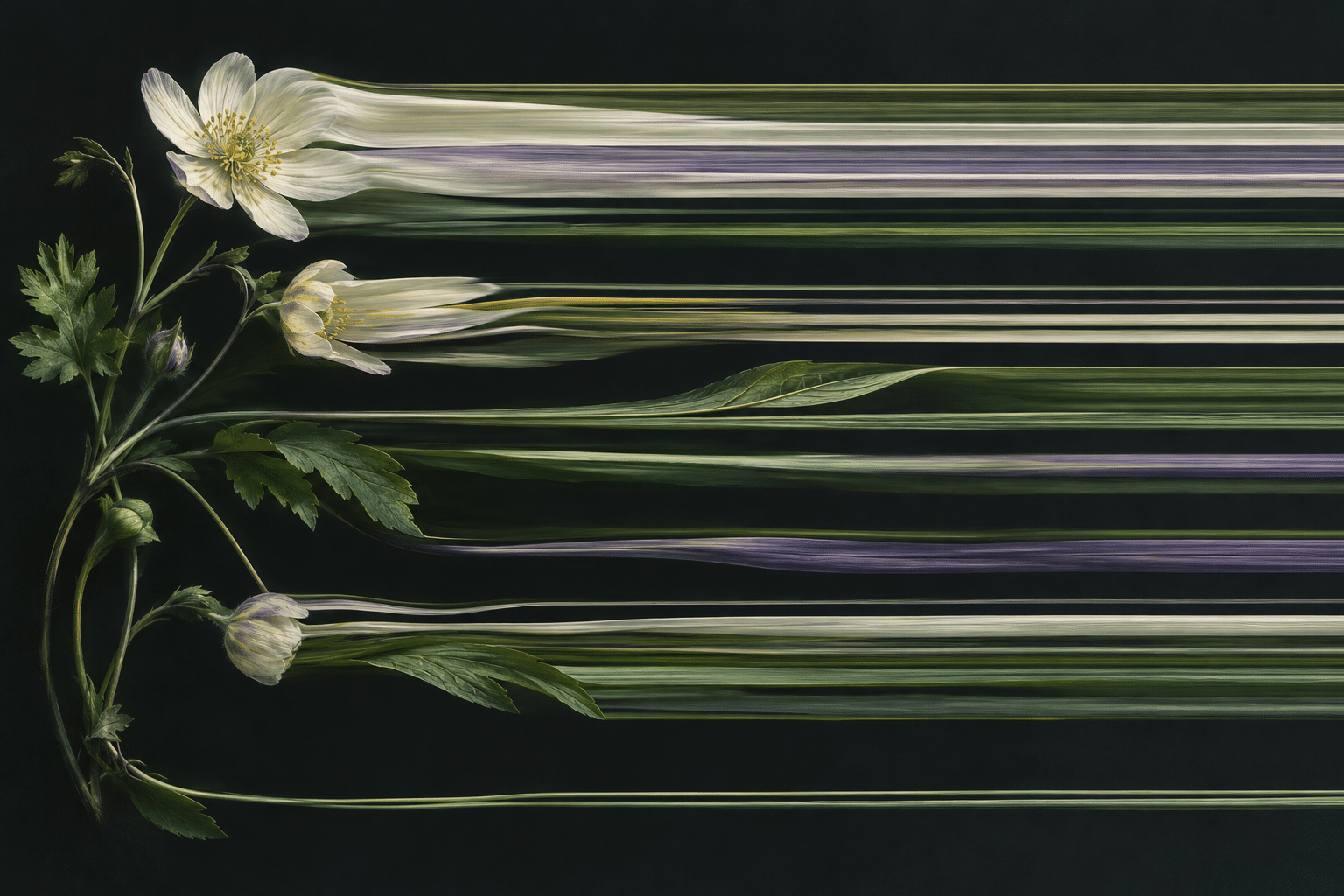
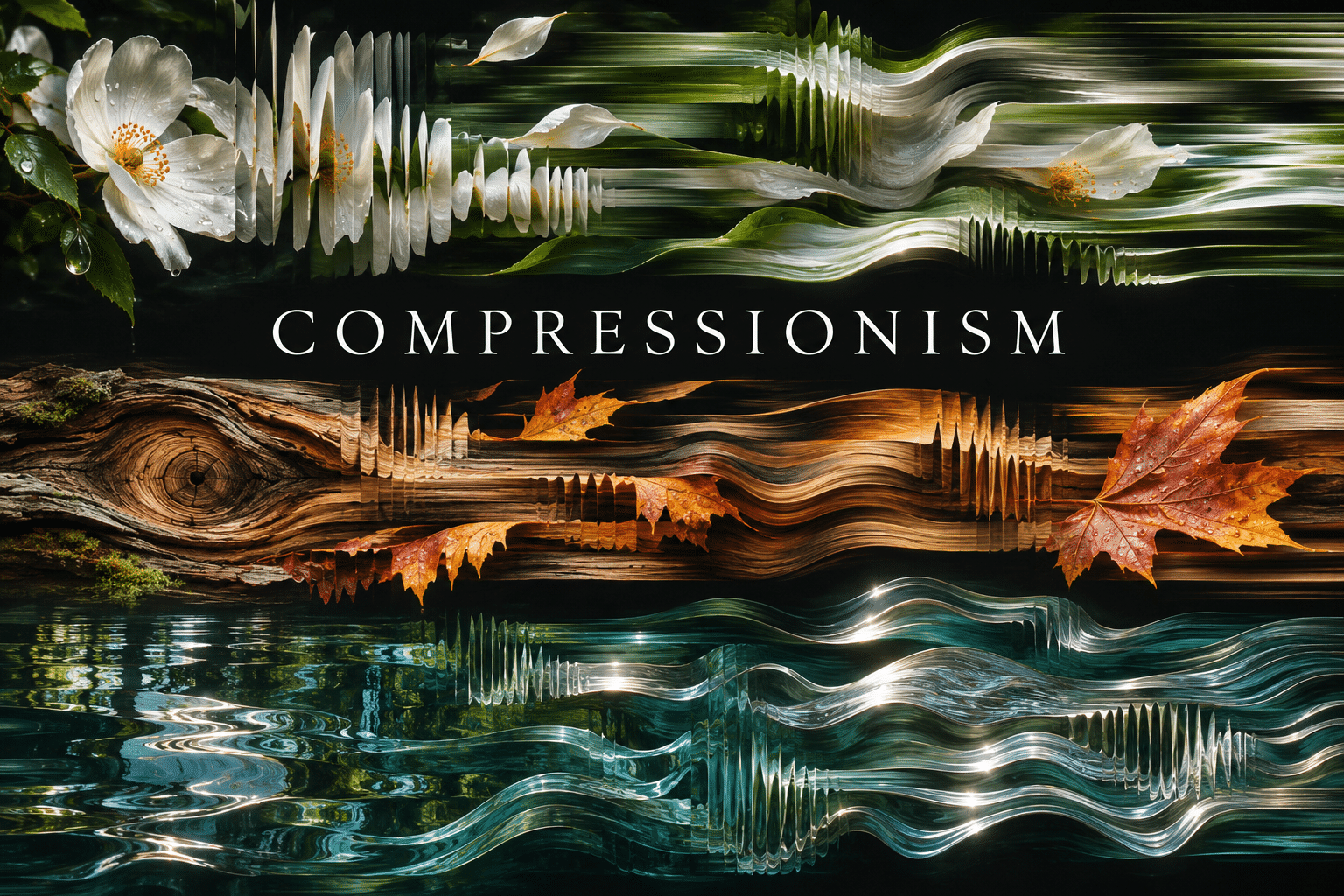
A retained flower banner joins a new titled collage and three original studies of wood, water and masonry. These generated interpretations are distinct from the documented artist projects linked below.
Select an image for a closer look. Use the thumbnails, arrow keys or a swipe to compare examples. Zoom in to inspect details, or share the image that inspires you.

Creative toolbox · take this style further
Choose an input and a destination. Search sends your words to the chosen site; Copy & open puts them on your clipboard to paste there.
Create with AI
Turn your chosen input into an image prompt or a new creative direction.
ChatGPT
Copy your input and paste it into a ChatGPT conversation or image request.
Copy & open ChatGPT (new tab)Claude · Anthropic
Develop an image prompt or explore the style in a new Claude conversation.
Copy & open Claude · Anthropic (new tab)Midjourney
Paste your input into the Imagine bar on the Create page.
Copy & open Midjourney (new tab)Adobe Firefly
Copy your input, open Firefly, and paste it into the prompt field.
Copy & open Adobe Firefly (new tab)Leonardo.Ai
Copy your input, open Leonardo, and paste it into the generation field.
Copy & open Leonardo.Ai (new tab)Image search
Find visual references. Short, concrete keywords usually work best.
Lexica
Search AI images and prompts using your selected input.
Search with this input Lexica (new tab)Pexels
Search the photo and video library. Short keywords often work best.
Search with this input Pexels (new tab)Pixabay
Search photos, illustrations and other images.
Search with this input Pixabay (new tab)Unsplash
Search photographs using the style name or your own keywords.
Search with this input Unsplash (new tab)Wikimedia Commons
Search photographs, artworks and historical images. Check each file for its source and reuse terms.
Search with this input Wikimedia Commons (new tab)Art & research
Explore artists, collections and the ideas behind a style.
Wikipedia
Search for background reading. A style may not have its own article.
Search with this input Wikipedia (new tab)WikiArt
Copy your input into WikiArt’s search to explore artists and artworks.
Copy & open WikiArt (new tab)Europeana
Paste your keywords into the search to explore European museum, library and archive collections.
Copy & open Europeana (new tab)Inspiration
Discover portfolios and visual ideas from creative communities.
Instagram hashtags
Search a hashtag made from your input: spaces and punctuation are removed. Instagram may require sign-in.
Search with this input Instagram hashtags (new tab)ArtStation
Paste your input into artwork search for concept art, environments, characters and visual development.
Copy & open ArtStation (new tab)Behance
Paste your input into project search for illustration, design and visual storytelling.
Copy & open Behance (new tab)A closer look
Recognizable fragments stretch into directional ribbons, with compressed intervals and local changes in rhythm. Material traces remain visible as the image shifts between a readable subject and an abstract sequence.
Compressionism: clarify which practice is meant
This article focuses on Nathaniel Stern’s Compressionism, which his project page dates from 2005. Stern describes working with a desktop scanner, laptop and battery, moving the equipment in relation to his body and surroundings. The resulting images are further worked on digitally and may be translated into different print processes. Consult his project documentation for actual works and the performance context.
This focus matters: the title alone does not identify every stretched image or every artwork involving data compression. The AOI studies below interpret directional traces and changes of rhythm. They are generated images, not records of Stern’s performances, scanner captures or works made by him.
Read the trace as a change over time
A useful way to look at the new illustrations is to follow one recognizable fragment into its extended trace. Where does a leaf stop reading as a leaf? Which line can still be followed across a stretched passage? Where do neighbouring bands bunch together or change direction? These questions connect the subject to the image’s organization.
Keep a quiet region beside the strongest change. If every part of the picture is disrupted equally, the eye has little basis for comparison. A small stable fragment can make a long transformed passage feel more deliberate than an all-over layer of unrelated visual noise.
Three materials, three different rhythms
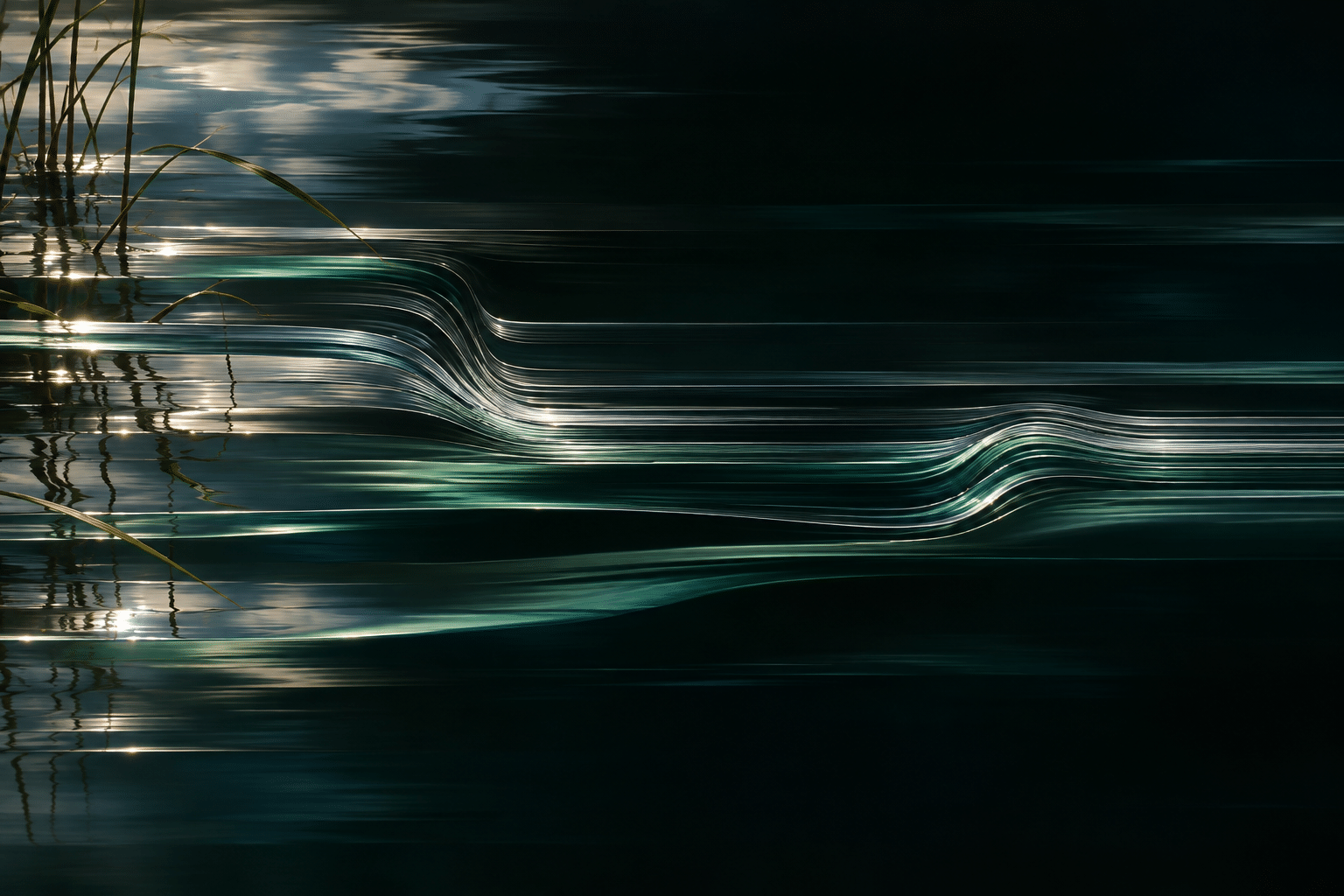
The wood-and-leaf study begins with a red-gold maple leaf against dark grain. Its right-hand portions extend into warm horizontal bands. The water study is quieter: reeds and reflections remain at the left while silver and teal traces pass through two broad changes of direction against a large dark field.
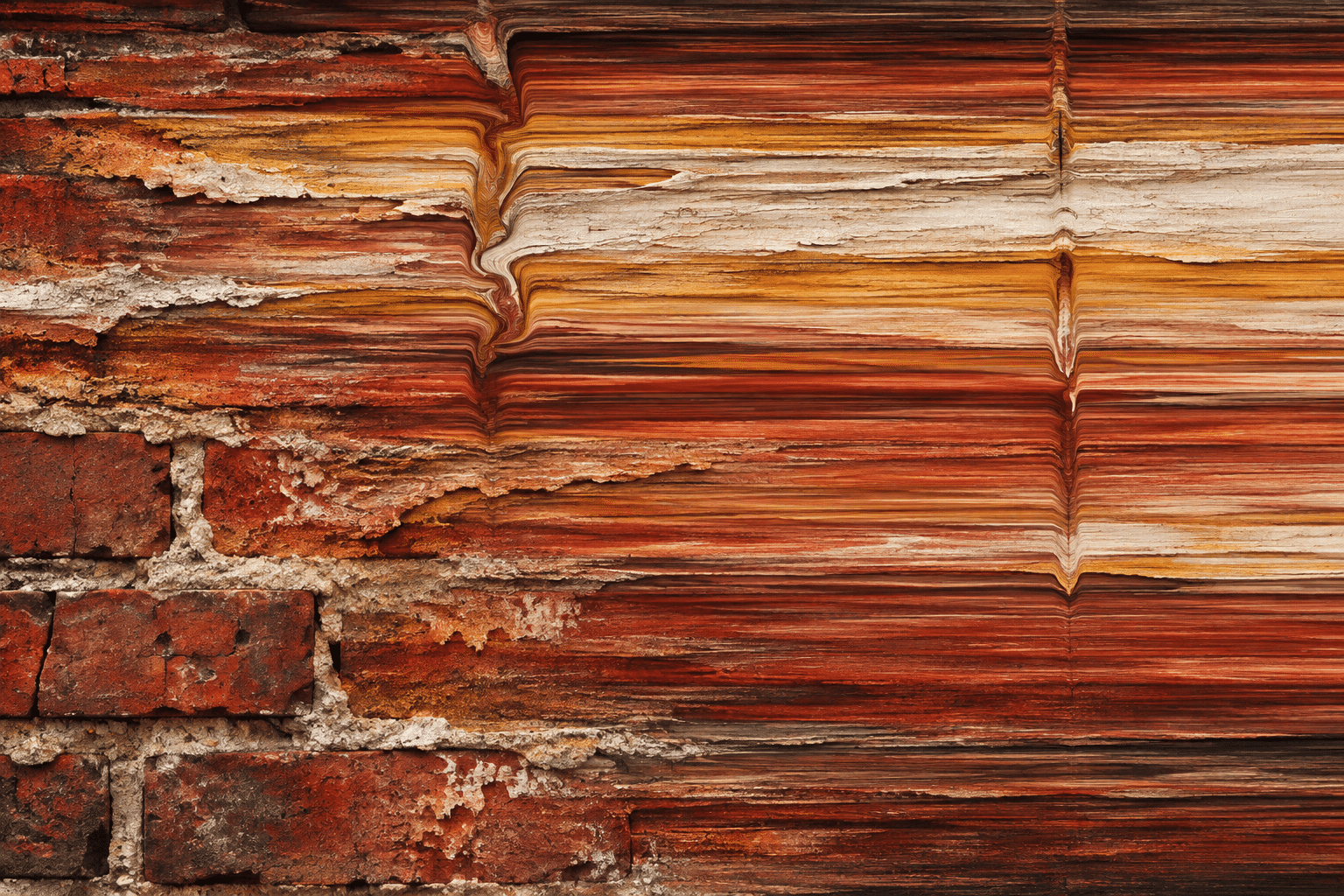
The brick study starts with readable masonry fragments and mortar, then extends their terracotta and ivory colours into bands interrupted by narrow vertical shifts. These changes are invented visual interpretations. They should not be used to infer a real scanner speed, path or device setting.
Keep the existing flower study in the conversation
The retained banner shows white flowers and green stems extending into fine horizontal ribbons against darkness. It already communicates the article’s focus clearly, so it remains the featured image. The new collage connects flowers, wood and water around the complete central title.
The three new standalone examples broaden the material range without replacing the useful earlier banner. Together they compare delicate botanical forms, reflected light and granular masonry. Their captions identify them as AI interpretations; actual artist works belong in the linked reference material, with their own provenance.
Other uses of the name
Johannes Hogebrink’s own account uses Compressionism for paintings from 2015–2020 inspired by poor internet connections. That is a different documented use of the name from Stern’s moving-scanner project. It should be identified separately rather than folded into a single invented movement history.
When discussing a work, name its maker, medium and context before relying on the label. A painted response to transmission problems, a scanner-based performance and a generated banded illustration can share a term while differing in process and purpose. Similar appearance alone is not evidence of the same method.
An experiment that makes comparison possible
Begin with one original photograph or invented still life and preserve a recognizable region. In a digital study, vary only the width of one stretched passage, then only the position of a discontinuity. Keep the palette and subject fixed. Compare which version makes the transition easiest to follow.
For a generated image, specify the material, direction, quiet area and one or two changes of rhythm. Save the request and label the result as an interpretation. Avoid adding arbitrary pixel blocks simply because the title suggests compression; they can distract from the sequential, directional vocabulary used in this article.
What these illustrations can and cannot explain
The new works can help a reader compare continuity, interruption and the loss of recognizable form. They cannot reconstruct a particular artist’s bodily action or prove how a physical capture was produced. A polished image is only one part of a practice whose documentation may include equipment, movement and decisions after capture.
Use the primary artist references to explore those differences. In your own image, judge whether the transformation reveals a relationship between material and rhythm. If it merely obscures everything, restore one stable edge or reduce the number of interruptions before adding further effects.
A small poetic detour
Original words from the AOI studio.
Poetry
The flower stays a flower here,
then loosens into lines of light.
A petal takes the longer path
across the quiet of the night.
The wood remembers being grain;
the water keeps a silver thread.
A wall gives up its measured rows
for roads the moving eye has read.
One edge remains to tell us where
the changing passage first began.
We see the trace, and leave unclaimed
the gesture of another hand.
The prompt workshop
Original creative exercises. These prompts create new illustrations, not documentary evidence.
A leaf becoming a trace
Create an original digital interpretation of a maple leaf on dark wood, with a recognizable left-hand fragment extending into narrow horizontal red-gold and brown ribbons. Include one local compression and a quiet dark region. Not a physical scanner result; no text or arbitrary pixel blocks.
Reflections and interrupted duration
Create a speculative image of dark water and reeds. Preserve fragments at the left, then extend silver and teal reflections into directional ribbons with two broad local changes of rhythm. Keep generous dark space and a restrained palette. Original interpretation, no claim of an actual scanner performance.
From masonry to bands
Compose weathered brick fragments that transition into terracotta, ochre and ivory horizontal traces. Let two narrow vertical shifts interrupt otherwise continuous bands. Preserve granular detail near the recognizable masonry and simplify the transformed region. Original digital study, no lettering or generic rainbow glitch overlay.
Your next inspiration
Discover another art style
Follow a visual thread to the next subject.
A smile from the studio
Jokes
The leaf asked how long its portrait would take. The image answered in horizontal distance.