Motif and optical inspiration
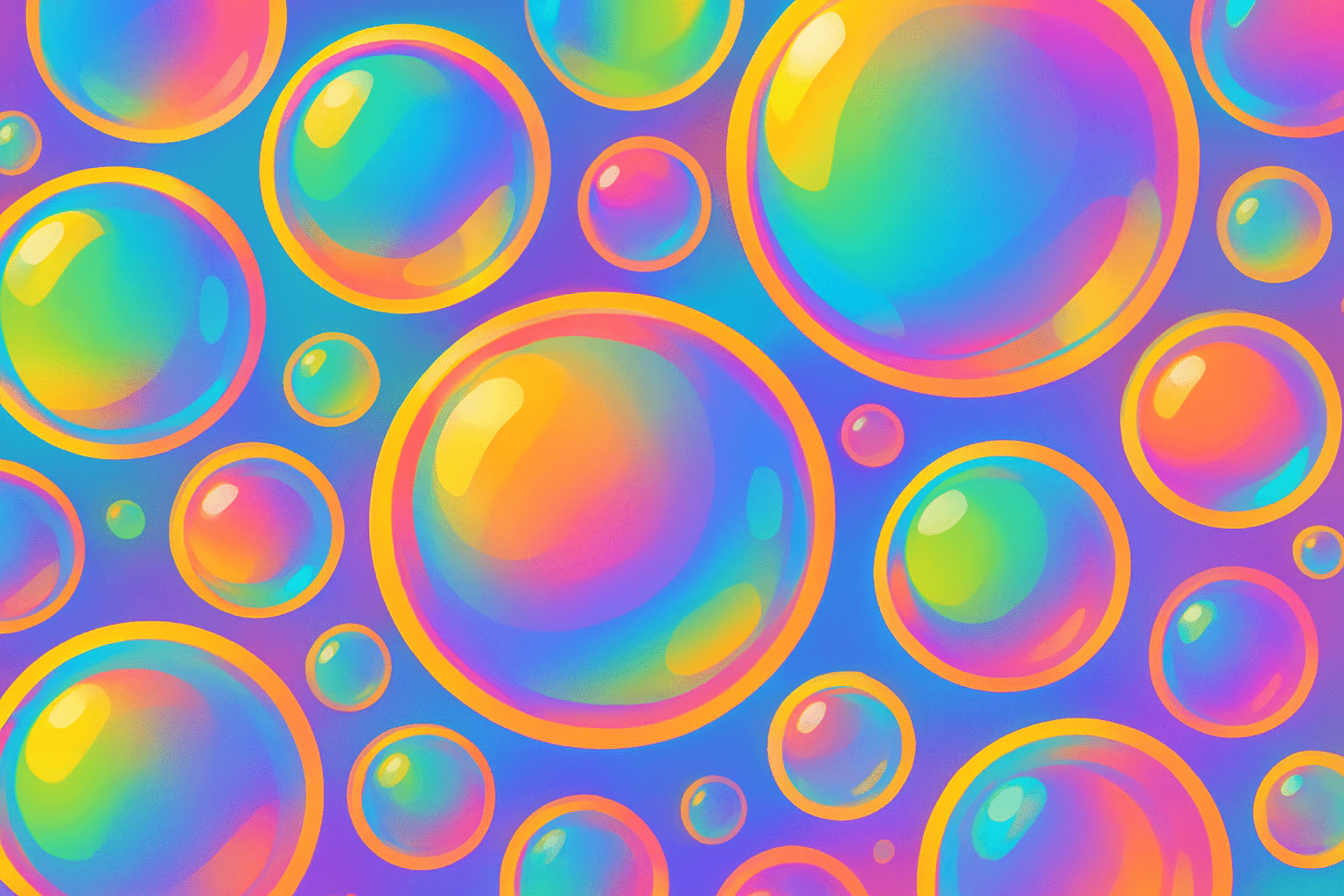
Colorful bubbles combine simple spherical forms with changing reflections and thin-film colors. Their visual complexity benefits from a simple arrangement.
A closer look
Begin with a few bubbles of different sizes and a background that gives their edges contrast.
Understanding the subject
Soap bubbles can show colors produced by thin-film interference, with appearance changing as film thickness and viewing conditions vary. Reflections from the surroundings also affect what is seen. This differs from imagining a solid sphere painted in rainbow stripes. “Colorful bubbles” is a motif rather than an art movement, and a generated illustration may exaggerate optical effects for a clearly creative purpose.
AOI looking and making workshop
Begin with a few bubbles of different sizes and a background that gives their edges contrast. Keep the reflected environment broadly consistent across the spheres. Let color form irregular bands or patches rather than identical rainbows on every bubble. Overlaps should remain understandable, with transparent areas revealing something beyond. In generated work, inspect where bubbles touch and whether reflections imply contradictory light sources. A quiet dark field or a pale window reflection can give the delicate forms structure without turning them into opaque glass marbles.
The prompt workshop
Original creative exercises. These prompts create new illustrations, not documentary evidence.
A few delicate spheres
Create an original close-up illustration of three soap bubbles against a deep blue background, irregular thin-film color bands and a consistent soft window reflection. Keep the spheres delicate and partly transparent.
Bubbles in a room
Create an original photographic interpretation of soap bubbles drifting through gentle afternoon light, varied sizes, coherent reflections and a quiet interior beyond. Avoid identical rainbow patterns or solid glass-like surfaces.
Optics into abstraction
Create an abstract composition inspired by overlapping soap films, translucent curved boundaries and restrained iridescent patches. Use broad quiet areas so the changing colors remain subtle and readable.
Your next inspiration
Discover another art style
Follow a visual thread to the next subject.